

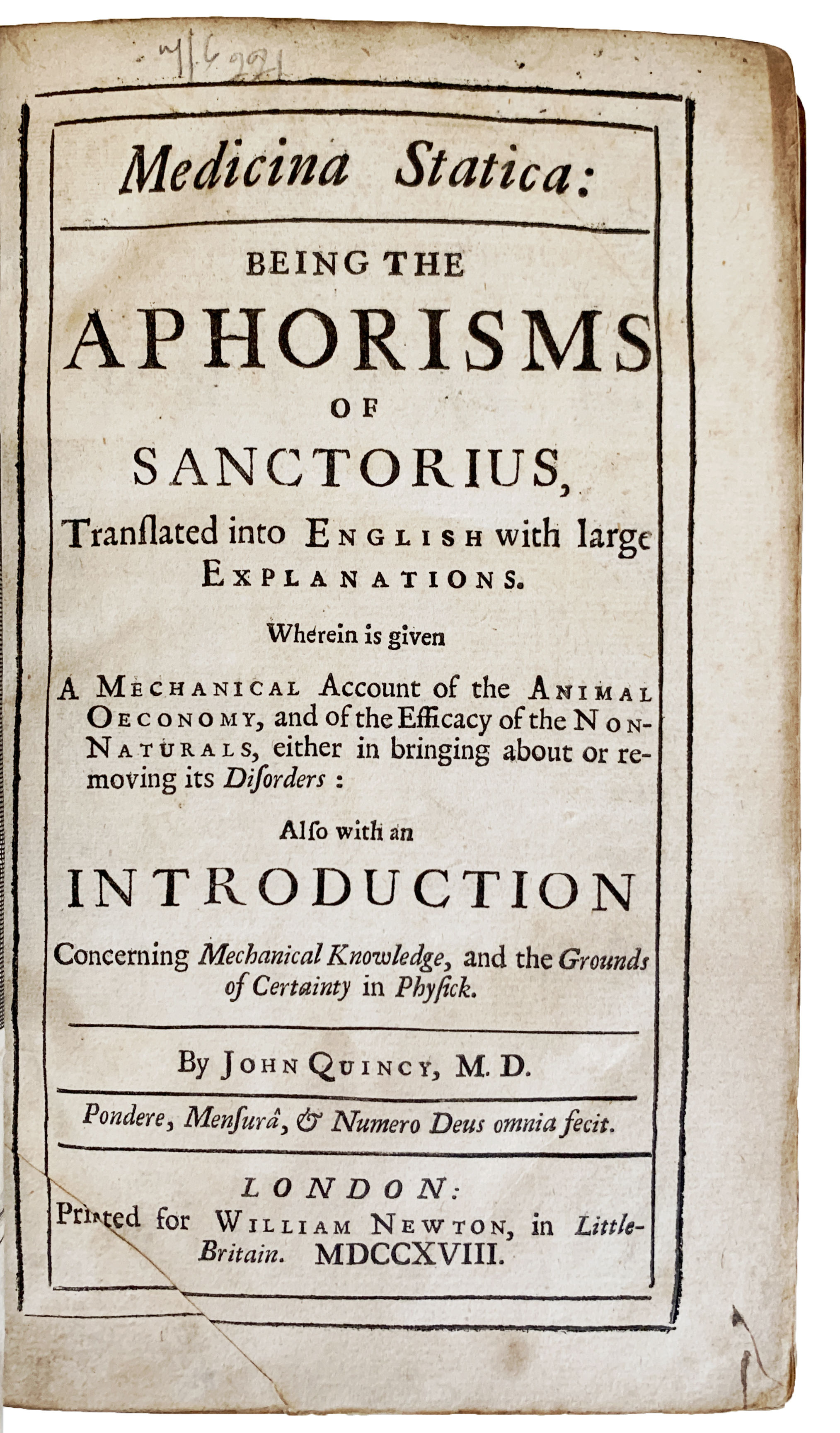
Medicina Statica: Being the Aphorisms of Sanctorius, Translated into English with large Explanations. Wherein is given A Mechanical Account of the Animal Oeconomy, and of the Efficacy of the Non-Naturals, either in bringing about or removing its Disorders: Also with an Introduction Concerning Mechanical Knowledge, and the Grounds of Certainty in Physic.
- London:: William Newton, 1718., 1718
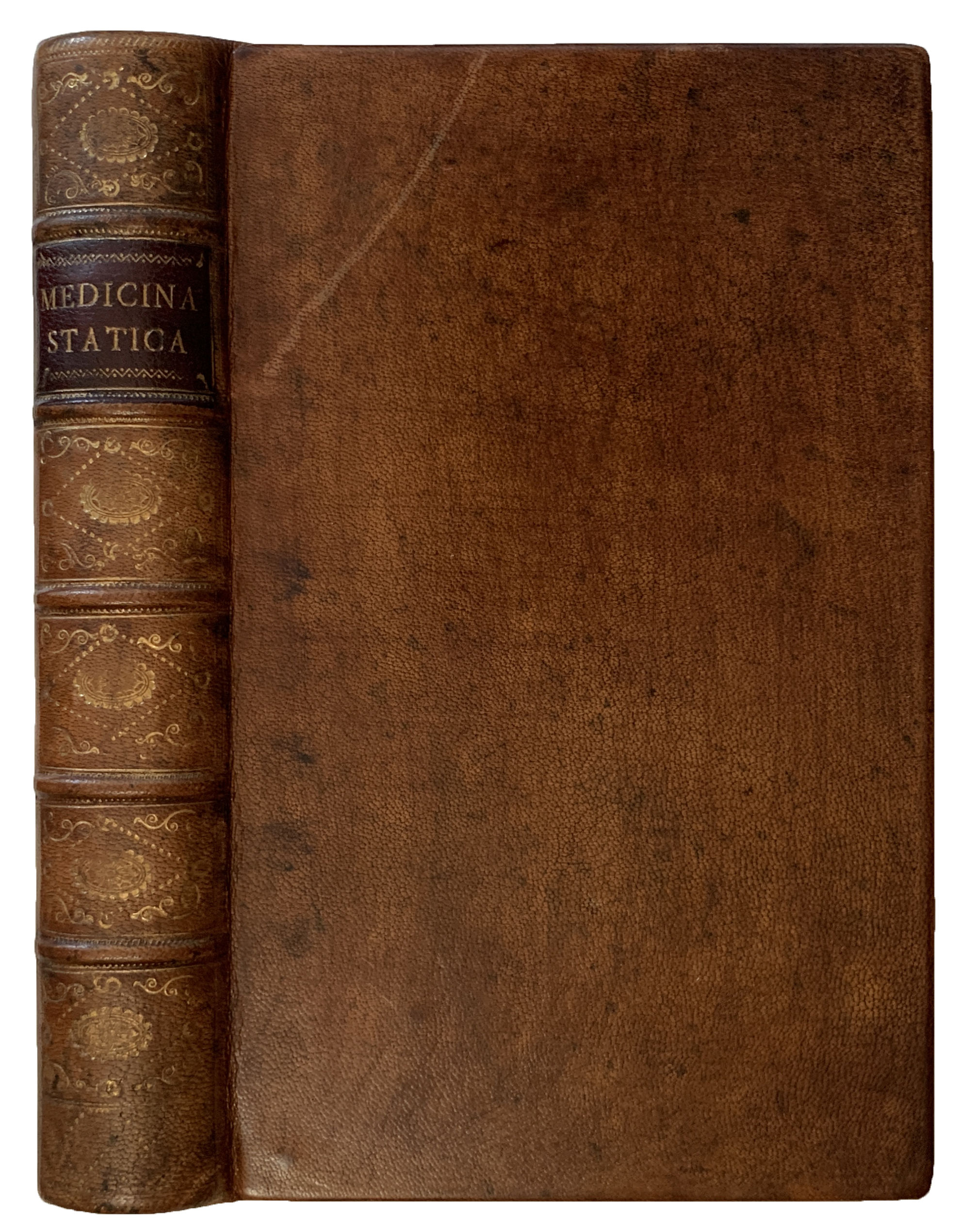
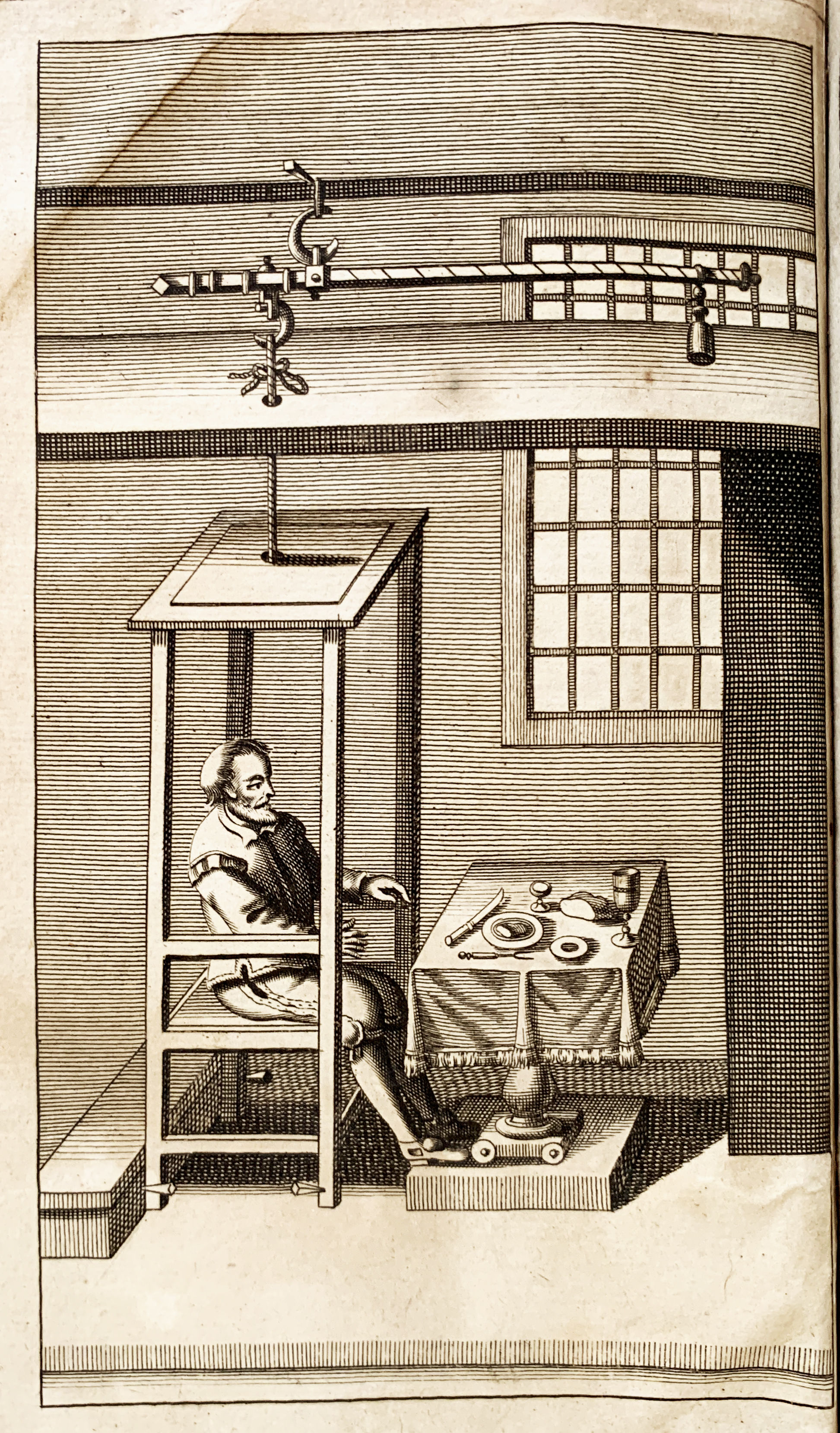
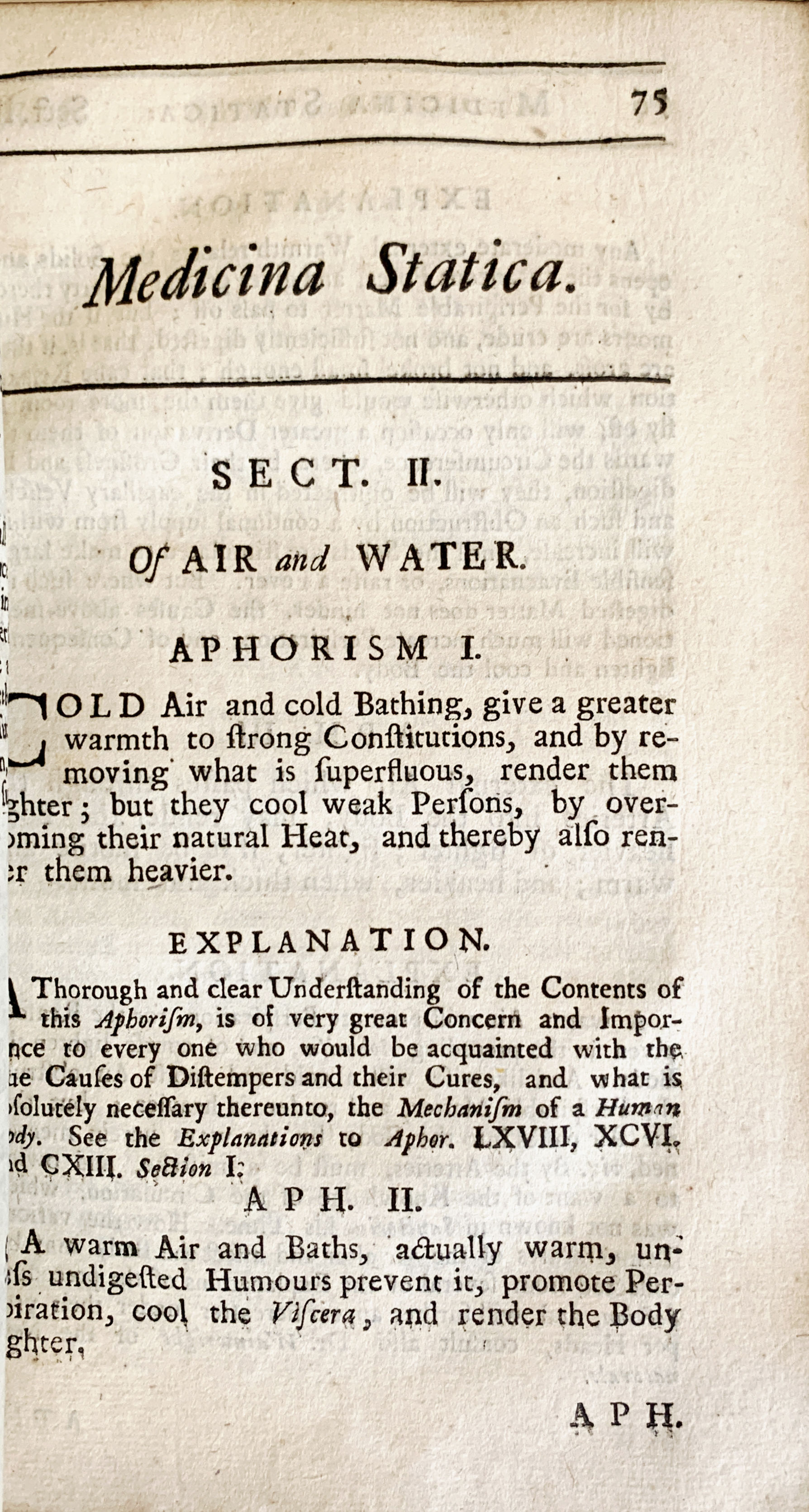
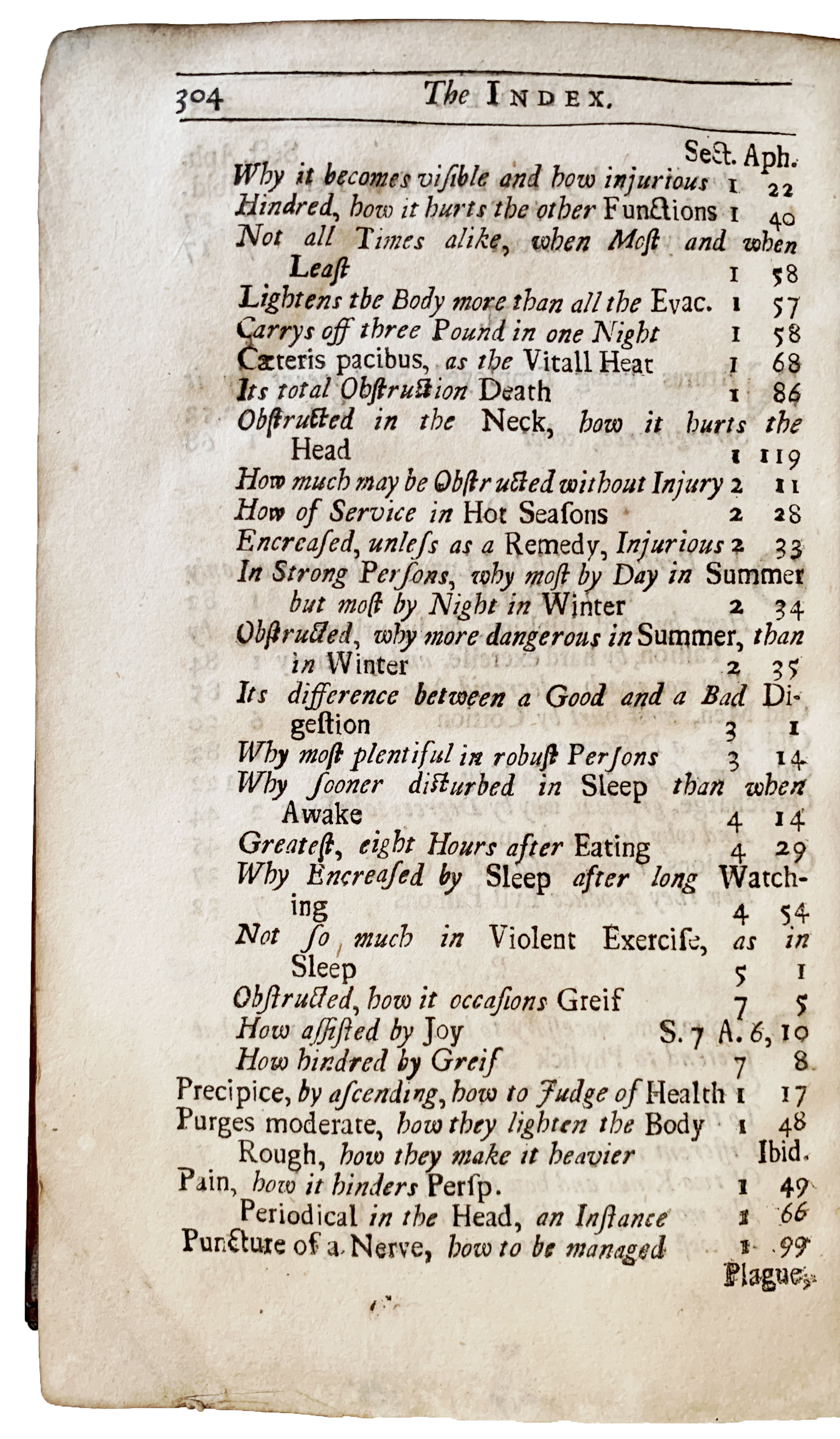
London:: William Newton, 1718., 1718. 8vo. (190 x 117 mm) lvi, 312 pp. Engraved frontispiece, 1 folding plate. Signature P mis-bound (P1-2 after P3-4), light toning throughout. Bound in full modern calf to period style, raised bands and gilt-stamped decoration on spine, black leather gilt-stamped spine label. Fine. Second edition. "The frontispiece of [this edition] shows Santorio's famous balance seat where he spent much of his time eating, working, and sleeping. Over a period of 30 years he weighed his dietary intake and bodily excretions and determined that the amount of the visible excreta was less than what he ate and drank. He concluded that a substantial portion of the weight of his food intake was lost from the body through his skin as 'insensible perspiration.'" – University of Virginia, Claude Moore Health Sciences Library. Issued along with Medico-physical Essays in 1720, this popular text went through many editions, even as late as the early 19th century. Sanctorius (1561-1636) was the founder of the physiology of metabolism. He introduced into physiology exact methods of measurement, pulse counting, temperature determination and weighing. Here Quincy translates into English topics that he feels are the most difficult. Included are aphorisms on insensible perspiration (including plague), air and water, meats and drink. sleep and watching, exercise and rest, venery, and affections of the mind. "John Quincy, medical writer, was apprenticed to an apothecary, and afterward practiced medicine as an apothecary in London. He was a dissenter and a Whig, a friend of Dr. Richard Mead, and an enemy of Dr. John Woodward. He studied mathematics and the philosophy of Sir Isaac Newton, and received the degree of M.D. from the University of Edinburgh for his Medicina Statica Britannica (1712), a translation of the Aphorisms of Sanctorius, of which a second edition appeared in 1720. In 1720 . . . he published a collection of Medico-physical Essays on ague, feberes, gout, leprosy, king's evil, and other diseases, which shows that he knew little of clinical medicine, and was only skilful in the arrangement of drugs in prescriptions. He considered dried millipedes good for tuberculous lymphatic glands, but esteemed the royal touch a method 'that can take place only on a deluded imagination,' and 'justly banished with the superstition and bigotry that introduced it.'" - [DNB]. References: BM Readex, Vol. 20, p. 1178 (1st ed.); DNB, Vol. XVI, pp. 555-6; Garrison and Morton 573 (Sanctorio); Osler 3915; Waller 7713; Wellcome III, p. 458 (1720 ed.).
Details
Title
Medicina Statica: Being the Aphorisms of Sanctorius, Translated into English with large Explanations. Wherein is given A Mechanical Account of the Animal Oeconomy, and of the Efficacy of the Non-Naturals, either in bringing about or removing its Disorders: Also with an Introduction Concerning Mechanical Knowledge, and the Grounds of Certainty in Physic.
Author
SANCTORIUS OF PADUA [SANTORIO SANTORI] (1561-1636); QUINCY, John (d. 1722).
Condition
Unknown
Publisher
William Newton, 1718.: London:
Date
1718