Book Description
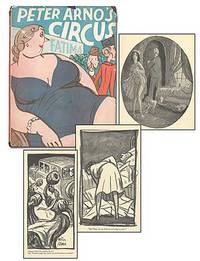
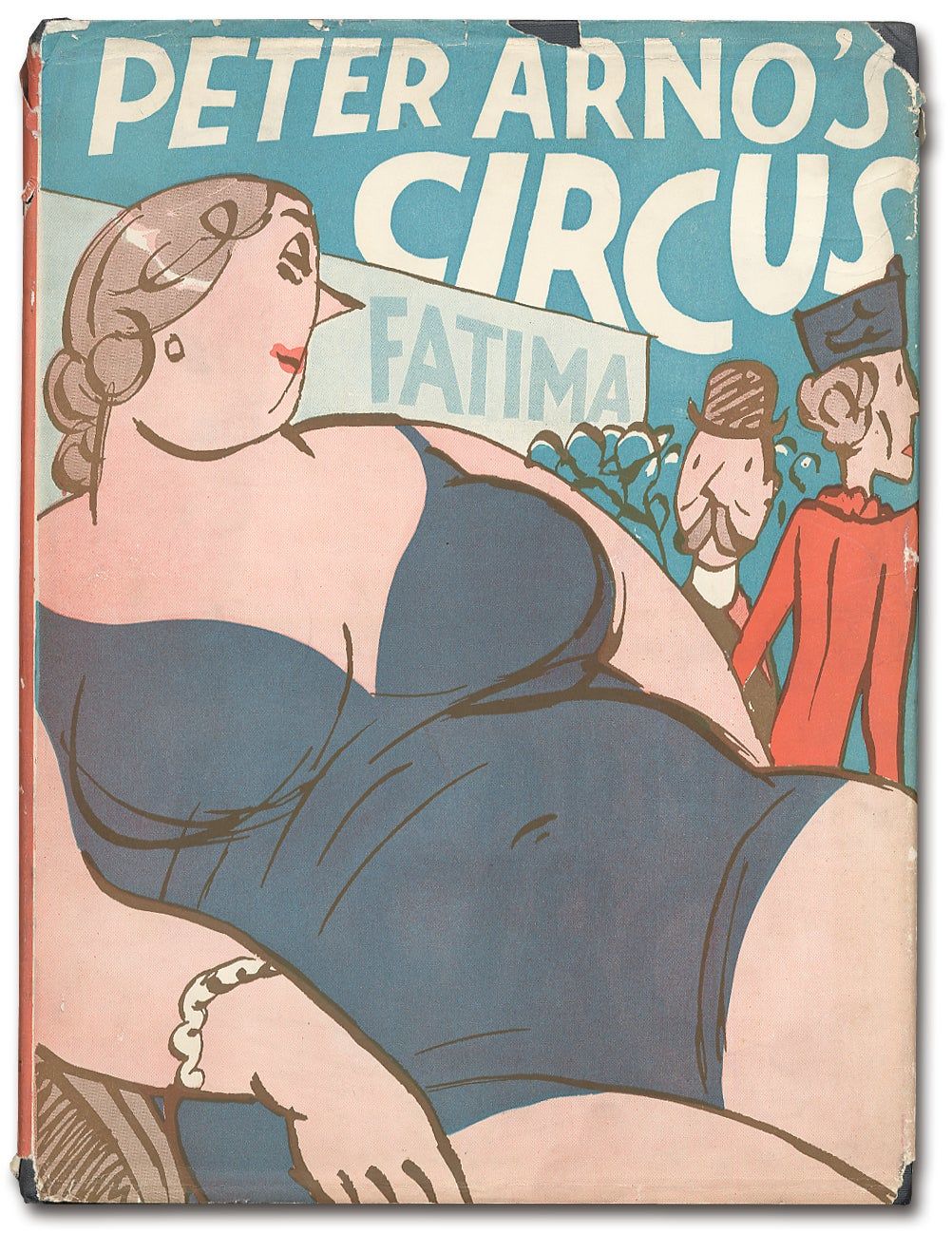
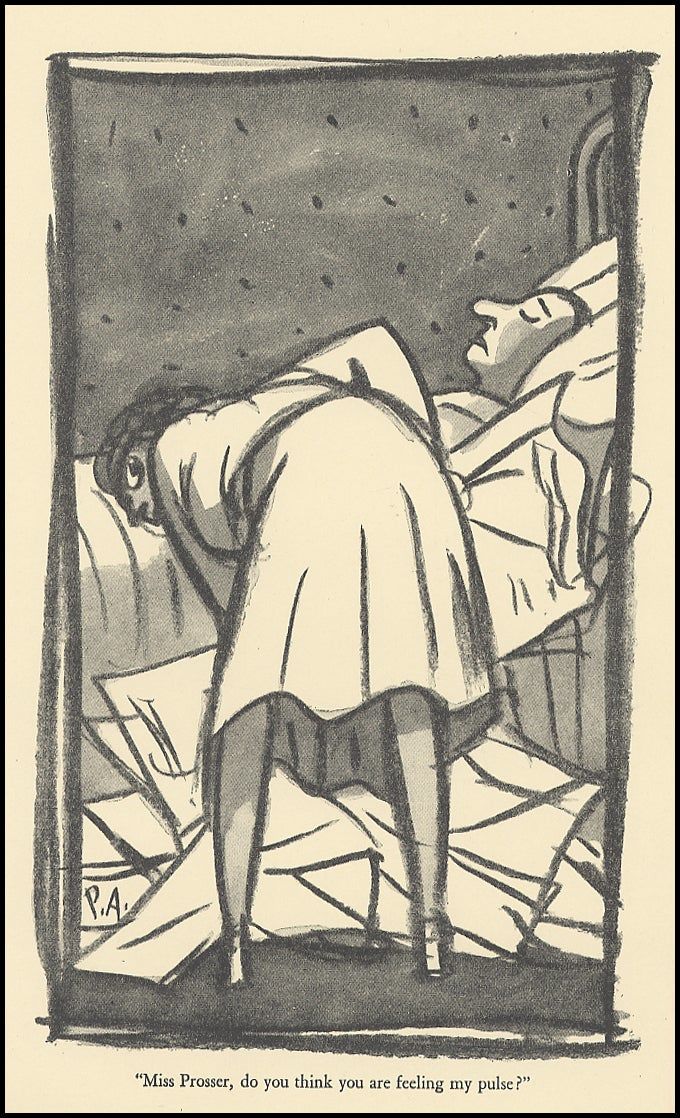
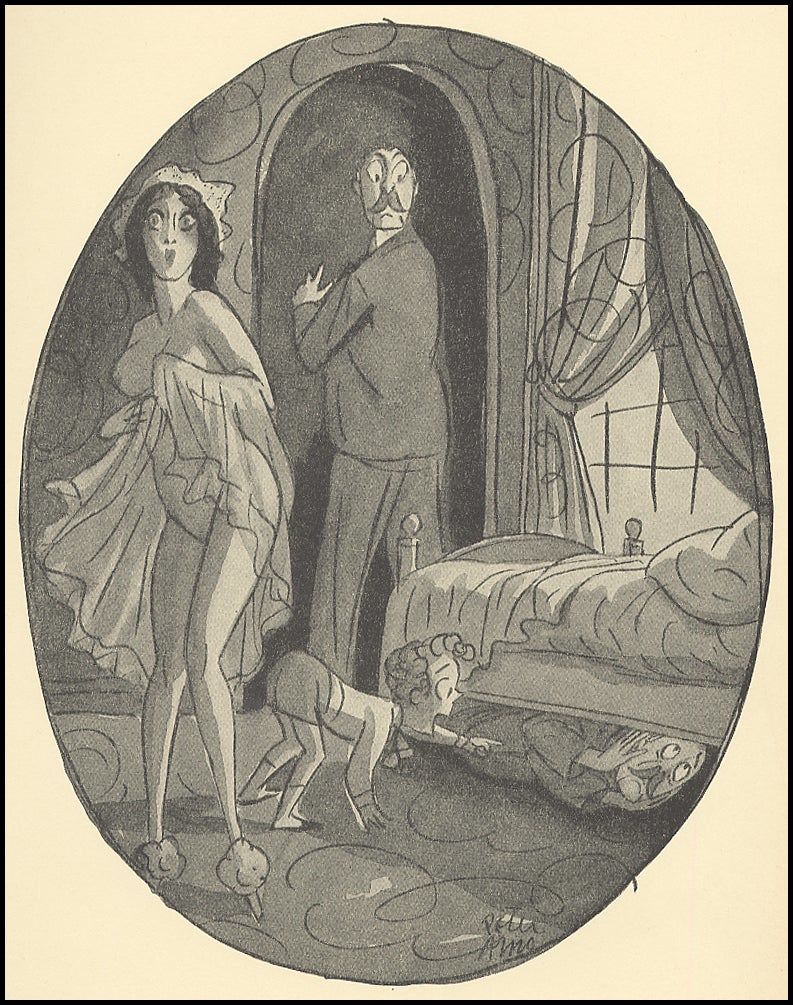
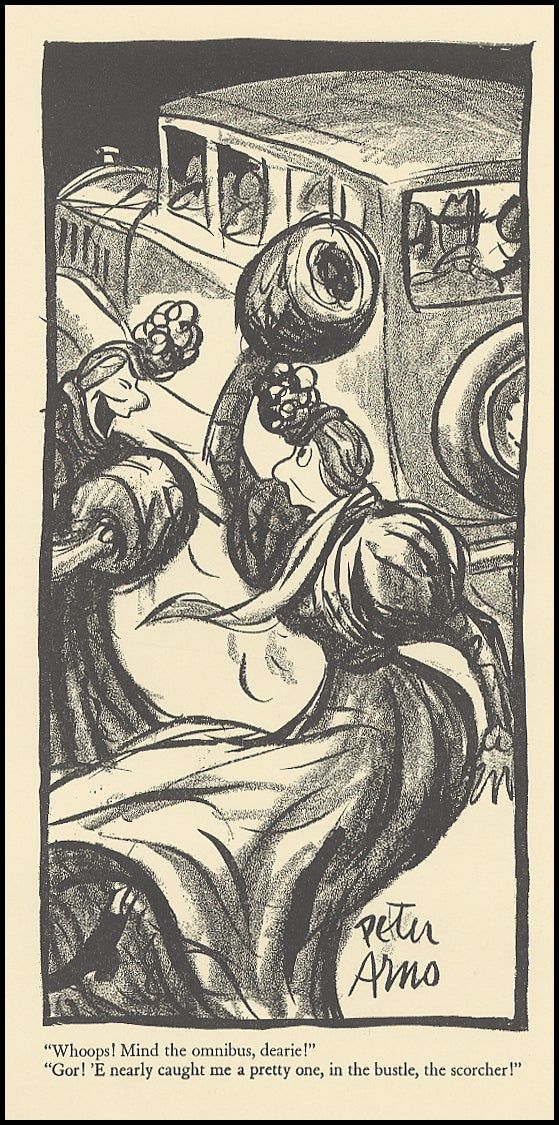
(New York): Horace Liveright. 1930. Second printing, published the same month as the first. Quarto. Small paper remnant from the jacket adhered at the top of the spine, else near fine in an about very good dustwrapper (printed "Second Printing" on the spine) with small chips and tears, and the aforementioned chip on the spine. Laid into the book in a glassine envelope are three separate Arno cartoons that do not appear in the book, and which appear to come from the publisher. We do not know why these plates are present. They do not appear to have been removed from another book, as the size and edges would indicate that they were issued thus. A curiosity, we haven't seen the additional plates before. .
Not sure what some of these terms mean? Look it up in our glossary.
jacket : Sometimes used as another term for dust jacket, a protective and often decorative wrapper, usually made of paper which wraps around the binding of a book
dustwrapper : Another term for dust jacket, a protective and often decorative wrapper, usually made of paper which wraps around the binding of a book.
spine : The outer portion of a book which covers the actual binding. The spine usually faces outward when a book is placed on a shelf. Also known as the back.
plates : Full page illustrations or photographs. Plates are printed separately from the text of the book, and bound in at production. I.e., they are not sewn as parts of gatherings.
quarto : A term used generally to describe the approximate size of a book, a book that is about 10" to 12" tall and roughly squarish in shape. The term is based on the size of paper traditionally used by book printers which has been folded and cut into 16 pages.
A.N. : When used to describe the condition of a book refers to As New, "the book is in the same immaculate condition in which it was published. There can be no defects, no missing pages, no library stamps, etc., and the dust jacket (if it was issued with one) must be perfect without any tears," as defined by AB Bookman's Weekly