

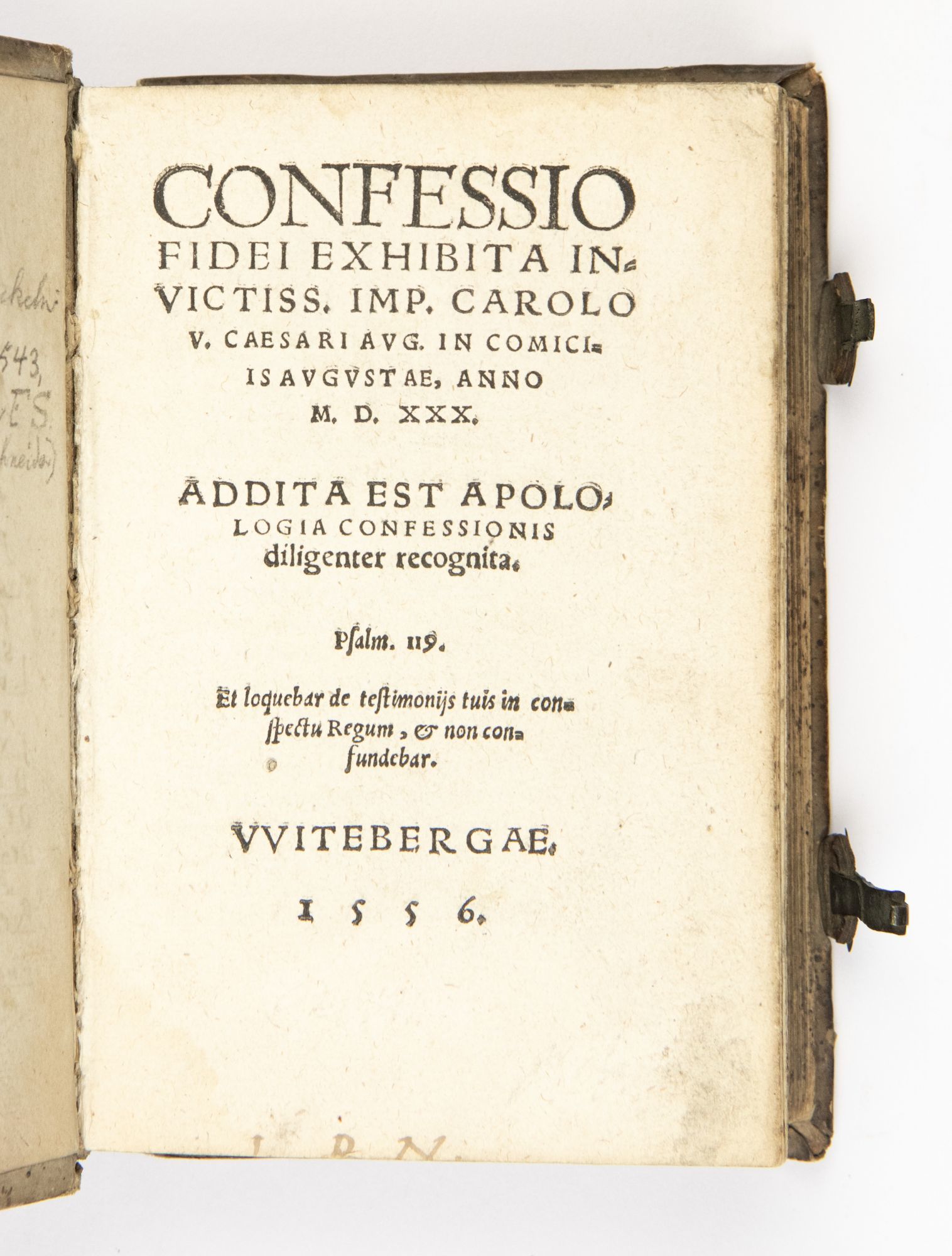
Confessio Fidei exhibita inuictiss. imp. Carolo V. caesari aug. in comicijs Augustae. Anno M.D. XXX. Addita est Apologia confessionis [Bound with: Confessio doctrinae saxonicarum ecclesiarum. Leipzig, V. Bapst, 1553]
- SIGNED Hardcover
- Wittenberg: Georg Rhau, 1542, 1556
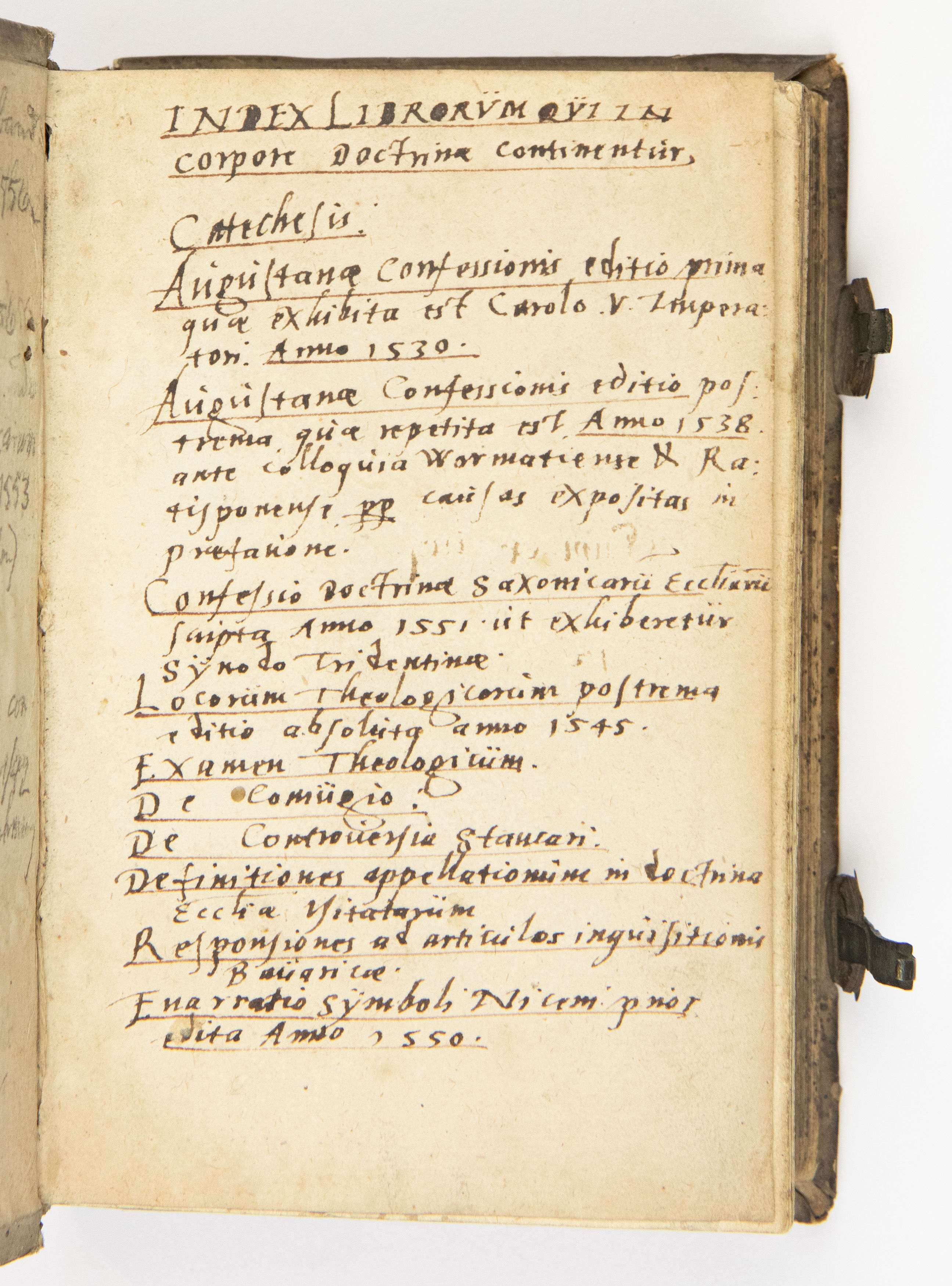
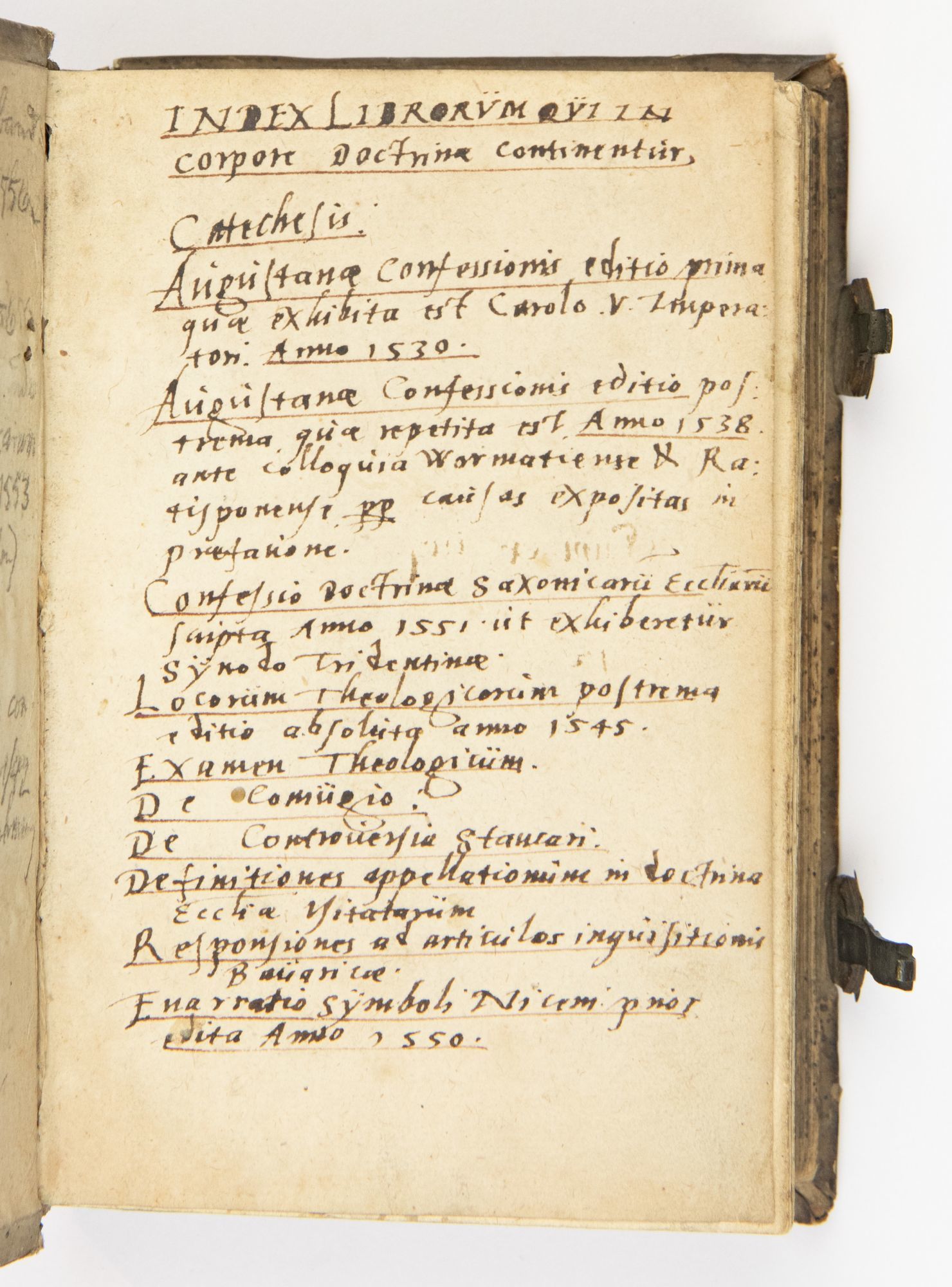
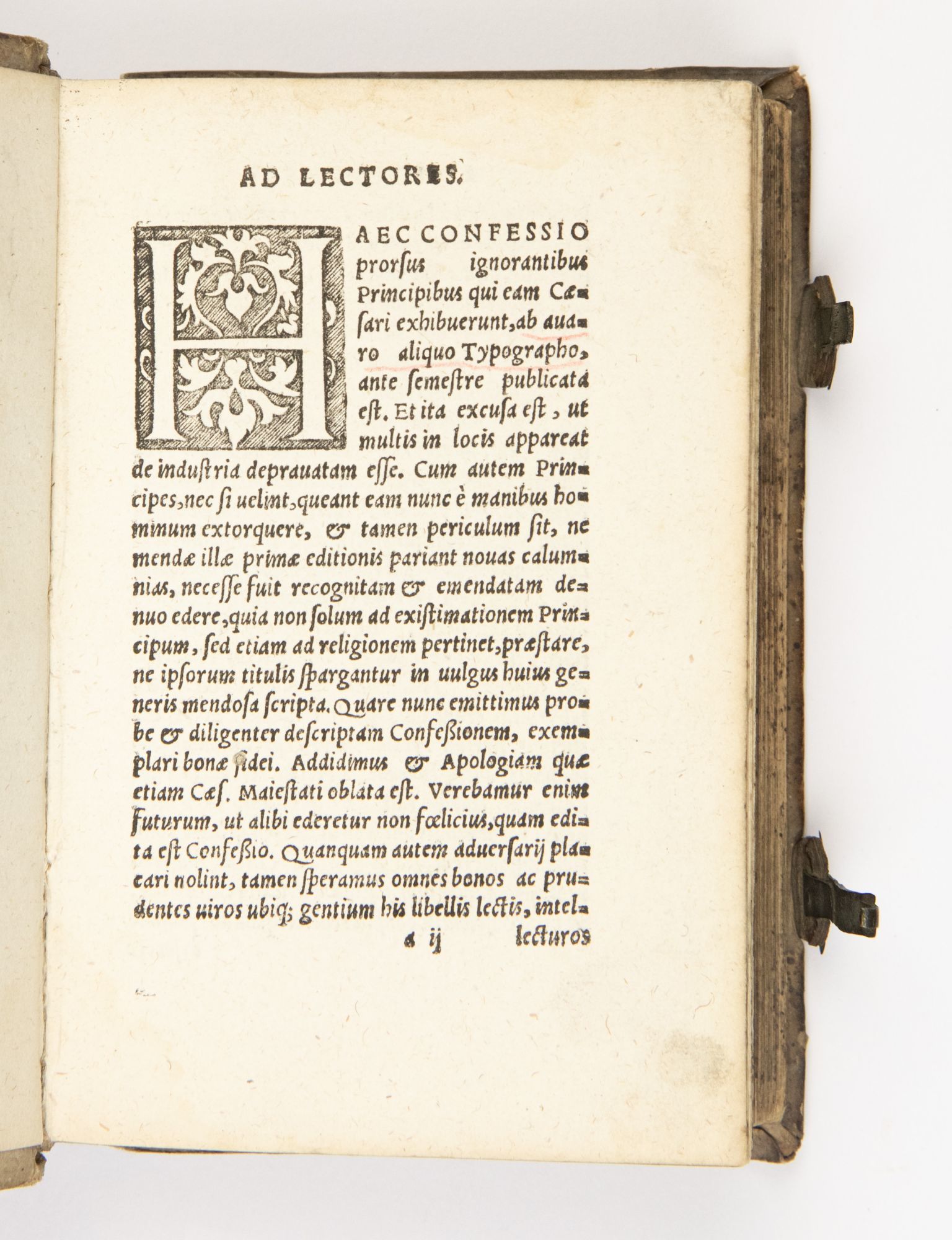
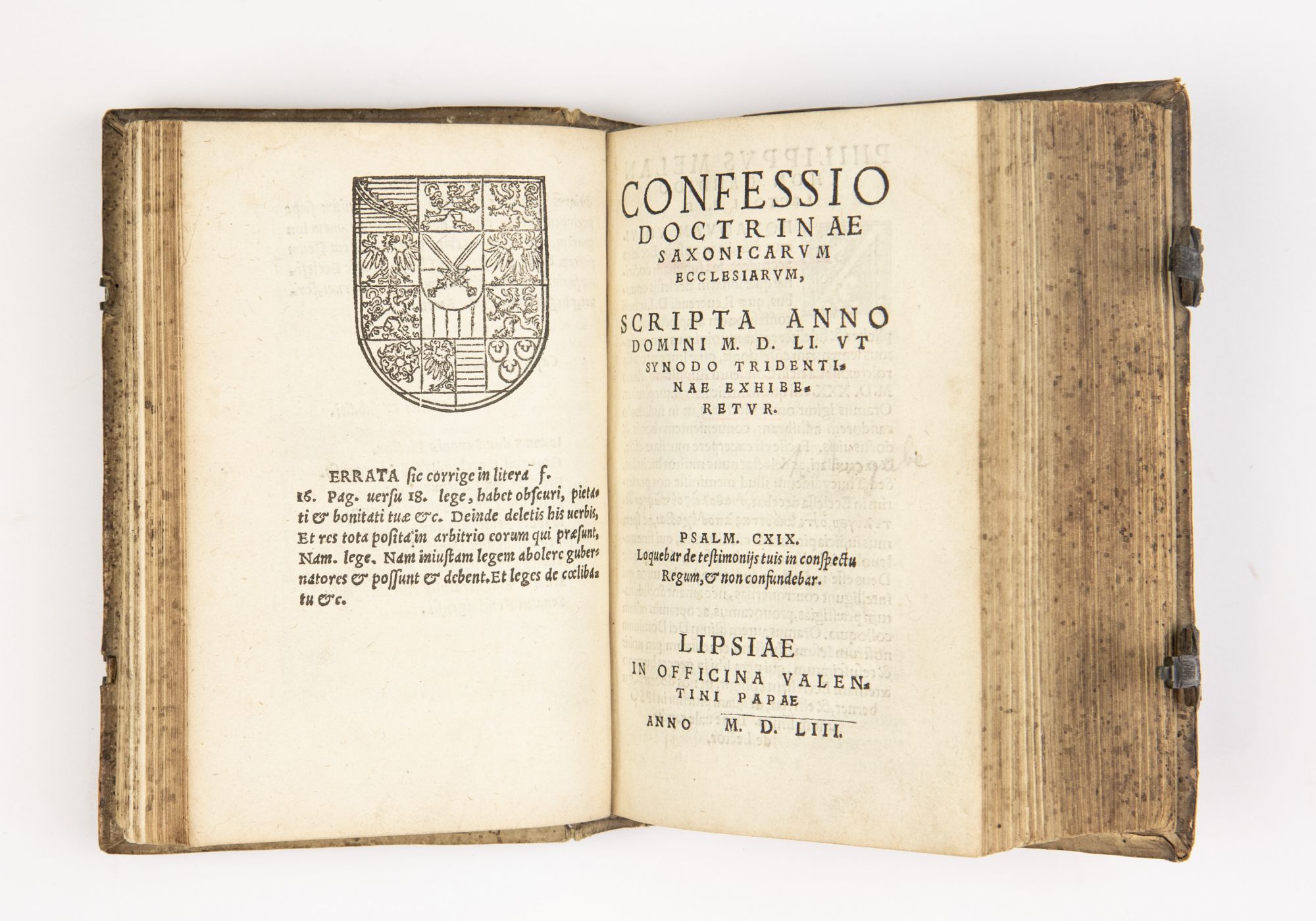
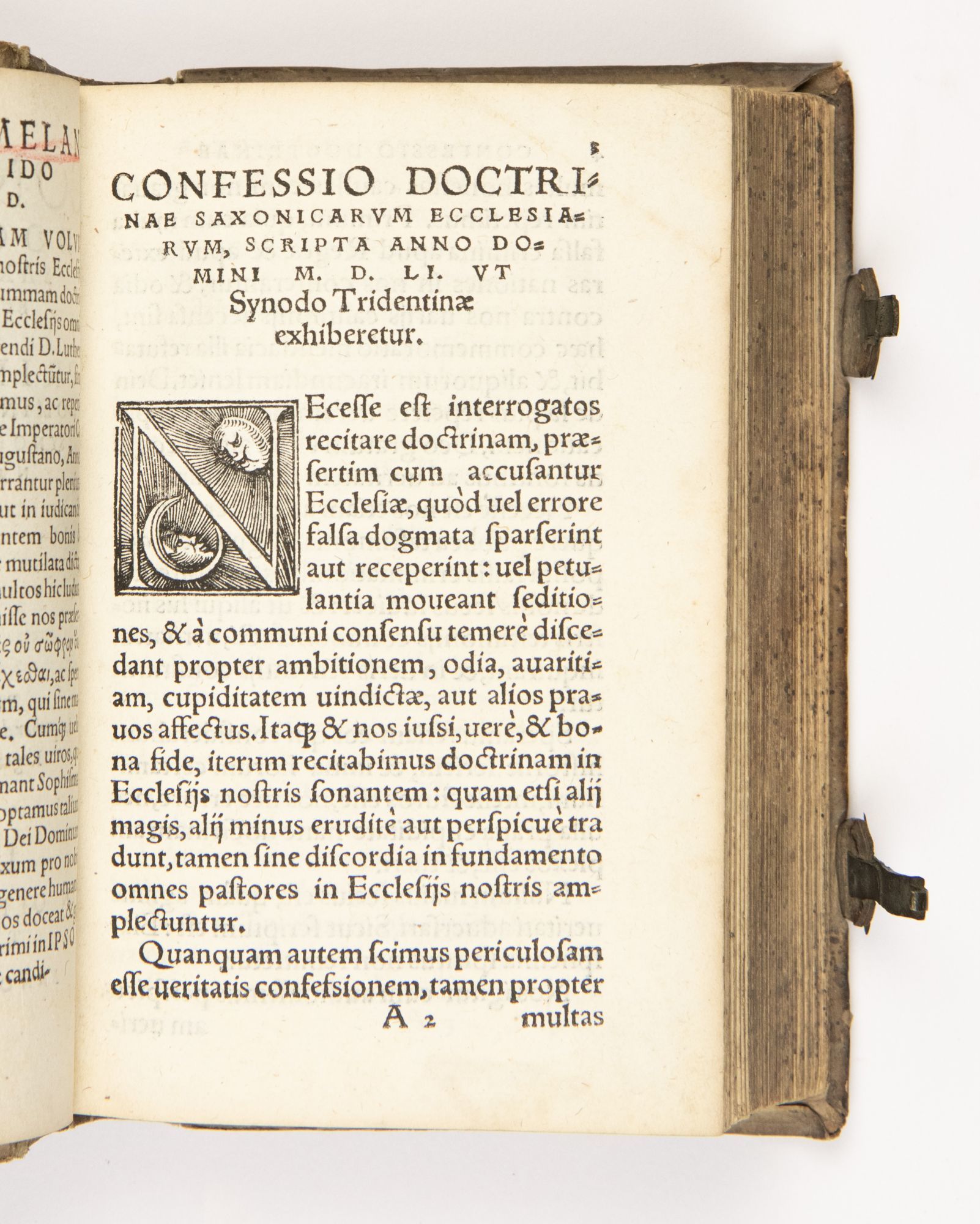
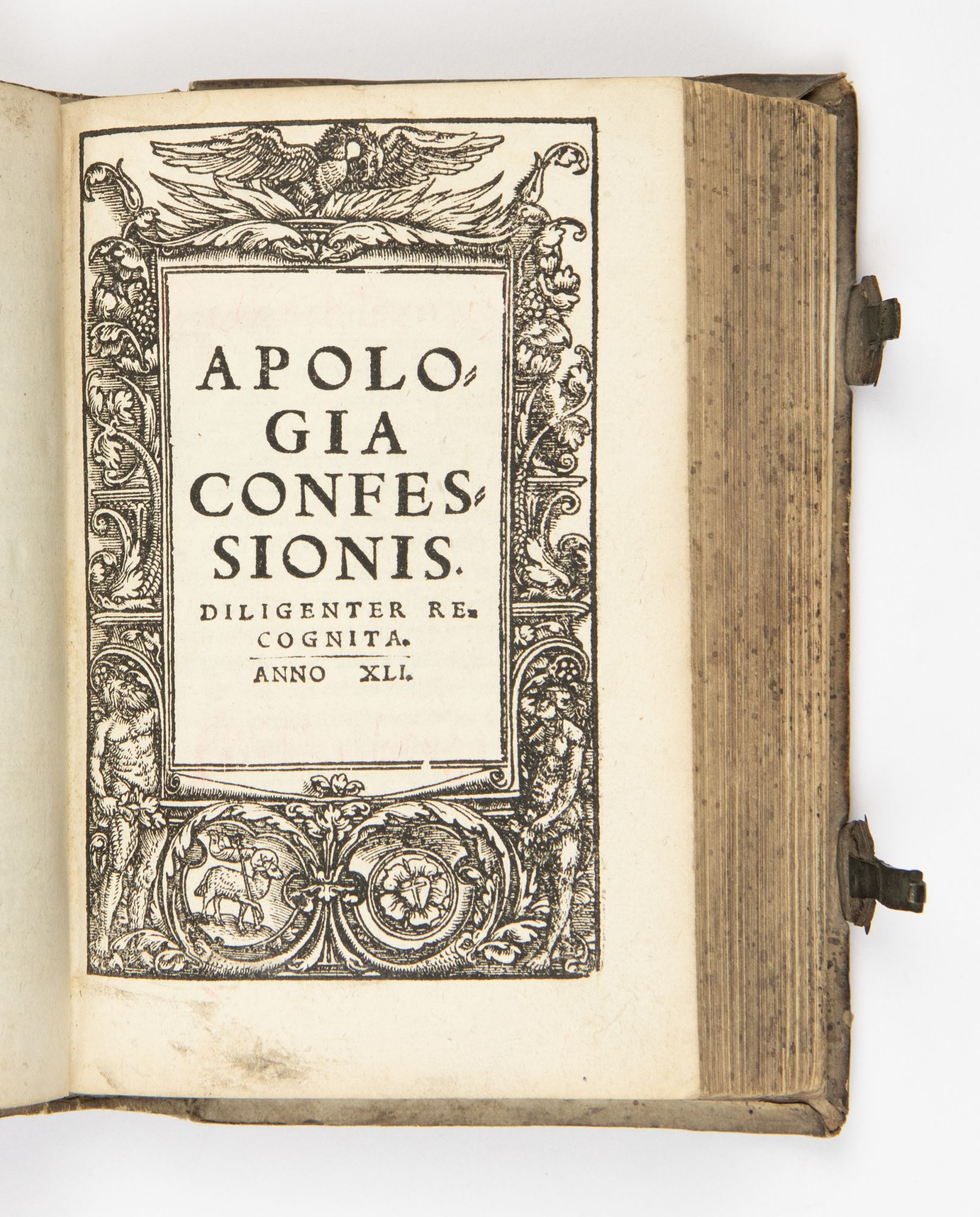
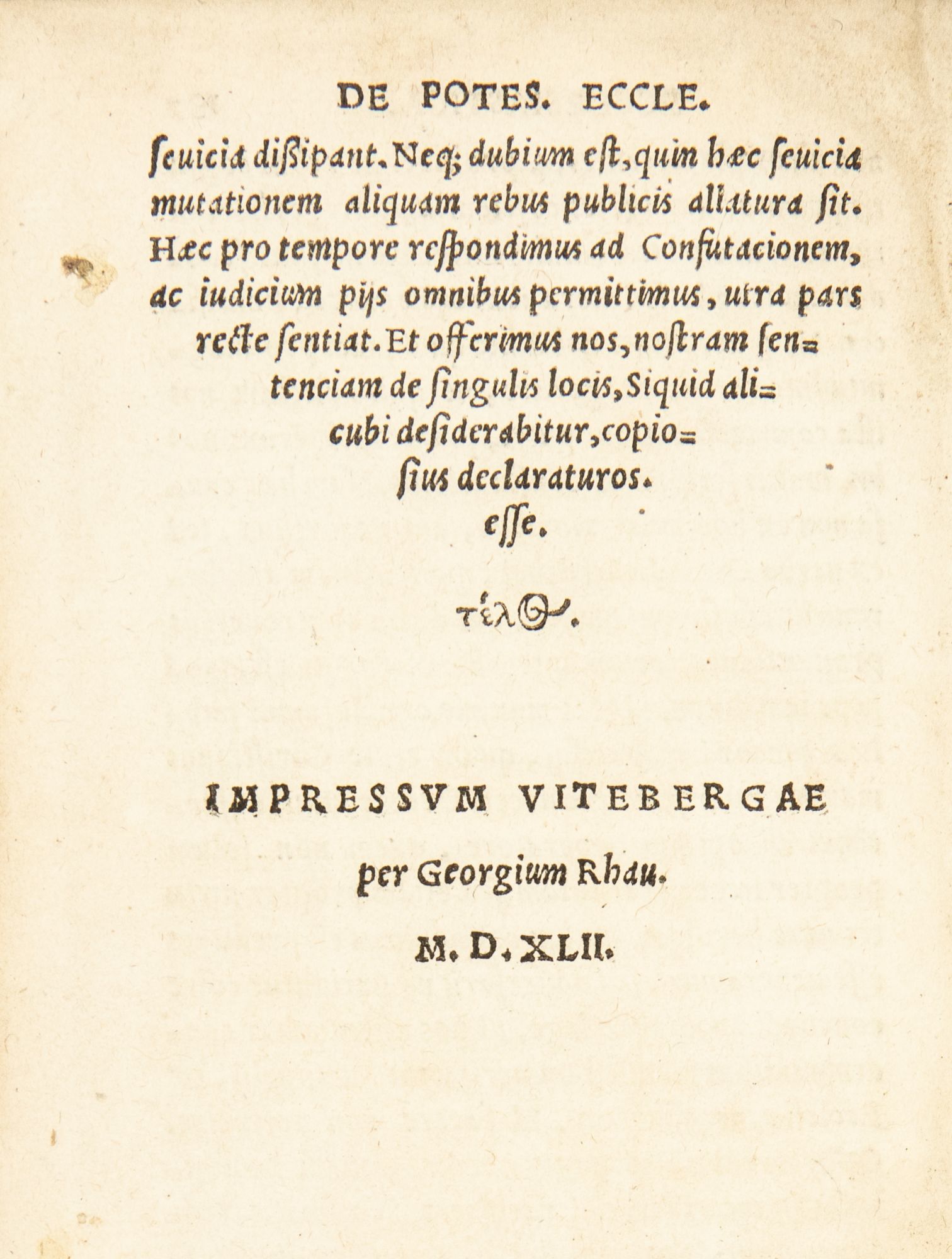
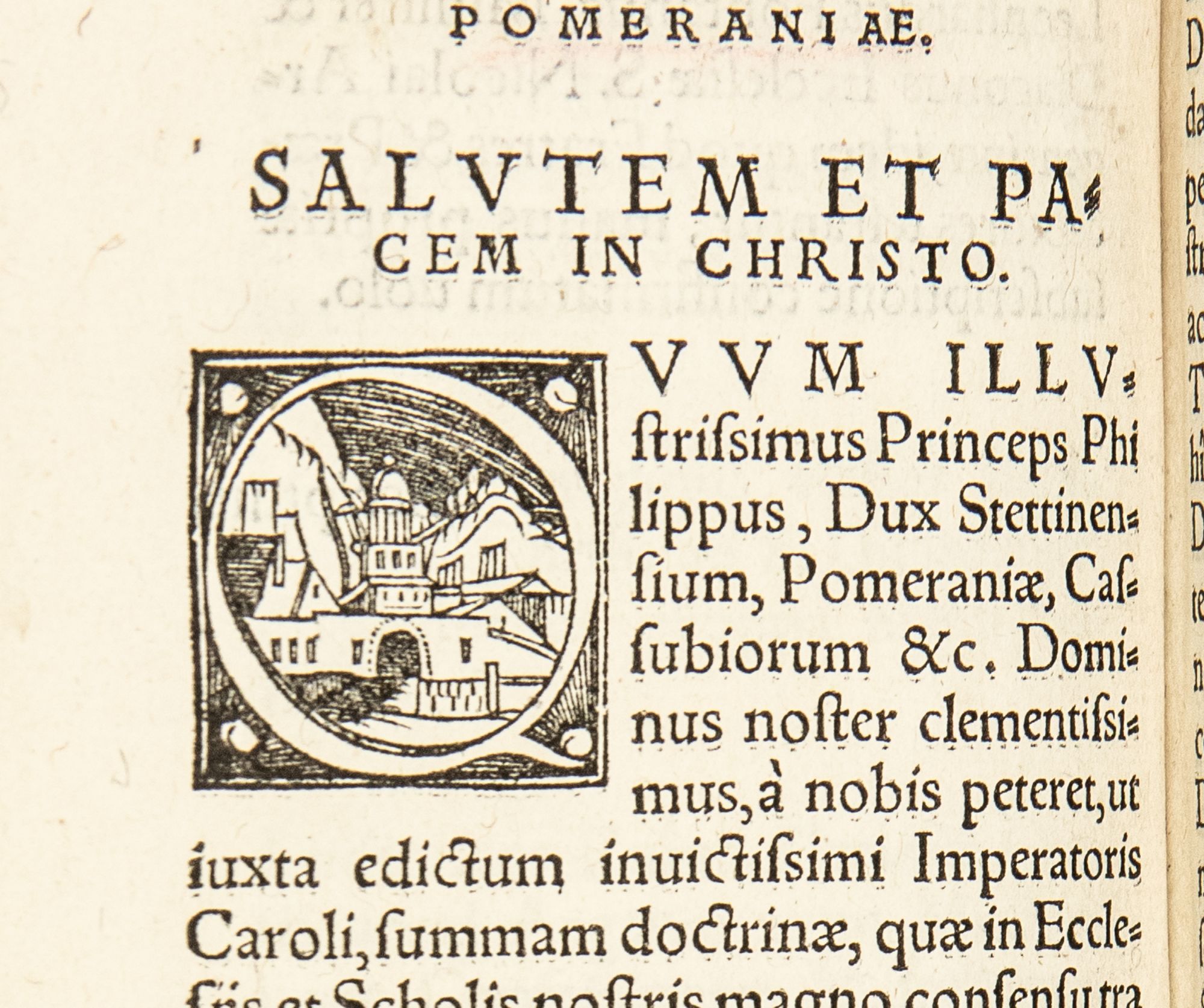
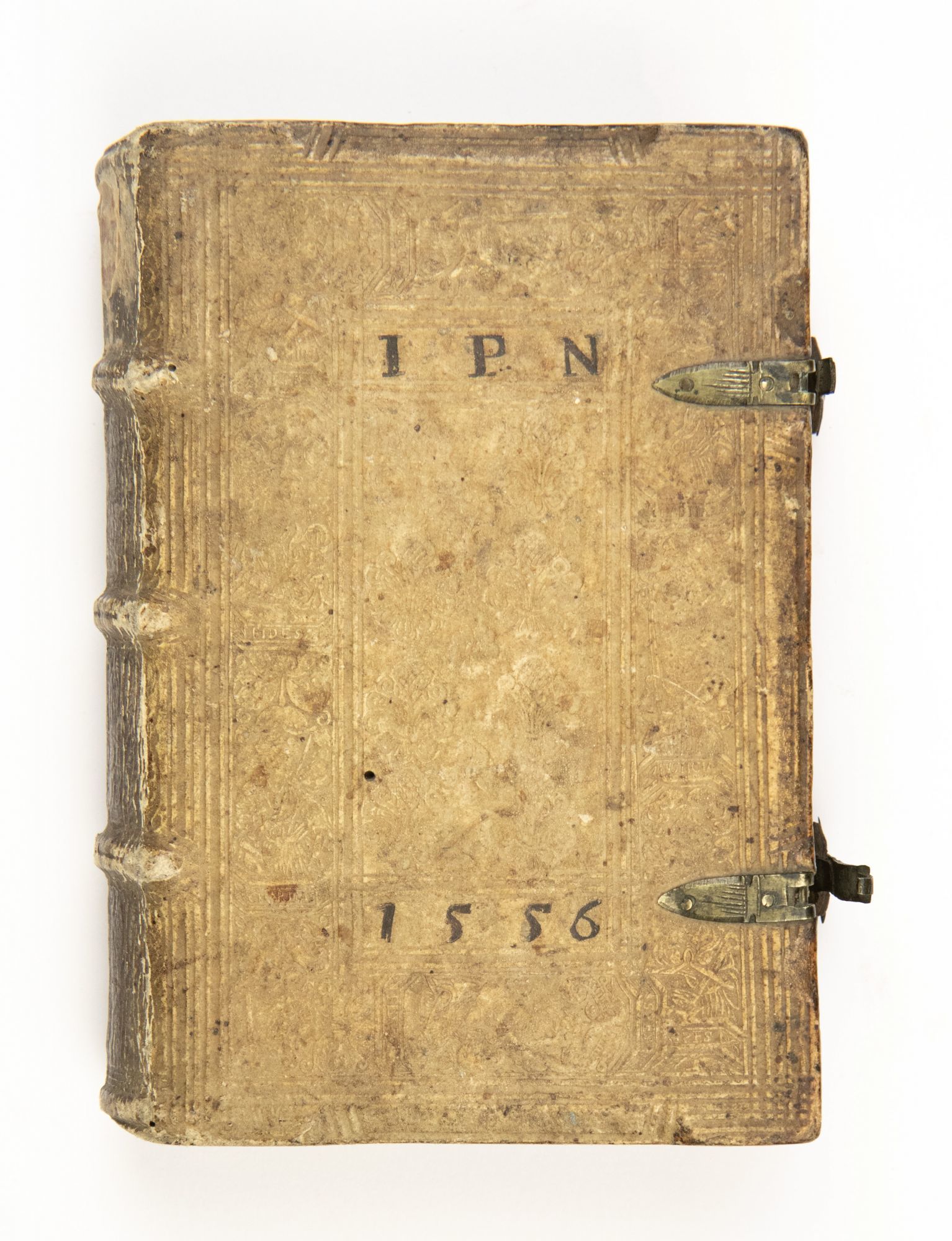
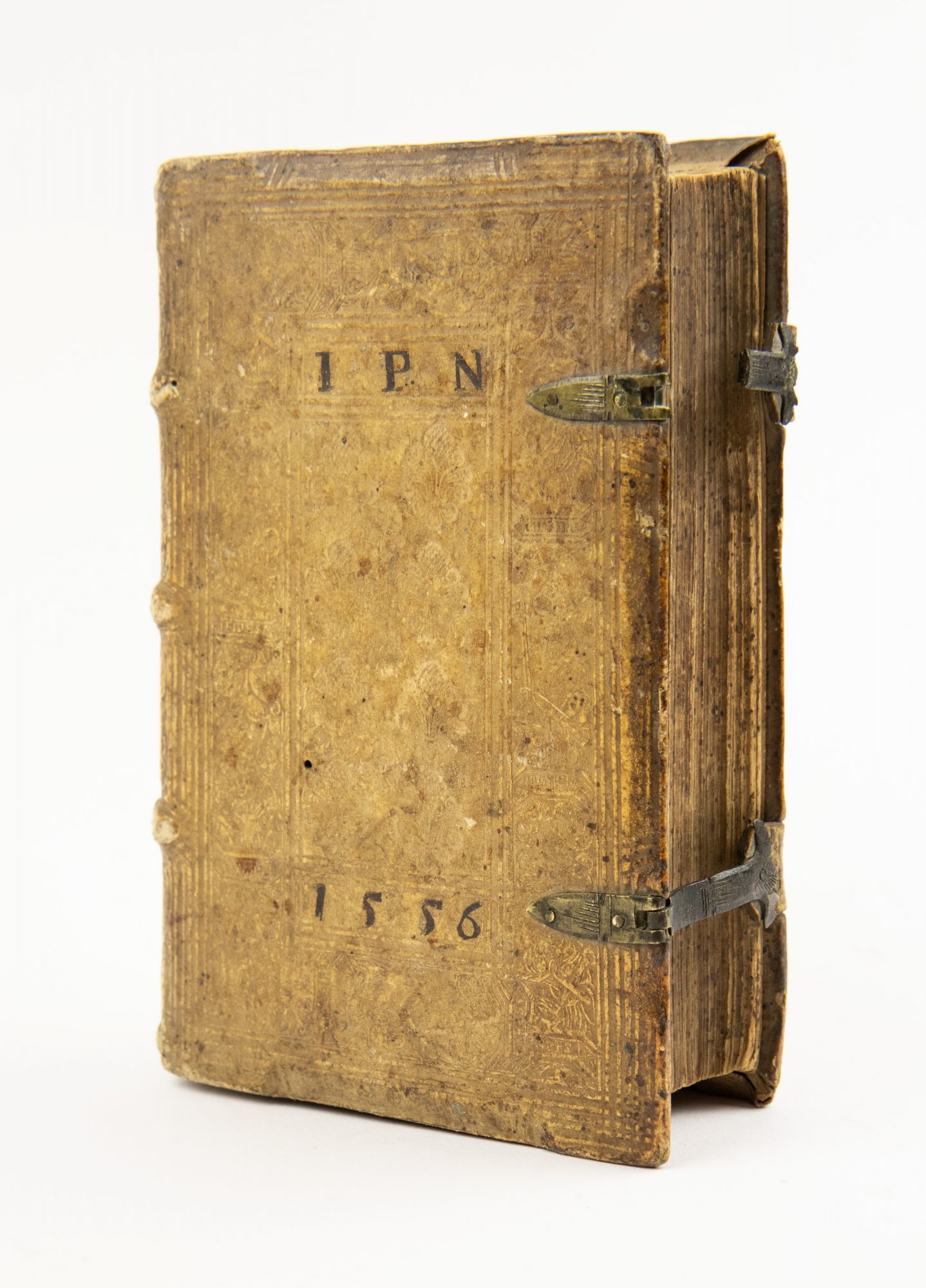
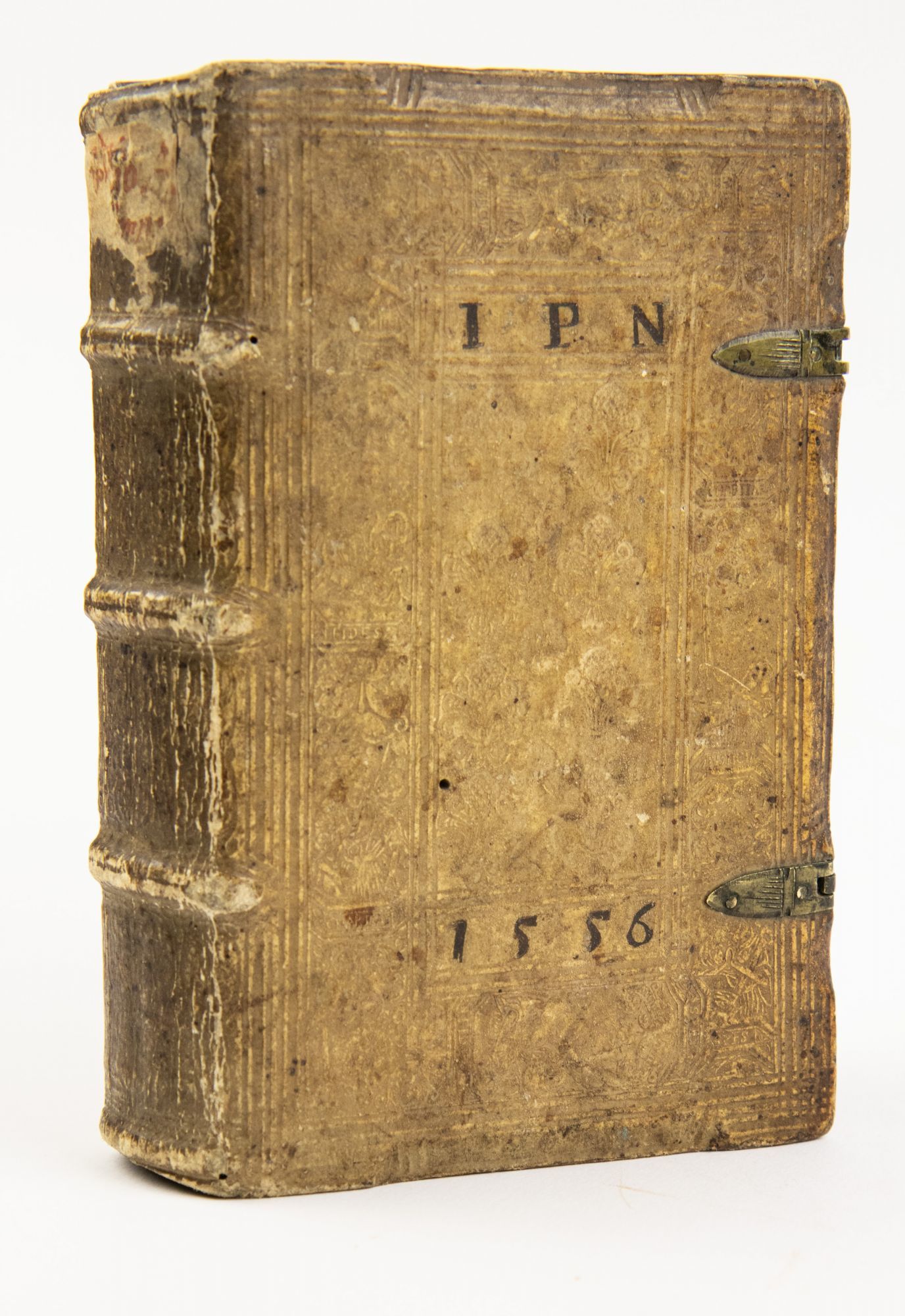
Wittenberg: Georg Rhau, 1542, 1556. Hardcover. Fine. Bound in contemporary alum-tawed pigskin over wooden boards, one clasp defective, binding soiled and mildly worn and with small defects. The boards are ruled and tooled in blind, signed and dated “IPN 1556”. The contents are in excellent, crisp condition (one leaf working loose, marginal tear in margin of leaf E5, no loss). With a historiated woodcut title border to the “Apologia”. Woodcut coat-of-arms to verso of final leaf of the “Confessio”, and fine woodcut initials in the Saxon Confession. Text of second work in Latin and German. With 16th c. notes on the f.f.e.p. This is the authorized text of the Augsburg Confession (1st ed. 1531), approved by Luther, edited by and with the "Apologia" of Philip Melanchthon. It was printed by Georg Rhau, who also printed the first editions (both in Latin and German) of the “Confessio” and “Apologia”. The “Apologia” of this 1556 edition is dated 1542 (see VD 16, ZV 31340). This edition was printed in the wake of the agreement reached in 1555 between the Lutheran princes and Charles V, known as the Peace of Augsburg, which granted Lutheranism legal status within the Holy Roman Empire.
Bound into this copy is the 1553 Leipzig edition of the Saxon Confession, which was drawn up by Melanchthon and intended for presentation at the Council of Trent; it presented the doctrinal status of the Lutheran Church of Germany as of 1552 and was the basis for the signing of the Peace of Augsburg.
The Augsburg Confession:
"On January 21, 1530, the Emperor Charles V issued letters from Bologna, inviting the German diet to meet in Augsburg on April 8, for the purpose of discussing and deciding various important questions. The far-seeing Landgrave of Hesse hesitated to attend the diet but the Elector John of Saxony, who received the writ March 11, directed Luther, Jonas, Bugenhagen, and Melanchthon to meet in Torgau, and present a summary of the Protestant faith, to be laid before the Emperor at the diet. This summary has received the name of the "Torgau articles". On April 3, the Elector and the reformers started from Torgau and reached Coburg on April 23. There Luther was left behind. The rest reached Augsburg May 2. On the journey Melanchthon worked on an "Apology" using the Torgau articles, and sent his draft to Luther at Coburg, who approved it.
"The Emperor had ordered the confession to be presented to him on June 24. The evangelical princes, however, declared that they would not part with the confession until its reading should be allowed. The 25th was then fixed for the day of its presentation. In order to exclude the people, the little chapel of the Episcopal palace was appointed in place of the spacious city hall. The two Saxon chancellors Bruck and Beyer, the one with the Latin copy, the other with the German, stepped into the middle of the assembly, and against the wish of the Emperor, the German text was read.
"Although the emperor prohibited the printing of the evangelical confession without his special permission, during the diet six German editions and one in Latin were published. Their inaccuracy and incorrectness induced Melanchthon to prepare an edition to which he added the Apology. Thus originated the so-called 'editio princeps' of the Augustana and the Apology, which was published in the spring of 1531." (Schaff-Herzog)
"Melanchthon drafted the ‘Confession’ in both German and Latin using the Torgau, Schwabach, and Marburg Articles. The intention of the German Protestants was to present a single creed. Since they could not all agree on one, several versions were presented to the Diet meeting at Augsburg. Of these, it is the ‘Augsburg Confession’ that is remembered today; the others have long been forgotten. The presentation of the ‘Augsburg Confession’ was probably Melanchthon’s finest hour as a theologian. He had written a theological document that presented a reasonable compromise in the ongoing religious disputes in Germany. Luther himself said that he could never have ‘trod so lightly’ in treating such matters. The ‘Confession’ has come to be the standard Lutheran statement of faith, and was included in the ‘Book of Concord’ of 1580."(Kessler).
Bound into this copy is the 1553 Leipzig edition of the Saxon Confession, which was drawn up by Melanchthon and intended for presentation at the Council of Trent; it presented the doctrinal status of the Lutheran Church of Germany as of 1552 and was the basis for the signing of the Peace of Augsburg.
The Augsburg Confession:
"On January 21, 1530, the Emperor Charles V issued letters from Bologna, inviting the German diet to meet in Augsburg on April 8, for the purpose of discussing and deciding various important questions. The far-seeing Landgrave of Hesse hesitated to attend the diet but the Elector John of Saxony, who received the writ March 11, directed Luther, Jonas, Bugenhagen, and Melanchthon to meet in Torgau, and present a summary of the Protestant faith, to be laid before the Emperor at the diet. This summary has received the name of the "Torgau articles". On April 3, the Elector and the reformers started from Torgau and reached Coburg on April 23. There Luther was left behind. The rest reached Augsburg May 2. On the journey Melanchthon worked on an "Apology" using the Torgau articles, and sent his draft to Luther at Coburg, who approved it.
"The Emperor had ordered the confession to be presented to him on June 24. The evangelical princes, however, declared that they would not part with the confession until its reading should be allowed. The 25th was then fixed for the day of its presentation. In order to exclude the people, the little chapel of the Episcopal palace was appointed in place of the spacious city hall. The two Saxon chancellors Bruck and Beyer, the one with the Latin copy, the other with the German, stepped into the middle of the assembly, and against the wish of the Emperor, the German text was read.
"Although the emperor prohibited the printing of the evangelical confession without his special permission, during the diet six German editions and one in Latin were published. Their inaccuracy and incorrectness induced Melanchthon to prepare an edition to which he added the Apology. Thus originated the so-called 'editio princeps' of the Augustana and the Apology, which was published in the spring of 1531." (Schaff-Herzog)
"Melanchthon drafted the ‘Confession’ in both German and Latin using the Torgau, Schwabach, and Marburg Articles. The intention of the German Protestants was to present a single creed. Since they could not all agree on one, several versions were presented to the Diet meeting at Augsburg. Of these, it is the ‘Augsburg Confession’ that is remembered today; the others have long been forgotten. The presentation of the ‘Augsburg Confession’ was probably Melanchthon’s finest hour as a theologian. He had written a theological document that presented a reasonable compromise in the ongoing religious disputes in Germany. Luther himself said that he could never have ‘trod so lightly’ in treating such matters. The ‘Confession’ has come to be the standard Lutheran statement of faith, and was included in the ‘Book of Concord’ of 1580."(Kessler).
Details
Title
Confessio Fidei exhibita inuictiss. imp. Carolo V. caesari aug. in comicijs Augustae. Anno M.D. XXX. Addita est Apologia confessionis [Bound with: Confessio doctrinae saxonicarum ecclesiarum. Leipzig, V. Bapst, 1553]
Author
AUGSBURG CONFESSION. Luther, Martin (1483-1546); Melanchthon, Philip (1497-1560)
Binding
Hardcover
Condition
Fine
Publisher
Georg Rhau, 1542: Wittenberg
Date
1556