

Selected Morphological Monographs. Memoirs from the Biological Laboratory of the Johns Hopkins University
reprinted from the Philosophical Transactions of the Royal Society of London, Memoirs of the Boston Society of Natural History, and the Report on the Scientific Results of the Voyage of H.M.S. Challenger
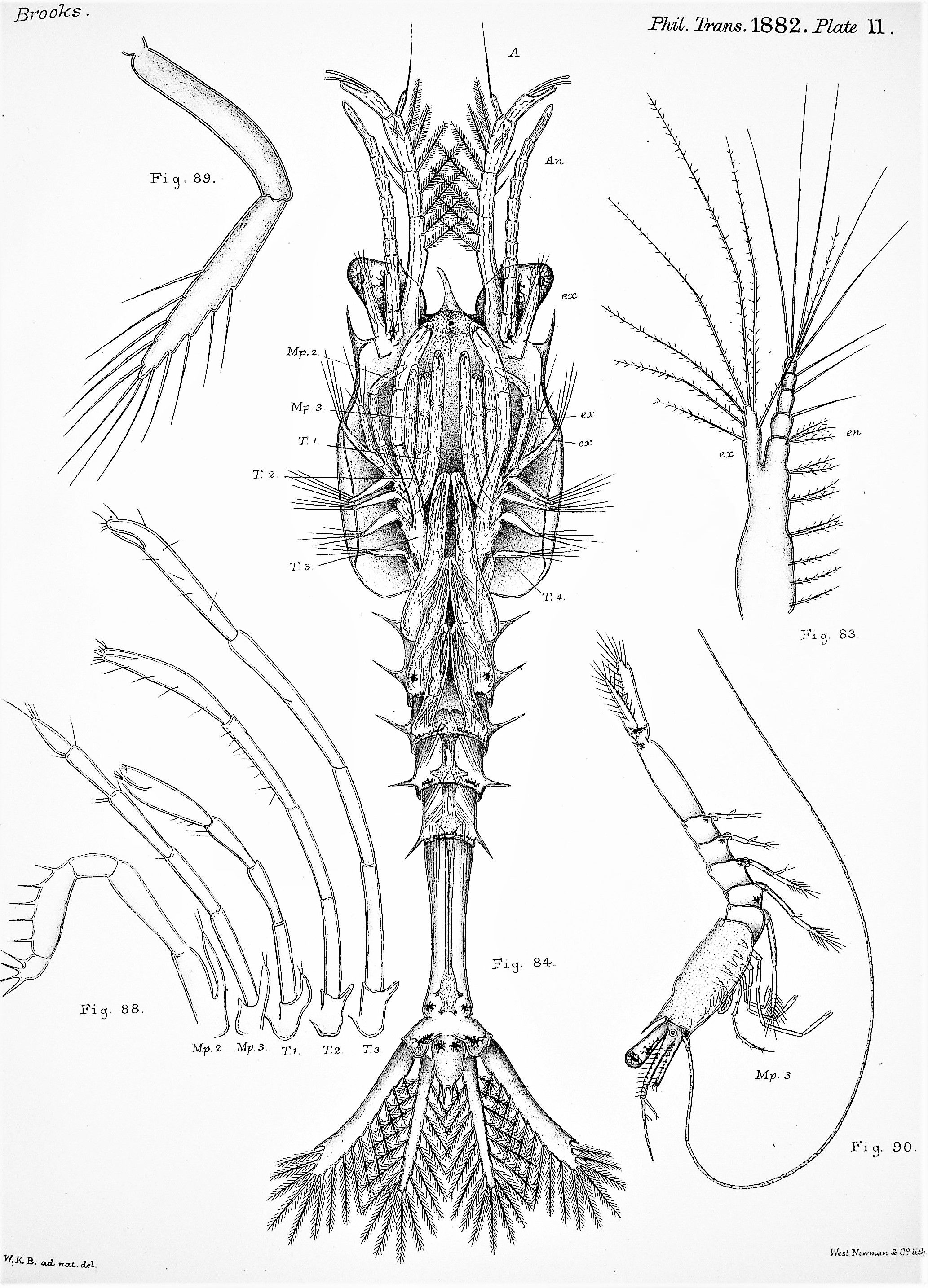
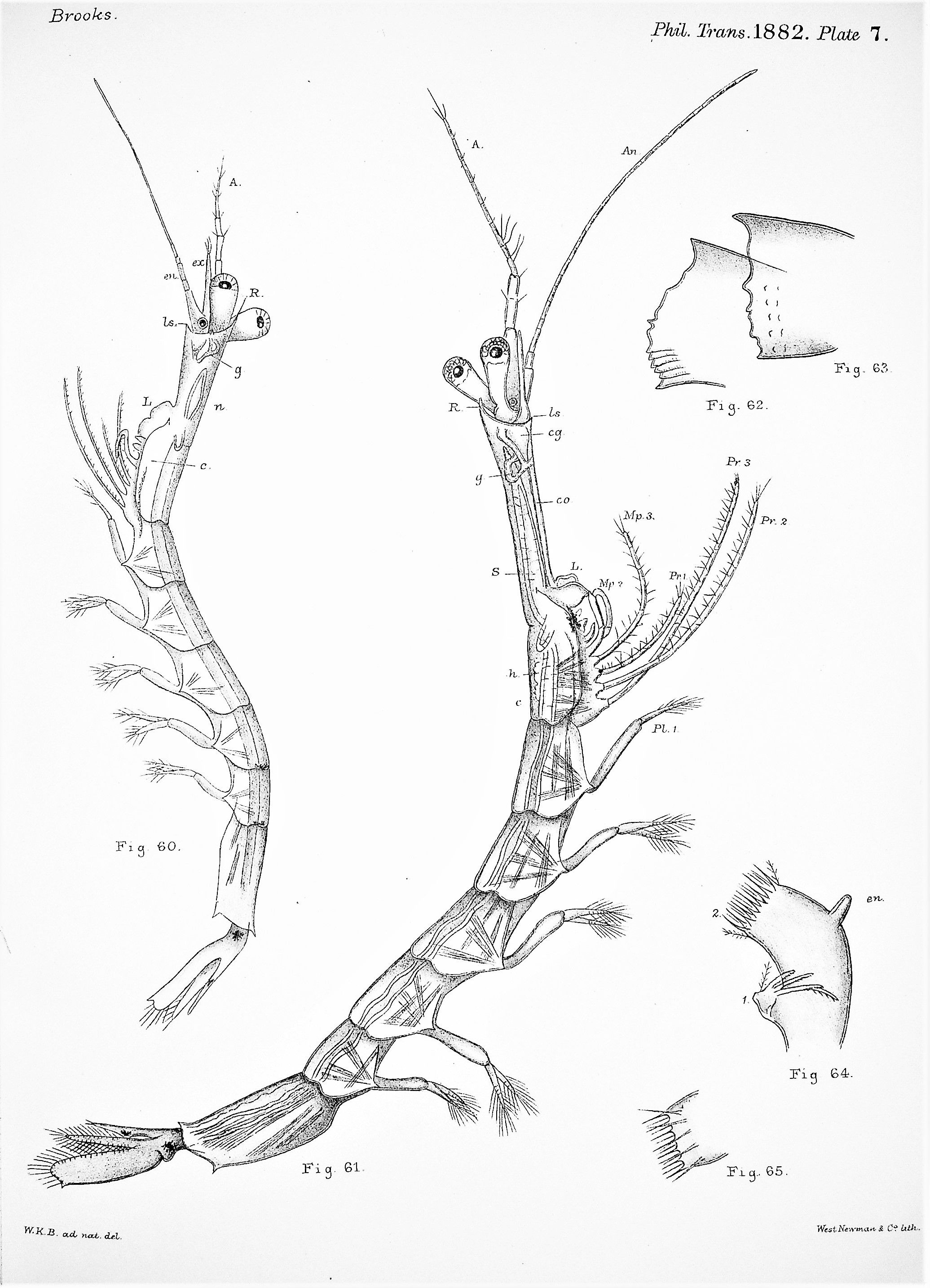
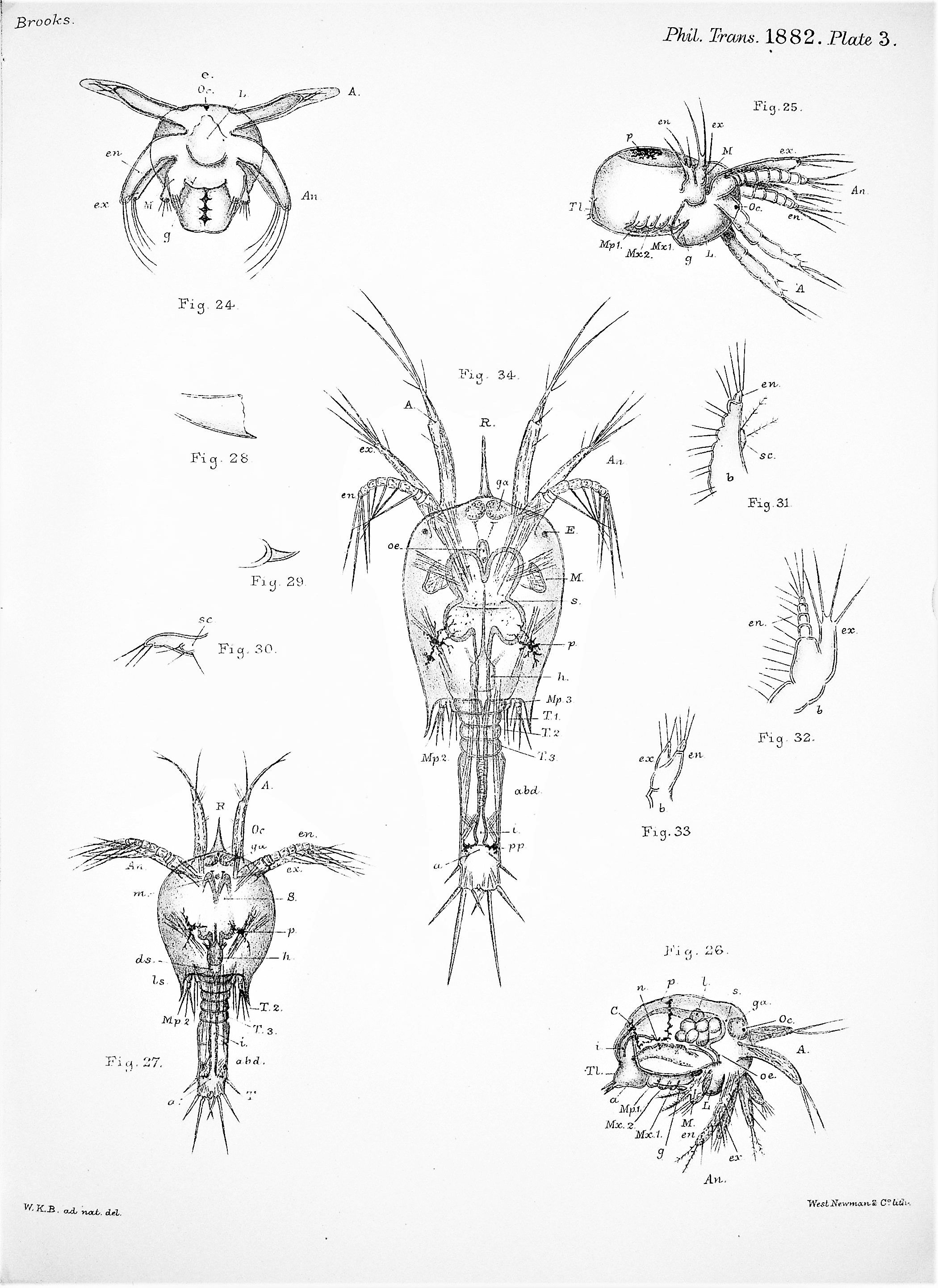
- Johns Hopkins University: Baltimore, 1887
Johns Hopkins University: Baltimore, 1887. Offprints.
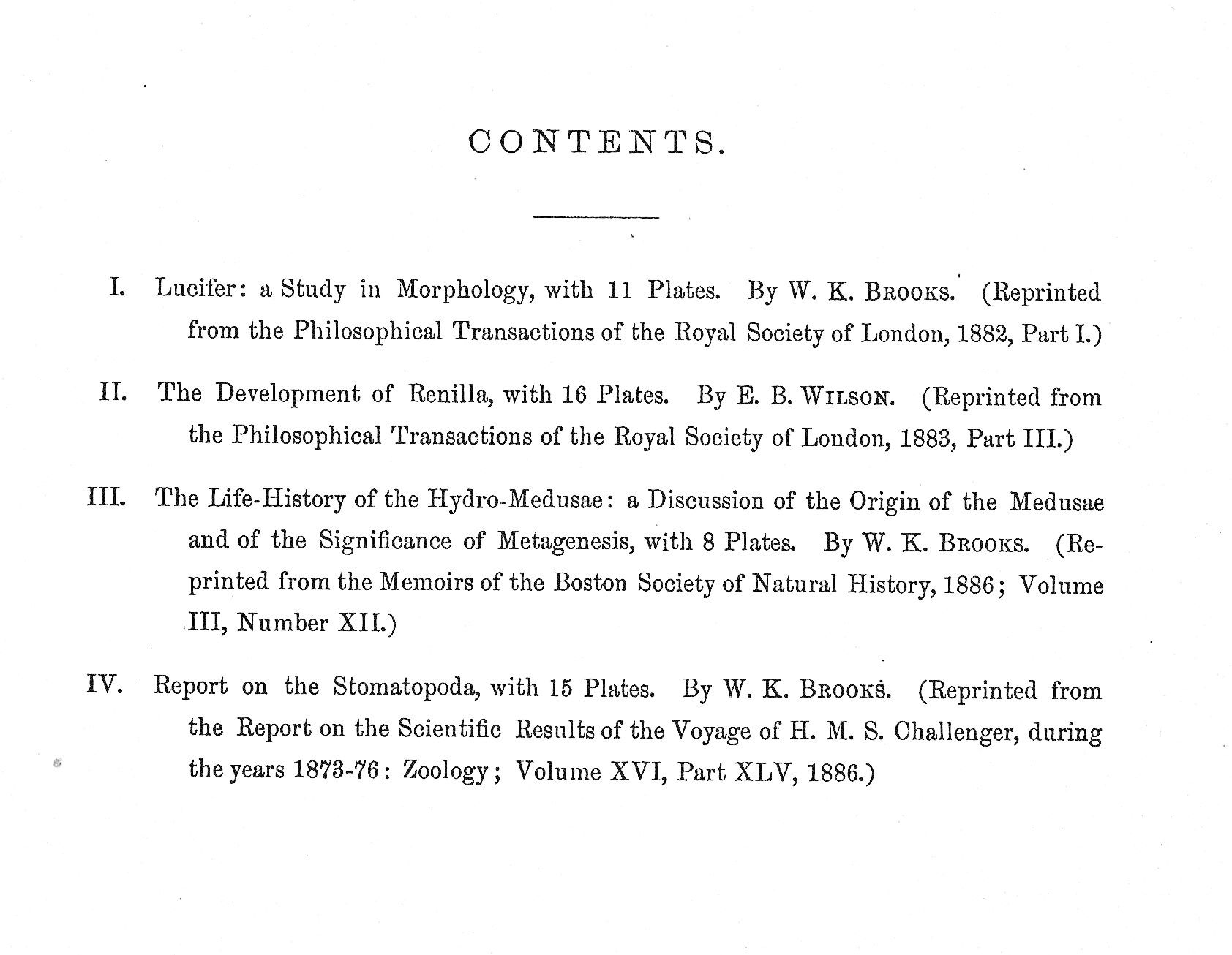
1880s SCARCE COLLECTION OF 4 MONOGRAPHS BY WK BROOKS AND EB WILSON, LUMINARIES OF MARINE INVERTEBRATE EMBRYOLOGY--WITH 39 FINE LITHOGRAPHIC PLATES.
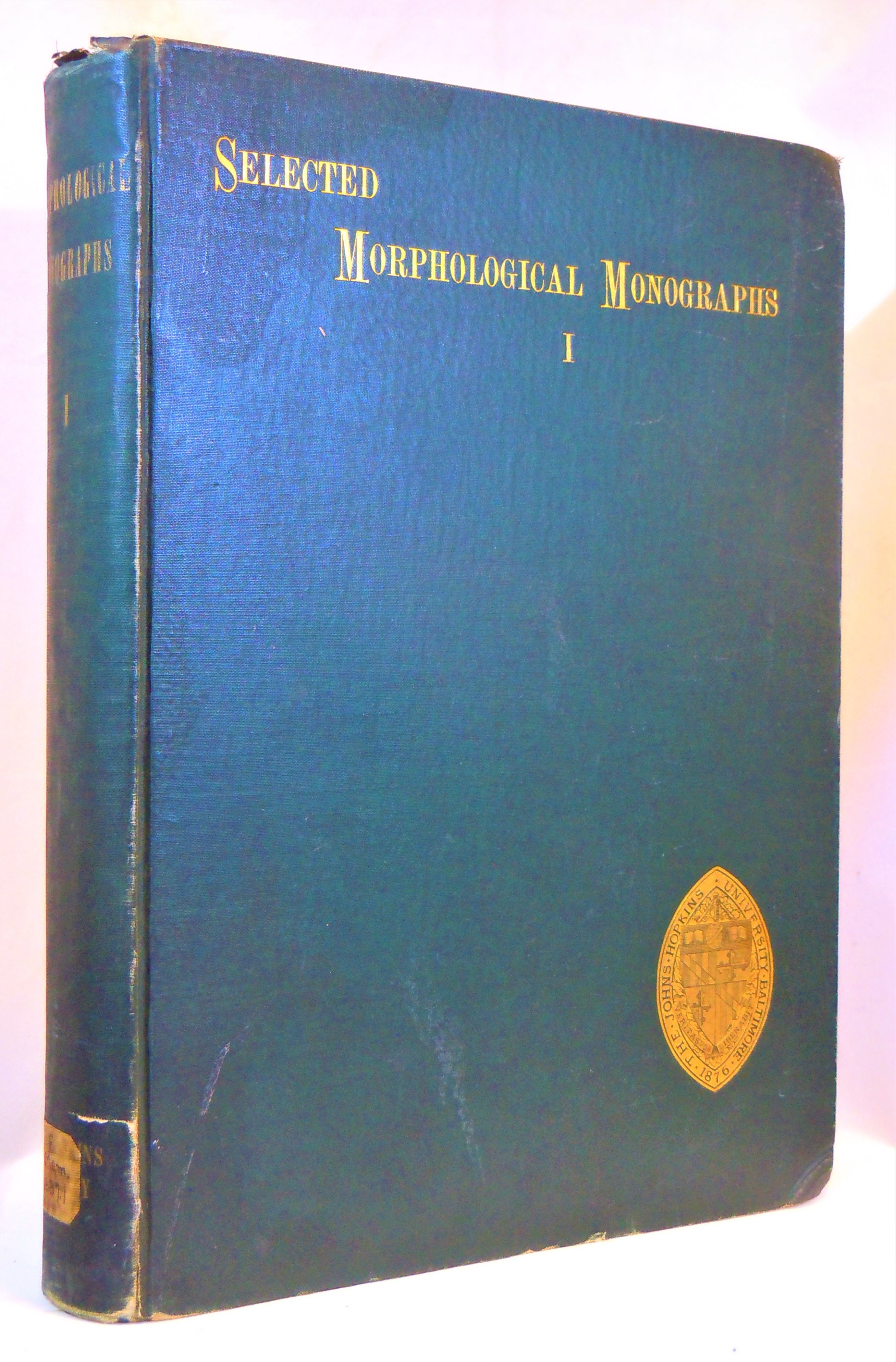
11 3/4 inches tall hardcover, publisher's green cloth binding, gilt title and Johns Hopkins seal to cover, institutional library canceled bookplate to front paste-down, title page, followed by WILSON, E.B. The Development of Renilla, pp. 721-815, 16 plates (1883); and BROOKS, W.K. Lucifer: A Study in Morphology, pp. 55-137, 11 lithographic plates (1882); The Life-History of Hydromedusae, pp. 357-430, 8 plates (1886); and Report on the Stomatopoda, pp. (3), 116, 16 plates (6 tinted) (1886). Cover corners bumped, edges worn, spine ends frayed, binding tight, pages unmarked, plates bright and clean. Very good.
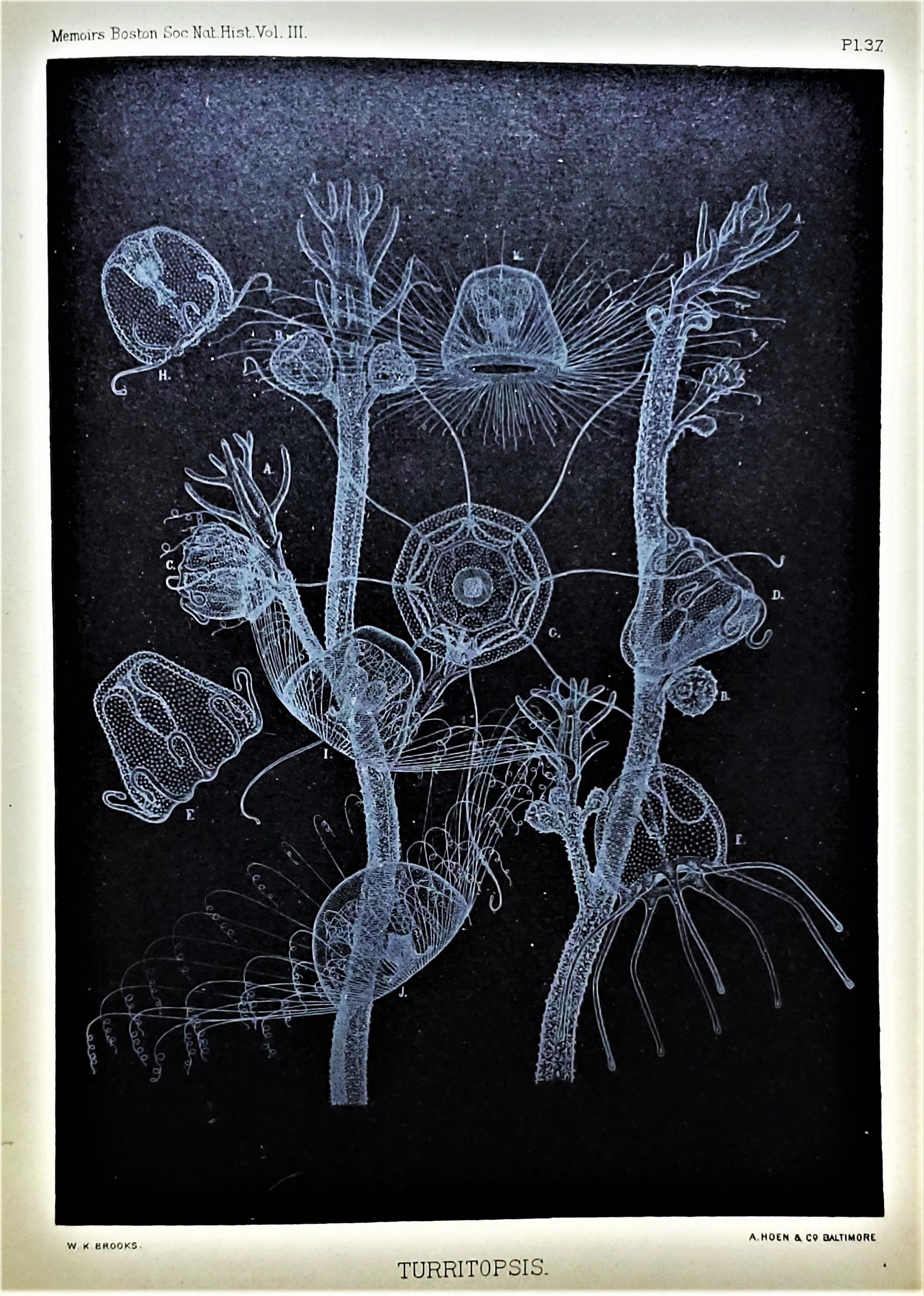
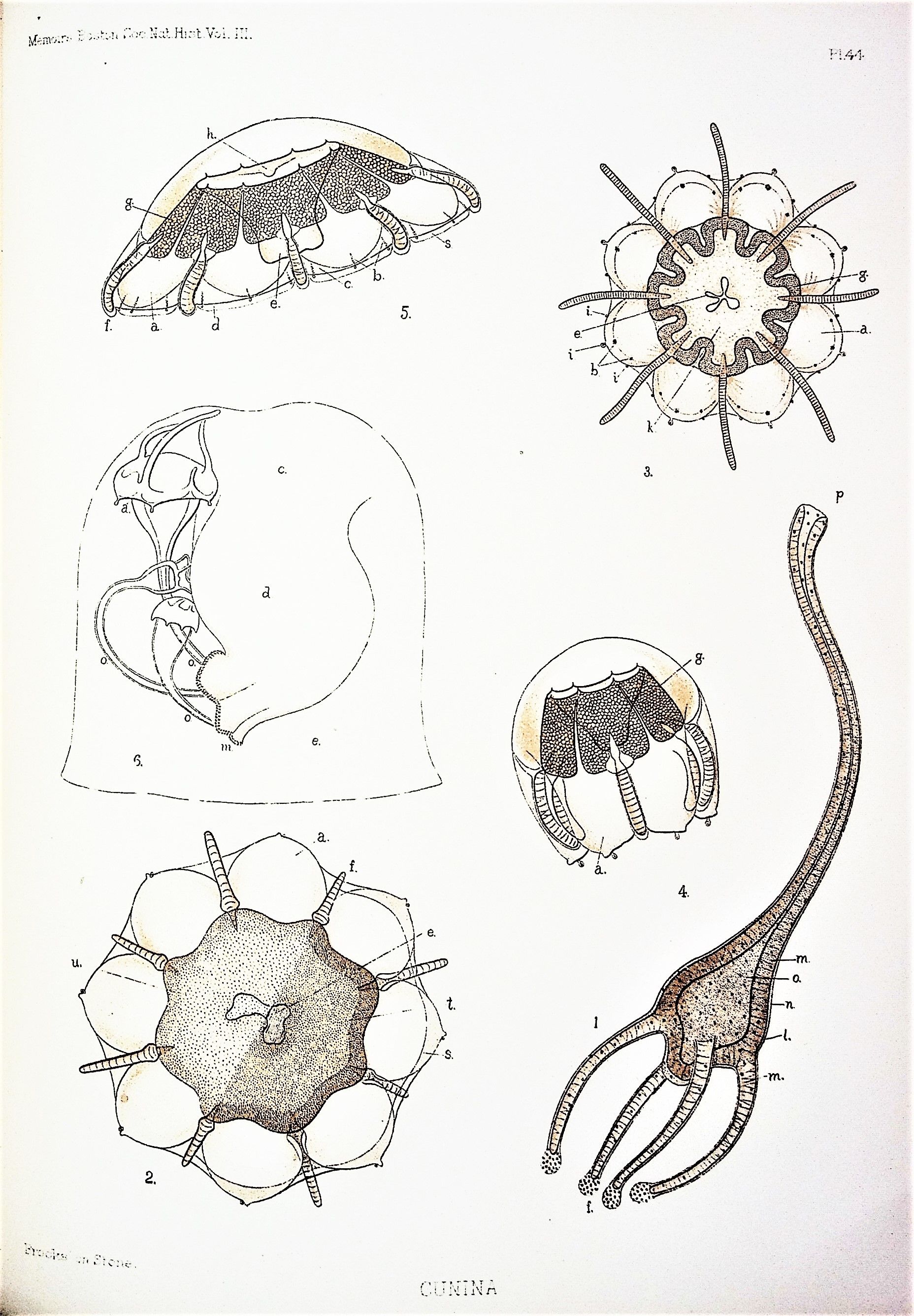
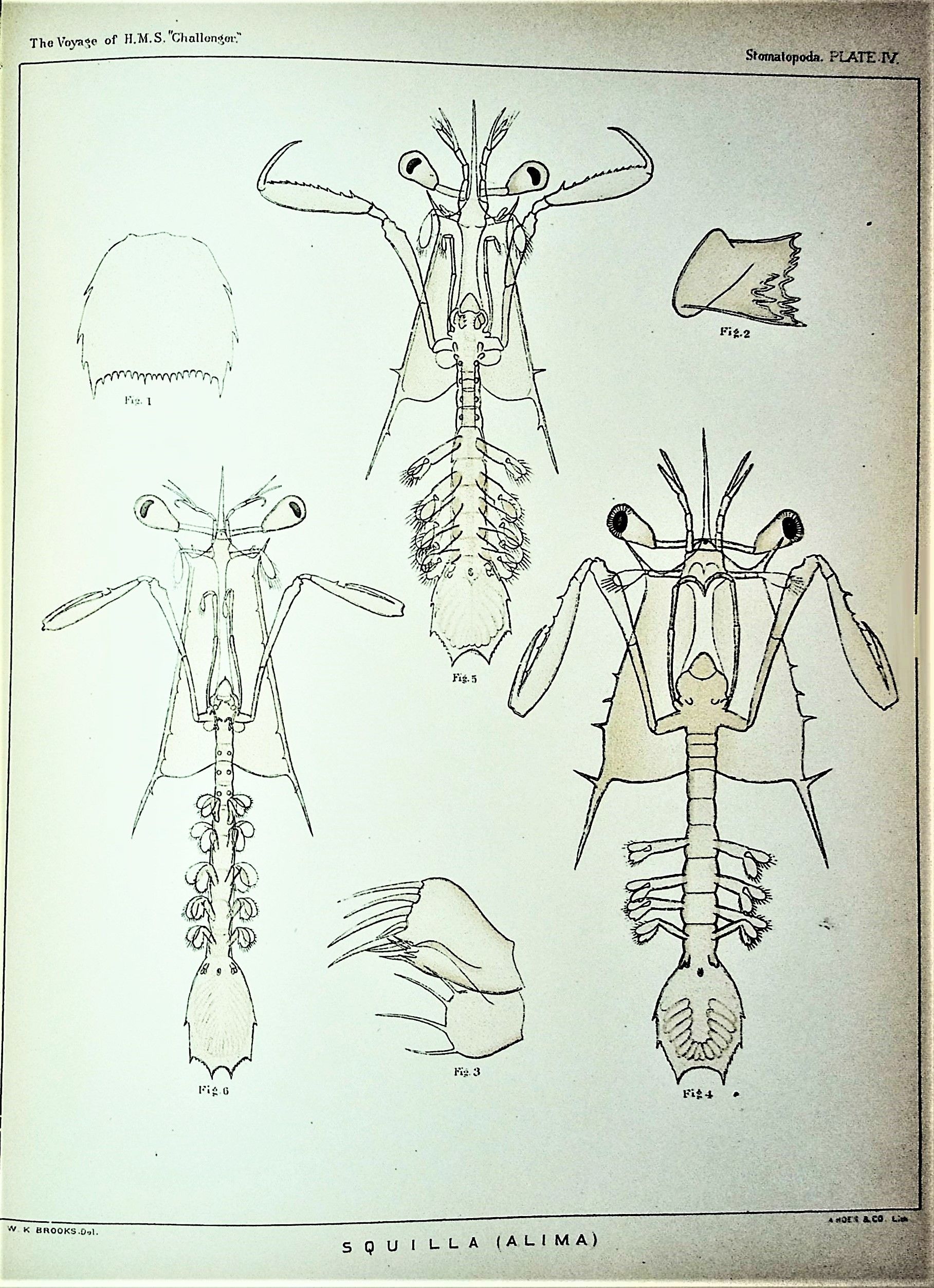
WILLIAM KEITH BROOKS (1848-1908) entered Harvard and studied under Louis Agassiz, receiving his PhD in 1875. A year later he became a junior faculty member at Johns Hopkins University when it opened, teaching and researching marine biology. In 1878, Brooks founded the Chesapeake Zoological Laboratory which moved around each summer from Crisfield, Maryland, and Hampton, Virginia, to Beaufort, North Carolina, Jamaica, and the Tortugas. The studies described in this volume were performed by both investigators at the Laboratory. Brooks was employed at Johns Hopkins University from 1876 onward, beginning as an associate and promoted to Professor of Morphology in 1889. In 1894 he succeeded H. Newell Martin as head of the Department of Biology. Brooks performed studies on invertebrates, particularly germ cells, and found evidence to explain variation among species due to ancestral heredity as well as Charles Darwin's theory of pangenesis. He trained many of the prominent embryologists of the country. Brooks' Lucifer is a detailed study of the complete life cycle of this deepwater shrimp, illustrated with fine lithographic plates made from his drawings. This paper provided the first description of direct observation of the complete life cycle: adult-embryo-larva-adult. In Life-History of Hydromedusae, Brooks traces every stage of the life cycle of these small transparent medusae, with spectacular lithographs that highlight the apperance of the living animals. Brooks' Report on the Stomatopoda is based on examination of larval and adult forms of various species of mantis shrimp collected in tow-nets by the HMS Challenger in the 1870s. The Challenger Expedition was a grand tour of the world covering 68,000 nautical miles organized by the Royal Society in collaboration with the University of Edinburgh.
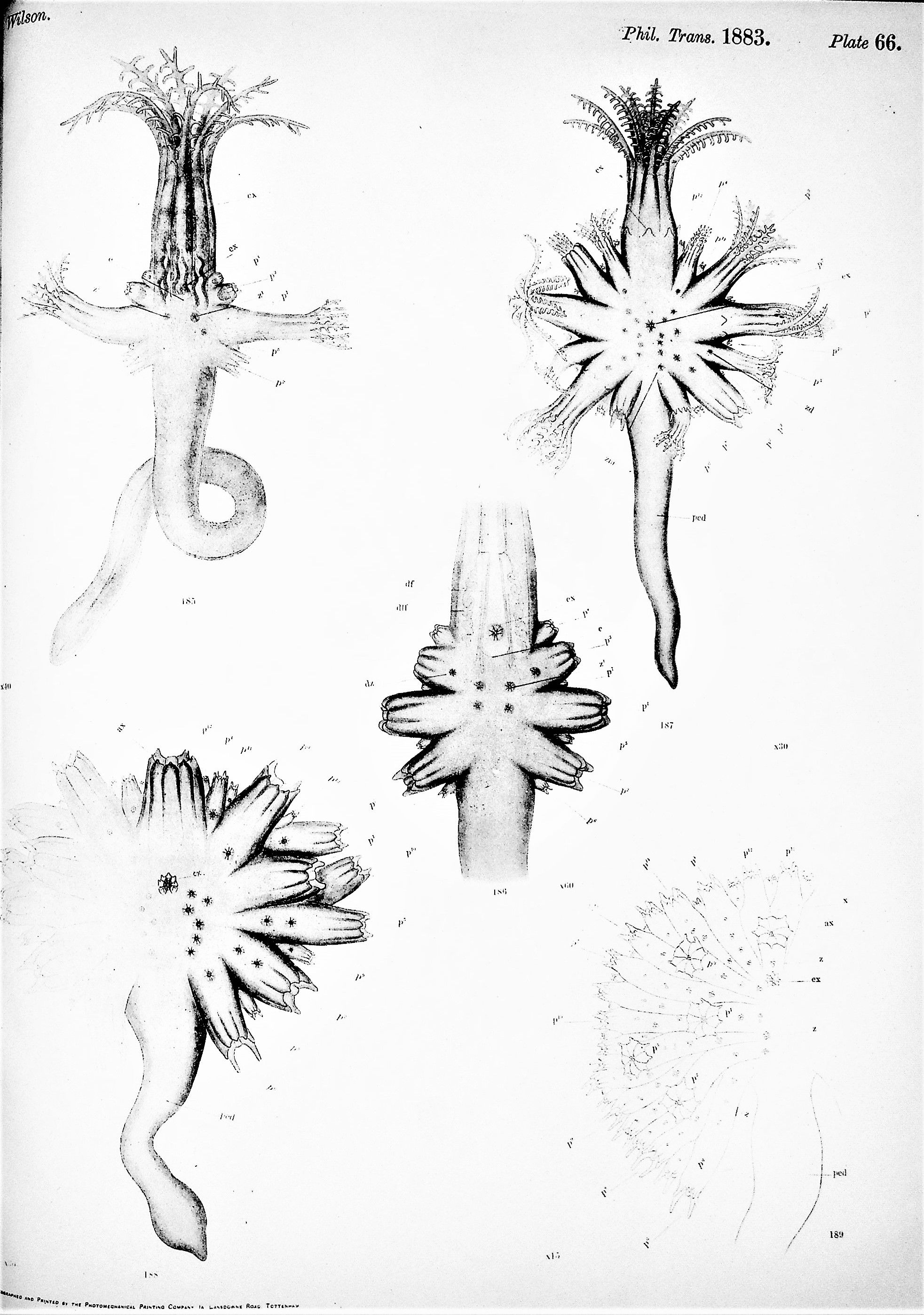
EDMUND BEECHER WILSON (1856 - 1939) earned his doctorate at Johns Hopkins in 1881. He served as professor of biology at Bryn Mawr College from 1885 to 1891 and spent the balance of his career at Columbia University where he was successively adjunct professor of biology (1891-94), professor of invertebrate zoology (1894-1897), and professor of zoology (from 1897). Wilson is credited as America's first cell biologist. In 1898 he used the similarity in embryos to describe phylogenetic relationships. By observing spiral cleavage in molluscs, flatworms and annelids he concluded that the same organs came from the same group of cells and concluded that all these organisms must have a common ancestor. Wilson published many papers on embryology, and served as president of the American Association for the Advancement of Science in 1913. For his volume, The Cell in Development and Inheritance, Wilson was awarded the Daniel Giraud Elliot Medal from the National Academy of Sciences in 1925. The American Society for Cell Biology annually awards the E. B. Wilson Medal in his honor. Wilson's Development of Renilla traces the embryology of the sea pansy, a colonial cnidarian found in warm marine environments. The plates show segmentation of the egg, development of the larva, the free-swimming embryo, and young sessile colonies. More recently, luciferase and green fluorescent protein have been isolated from Renilla, both used widely in the study of cell lineage during development. Both Wilson's Renilla and Brooks' Lucifer were communicated by T. H. HUXLEY ("Darwin's bulldog") for publication by the Royal Society.
Details
Title
Selected Morphological Monographs. Memoirs from the Biological Laboratory of the Johns Hopkins University
Author
Brooks, W.K. and Wilson, E.B.
Condition
Unknown
Publisher
Baltimore: Johns Hopkins University
Date
1887
Edition
First edition thus