

The She-wolf with Romulus and Remus
- SIGNED Hardcover
- Rome: Antonio Lafréry, 1552
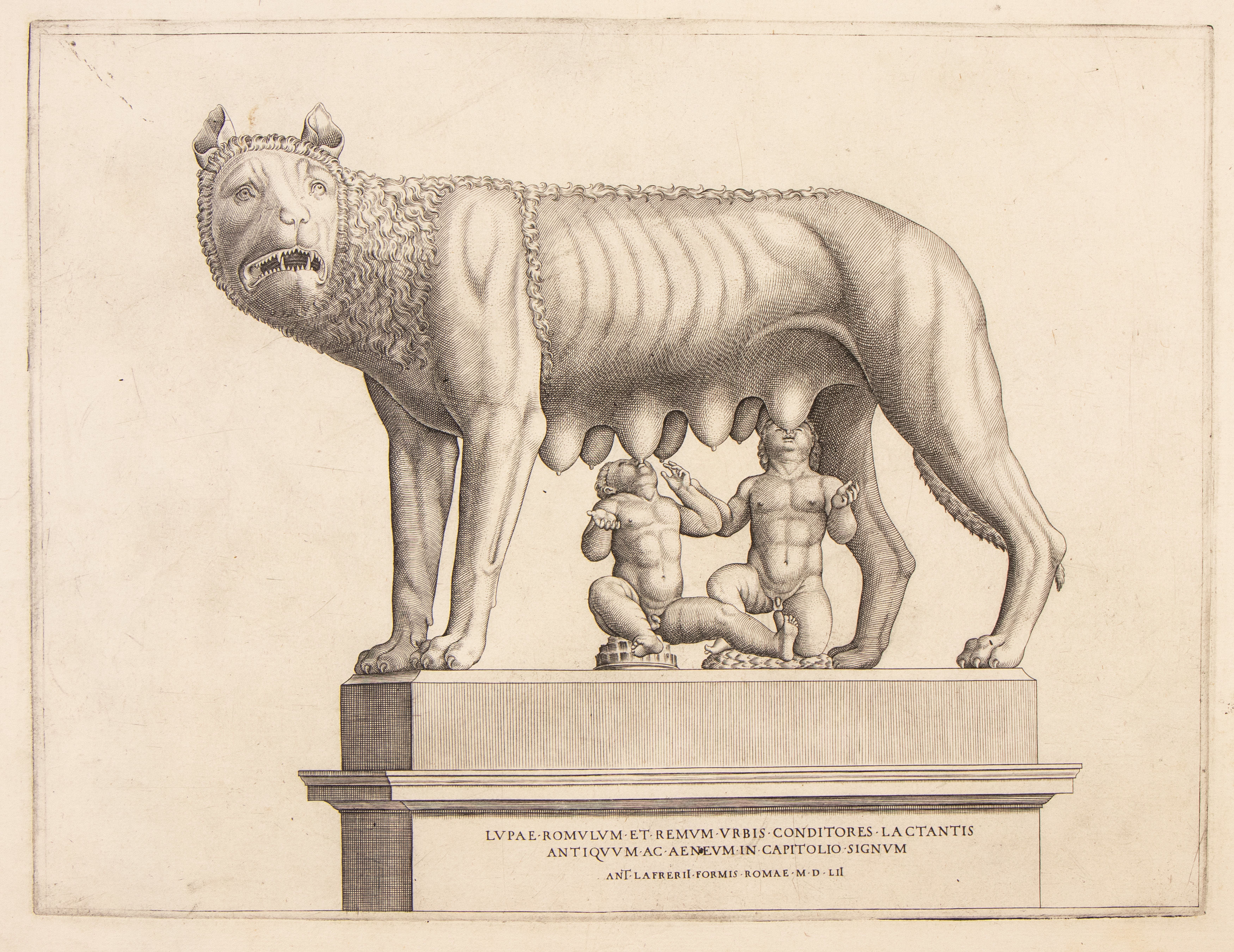
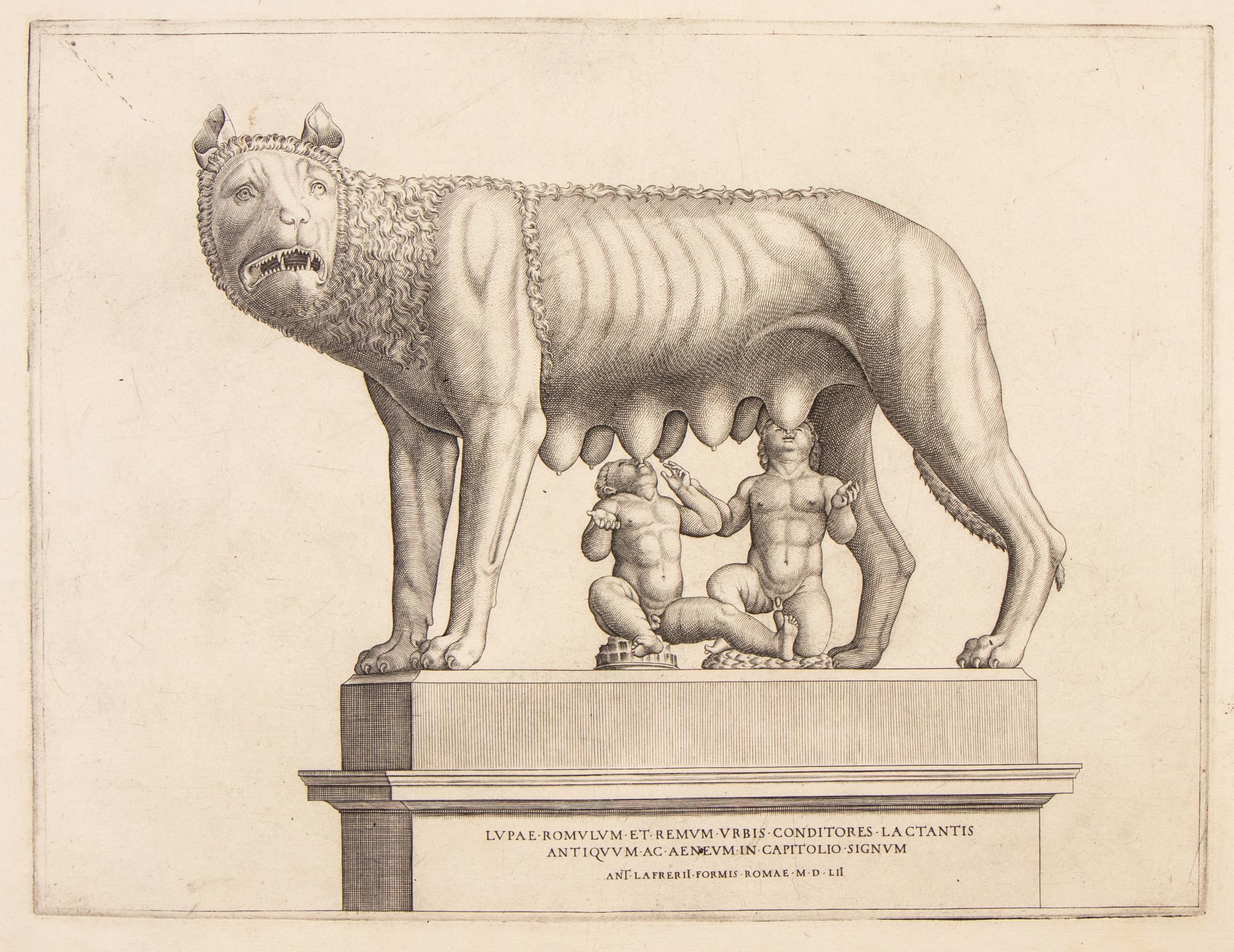
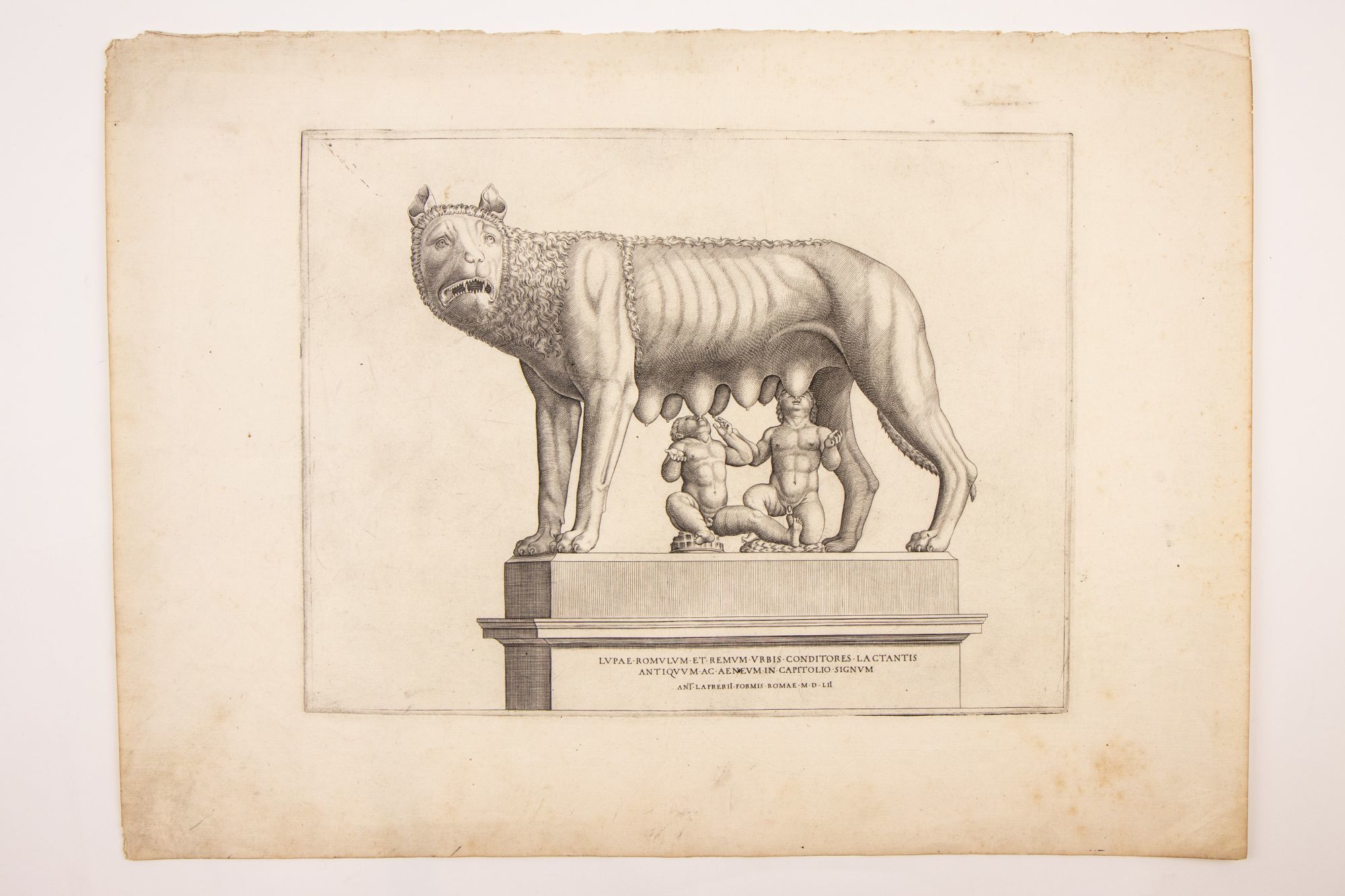
Rome: Antonio Lafréry, 1552. Hardcover. Fine. First state (of three.) A rich impression with wide margins, light marginal foxing and a little light soiling, extreme upper margin a little ragged. Inscribed on the pedestal: “LVPAE ROMVLVM ET REMVM VRBIS CONDITORES LACTANTIS ANTIQVVM AC AENEVM IN CAPITOLIO SIGNVM.” (Ancient bronze image of the she-wolf nursing Romulus and Remus, founders of the city, on the Campidoglio). Signed “ANT. LAFRERII FORMIS ROMAE MDLII”. An icon of central importance to the mythology and history of the city of Rome, and an artwork that served as the nucleus of Europe’s first public museum. This print, attributed to the French emigree engraver Nicolas Béatrizet, was issued by Lafréry in 1552, the year before he agreed to a partnership with his rival, Antonio Salamanca. After Lafréry’s death the plate passed to his nephew Claudio Duchet. It was reprinted by Giovanni Orlandi in 1602 and afterwards (before 1622) by Hendrick van Schoel.
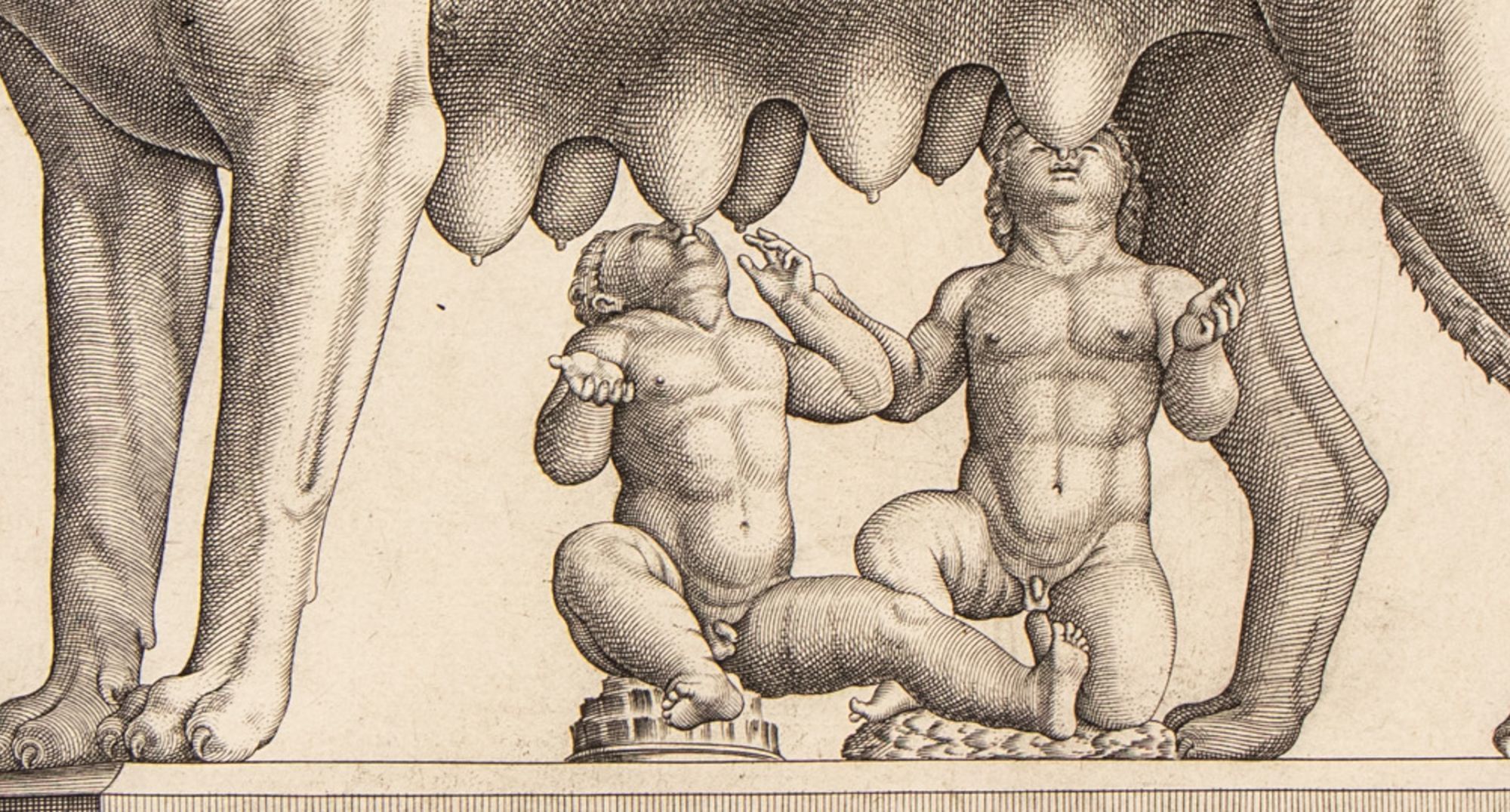
The first definitive reference to this statue of the she-wolf (the twins are Renaissance additions) dates to the late 12th- or early 13th century. In his “Mirabilia Romae”, the Oxford pilgrim Master Gregorius describes that statue, in the portico of the Lateran Palace, at which time it was in a damaged state, broken off at the feet. According to Gregorius, the wolf served as a pendentive to another (now lost) statue, that of a ram, which the wolf seemed to stalk.
In 1471, Pope Sixtus IV (reg. 1471-1484) bequeathed the statue and four other ancient bronzes -the spinario, the Camillus, and the bronze head and hand (holding a globe) of Constantine- to the people of Rome to serve as the core of the nascent Capitoline Museum, the first public museum in Europe. A long inscription at the entrance of the Palazzo dei Conservatori documents this event and describes Sixtus’ donation as an act of restitution of the city’s ancient patrimony to its people: “Ob immensam benignitatem Aeneas insignes statuas priscae excellentiae virtutisque monumentum – Romano populo unde exorte fuere restituendas condonandasque censuit.”
The she-wolf was placed on a platform projecting from the façade of the Palazzo dei Conservatori (Sixtus had given 100 gold florins to the Conservatori specifically for the relocation and installation of the statue.) A drawing by Heemskerck from the mid-1530s shows the sculpture in that location. In the middle of the 16th century, it was moved to a loggia, where Aldrovandi saw it prior to 1556. The loggia was later walled in to create an enclosed chamber known as the sala della lupa, in which the she-wolf still resides.
The first definitive reference to this statue of the she-wolf (the twins are Renaissance additions) dates to the late 12th- or early 13th century. In his “Mirabilia Romae”, the Oxford pilgrim Master Gregorius describes that statue, in the portico of the Lateran Palace, at which time it was in a damaged state, broken off at the feet. According to Gregorius, the wolf served as a pendentive to another (now lost) statue, that of a ram, which the wolf seemed to stalk.
In 1471, Pope Sixtus IV (reg. 1471-1484) bequeathed the statue and four other ancient bronzes -the spinario, the Camillus, and the bronze head and hand (holding a globe) of Constantine- to the people of Rome to serve as the core of the nascent Capitoline Museum, the first public museum in Europe. A long inscription at the entrance of the Palazzo dei Conservatori documents this event and describes Sixtus’ donation as an act of restitution of the city’s ancient patrimony to its people: “Ob immensam benignitatem Aeneas insignes statuas priscae excellentiae virtutisque monumentum – Romano populo unde exorte fuere restituendas condonandasque censuit.”
The she-wolf was placed on a platform projecting from the façade of the Palazzo dei Conservatori (Sixtus had given 100 gold florins to the Conservatori specifically for the relocation and installation of the statue.) A drawing by Heemskerck from the mid-1530s shows the sculpture in that location. In the middle of the 16th century, it was moved to a loggia, where Aldrovandi saw it prior to 1556. The loggia was later walled in to create an enclosed chamber known as the sala della lupa, in which the she-wolf still resides.
Details
Title
The She-wolf with Romulus and Remus
Author
Béatrizet, Nicolas (Lunéville ca. 1515- Rome ca. 1565), attrib
Binding
Hardcover
Condition
Fine
Publisher
Antonio Lafréry: Rome
Date
1552