

The Design of Virgil's Bucolics
- Paperback
- London: Bristol Classical Press, 2004
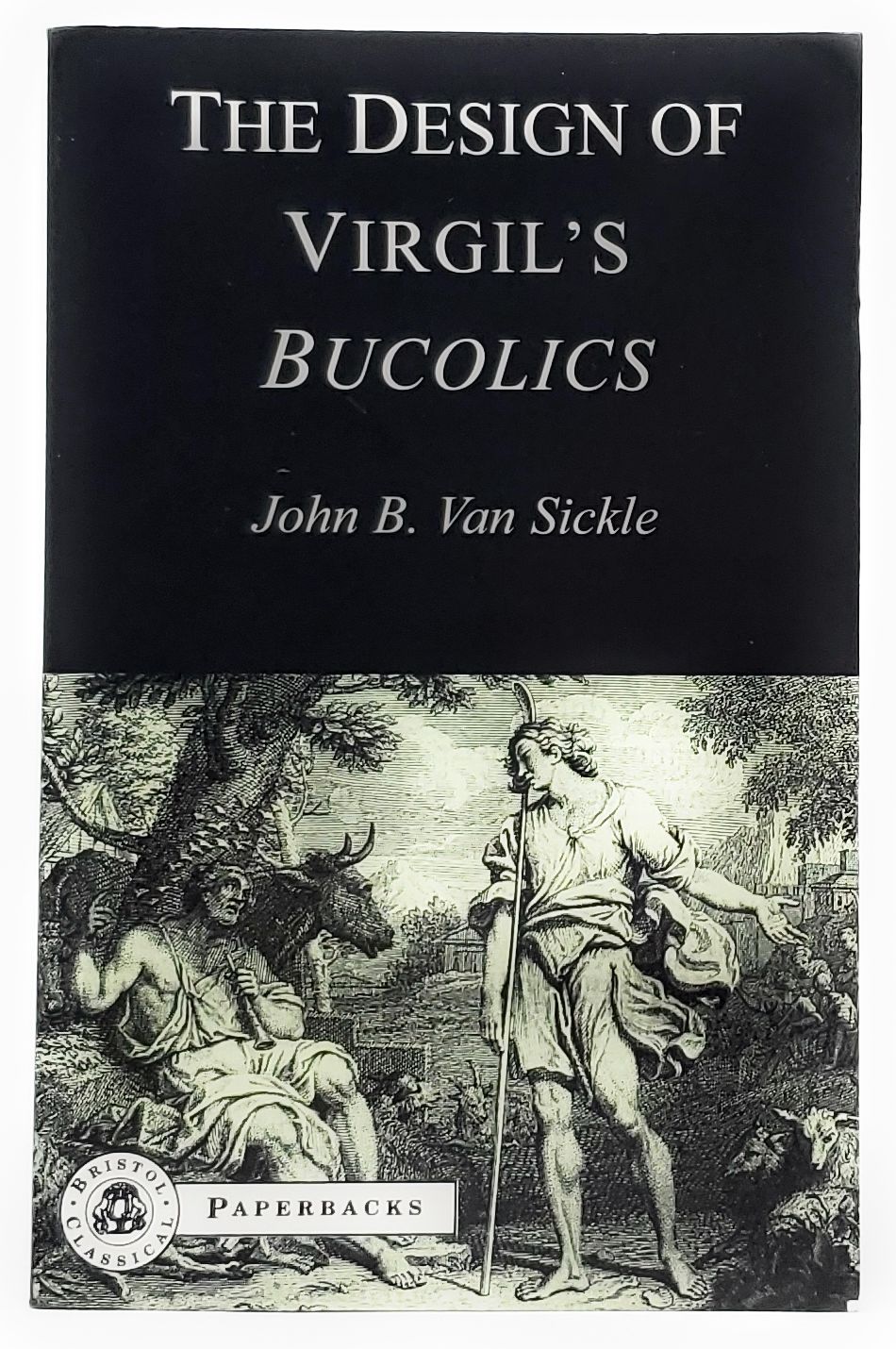
London: Bristol Classical Press, 2004. Second Edition. Paperback. Very good. Second Edition. Paperback. 8 1/2" X 5 1/2". xxxvi, 258pp. MIld wear to pictorial paper wraps with light rubbing and creasing to covers, corners, and edges. Pages are clean and unmarked. Binding is firm and sound.
ABOUT THIS BOOK:
In 1986, reviewing recent work on the Bucolics, William S. Anderson wrote, 'Van Sickle, Design, has produced the most persuasive portrait of the Eclogues, arguing cogently for what he calls an "ideological order".' The Design of Virgil's Bucolics argues that Virgil composed his ten eclogues as parts of a system: the Book of Bucolics conceived as a concerted whole. The report of frequent theatre presentations showed that Virgil caught attention withdramatic flair, masking an ideological programme that grew to encompass motifs of a returning Golden Age and new myth, providing cover for the Caesarist regime, casting the poet as a prophet, vates, and laying groundwork for the Georgics and Aeneid.
Design argues, too, that ideology implied a poetic programme and that bucolic drama was metapoetic, starting with the discovery that already the first eclogue rewrote Theocritus with metapoetic point, despite the scholarly fad that styled Virgil's programme as Callimachean and postponed it to the sixth eclogue. Each eclogue in factmade a distinct contribution, the tenth complementing the newpolitical mythology of the first half book with the new myth of Arcadian poetics.
An extensive new Introduction to this second edition reviews developments and shortfalls in recent work on the Bucolics.(Publisher).
ABOUT THIS BOOK:
In 1986, reviewing recent work on the Bucolics, William S. Anderson wrote, 'Van Sickle, Design, has produced the most persuasive portrait of the Eclogues, arguing cogently for what he calls an "ideological order".' The Design of Virgil's Bucolics argues that Virgil composed his ten eclogues as parts of a system: the Book of Bucolics conceived as a concerted whole. The report of frequent theatre presentations showed that Virgil caught attention withdramatic flair, masking an ideological programme that grew to encompass motifs of a returning Golden Age and new myth, providing cover for the Caesarist regime, casting the poet as a prophet, vates, and laying groundwork for the Georgics and Aeneid.
Design argues, too, that ideology implied a poetic programme and that bucolic drama was metapoetic, starting with the discovery that already the first eclogue rewrote Theocritus with metapoetic point, despite the scholarly fad that styled Virgil's programme as Callimachean and postponed it to the sixth eclogue. Each eclogue in factmade a distinct contribution, the tenth complementing the newpolitical mythology of the first half book with the new myth of Arcadian poetics.
An extensive new Introduction to this second edition reviews developments and shortfalls in recent work on the Bucolics.(Publisher).
Details
Title
The Design of Virgil's Bucolics
Author
Van Sickle, John B.
Binding
Paperback
Condition
Very Good
Publisher
Bristol Classical Press: London
Date
2004
Edition
Second Edition