

Hand-cut Paper Lace
- Ephemera no binding
- No place: No maker noted, 1900
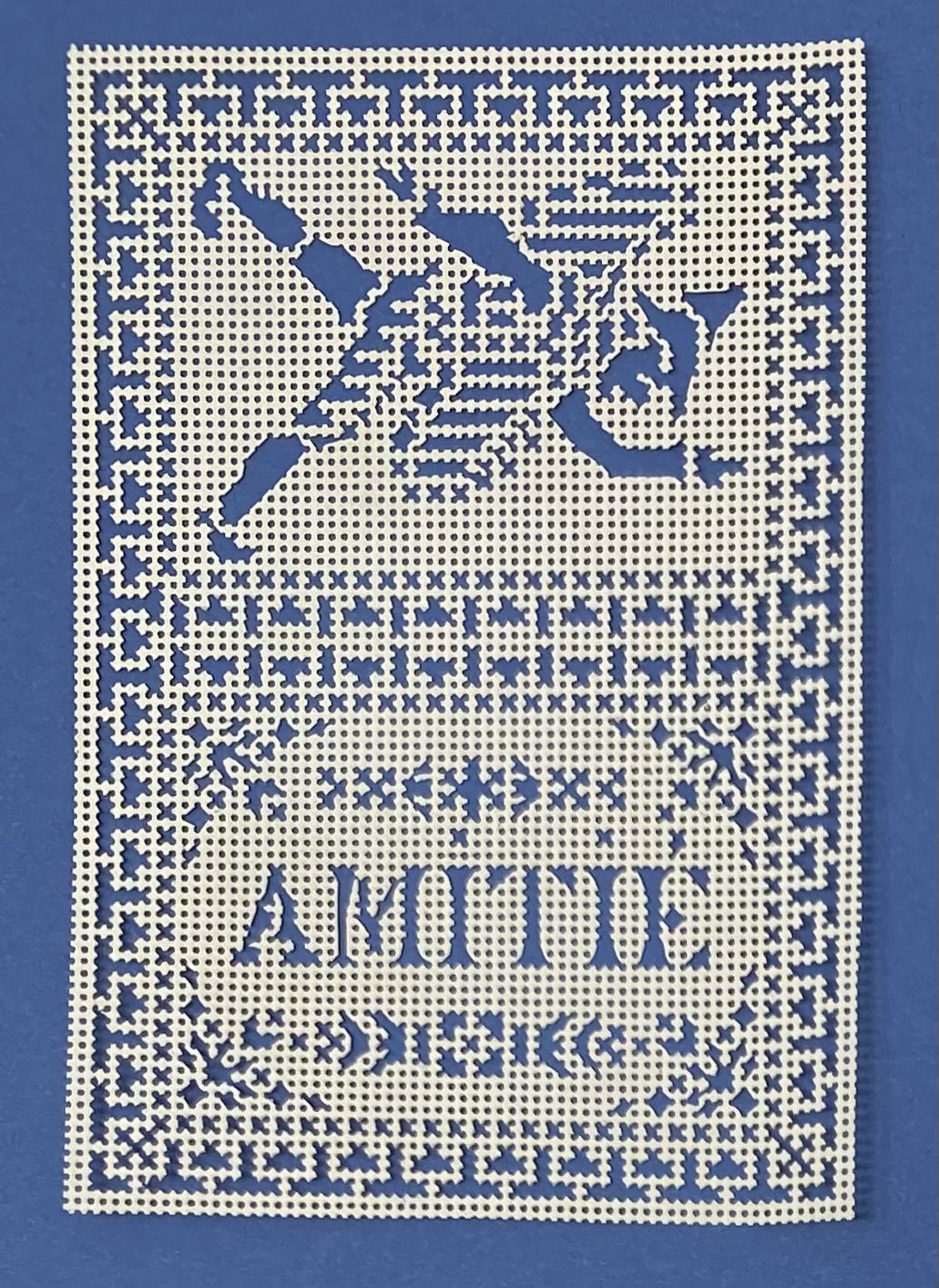
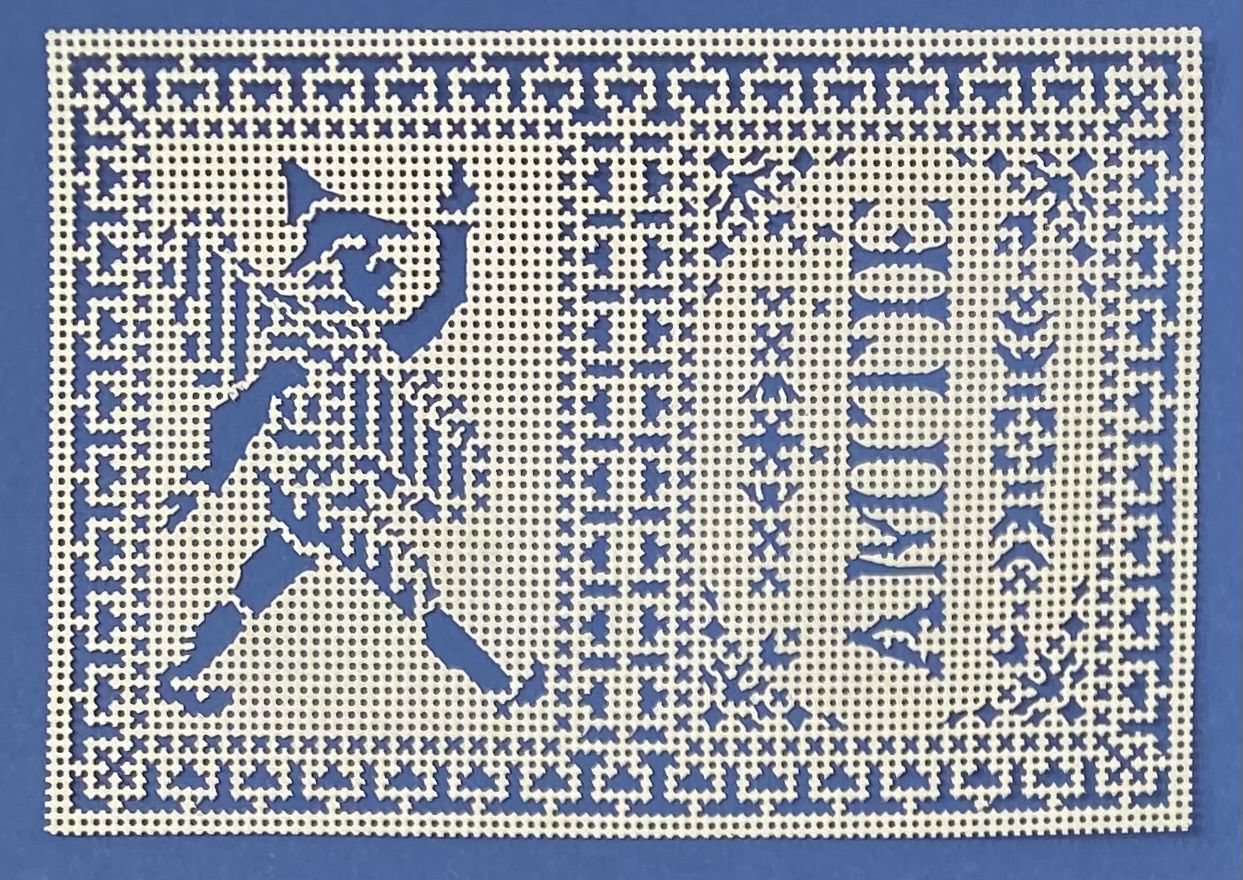
No place: No maker noted, 1900. Ephemera no binding. Fine. [PAPER LACE]. 48mo (3 15/16" x 2 11/16"); one sheet of white perforated paper lace punched with a decorative border and two scenes: a man walking and the French word "Amitié" meaning "Friendship"; fine. The art of hand-cutting perforated paper was established around 1850 to 1860 with newly available commercially produced, punched paper for needlework, often used in embroidery. With these punched papers, the art of delicately cutting the strips between the holes into mottos, designs, and elaborate borders came to life. Papers could feature holes as large as 8 per inch to as small as 26 per inch. The solid is cut away to reveal the motto "Amitié" within a decorative border, with an image of an elf or peasant walking, decked out in a brimmed pointed cap. Often the paper lace was glued to a fabric background, such as a ribbon, or to colored paper to better emphasize the design. Specimens have been found as bookmarks, carefully preserved by the book in which they were pressed. The paper lace could also be glued to larger lace designs to build up a scene, and sometimes make 3-D models. During the Victorian era, ladies' magazines such as Godey's and Peterson's offered patterns to follow for both cutting and embroidery. Claudia Dutcher Kistler 2012. Rickards 222.
This fine example is a rare survivor, as it has not been affixed to a larger or more stable base. Further examples can be seen on the website perforatedpaper (dot) net and paper-lace (dot) com.
This fine example is a rare survivor, as it has not been affixed to a larger or more stable base. Further examples can be seen on the website perforatedpaper (dot) net and paper-lace (dot) com.
Details
Title
Hand-cut Paper Lace
Binding
Ephemera no binding
Condition
Fine
Publisher
No maker noted: No place
Date
1900