

Kinematographic methods in the study of capillary circulation IN American Journal of Physiology, Vol. 68, pp 153-160
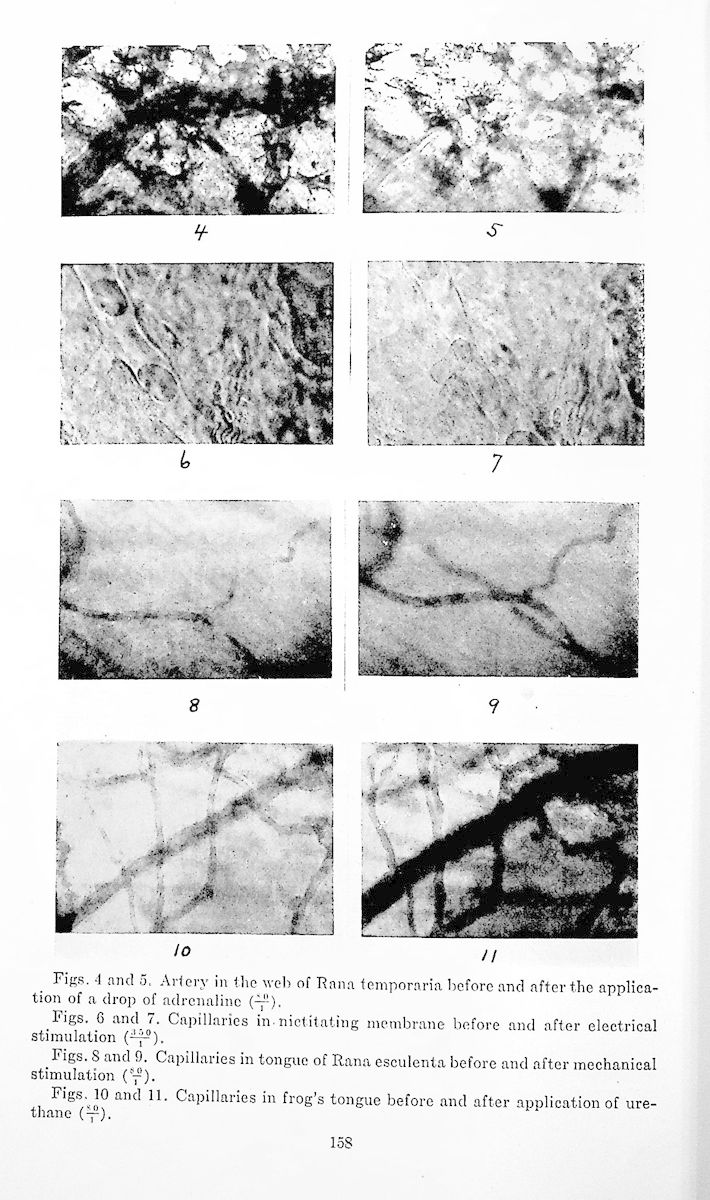
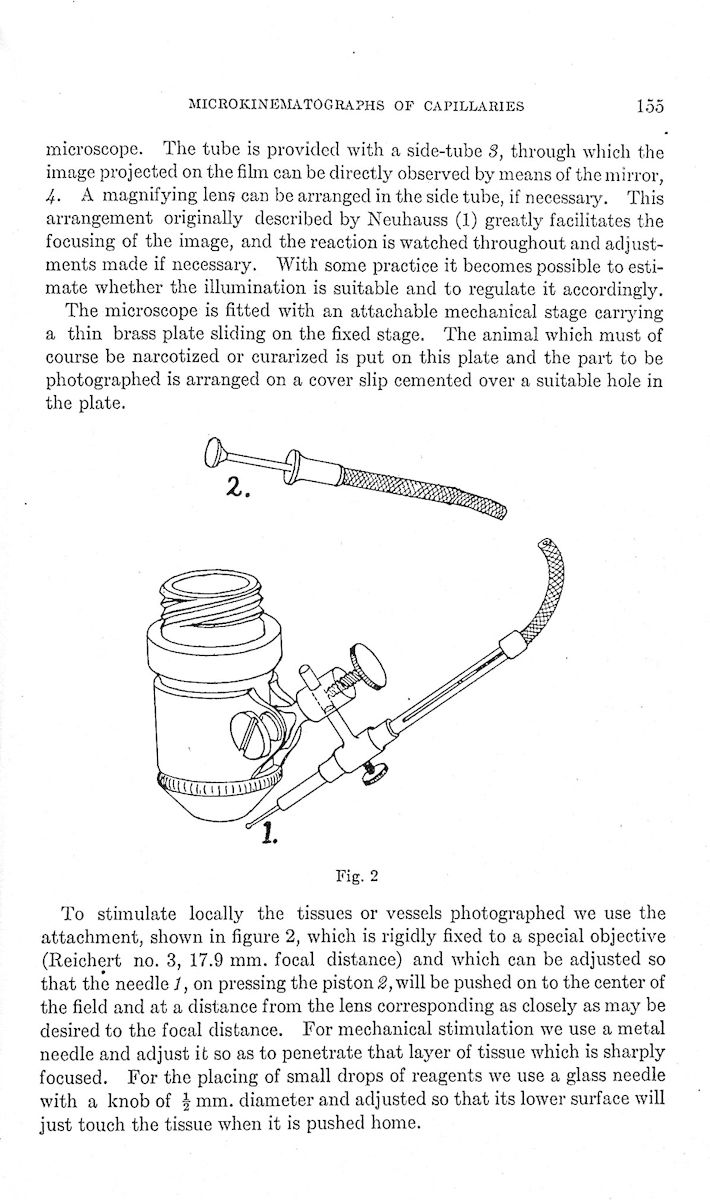
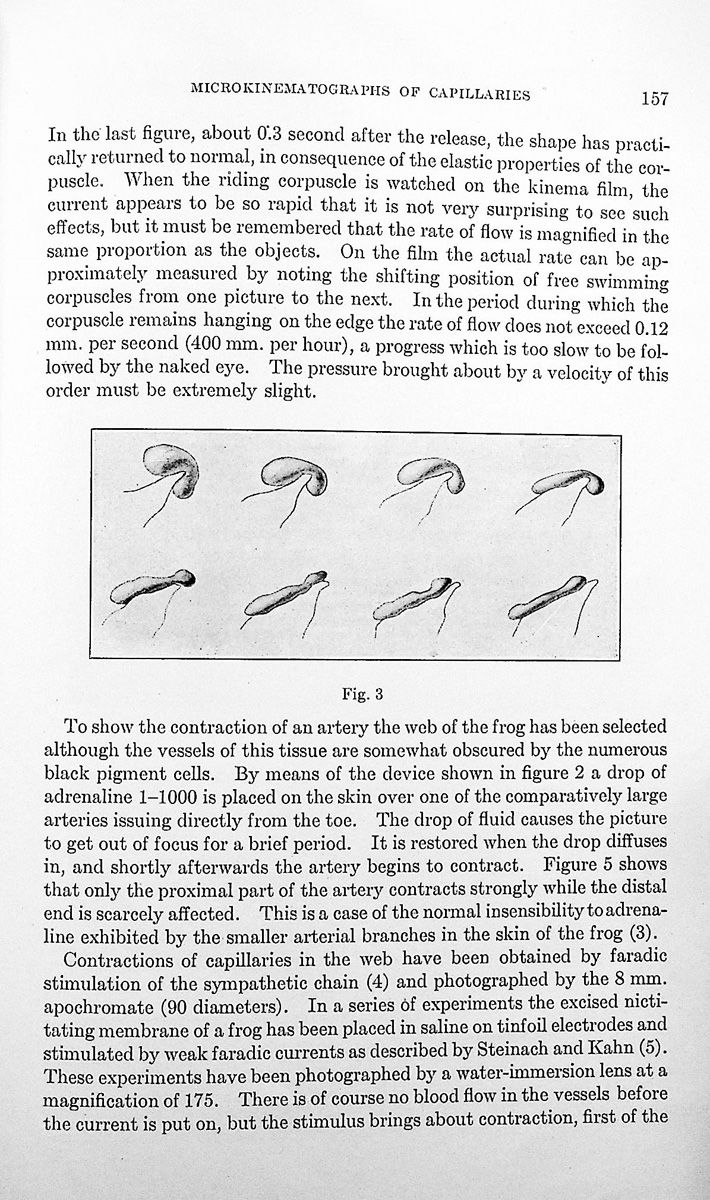
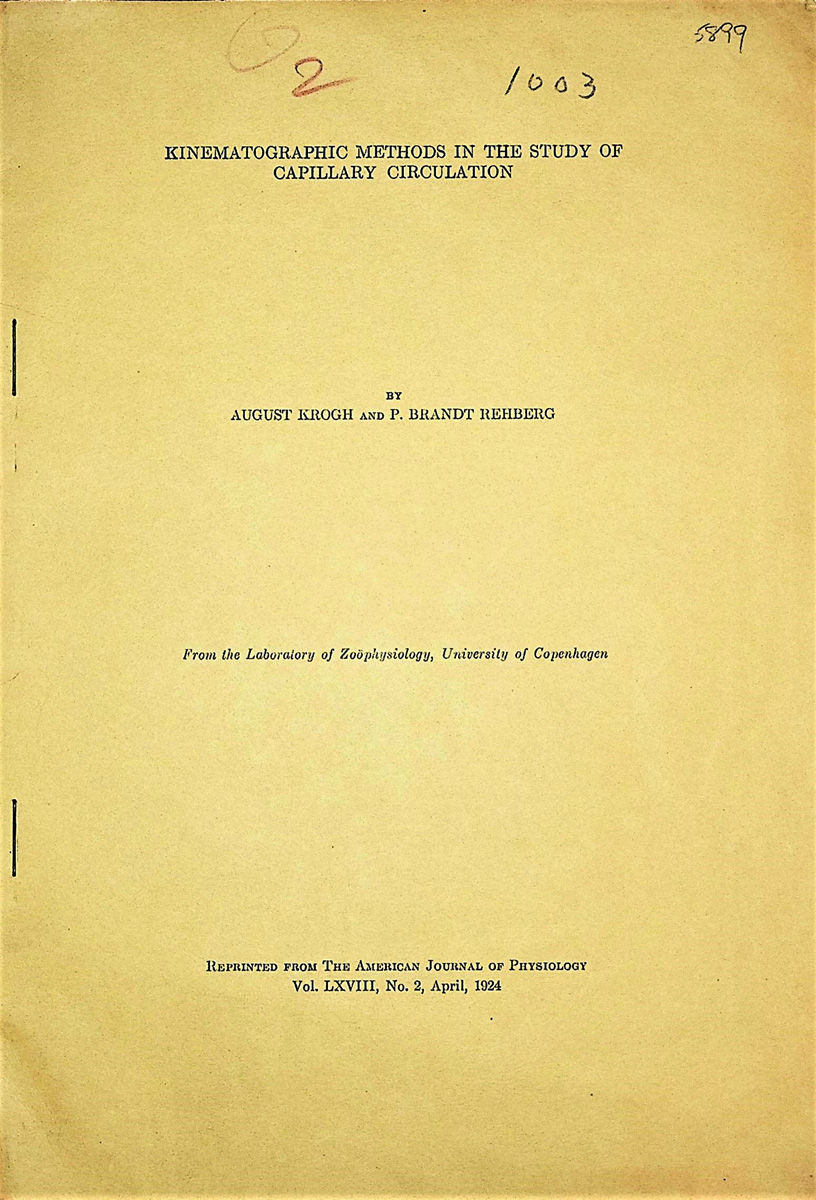
- Offprint in paper covers
- American Physiological Society, 1924
American Physiological Society, 1924. First edition.
1924 PIONEERING REPORT OF FIRST RECORDING OF MOVING PHOTOMICROGRAPHS OF CAPILLARY FUNCTION IN THE FROG BY NOBEL LAUREATE AUGUST KROGH.
17.5x25 cm offprint in printed wraps, line and photographic illustrations, penciled numbers top of cover, staples rusted. age-toned pages, very good.
AUGUST KROGH (1874-1949), professor at Copenhagen University, received the 1920 Nobel Prize in physiology or medicine for discovering the causes of capillary constriction and expansion. In 1922 Krogh published his classic Anatomy and Physiology of Capillaries, which showed that capillaries are regulated both by the nervous system and by hormonal secretions. "Many of the scientists who became the most prominent physiologists of the United States in succeeding decades participated in the studies that made up Krogh's famous monograph. His influence on American physiology cannot be overstated" (Magill, Nobel Prize Winners: Physiology or Medicine, p. 210). A very distinguished physiologist, he studied gas exchange in living organisms, the effect of carbon dioxide on oxyhemoglobin dissociation in the blood, the quantitation of blood flow, the exchange of gases in the tissues and the structure and function of the capillaries.
1924 PIONEERING REPORT OF FIRST RECORDING OF MOVING PHOTOMICROGRAPHS OF CAPILLARY FUNCTION IN THE FROG BY NOBEL LAUREATE AUGUST KROGH.
17.5x25 cm offprint in printed wraps, line and photographic illustrations, penciled numbers top of cover, staples rusted. age-toned pages, very good.
AUGUST KROGH (1874-1949), professor at Copenhagen University, received the 1920 Nobel Prize in physiology or medicine for discovering the causes of capillary constriction and expansion. In 1922 Krogh published his classic Anatomy and Physiology of Capillaries, which showed that capillaries are regulated both by the nervous system and by hormonal secretions. "Many of the scientists who became the most prominent physiologists of the United States in succeeding decades participated in the studies that made up Krogh's famous monograph. His influence on American physiology cannot be overstated" (Magill, Nobel Prize Winners: Physiology or Medicine, p. 210). A very distinguished physiologist, he studied gas exchange in living organisms, the effect of carbon dioxide on oxyhemoglobin dissociation in the blood, the quantitation of blood flow, the exchange of gases in the tissues and the structure and function of the capillaries.
Details
Title
Kinematographic methods in the study of capillary circulation IN American Journal of Physiology, Vol. 68, pp 153-160
Author
Krogh, August and Rehberg, Brandt
Binding
Offprint in paper covers
Condition
Unknown
Publisher
American Physiological Society
Date
1924
Edition
First edition