

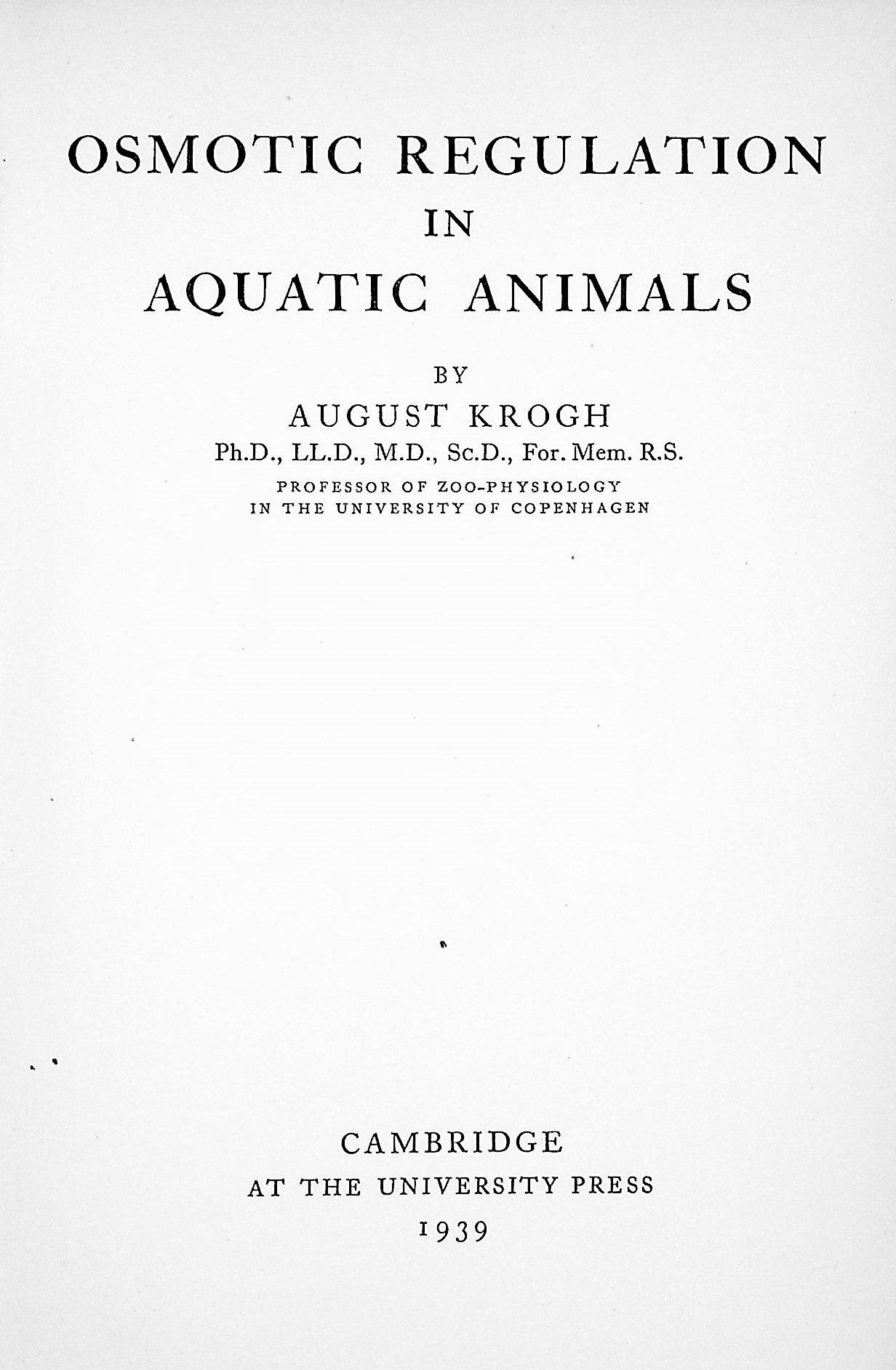
Osmotic Regulation in Aquatic Animals
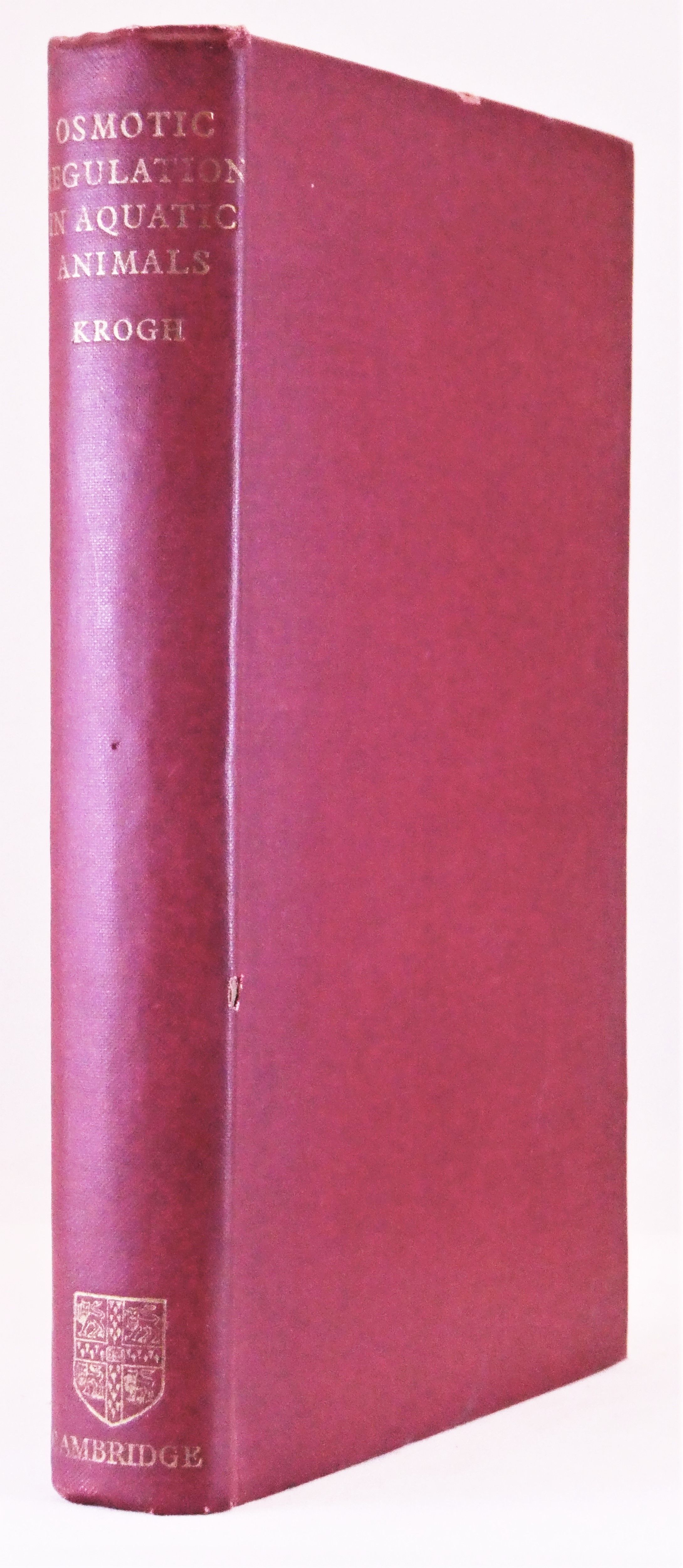
- Cloth binding
- Cambridge: Cambridge University Press, 1939
Cambridge: Cambridge University Press, 1939. First edition.
FIRST EDITION MONOGRAPH ON THE PHYSIOLOGY OF OSMORGULATION IN FISH BY NOBEL LAUREATE AUGUST KROGH.
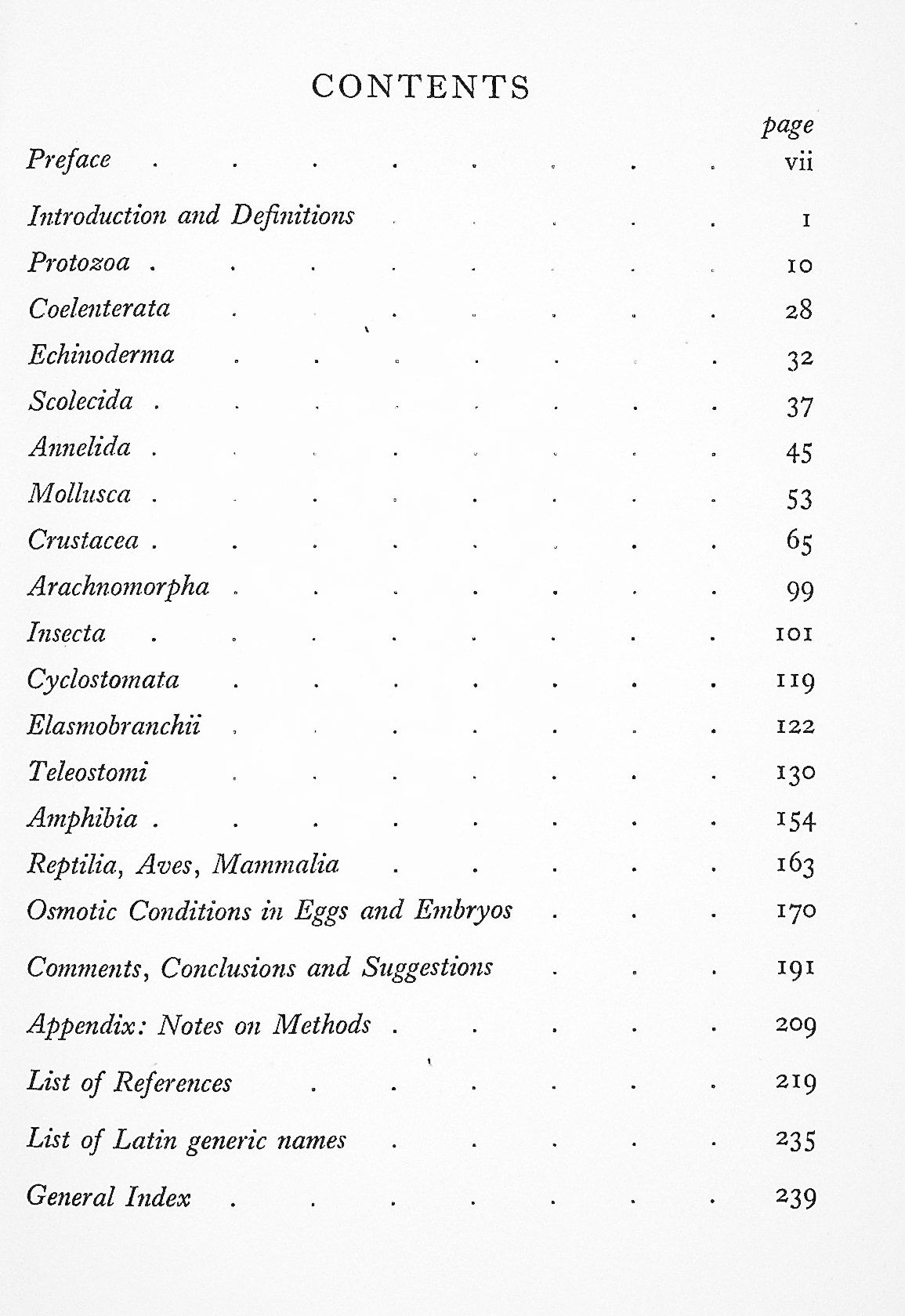
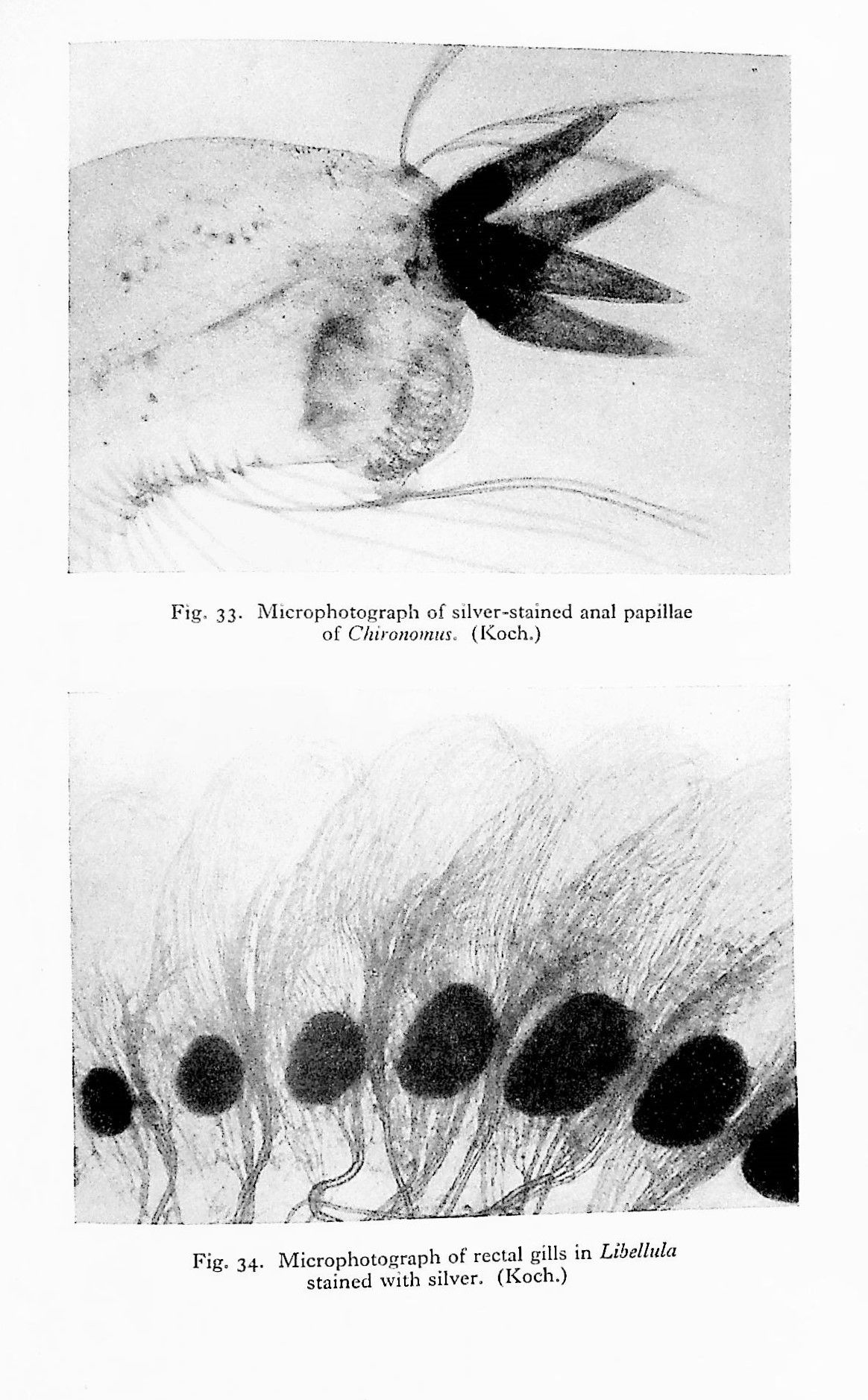
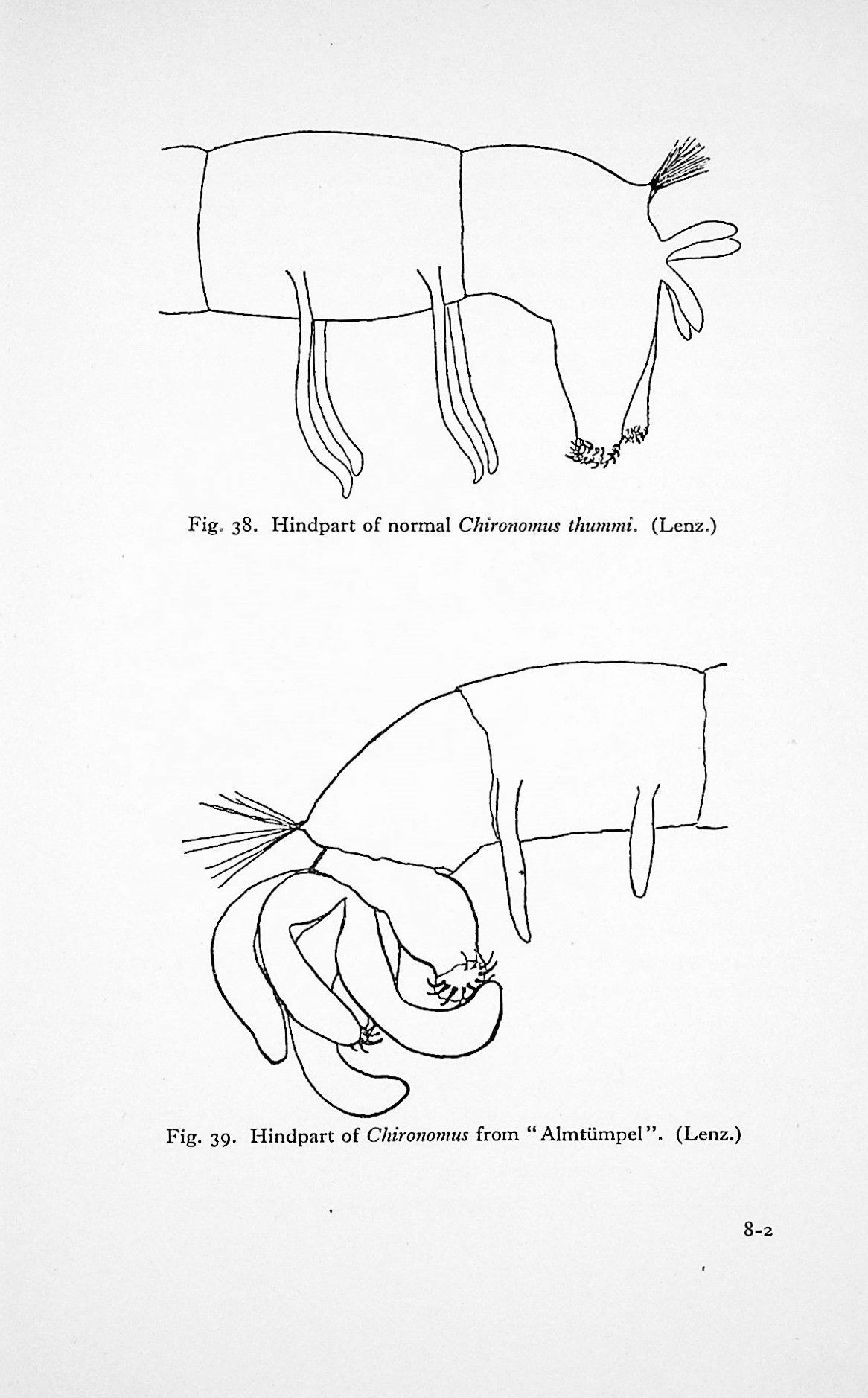
8 1/2 inches tall hardcover, publisher's red cloth binding, gilt title to spine, previous owner signature top of half-title, dated 8/4/49, [viii], 242 pp, 54 figures in text, Light wear to cover edges and corners, binding tight, pages clean and unmarked, very good in custom archival mylar cover.
AUGUST KROGH (1874-1949), professor at Copenhagen University, received the 1920 Nobel Prize in physiology or medicine for discovering the causes of capillary constriction and expansion. In 1922 Krogh published his classic Anatomy and Physiology of Capillaries which showed that capillaries are regulated both by the nervous system and by hormonal secretions. A very distinguished physiologist, he studied gas exchange in living organisms, the effect of carbon dioxide on oxyhemoglobin dissociation in the blood, the quantitation of blood flow, the exchange of gases in the tissues and the structure and function of the capillaries. "For several years Krogh and his school have been studying the exchange of water and inorganic ions through the surface of living cells and membranes, partly with the aid of isotopes as indicators. The many facts observed in this work have been reviewed by Krogh in his monograph Osmotic Regulation in Aquatic Animals (offered here) and in a Croonian lecture (1946)."--Nobel Prize Biography.
FIRST EDITION MONOGRAPH ON THE PHYSIOLOGY OF OSMORGULATION IN FISH BY NOBEL LAUREATE AUGUST KROGH.
8 1/2 inches tall hardcover, publisher's red cloth binding, gilt title to spine, previous owner signature top of half-title, dated 8/4/49, [viii], 242 pp, 54 figures in text, Light wear to cover edges and corners, binding tight, pages clean and unmarked, very good in custom archival mylar cover.
AUGUST KROGH (1874-1949), professor at Copenhagen University, received the 1920 Nobel Prize in physiology or medicine for discovering the causes of capillary constriction and expansion. In 1922 Krogh published his classic Anatomy and Physiology of Capillaries which showed that capillaries are regulated both by the nervous system and by hormonal secretions. A very distinguished physiologist, he studied gas exchange in living organisms, the effect of carbon dioxide on oxyhemoglobin dissociation in the blood, the quantitation of blood flow, the exchange of gases in the tissues and the structure and function of the capillaries. "For several years Krogh and his school have been studying the exchange of water and inorganic ions through the surface of living cells and membranes, partly with the aid of isotopes as indicators. The many facts observed in this work have been reviewed by Krogh in his monograph Osmotic Regulation in Aquatic Animals (offered here) and in a Croonian lecture (1946)."--Nobel Prize Biography.
Details
Title
Osmotic Regulation in Aquatic Animals
Author
Krogh, August
Binding
Cloth binding
Condition
Unknown
Publisher
Cambridge University Press: Cambridge
Date
1939
Edition
First edition