

Candide, ou l’Optimisme, traduit de l’allemand de Mr. le Docteur Ralph [bound with] Candide, ou l’Otimisme, Seconde Partie [and] Remercîment de Candide à Mr. de Voltaire
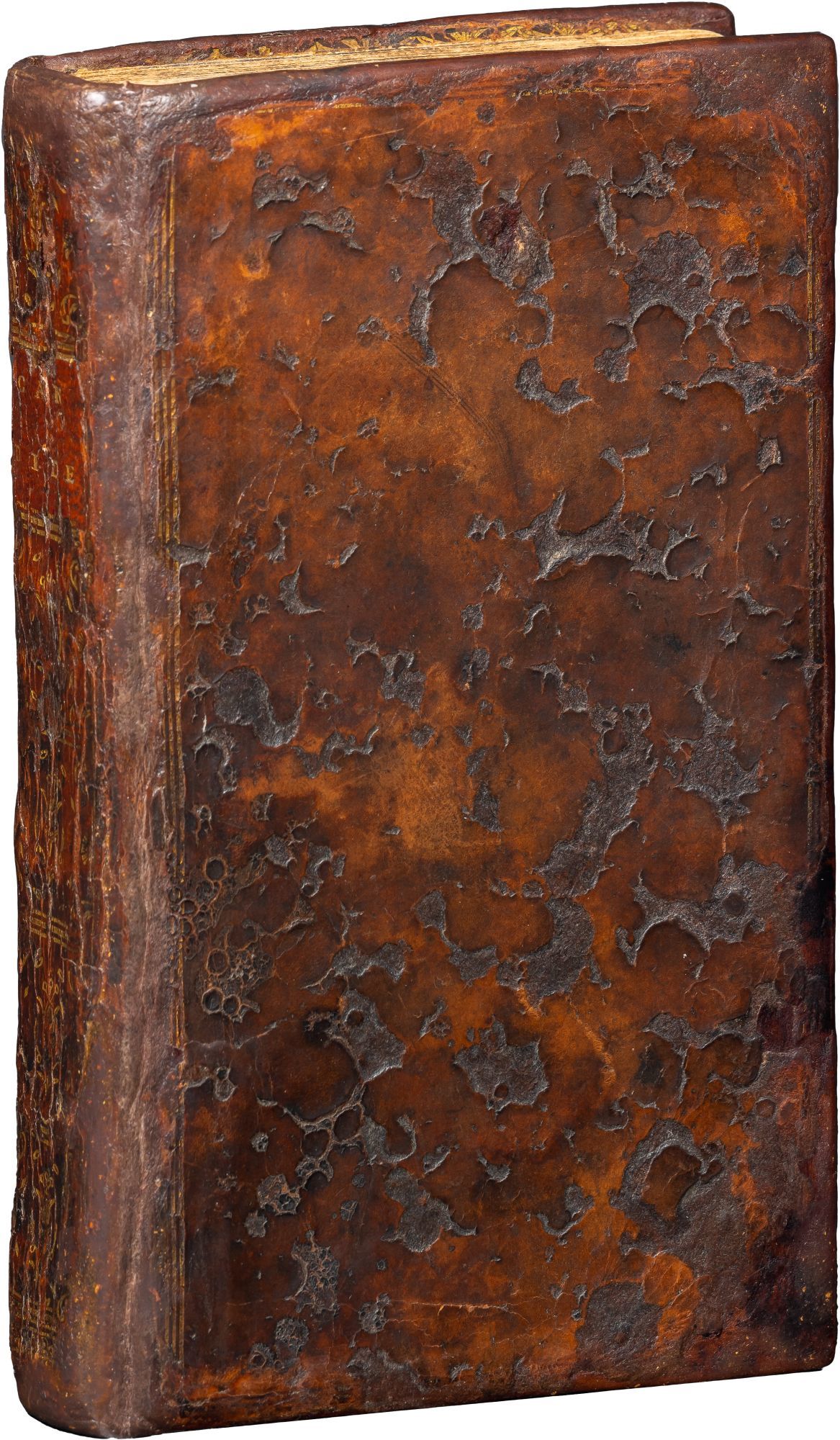
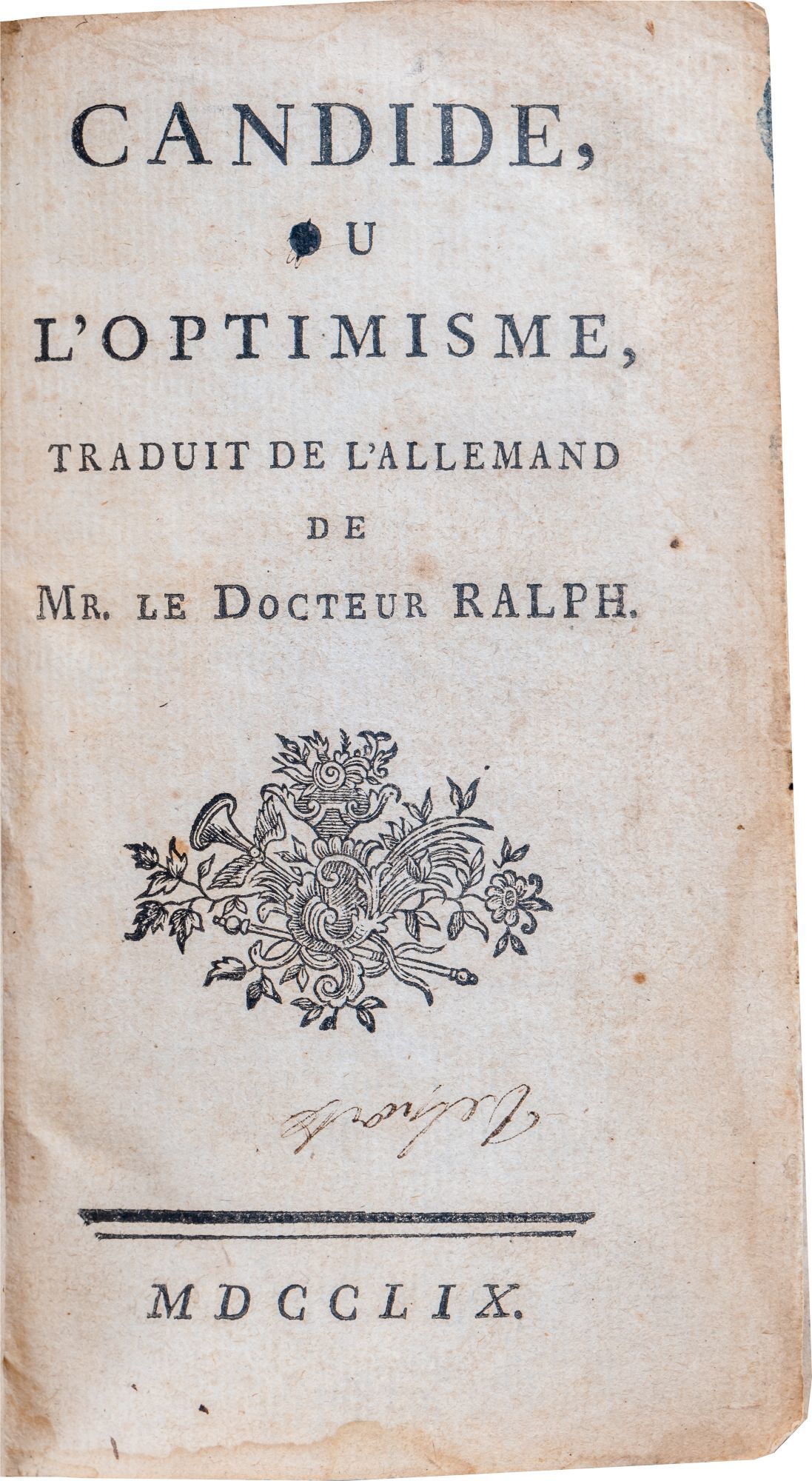
- Genève (Geneva): Cramer, 1759
Genève (Geneva): Cramer, 1759. First Edition. 3 vols. in one, 12mo (164 x 100mm), pp. [2], 291, [1]; 133, [1], 35, [1]. First printing of the great 18th century philosophical narrative, with all the points correct. Including, the 3 usual cancels, the right title page ornament repeated (pages 193 and 266), the misprints of “que ce ce fut” (page 103 line 4) and “précisément” (page 125 line 4), the correction removing a paragraph break (page 31), the rewritten lines about the Lisbon earthquake (page 41), etc. Contemporary full calf, red calf label, rebacked with the original spine saved and laid down, recornered, marbled endpapers, gilt rubbed, inner paper hinges strengthened, old ink signatures on the endpaper and front blank, tiny signature on the title page, one tissue strengthened tear at the bottom of A2 touching the last 3 lines of text without any loss, otherwise internally quite nice, clean, and very good. Bound without N7 (a blank) and N8 (a notice to the binder) as is usual, agreeing in all respects to what you would have received if you had purchased a copy in sheets, on publication day, then bought the sequels, and then handed them over to the most local Swiss bindery. Ref: PMM 204. There were 18 editions of Candide in 1759. It took 221 years for a clear and convincing bibliography to, first sort them out, and then got accepted, and once accepted our real 1st edition was confirmed as rare. In the last 15 years however, that bibliographical data has been more widely circulated and several 1st editions, that weren’t on the original 22–copy census, have come into market. It is still scarce, more so in a contemporary binding.
Candide bides as the epitomic philosophical fable of the French Enlightenment and the genotype of irony without exaggeration, and though it’s laced with more salt than the postwar streets of Carthage, it repeatedly tolls a reminder that, light hearts live long. Most importantly, Candide remains remarkably relevant when examined through contemporary frameworks, functioning as an incisive proto-postcolonial text that anticipates modern discourse on global inequality, systems of oppression, and the limitations of Enlightenment rationality. The novel's scathing portrayal of slavery, conquest, and religious persecution resonates with intersectional analyses that recognize how power structures interlock across racial, gender, and economic dimensions. The savage irony throughout the text dismantles not just philosophical optimism but also European exceptionalism, exposing the hypocrisy of colonial enterprises and religious institutions alike. The narrative's episodic structure—with its global movements between Europe, South America, and the Ottoman Empire—invites discussions of transnationalism and diasporic experience, while Candide's concluding retreat to cultivate his garden has been reinterpreted by ecocritical scholars as both an acknowledgment of environmental interdependence and a potentially problematic withdrawal from systems-level political engagement.
“Do you believe,” said Candide, “that men have always massacred each other as they do to-day, that they have always been liars, cheats, traitors, ingrates, brigands, idiots, thieves, scoundrels, gluttons, drunkards, misers, envious, ambitious, bloody–minded, calumniators, debauchees, fanatics, hypocrites, and fools?” “Do you believe,” said Martin, “that hawks have always eaten pigeons when they have found them?”
–Voltaire, Candide.
Candide bides as the epitomic philosophical fable of the French Enlightenment and the genotype of irony without exaggeration, and though it’s laced with more salt than the postwar streets of Carthage, it repeatedly tolls a reminder that, light hearts live long. Most importantly, Candide remains remarkably relevant when examined through contemporary frameworks, functioning as an incisive proto-postcolonial text that anticipates modern discourse on global inequality, systems of oppression, and the limitations of Enlightenment rationality. The novel's scathing portrayal of slavery, conquest, and religious persecution resonates with intersectional analyses that recognize how power structures interlock across racial, gender, and economic dimensions. The savage irony throughout the text dismantles not just philosophical optimism but also European exceptionalism, exposing the hypocrisy of colonial enterprises and religious institutions alike. The narrative's episodic structure—with its global movements between Europe, South America, and the Ottoman Empire—invites discussions of transnationalism and diasporic experience, while Candide's concluding retreat to cultivate his garden has been reinterpreted by ecocritical scholars as both an acknowledgment of environmental interdependence and a potentially problematic withdrawal from systems-level political engagement.
“Do you believe,” said Candide, “that men have always massacred each other as they do to-day, that they have always been liars, cheats, traitors, ingrates, brigands, idiots, thieves, scoundrels, gluttons, drunkards, misers, envious, ambitious, bloody–minded, calumniators, debauchees, fanatics, hypocrites, and fools?” “Do you believe,” said Martin, “that hawks have always eaten pigeons when they have found them?”
–Voltaire, Candide.
Details
Title
Candide, ou l’Optimisme, traduit de l’allemand de Mr. le Docteur Ralph [bound with] Candide, ou l’Otimisme, Seconde Partie [and] Remercîment de Candide à Mr. de Voltaire
Author
Voltaire, François Marie Arouet
Condition
Unknown
Publisher
Cramer: Genève (Geneva)
Date
1759
Edition
First Edition