

LES RUINES DE PAESTUM, OU DE POSIDONIE, DANS LA GRANDE GRECE
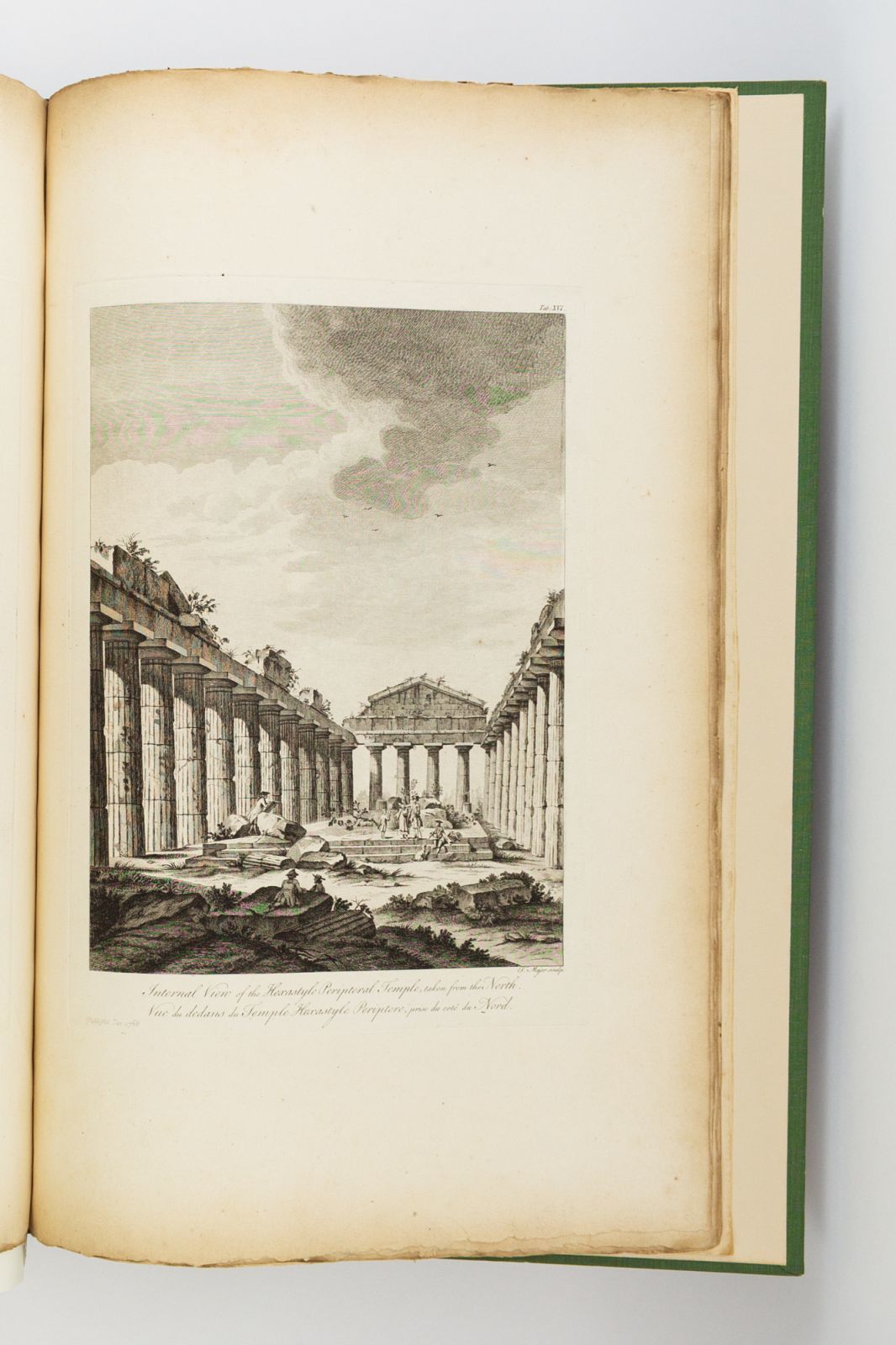
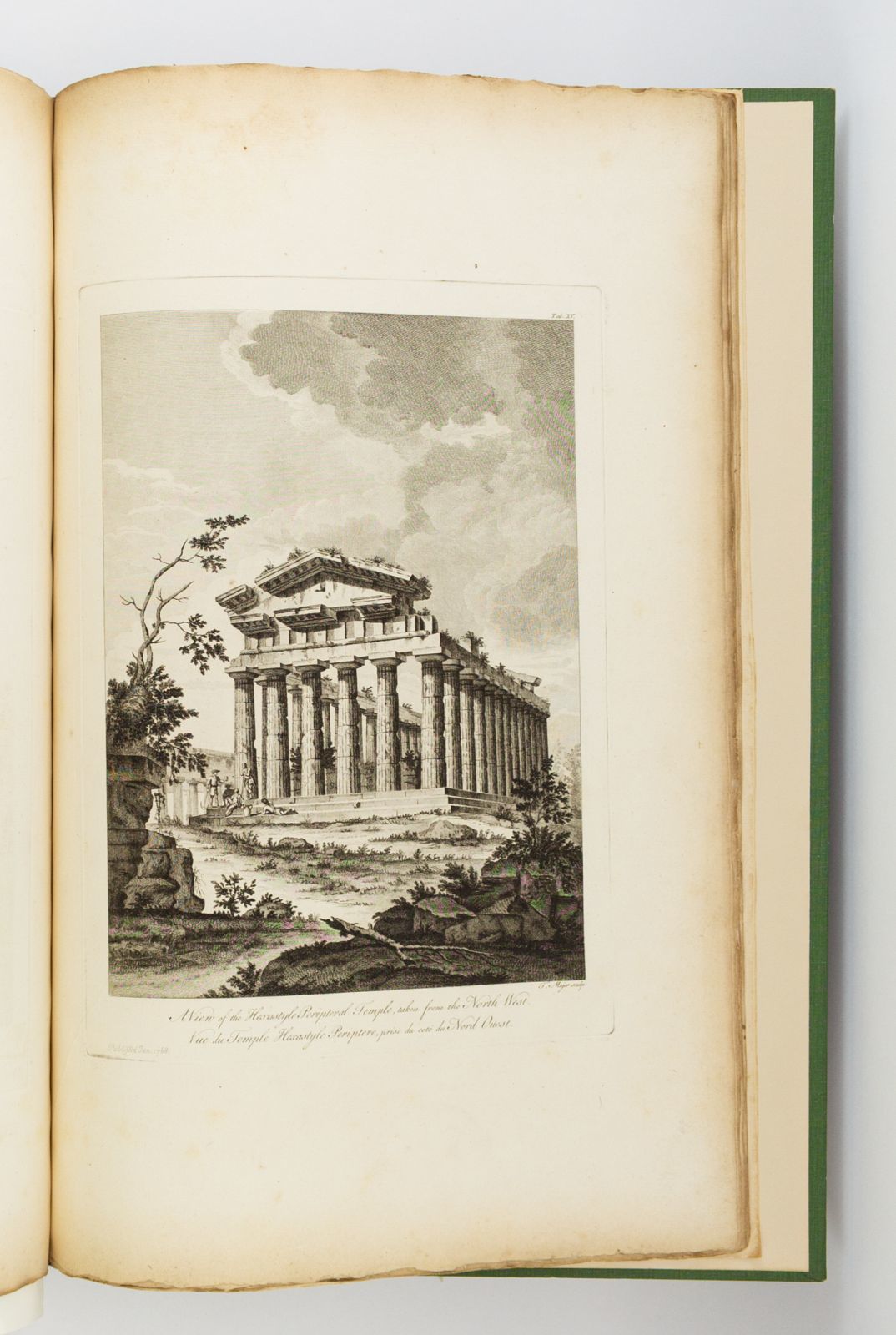
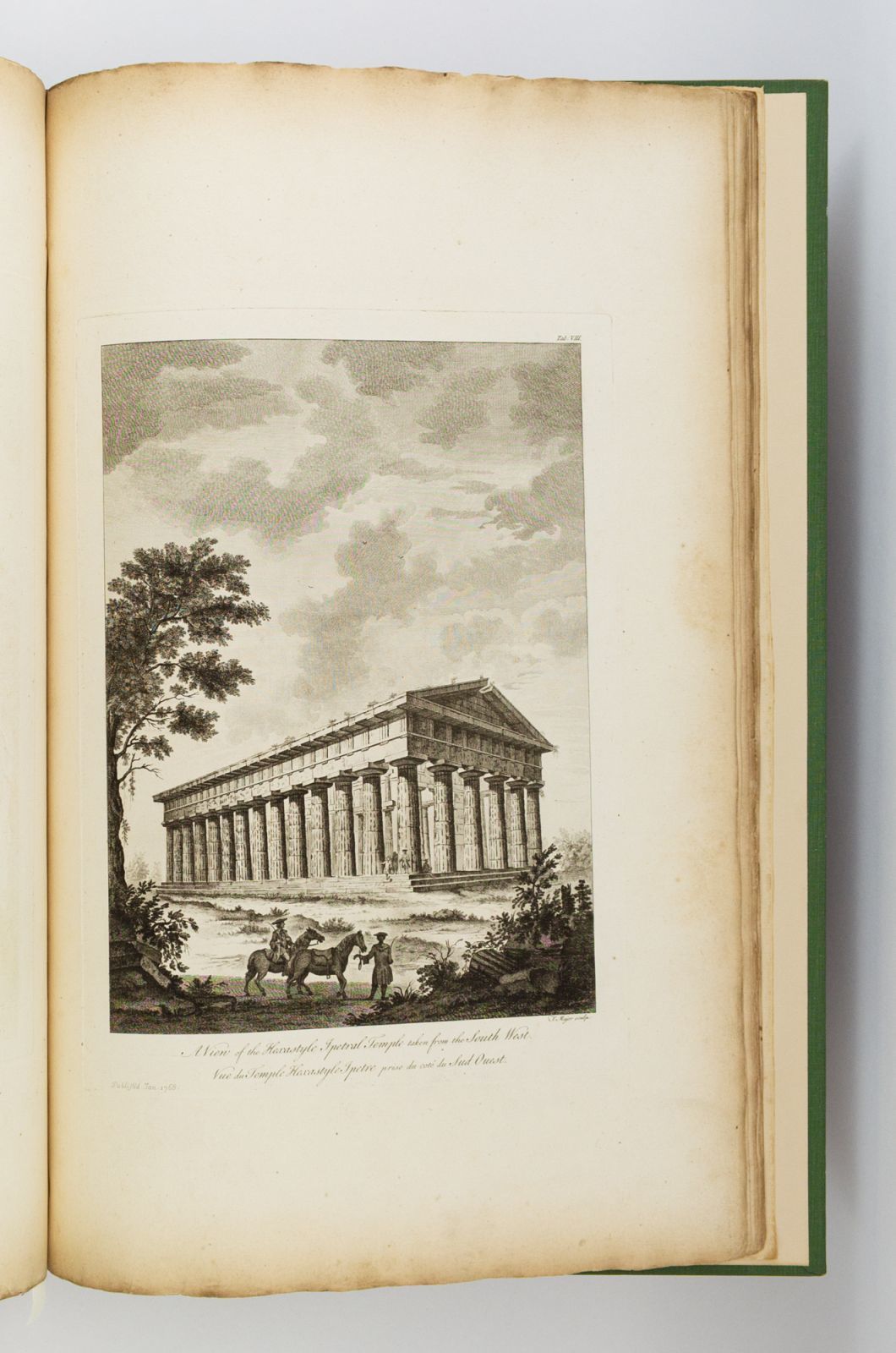
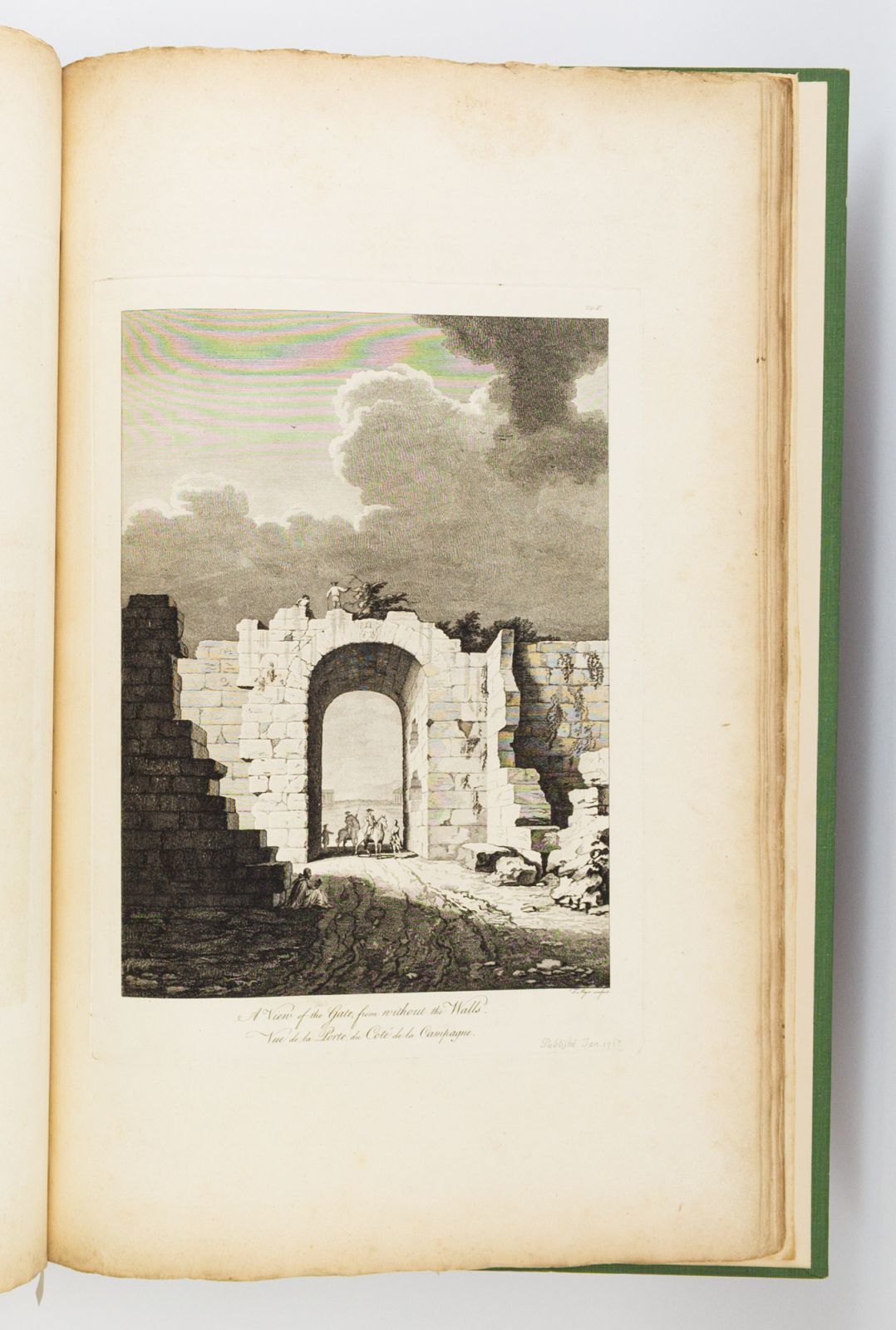
- London: Chez l'auteur, 1768
London: Chez l'auteur, 1768. First Edition in French. 590 x 380 mm. (23 1/4 x 15"). 52, [2] pp.
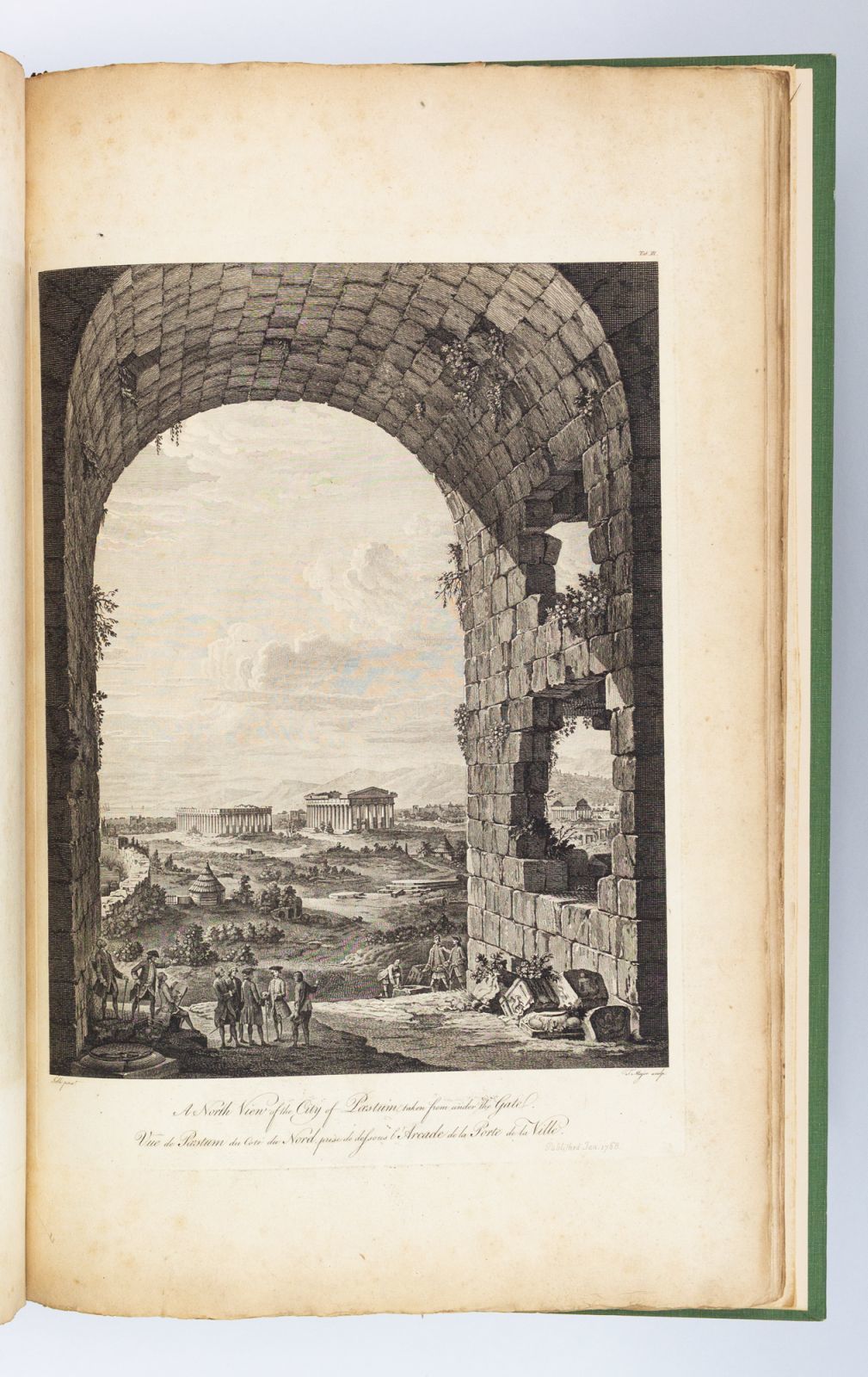
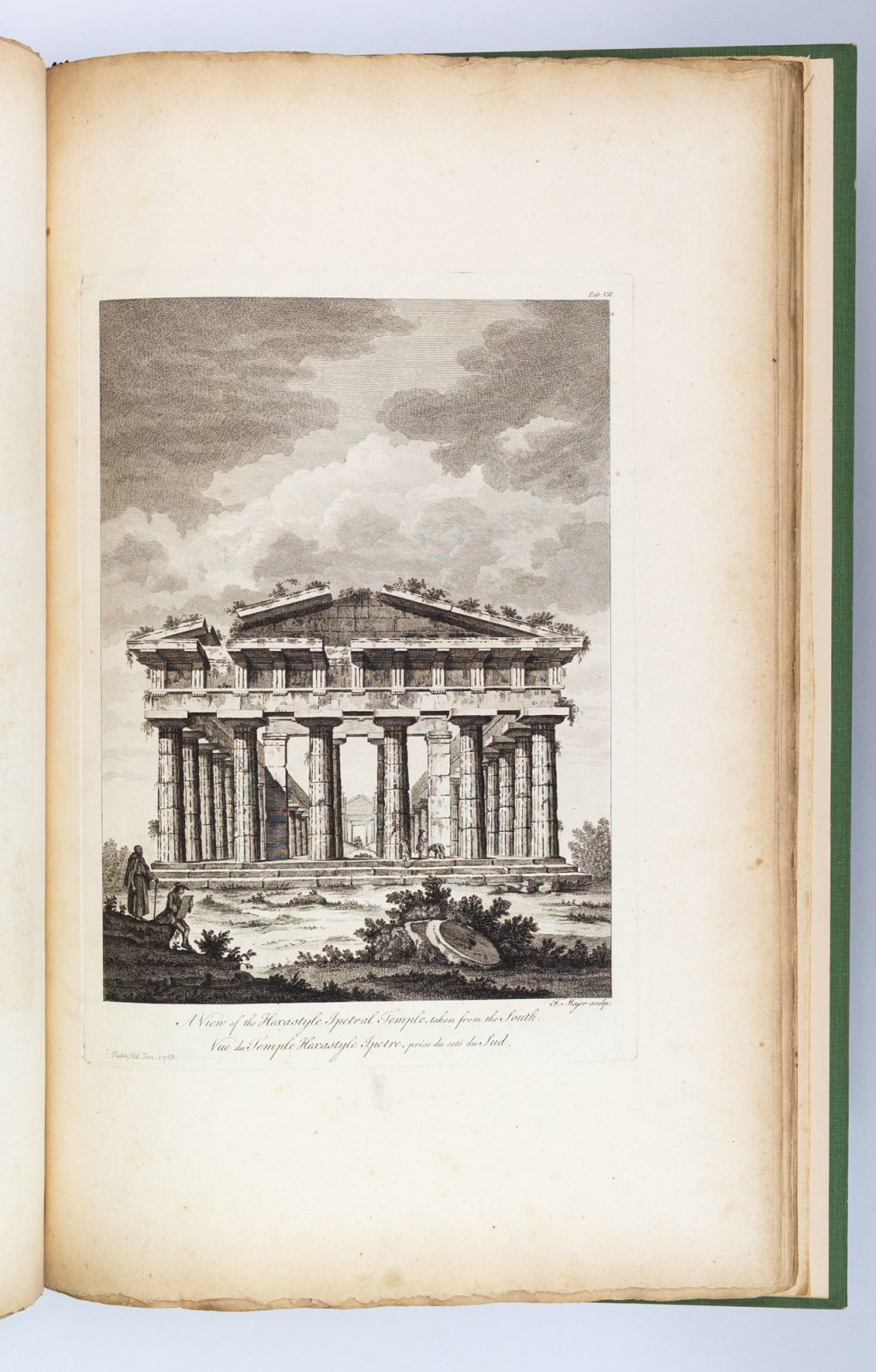
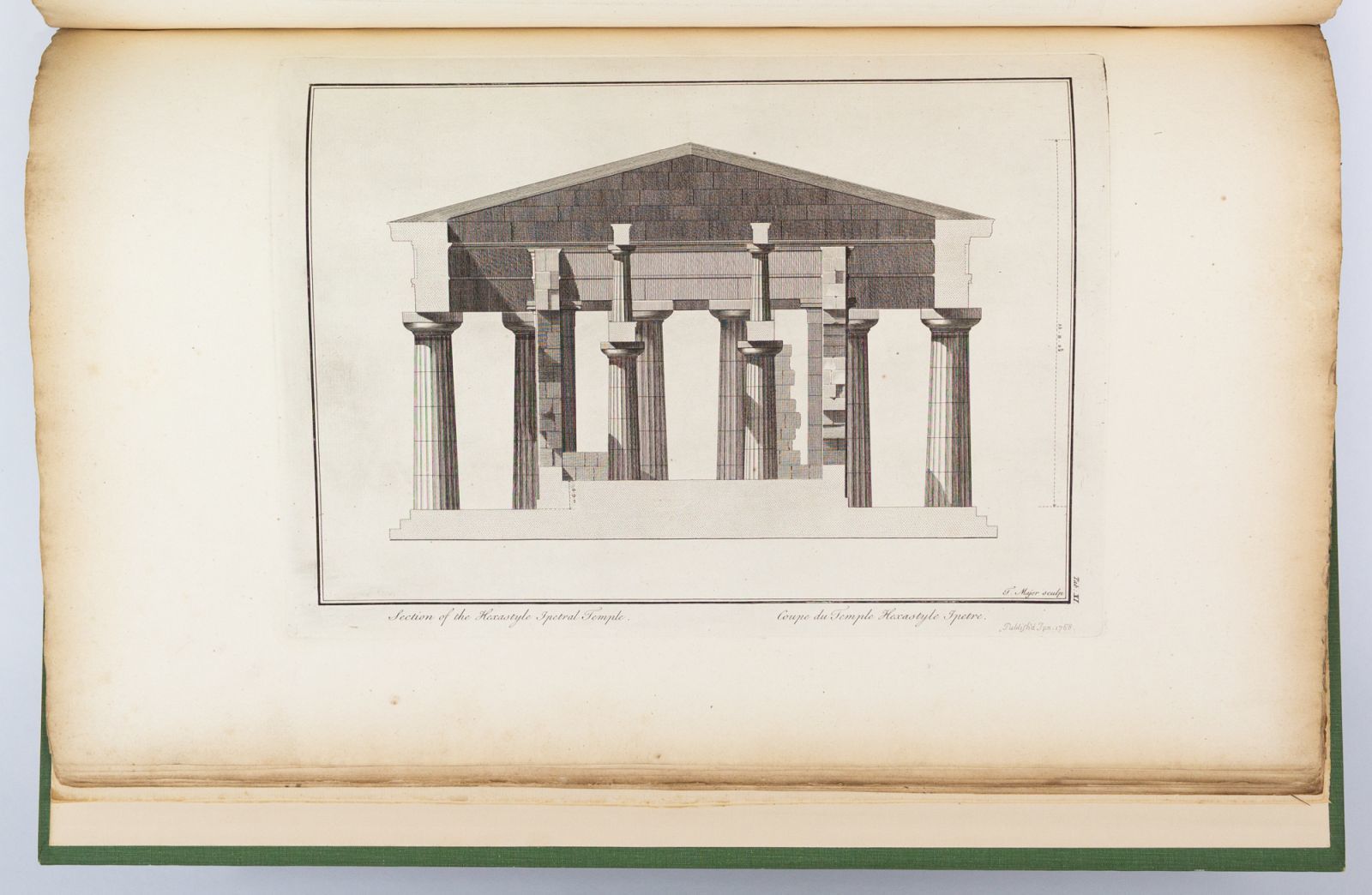
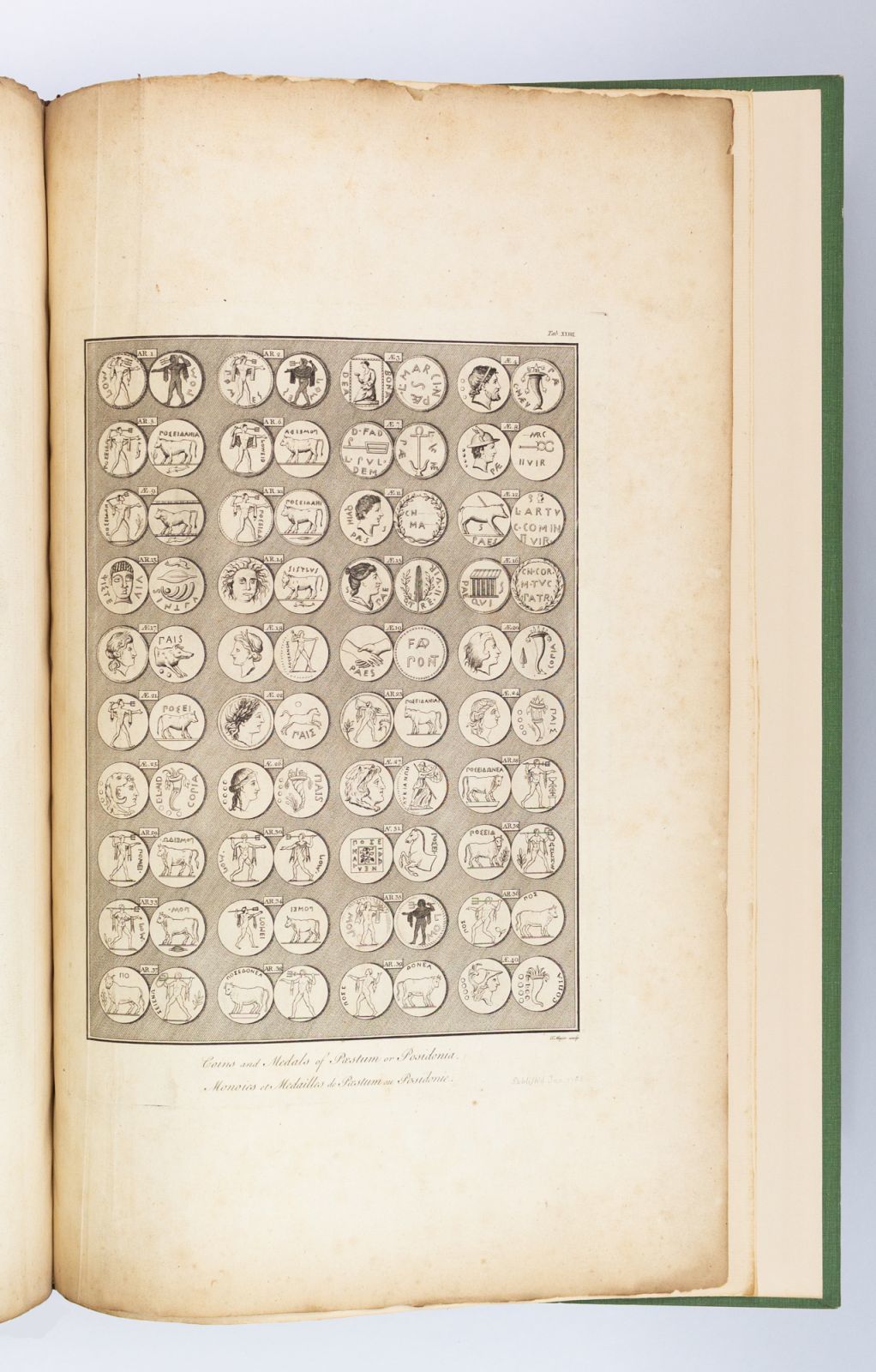
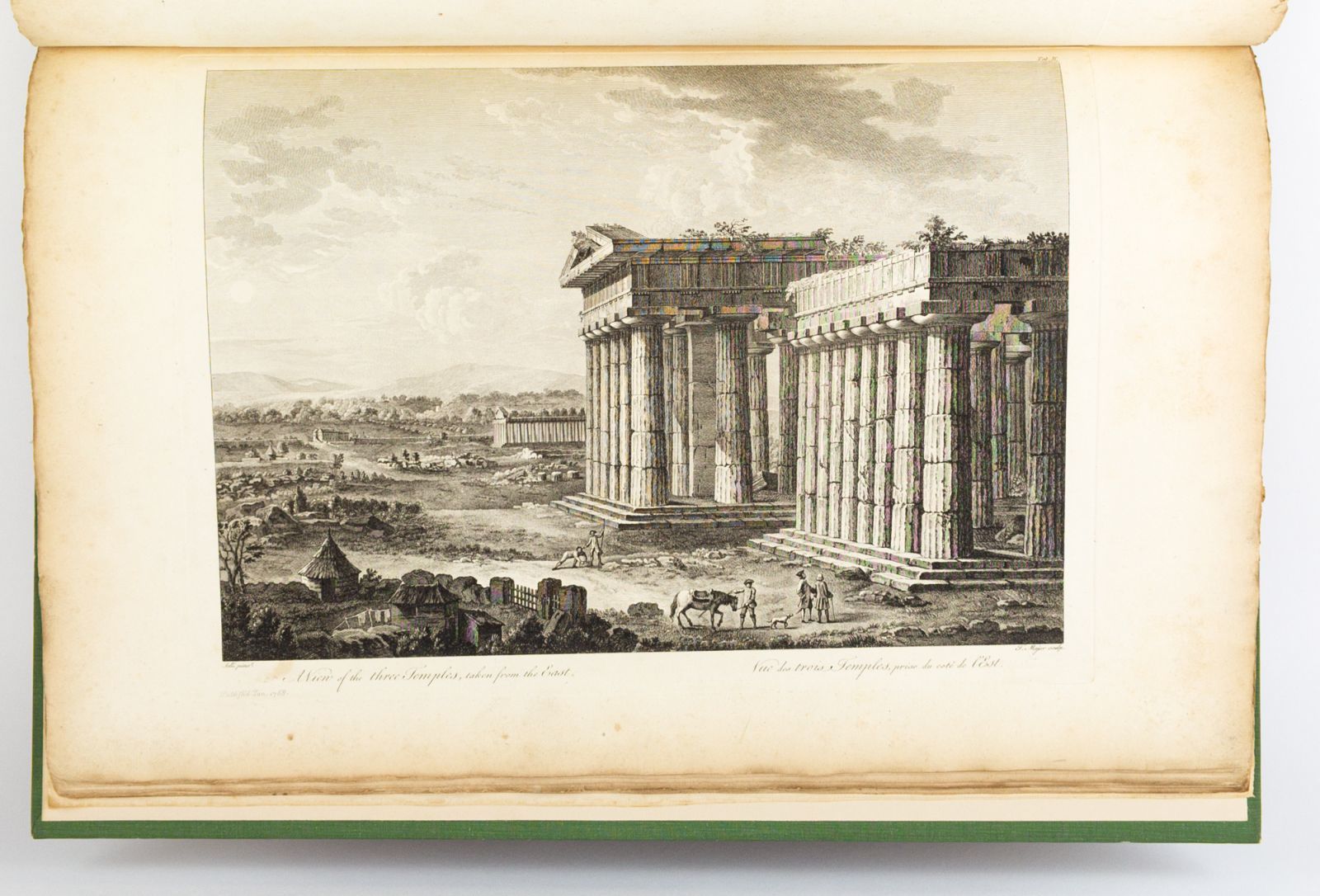
Modern brown quarter morocco over green linen boards, brown morocco label with gilt lettering on smooth spine, edges untrimmed. WITH 25 FULL-PAGE ENGRAVED PLATES OF GRECIAN RUINS, and seven smaller engraved plates in text (including one on dedication page). A Large Paper Copy. Fowler, p. 157; Millard, British 41; Blackmer 1065; Brunet III, 1329. Head of spine partly torn (but with no loss), contents with not infrequent light marginal soiling (though plates uniformly clean), other minor imperfections, but an excellent copy with greatly generous margins, with deep impressions of the type, and with strong impressions of the plates.
This work is the first significant account of the ancient city of Paestum, being, in the words of Blackmer, "larger and much more complete than any of the previous publications." Located in the Tyrrhenian Sea off the coast of southern Italy, Paestum (or Poseidonia in Greek) was founded by Greek colonists in the sixth century B.C. and still contains beautifully preserved ruins from that period, including temples, an amphitheater, and painted tombs. Abandoned in the Medieval period, Paestum wasn't rediscovered by the West until the 18th century, with the first modern publication of the site not appearing until 1764, when a suite of plans by G. P. M. Dumont appeared (with no text), based on the observations of Jacques-Germain Soufflot. As Millard indicates, the genesis of the present publication has an extremely complex history (we do not even know with certainty who wrote the text), but we do know that engraver Thomas Major (1729-99), whom DNB calls "the first great English landscape engraver," was responsible for preparing the plates. Because he had no first-hand knowledge of the site, Major relied on images by other artists, including Antonio Joli, Gaetano Magri, Robert Mylne, and Jacques-Germain Soufflot. The text was first published in English, and then in French the same year. According to Fowler, "this work . . . was an important eighteenth-century pioneer contribution to the knowledge of Greek architecture in England"; and Millard tells us that "the book was surprisingly well received by reviewers" in both England and France, remaining "the standard reference to Paestum until 'Les Ruines de Paestum ou Posidonia' by C.-M. Delagardette was issued in 1798.".
Modern brown quarter morocco over green linen boards, brown morocco label with gilt lettering on smooth spine, edges untrimmed. WITH 25 FULL-PAGE ENGRAVED PLATES OF GRECIAN RUINS, and seven smaller engraved plates in text (including one on dedication page). A Large Paper Copy. Fowler, p. 157; Millard, British 41; Blackmer 1065; Brunet III, 1329. Head of spine partly torn (but with no loss), contents with not infrequent light marginal soiling (though plates uniformly clean), other minor imperfections, but an excellent copy with greatly generous margins, with deep impressions of the type, and with strong impressions of the plates.
This work is the first significant account of the ancient city of Paestum, being, in the words of Blackmer, "larger and much more complete than any of the previous publications." Located in the Tyrrhenian Sea off the coast of southern Italy, Paestum (or Poseidonia in Greek) was founded by Greek colonists in the sixth century B.C. and still contains beautifully preserved ruins from that period, including temples, an amphitheater, and painted tombs. Abandoned in the Medieval period, Paestum wasn't rediscovered by the West until the 18th century, with the first modern publication of the site not appearing until 1764, when a suite of plans by G. P. M. Dumont appeared (with no text), based on the observations of Jacques-Germain Soufflot. As Millard indicates, the genesis of the present publication has an extremely complex history (we do not even know with certainty who wrote the text), but we do know that engraver Thomas Major (1729-99), whom DNB calls "the first great English landscape engraver," was responsible for preparing the plates. Because he had no first-hand knowledge of the site, Major relied on images by other artists, including Antonio Joli, Gaetano Magri, Robert Mylne, and Jacques-Germain Soufflot. The text was first published in English, and then in French the same year. According to Fowler, "this work . . . was an important eighteenth-century pioneer contribution to the knowledge of Greek architecture in England"; and Millard tells us that "the book was surprisingly well received by reviewers" in both England and France, remaining "the standard reference to Paestum until 'Les Ruines de Paestum ou Posidonia' by C.-M. Delagardette was issued in 1798.".
Details
Title
LES RUINES DE PAESTUM, OU DE POSIDONIE, DANS LA GRANDE GRECE
Author
(ARCHITECTURE - ANCIENT GREEK WORLD). MAJOR, THOMAS, Engraver
Condition
Unknown
Publisher
Chez l'auteur: London
Date
1768
Edition
First Edition in French