

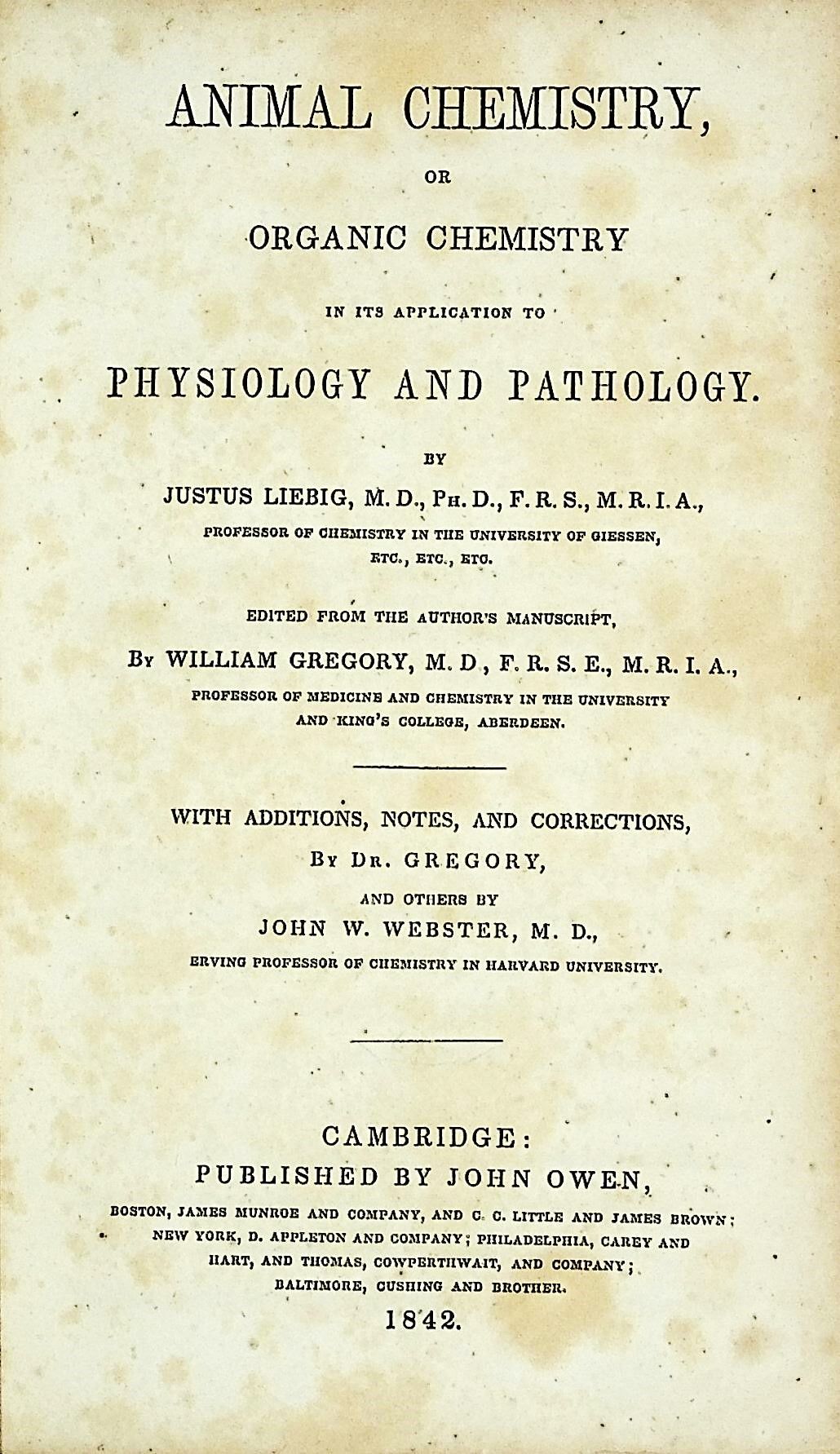
Animal Chemistry, or Organic Chemistry in its application to Physiology and Pathology, with additions, notes, and corrections by Dr. Gregory, and others by John W. Webster
- 3/4 leather binding with marbled boards
- Cambridge, Mass.: John Owen, 1842
Cambridge, Mass.: John Owen, 1842. First edition.
1842 FIRST ENGLISH TRANSLATION OF THE INTRODUCTION OF METABOLISM INTO PHYSIOLOGY BY THE FOUNDER OF ORGANIC CHEMISTRY.
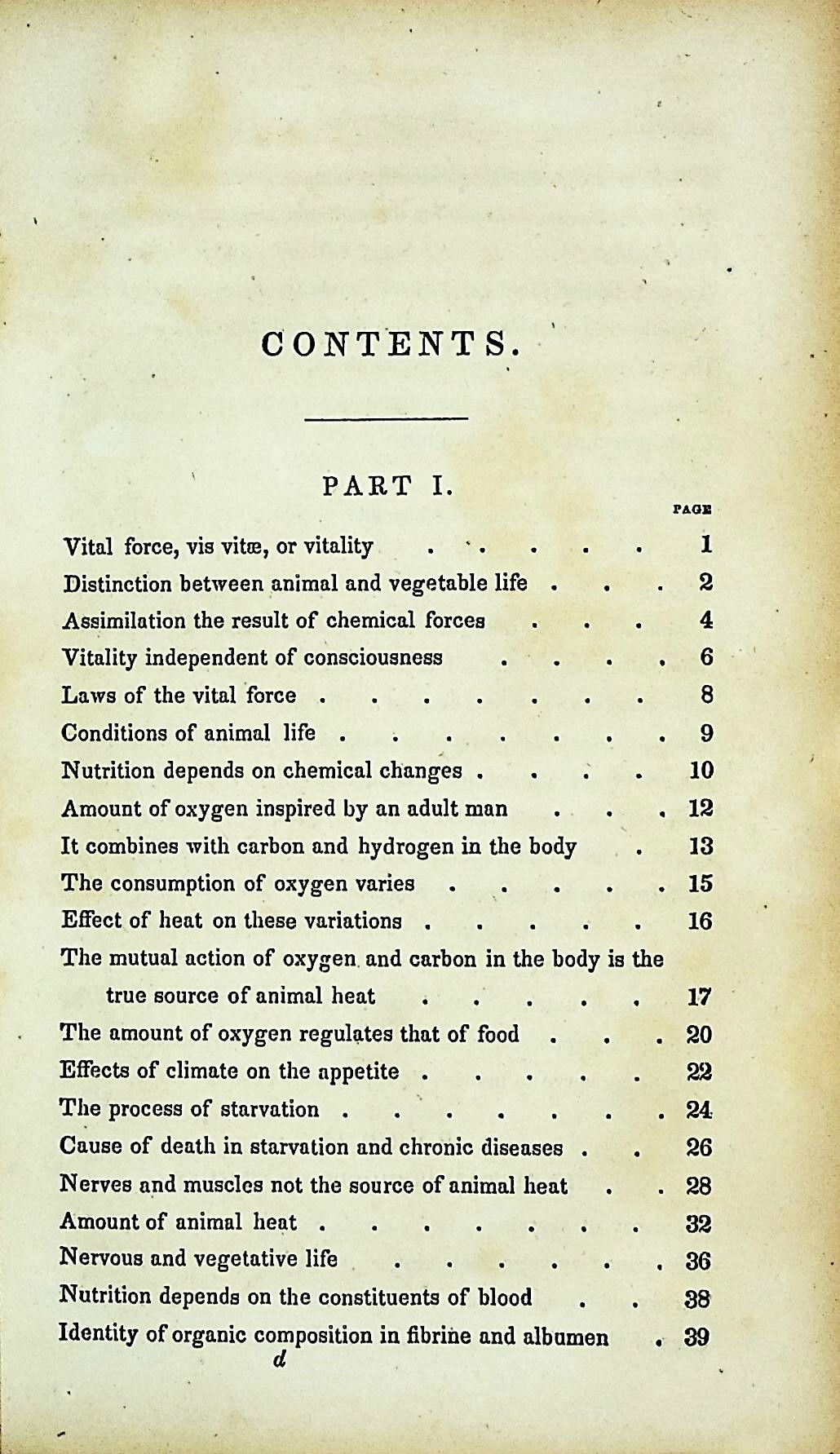
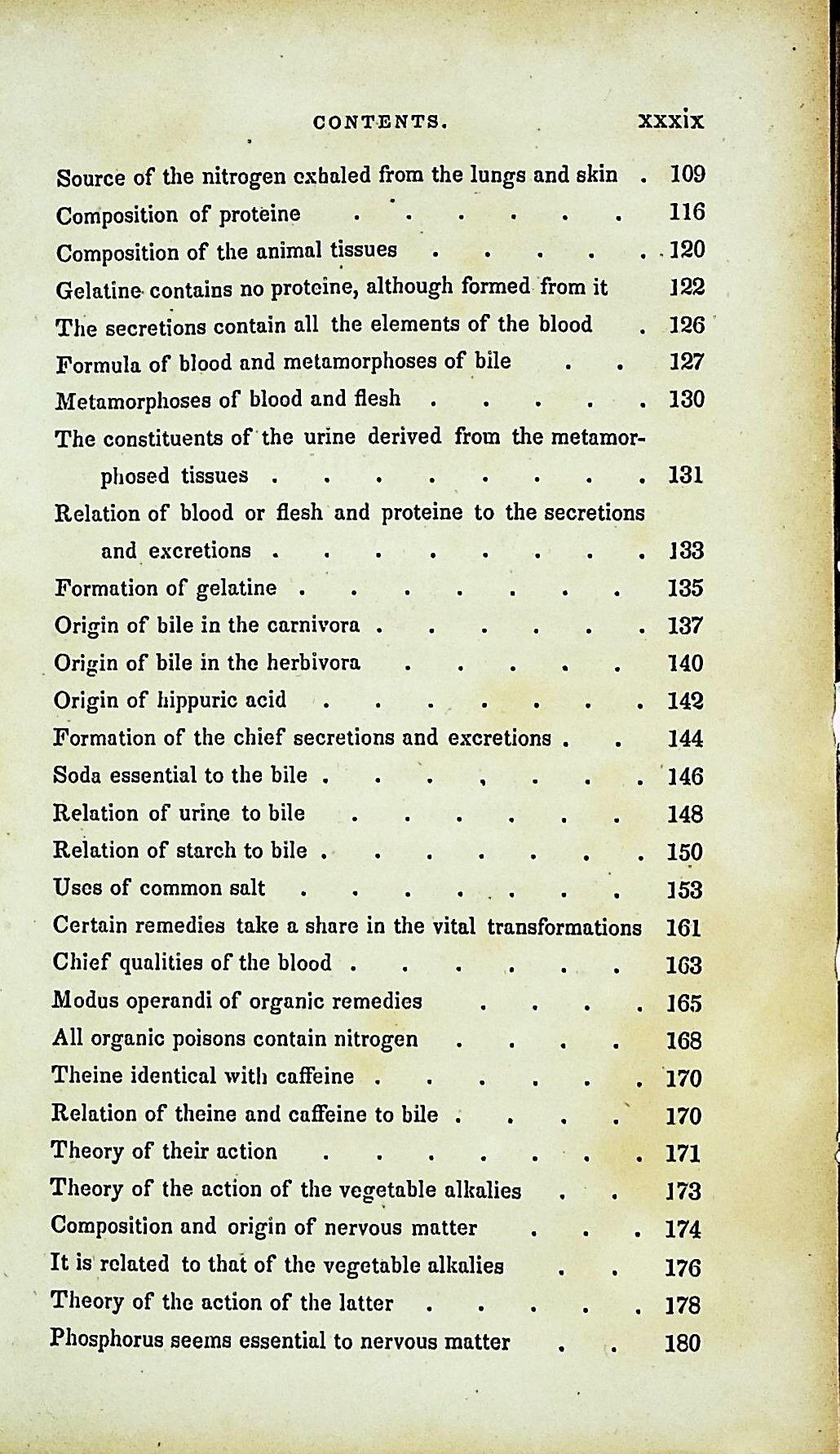
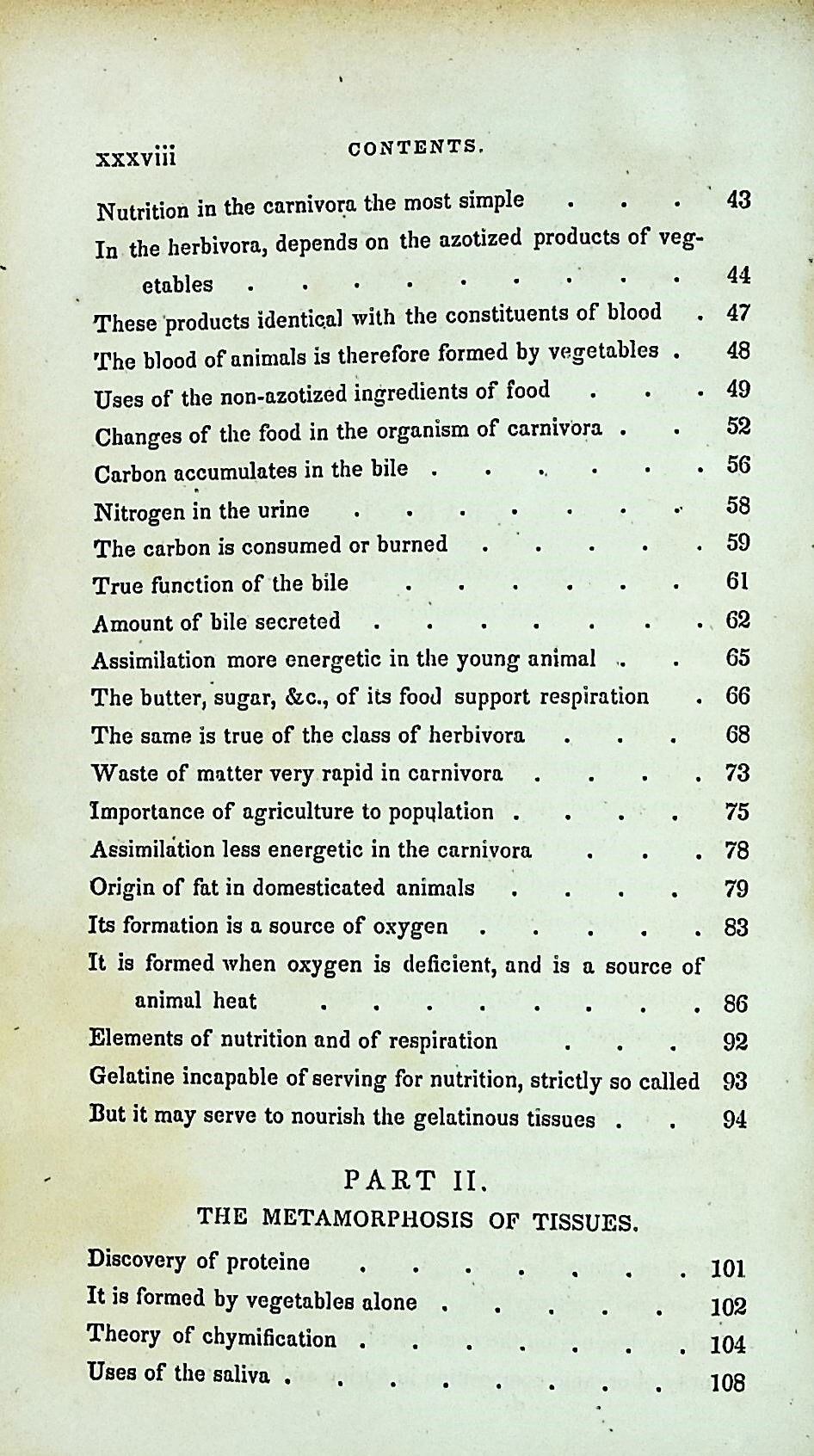
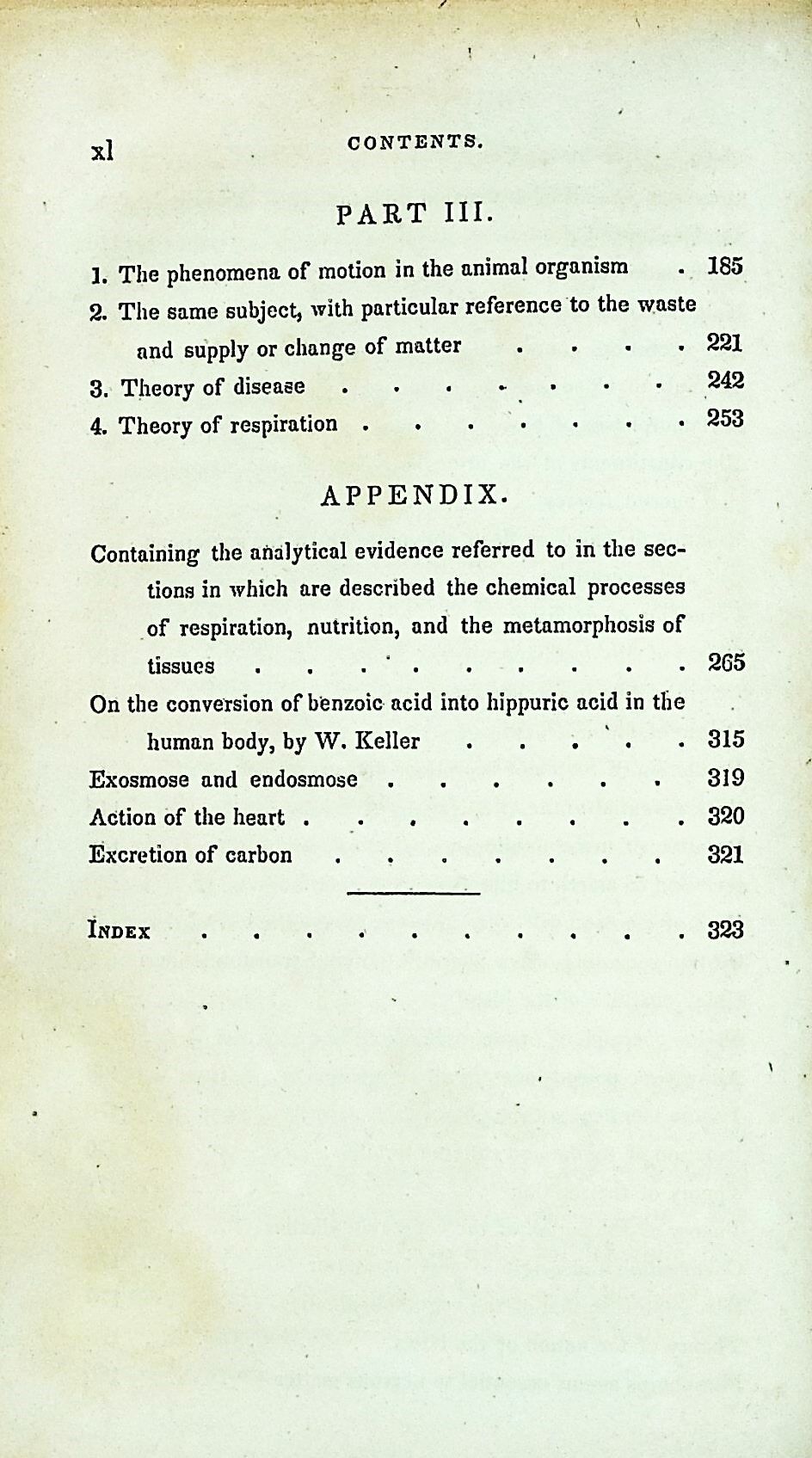
7 1/2 inches tall hardcover, 3/4 calf with marbled paper boards, spine with raised bands and red leather label with gilt title, marbled endpapers, xl, 347 pp, 8 pp reply to publishers of unauthorized edition of Part II of Liebig's work. Covers worn, binding tight, light foxing, pages crisp and text unmarked, good+. JUSTUS LIEBIG (1803 – 1873) was a German scientist who made major contributions to agricultural and biological chemistry, and is considered one of the principal founders of organic chemistry. As a professor at the University of Giessen, he devised the modern laboratory-oriented teaching method, and for such innovations, he is regarded as one of the greatest chemistry teachers of all time. He has been described as the "father of the fertilizer industry" for his emphasis on nitrogen and trace minerals as essential plant nutrients, and his formulation of the law of the minimum, which described how plant growth relied on the scarcest nutrient resource, rather than the total amount of resources available. At the age of 13, Liebig lived through the year without a summer, when the majority of food crops in the Northern Hemisphere were destroyed by a volcanic winter. Germany was among the hardest-hit nations in the global famine that ensued, and the experience is said to have shaped Liebig's later work. Due in part to Liebig's innovations in fertilizers and agriculture, the 1816 famine became known as "the last great subsistence crisis in the Western world". In late 1822, Liebig went to study in Paris where he worked in the private laboratory of Joseph Louis Gay-Lussac, and was also befriended by Alexander von Humboldt and Georges Cuvier. On 26 May 1824, at the age of 21 and with Humboldt's recommendation, Liebig became a professor extraordinarius at the University of Giessen. Liebig's work on applying chemistry to plant and animal physiology was especially influential. By 1842, he had published Chimie organique appliquée à la physiologie animale et à la pathologie, published in English as Animal Chemistry, or, Organic Chemistry in its Applications to Physiology and Pathology (offered here), presenting a chemical theory of metabolism. The experimental techniques used by Liebig and others often involved controlling and measuring diet, and monitoring and analyzing the products of animal metabolism, as indicators of internal metabolic processes. Liebig saw similarities between plant and animal metabolism, and suggested that nitrogenous animal matter was similar to, and derived from, plant matter. He categorized foodstuffs into two groups, nitrogenous materials which he believed were used to build animal tissue, and non-nitrogenous materials which he believed were involved in separate processes of respiration and generation of heat. Liebig proposed chemical explanations for processes such as eremacausis (organic decomposition), describing the rearrangement of atoms as a result of unstable "affinities" reacting to external causes such as air or already decaying substances. Liebig identified the blood as the site of the body's "chemical factory", where he believed processes of synthesis and degradation took place. He presented a view of disease in terms of chemical process, in which healthy blood could be attacked by external contagia; secreting organs sought to transform and excrete such substances; and failure to do so could lead to their elimination through the skin, lungs, and other organs, potentially spreading contagion. Again, although the world was much more complicated than his theory, and many of his individual ideas were later proved wrong, Liebig managed to synthesize existing knowledge in a way that had significant implications for doctors, sanitarians, and social reformers. The English medical journal The Lancet reviewed Liebig's work and translated his chemical lectures as part of its mission to establish a new era of medicine. Liebig's ideas stimulated significant medical research, led to the development of better techniques for testing experimental models of metabolism, and pointed to chemistry as fundamental to the understanding of health and disease.
WILLIAM GREGORY (1803-0858) entered the University of Edinburgh in 1821 and graduated M.D. in 1828. After graduation he went to study chemistry at Giessen in Germany under the great chemist, Justus Liebig; the laboratory at Giessen was almost the first in Germany where practical instruction in chemistry was systematically given and in the second quarter of the nineteenth century was famous throughout the world attracting many students who subsequently made important contributions to chemistry. Gregory and Liebig became good friends and the impression that Liebig created made Gregory his life-long supporter and the champion of his views.
GARRISON-MORTON #677: "First classification of the organic foodstuffs and the processes of nutrition. With this book Liebig introduced the concept of metabolism into physiology. English translation, London, 1842."
1842 FIRST ENGLISH TRANSLATION OF THE INTRODUCTION OF METABOLISM INTO PHYSIOLOGY BY THE FOUNDER OF ORGANIC CHEMISTRY.
7 1/2 inches tall hardcover, 3/4 calf with marbled paper boards, spine with raised bands and red leather label with gilt title, marbled endpapers, xl, 347 pp, 8 pp reply to publishers of unauthorized edition of Part II of Liebig's work. Covers worn, binding tight, light foxing, pages crisp and text unmarked, good+. JUSTUS LIEBIG (1803 – 1873) was a German scientist who made major contributions to agricultural and biological chemistry, and is considered one of the principal founders of organic chemistry. As a professor at the University of Giessen, he devised the modern laboratory-oriented teaching method, and for such innovations, he is regarded as one of the greatest chemistry teachers of all time. He has been described as the "father of the fertilizer industry" for his emphasis on nitrogen and trace minerals as essential plant nutrients, and his formulation of the law of the minimum, which described how plant growth relied on the scarcest nutrient resource, rather than the total amount of resources available. At the age of 13, Liebig lived through the year without a summer, when the majority of food crops in the Northern Hemisphere were destroyed by a volcanic winter. Germany was among the hardest-hit nations in the global famine that ensued, and the experience is said to have shaped Liebig's later work. Due in part to Liebig's innovations in fertilizers and agriculture, the 1816 famine became known as "the last great subsistence crisis in the Western world". In late 1822, Liebig went to study in Paris where he worked in the private laboratory of Joseph Louis Gay-Lussac, and was also befriended by Alexander von Humboldt and Georges Cuvier. On 26 May 1824, at the age of 21 and with Humboldt's recommendation, Liebig became a professor extraordinarius at the University of Giessen. Liebig's work on applying chemistry to plant and animal physiology was especially influential. By 1842, he had published Chimie organique appliquée à la physiologie animale et à la pathologie, published in English as Animal Chemistry, or, Organic Chemistry in its Applications to Physiology and Pathology (offered here), presenting a chemical theory of metabolism. The experimental techniques used by Liebig and others often involved controlling and measuring diet, and monitoring and analyzing the products of animal metabolism, as indicators of internal metabolic processes. Liebig saw similarities between plant and animal metabolism, and suggested that nitrogenous animal matter was similar to, and derived from, plant matter. He categorized foodstuffs into two groups, nitrogenous materials which he believed were used to build animal tissue, and non-nitrogenous materials which he believed were involved in separate processes of respiration and generation of heat. Liebig proposed chemical explanations for processes such as eremacausis (organic decomposition), describing the rearrangement of atoms as a result of unstable "affinities" reacting to external causes such as air or already decaying substances. Liebig identified the blood as the site of the body's "chemical factory", where he believed processes of synthesis and degradation took place. He presented a view of disease in terms of chemical process, in which healthy blood could be attacked by external contagia; secreting organs sought to transform and excrete such substances; and failure to do so could lead to their elimination through the skin, lungs, and other organs, potentially spreading contagion. Again, although the world was much more complicated than his theory, and many of his individual ideas were later proved wrong, Liebig managed to synthesize existing knowledge in a way that had significant implications for doctors, sanitarians, and social reformers. The English medical journal The Lancet reviewed Liebig's work and translated his chemical lectures as part of its mission to establish a new era of medicine. Liebig's ideas stimulated significant medical research, led to the development of better techniques for testing experimental models of metabolism, and pointed to chemistry as fundamental to the understanding of health and disease.
WILLIAM GREGORY (1803-0858) entered the University of Edinburgh in 1821 and graduated M.D. in 1828. After graduation he went to study chemistry at Giessen in Germany under the great chemist, Justus Liebig; the laboratory at Giessen was almost the first in Germany where practical instruction in chemistry was systematically given and in the second quarter of the nineteenth century was famous throughout the world attracting many students who subsequently made important contributions to chemistry. Gregory and Liebig became good friends and the impression that Liebig created made Gregory his life-long supporter and the champion of his views.
GARRISON-MORTON #677: "First classification of the organic foodstuffs and the processes of nutrition. With this book Liebig introduced the concept of metabolism into physiology. English translation, London, 1842."
Details
Title
Animal Chemistry, or Organic Chemistry in its application to Physiology and Pathology, with additions, notes, and corrections by Dr. Gregory, and others by John W. Webster
Author
Liebig, Justus and Gregory, William
Binding
3/4 leather binding with marbled boards
Condition
Unknown
Publisher
John Owen: Cambridge, Mass.
Date
1842
Edition
First edition