

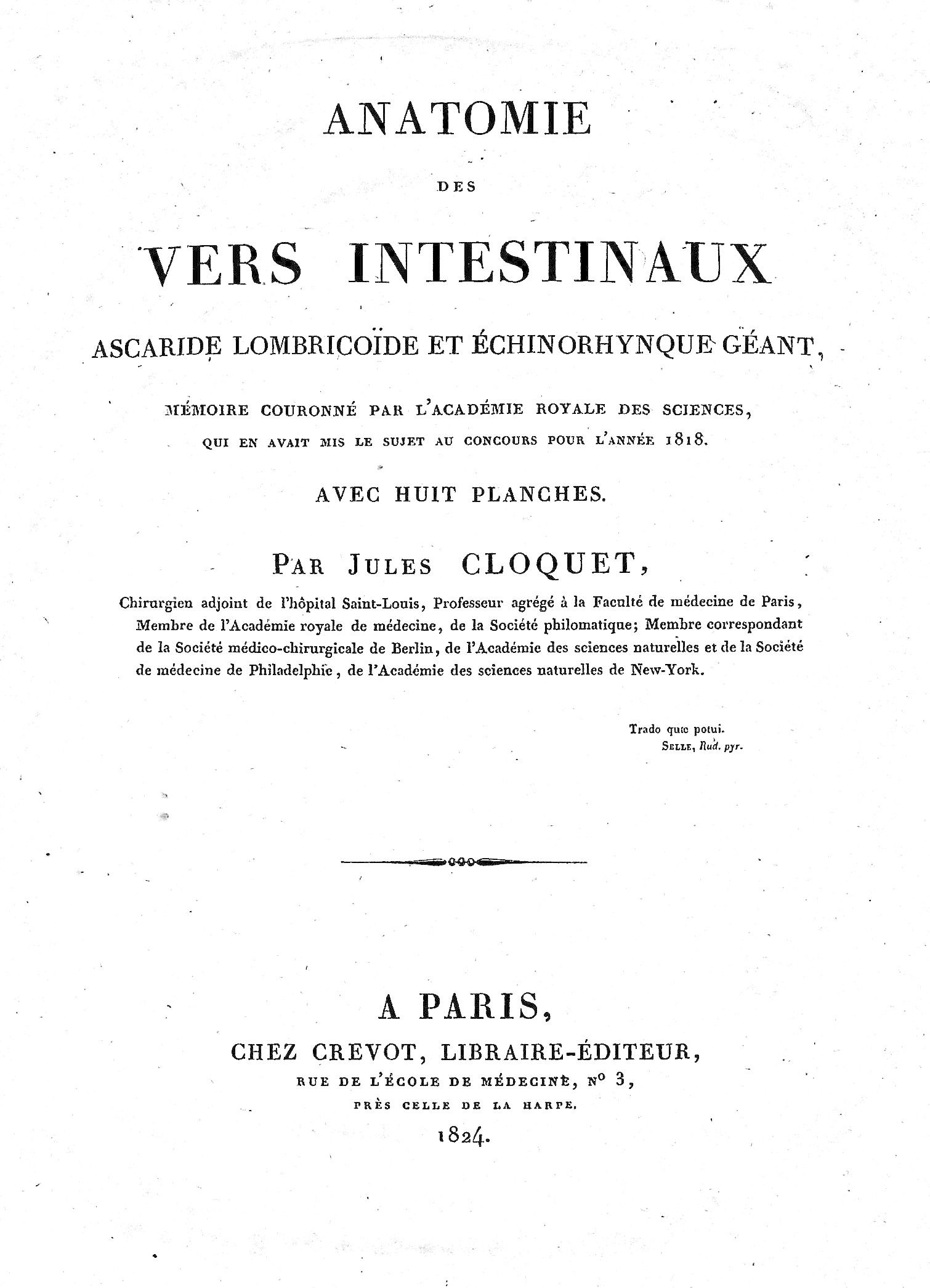
Anatomie des Vers Intestinaux, Ascaride Lombricoide, et Echinorhynque Geant
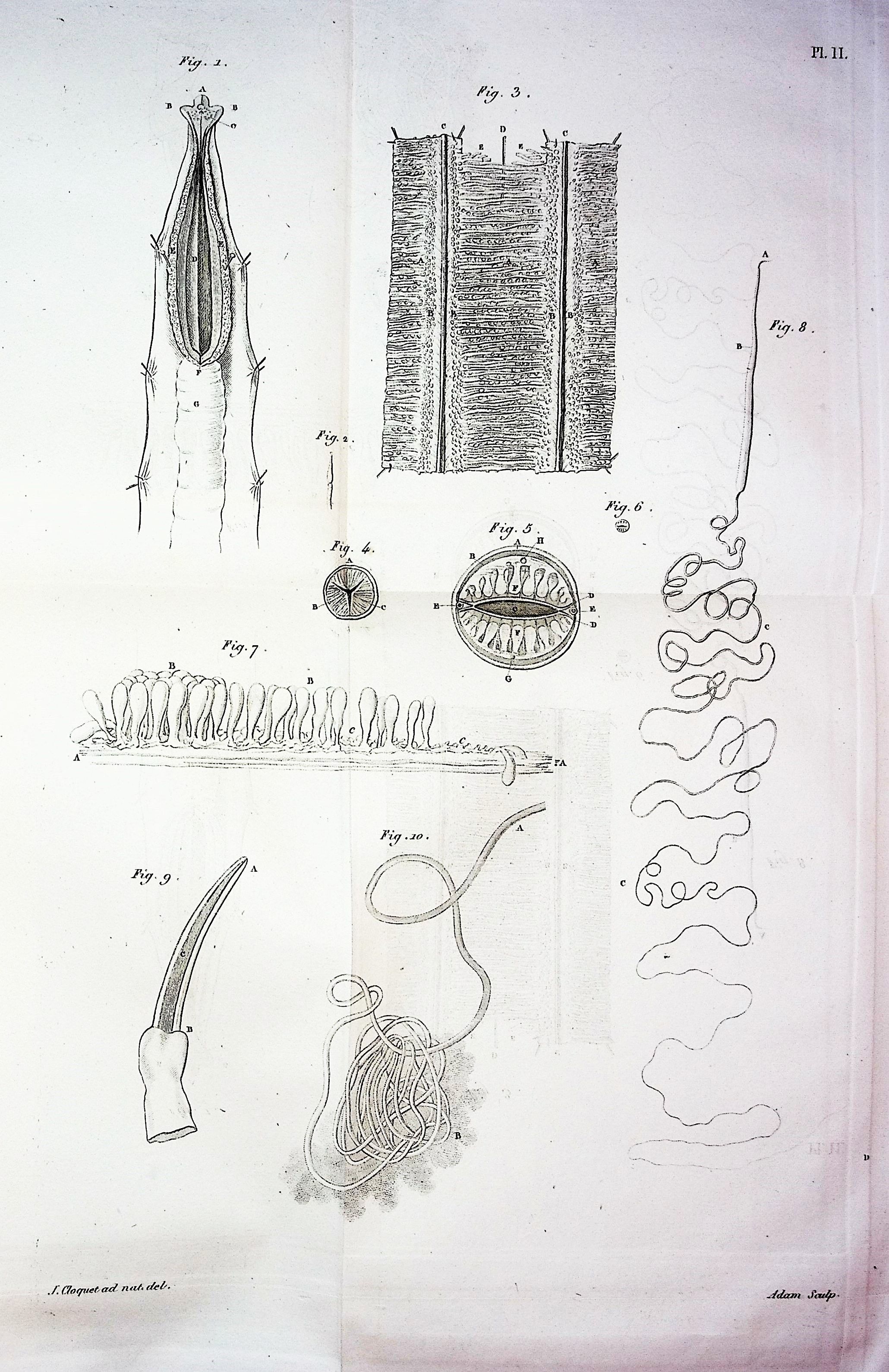
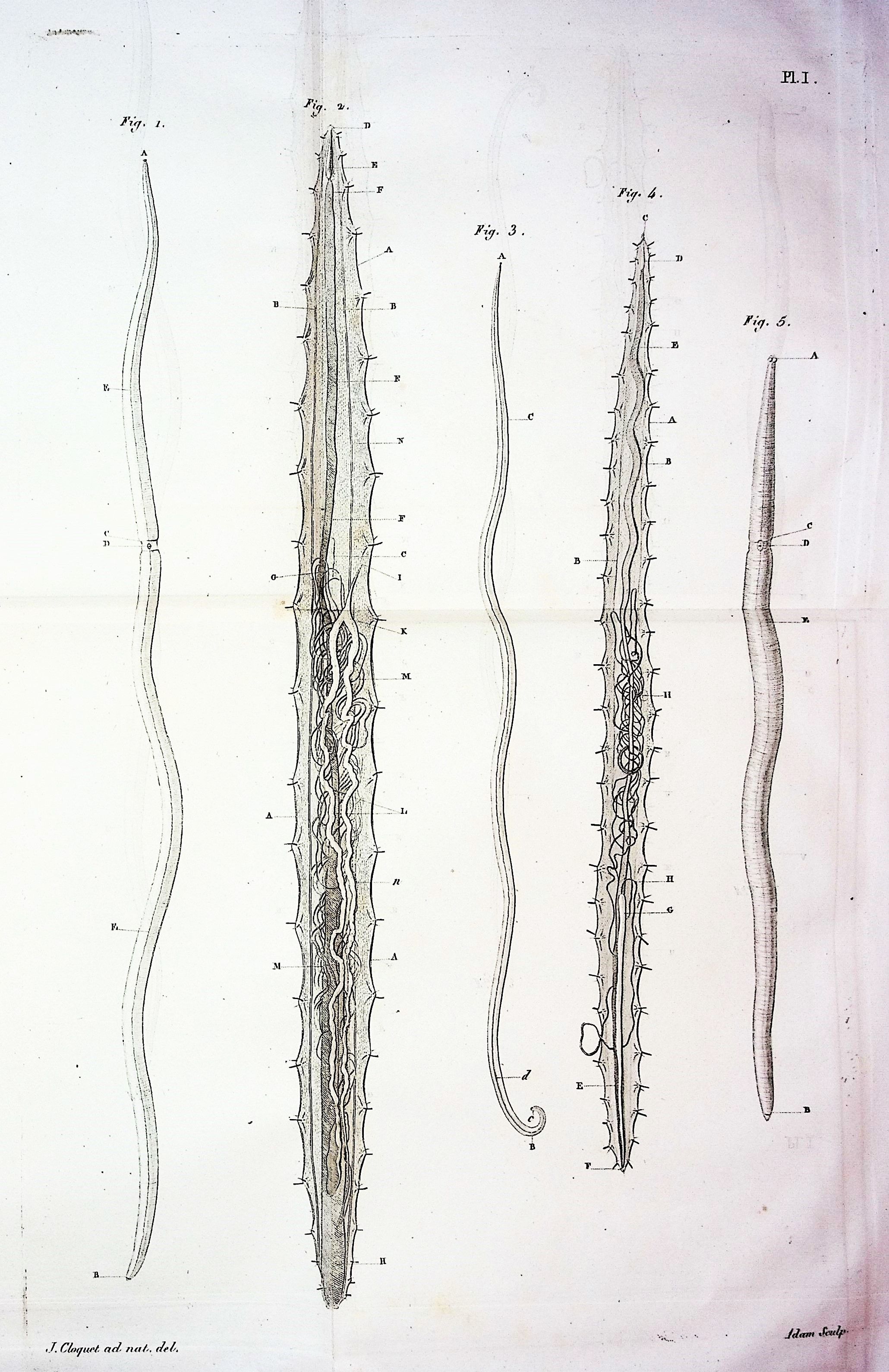
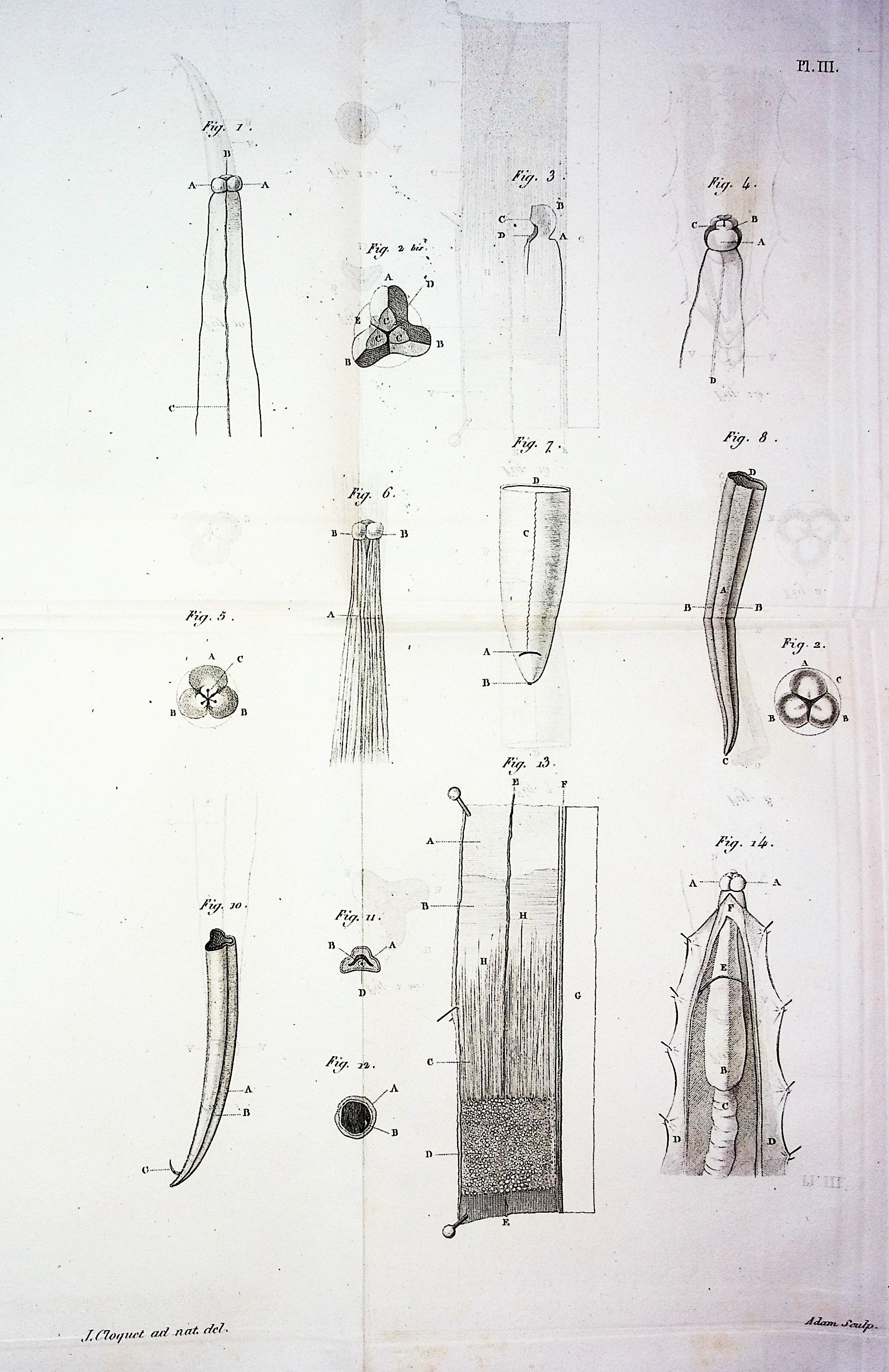
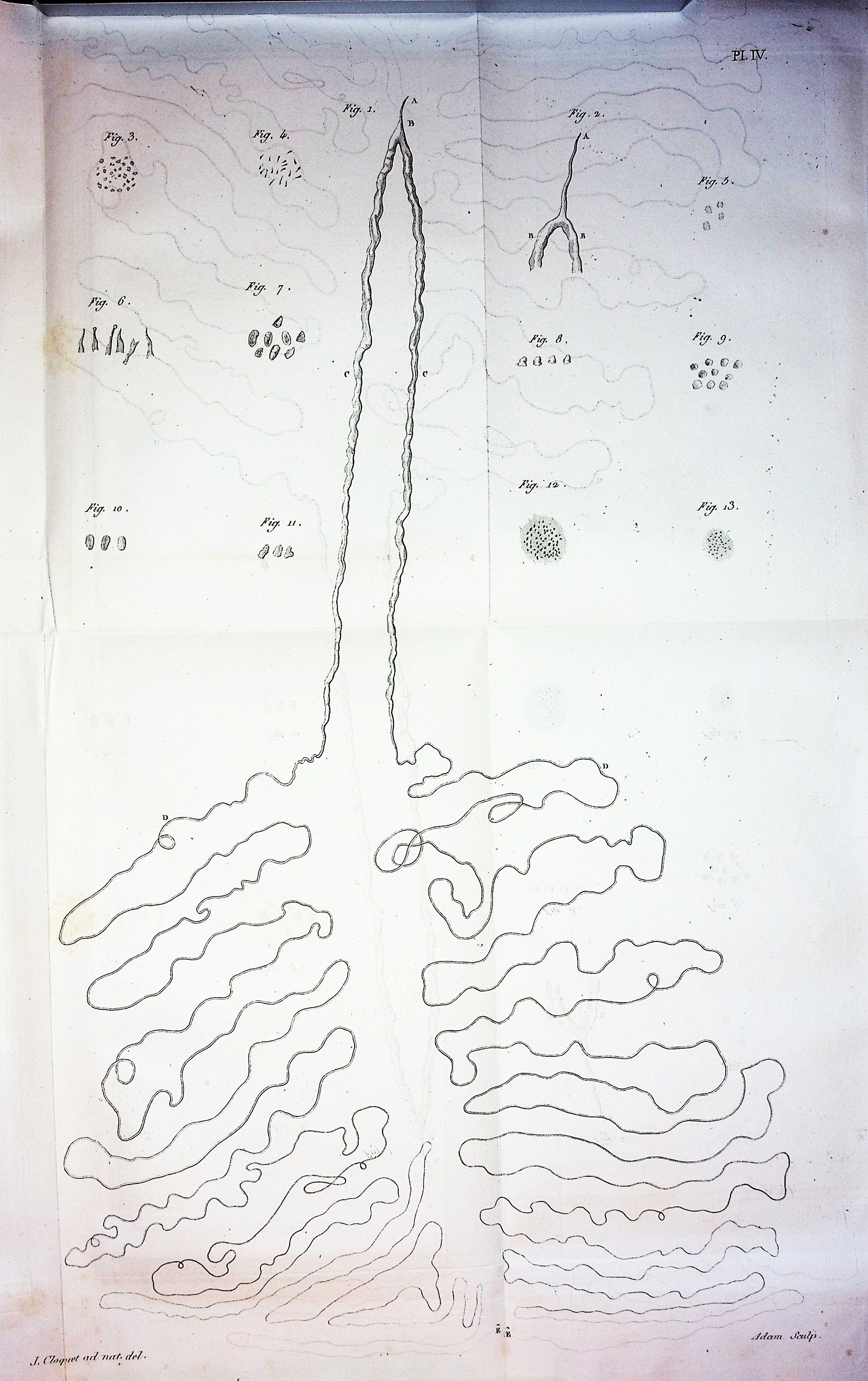
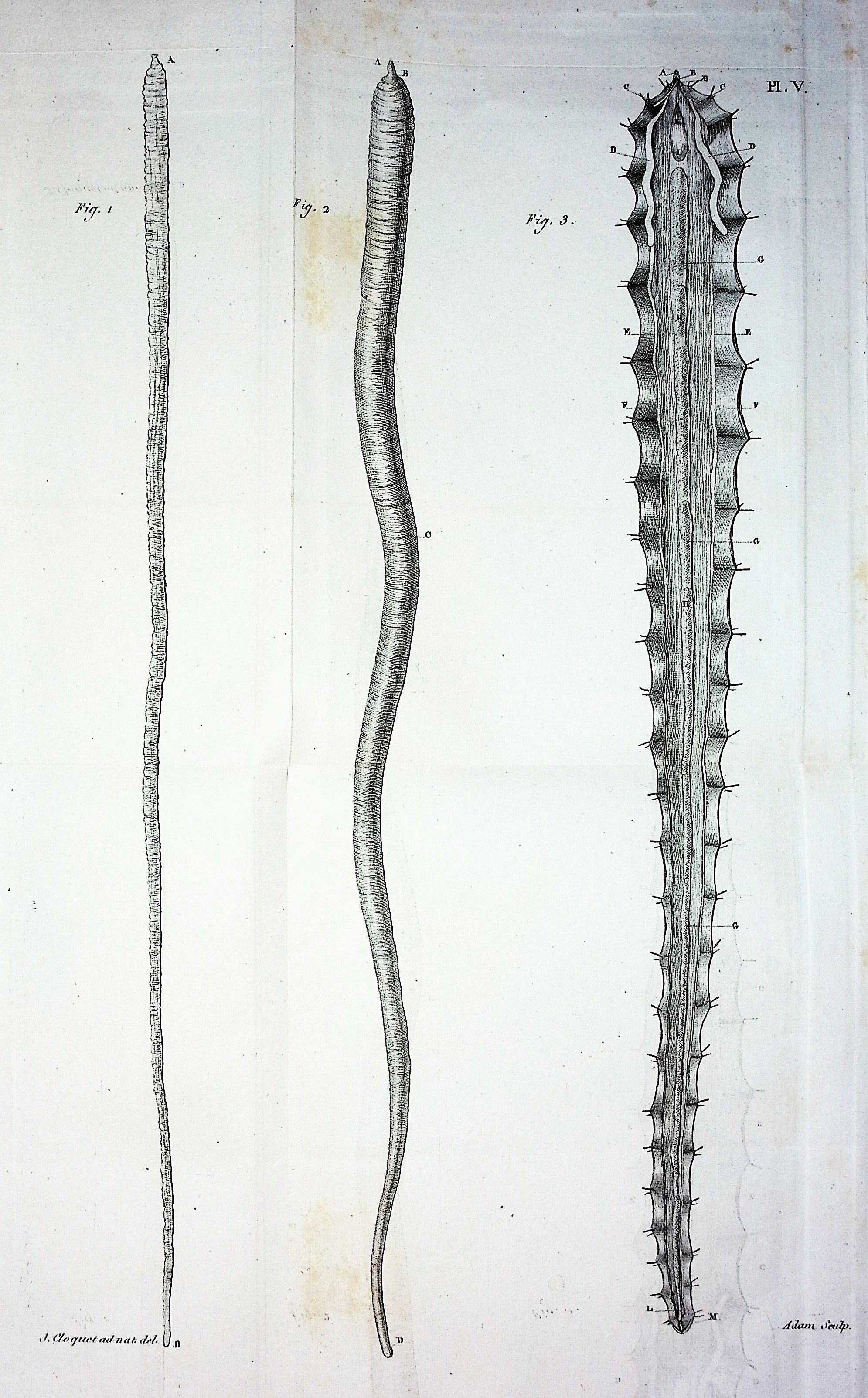
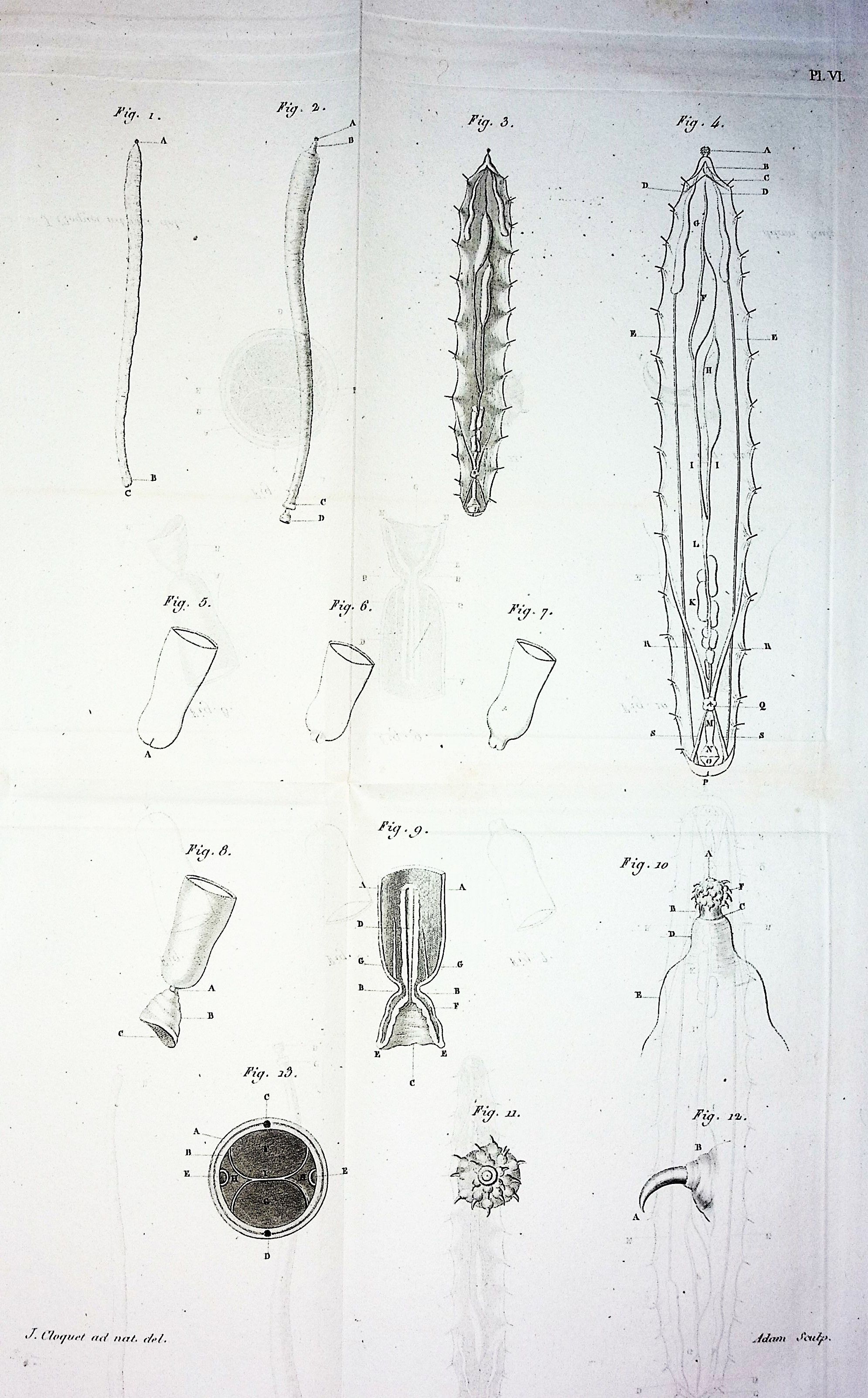
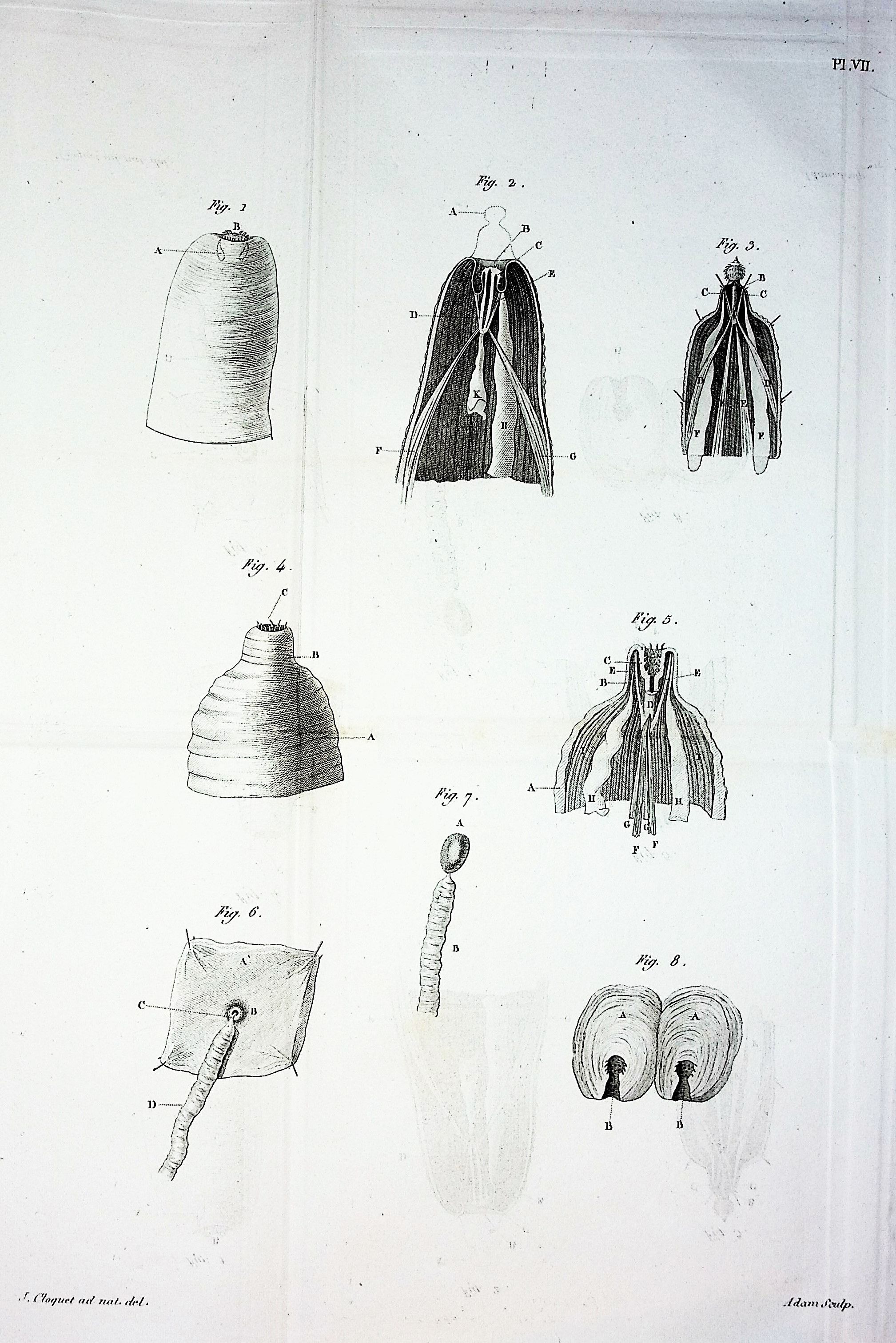
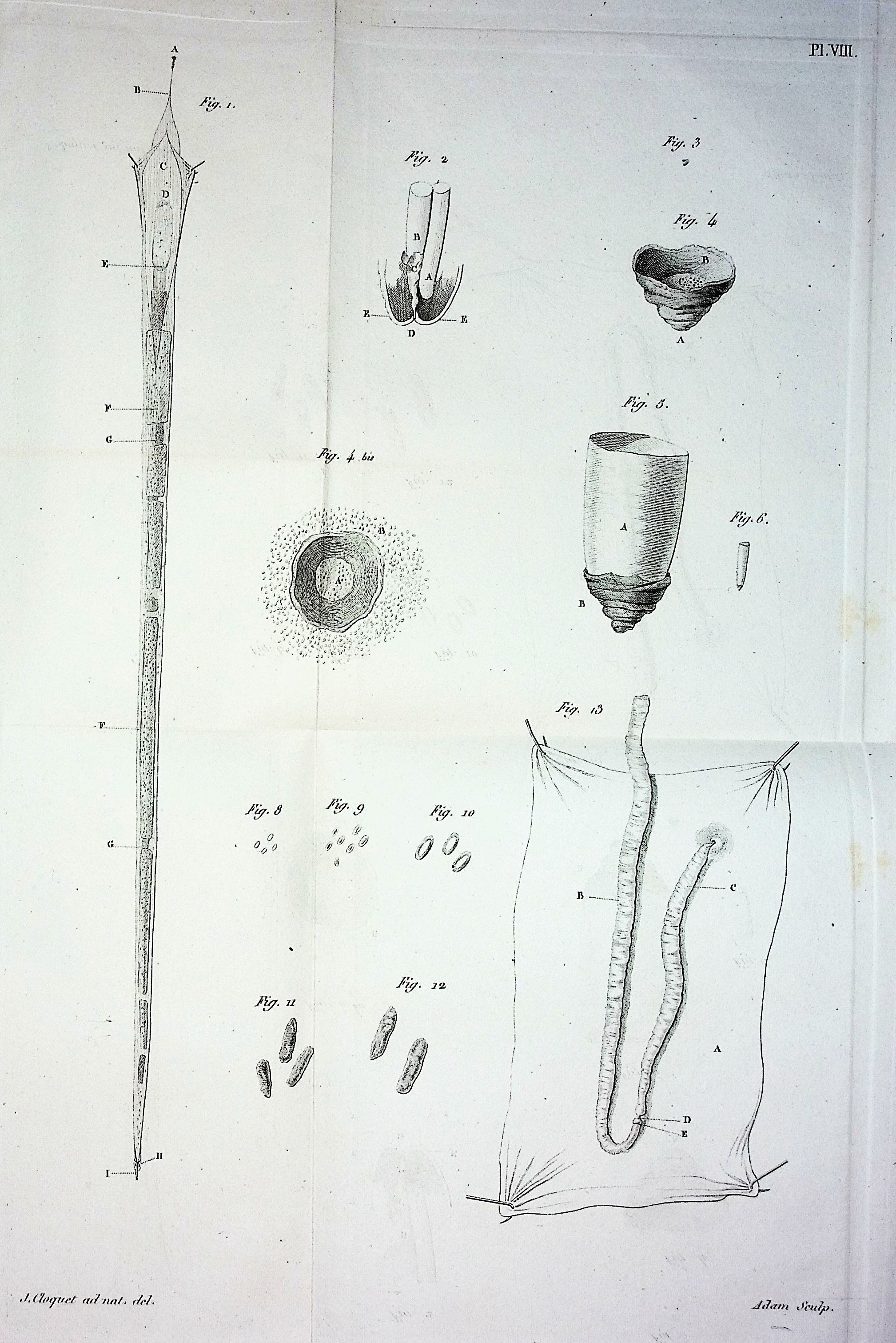
- Leather spine, marbled paper-covered boards
- Paris: Crevot, 1824
Paris: Crevot, 1824. First edition.
1824 LANDMARK ILLUSTRATED STUDY OF ASCARIS--ITS LIFE CYCLE WOULD NOT BE DISCOVERED UNTIL A CENTURY LATER.
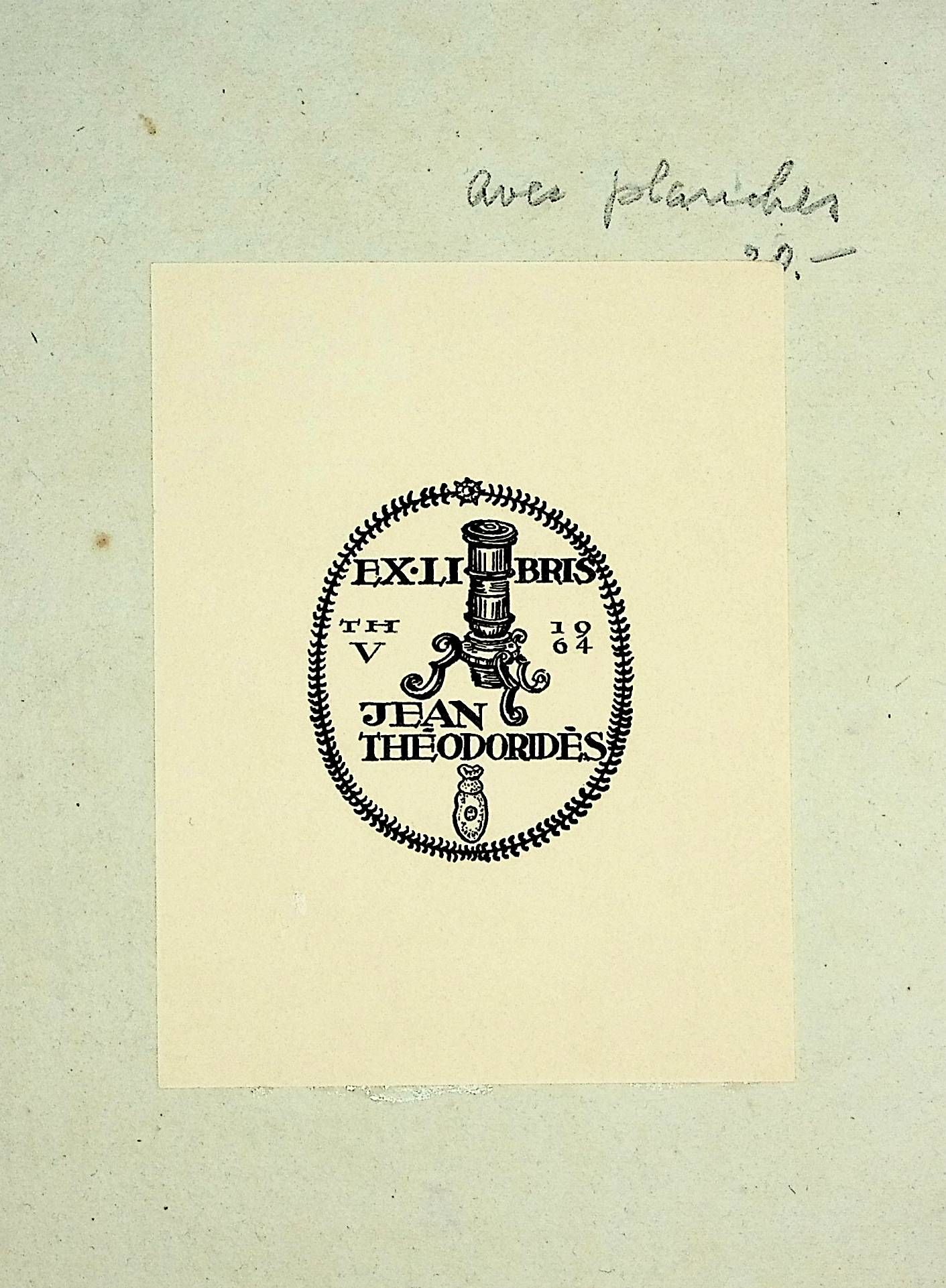
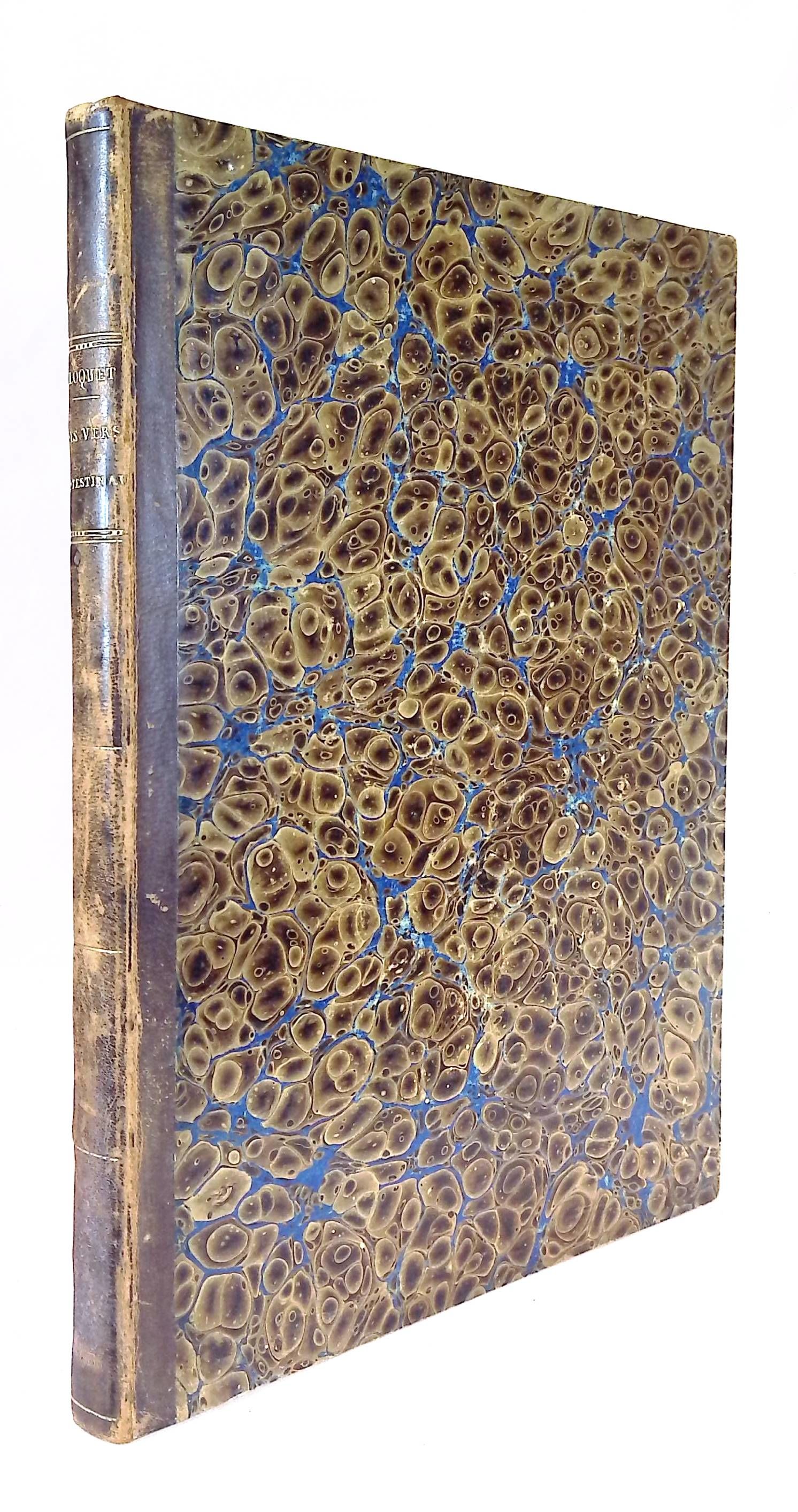
10 3/4 inches tall hardcover, marbled paper-covered boards, leather spine with gilt title, decorative bookplate of Jean Theodorides to front paste-down, bookplate of Robert L. Chevalier to front free endpaper, vii, 130 pp, 8 fine folding engraved plates. Light wear to spine, covers clean, binding tight, plates bright, very good in custom archival mylar cover. Large intestinal roundworms have been known since antiquity. Eggs have been identified in archeological coprolites across the globe, the oldest ones being more than 24,000 years old. In 1758 Linnaeus named them Ascaris lumbricoides. For many centuries, they were thought to arise by spontaneous generation. In 1855, Ascaris eggs were found in human faeces by Henry Ransom in England. In 1922, Shimesu Koino ingested 2,000 Ascaris lumbricoides eggs, found larvae in his sputum a few days later, then after 50 days took an anthelmintic and recovered 667 immature Ascaris lumbricoides, thus confirming the life cycle. An estimated 1 billion people are currently infected with Ascaris lumbricoides worldwide. The eggs are extremely resistant to strong chemicals, desiccation, and low temperatures and can remain viable in the soil for several months or even years.
JULES GERMAIN CLOCQUET (1790-1883) the famed French anatomist, surgeon, and professor, has many eponyms associated with him, including: Cloquet's fascia, Cloquet's gland or lymph node of Cloquet, Cloquet's hernia, Cloquet's ligament, Cloquet's canal, and Cloquet's septum. A man blessed with artistic talents, Cloquet was the author of many theses, as well as anatomical volumes that were comparable to the works of other great anatomists of his time. Cloquet attracted many pupils with his innovative teaching style and implementation of anatomical preparations, drawings, and sketches on the black board with chalk.
PROVENANCE: JEAN THEODORIDES (1926-1999) was a parasitologist and a historian of biological and medical sciences. For more than thirty years, he pursued the study of gregarines, a class of Apicomplexa exclusively represented in invertebrates. He will remain the world specialist in these parasitic protozoa to which he has devoted nearly 100 publications. With Pierre-Paul Grassé, in 1955 he undertook the study of gregarines by electron microscopy and it was this material that revealed the presence of ergastoplasm in protozoa. He was a Fellow of the Royal Society of Medicine.
Details
Title
Anatomie des Vers Intestinaux, Ascaride Lombricoide, et Echinorhynque Geant
Author
Cloquet, Jules
Binding
Leather spine, marbled paper-covered boards
Condition
Unknown
Publisher
Crevot: Paris
Date
1824
Edition
First edition