

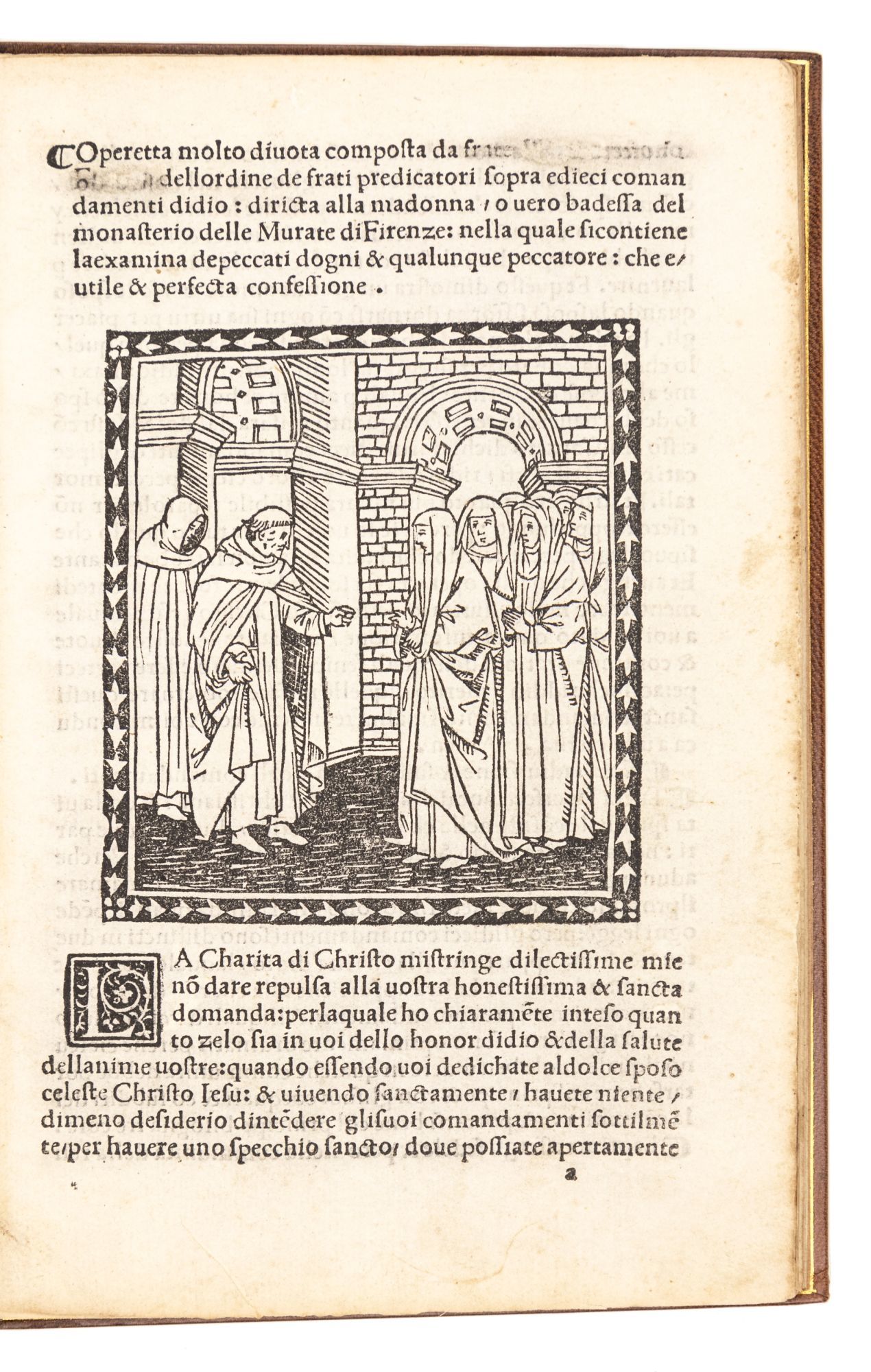
Operetta molto divota da Frate Hieronymo da Ferrara... sopra edieci comandamenti didio: diricta alla madonna, o uero badessa del monasterio delle Murate di Firenze nella quale si contiene laexamina depeccati dogni [!] & qualunque peccatore: che e utile & perfecta confessione
- Hardcover
- Florence: [Gianstephano di Carlo da Pavia], 23 October, 1508
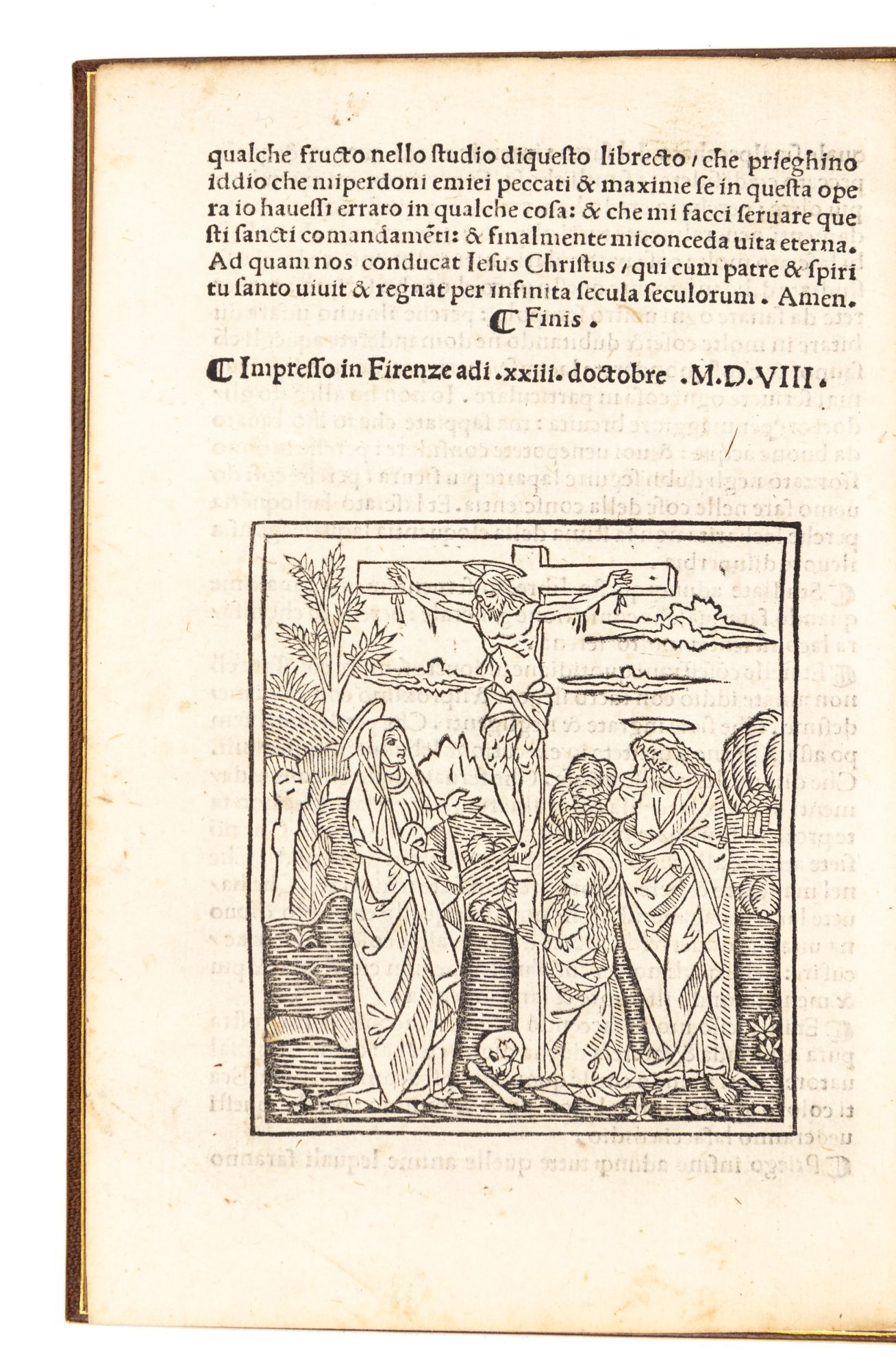
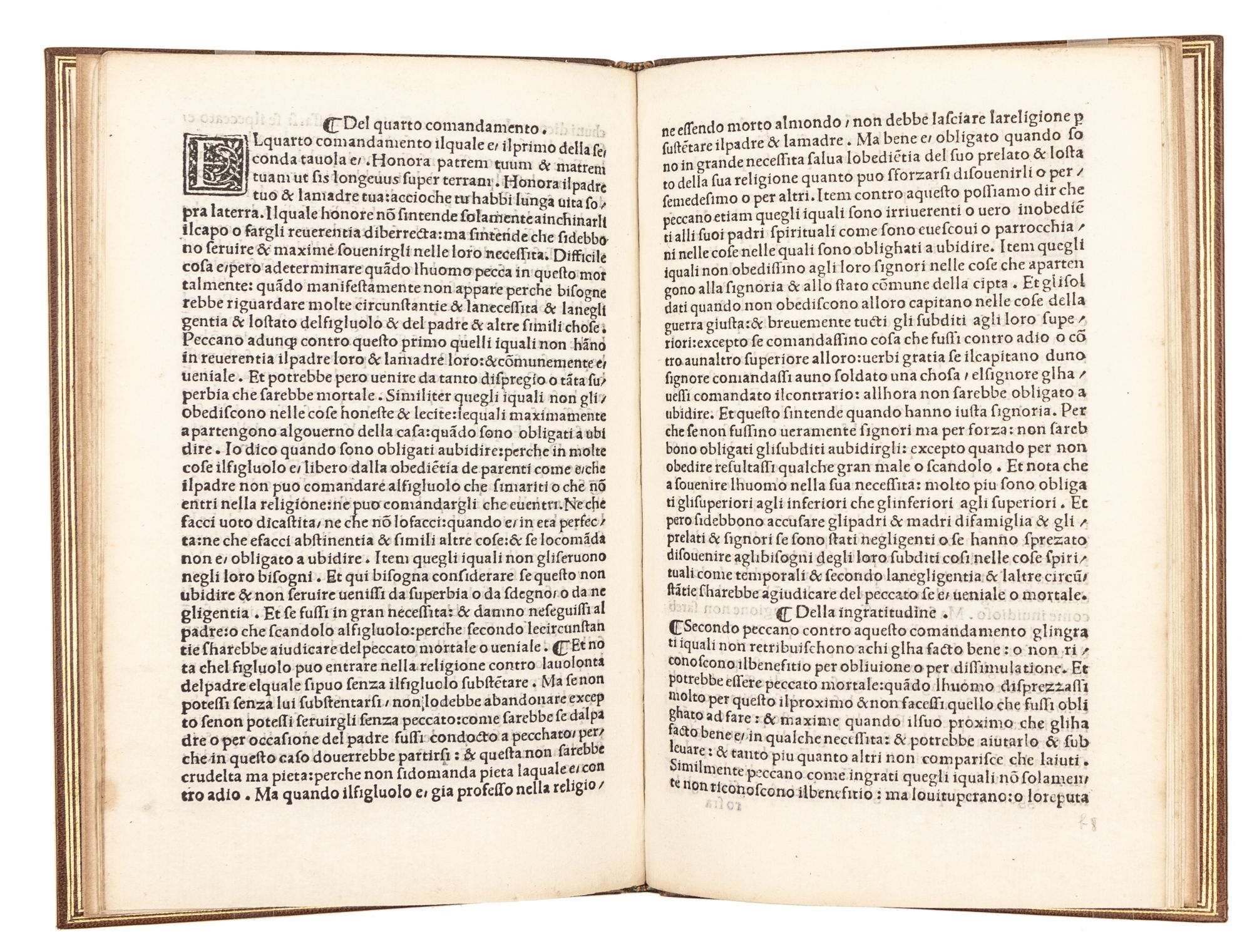
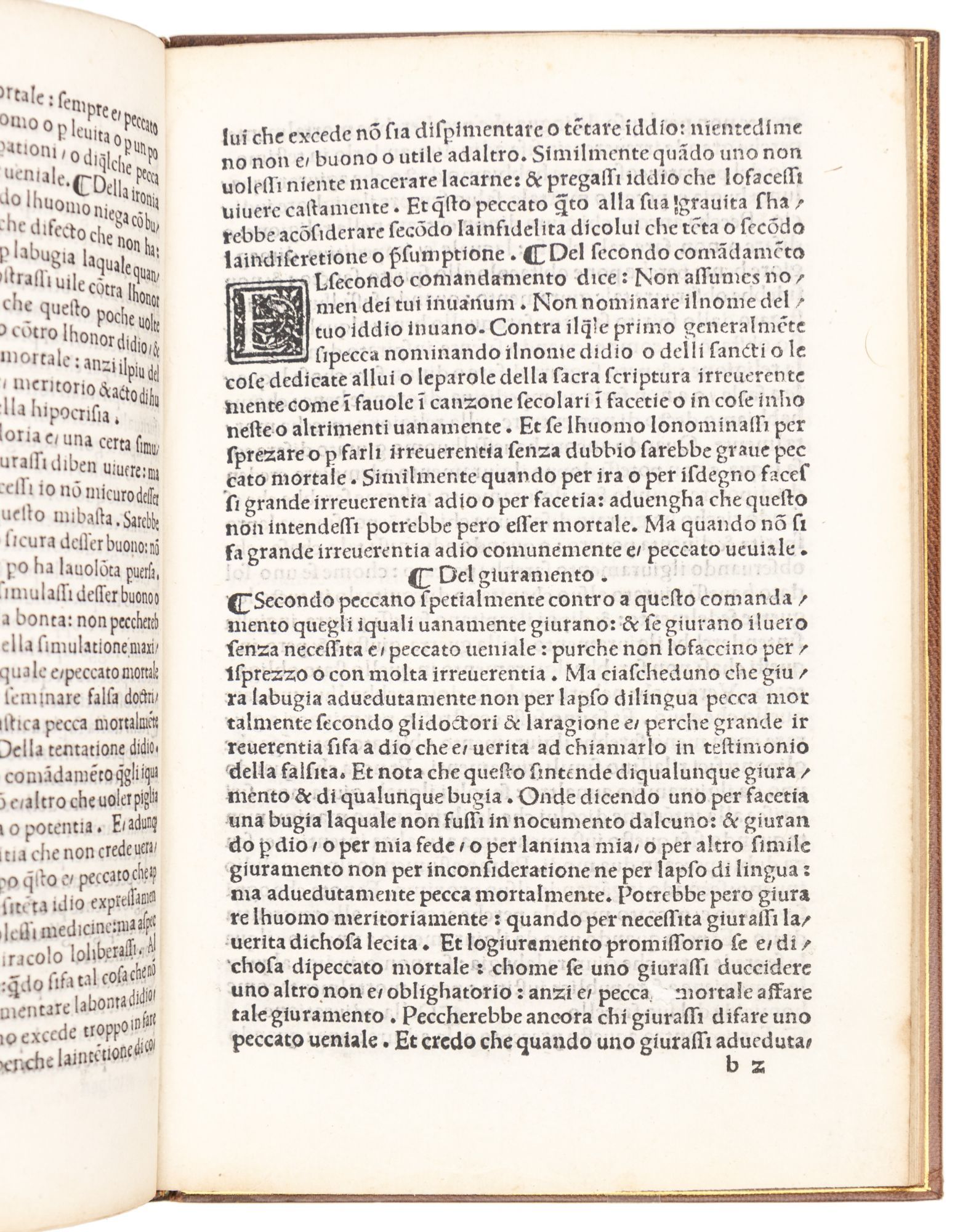
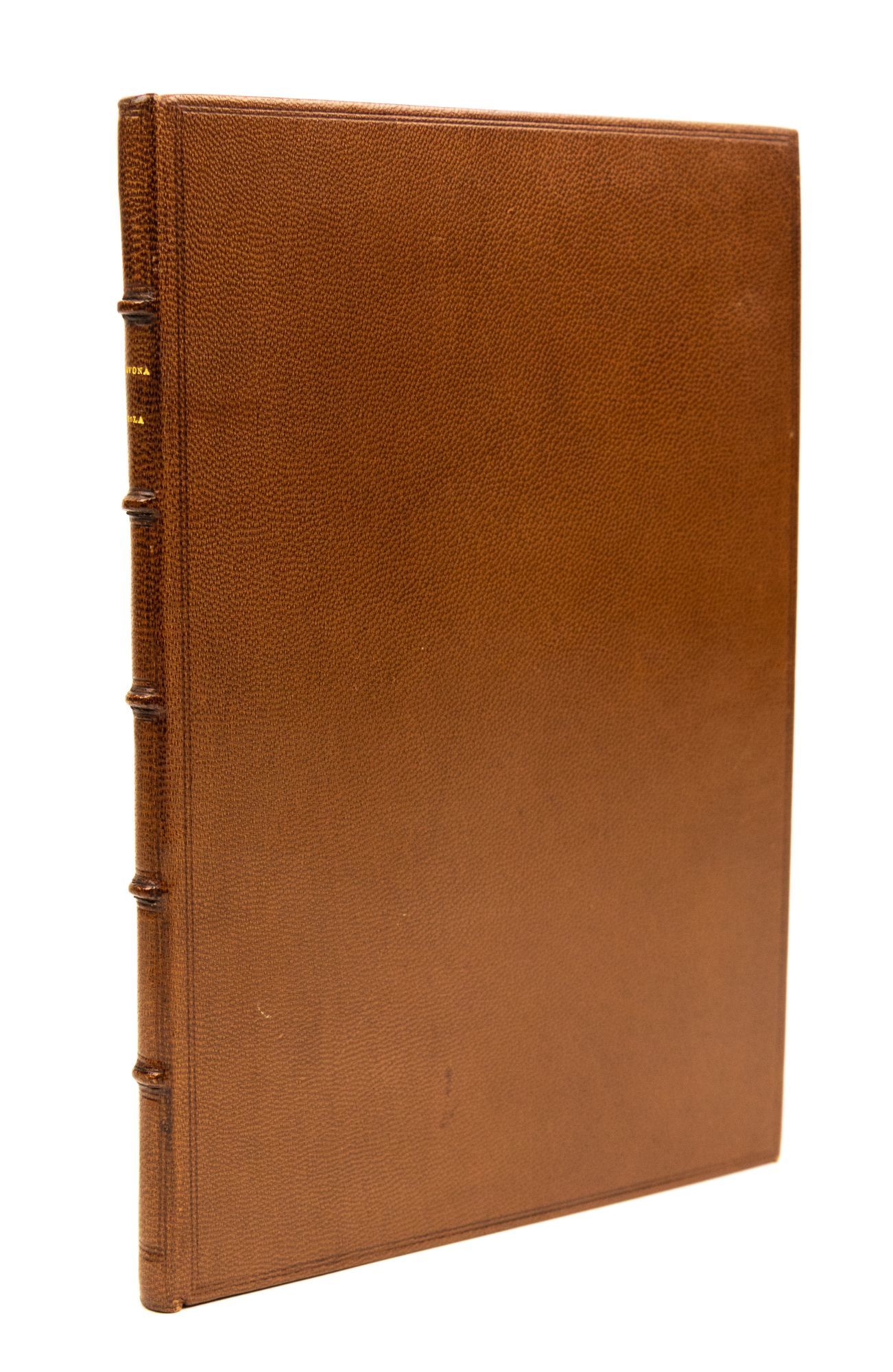
Florence: [Gianstephano di Carlo da Pavia], 23 October, 1508. THIRD EDITION, mimicking the layout and using the same woodcuts as the edition published at Florence by Bartolommeo di Libri, 24 Oct. 1495. Another Florentine edition, undated, was printed by Lorenzo Morgiani and Johannes Petri, ca. 1495-1496. Hardcover. Fine. Bound in 20th c. brown morocco. A fine copy. Savonarola’s name has been censored on the title. With a fine woodcut scene on the title page showing Savonarola conversing with the Abbess and sisters of the Monastero delle Murate. On the final leaf is a Crucifixion scene with the Virgin, St. John, and Mary Magdalene. These woodcuts were used in Bartolommeo di Libri’s 1495 first edition. Printer from BM STC Italian; place and date of printing from colophon. Sander, who attributes the printing to De Libri, regards the 1508 date of this third edition as erroneous, and assigns it to 1498, perhaps because of the use of the same woodcuts. Very rare. 5 copies traced in North America: UCLA, Rochester, Harvard, UNC, LC. Savonarola’s guide to confession, written for the nuns of the Florentine convent of Le Murate, and structured around the Ten Commandments. Savonarola addressed his text to the convent’s abbess, Caterina Ubaldini (a. 1475-1498), whom he praises in the introduction. The book appeared in October 1495, some months after Savonarola had paid a visit to the convent and preached a sermon critical of the nuns.
“The convent came to be identified as a pro-Medicean house, and the nuns were occasionally drawn into political conflicts. Religious and political reformer Fra Girolamo Savonarola took every opportunity to connect Florence’s first family with what he perceived to be the city’s decadence. Although they were not addressed directly, Medici associations may have fueled Savonarola’s public reproaches of Le Murate, issued from the cathedral pulpit in May 1495. The Dominican claimed that the nuns of Le Murate performed their needle and bookwork out of vanity; in their defense, the nuns argued that the funds produced by those arts were their sole source of financial support. Eventually, Savonarola’s opinion changed. He dedicated his treatise on the Ten Commandments to Abbess Caterina Ubaldini (a. 1475–98) and praised her in the book’s preface.”(Niccolini, The Chronicle of Le Murate, p. 11-12)
Savonarola writes:
“The charity of Christ binds me not to ignore your honest and holy request, by which I can clearly understand your zeal for honoring God and for the salvation of your souls, dedicated as you are to your sweet Heavenly Spouse, Jesus Christ. You live a holy life yet still desire to have a deep and clear understanding of the Commandments, to have a holy mirror in which you can see clearly whether there is anything on the face of conscience or the brow of reason that offends the eyes of your sweet spouse. So that, should that be the case, you can rid yourself of it through tears of contrition and confession.”(Savonarola, Operetta, f. 1r-v)
“Santissima Annunziata delle Murate (commonly referred to as Le Murate) is arguably the best-known convent of the Florentine Renaissance. Beginning with its establishment in 1390, the community developed from a small group of devout women, living together in a house situated on the Rubaconte bridge without supervision from church authorities, into the city’s largest and most prominent female religious institution, occupying a vast site on via Ghibellina. It attracted boarders, nuns, and patrons from Italy’s elite families including the Medici of Florence, the Orsini of Rome, the Sforza of Milan, and the Este of Ferrara. Indeed, the Benedictine convent became so famous that it was not uncommon for diplomats visiting Florence to include a tour of its grounds on their itineraries. Since the Renaissance, the convent has attracted the attention of historians who have been keen to gain insight into life behind the convent’s monumental enclosing walls…
“The growth in Le Murate’s population preceded that of its peers. In 1424, thirteen women lived at the convent; by 1461, 150 did. While its initial growth spurt might be attributed to the convent’s willingness to accept women from different social strata, it is noteworthy that the greatest surge in population coincided with the abbacy of Scolastica Rondinelli (a. 1439–75), the convent’s first abbess of elite status… . The community’s mid-quattrocento expansion was only the beginning. Florentine convent populations continued to rise through the mid-sixteenth century, and Le Murate was consistent with this trend. By 1494 its population reached 200, peaking in 1551 at 211.( Niccolini, p. 1, 8-9).
“The convent came to be identified as a pro-Medicean house, and the nuns were occasionally drawn into political conflicts. Religious and political reformer Fra Girolamo Savonarola took every opportunity to connect Florence’s first family with what he perceived to be the city’s decadence. Although they were not addressed directly, Medici associations may have fueled Savonarola’s public reproaches of Le Murate, issued from the cathedral pulpit in May 1495. The Dominican claimed that the nuns of Le Murate performed their needle and bookwork out of vanity; in their defense, the nuns argued that the funds produced by those arts were their sole source of financial support. Eventually, Savonarola’s opinion changed. He dedicated his treatise on the Ten Commandments to Abbess Caterina Ubaldini (a. 1475–98) and praised her in the book’s preface.”(Niccolini, The Chronicle of Le Murate, p. 11-12)
Savonarola writes:
“The charity of Christ binds me not to ignore your honest and holy request, by which I can clearly understand your zeal for honoring God and for the salvation of your souls, dedicated as you are to your sweet Heavenly Spouse, Jesus Christ. You live a holy life yet still desire to have a deep and clear understanding of the Commandments, to have a holy mirror in which you can see clearly whether there is anything on the face of conscience or the brow of reason that offends the eyes of your sweet spouse. So that, should that be the case, you can rid yourself of it through tears of contrition and confession.”(Savonarola, Operetta, f. 1r-v)
“Santissima Annunziata delle Murate (commonly referred to as Le Murate) is arguably the best-known convent of the Florentine Renaissance. Beginning with its establishment in 1390, the community developed from a small group of devout women, living together in a house situated on the Rubaconte bridge without supervision from church authorities, into the city’s largest and most prominent female religious institution, occupying a vast site on via Ghibellina. It attracted boarders, nuns, and patrons from Italy’s elite families including the Medici of Florence, the Orsini of Rome, the Sforza of Milan, and the Este of Ferrara. Indeed, the Benedictine convent became so famous that it was not uncommon for diplomats visiting Florence to include a tour of its grounds on their itineraries. Since the Renaissance, the convent has attracted the attention of historians who have been keen to gain insight into life behind the convent’s monumental enclosing walls…
“The growth in Le Murate’s population preceded that of its peers. In 1424, thirteen women lived at the convent; by 1461, 150 did. While its initial growth spurt might be attributed to the convent’s willingness to accept women from different social strata, it is noteworthy that the greatest surge in population coincided with the abbacy of Scolastica Rondinelli (a. 1439–75), the convent’s first abbess of elite status… . The community’s mid-quattrocento expansion was only the beginning. Florentine convent populations continued to rise through the mid-sixteenth century, and Le Murate was consistent with this trend. By 1494 its population reached 200, peaking in 1551 at 211.( Niccolini, p. 1, 8-9).
Details
Title
Operetta molto divota da Frate Hieronymo da Ferrara... sopra edieci comandamenti didio: diricta alla madonna, o uero badessa del monasterio delle Murate di Firenze nella quale si contiene laexamina depeccati dogni [!] & qualunque peccatore: che e utile & perfecta confessione
Author
Savonarola, Girolamo (1452-1498)
Binding
Hardcover
Condition
Fine
Publisher
[Gianstephano di Carlo da Pavia], 23 October: Florence
Date
1508
Edition
THIRD EDITION, mimicking the layout and using the same woodcuts