

Philosophy, Theology, and Politics: A Reading of Benedict Spinoza’s Tractatus theologico-politicus
- Hardcover
- Leiden: Brill, 2008
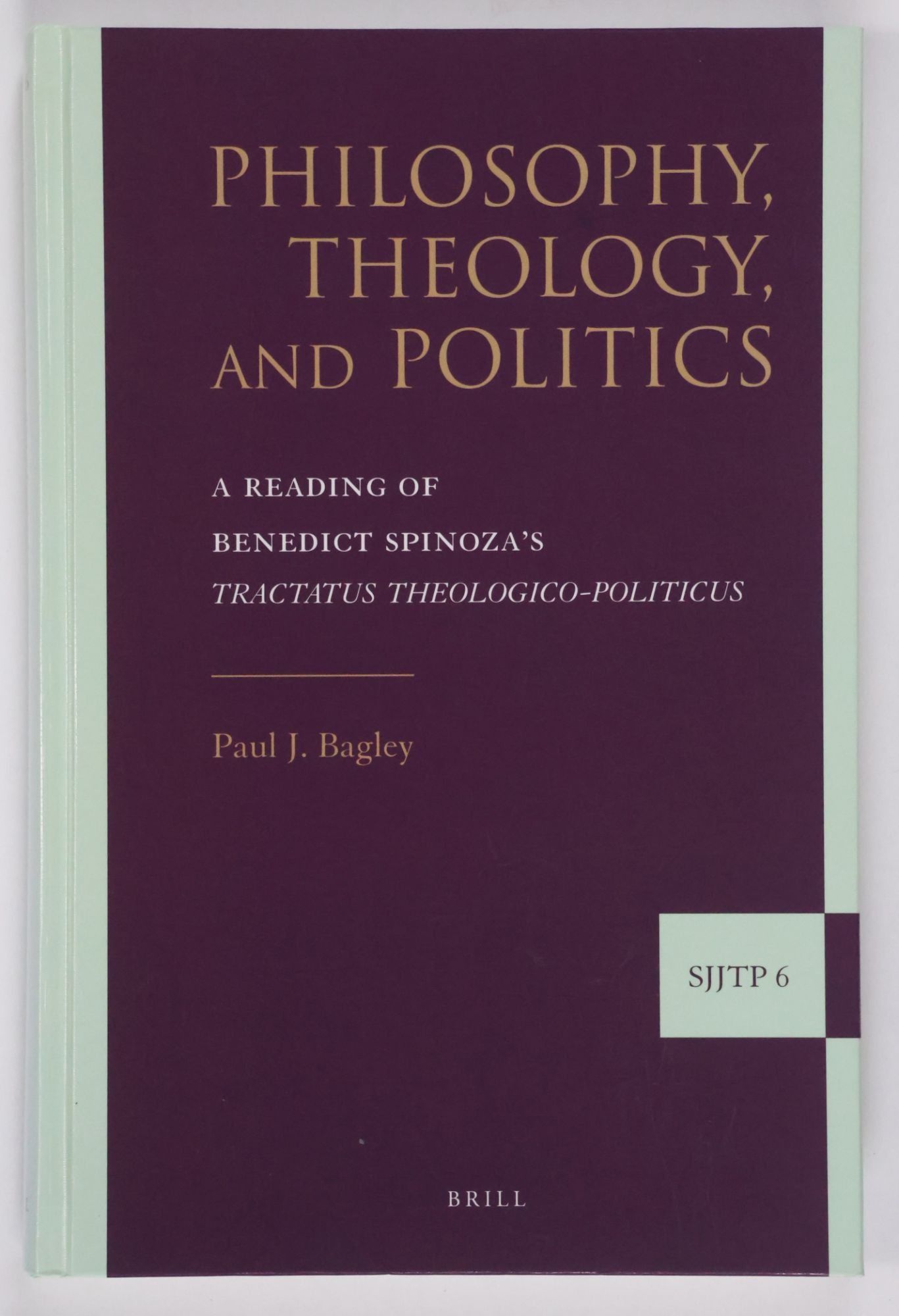
Leiden: Brill, 2008. First edition. Hardcover. Near fine. Octavo. (14), 252pp. Index of names and a bibliography. Light green over purple boards, lettered in purple. Spine slightly sun faded to light blue, otherwise a fine, as new copy.
Argues that Spinoza treats the 'natural problem' of reconciling those who live by 'the dictates of reason' with those who live by 'the urgings of the passions'. This book fashions a 'theologico-political solution' to the 'natural problem' by holding that the 'universal religion' and the democratic liberalism of the treatise share a common purpose. (OCLC)
The interpretation of Spinoza’s theologico-political teaching remains a matter of controversy. Is Spinoza simply addressing contemporary difficulties in The Netherlands of the late 1660s? Or is he attempting to solve a more basic and enduring human problem? In this book, it is argued that against the background of contemporary concerns, Spinoza treats the more fundamental “natural problem” of reconciling those who live by “the dictates of reason” with those who live by “the urgings of the passions.” Based upon his accounts of theology, human nature, and politics, Spinoza fashions a theocratic or “theologico-political solution” to the “natural problem” by holding that the “universal religion” and the democratic liberalism of the treatise share a common purpose. Thus, Spinoza becomes a “new Moses.” . (Publisher)
Volume 6 of the Brill series "Supplements to the Journal of Jewish Thought and Philosophy" (SJJTP).
Argues that Spinoza treats the 'natural problem' of reconciling those who live by 'the dictates of reason' with those who live by 'the urgings of the passions'. This book fashions a 'theologico-political solution' to the 'natural problem' by holding that the 'universal religion' and the democratic liberalism of the treatise share a common purpose. (OCLC)
The interpretation of Spinoza’s theologico-political teaching remains a matter of controversy. Is Spinoza simply addressing contemporary difficulties in The Netherlands of the late 1660s? Or is he attempting to solve a more basic and enduring human problem? In this book, it is argued that against the background of contemporary concerns, Spinoza treats the more fundamental “natural problem” of reconciling those who live by “the dictates of reason” with those who live by “the urgings of the passions.” Based upon his accounts of theology, human nature, and politics, Spinoza fashions a theocratic or “theologico-political solution” to the “natural problem” by holding that the “universal religion” and the democratic liberalism of the treatise share a common purpose. Thus, Spinoza becomes a “new Moses.” . (Publisher)
Volume 6 of the Brill series "Supplements to the Journal of Jewish Thought and Philosophy" (SJJTP).
Details
Title
Philosophy, Theology, and Politics: A Reading of Benedict Spinoza’s Tractatus theologico-politicus
Author
Bagley, Paul J.
Binding
Hardcover
Condition
Near Fine
Publisher
Brill: Leiden
Date
2008
Edition
First edition