

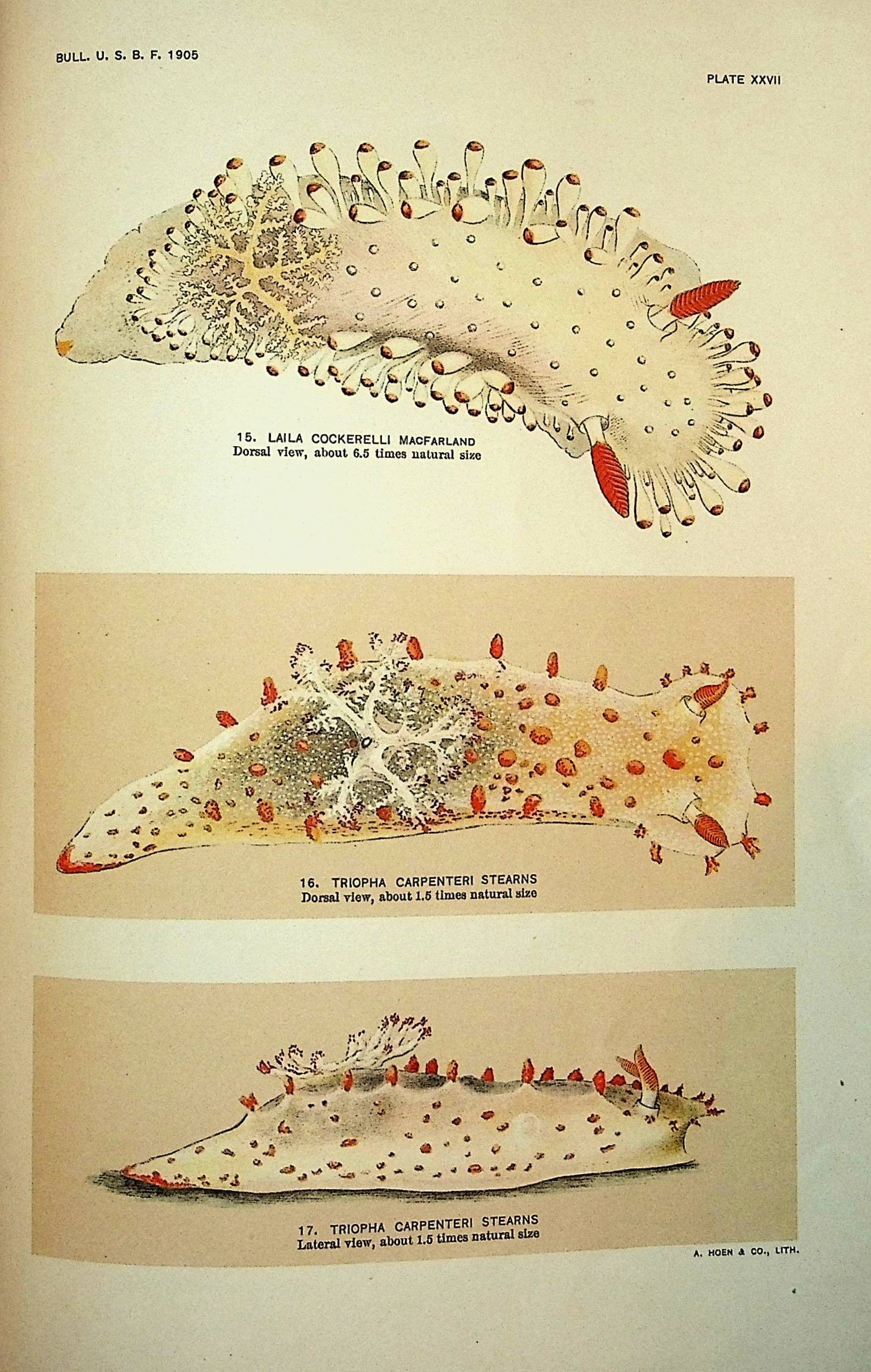
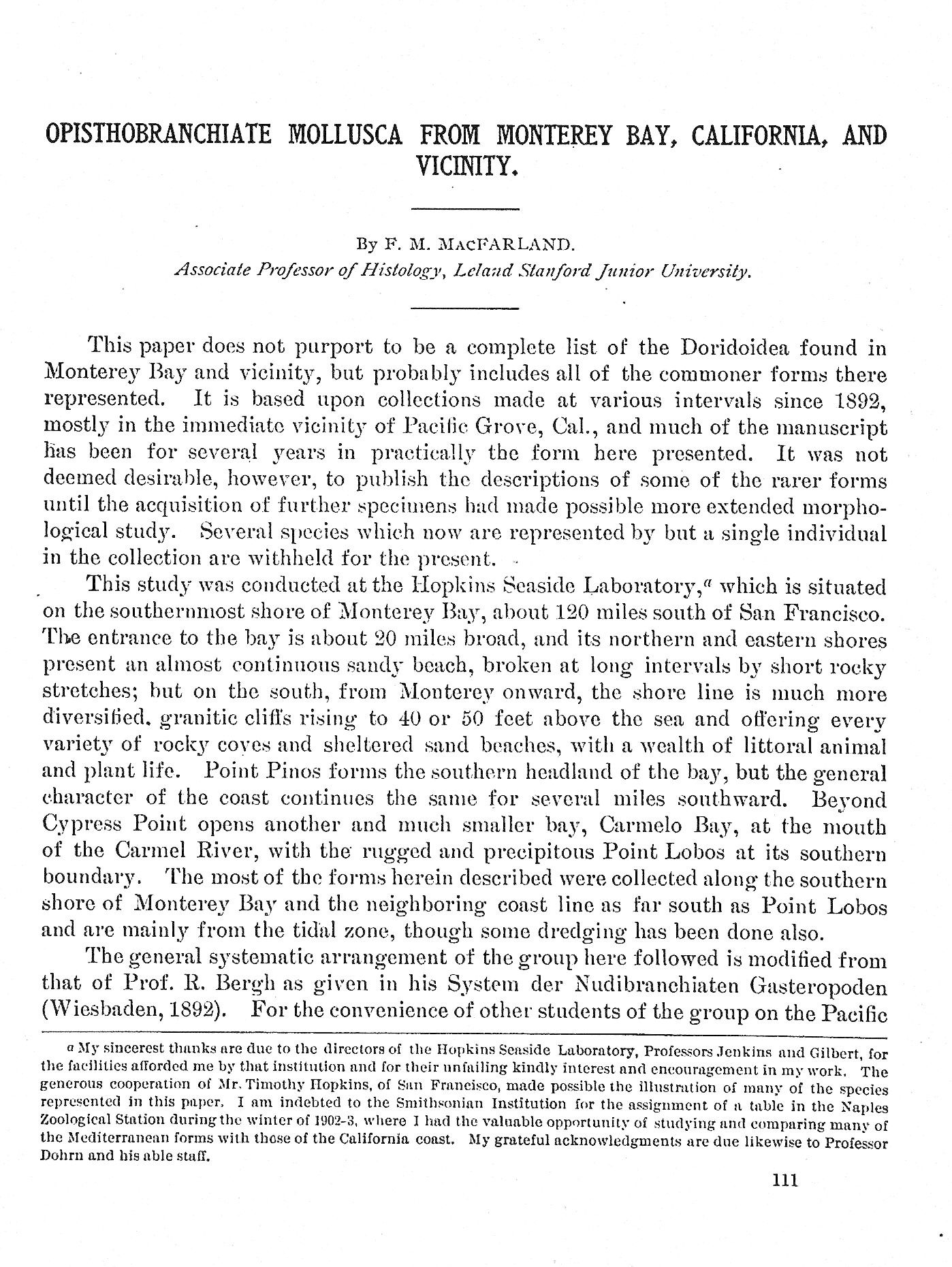
INSCRIBED-WITH COLOR PLATES. Opisthobranchiate Mollusca from Monterey Bay, California, and Vicinity, Bulletin of the Bureau of Fisheries, Vol. XXV, 1905
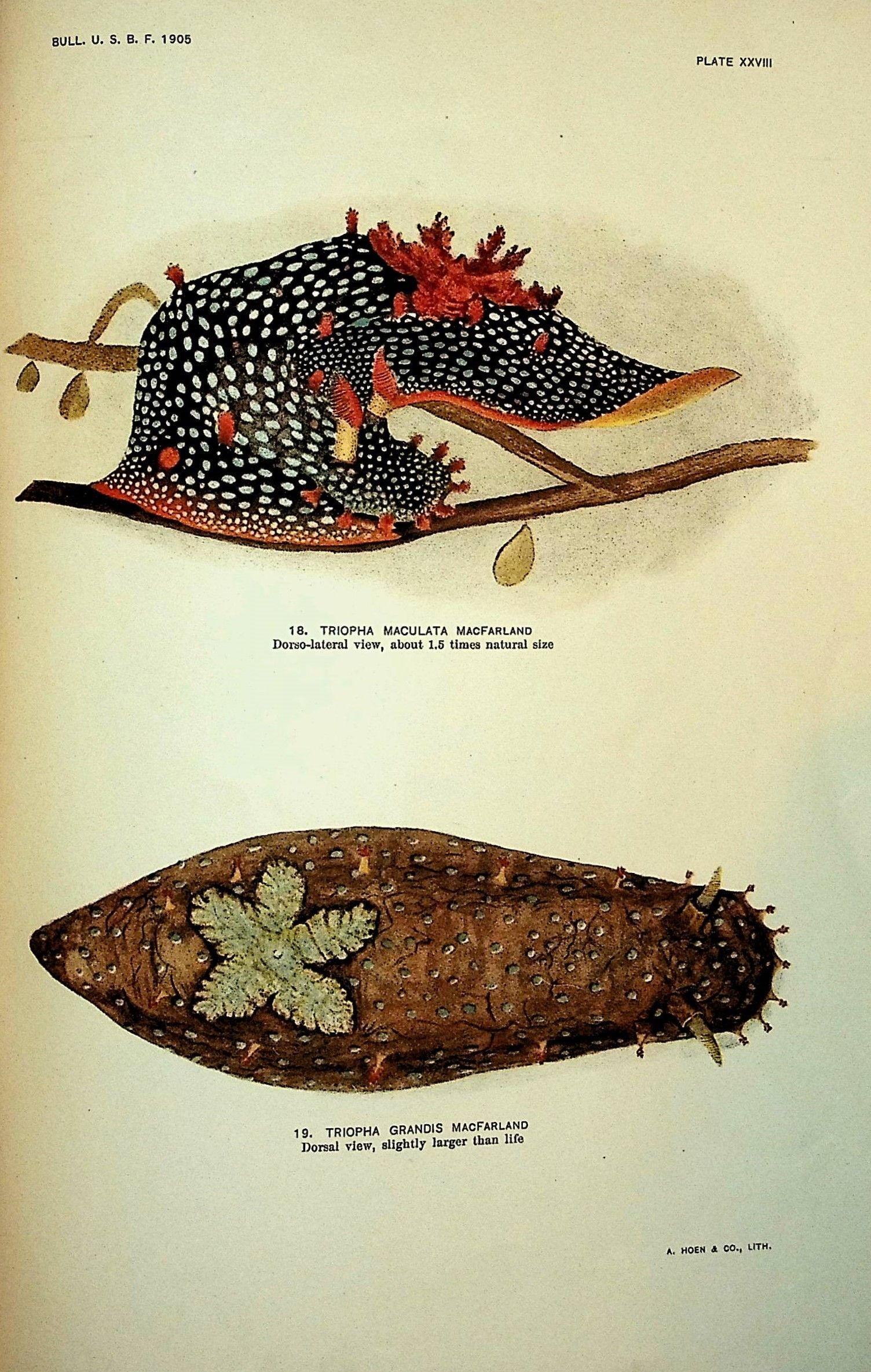
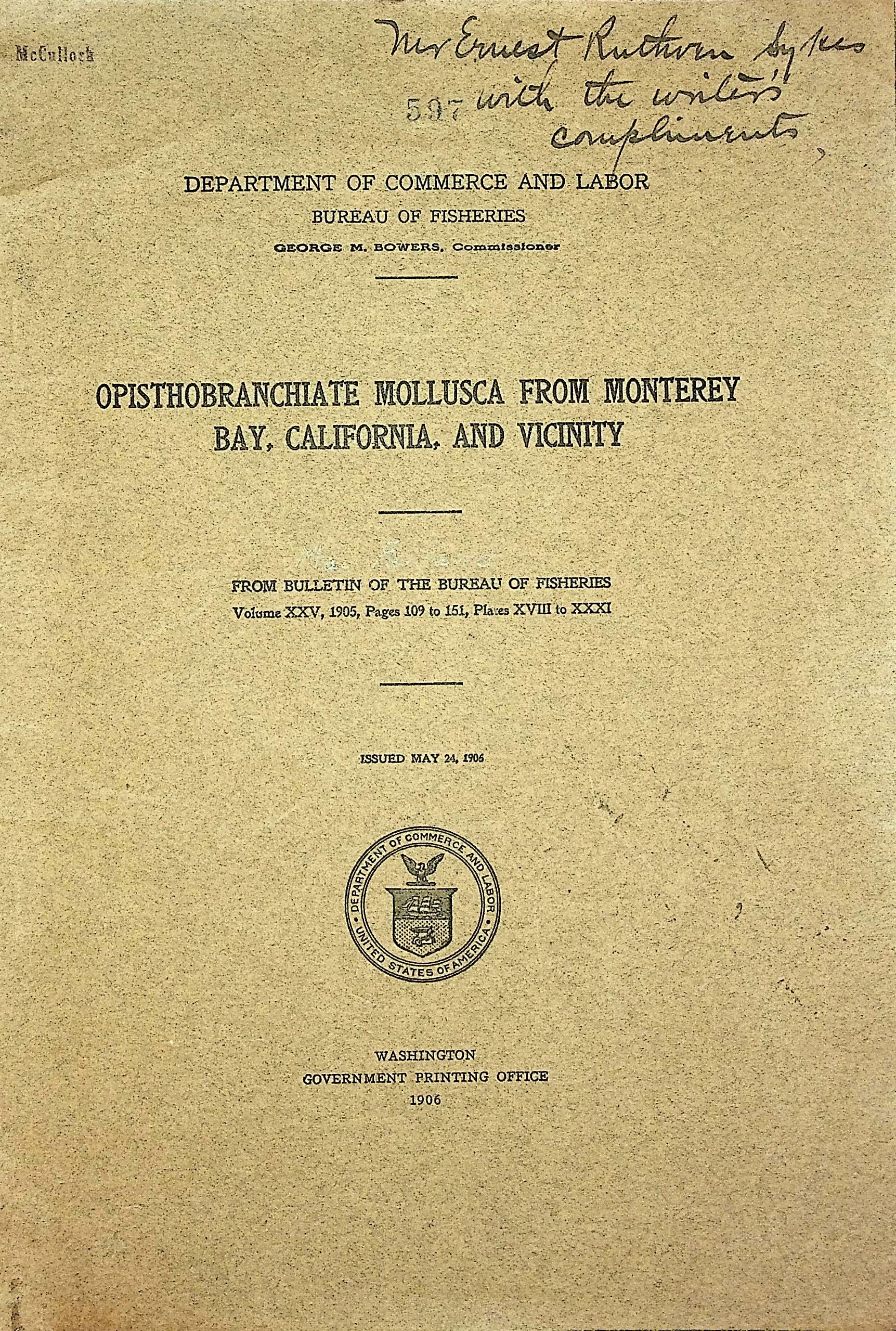
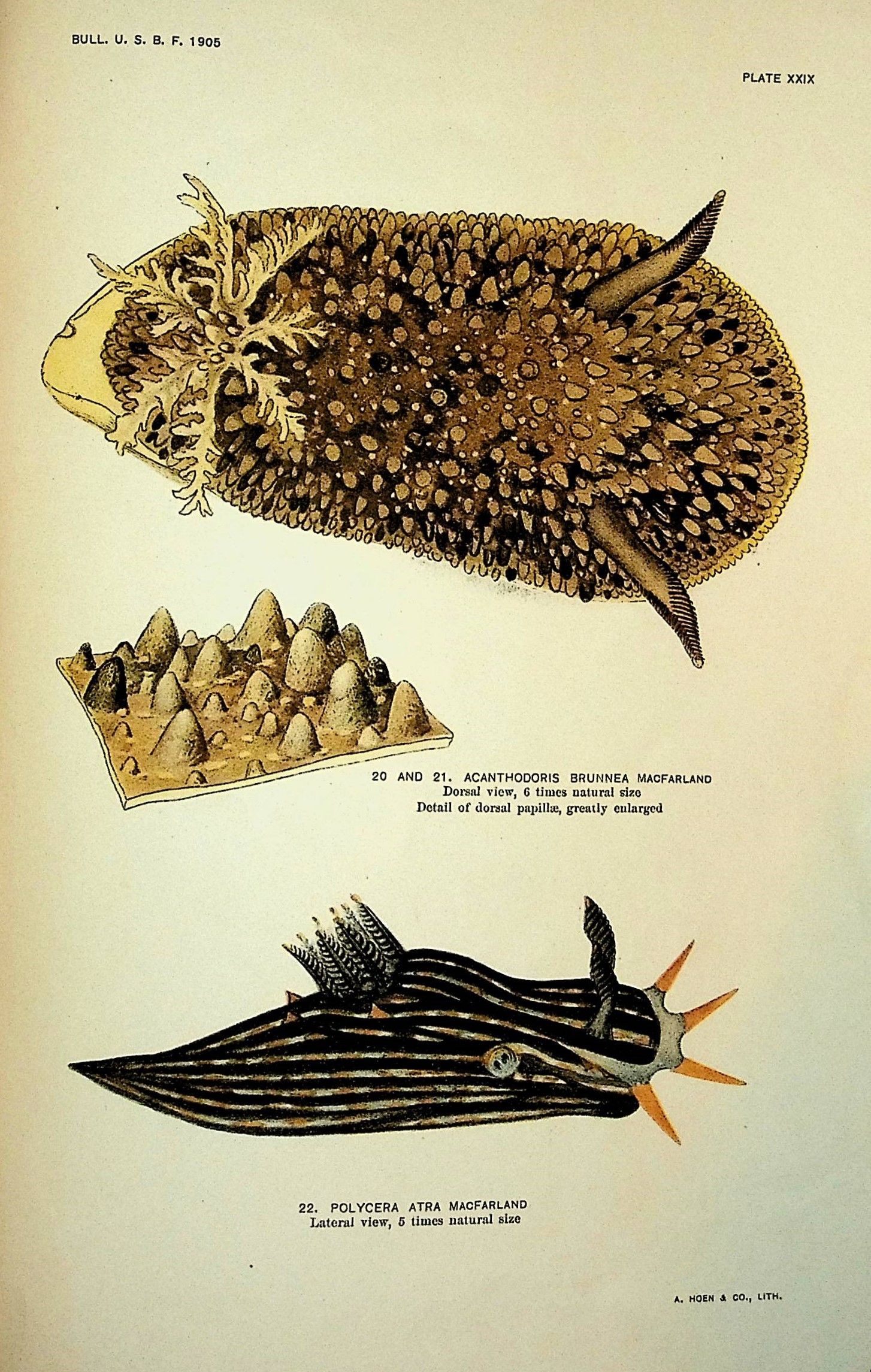
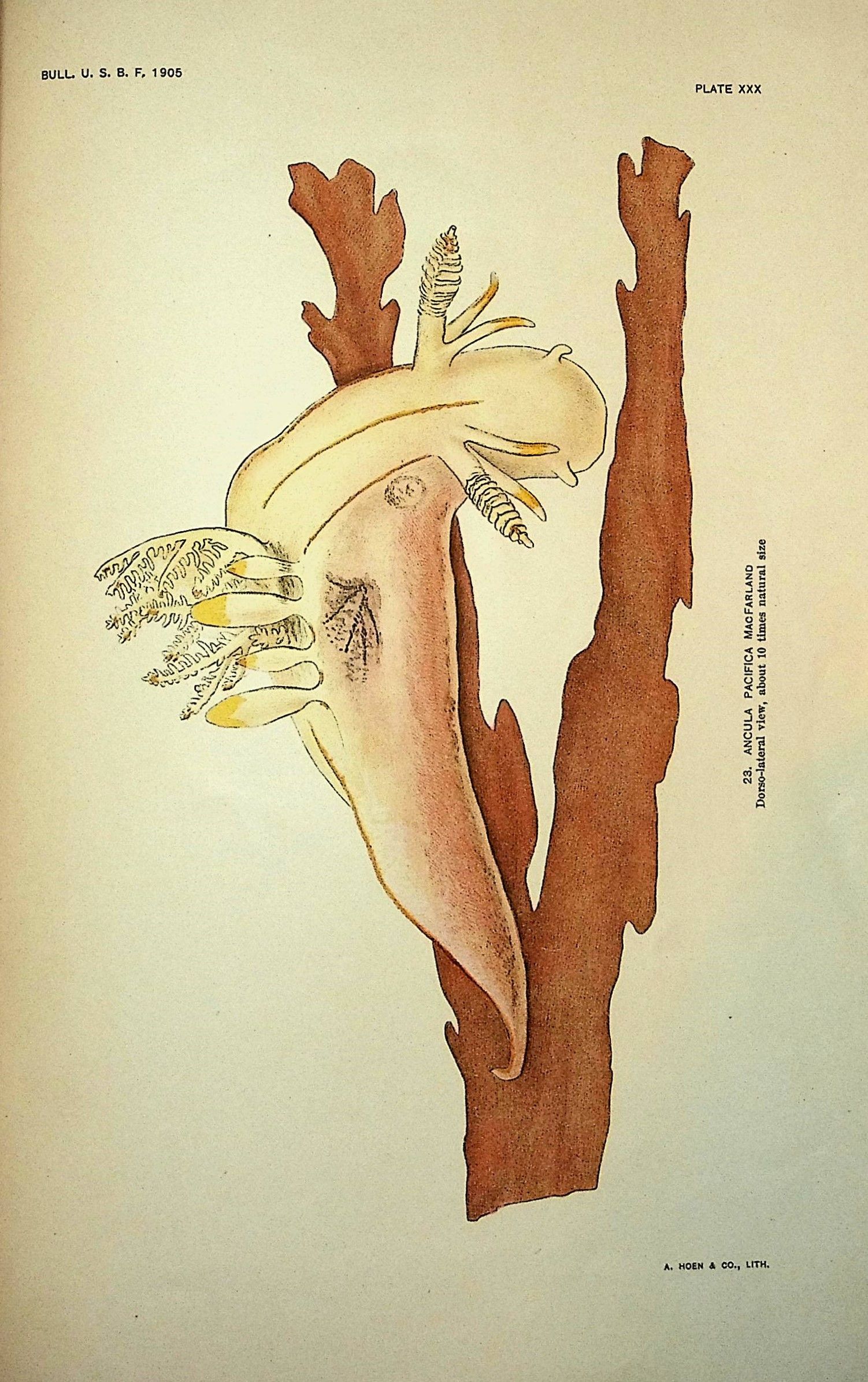
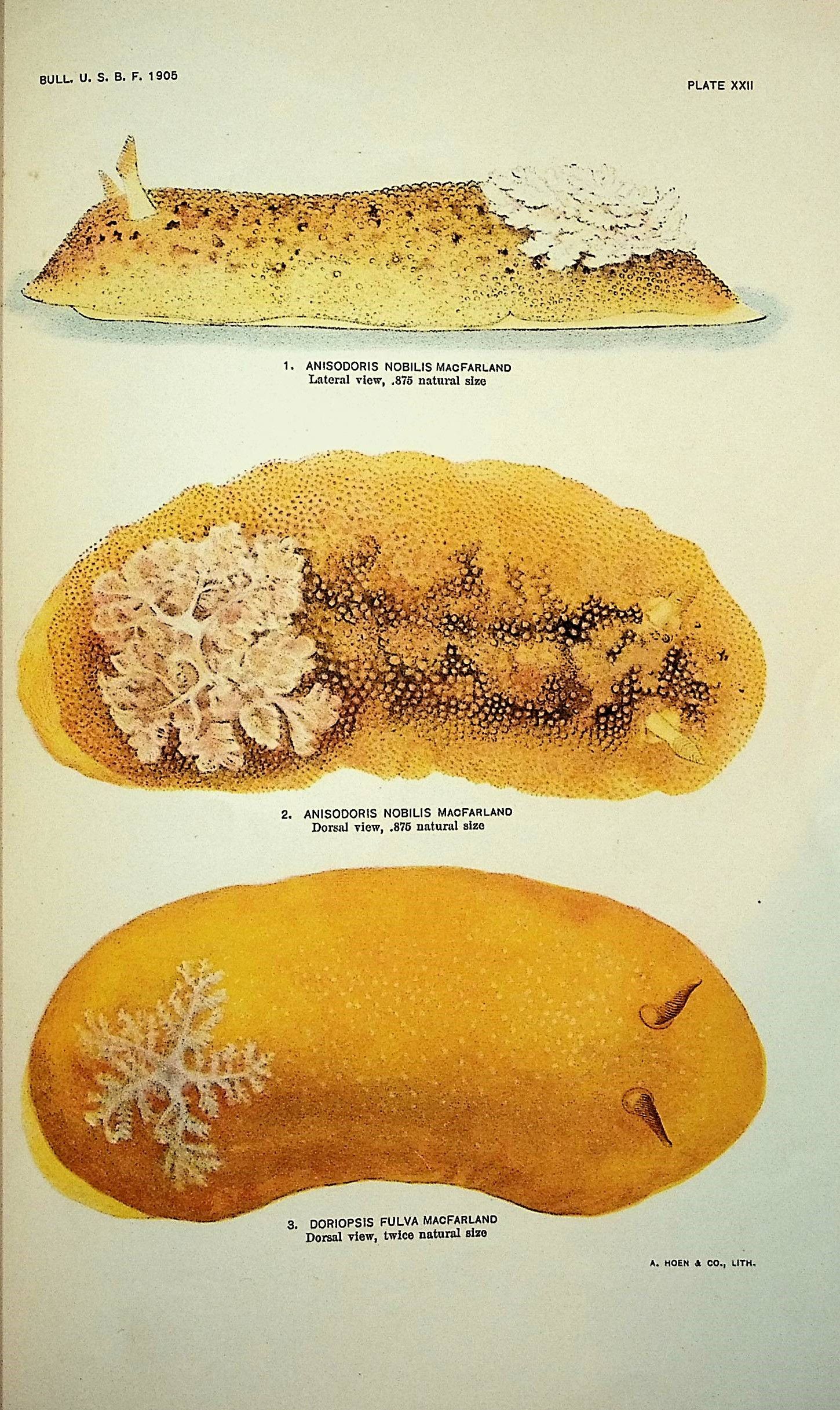
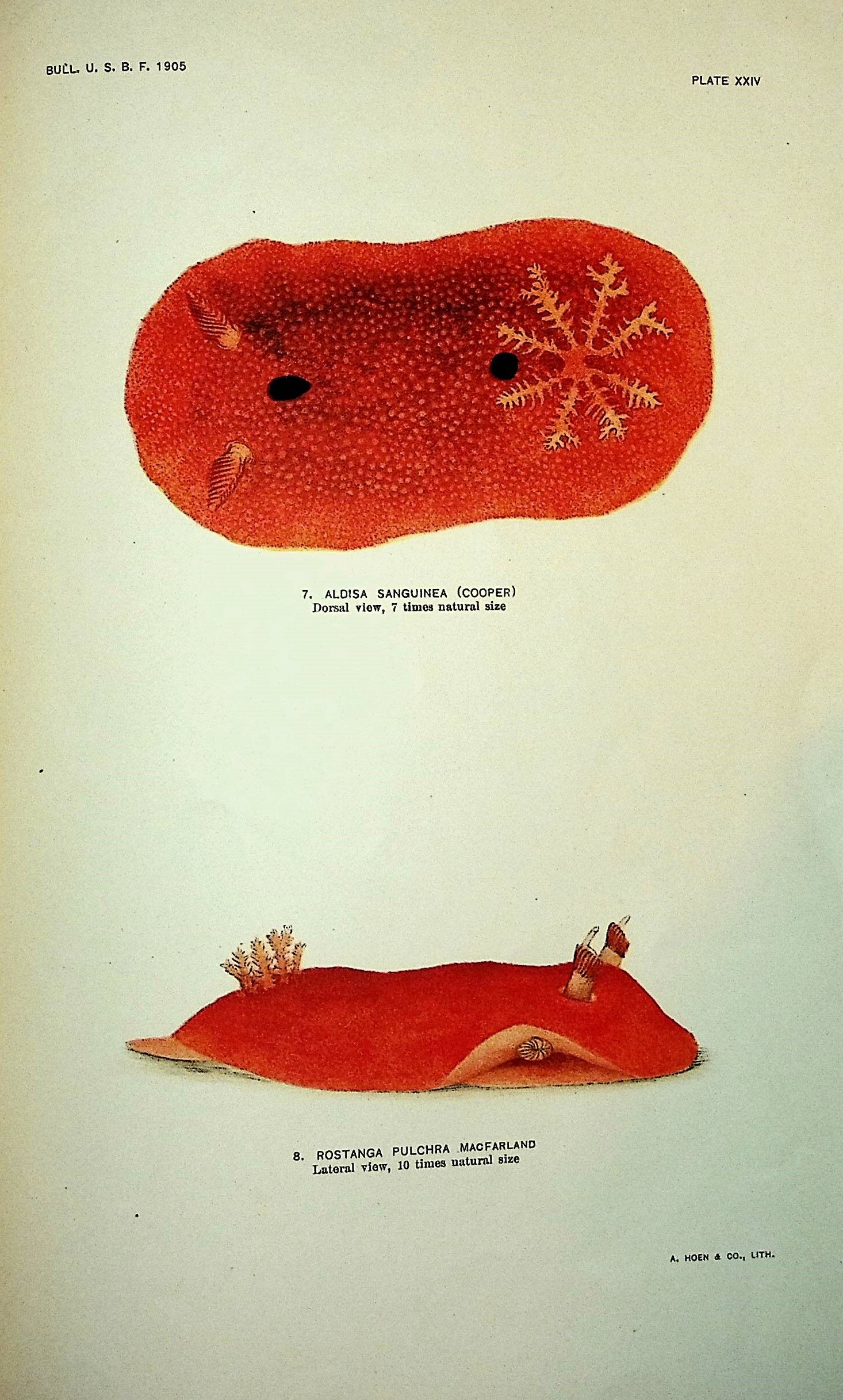
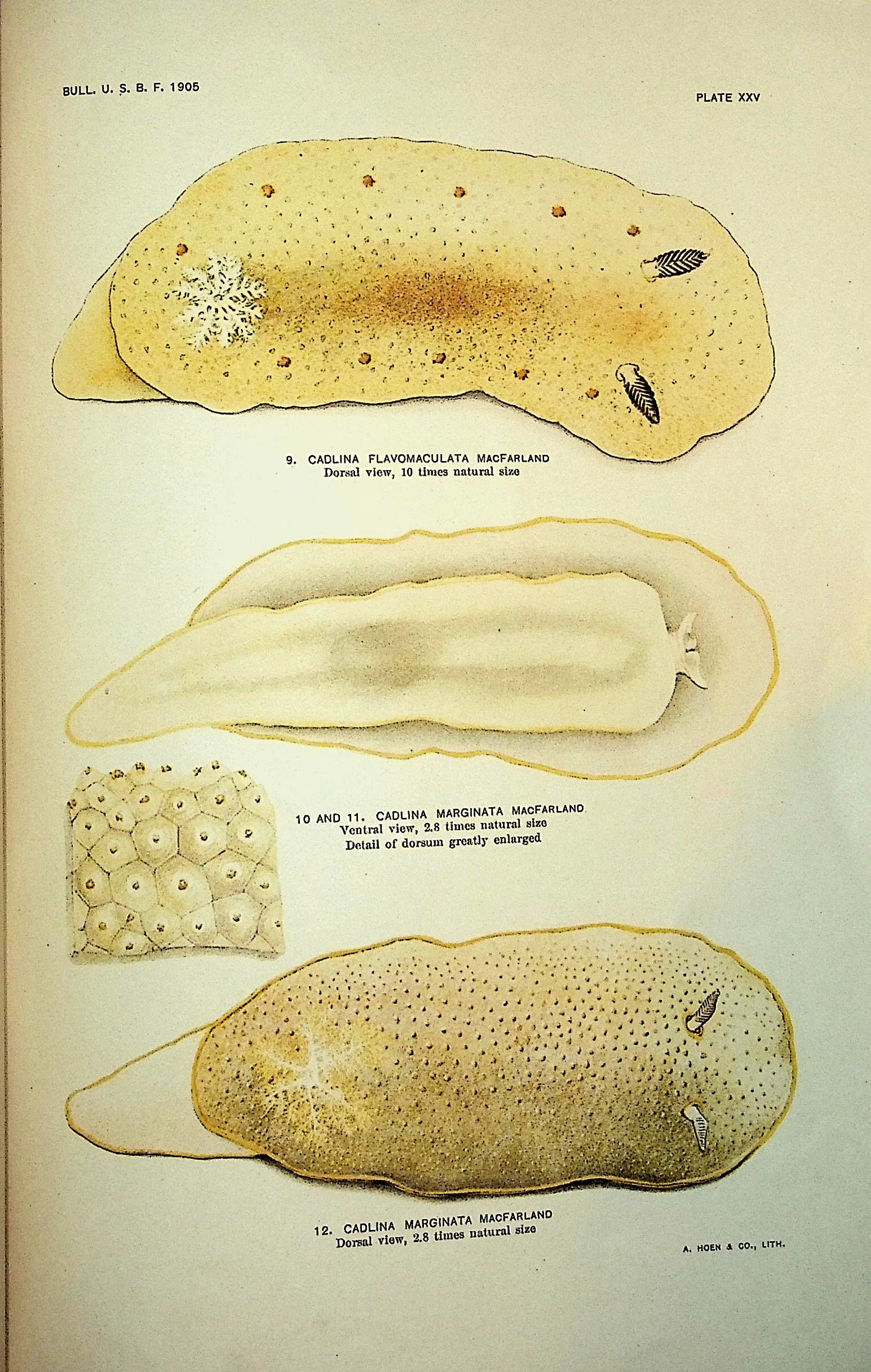
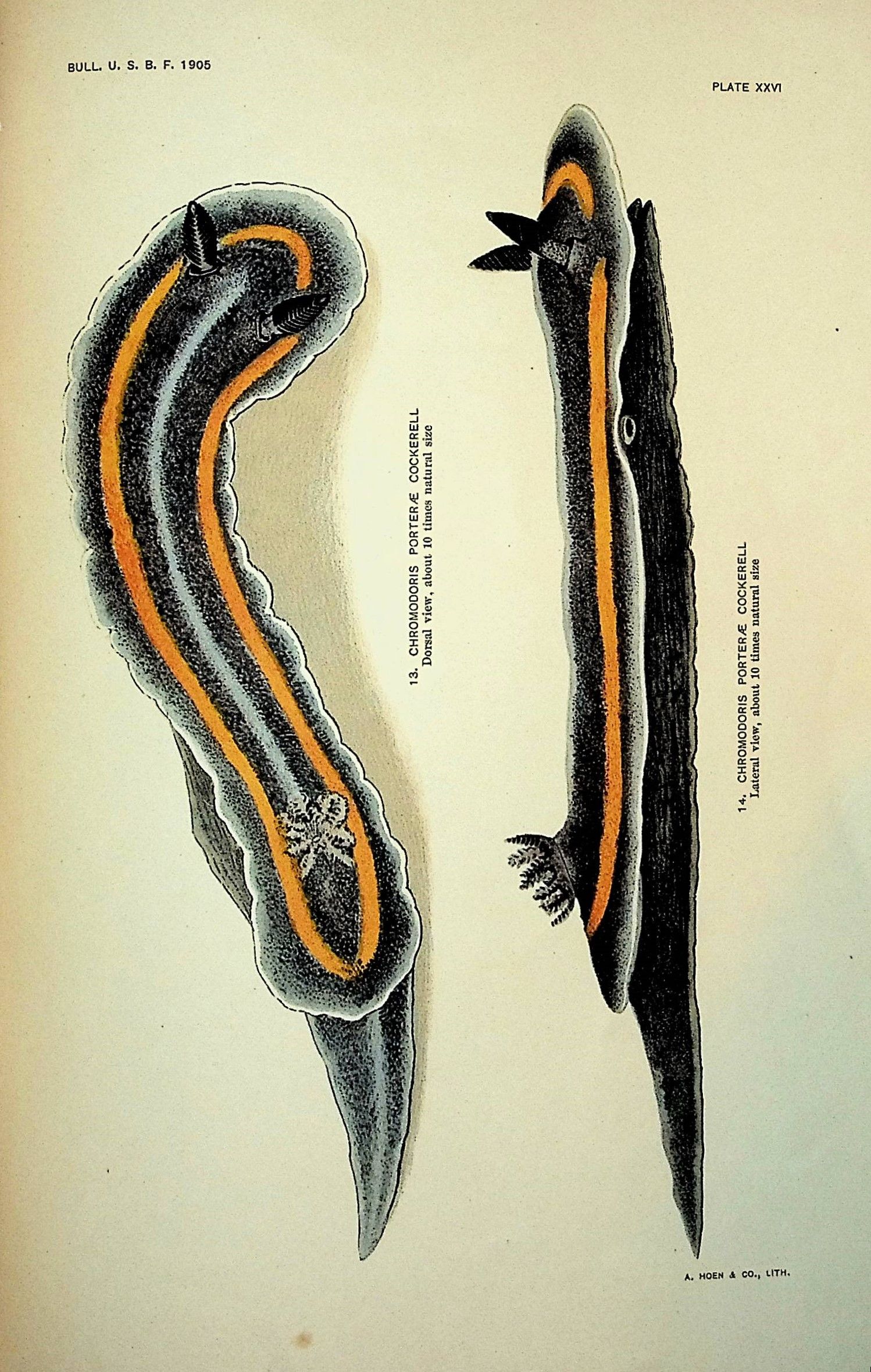
- Printed paper covers
- Washington DC: Government Printing Office, 1906
Washington DC: Government Printing Office, 1906.
BEAUTIFULLY ILLUSTRATED MONOGRAPH ON MARINE MOLLUSKS INSCRIBED BY AMERICAN TO BRITISH MALACOLOGIST.
18.5x27.5 cm offprint, brown printed paper covers, inscription to cover, "Mr. Ernest Ruthven Sykes with the writer's compliments," pp 109-151, plates XVII-XXXI. Spine worn, otherwise very good in custom archival mylar cover.
FRANK MACE MACFARLAND (1869-1951) spent a long and productive career devoted to the study of nudibranch sea slugs, some of which are the most beautifully colored and ecologically complex of all invertebrate inhabitants of in-shore marine habitats. His studies, particularly of the species-rich communities of California, were considered to be among the most detailed and meticulous of the time, and at his death in 1951, he was broadly acknowledged to be a world expert on this ecologically diverse group of mollusks. MacFarland was born in Centralia, Illinois, and studied at DePauw University in Indiana. In 1892 he enrolled as an advanced student and instructor at the newly established Leland Stanford Junior University in Palo Alto, California. The work offered here was begun while he was based at the newly constructed Hopkins Seaside Laboratory-the marine research facility that had been founded by David Starr Jordan after he was appointed president of Stanford University. In 1893 MacFarland was awarded a master's degree and he decided to carry out the remainder of his graduate studies in Europe. In the following years, he studied in Zurich, Wiirzburg, and Naples. While at the Zoological Station in Naples, MacFarland made detailed studies of nudibranchs and compared the Mediterranean species with those from the California coast. On his return to the United States, MacFarland was appointed professor of histology at Stanford, where he continued to work for the rest of his career. Throughout his career, his wife, Olive Hornbrook MacFarland, assisted him as an illustrator. Many beautiful representations of nudibranchs, often drawn from life, were prepared by her to accompany her husband's publications. Opisthobranchians are a highly specialized group of mollusks, and among the most colorful and ecologically diverse of them are the three thousand or so species of nudibranch (naked gilled) sea slugs. Because nudibranchs lack a protective external shell, they are vulnerable to predation and as a result have evolved some of the most spectacular defense mechaisms known in the animal kingdom. Some species are able to synthesize toxic compounds, such as sulphuric acid. Others store compounds taken from their prey to deter predators. Many of the nudibranchs feed on cnidarians and are able to "hijack" the stinging nematocysts of their prey and repurpose them for their own defense.
PROVENANCE: ERNEST RUTHVEN SYKES (1867-1954) was a malacologist from Littlemayne, Dorset, England. He was a wealthy man - his family had a bank, which was one of those which amalgamated to form Barklay's. He was a member of the German Malacozoological Society and the Malacological Society of London, and like MacFarland, he described many new species of mollusks over a 50-year period.
Details
Title
INSCRIBED-WITH COLOR PLATES. Opisthobranchiate Mollusca from Monterey Bay, California, and Vicinity, Bulletin of the Bureau of Fisheries, Vol. XXV, 1905
Author
MacFarland, Frank Mace
Binding
Printed paper covers
Condition
Unknown
Publisher
Government Printing Office: Washington DC
Date
1906
Edition
First edition