

WONDER BOOK FOR GIRLS & BOYS
- Boston: [Printed at the Riverside Press, Cambridge, for] Houghton Mifflin & Co, 1893
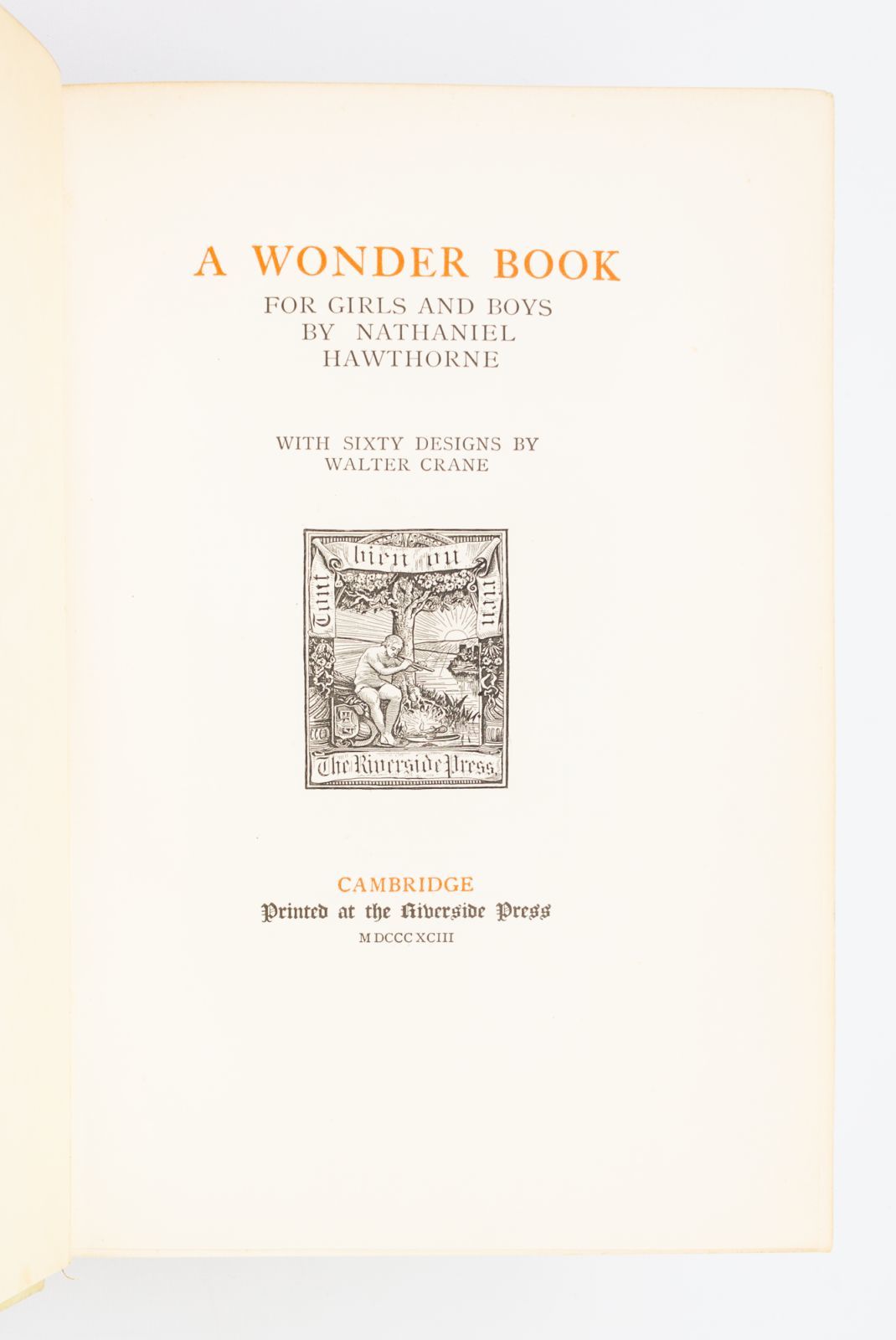
Boston: [Printed at the Riverside Press, Cambridge, for] Houghton Mifflin & Co, 1893. EDITION DE LUXE. No. 120 OF 250 COPIES. 252 x 175 mm. (10 x 7"). x, 210 pp.
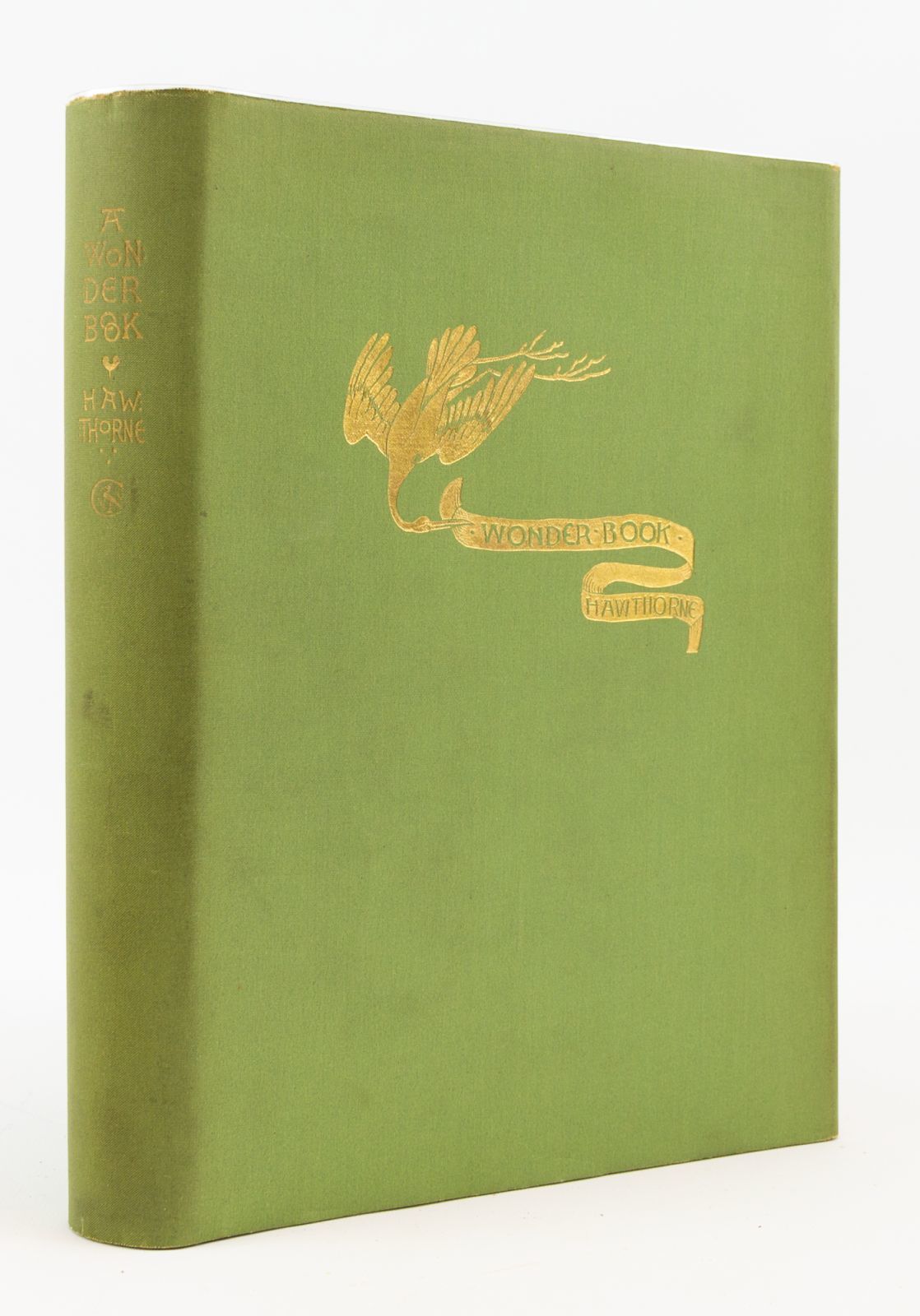
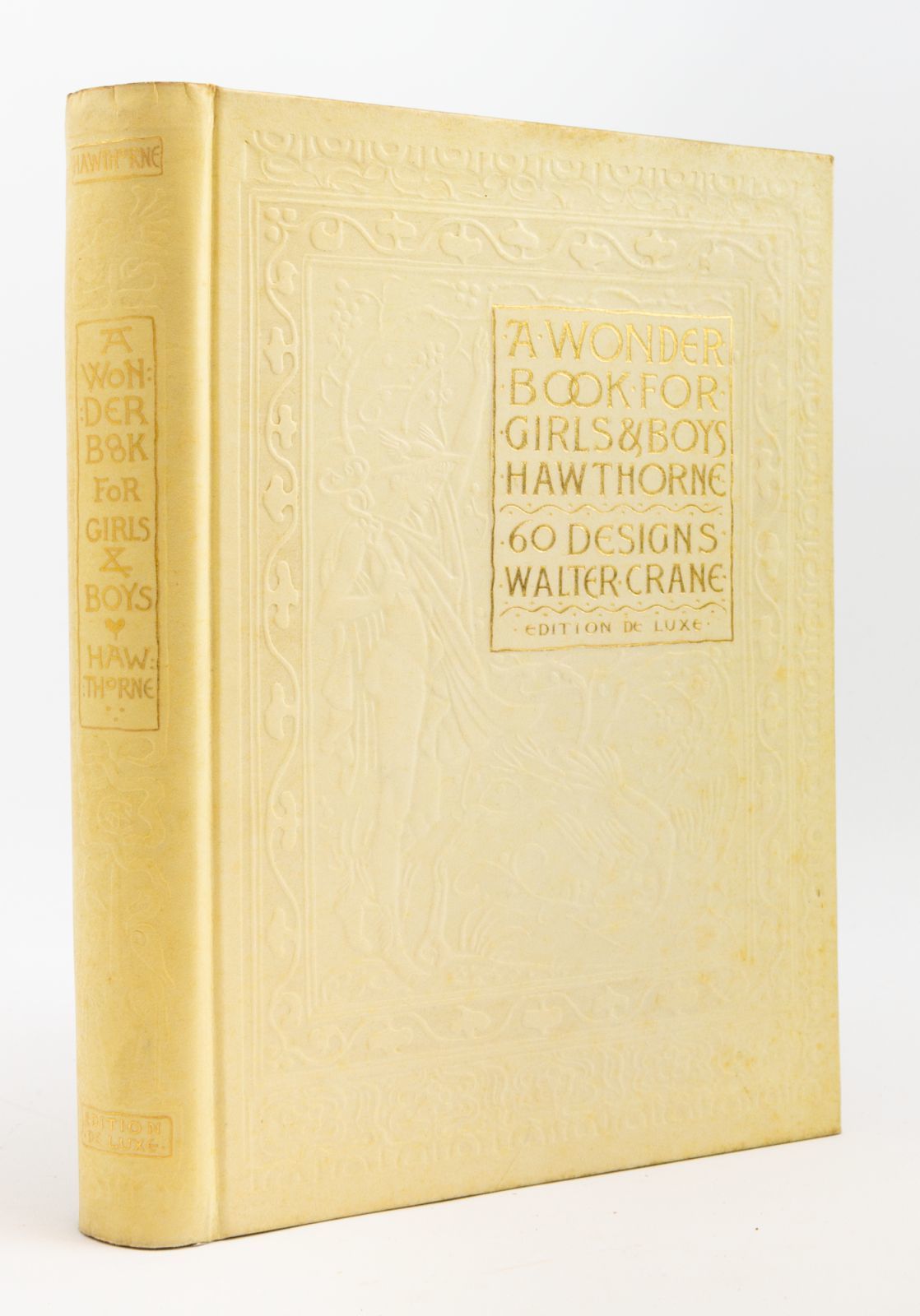
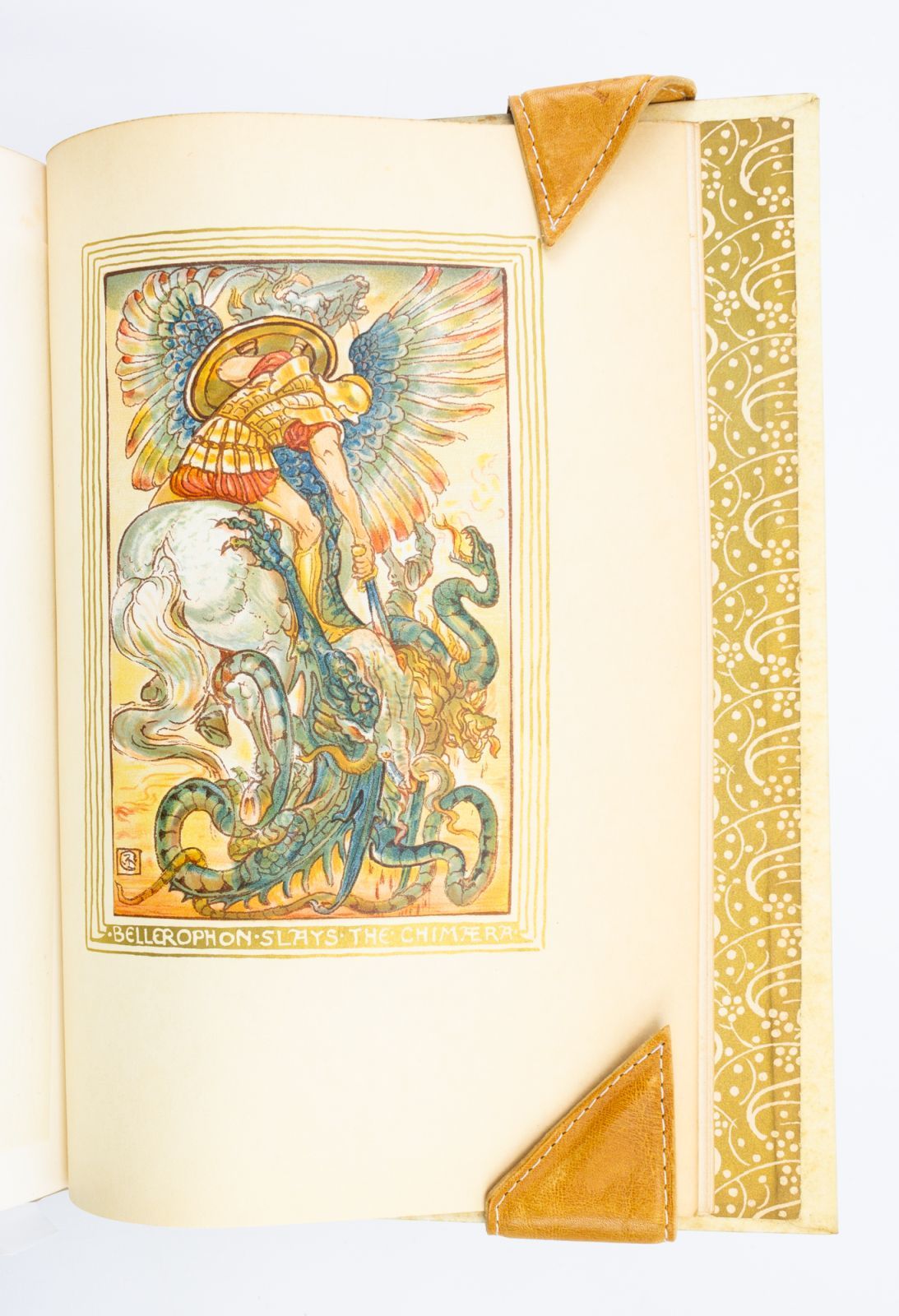
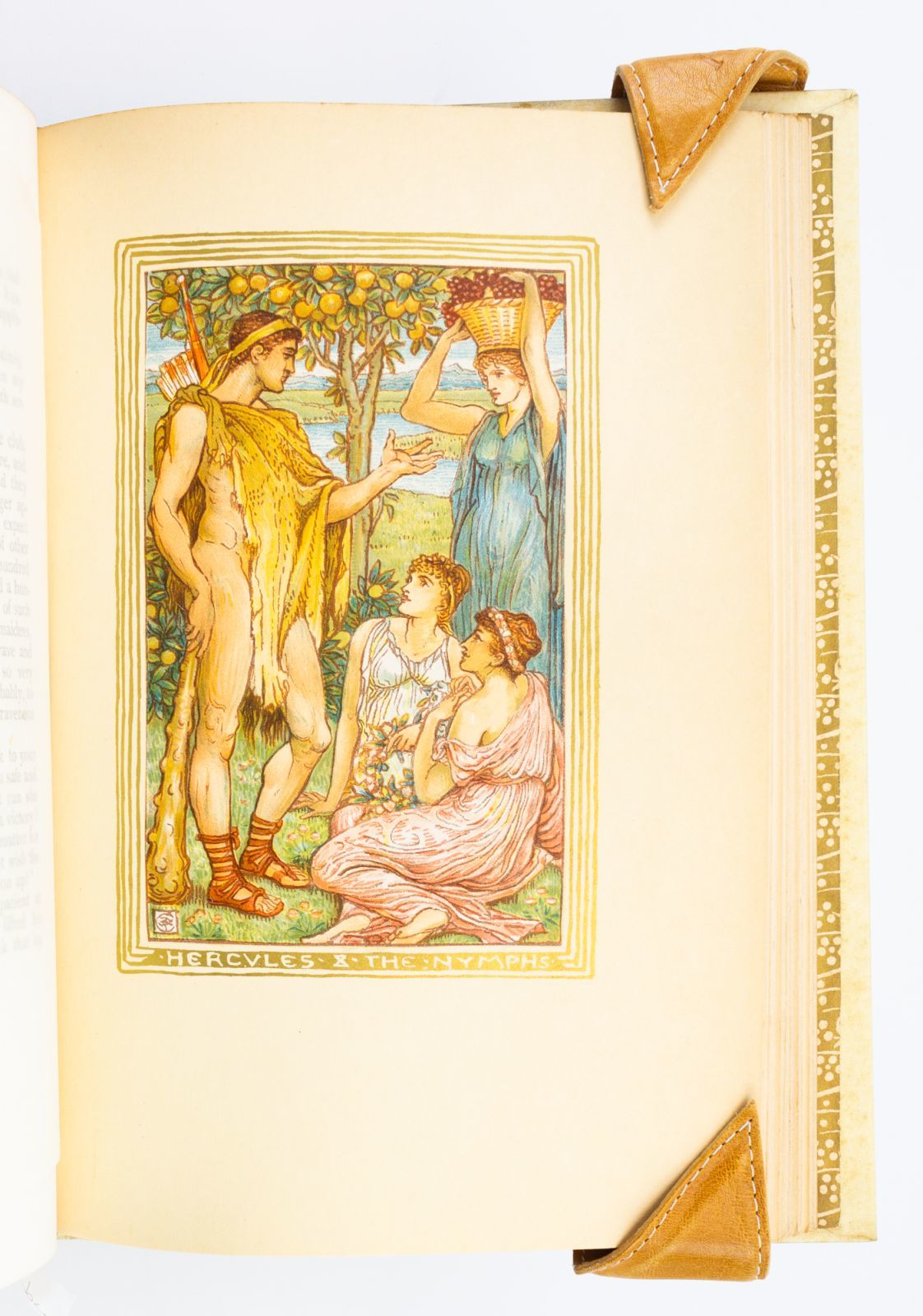
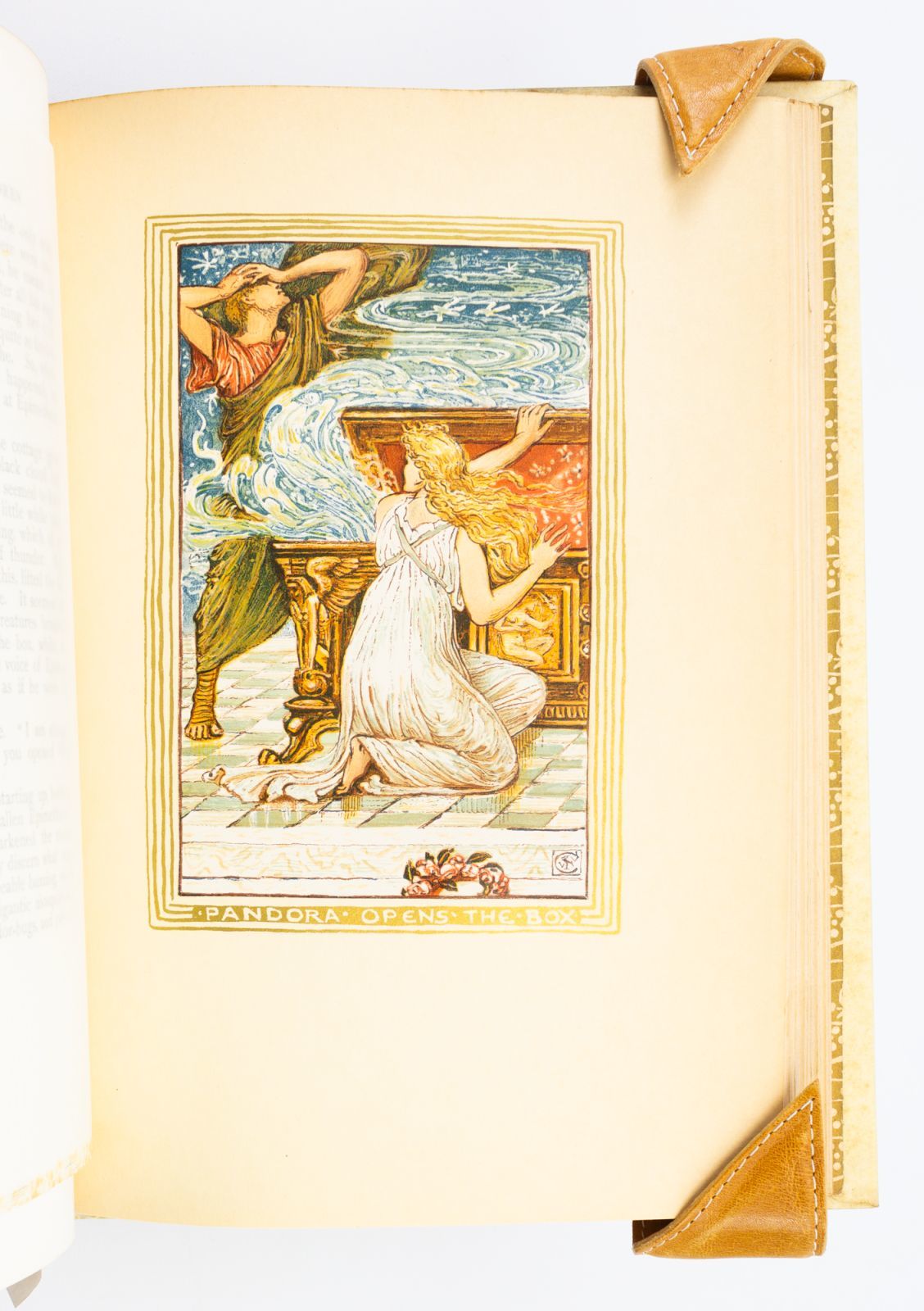
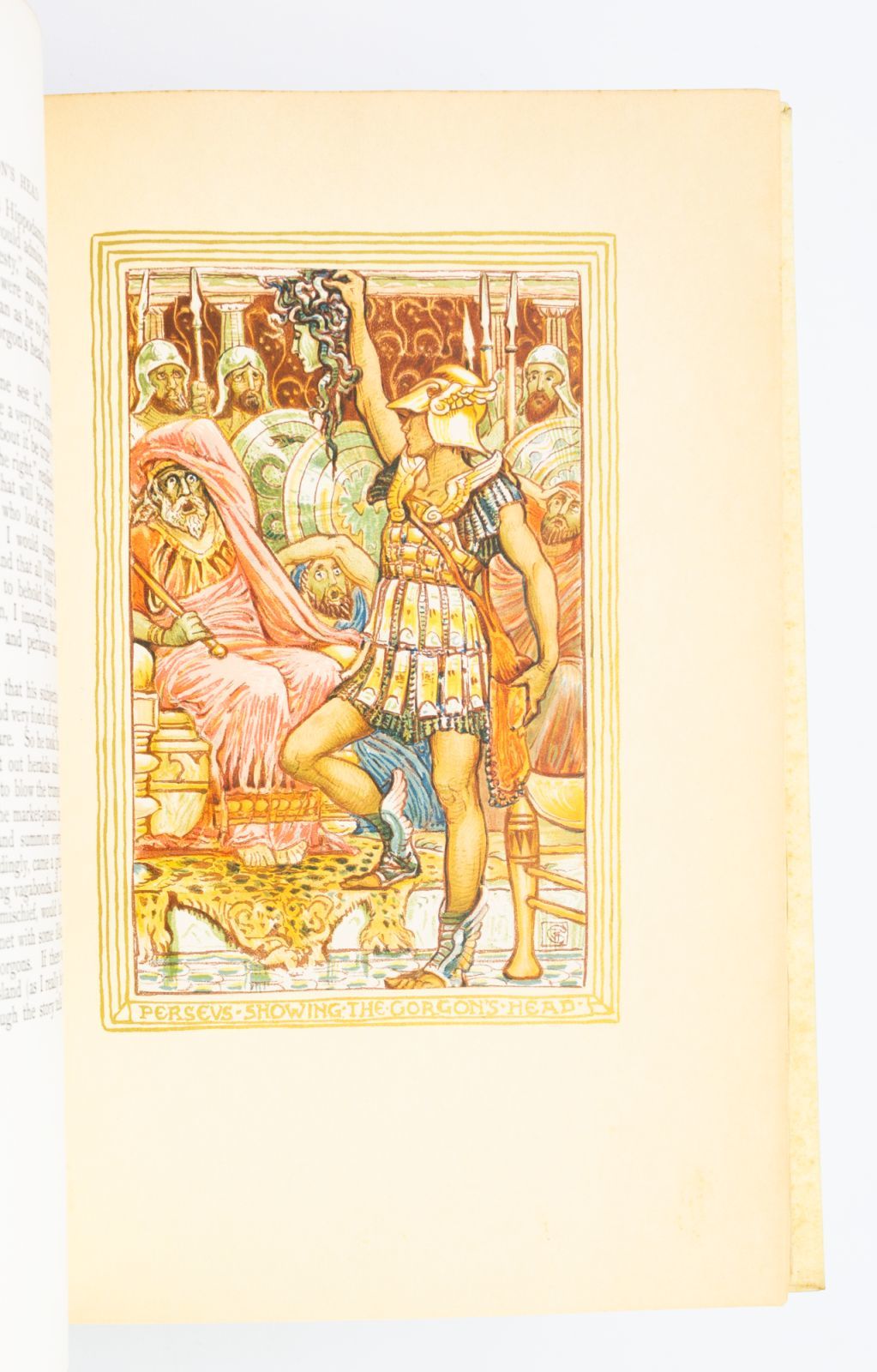
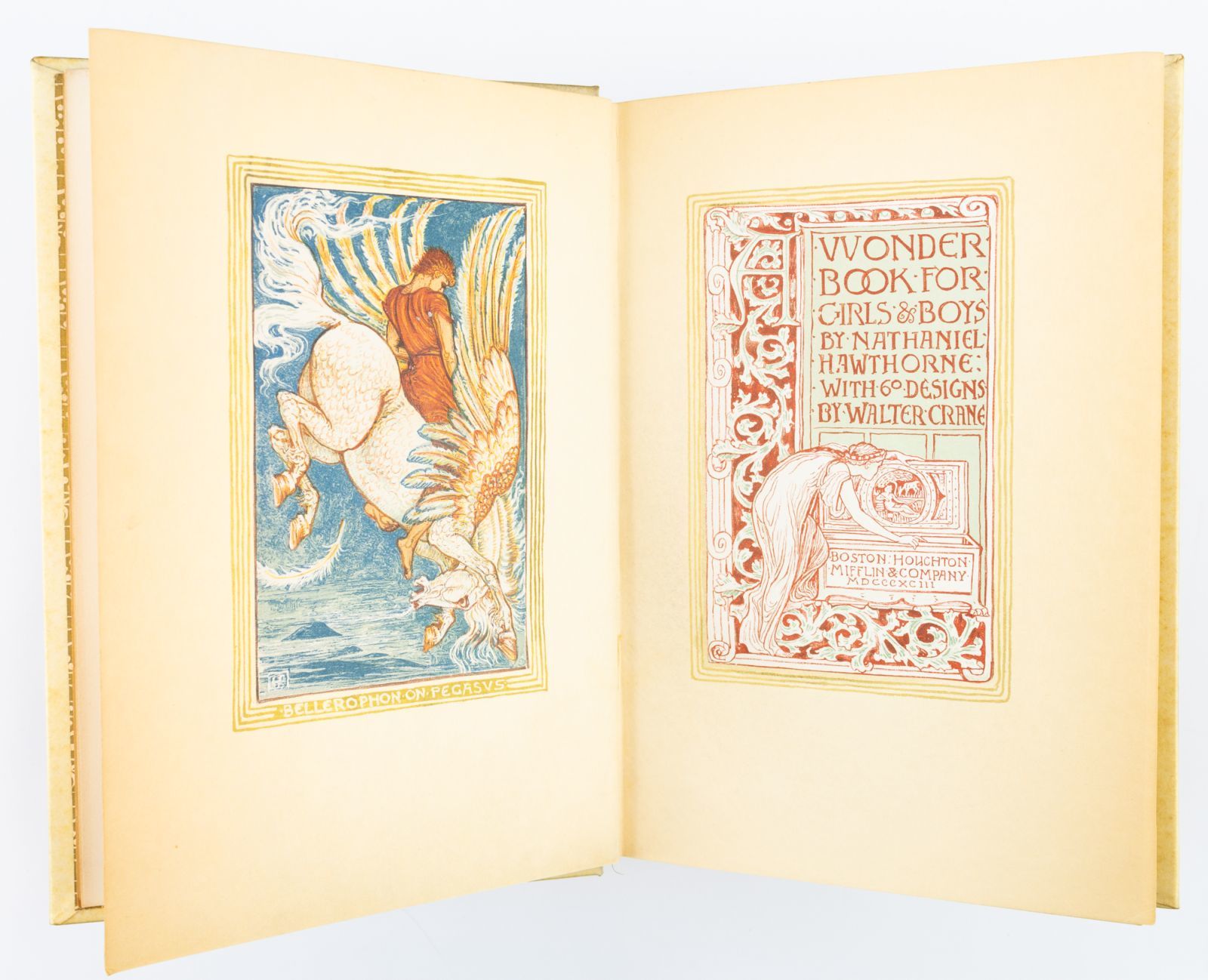
Publisher's ivory-colored embossed boards, upper cover with a depiction of Mercury in his winged helmet and sandals, after a design by Crane, within an Art Nouveau frame, gilt title panel, lower cover with same frame and embossed title, smooth spine with embossed floral design and gilt lettering, patterned gilt endpapers, top edge gilt. IN THE ORIGINAL LIGHT GREEN BUCKRAM DUST JACKET with gilt titling on upper cover and spine. With 60 designs by Walter Crane, including headpieces, decorative initials, an illustrated half title mounted on Japanese vellum, and 19 COLOR PLATES mounted on Japanese vellum, all but three with original tissue guards (despite publisher's notice tipped onto front flyleaf assuring the reader these "temporary protection[s] . . . may be removed at pleasure"). From the Ellen K. Morris and Edward S. Levin Collection of Publishers' Bookbindings. Rear board and small areas of the front cover lightly foxed, spine of jacket a little darkened, very slight fraying at head of spine, but A BEAUTIFUL COPY--entirely clean, fresh, and bright internally, in an incredibly well-preserved binding and jacket.
This is an almost astonishingly well-preserved copy of a work often found the worse for wear at the hands of its youthful readers. One of the major literary figures in American history, Nathaniel Hawthorne (1804-64) was among those who first inspired the idea of a national literature from the United States that could take its place alongside its long-established European forebears. Probably more than any other writer of stature in 19th century America, Hawthorne combined vivid imagination with careful, structured craft. Although best remembered for his novels, he published several books of stories for children, including the present work, which ANB tells us was produced in 1851 "to support his growing family." Hawthorne's delightful retelling of Greek myths of Perseus, King Midas, Pandora's Box, Hercules, and Baucis and Philemon is much enlivened here by Crane's charming illustrations. Perhaps the most accomplished and influential book illustrator of his day, Walter Crane (1845-1915) served his apprenticeship with the wood-engraver W. J. Linton. Deeply influenced by the Pre-Raphaelite movement, Crane, like William Morris, was a multi-purpose craftsman, creating designs for wallpaper and pottery as well as book illustrations. But he made his name as a book illustrator by creating images for the 37 "Toy Books," a very popular series for young children. Under the influence of his friend Morris, he became a socialist and soon lent his talents to that cause. According to DNB, "He became the artist of the cause, designing posters, trade-union banners, cartoons, and newspaper headings, adapting the emblematic figures of his paintings to socialist themes." For the present work, he returned to the wonder and magic of childhood, with great success. As DNB notes, "His best things were his lightest things." This volume comes from the splendid collection of publisher's bindings assembled over three decades by Ellen K. Morris and Edward S. Levin, and exhibited at the Grolier Club in 2000. In a review of the sumptuous catalogue for the exhibition, written for the Papers of the Bibliographical Society of America, Andrea Krupp praises the "pristine condition" of this "glittering and opulent collection.".
Publisher's ivory-colored embossed boards, upper cover with a depiction of Mercury in his winged helmet and sandals, after a design by Crane, within an Art Nouveau frame, gilt title panel, lower cover with same frame and embossed title, smooth spine with embossed floral design and gilt lettering, patterned gilt endpapers, top edge gilt. IN THE ORIGINAL LIGHT GREEN BUCKRAM DUST JACKET with gilt titling on upper cover and spine. With 60 designs by Walter Crane, including headpieces, decorative initials, an illustrated half title mounted on Japanese vellum, and 19 COLOR PLATES mounted on Japanese vellum, all but three with original tissue guards (despite publisher's notice tipped onto front flyleaf assuring the reader these "temporary protection[s] . . . may be removed at pleasure"). From the Ellen K. Morris and Edward S. Levin Collection of Publishers' Bookbindings. Rear board and small areas of the front cover lightly foxed, spine of jacket a little darkened, very slight fraying at head of spine, but A BEAUTIFUL COPY--entirely clean, fresh, and bright internally, in an incredibly well-preserved binding and jacket.
This is an almost astonishingly well-preserved copy of a work often found the worse for wear at the hands of its youthful readers. One of the major literary figures in American history, Nathaniel Hawthorne (1804-64) was among those who first inspired the idea of a national literature from the United States that could take its place alongside its long-established European forebears. Probably more than any other writer of stature in 19th century America, Hawthorne combined vivid imagination with careful, structured craft. Although best remembered for his novels, he published several books of stories for children, including the present work, which ANB tells us was produced in 1851 "to support his growing family." Hawthorne's delightful retelling of Greek myths of Perseus, King Midas, Pandora's Box, Hercules, and Baucis and Philemon is much enlivened here by Crane's charming illustrations. Perhaps the most accomplished and influential book illustrator of his day, Walter Crane (1845-1915) served his apprenticeship with the wood-engraver W. J. Linton. Deeply influenced by the Pre-Raphaelite movement, Crane, like William Morris, was a multi-purpose craftsman, creating designs for wallpaper and pottery as well as book illustrations. But he made his name as a book illustrator by creating images for the 37 "Toy Books," a very popular series for young children. Under the influence of his friend Morris, he became a socialist and soon lent his talents to that cause. According to DNB, "He became the artist of the cause, designing posters, trade-union banners, cartoons, and newspaper headings, adapting the emblematic figures of his paintings to socialist themes." For the present work, he returned to the wonder and magic of childhood, with great success. As DNB notes, "His best things were his lightest things." This volume comes from the splendid collection of publisher's bindings assembled over three decades by Ellen K. Morris and Edward S. Levin, and exhibited at the Grolier Club in 2000. In a review of the sumptuous catalogue for the exhibition, written for the Papers of the Bibliographical Society of America, Andrea Krupp praises the "pristine condition" of this "glittering and opulent collection.".
Details
Title
WONDER BOOK FOR GIRLS & BOYS
Author
(BINDINGS - PUBLISHER'S). HAWTHORNE, NATHANIEL. WALTER CRANE, Illustrator
Condition
Unknown
Publisher
[Printed at the Riverside Press, Cambridge, for] Houghton Mifflin & Co: Boston
Date
1893
Edition
EDITION DE LUXE. No. 120 OF 250 COPIES