

The Faerie Queen: The Shepheards Calendar: together with the other Works of England's Arch-Poet
- Hardcover
- [London]: By H[umphrey] L[ownes] for Mathew Lownes, 1611-, 1613
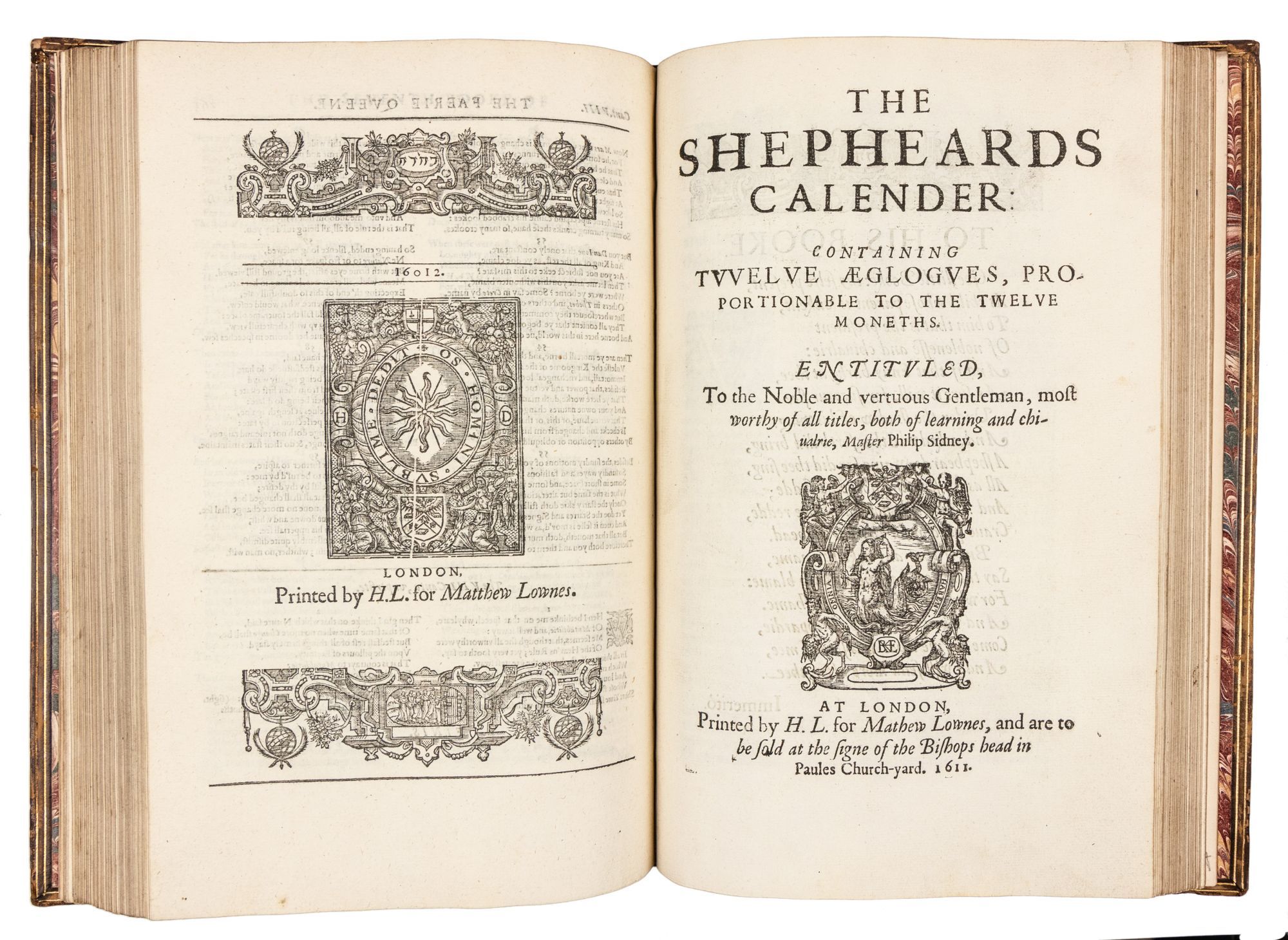
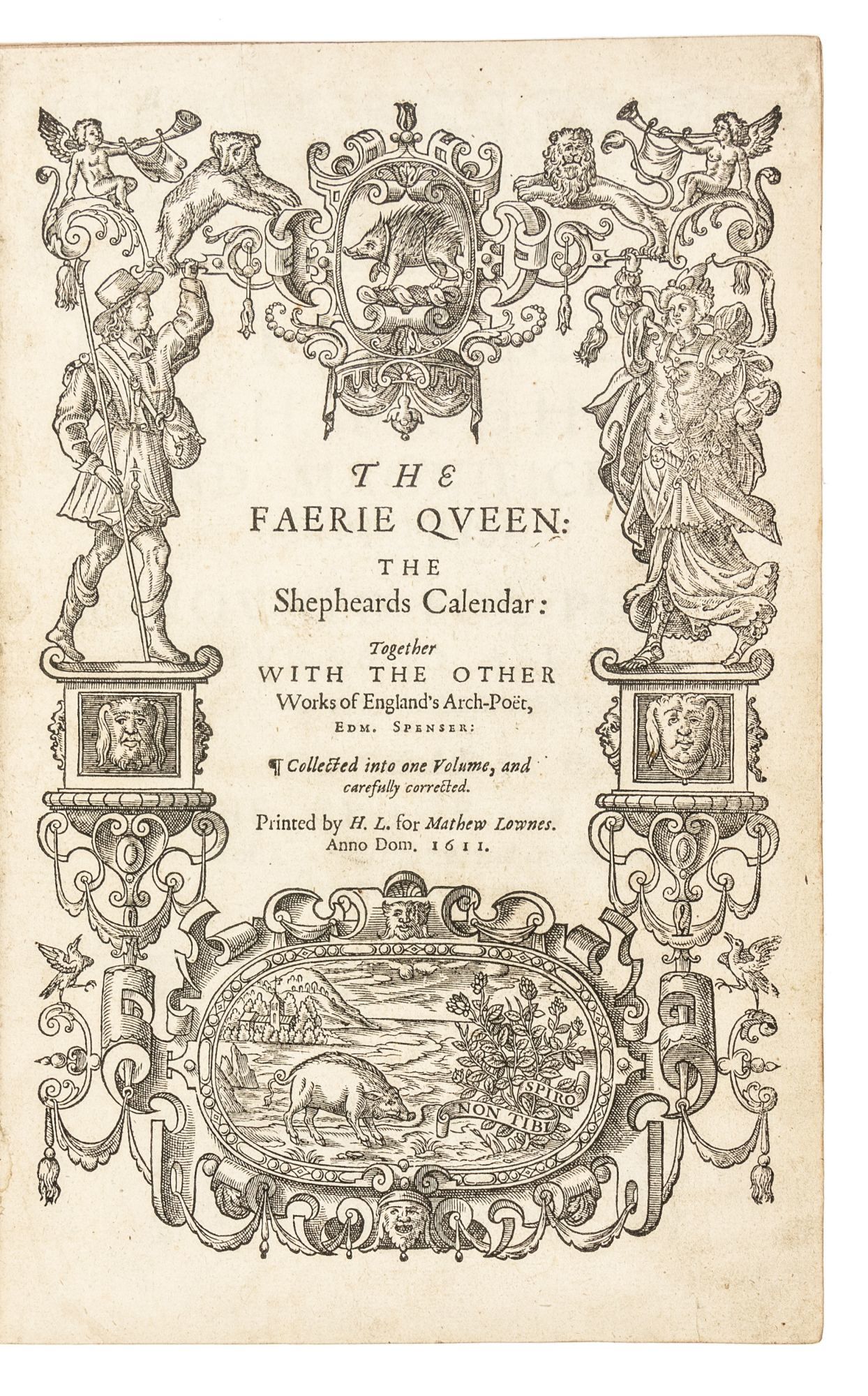
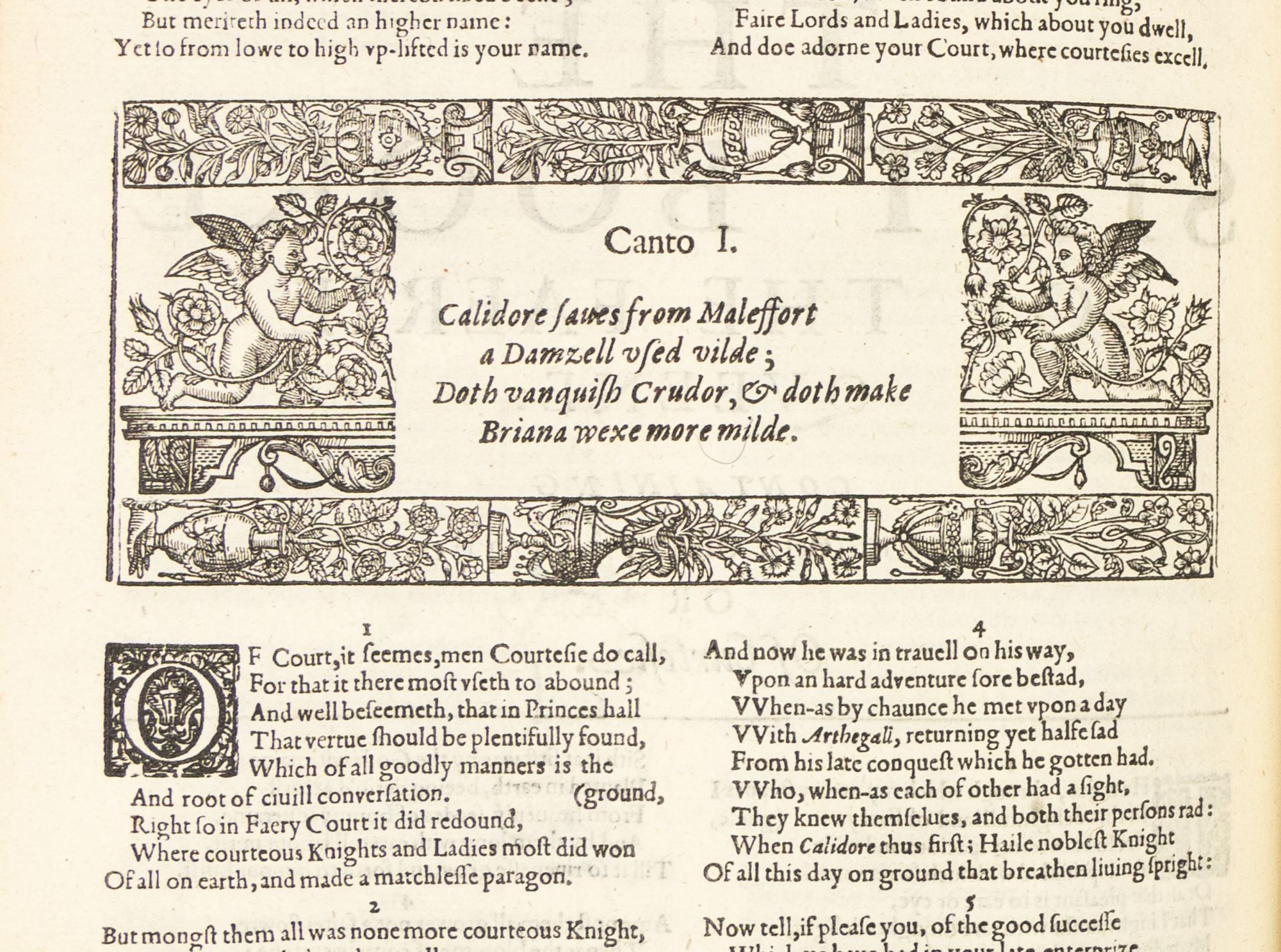
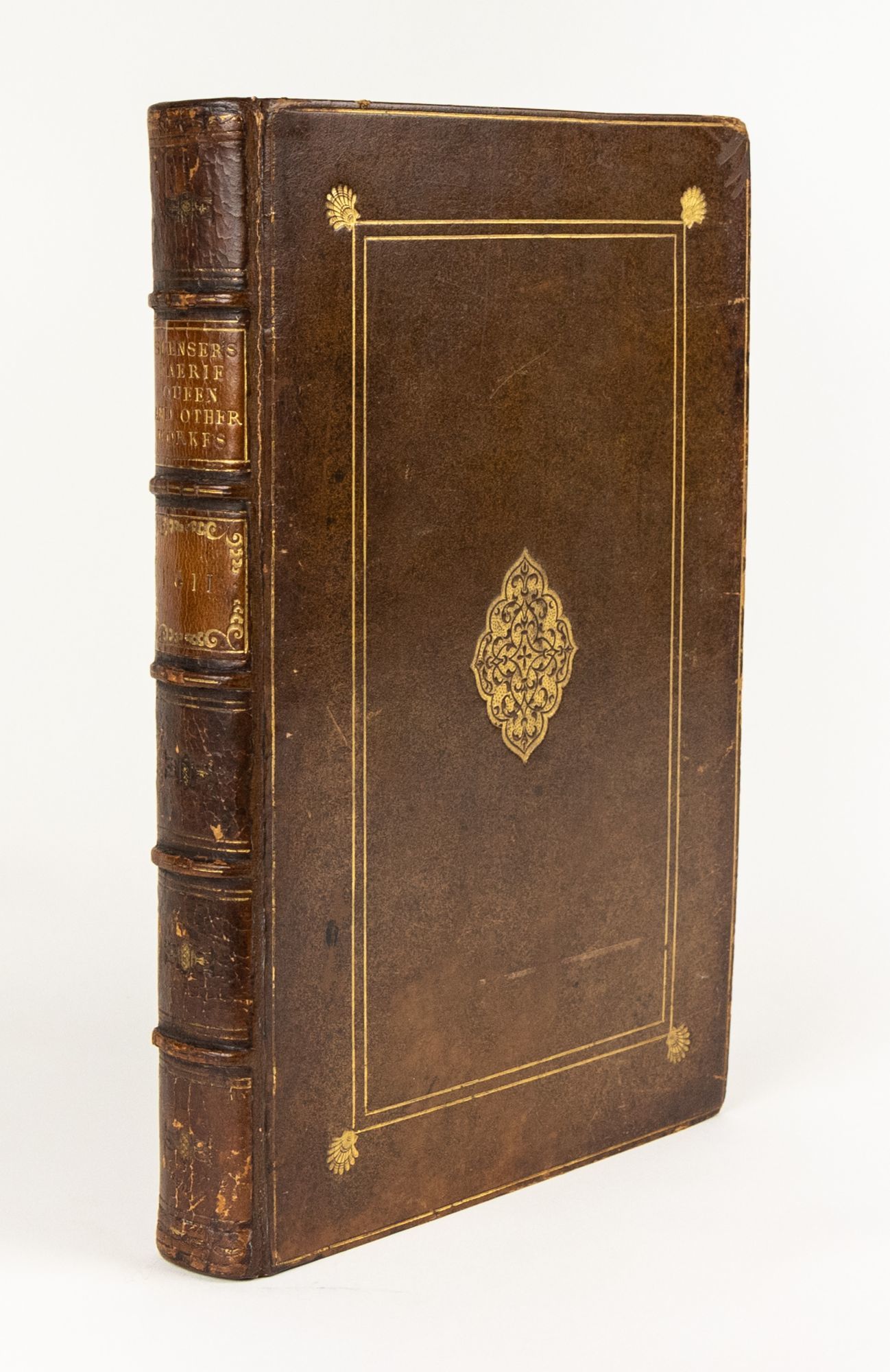
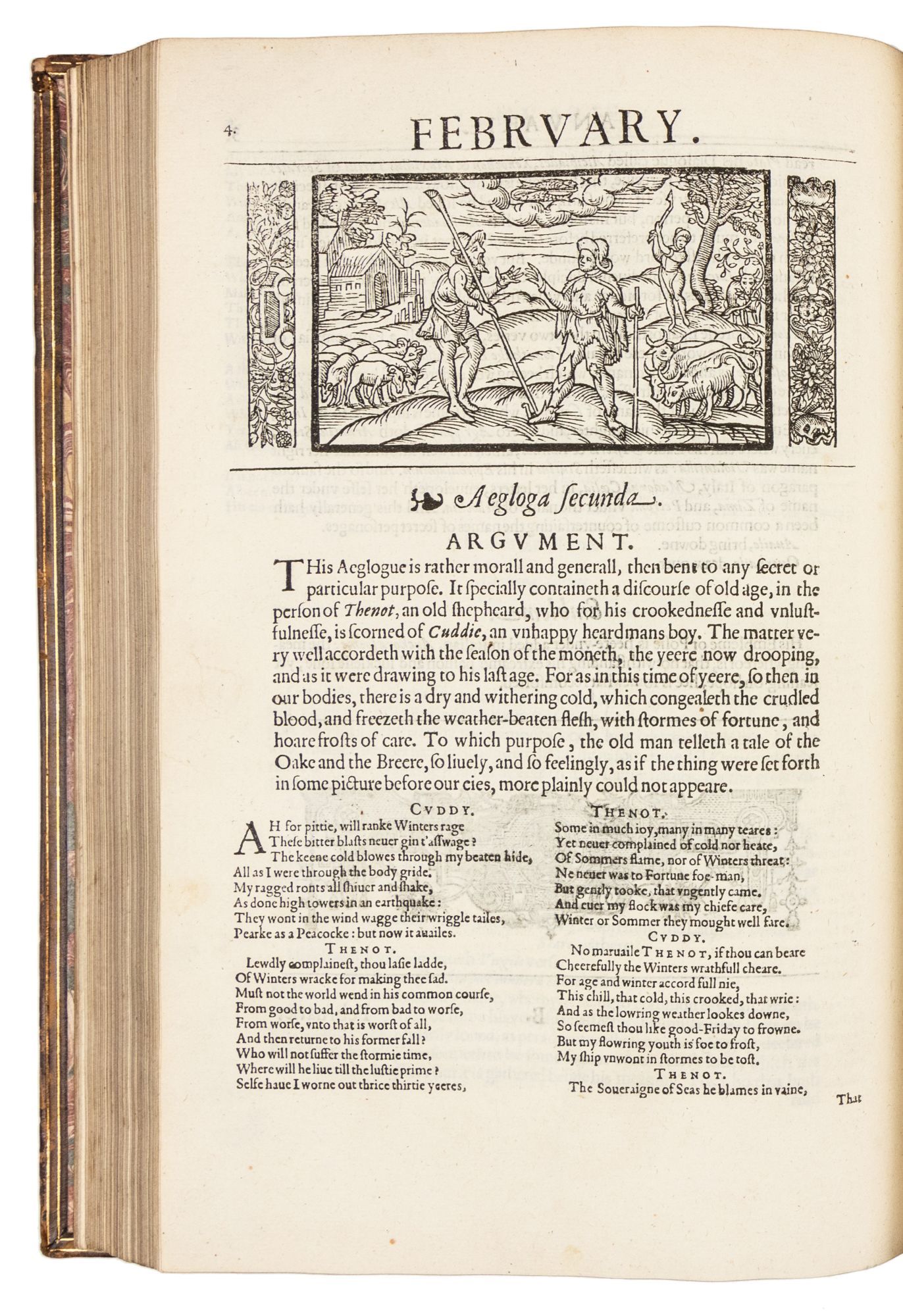
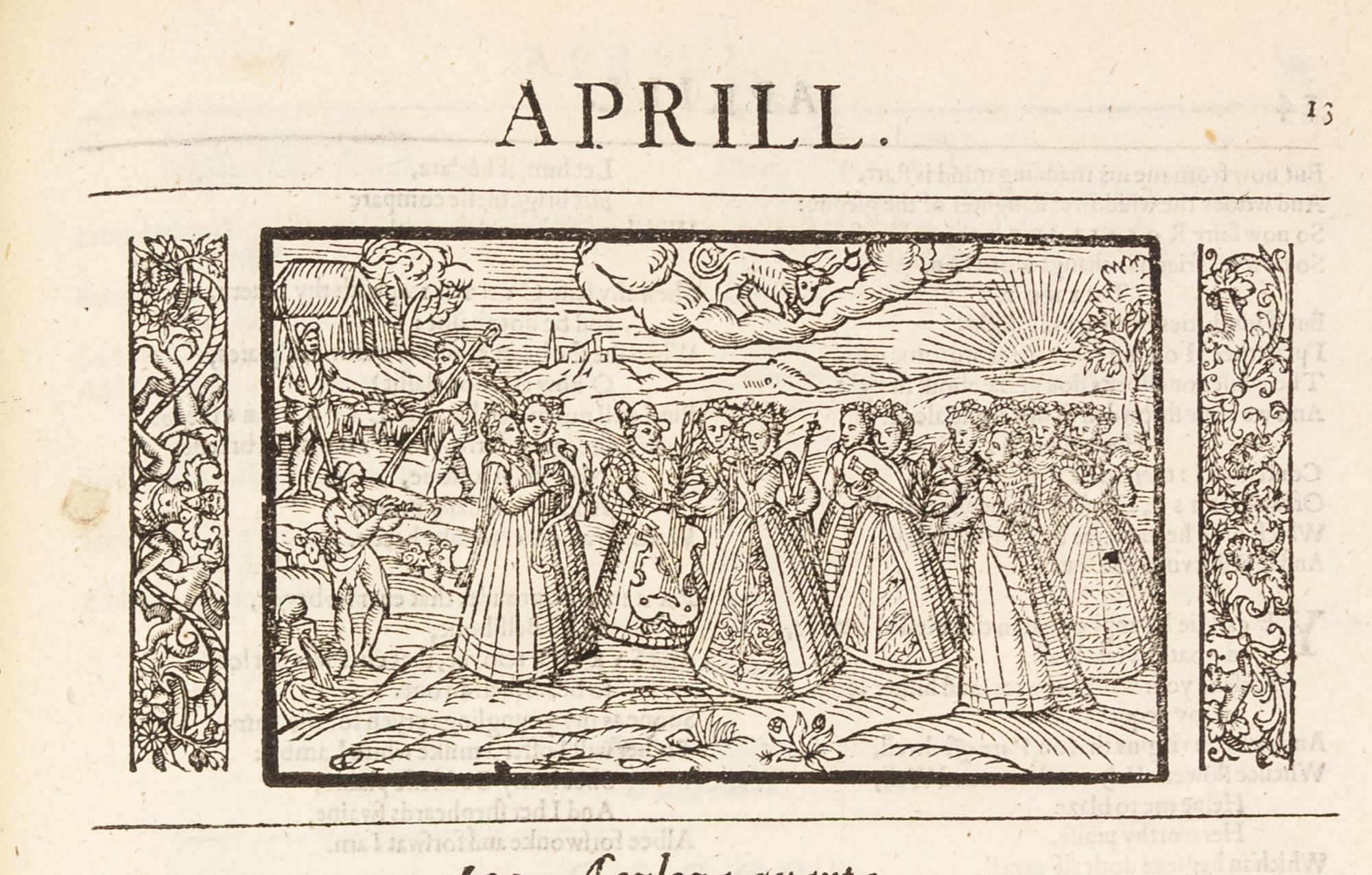
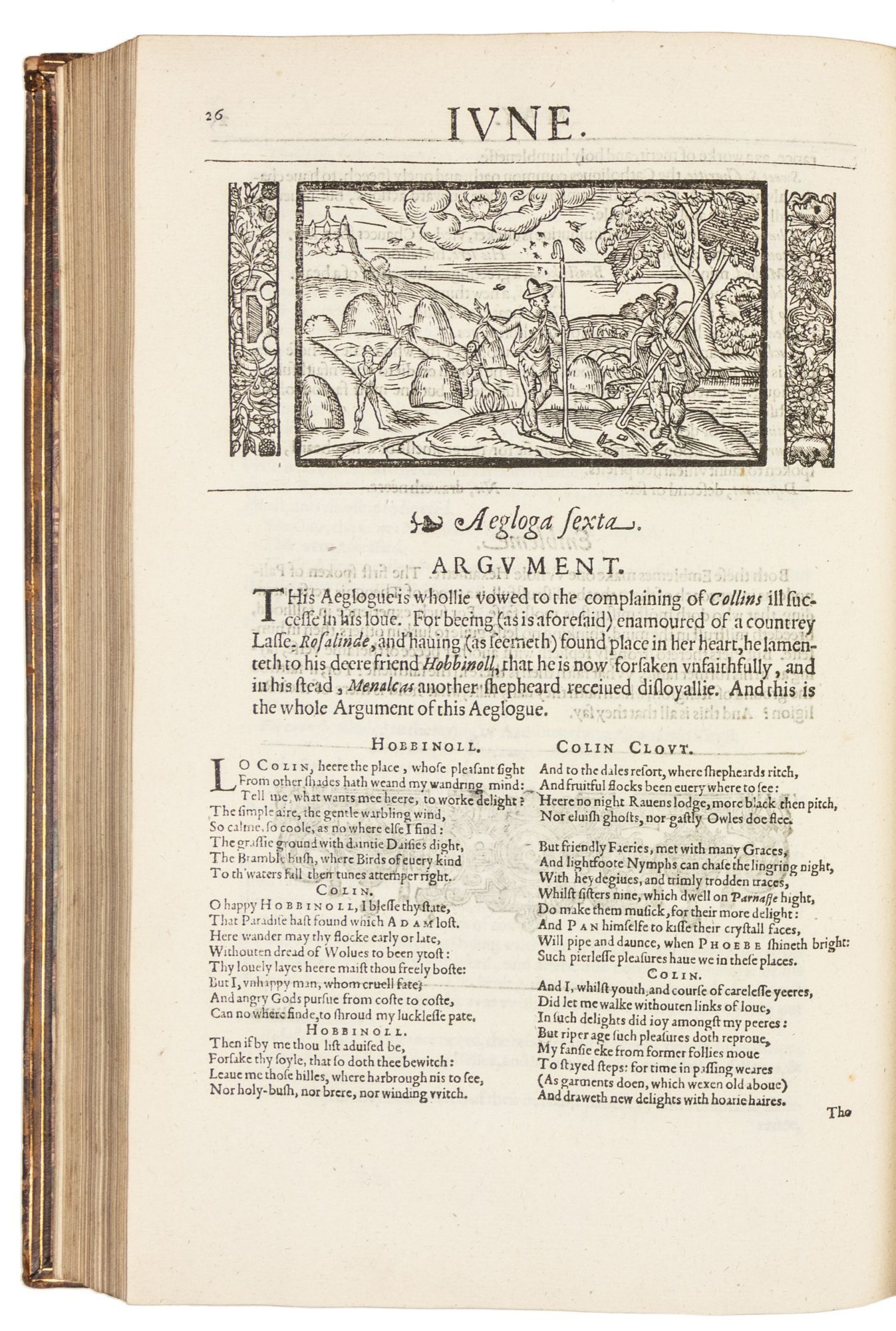
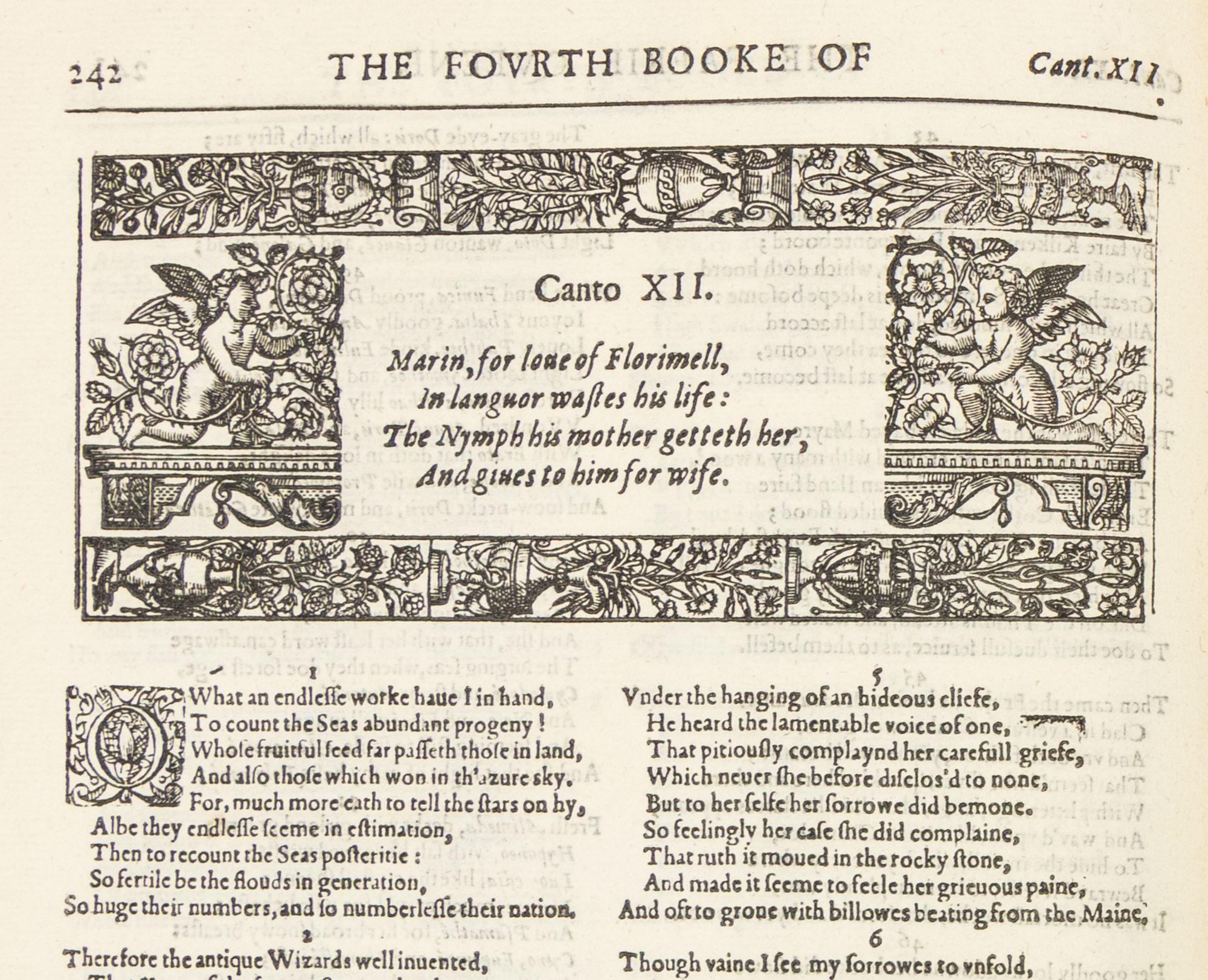
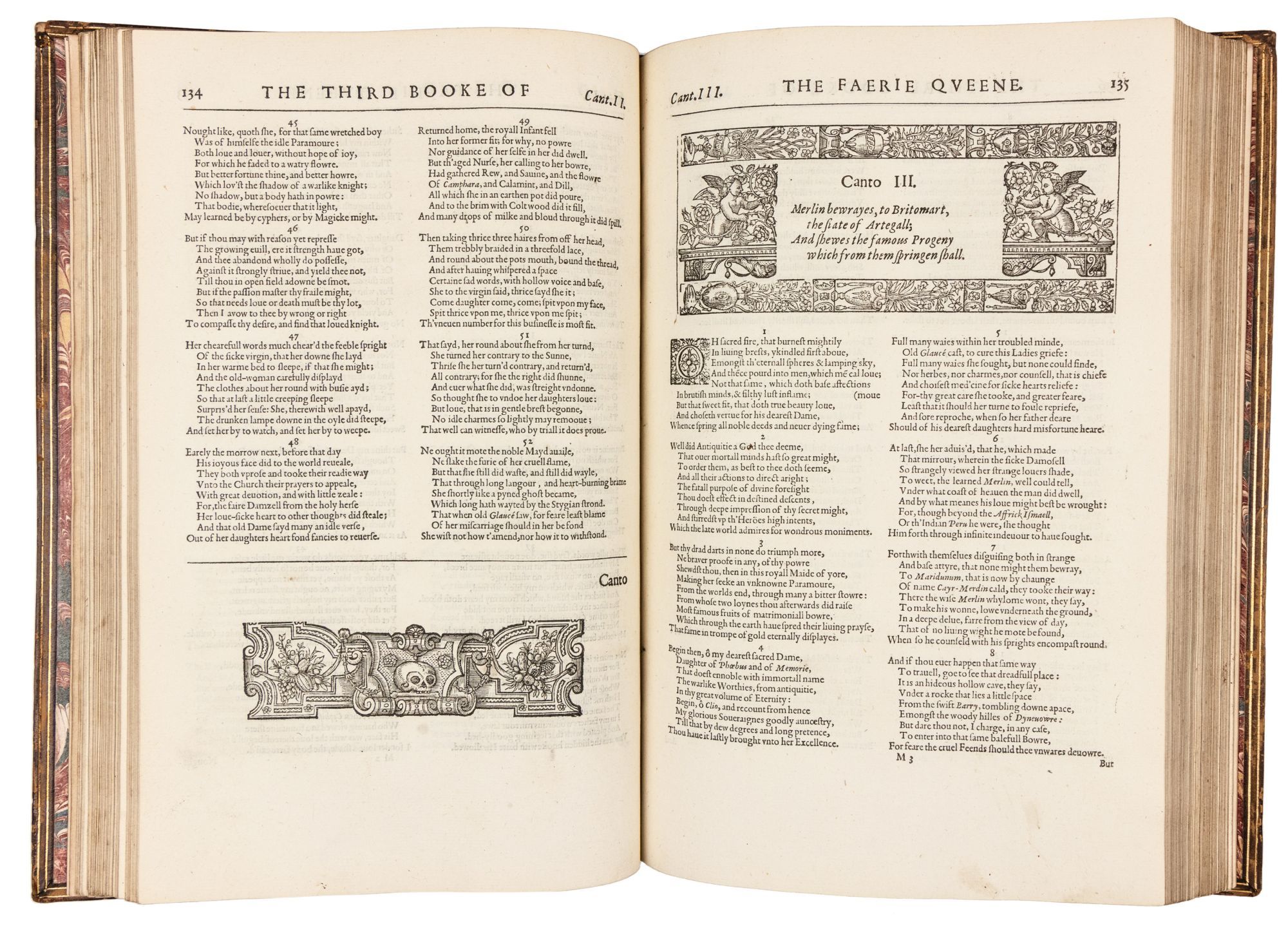
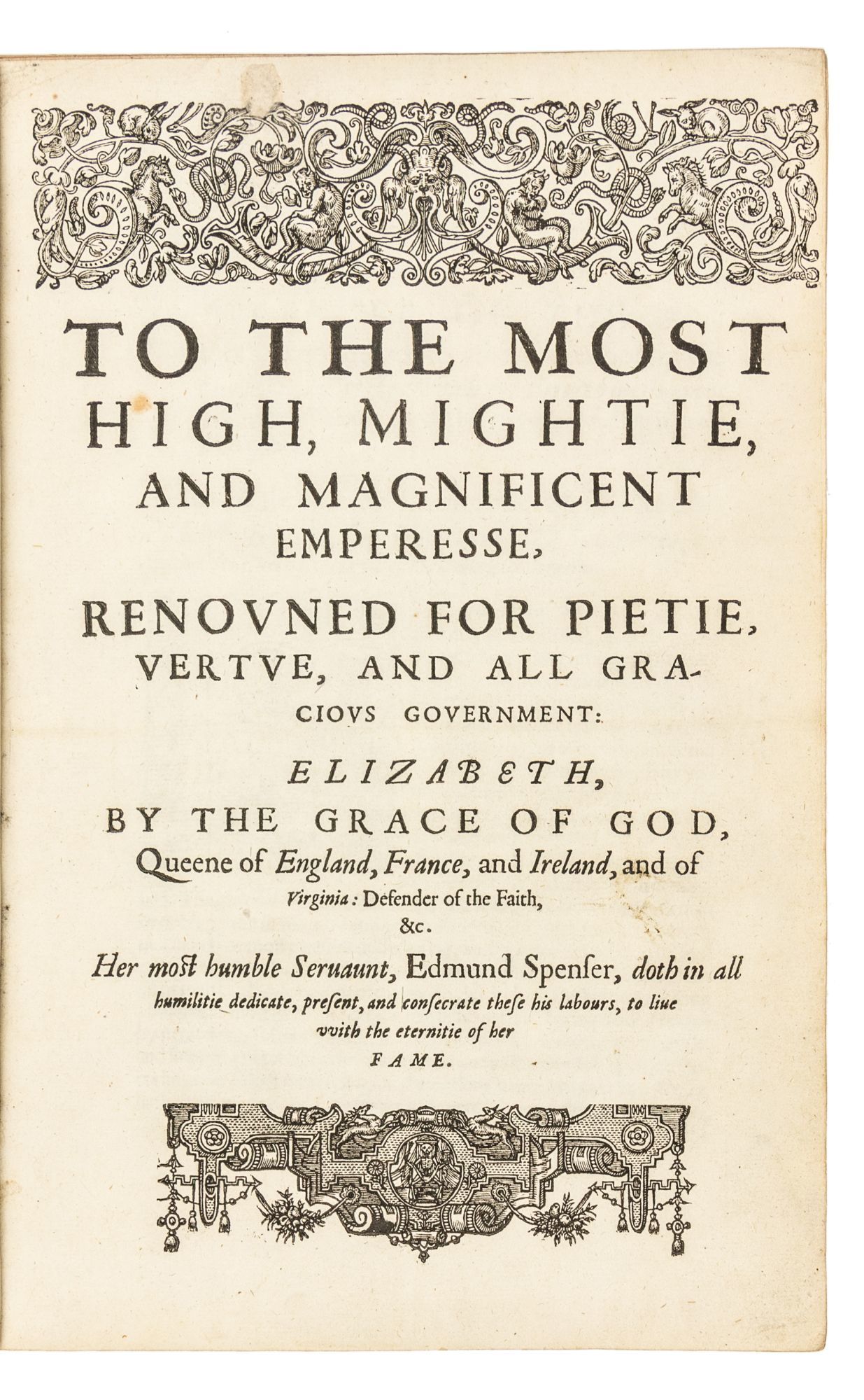
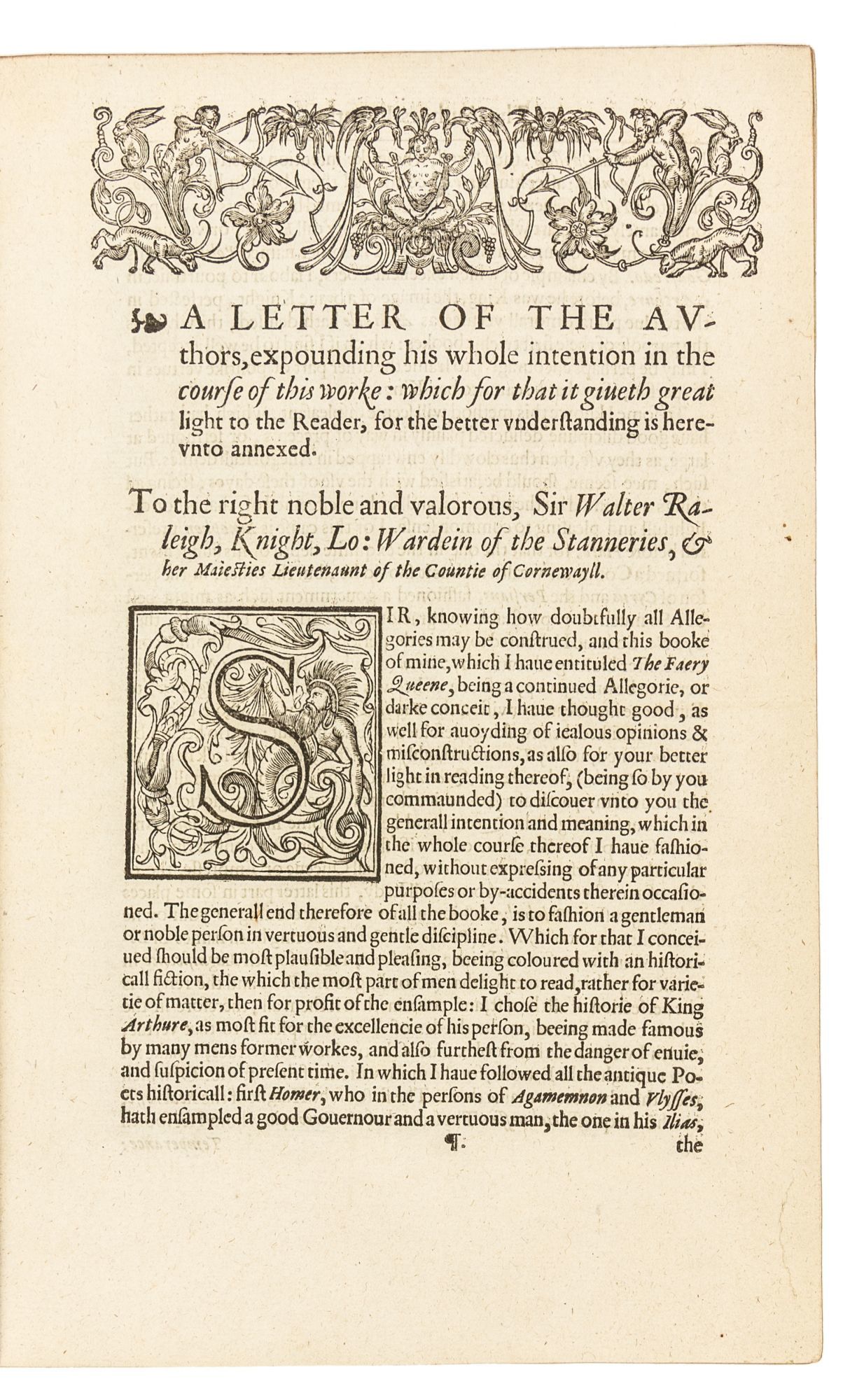
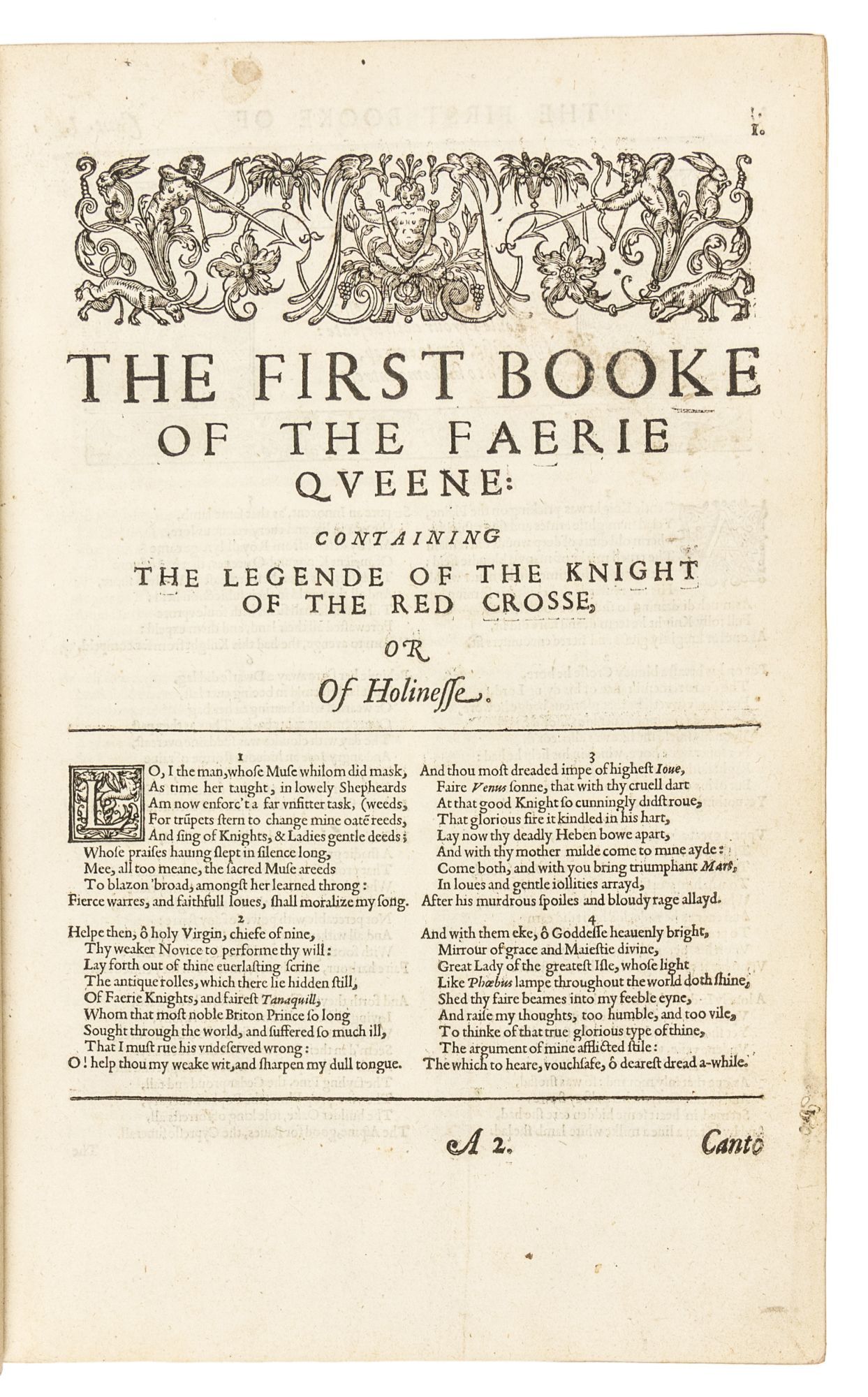
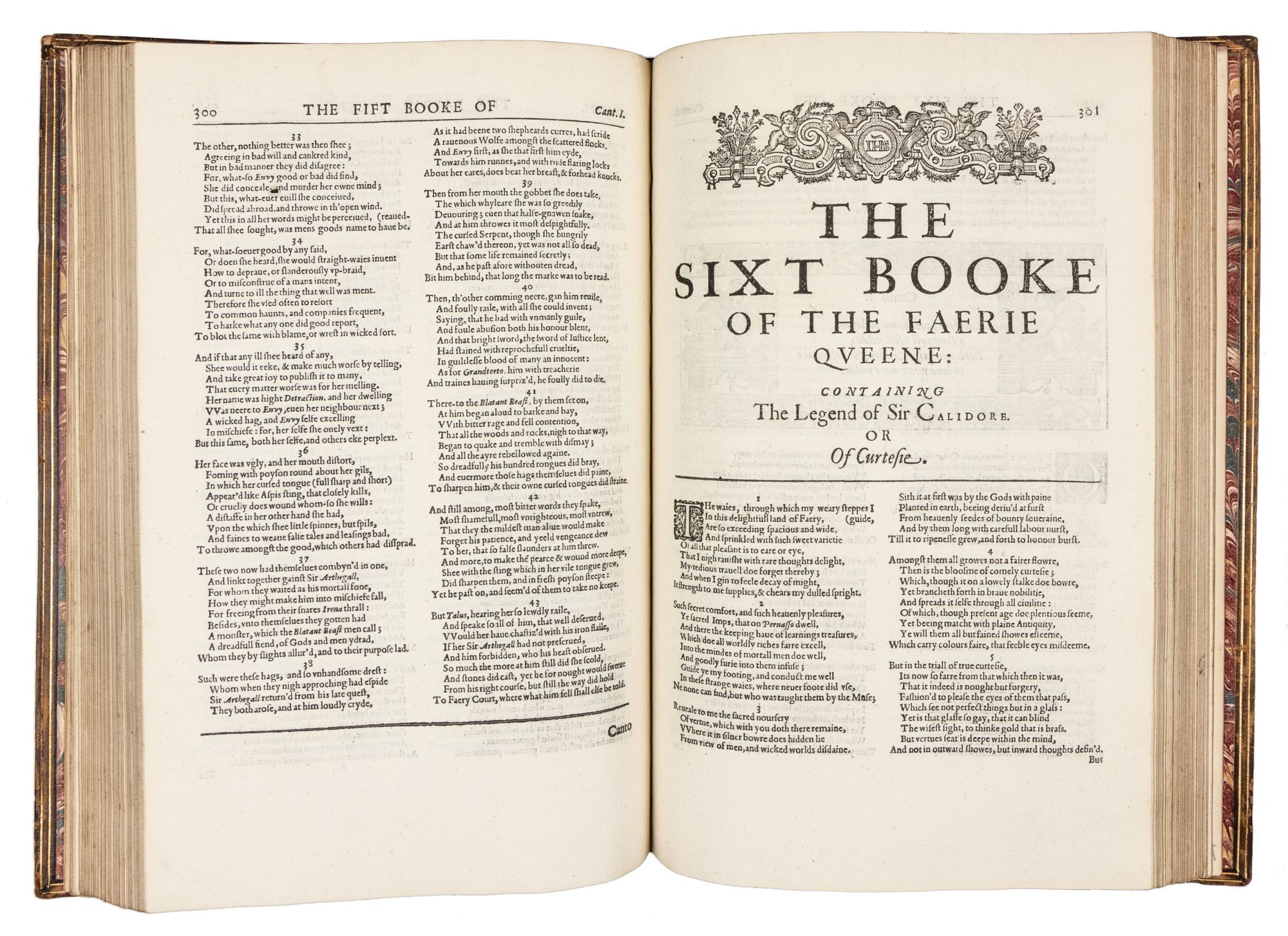
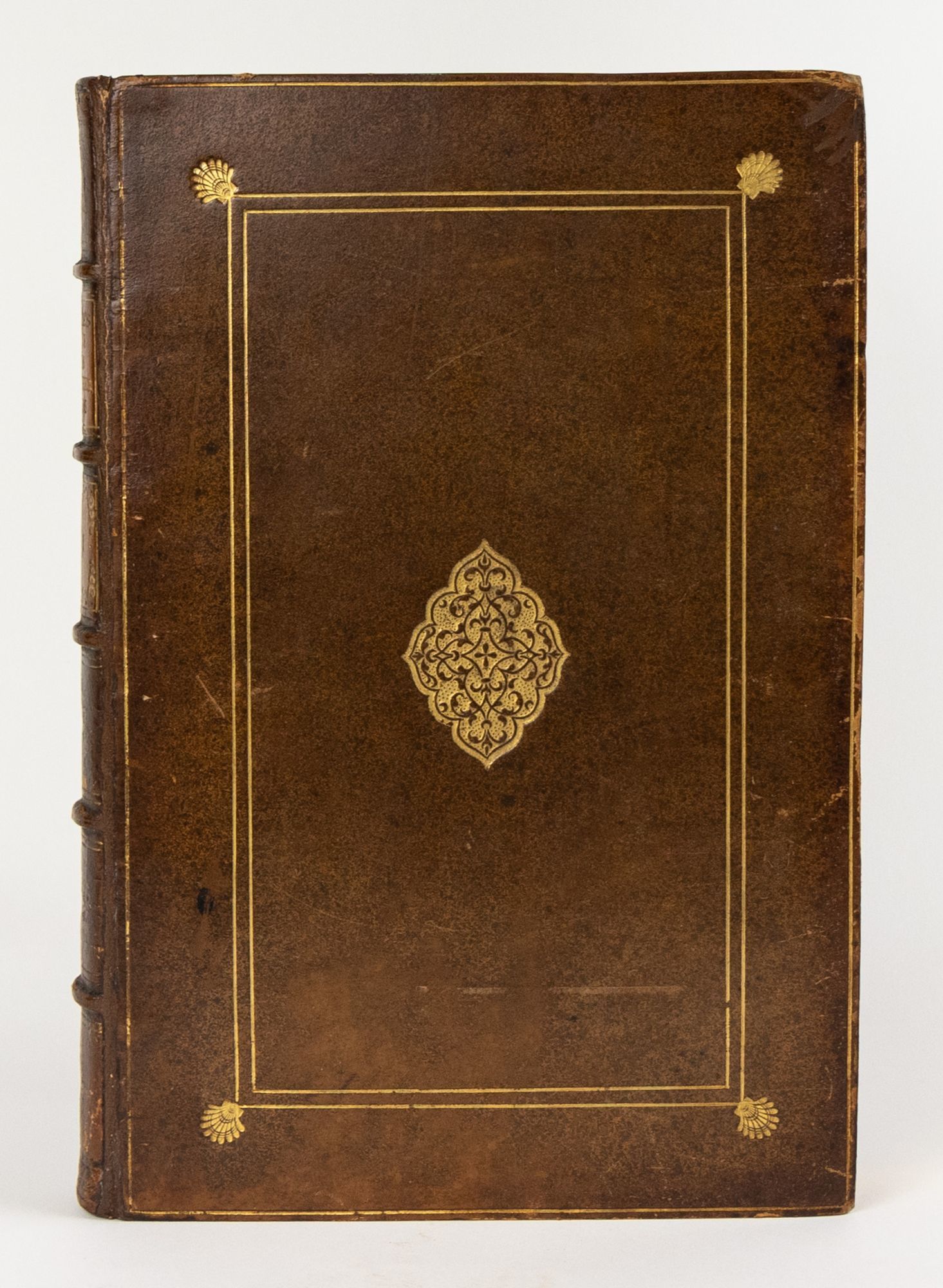
[London]: By H[umphrey] L[ownes] for Mathew Lownes, 1611-, 1613. FIRST COLLECTED EDITION, second issue (see below for issue points). Hardcover. Fine. Bound in 19th c. sprinkled calfskin, gilt, hinges discreetly repaired, mild wear to corners and extremities. The boards are ruled in gold, with shell ornaments at the corners and a gilt arabesque at the center. The text itself is in very nice condition, lightly pressed, with a few trivial blemishes and small rust holes to four leaves (F3, X1-2, C6). The main title page is framed by a fine ornamental woodcut border (McKerrow & Ferguson 212). Every canto of the “Faerie Queene” is introduced by an elaborate, four-part woodcut frame and concludes with a historiated tail-piece. The “Shepheard's Calendar” is illustrated with twelve woodcut vignettes, one for each month. The first issue of Spenser’s collected works appeared in 1611. In the earliest copies, the publisher, Mathew Lownes, used the remaining sheets from his 1609 folio edition of the “Faerie Queene”, together with a new title page and dedicatory leaf. Spenser’s other works were then printed in the same format to complete the collected edition. In 1612, the 1609 “Faerie Queene” sheets having run out, the poem was re-set and printed anew, with the t.p. to the second part dated 1612 and its colophon dated "16012", as in this copy.
This issue also includes “Mother Hubberd’s Tale”, which had been omitted in the first issue in order not to offend William Cecil, whose father, Lord Burghley, Spenser had satirized in that poem. “Since Cecil died in 1612, the last objection to the republication of that work was removed and so copies of it were separately printed and inserted in those copies (of the 1611 works) that remained on hand.”(Pforzheimer 972)
The Omission of ‘Mother Hubberd’s Tale” from the 1611 Collected Works of Spenser:
“Two years after Matthew Lownes had issued the first folio edition of the ‘Faerie Queen’, he decided to issue a collected edition of Spenser’s works. Having a number of unsold copies of the 1609 ‘Faerie Queen’ still on hand, he determined to use those copies by including them in the collected edition in lieu of a 1611 reprint of the same. In order to effect this end he printed a general title and dedicatory leaf on a single sheet, unsigned, and so was enabled thus to make-up copies of a collected edition by cancelling the title of the 1609 edition and adding a 1611 edition of the remaining parts.
“The 1591 edition of Spenser’s ‘Complaints’ having been officially suppressed on account of the attack on lord Burghley contained in the ‘Mother Hubberd’s Tale’ and in certain passages of the ‘Ruines of Time’, Lownes was not free to include the contents of that volume in this collected edition without obtaining official permission. By 1611, the matter had long blown over and Burghley, the object of the satire, was now dead, but in deference to Sir Robert Cecil, his son, it was considered advisable to omit the offending satire and to revise the objectionable passages in the ‘Ruines of Time’. Therefore, some copies, e.g. the present, of the 161 edition that were sold soon after publication did not contain the ‘Mother Hubberd’s Tale’ but since Cecil died in 1612, the last objection to the re-publication of that work was removed and so copies of it were separately printed and inserted in those copies that remained on hand.”(Pforzheimer 972).
This issue also includes “Mother Hubberd’s Tale”, which had been omitted in the first issue in order not to offend William Cecil, whose father, Lord Burghley, Spenser had satirized in that poem. “Since Cecil died in 1612, the last objection to the republication of that work was removed and so copies of it were separately printed and inserted in those copies (of the 1611 works) that remained on hand.”(Pforzheimer 972)
The Omission of ‘Mother Hubberd’s Tale” from the 1611 Collected Works of Spenser:
“Two years after Matthew Lownes had issued the first folio edition of the ‘Faerie Queen’, he decided to issue a collected edition of Spenser’s works. Having a number of unsold copies of the 1609 ‘Faerie Queen’ still on hand, he determined to use those copies by including them in the collected edition in lieu of a 1611 reprint of the same. In order to effect this end he printed a general title and dedicatory leaf on a single sheet, unsigned, and so was enabled thus to make-up copies of a collected edition by cancelling the title of the 1609 edition and adding a 1611 edition of the remaining parts.
“The 1591 edition of Spenser’s ‘Complaints’ having been officially suppressed on account of the attack on lord Burghley contained in the ‘Mother Hubberd’s Tale’ and in certain passages of the ‘Ruines of Time’, Lownes was not free to include the contents of that volume in this collected edition without obtaining official permission. By 1611, the matter had long blown over and Burghley, the object of the satire, was now dead, but in deference to Sir Robert Cecil, his son, it was considered advisable to omit the offending satire and to revise the objectionable passages in the ‘Ruines of Time’. Therefore, some copies, e.g. the present, of the 161 edition that were sold soon after publication did not contain the ‘Mother Hubberd’s Tale’ but since Cecil died in 1612, the last objection to the re-publication of that work was removed and so copies of it were separately printed and inserted in those copies that remained on hand.”(Pforzheimer 972).
Details
Title
The Faerie Queen: The Shepheards Calendar: together with the other Works of England's Arch-Poet
Author
Spenser, Edmund (ca.1552-1599)
Binding
Hardcover
Condition
Fine
Publisher
By H[umphrey] L[ownes] for Mathew Lownes, 1611-: [London]
Date
1613
Edition
FIRST COLLECTED EDITION, second issue (see below for issue point