

Traité des Hernies
- Lyon: Thibauld Payan, 1561
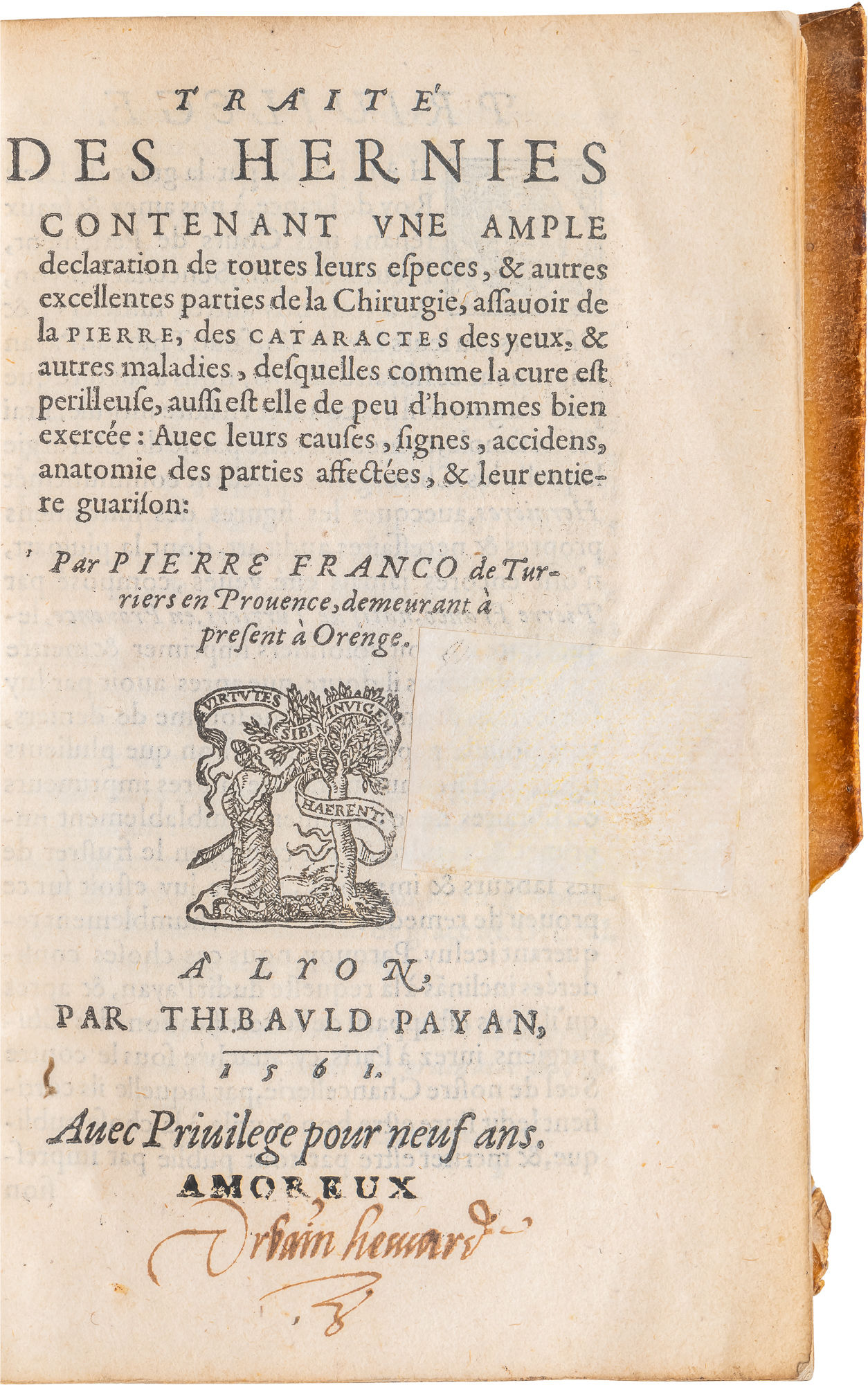
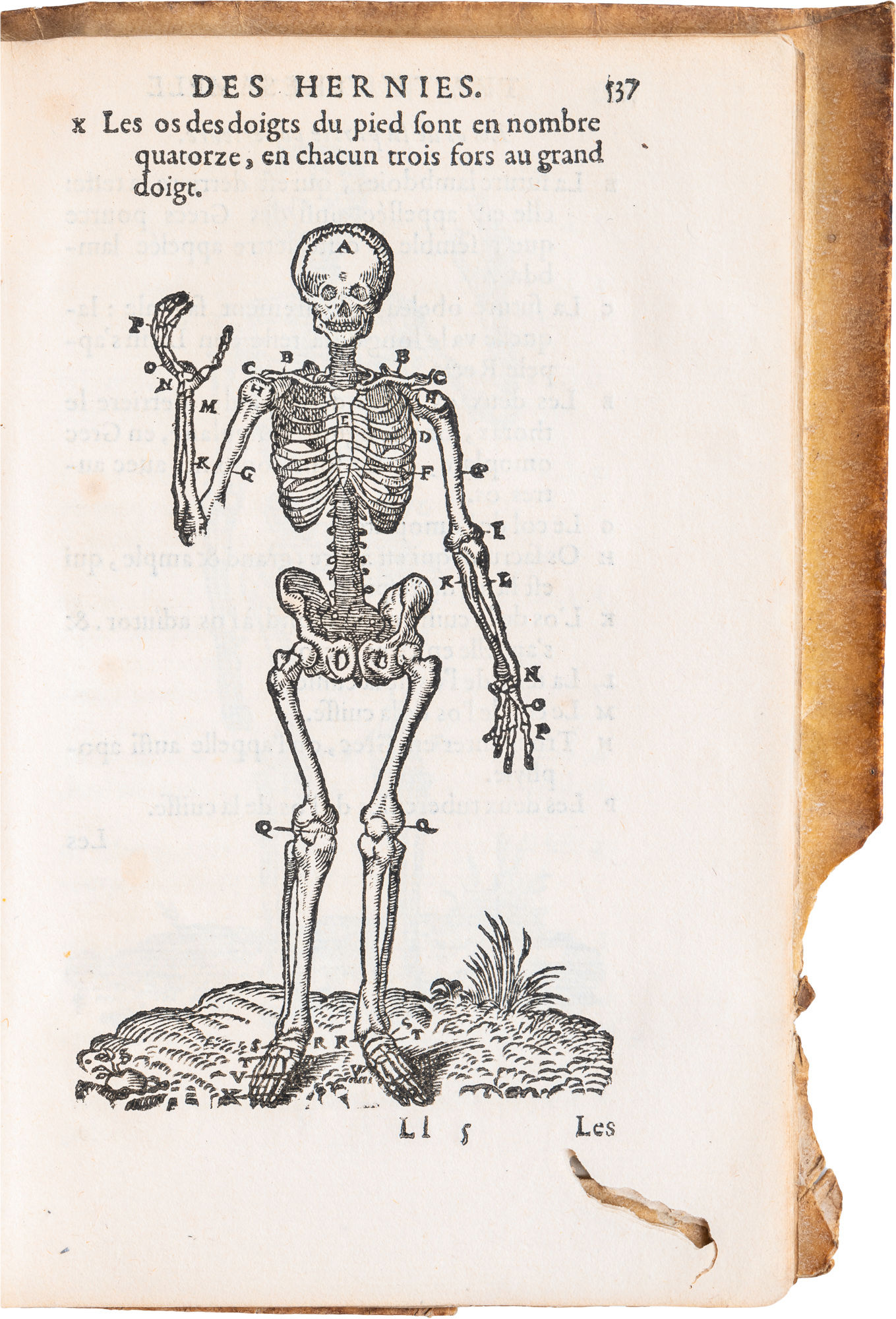
Lyon: Thibauld Payan, 1561. Second edition of Franco's most famous work, greatly expanding the 1st (1556) with 25 new woodcuts (22 instruments and 3 skeletons). 8vo (175 x 119mm), pp. [34], 554, [2]. Contemporary ink ownership inscription to the title page, title with old paper restoration (30mmx40mm) to blank right margin, paper reinforcements to lower margin of G2 [‘F2’], T6, Bb8, Ii2), worming to the final 26 leaves not effecting text, errata with a 28mmx44mm piece of the lower blank margin removed and the whole page laid down, some very minor, sporadic foxing and browning, else internally clean very good. Bound in contemporary vellum remnants of from an old manuscript, chipped at the lower rear corner, lacking the ties, toned, else very good. Only 3 other copies at auction in at least 85 years. Norman 828. Pierre Franco's "Traité des Hernies" is a groundbreaking work in the history of medicine, originally published in 1556 and greatly expanded in this second edition from 1561. Franco, one of the most innovative surgeons of the Renaissance despite his humble origins, made significant contributions to the field of operative surgery, elevating it from the hands of charlatans and itinerant 'cutters' and bringing it back into the realm of respected medical practice.
Born to a poor family in Provence, Franco never received formal university education—a remarkable detail considering his impact. Instead, he trained as a barber-surgeon, a less prestigious position that provided extensive practical experience. Franco's importance stems from several groundbreaking achievements. The Traité represents the first comprehensive text dedicated entirely to hernias and their surgical treatment. Franco meticulously documented various types of hernias and standardized their classification when most practitioners relied on unstructured knowledge passed through apprenticeship.
Franco introduced new techniques and instruments, such as performing the first documented suprapubic lithotomy (removal of bladder stones) in 1556 on a child when traditional approaches proved impossible, a technique that eventually became standard practice. He also refined techniques for cataract treatment, perfecting the "couching" method and pioneering early forms of lens extraction. His work on hernia surgery was particularly groundbreaking, as he developed a method for performing herniotomies without castration, a common practice at the time.
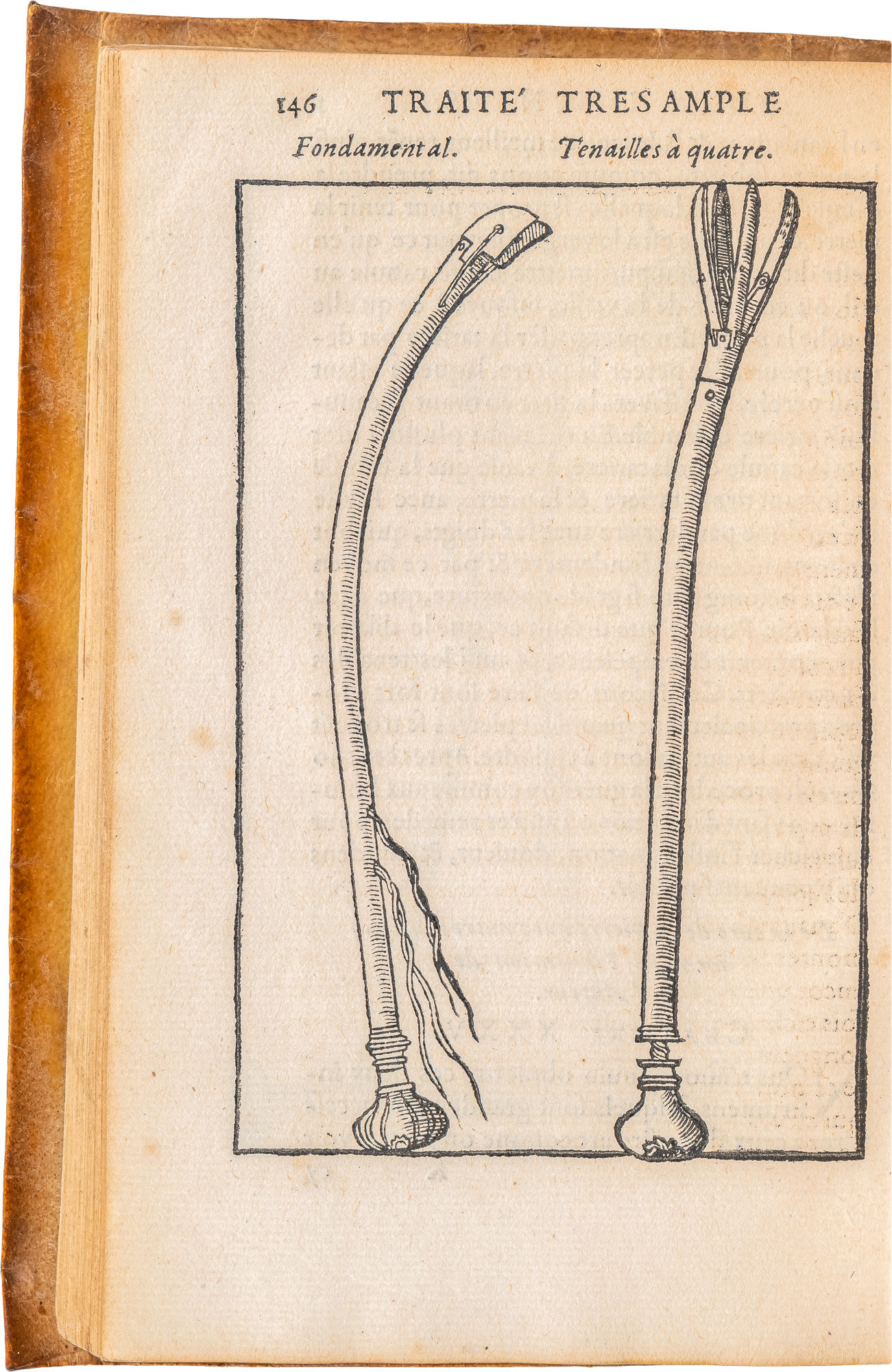
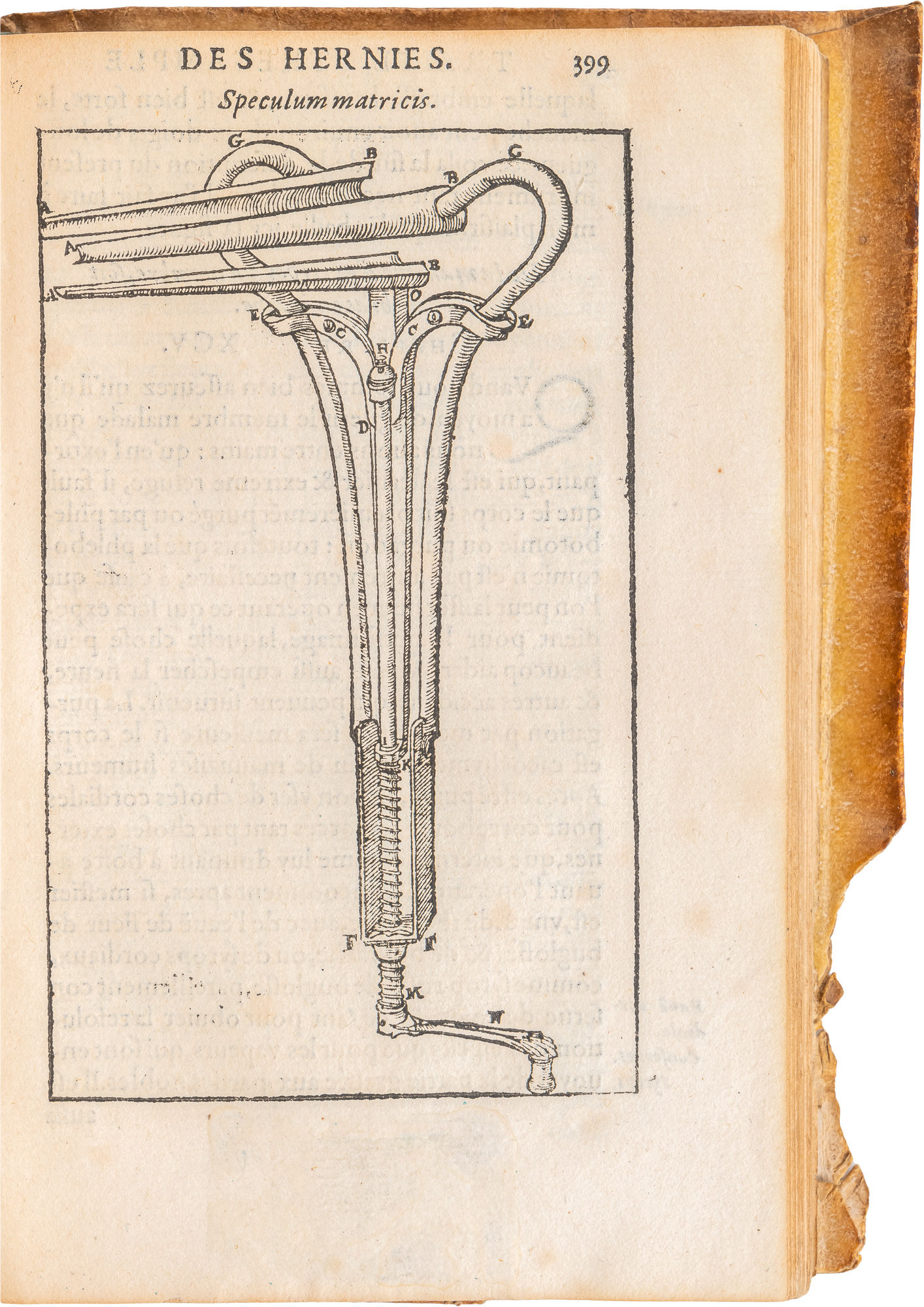
Unlike many contemporaries who deferred to ancient authorities, Franco prioritized direct observation and experience. By publishing in French rather than Latin, he made surgical knowledge accessible to practicing surgeons without classical education. The detailed work on specific procedures laid the groundwork for surgical specialization, and the woodcuts in this expanded second edition, featuring 25 new illustrations not found in the first edition, documented specialized instruments, many of Franco's own design, serving as prototypes for surgical tool development well into the 19th century.
Franco's systematic approach established standards that elevated the reputation of surgery as a legitimate medical discipline. He directly influenced later surgical giants, including Ambroise Paré, who acknowledged Franco's contributions. This 1561 edition represents a crucial moment in the development of modern surgery, documenting techniques that established principles that remain relevant in contemporary surgical practice nearly five centuries later.
“[…] influential in bringing operative surgery back into the realm of regular surgical practice, recapturing it from the ignorant hands of charlatans and itinerant ‘cutters'”.
Born to a poor family in Provence, Franco never received formal university education—a remarkable detail considering his impact. Instead, he trained as a barber-surgeon, a less prestigious position that provided extensive practical experience. Franco's importance stems from several groundbreaking achievements. The Traité represents the first comprehensive text dedicated entirely to hernias and their surgical treatment. Franco meticulously documented various types of hernias and standardized their classification when most practitioners relied on unstructured knowledge passed through apprenticeship.
Franco introduced new techniques and instruments, such as performing the first documented suprapubic lithotomy (removal of bladder stones) in 1556 on a child when traditional approaches proved impossible, a technique that eventually became standard practice. He also refined techniques for cataract treatment, perfecting the "couching" method and pioneering early forms of lens extraction. His work on hernia surgery was particularly groundbreaking, as he developed a method for performing herniotomies without castration, a common practice at the time.
Unlike many contemporaries who deferred to ancient authorities, Franco prioritized direct observation and experience. By publishing in French rather than Latin, he made surgical knowledge accessible to practicing surgeons without classical education. The detailed work on specific procedures laid the groundwork for surgical specialization, and the woodcuts in this expanded second edition, featuring 25 new illustrations not found in the first edition, documented specialized instruments, many of Franco's own design, serving as prototypes for surgical tool development well into the 19th century.
Franco's systematic approach established standards that elevated the reputation of surgery as a legitimate medical discipline. He directly influenced later surgical giants, including Ambroise Paré, who acknowledged Franco's contributions. This 1561 edition represents a crucial moment in the development of modern surgery, documenting techniques that established principles that remain relevant in contemporary surgical practice nearly five centuries later.
“[…] influential in bringing operative surgery back into the realm of regular surgical practice, recapturing it from the ignorant hands of charlatans and itinerant ‘cutters'”.
Details
Title
Traité des Hernies
Author
Franco, Pierre
Condition
Unknown
Publisher
Thibauld Payan: Lyon
Date
1561