

Fortunius Licetus De Monstris. Ex recensione Gerardi Blasii, M. D. & P. P. Qui Monstra quaedam nova & rariora ex recentiorum scriptis addidit. Editio Novissima. Iconibus illustrata
- Hardcover
- Amsterdam: Sumptibus Andreae Frisii, 1665
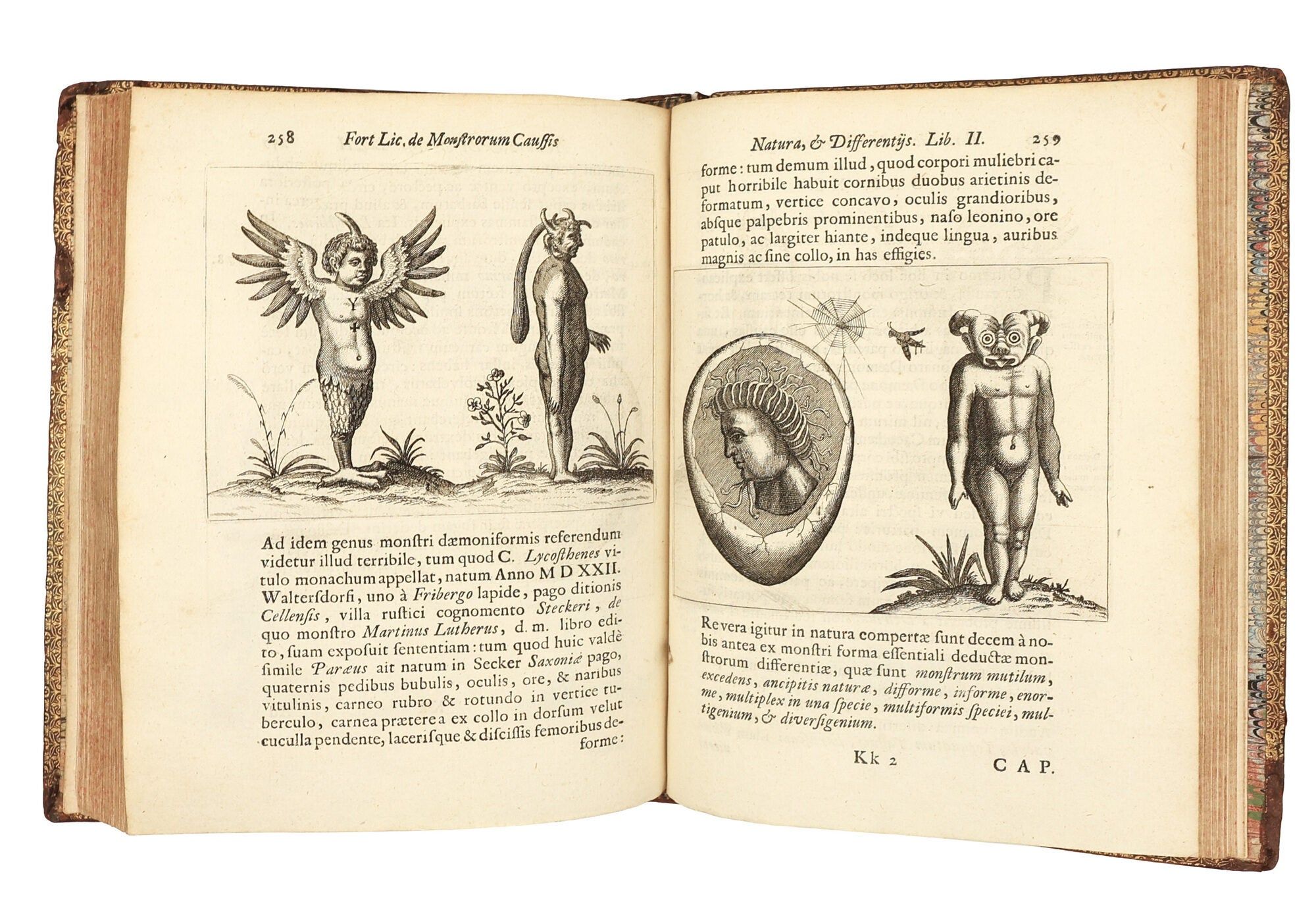
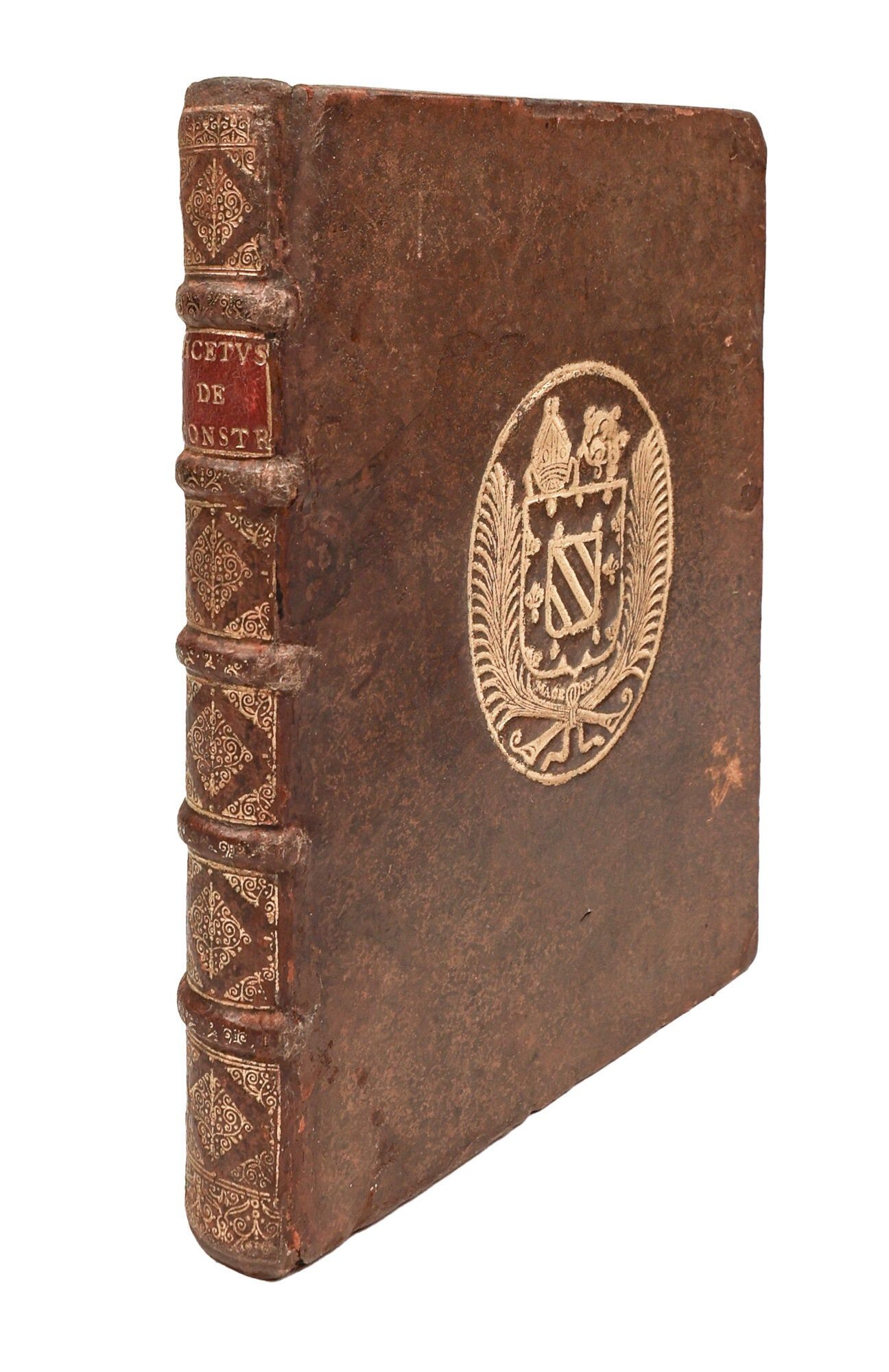
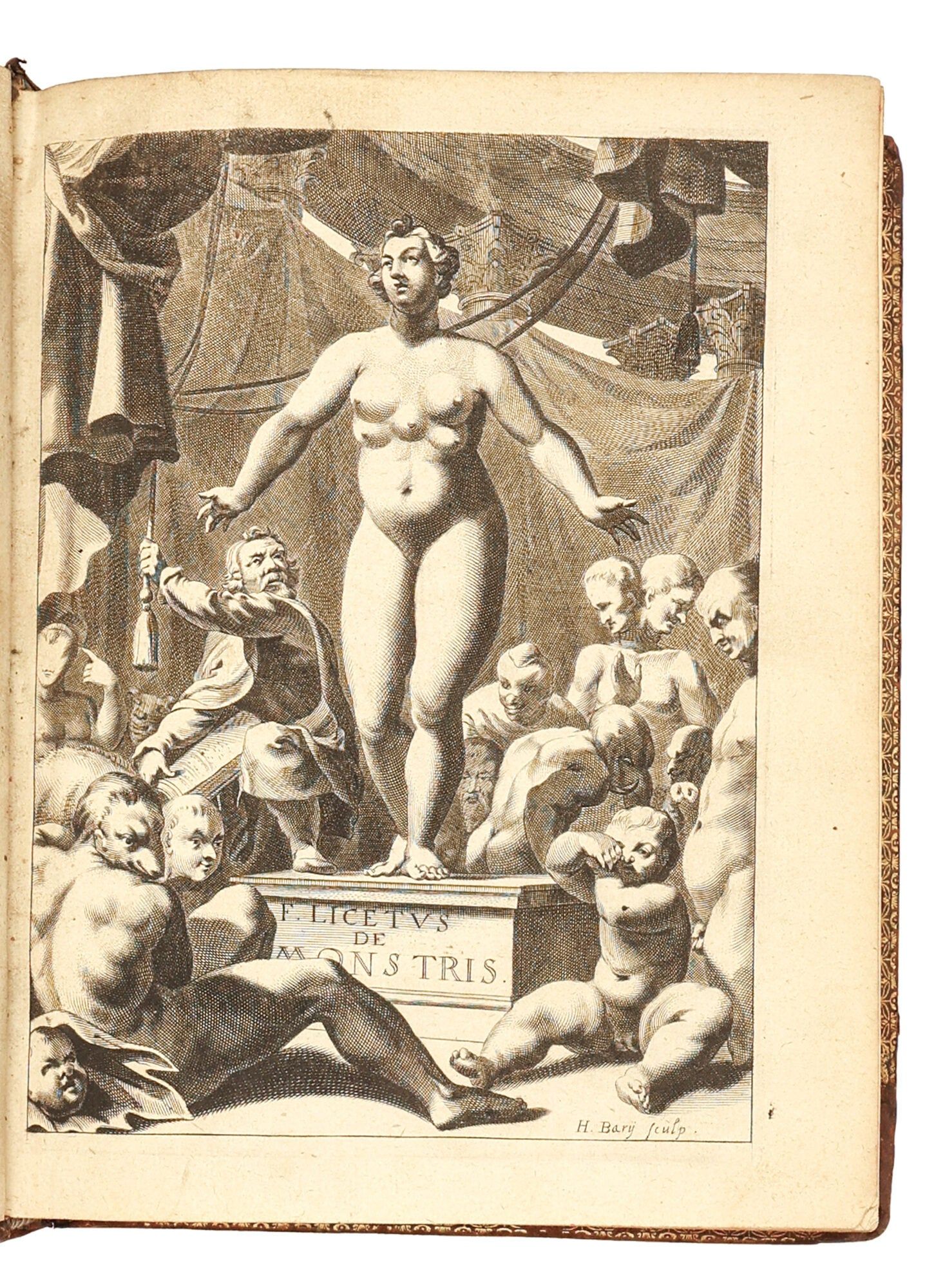
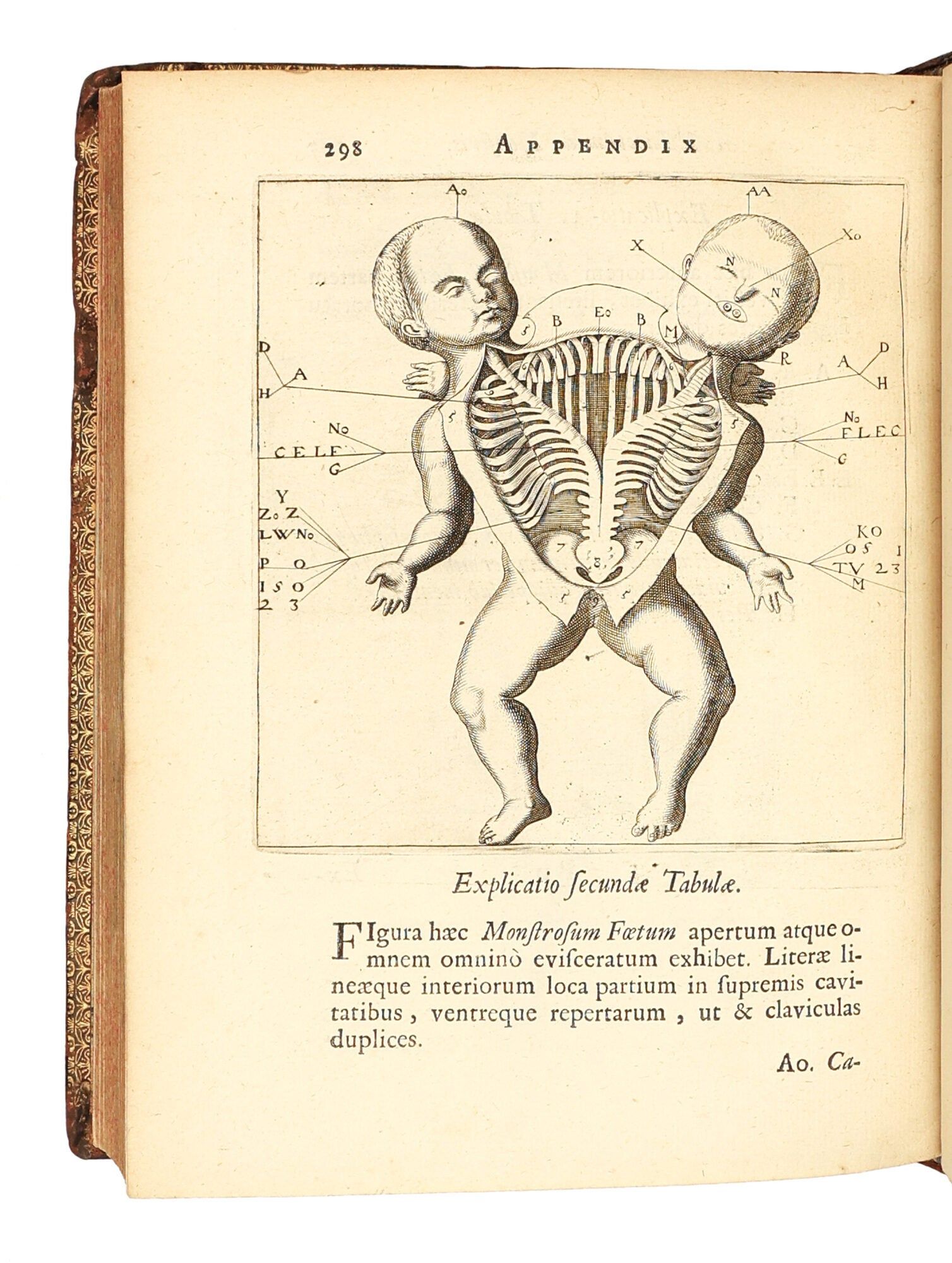
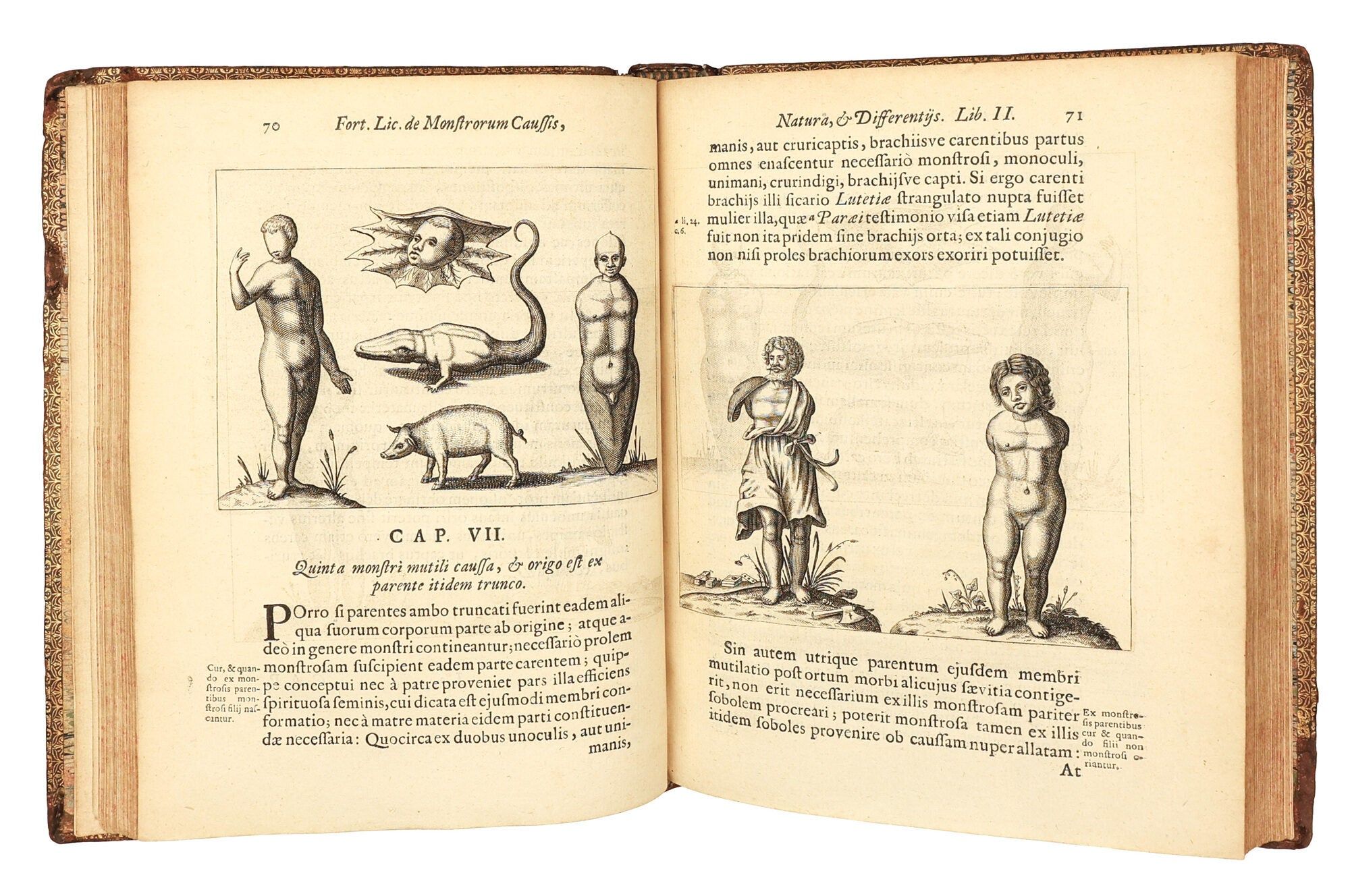
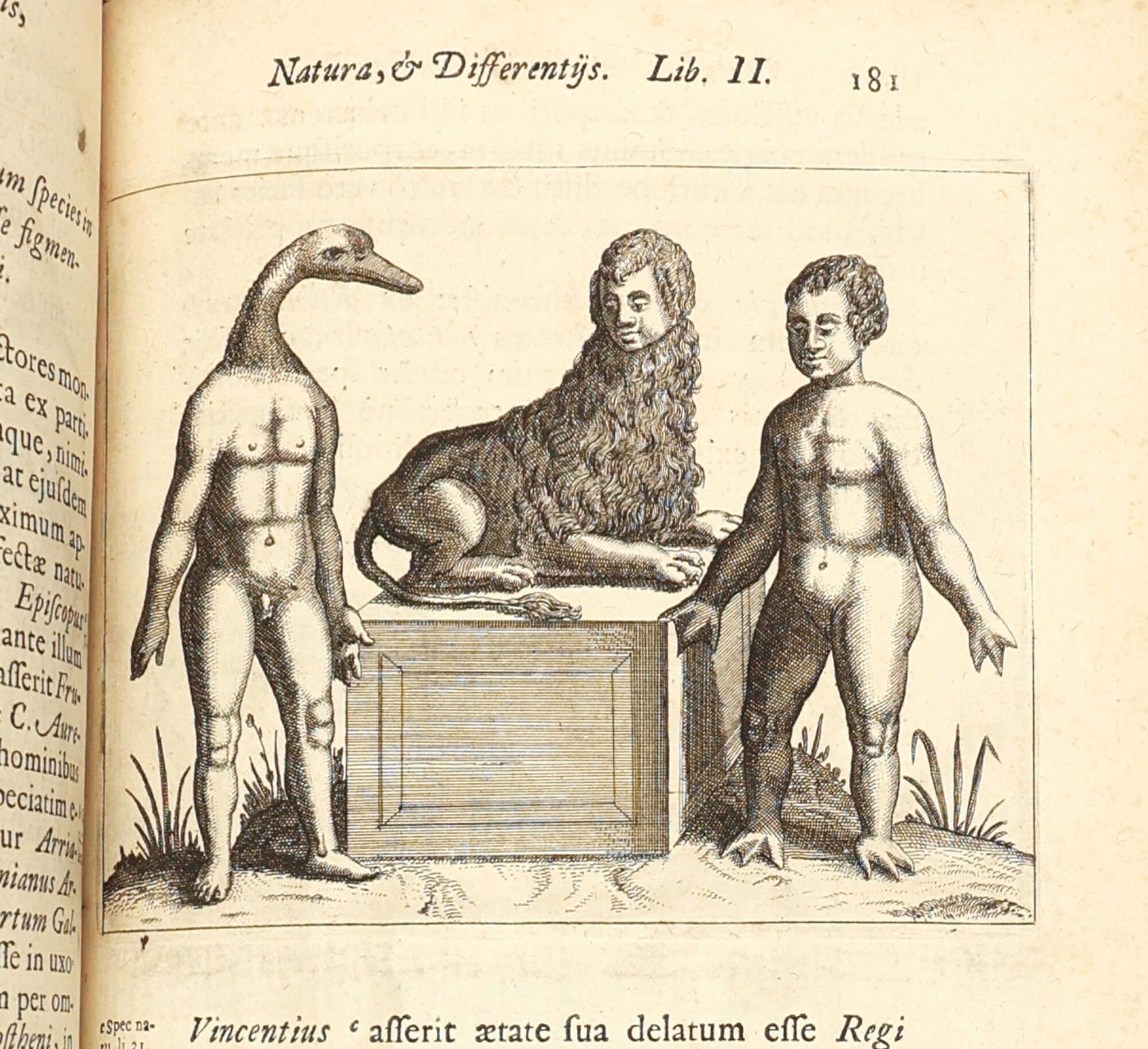
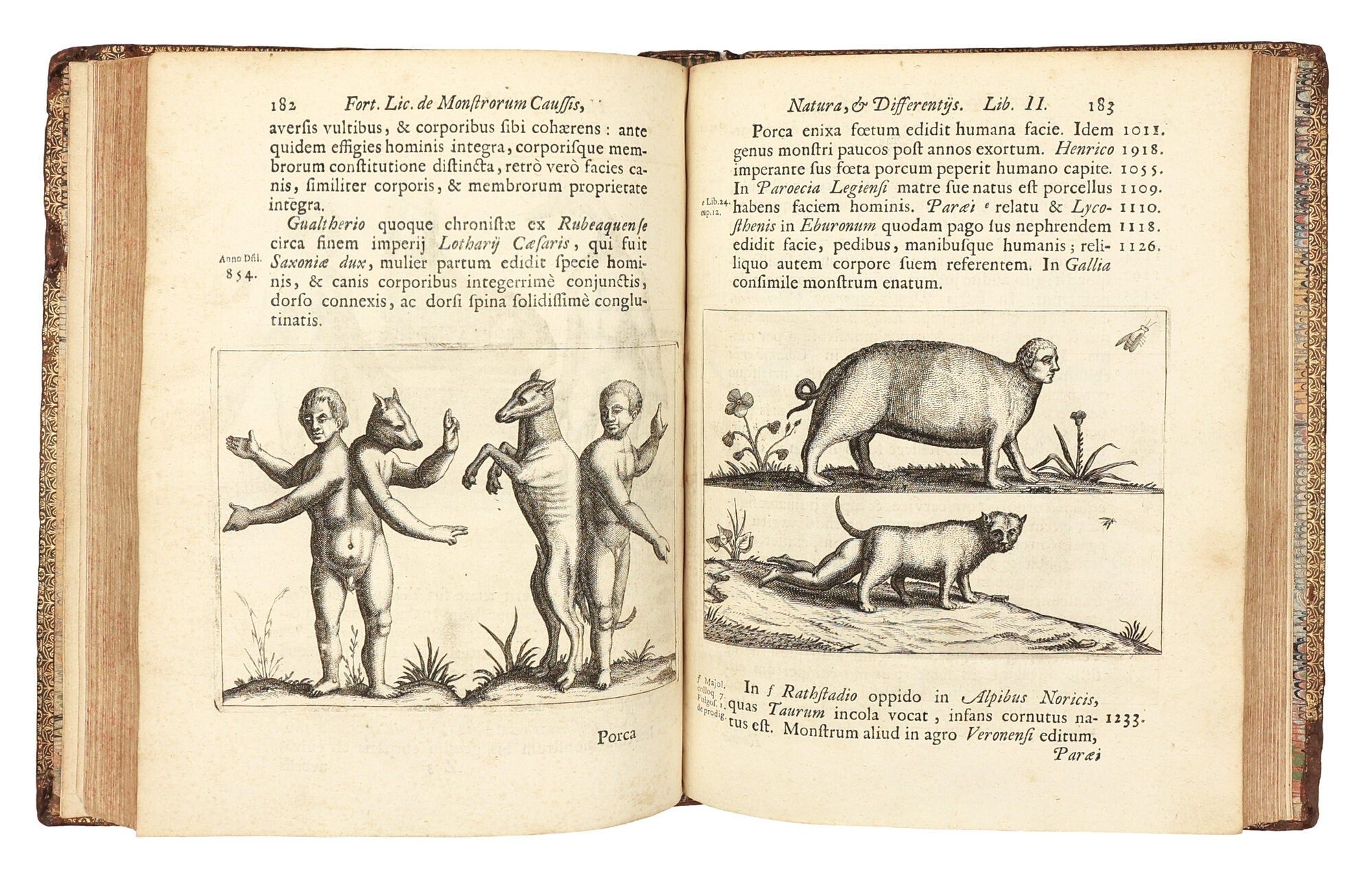
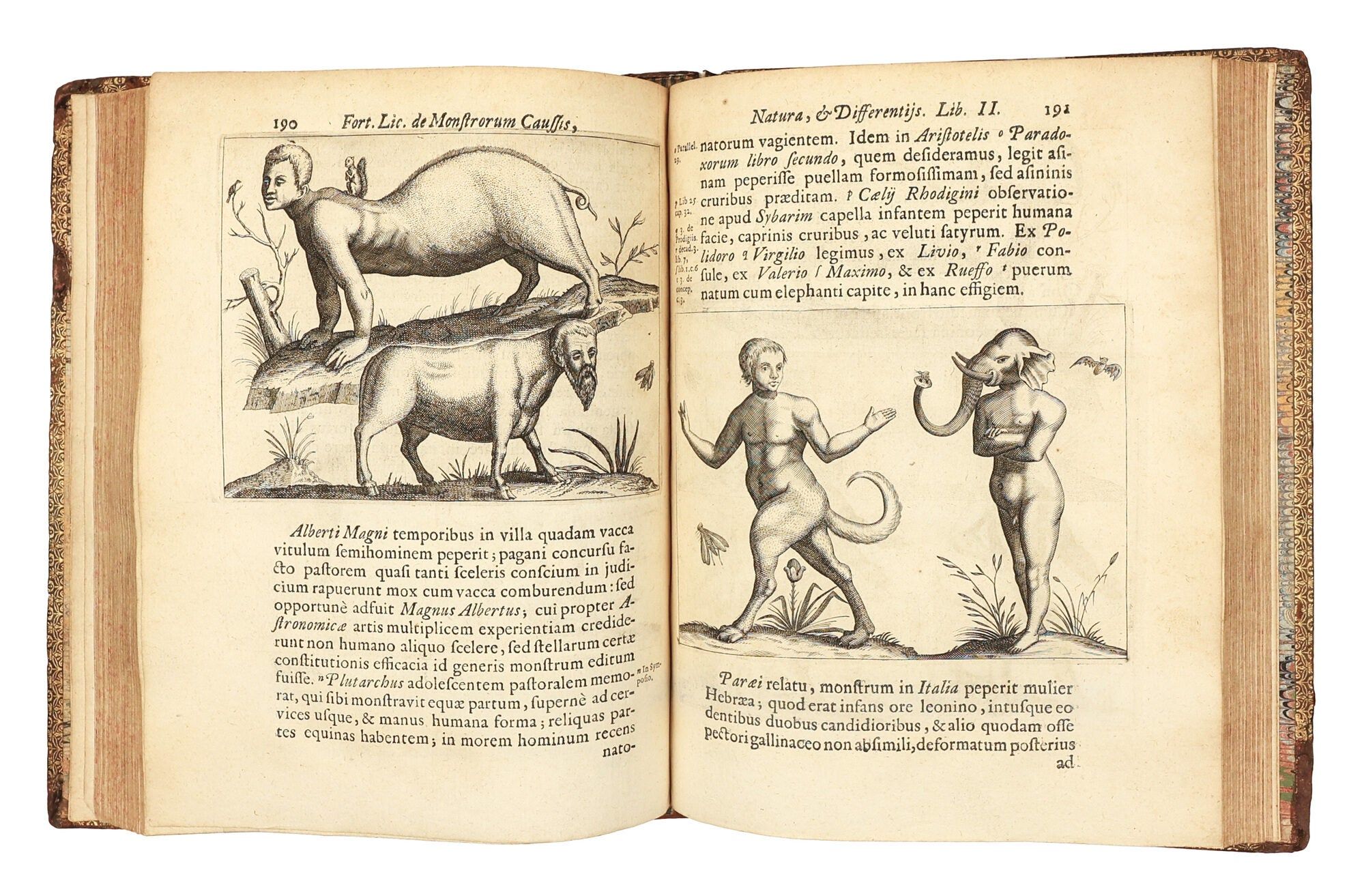
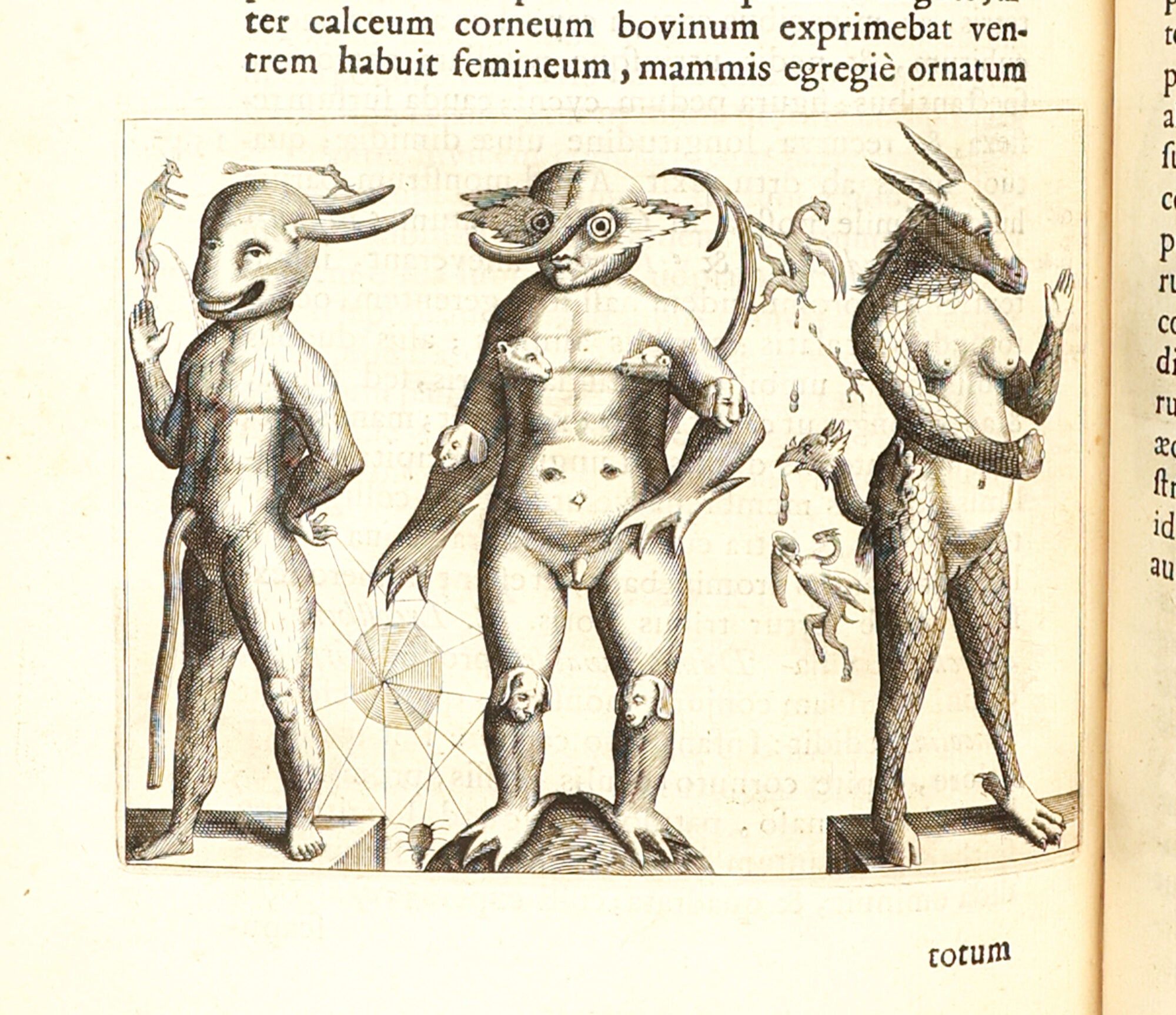
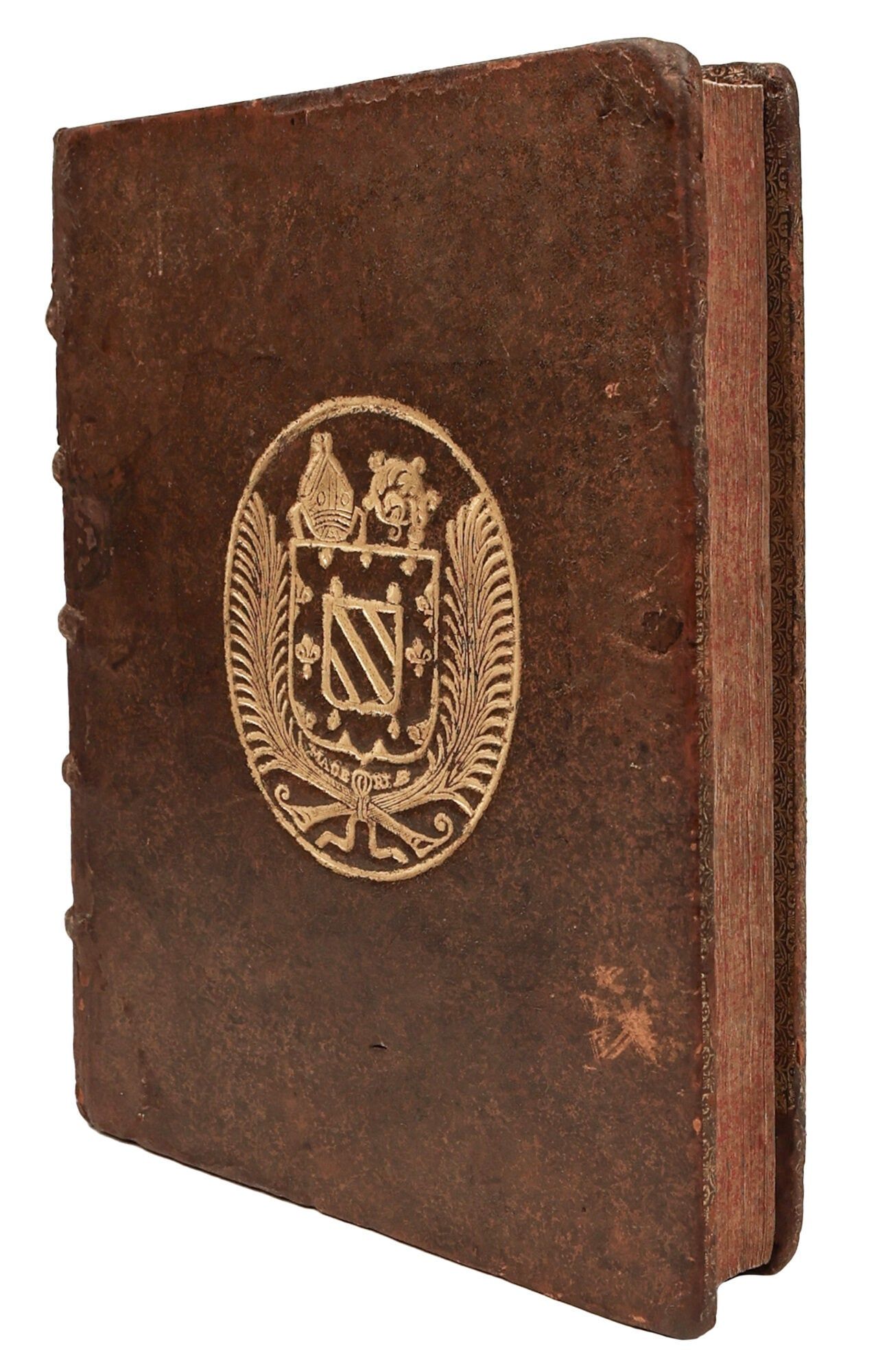
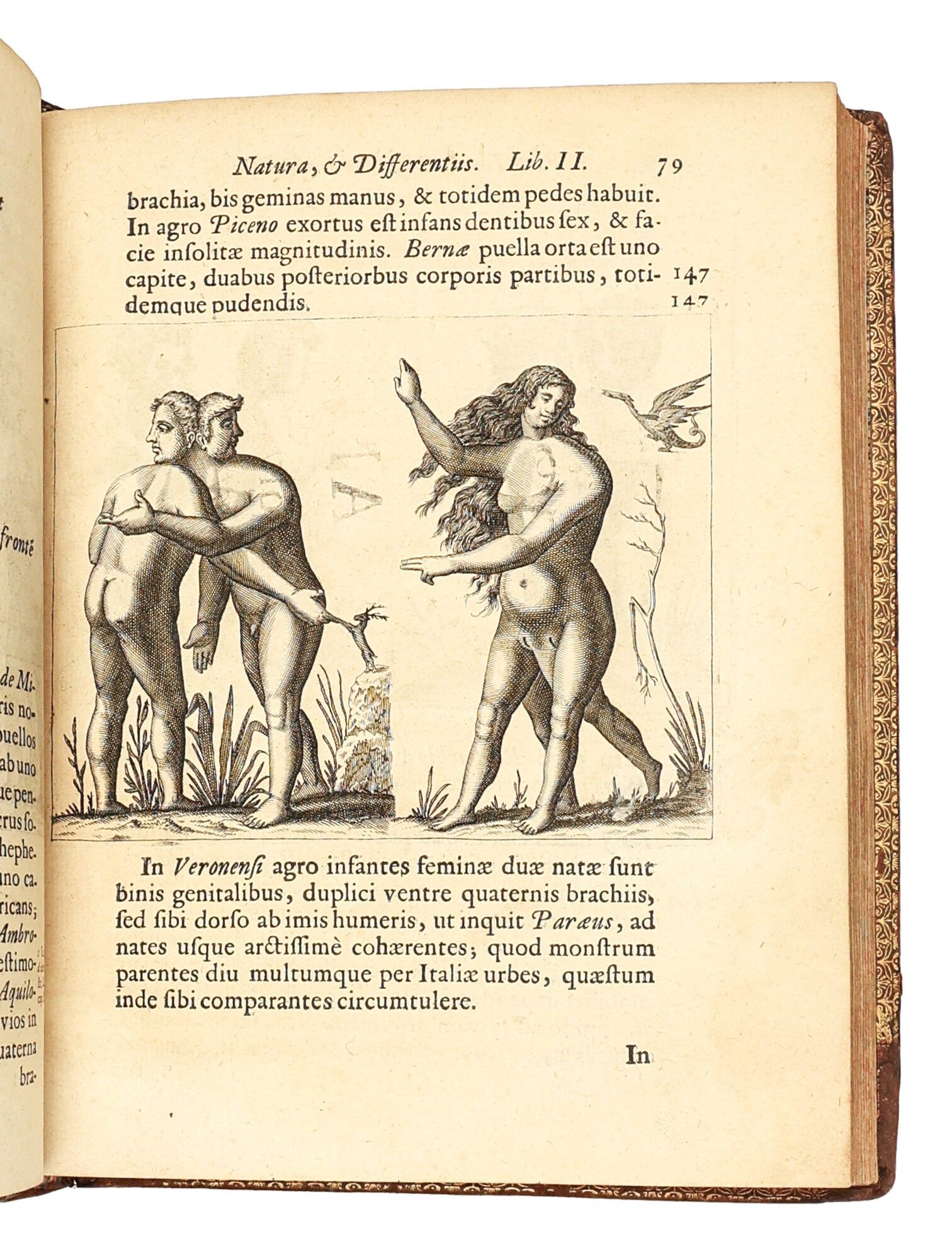
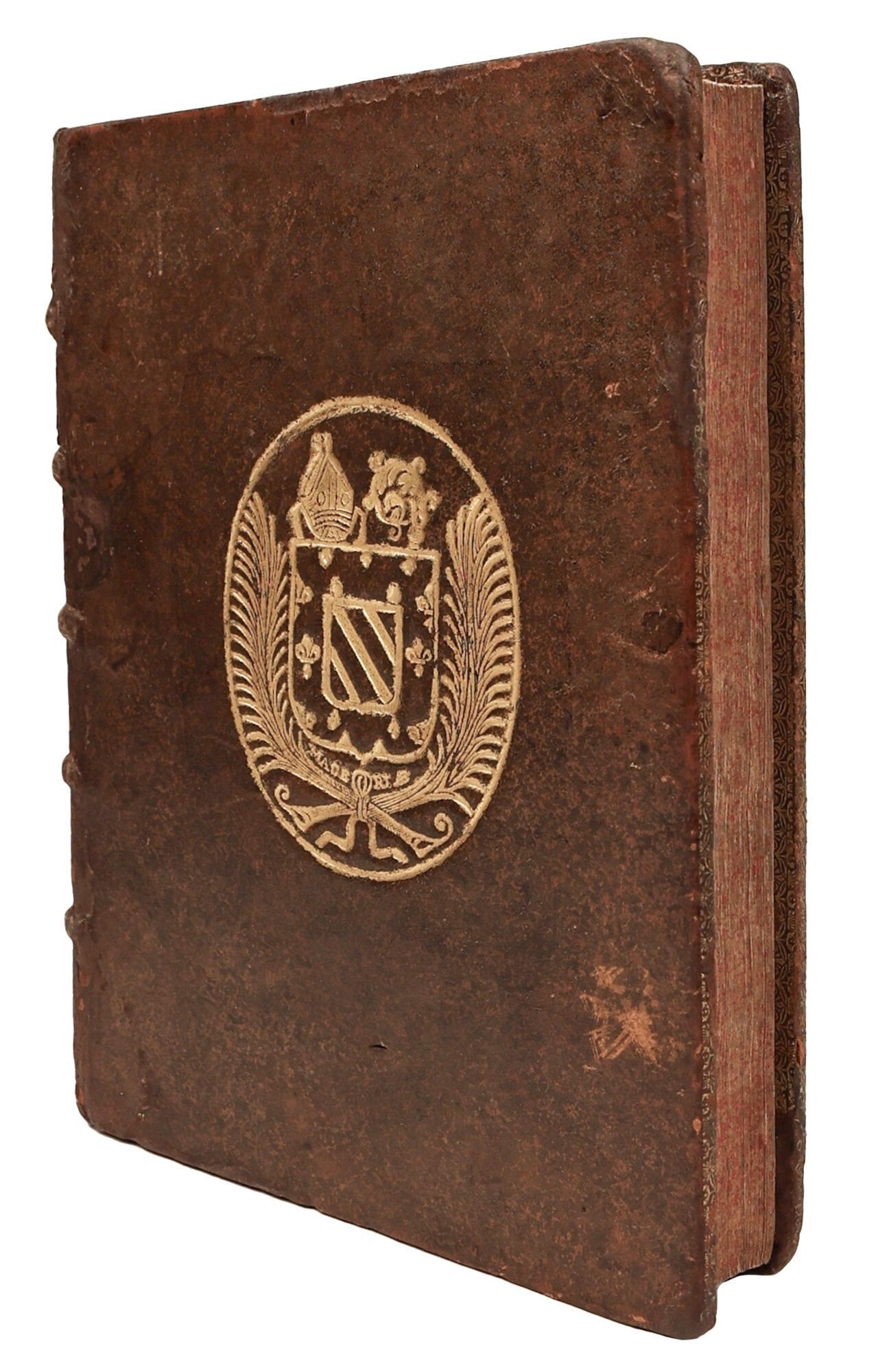
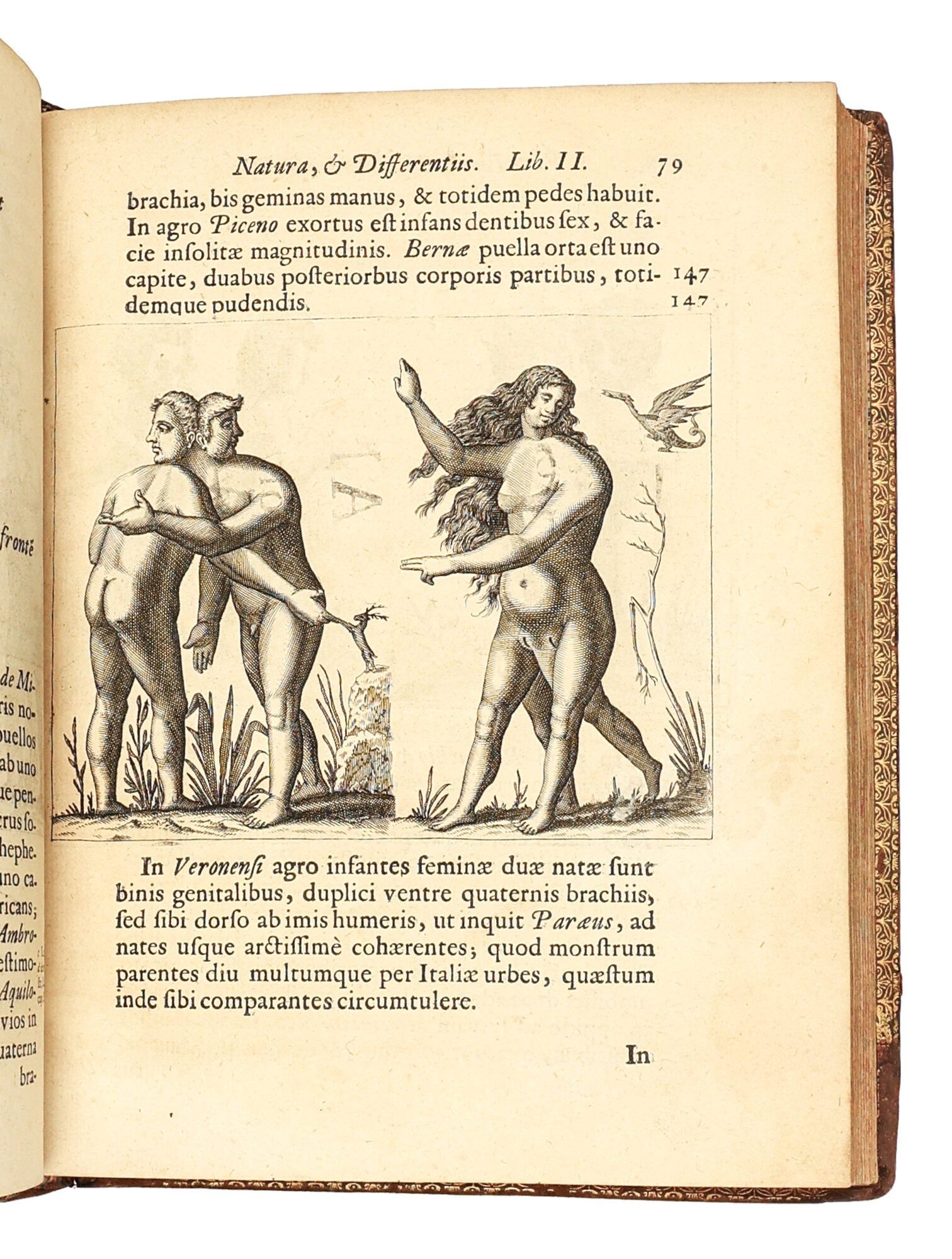
Amsterdam: Sumptibus Andreae Frisii, 1665. SECOND ILLUSTRATED EDITION (The third edition overall) of this classic of teratology. Hardcover. Fine. The book is introduced by a fantastic engraved title page populated by monsters. The text is illustrated with 73 half and quarter-page engravings of monsters –deformed humans and animals, as well as fantastic, monstrous hybrids of the both. This is the first edition to include Gerard Blasius’ "Appendix of new and rare monstrosities”. This new section includes fifteen engravings; among these are images of conjoined twins, the “horned woman”, the famous engravings of Lazarus and his “parasitic twin” Johannes Baptista Colloredo, and the equally famous image of an Orangutan (the “Satyr Indica”.) Bound in contemporary speckled armorial calf, richly gilt, with discreet repairs to corners, board-edges and end-caps. The contents are in very fine condition. Tiny chip to blank lower corner of title, clean tear in blank margin of leaf H1, blank corner of X1 with natural paper flaw, small tear to blank margin of third plate. A very fine copy. Provenance: The boards feature the gilt arms of the now-defunct Cistercian Abbey of Maizières. Founded at the beginning of the 12th c., the abbey thrived until the 14th c., and despite periods of decline in the 15th and 16th, enjoyed a resurgence in the early 18th c. The French Revolution led to the abbey's demise. Its riches and library were disperses. “One of the earliest classifications of deformities. This work, by the Paduan physician Liceti, was still under review in works on malformation in the 19th century. It includes both real and imaginary cases and accurate descriptions of cases observed in the years following the first edition. Liceti contested the “vulgar” opinion that identified monsters with errors or failures in the course of nature. Liceti likened nature to an artist who, faced with some imperfection in the materials to be shaped, ingeniously creates another form still more admirable. On this view, monsters revealed nature not as frustrated in her aims, but as rising to the challenge of recalcitrant matter, a constricted womb, or even a mixture of animal and human seed. “It is in this that I see the convergence of both Nature and Art,” wrote Liceti, “because one or the other not being able to make what they want, they at least make what they can.”
“By the early decades of the seventeenth century, professors like Aldrovandi and physicians like Liceti who inquired into the wonders of nature were joined by erudite Jesuits like Athanasius Kircher, gentleman virtuosi like John Evelyn, and members of academies such as the Accademia degli Lincei in Rome or the Academia Naturae Curiosorum, founded in Schweinfurt in 1652. Not all marvel-mongers in the seventeenth century concerned themselves with natural philosophy; nor did all natural philosophers and natural historians attend to marvels. But there was an unprecedented (and never-to-be-repeated) overlap between the two groups. This was in part because marvels, described in words and displayed as things, saturated early modern European culture, thrusting themselves into the consciousness of nearly everyone, from prince to pauper to philosopher.” (Daston & Park, “Wonders and The Order of Nature”)
To this edition is added Gerard Blasius’ "Appendix of new and rare monstrosities”. “Blasius was a Dutch physician and anatomist who made significant contributions in research and teaching of anatomy, botany, and chemistry. He published a detailed description of the spinal cord with its gray and white matter and the spinal nerve roots, which significantly increased the knowledge of neuroanatomy in his era. He also is considered one of the founders of comparative anatomy through his work in both humans and animals.”(Markatos et al.) The “Appendix” consists of case studies of hermaphrodites, conjoined twins, people afflicted with “cutaneous horns”, etc.
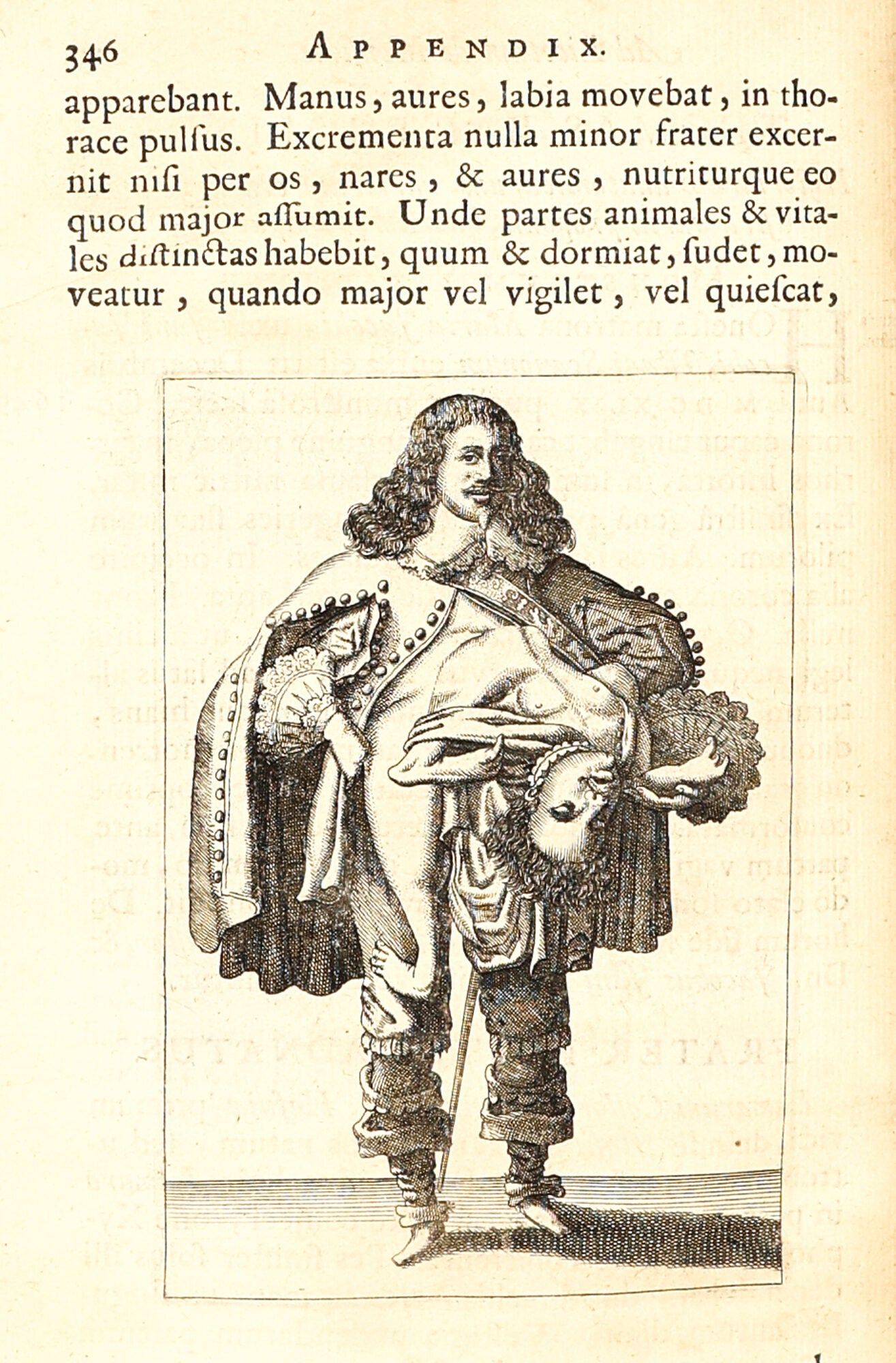
Living Marvels: Lazarus Colloredo and his Parasitic Twin Giovanni Battista (1617-1646)
Perhaps the most famous case history concerns the remarkable conjoined twins Lazarus and Giovanni Battista Colloredo. The partially formed Giovanni Battista protruded from the abdomen of his fully formed brother. His torso, head, and one leg were almost fully developed; his malformed arms and underdeveloped genitals were also visible. His eyes remained closed and he did not exhibit consciousness but was clearly able to register sensation. The pair shared a digestive system but only Lazarus ate, nourishing his brother in the process.
The two traveled Europe as celebrities and were described in poems, news reports, and medical case studies (including that of the physician Thomas Bartholin, whose observations are included in this volume.). They performed for a fee to public audiences but were also welcomed as guests, not performers, at the highest levels of society; in England, for instance, they had an audience with Charles I and Queen Henrietta. Lazarus was invariably described as handsome. When not “exhibiting” his brother, he wore a long cloak to conceal him. There is no record of them after their tour of Italy in 1646. For more, see Karen Jillings, ‘Monstrosity as Spectacle: the Two Inseparable Brothers’ European Tour of the 1630s and 1640s,’ Popular Entertainment Studies 2/1 (2011), 54-68.
“By the early decades of the seventeenth century, professors like Aldrovandi and physicians like Liceti who inquired into the wonders of nature were joined by erudite Jesuits like Athanasius Kircher, gentleman virtuosi like John Evelyn, and members of academies such as the Accademia degli Lincei in Rome or the Academia Naturae Curiosorum, founded in Schweinfurt in 1652. Not all marvel-mongers in the seventeenth century concerned themselves with natural philosophy; nor did all natural philosophers and natural historians attend to marvels. But there was an unprecedented (and never-to-be-repeated) overlap between the two groups. This was in part because marvels, described in words and displayed as things, saturated early modern European culture, thrusting themselves into the consciousness of nearly everyone, from prince to pauper to philosopher.” (Daston & Park, “Wonders and The Order of Nature”)
To this edition is added Gerard Blasius’ "Appendix of new and rare monstrosities”. “Blasius was a Dutch physician and anatomist who made significant contributions in research and teaching of anatomy, botany, and chemistry. He published a detailed description of the spinal cord with its gray and white matter and the spinal nerve roots, which significantly increased the knowledge of neuroanatomy in his era. He also is considered one of the founders of comparative anatomy through his work in both humans and animals.”(Markatos et al.) The “Appendix” consists of case studies of hermaphrodites, conjoined twins, people afflicted with “cutaneous horns”, etc.
Living Marvels: Lazarus Colloredo and his Parasitic Twin Giovanni Battista (1617-1646)
Perhaps the most famous case history concerns the remarkable conjoined twins Lazarus and Giovanni Battista Colloredo. The partially formed Giovanni Battista protruded from the abdomen of his fully formed brother. His torso, head, and one leg were almost fully developed; his malformed arms and underdeveloped genitals were also visible. His eyes remained closed and he did not exhibit consciousness but was clearly able to register sensation. The pair shared a digestive system but only Lazarus ate, nourishing his brother in the process.
The two traveled Europe as celebrities and were described in poems, news reports, and medical case studies (including that of the physician Thomas Bartholin, whose observations are included in this volume.). They performed for a fee to public audiences but were also welcomed as guests, not performers, at the highest levels of society; in England, for instance, they had an audience with Charles I and Queen Henrietta. Lazarus was invariably described as handsome. When not “exhibiting” his brother, he wore a long cloak to conceal him. There is no record of them after their tour of Italy in 1646. For more, see Karen Jillings, ‘Monstrosity as Spectacle: the Two Inseparable Brothers’ European Tour of the 1630s and 1640s,’ Popular Entertainment Studies 2/1 (2011), 54-68.
Details
Title
Fortunius Licetus De Monstris. Ex recensione Gerardi Blasii, M. D. & P. P. Qui Monstra quaedam nova & rariora ex recentiorum scriptis addidit. Editio Novissima. Iconibus illustrata
Author
Liceti, Fortunio (1577-1657)
Binding
Hardcover
Condition
Fine
Publisher
Sumptibus Andreae Frisii: Amsterdam
Date
1665
Edition
SECOND ILLUSTRATED EDITION (The third edition overall) of this c