

The First 40 Scratch–Off Tickets
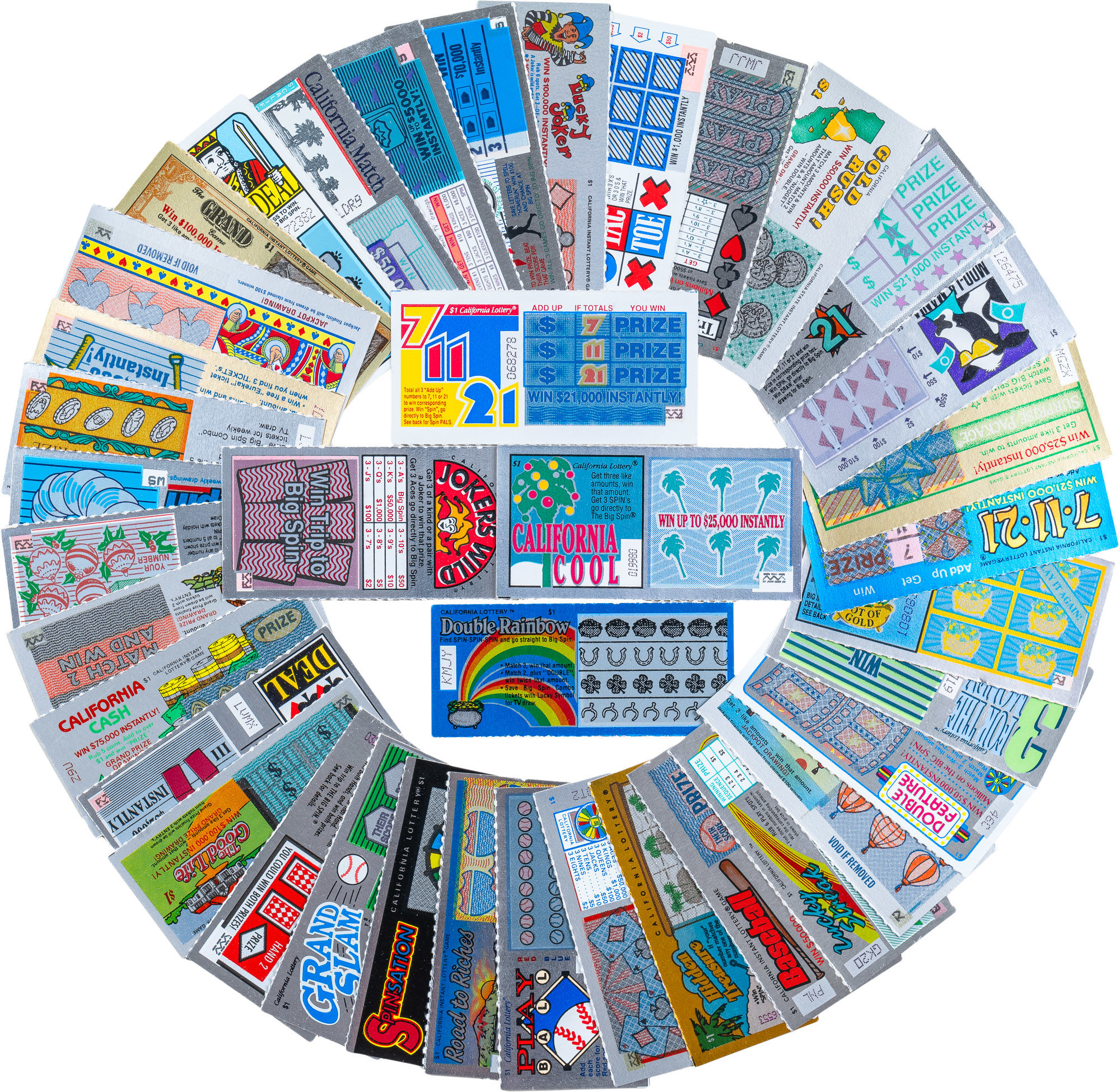
- California: California State Lottery Commission, 1990
California: California State Lottery Commission, 1990. A complete and continuous, unbroken run from the first 5 years of the California lottery, a total of 40 tickets, games 1 to 40 (#26 is a proof). Each ticket is unscratched. Fine condition (as new), alluringly printed in glowing colors, the silver coatings are unblemished. Rare. Though individual, used (scratched) tickets are sometimes available, we have seen only a couple of unused tickets from this vintage for sale in the last 35 years, and we know of no one else offering a complete set. The lottery is adventure and romance finally reduced to their level of minimum effort and repute—hey, you never know.
Scratch-off lottery tickets embody a complex social phenomenon within contemporary society. They represent the commodification of hope, where the state sanctions and profits from selling the possibility of economic transformation to citizens, particularly those in vulnerable financial positions.
These tickets function as symbols of pseudo-democratized wealth in a system of increasing inequality. The lottery mythology suggests anyone can instantly transcend economic barriers through pure chance, while statistically serving as a regressive taxation mechanism.
The scratch-off format specifically reduces risk-taking to its most minimal form—a momentary act requiring neither skill nor meaningful engagement. This mirrors broader social trends of simulating adventure rather than pursuing authentic experiences with genuine stakes and potential personal growth.
Lottery tickets exist in a unique temporal space of perpetual potential until scratched, creating a liminal experience that suspends the player between worthlessness and potentially life-changing value. This liminality captures how modern capitalism monetizes the space between aspiration and reality, converting dreams into revenue while rarely delivering on its implicit promise.
Scratch-off lottery tickets embody a complex social phenomenon within contemporary society. They represent the commodification of hope, where the state sanctions and profits from selling the possibility of economic transformation to citizens, particularly those in vulnerable financial positions.
These tickets function as symbols of pseudo-democratized wealth in a system of increasing inequality. The lottery mythology suggests anyone can instantly transcend economic barriers through pure chance, while statistically serving as a regressive taxation mechanism.
The scratch-off format specifically reduces risk-taking to its most minimal form—a momentary act requiring neither skill nor meaningful engagement. This mirrors broader social trends of simulating adventure rather than pursuing authentic experiences with genuine stakes and potential personal growth.
Lottery tickets exist in a unique temporal space of perpetual potential until scratched, creating a liminal experience that suspends the player between worthlessness and potentially life-changing value. This liminality captures how modern capitalism monetizes the space between aspiration and reality, converting dreams into revenue while rarely delivering on its implicit promise.
Details
Title
The First 40 Scratch–Off Tickets
Author
[California Lottery]
Condition
Unknown
Publisher
California State Lottery Commission: California
Date
1990