

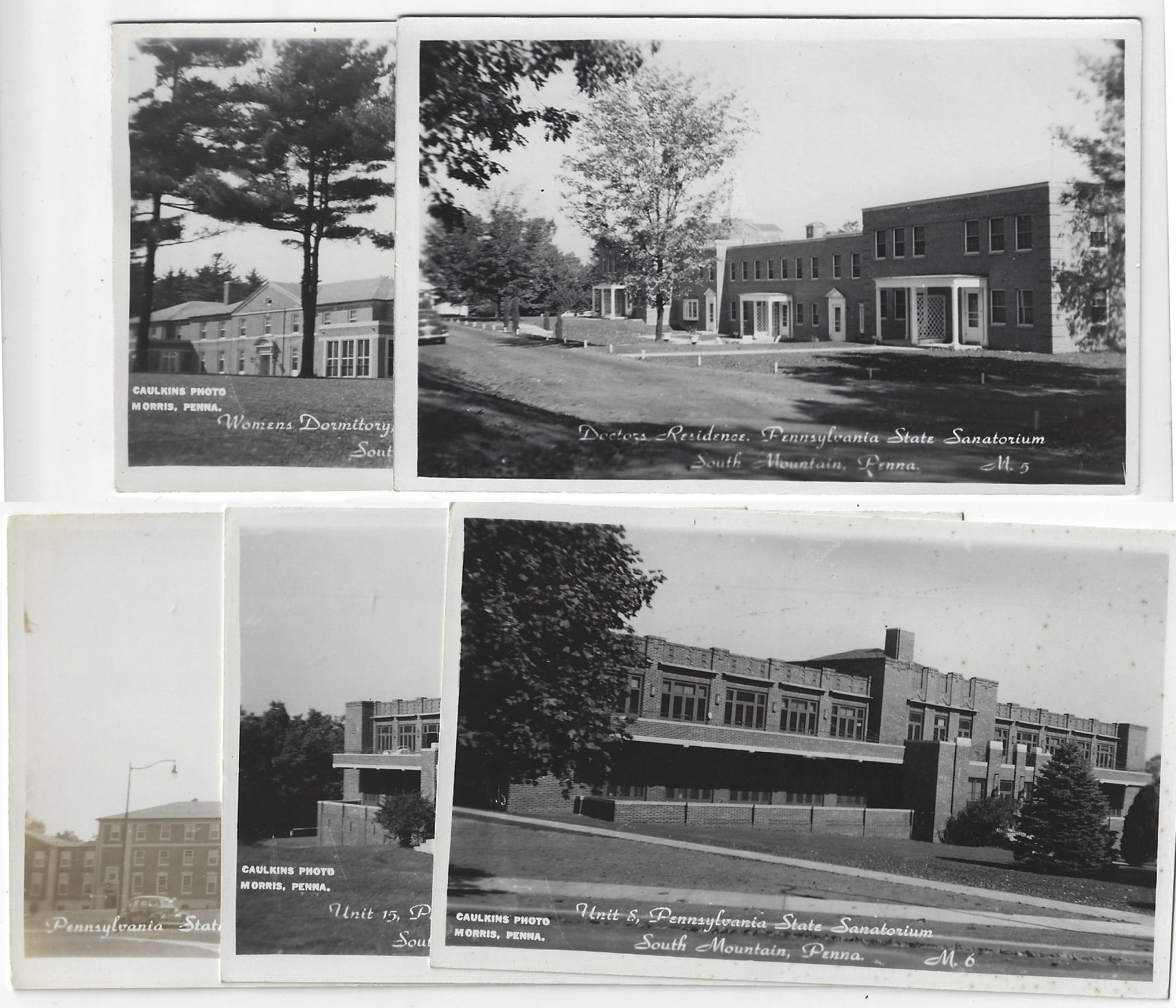
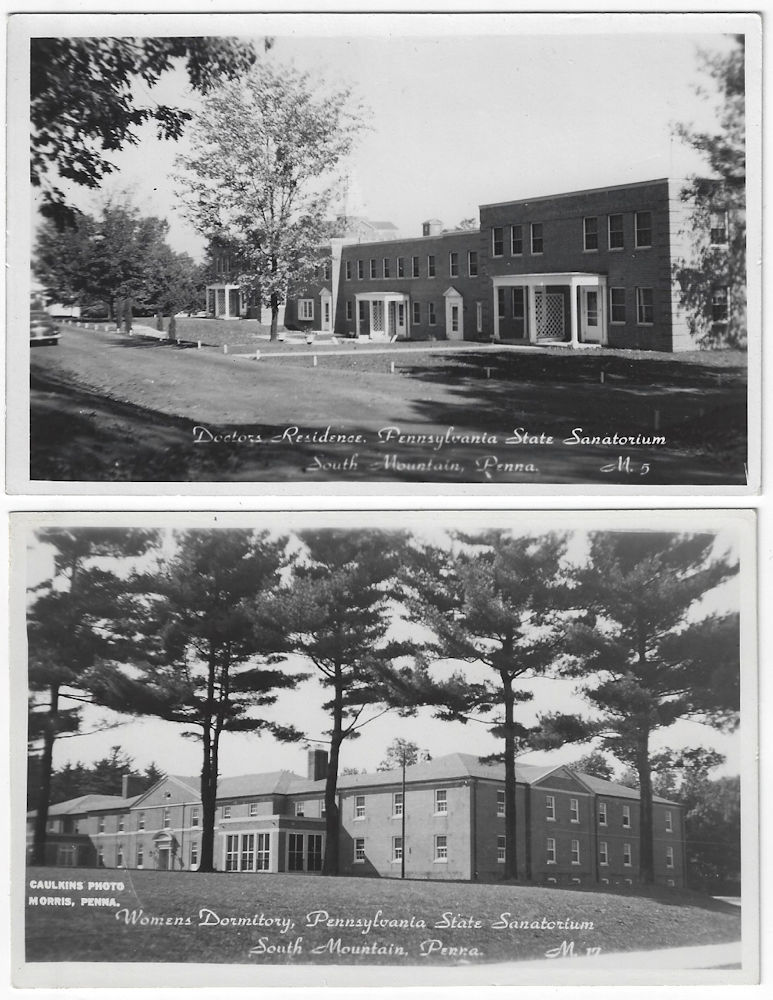
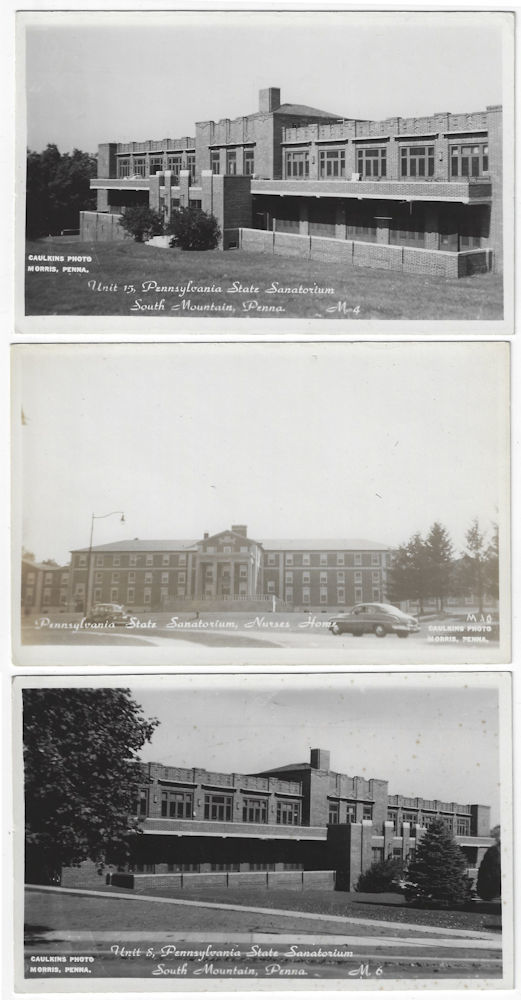
Circa 1945 - Five real photograph postcards showing the facilities of the Pennsylvania State Sanatorium at South Mountain
- Unbound
- South Mountain, Pennsylvania , 1945
South Mountain, Pennsylvania, 1945. Unbound. Very good.
These five cards show the the South Mountain Sanitorium's doctors' residence, nurses, residence, women's dormitory, men's dormitory Unit 8, and men's dormitory Unit 15.
. The sanitorium movement began in Europe, and the first was established in the United States at Asheville, North Carolina in 1875. The movement exploded in the 1880s when Dr. Edward Livingstone Trudeau of the Adirondack Cottage Sanatorium at Saranac Lake realized that patients symptoms improved (or at least did not worsen) with exposure to fresh air, and the number of sanitation beds in the United states grew from 4,500 in 1900 to over 675,00 in 1925. Treatment consisted of bed rest, exposure to fresh air, walking exercises, and occupational therapy like weaving, basketry, and leather work. The movement ended in the 1950s when streptomycin, isoniazid, and pyrazinamide became readily available to treat the disease.The words sanatorium and sanitarium and be used interchangeably; they were derived from two different Latin roots, sanitas, which means health and sanitorius, which means health-giving.
(For more information see, "Sanatorium - from the first to the last" at TBFacts.org and "History of World TB Day" at the Center for Disease Control website.)
.Details
Title
Circa 1945 - Five real photograph postcards showing the facilities of the Pennsylvania State Sanatorium at South Mountain
Binding
Unbound
Condition
Very Good
Publisher
South Mountain, Pennsylvania
Date
1945