

American Social History and Homelessness Press Photography from Soup Kitchens to Urban Encampments, 1951 to 1990s
- 1950
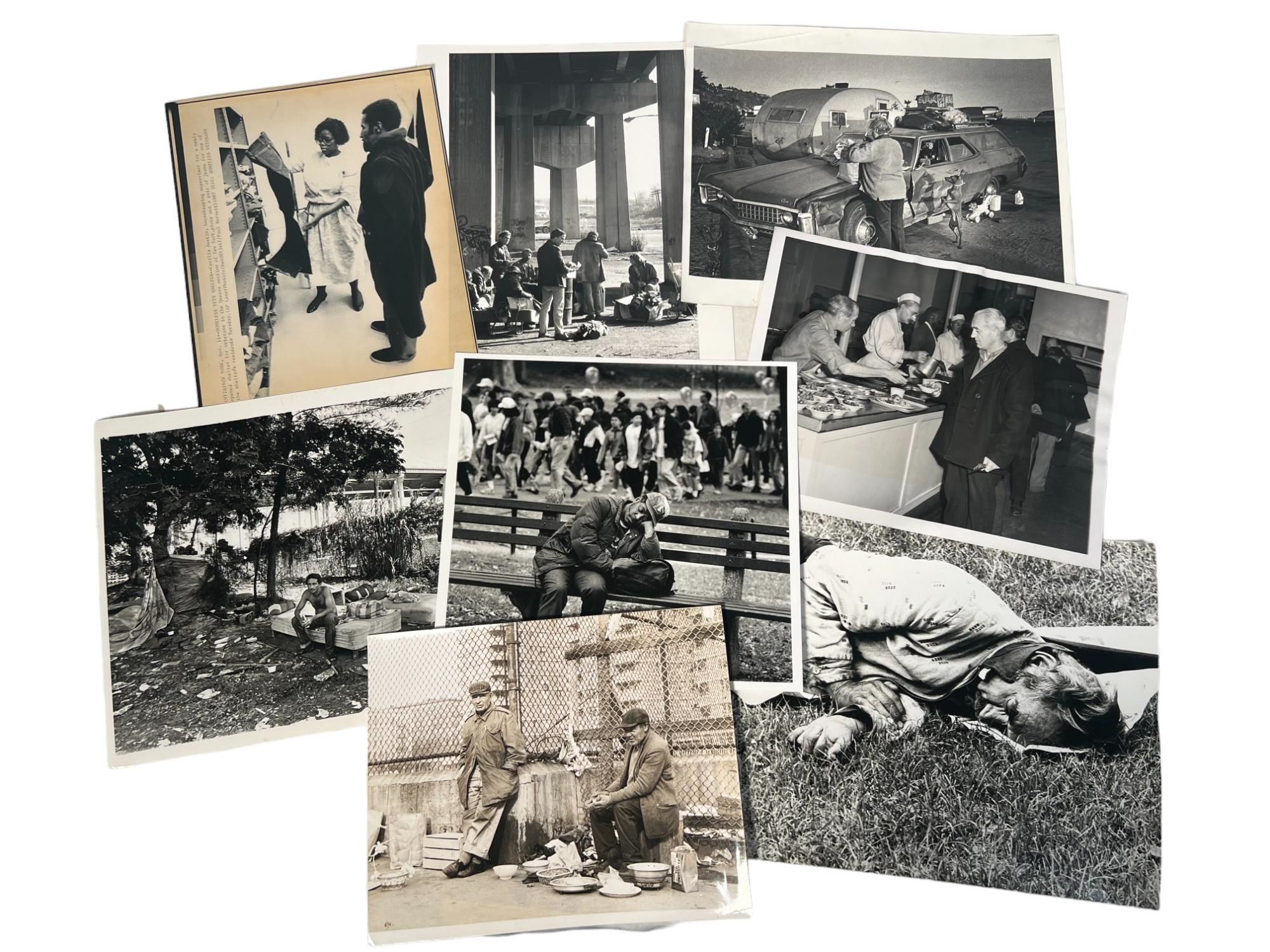
1950. Homelessness press photography archive, 1951 to 1990s, documents displaced people in American cities through images of soup kitchens, public sleeping spaces, roadside survival, emergency shelters, and encampments. The archive provides primary visual evidence for the study of urban poverty, public welfare, veteran reintegration, housing insecurity, and the changing visibility of homelessness in the second half of the twentieth century. Its strongest historical value lies in the range of settings recorded: postwar charitable food assistance, men sleeping in parks and public spaces, Vietnam veterans gathered beneath highway infrastructure, shelter-based aid, and women living in vehicles with personal belongings and pets.
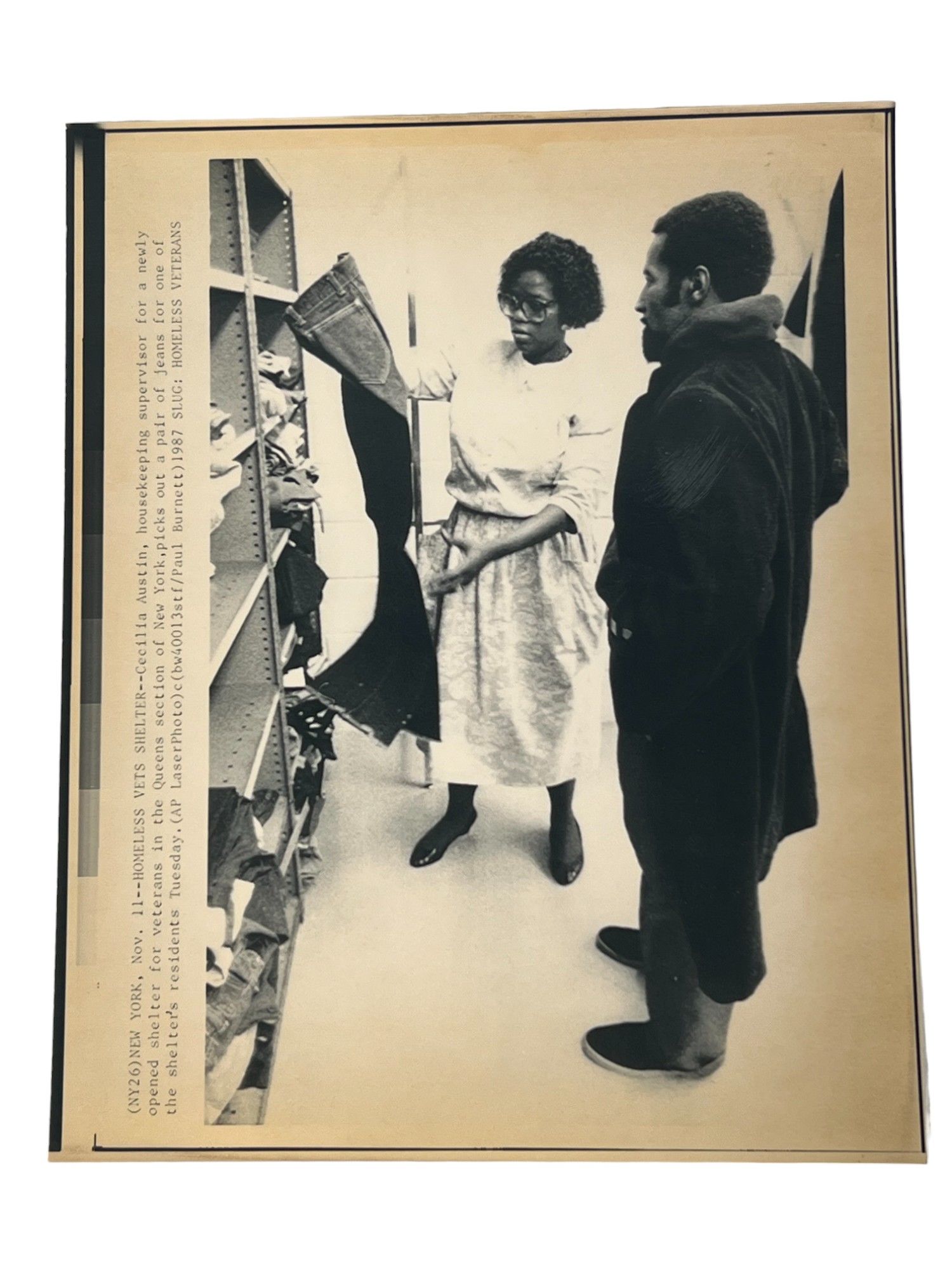
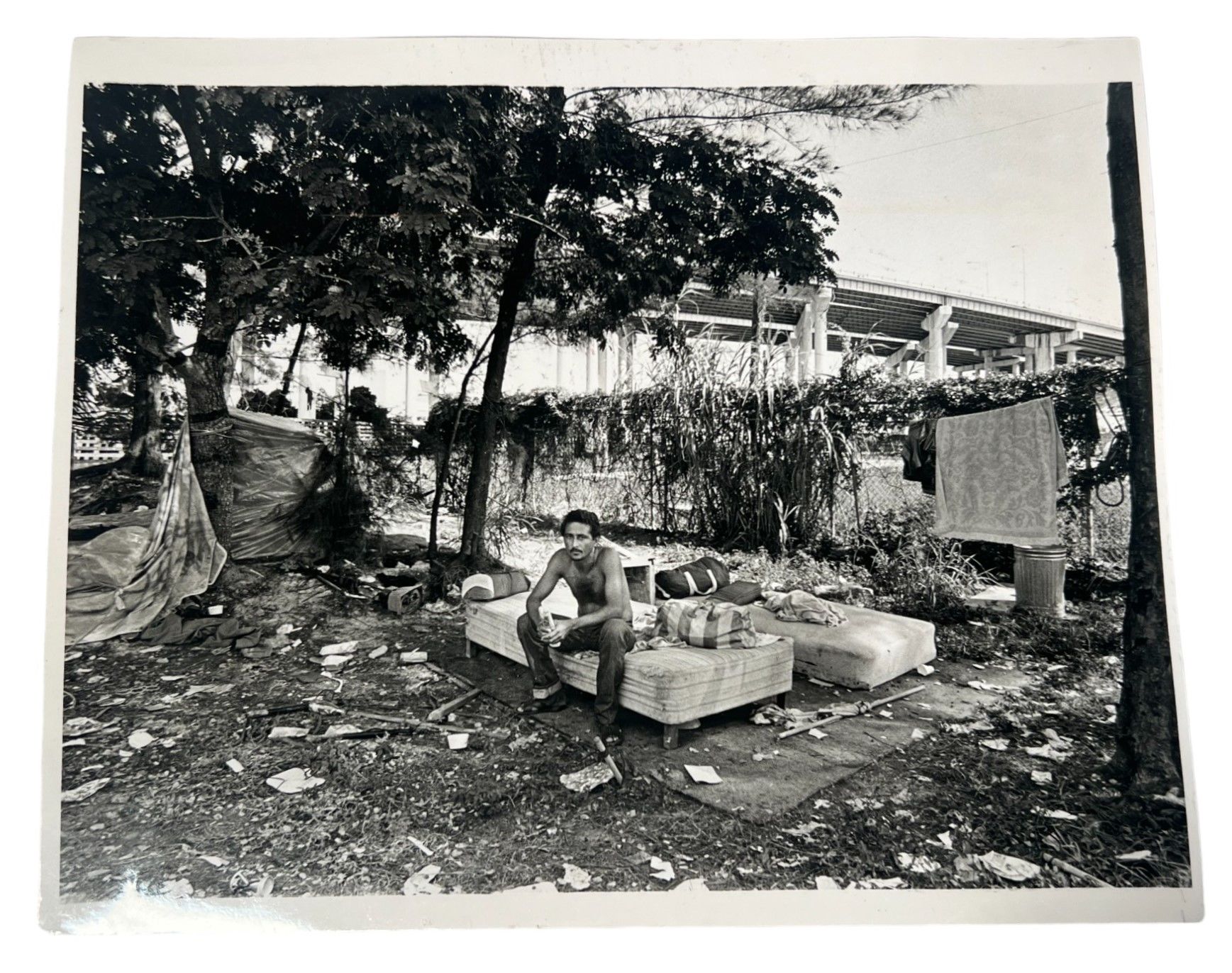
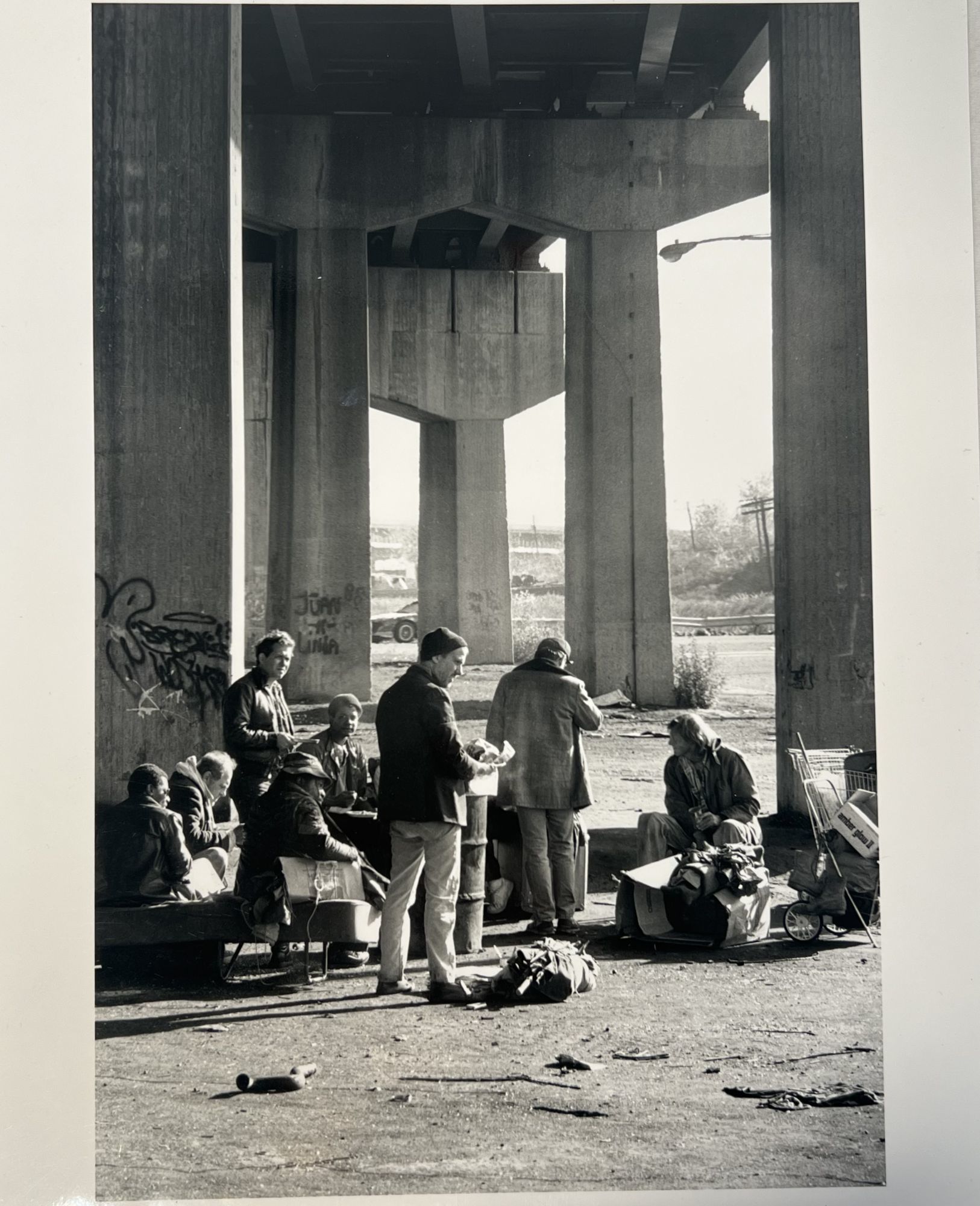
The archive consists of eight black-and-white silver gelatin press photographs from the United States, dated from 1951 to the 1990s, most measuring approximately 7.25 x 9 inches, with several retaining original press captions or newspaper clippings mounted on the verso. The earliest image shows a 1951 soup kitchen scene assisting homeless residents. Later photographs show Vietnam veterans beneath an underpass, using mattresses and boxes for seating; a Queens, New York veterans' shelter where an African American veteran shops for clothing with a staff supervisor; and Gabrielle Mendosa resting on a mattress near the Miami River beside the encampment identified as "Tent City under the Xway." Additional images show men sleeping on park benches or lawns, including a scene associated with the Boston Freedom Trail Walk for the Homeless, two men attempting to sell recovered household appliances by the roadside, and a woman identified as Lynn living in her car with her belongings and dog while seeking assistance.
The photographs are significant because they record homelessness not as a single condition but as a set of lived circumstances shaped by food insecurity, military afterlives, public space, shelter access, informal economies, and the absence of stable housing. The retained press captions and clippings connect the images to their original journalistic use, showing how homelessness was presented to newspaper audiences across several decades. Minor edge wear, light handling marks, and typical press-photo surface wear; verso caption material and clippings present on several photographs; images remain clear and usable; overall very good. Concentrated documentary archive showing American homelessness from institutional relief to street encampment, with particular strength in veteran homelessness and urban public visibility.
The archive consists of eight black-and-white silver gelatin press photographs from the United States, dated from 1951 to the 1990s, most measuring approximately 7.25 x 9 inches, with several retaining original press captions or newspaper clippings mounted on the verso. The earliest image shows a 1951 soup kitchen scene assisting homeless residents. Later photographs show Vietnam veterans beneath an underpass, using mattresses and boxes for seating; a Queens, New York veterans' shelter where an African American veteran shops for clothing with a staff supervisor; and Gabrielle Mendosa resting on a mattress near the Miami River beside the encampment identified as "Tent City under the Xway." Additional images show men sleeping on park benches or lawns, including a scene associated with the Boston Freedom Trail Walk for the Homeless, two men attempting to sell recovered household appliances by the roadside, and a woman identified as Lynn living in her car with her belongings and dog while seeking assistance.
The photographs are significant because they record homelessness not as a single condition but as a set of lived circumstances shaped by food insecurity, military afterlives, public space, shelter access, informal economies, and the absence of stable housing. The retained press captions and clippings connect the images to their original journalistic use, showing how homelessness was presented to newspaper audiences across several decades. Minor edge wear, light handling marks, and typical press-photo surface wear; verso caption material and clippings present on several photographs; images remain clear and usable; overall very good. Concentrated documentary archive showing American homelessness from institutional relief to street encampment, with particular strength in veteran homelessness and urban public visibility.
Details
Title
American Social History and Homelessness Press Photography from Soup Kitchens to Urban Encampments, 1951 to 1990s
Author
War Veterans Displacement
Condition
Unknown
Date
1950