

Book 91
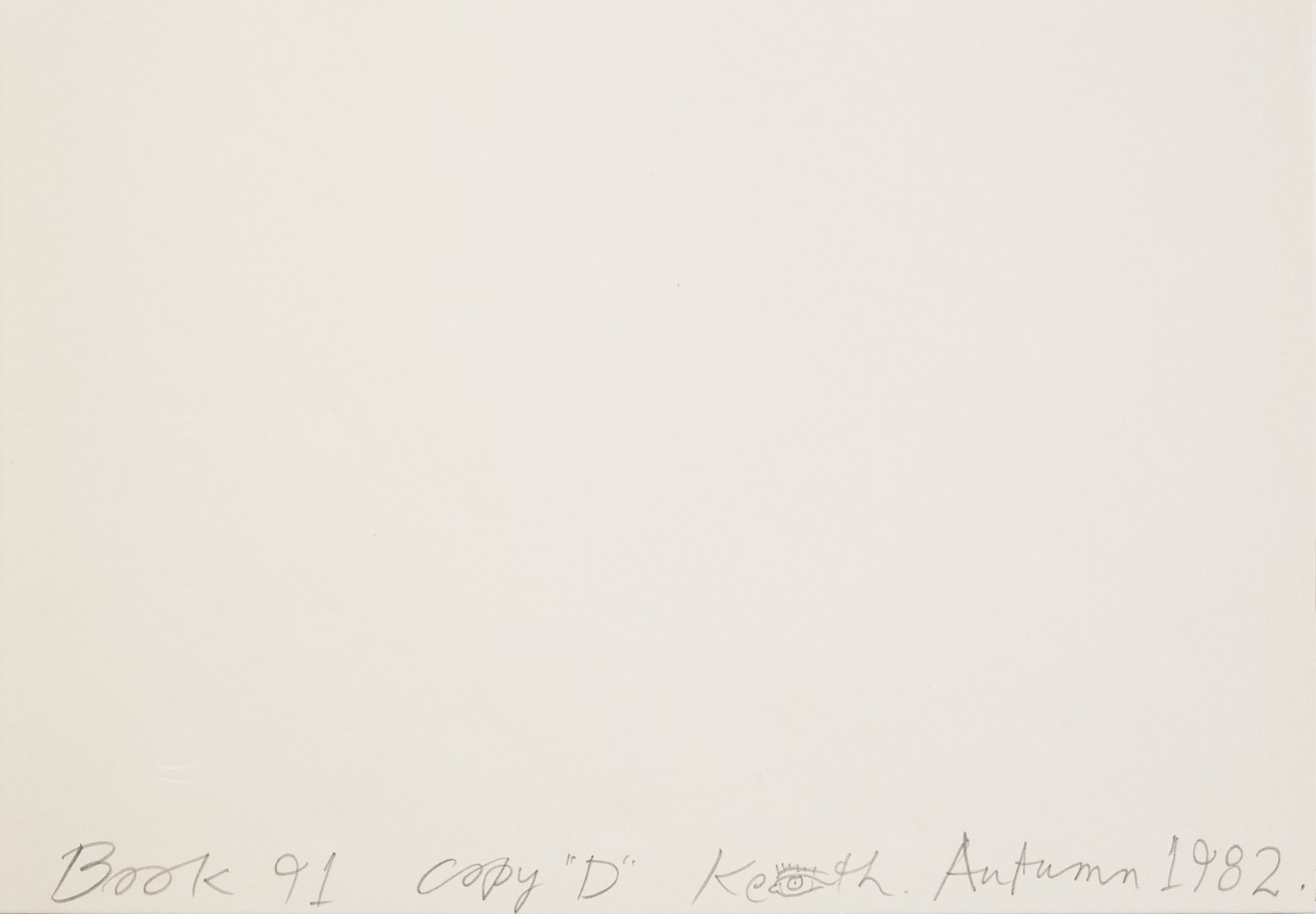
- SIGNED
- 1982
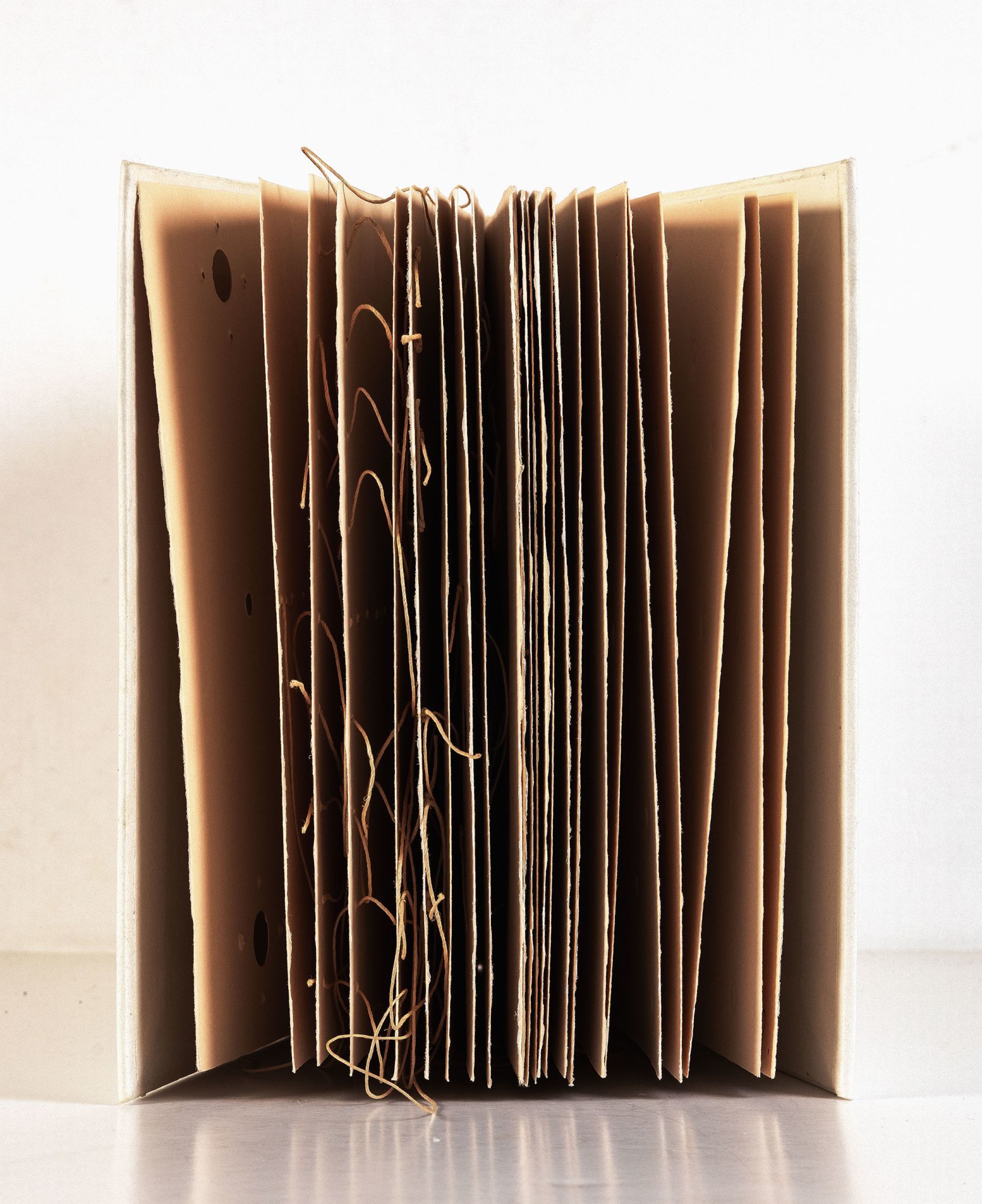
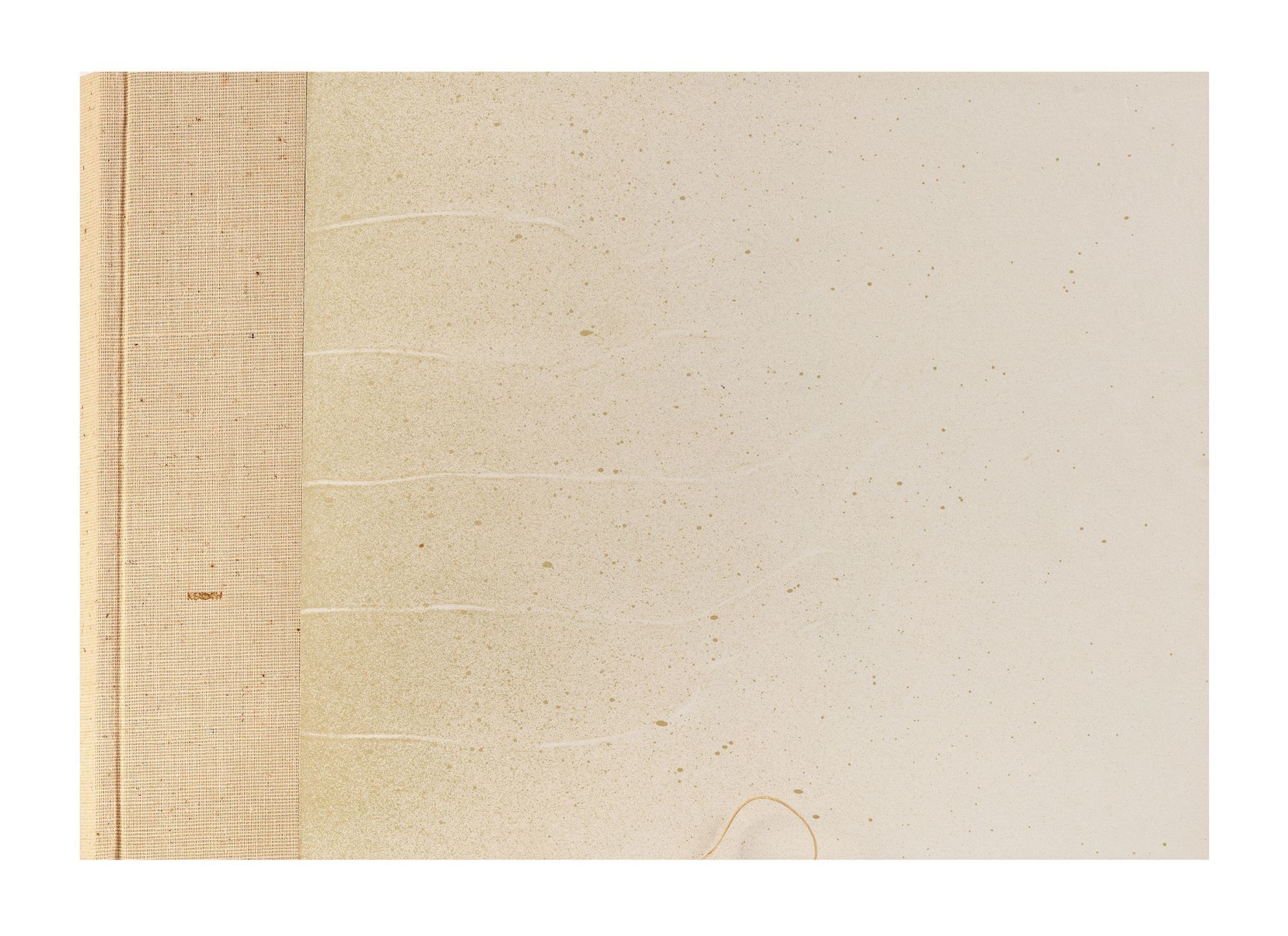
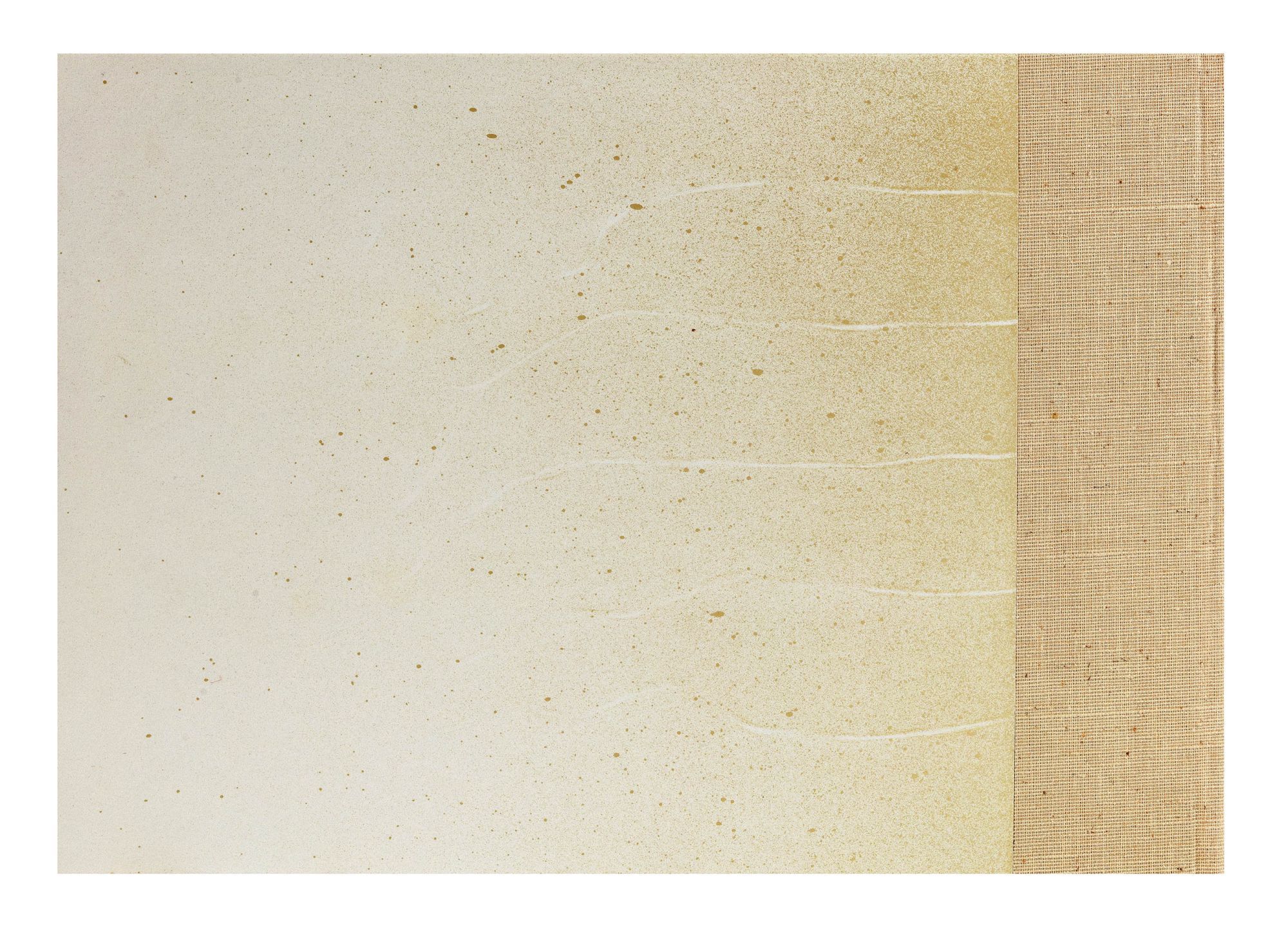
1982. Embossed title on first leaf. [24] leaves of thick Fabriano Rosaspina Avorio paper. Oblong folio (260 x 370 mm.), orig. cloth boards, linen cords strung through holes in paper. Barrytown: Space Heater Multiples, 1982.
A book that commands it be read from beginning to end, then end to beginning. This is one of Smith’s masterpieces, also known as the “String Book”; from a numbered edition of 50 and signed by the artist, ours is “Copy D.”
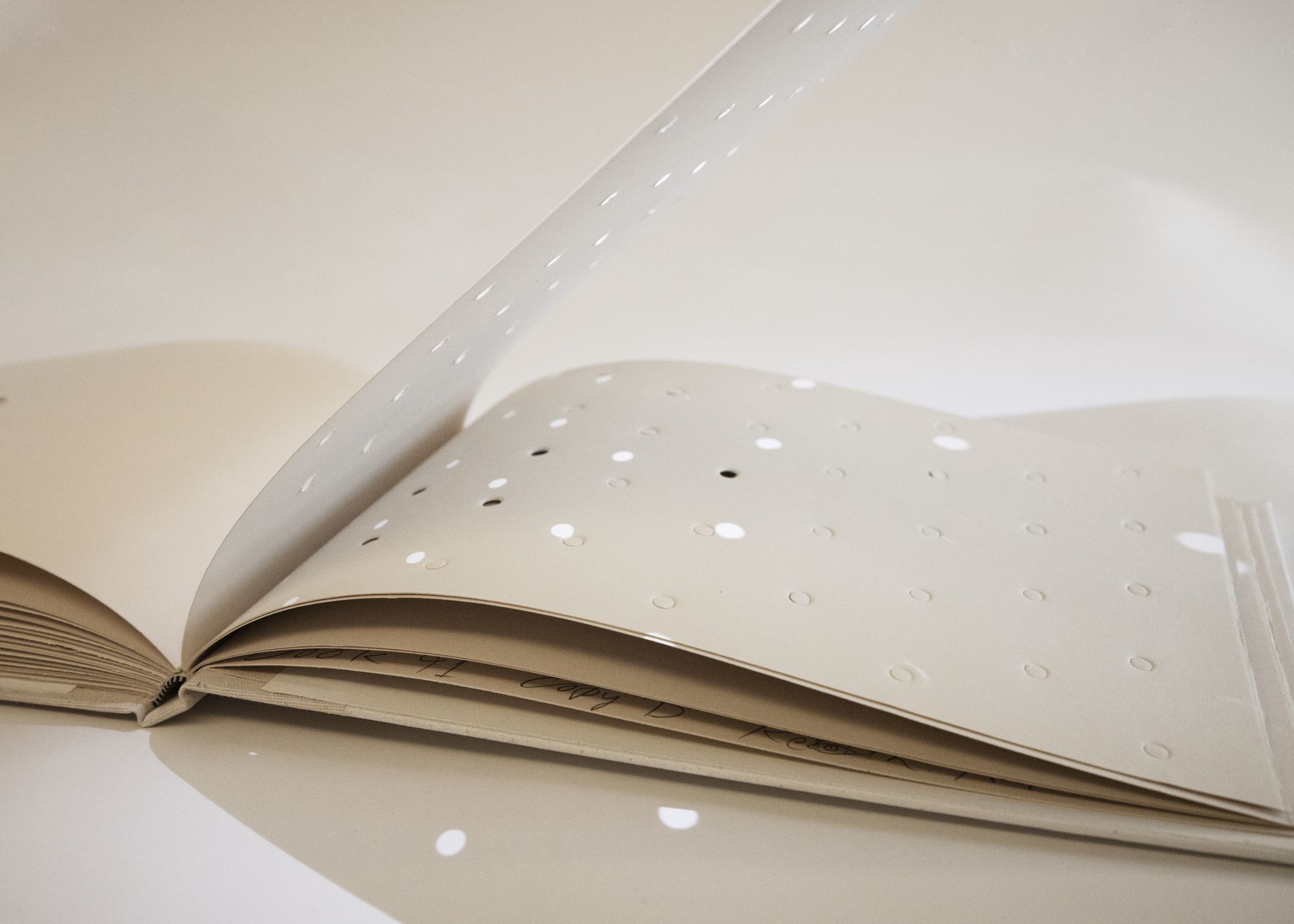
The book is noteworthy for its unique structure — thick paper linked by linen string — and interaction with light. Book 91 is not a printed book; one finds no ink within. Aside from the blind embossed title-page, the punched holes, which allow light through one leaf onto another, and the strings provide the only “text.” It was featured in two exhibitions of artists’ books: the first at the Philadelphia Museum of Art, Keith Smith at Home (17 February-8 July 2018), the other, Artists and Their Books, Books and Their Artists, held at the Getty Research Institute (26 June-28 October 2018). Book 91 is one of the most highly sought-after American artists’ books and is found in the collections of the Library of Congress, the Bibliothèque nationale de France, the Getty, Harvard University, the Victoria and Albert Museum, and the New York Public Library.
In his auto-bibliography 200 Books (p. 149), Smith explains this book’s interplay with light: “This book deals with cast light and shadows. The light spots are caused by viewing the book with a single light source at a 45° angle and three feet to the left of the book. The opened book reveals punched holes with deep shadows. As each page is lifted, however, dark holes throw circular spots of light across the facing page and the close environment of the book. The focus of these spots varies according to the distance from the page to the surface upon which they are cast. Like my books containing photographic film transparencies the composition of each page is compounded and altered by the addition and the movement of the shadow forms across the page…
“The sound, cast light and shadows and their focus and movement are not part of the physical book. They are physical but they only come into existence during the act of experiencing the book, that is, turning the page.”
A fine copy. It was given by Smith to a student of his in the early 1980s.
❧ J. Drucker, The Century of Artists’ Books (2017), pp. 106-7.
M. Reed & G. Phillips, Artists and Their Books, Books and Their Artists (2018), pp. 176-7.
A book that commands it be read from beginning to end, then end to beginning. This is one of Smith’s masterpieces, also known as the “String Book”; from a numbered edition of 50 and signed by the artist, ours is “Copy D.”
The book is noteworthy for its unique structure — thick paper linked by linen string — and interaction with light. Book 91 is not a printed book; one finds no ink within. Aside from the blind embossed title-page, the punched holes, which allow light through one leaf onto another, and the strings provide the only “text.” It was featured in two exhibitions of artists’ books: the first at the Philadelphia Museum of Art, Keith Smith at Home (17 February-8 July 2018), the other, Artists and Their Books, Books and Their Artists, held at the Getty Research Institute (26 June-28 October 2018). Book 91 is one of the most highly sought-after American artists’ books and is found in the collections of the Library of Congress, the Bibliothèque nationale de France, the Getty, Harvard University, the Victoria and Albert Museum, and the New York Public Library.
In his auto-bibliography 200 Books (p. 149), Smith explains this book’s interplay with light: “This book deals with cast light and shadows. The light spots are caused by viewing the book with a single light source at a 45° angle and three feet to the left of the book. The opened book reveals punched holes with deep shadows. As each page is lifted, however, dark holes throw circular spots of light across the facing page and the close environment of the book. The focus of these spots varies according to the distance from the page to the surface upon which they are cast. Like my books containing photographic film transparencies the composition of each page is compounded and altered by the addition and the movement of the shadow forms across the page…
“The sound, cast light and shadows and their focus and movement are not part of the physical book. They are physical but they only come into existence during the act of experiencing the book, that is, turning the page.”
A fine copy. It was given by Smith to a student of his in the early 1980s.
❧ J. Drucker, The Century of Artists’ Books (2017), pp. 106-7.
M. Reed & G. Phillips, Artists and Their Books, Books and Their Artists (2018), pp. 176-7.
Details
Title
Book 91
Author
SMITH, Keith A.
Condition
Unknown
Date
1982