

THE TRIUMPHS OF THE REFORMED RELIGION IN AMERICA. THE LIFE OF THE RENOWNED JOHN ELIOT . . . A MEMORABLE EVANGELIST AMONG THE INDIANS OF NEW ENGLAND. [with]. A BROADSIDE ADVERTISEMENT FOR BOSTON BOOKSELLER RICHARD WILKINS
- Boston: Printed by Benjamin Harris, and John Allen, for Joseph Brunning at the corner of the Prison-lane, 1691
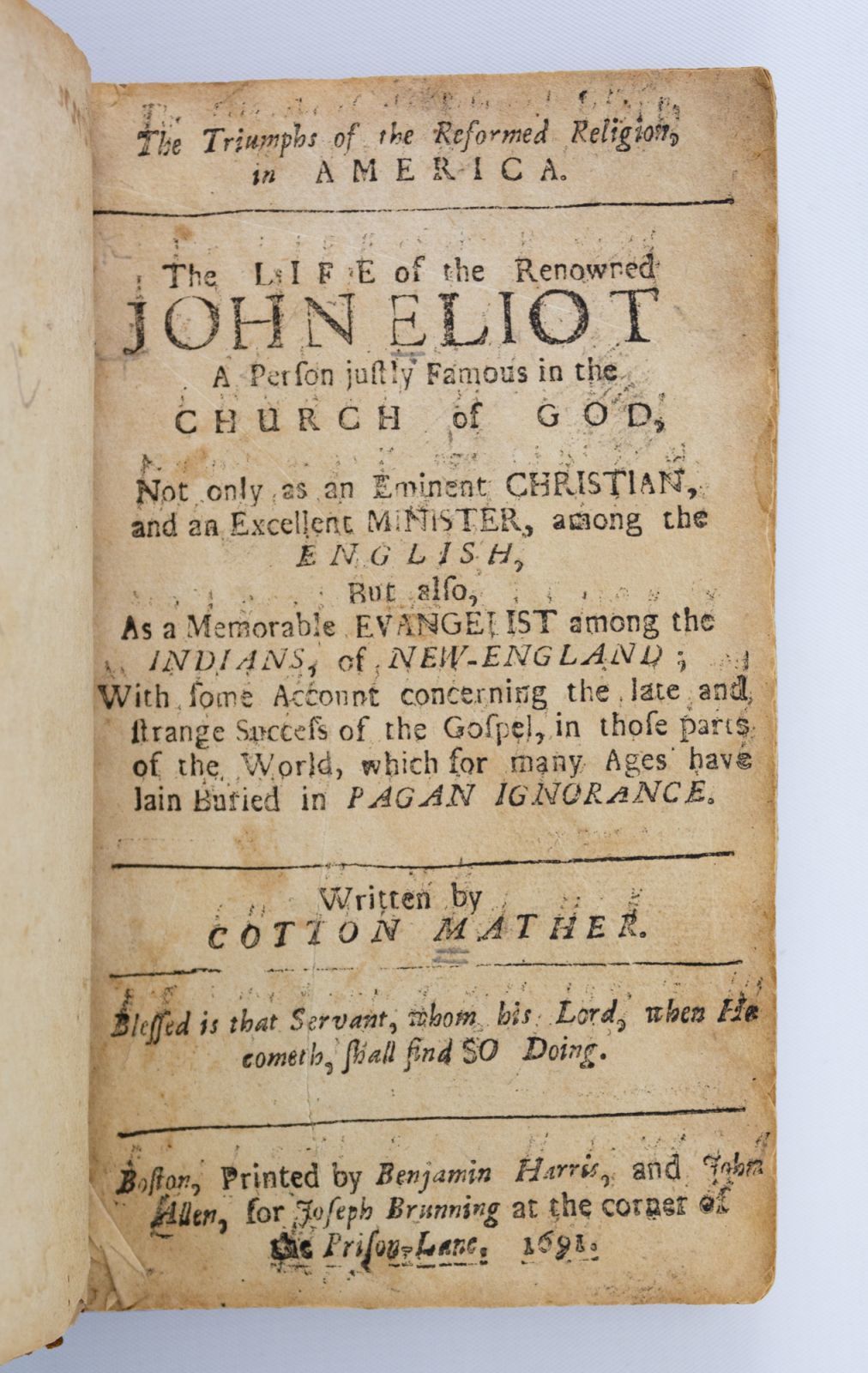
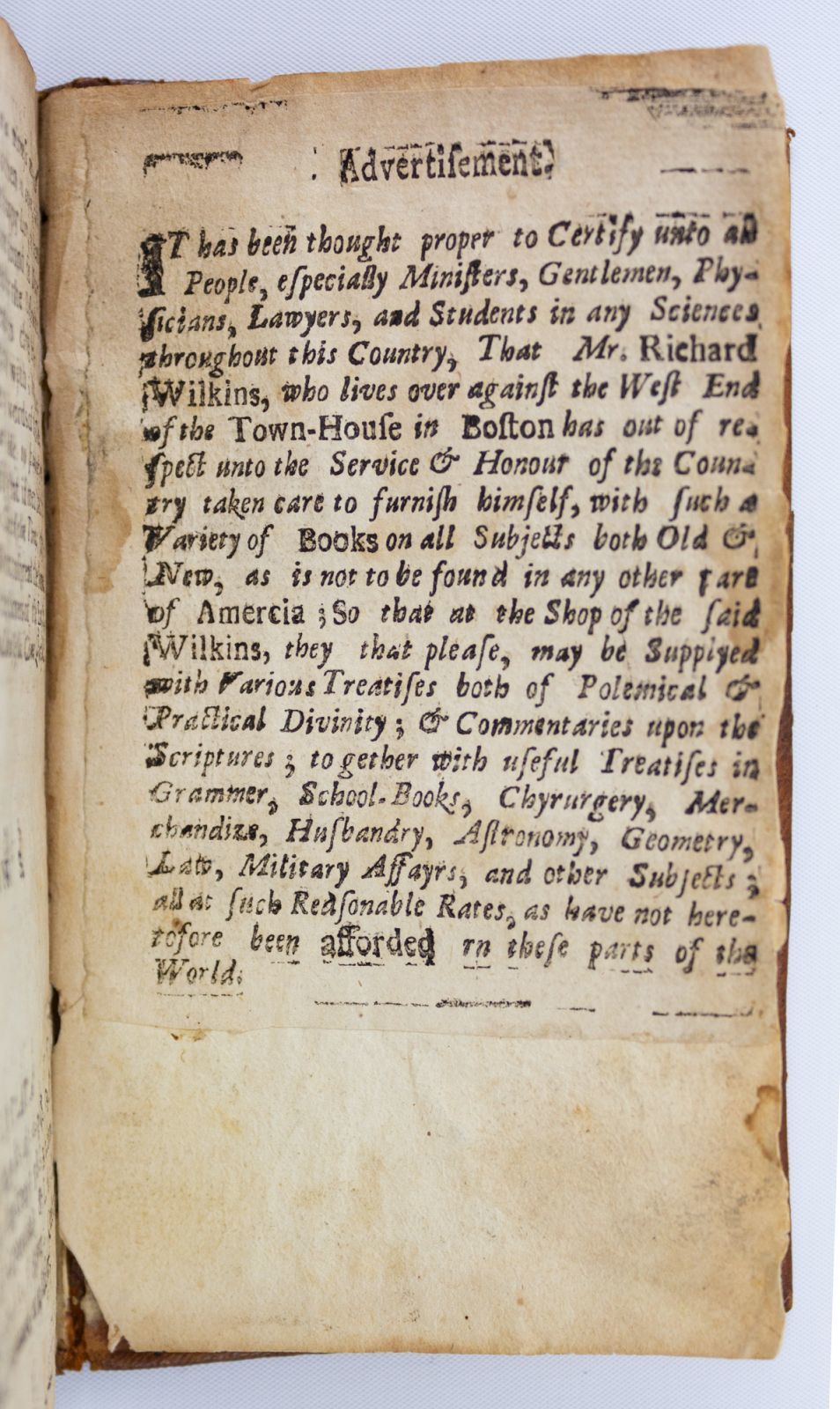
Boston: Printed by Benjamin Harris, and John Allen, for Joseph Brunning at the corner of the Prison-lane, 1691. FIRST EDITION. 151 x 89 mm (5 7/8 x 3 1/2"). 4 p.l., 152 pp. [lacking the four leaves of quire S, containing pp. 129-36, good facsimiles of which accompany the volume]; A CONTEMPORANEOUS ADVERTISEMENT FOR THE BOOKSELLER WILKINS MOUNTED ONTO RECTO OF REAR FLYLEAF, PRESUMABLY AT THE TIME.
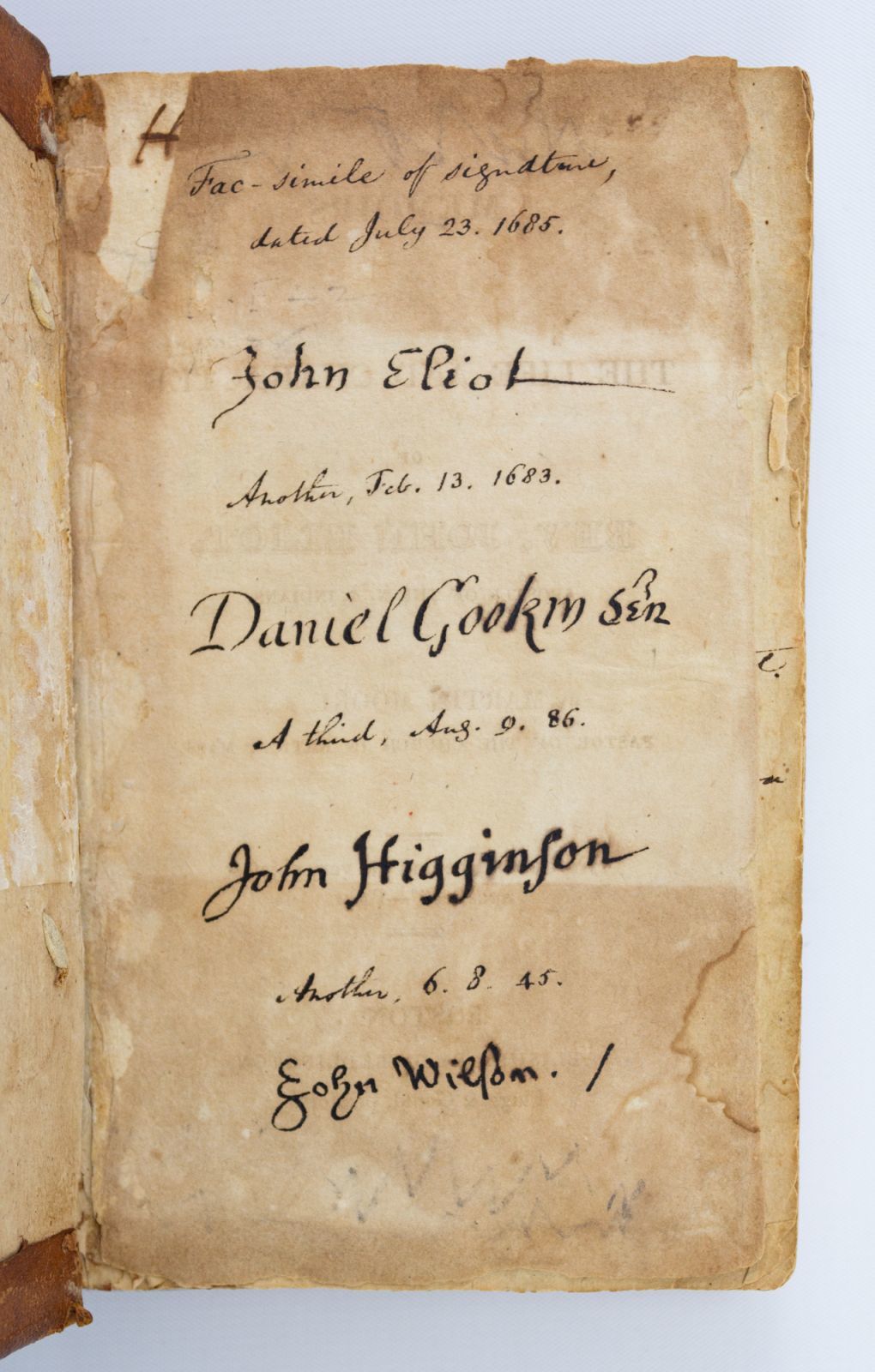
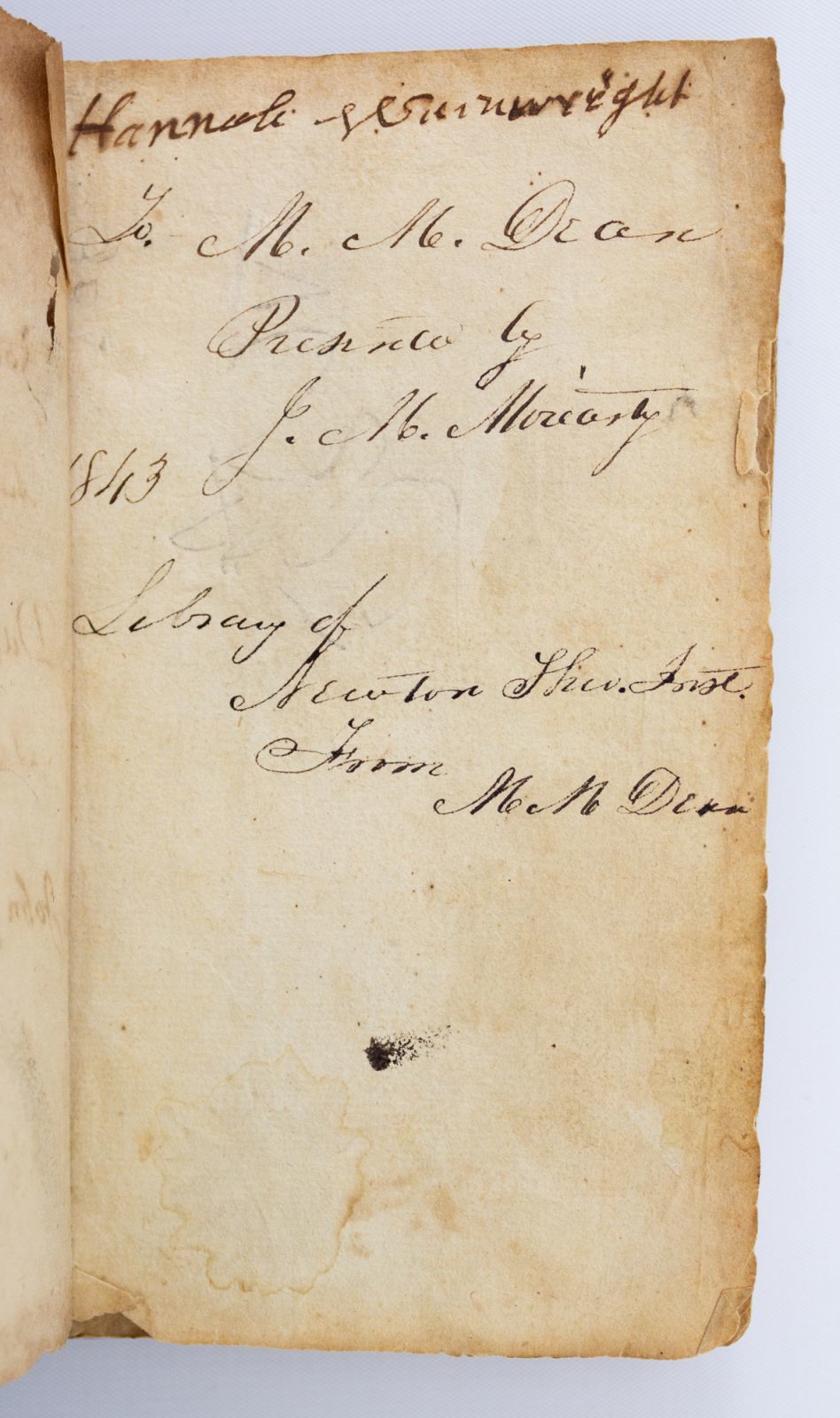
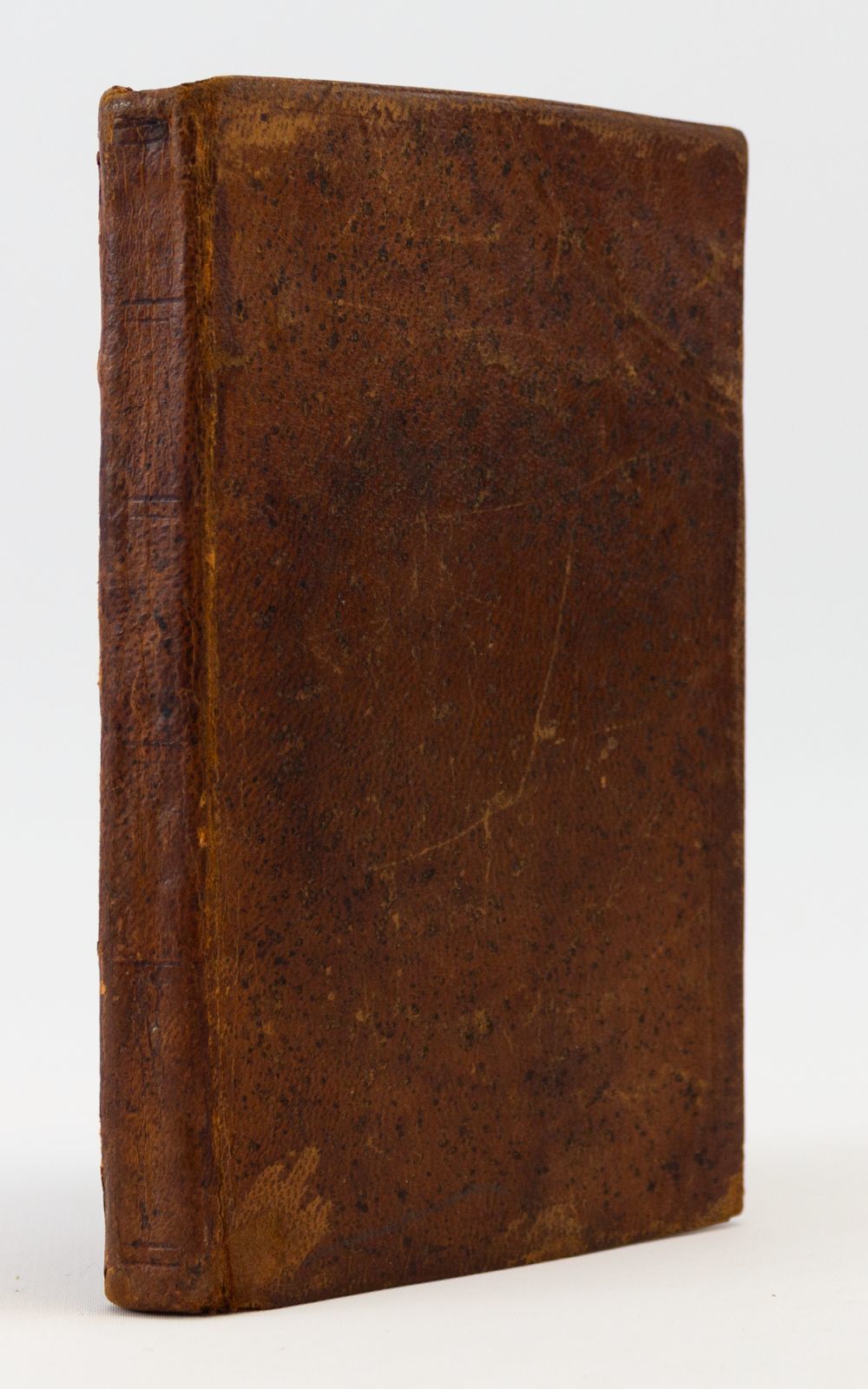
Contemporary sprinkled sheep, flat spine. Housed in fine modern brown clamshell box, calf spine with black morocco label. Front flyleaf inscribed by an early owner with facsimile signatures of John Eliot and three others; second front flyleaf with ownership signature of Hannah Wainwright and a presentation inscription "To M. M. Dean, Presented by J. M. Moriarty, 1843," and with Dean's own gift inscription to the Newton Theological Institute (from which this copy was deaccessioned). Mather: Howes M-398; Sabin 46561; Wing M-1163. Broadside: Bristol, "Supplement to Charles Evans' American Bibliography, B-127; Shipton & Mooney 39281; Wing W-2216A; ESTC W15418; not in Ford's "Broadsides, Ballads, &c. Printed in Massachusetts, 1639-1800." See Thomas, Isaiah, "History of Printing in American (1970), pp. 186-7. Boards with scratches and a couple patches of lost patina from insect activity, first three quires and final leaf with half-inch tears to gutter margin at tail, occasional minor stains and faint dampstaining, margins trimmed a bit close, affecting the very end of the text lines on p. 107, but a surprisingly well-preserved copy (apart from the missing leaves) of a fragile item in its original unsophisticated binding, and so rare and so interesting that condition doesn't much matter.
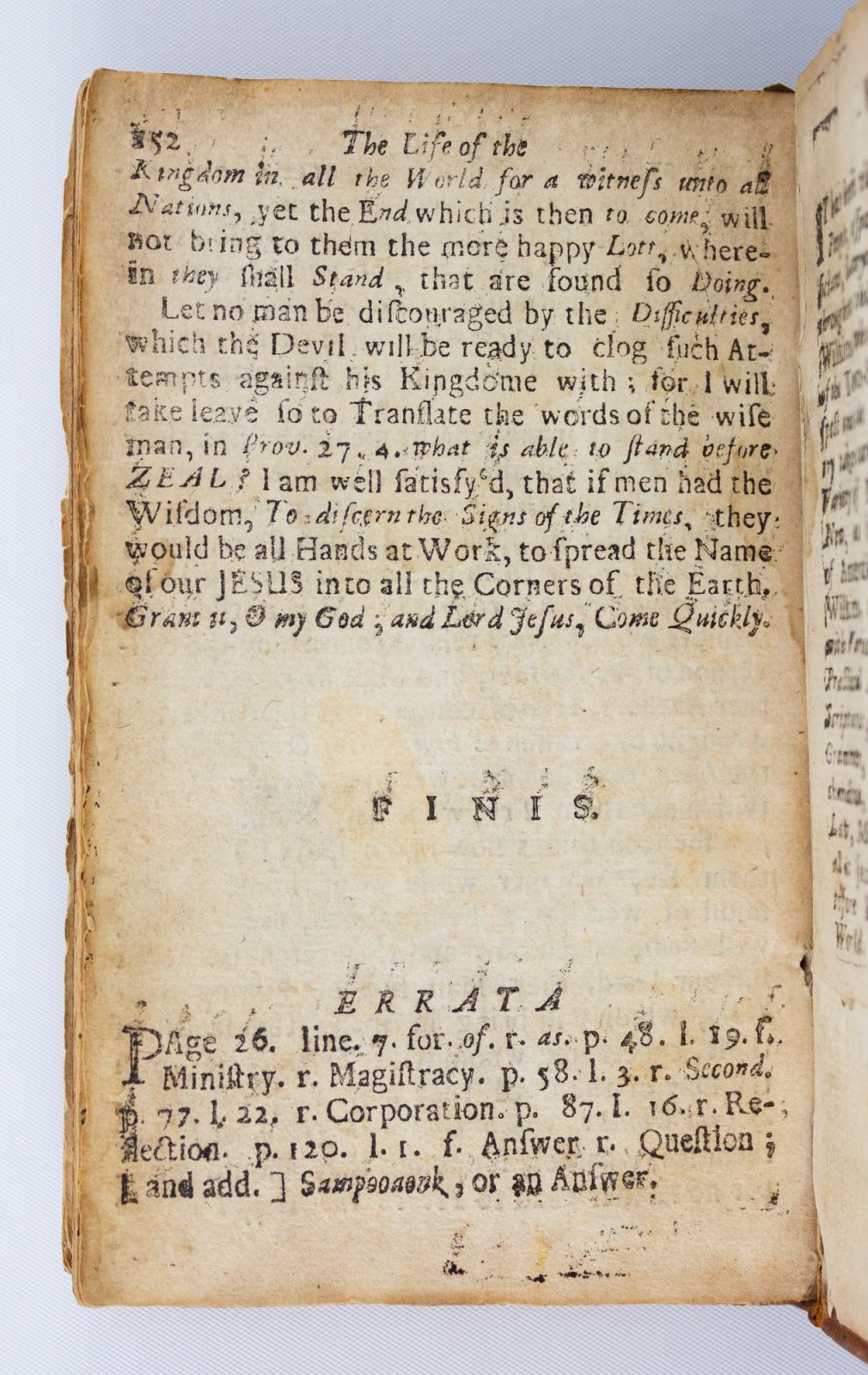
To begin with, this is the first printing of Puritan minister Cotton Mather's biography of John Eliot (ca. 1604-90), who translated the Geneva Bible into the language of the Massachuset tribe--but there is considerably more to the story here. Created over the course of four years, beginning in 1660, "Eliot's Indian Bible," or the "Algonquian Bible," was the first complete Bible to be printed in America. Mather (1663-1728) describes Eliot's evangelism to the Indians, his acquisition of their language, and his painstaking translation of Scripture. The biography is interesting and valuable enough by itself (especially for its 17th century American imprint), but our copy contains an additional extremely rare piece of early American ephemera--a broadside that advertises the shop of Boston bookseller Richard Wilkins, where one might find "such a Variety of Books on all Subjects both Old & New, as is not to be found in any other part of America." In the chapter on "Booksellers of Boston" in Isaiah Thomas' "History of Printing in America," Wilkins is mentioned as having premises "Near the Town-House" in 1684. Thomas notes that Wilkins (ca. 1636-1704) had emigrated from Limerick in Ireland to escape religious persecution, and established the reputation of being a "person of good sense" and "a Pious man." One of the earliest American booksellers' broadsides, Wilkins' advertisement describes his stock as: "Polemical & Practical Divinity; & Commentaries upon the Scriptures; together with useful Treatises in Grammer, School-Books, Chyrurgery, Merchandize, Husbandry, Astronomy, Geometry, Law, Military Affayrs, and other Subjects; all at such Reasonable Rates, as have not heretofore been afforded in these parts of the World." This seems to be the earliest broadside advertisement for a bookseller printed in the American colonies; OCLC finds other printed bookseller ads that appear in a book--usually on the final page or at the end of the front matter--but this is the only pre-1700 example we could find of an American-printed bookseller advertisement that stands alone. OCLC and LibHub locate just one copy of our broadside (at Harvard's Houghton Library); like ours, it is mounted on the blank page facing p. 152 in Mather's "Triumphs of the Reformed Religion." (STC lists an additional copy of the work at the John Rylands Library in Manchester, but that institution's online catalogue identifies their copy as a reproduction of the one at Harvard.) The English Short Title Catalogue suggests that the location of the advertisement, as well as its typeface and layout, indicate that it was also printed by Harris and Allen. The suggestion is also made that Wilkins may have taken advantage of the opportunity for free advertising by generally placing the ad in books he sold. This is perhaps unlikely, given how rare the advertisement now is. Even apart from the broadside, our Eliot biography is quite rare, especially in agreeable condition: we could trace just two copies this century in RBH, one very defective and one lacking its title leaf (which sold for $10,625 in 2014). This copy was a gift to Rev. Myron Munson Dean (1811-61) from his brother-in-law Dr Joseph Moseley Moriarty Sr. (1810-1847). Dean subsequently donated the volume to his alma mater, the Newton Theological Institution in Newton Centre, Massachusetts, which began as a pioneering Baptist educational center for the New England region. The institution eventually merged with the prestigious Andover Theological Seminary, which in turn, in 2026, relocated from Massachusetts to Connecticut, formally becoming part of Yale Divinity School. Dean had been among the earlier students of the Newton Theological Institution: he was admitted in 1835, only 10 years after the institution's founding. The municipality of Newton in Massachusetts played such a central role in John Eliot's ministry in the 17th century that when Dean donated this volume to his alma mater in the 19th century he may have done so with the feeling that the book was coming home..
Contemporary sprinkled sheep, flat spine. Housed in fine modern brown clamshell box, calf spine with black morocco label. Front flyleaf inscribed by an early owner with facsimile signatures of John Eliot and three others; second front flyleaf with ownership signature of Hannah Wainwright and a presentation inscription "To M. M. Dean, Presented by J. M. Moriarty, 1843," and with Dean's own gift inscription to the Newton Theological Institute (from which this copy was deaccessioned). Mather: Howes M-398; Sabin 46561; Wing M-1163. Broadside: Bristol, "Supplement to Charles Evans' American Bibliography, B-127; Shipton & Mooney 39281; Wing W-2216A; ESTC W15418; not in Ford's "Broadsides, Ballads, &c. Printed in Massachusetts, 1639-1800." See Thomas, Isaiah, "History of Printing in American (1970), pp. 186-7. Boards with scratches and a couple patches of lost patina from insect activity, first three quires and final leaf with half-inch tears to gutter margin at tail, occasional minor stains and faint dampstaining, margins trimmed a bit close, affecting the very end of the text lines on p. 107, but a surprisingly well-preserved copy (apart from the missing leaves) of a fragile item in its original unsophisticated binding, and so rare and so interesting that condition doesn't much matter.
To begin with, this is the first printing of Puritan minister Cotton Mather's biography of John Eliot (ca. 1604-90), who translated the Geneva Bible into the language of the Massachuset tribe--but there is considerably more to the story here. Created over the course of four years, beginning in 1660, "Eliot's Indian Bible," or the "Algonquian Bible," was the first complete Bible to be printed in America. Mather (1663-1728) describes Eliot's evangelism to the Indians, his acquisition of their language, and his painstaking translation of Scripture. The biography is interesting and valuable enough by itself (especially for its 17th century American imprint), but our copy contains an additional extremely rare piece of early American ephemera--a broadside that advertises the shop of Boston bookseller Richard Wilkins, where one might find "such a Variety of Books on all Subjects both Old & New, as is not to be found in any other part of America." In the chapter on "Booksellers of Boston" in Isaiah Thomas' "History of Printing in America," Wilkins is mentioned as having premises "Near the Town-House" in 1684. Thomas notes that Wilkins (ca. 1636-1704) had emigrated from Limerick in Ireland to escape religious persecution, and established the reputation of being a "person of good sense" and "a Pious man." One of the earliest American booksellers' broadsides, Wilkins' advertisement describes his stock as: "Polemical & Practical Divinity; & Commentaries upon the Scriptures; together with useful Treatises in Grammer, School-Books, Chyrurgery, Merchandize, Husbandry, Astronomy, Geometry, Law, Military Affayrs, and other Subjects; all at such Reasonable Rates, as have not heretofore been afforded in these parts of the World." This seems to be the earliest broadside advertisement for a bookseller printed in the American colonies; OCLC finds other printed bookseller ads that appear in a book--usually on the final page or at the end of the front matter--but this is the only pre-1700 example we could find of an American-printed bookseller advertisement that stands alone. OCLC and LibHub locate just one copy of our broadside (at Harvard's Houghton Library); like ours, it is mounted on the blank page facing p. 152 in Mather's "Triumphs of the Reformed Religion." (STC lists an additional copy of the work at the John Rylands Library in Manchester, but that institution's online catalogue identifies their copy as a reproduction of the one at Harvard.) The English Short Title Catalogue suggests that the location of the advertisement, as well as its typeface and layout, indicate that it was also printed by Harris and Allen. The suggestion is also made that Wilkins may have taken advantage of the opportunity for free advertising by generally placing the ad in books he sold. This is perhaps unlikely, given how rare the advertisement now is. Even apart from the broadside, our Eliot biography is quite rare, especially in agreeable condition: we could trace just two copies this century in RBH, one very defective and one lacking its title leaf (which sold for $10,625 in 2014). This copy was a gift to Rev. Myron Munson Dean (1811-61) from his brother-in-law Dr Joseph Moseley Moriarty Sr. (1810-1847). Dean subsequently donated the volume to his alma mater, the Newton Theological Institution in Newton Centre, Massachusetts, which began as a pioneering Baptist educational center for the New England region. The institution eventually merged with the prestigious Andover Theological Seminary, which in turn, in 2026, relocated from Massachusetts to Connecticut, formally becoming part of Yale Divinity School. Dean had been among the earlier students of the Newton Theological Institution: he was admitted in 1835, only 10 years after the institution's founding. The municipality of Newton in Massachusetts played such a central role in John Eliot's ministry in the 17th century that when Dean donated this volume to his alma mater in the 19th century he may have done so with the feeling that the book was coming home..
Details
Title
THE TRIUMPHS OF THE REFORMED RELIGION IN AMERICA. THE LIFE OF THE RENOWNED JOHN ELIOT . . . A MEMORABLE EVANGELIST AMONG THE INDIANS OF NEW ENGLAND. [with]. A BROADSIDE ADVERTISEMENT FOR BOSTON BOOKSELLER RICHARD WILKINS
Author
(AMERICAN IMPRINTS, EARLY). (ELIOT, JOHN). MATHER, COTTON
Condition
Unknown
Publisher
Printed by Benjamin Harris, and John Allen, for Joseph Brunning at the corner of the Prison-lane: Boston
Date
1691
Edition
FIRST EDITION