

Opera
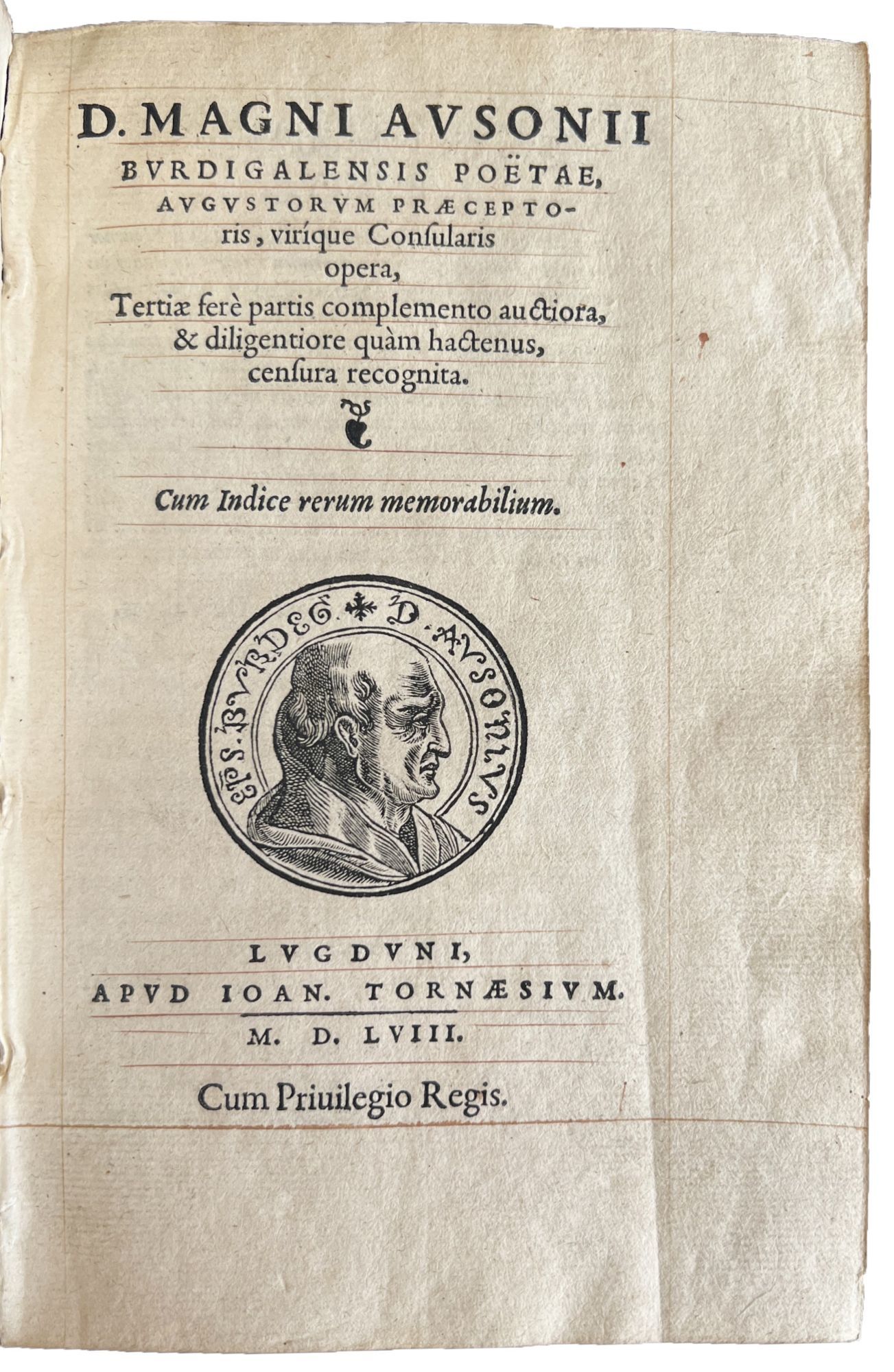
- Lyon: Jean I de Tournes, 1558
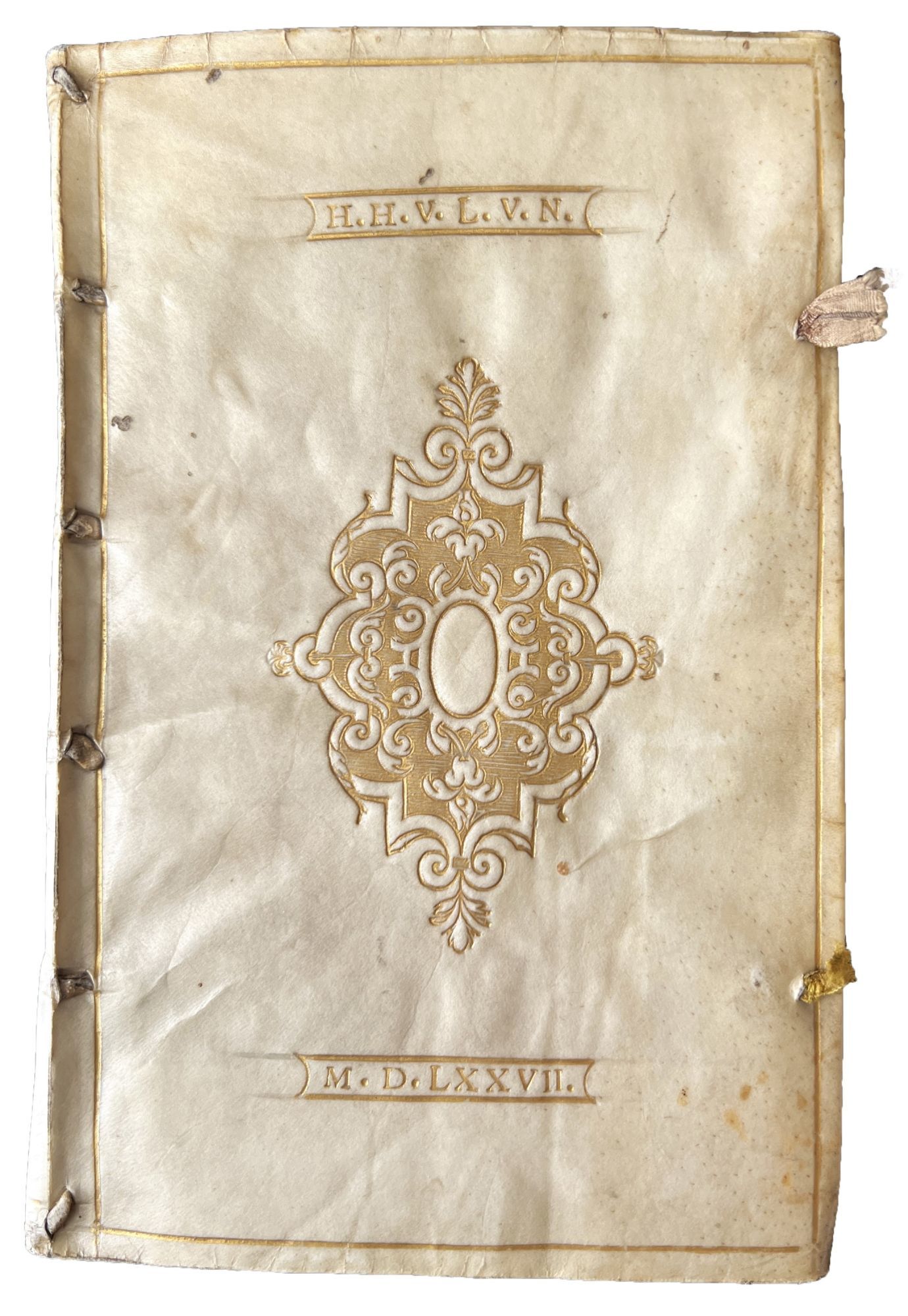
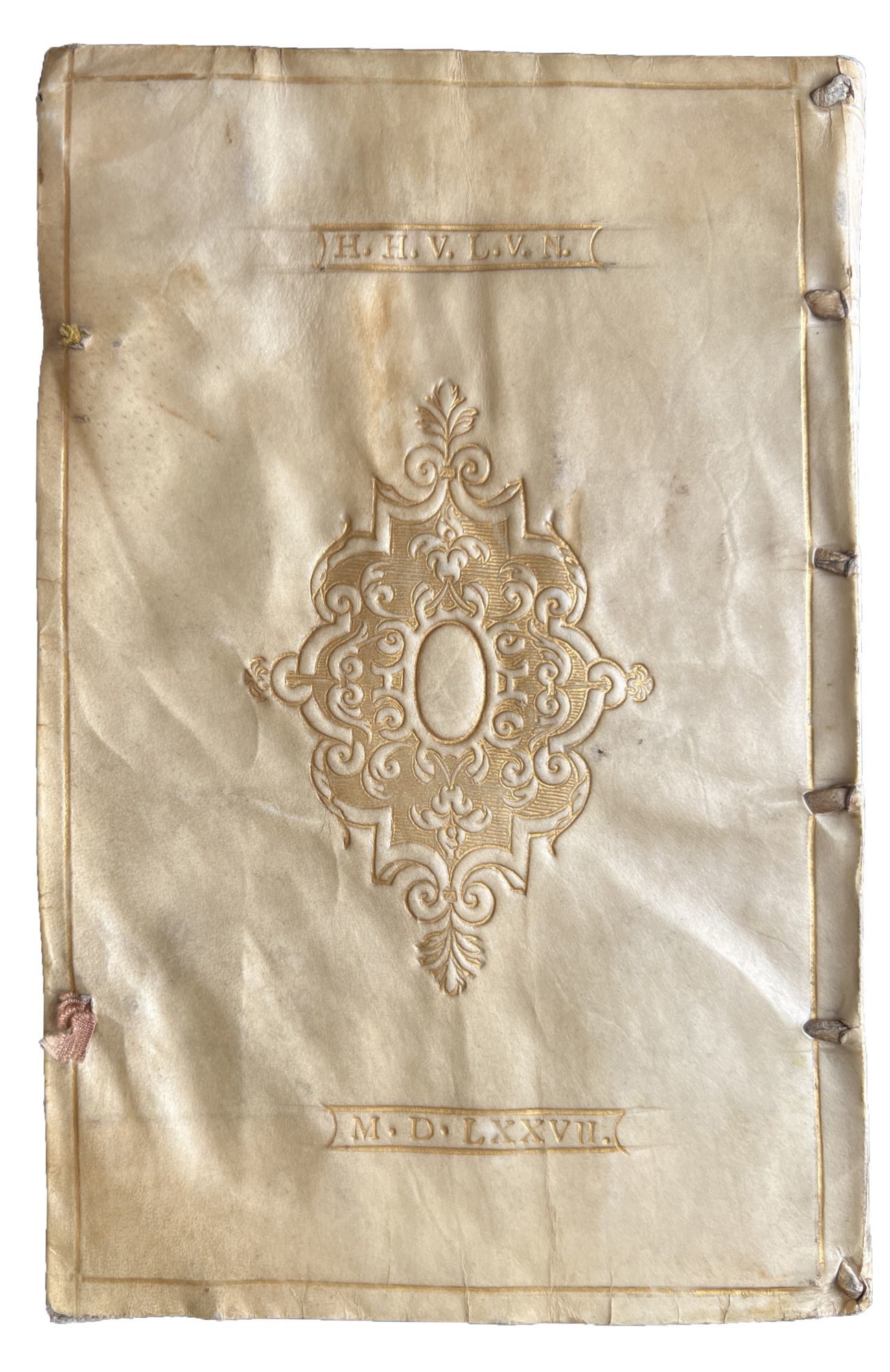
A French humanist edition of Latin epistolary poetry, in a refined contemporary gold-tooled and dated vellum binding commissioned by the first book collector of the bibliophilic family of the princes of Liechtenstein.
Ausonius, fourth-century poet from Bordeaux, had an exceptional life, rising from humble teacher of rhetoric to become tutor to the sons of emperors and high-placed member of the Roman civil service. He wrote on a wide variety of subjects, which rarely included religion (he is thought to have been a “not very enthusiastic” convert to Christianity - Encyclopedia Britannica, 1911). Some of his eclogues, epitaphs and epigrams were translations of Greek originals, largely from the Anthologia Palatina. Of his own poems, best known are his “travelogue” on the Moselle, his love poems about Bissula, an enslaved Alemannic woman whom he had received as war booty and freed, and his descriptions of wine, wine-making, and other aspects of daily life, including a poem (Commemoratio professorum Burgdigalensium) containing affectionate portraits of the schoolmasters of Bordeaux.
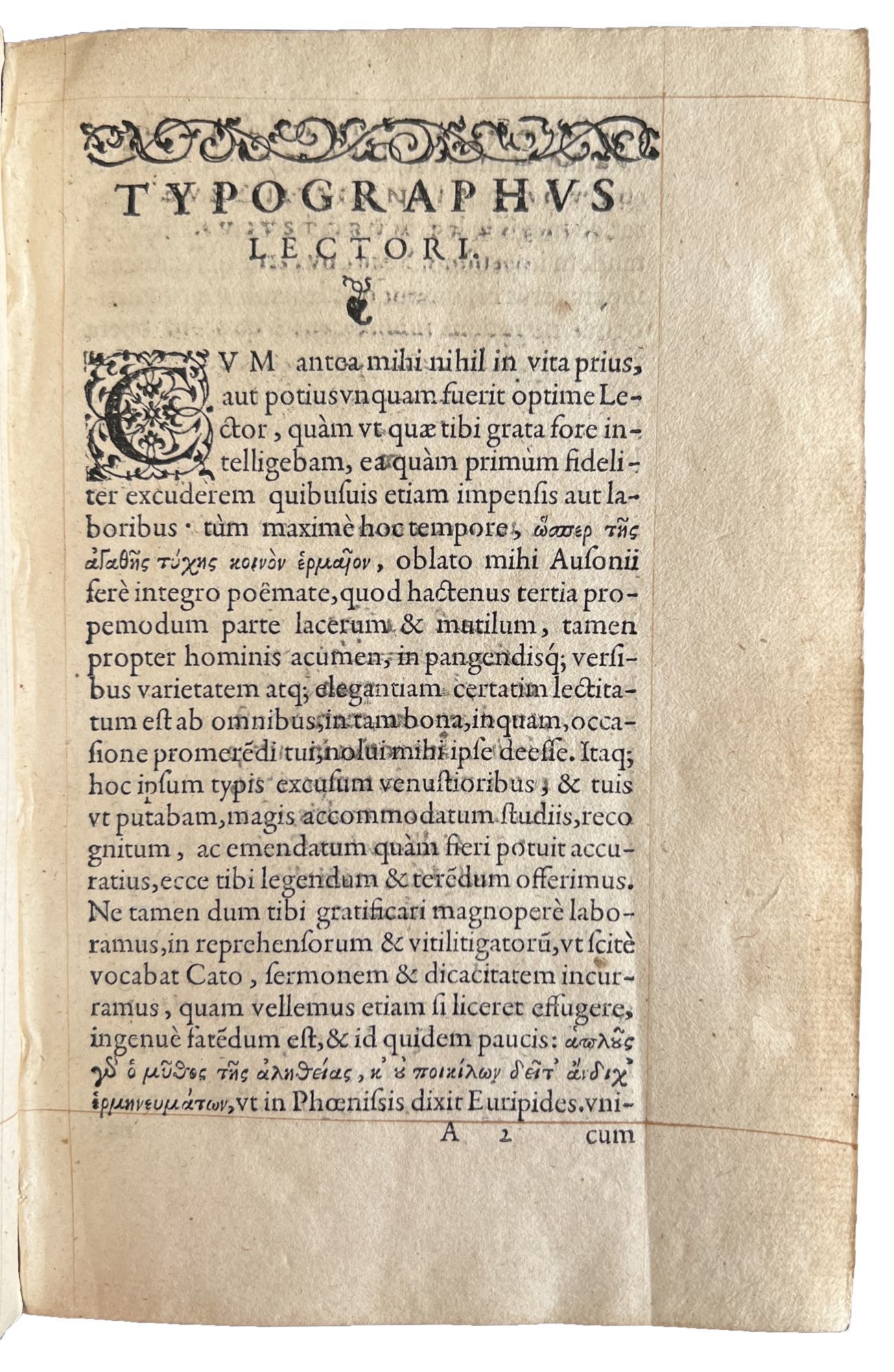
The textual transmission of his literary works has been “among the most complicated problems of classical Antiquity” (von Albrecht, p. 1327). Ausonius’ writings are found scattered through 181 surviving manuscripts, all anthological miscellanies, often filled with misattributions, and none containing the entirety of his work. Differences between the three (or four) main filiations have not been resolved (see Reynolds and Catalogus translationum). De Tournes’ edition, which contains a few poems not previously published, was the first to be based on an early ninth-century manuscript in the library of the Benedictine monastery at L’Île-Barbe, the island at Lyon (Leiden, Vossianus lat. F.111, discovered soon after 1500 by Jacobo Sannazzaro). It is now considered the most complete of the surviving manuscripts, although it lost a leaf soon after this edition was published. In preparing the edition, the Lyonese priest Etienne Charpin (d. 1567) was helped by Guillaume de la Barge, Antoine d’Albon, and Robert Constantin. While he is not named on the title-page, poems dedicated to Charpin as the editor appear on fols. A4v and A6r.
Joseph Scaliger and the Bordeaux humanist Élie Vinet criticized Charpin’s edition; they later published their own corrections and commentaries (Scaliger’s plagiarizing much of Vinet’s).
This copy was bound for Hartmann II von Liechtenstein und Nikolsburg (1544–1585). Hartmann was from the Feldsberg (Valtice) branch of the lords of Liechtenstein, who supported Lutheranism “on their estates in Austria and the Unity of the Brethren in Moravia.... In October 1568 he married Anna Maria, Countess of Ortenburg, the niece of Count Joachim of Ortenburg, a prominent leader of the Lutheran nobility in the Bavarian duchy.... The marriage resulted in five sons, two of whom died in childhood, and four daughters, two of whom survived into adulthood.... In 1573 Hartmann served as the imperial commissioner who was responsible for settling border disputes between Austria and Moravia. He was advisor to Maximilian II and Rudolph II and an important creditor to these two emperors. In 1575 he managed to recover the estate of Lednice, sold between 1572 and 1573, from Wolfgang II of the Mikulov branch, thus laying the foundations for the extraordinary expansion of Liechtenstein property in Moravia in the following generation” (Czech-Liechtenstein Relations Past and Present, pp. 36-37). It appears thus that it was after acquiring back the medieval Lednice castle, which he demolished to make way for a new, Renaissance-style villa, that Hartmann had his books uniformly bound in France, in the highest quality pale vellum, the covers with a gold-tooled lozenge centerpiece, his initials (H.H.V.L.V.N.) and the year (all are dated either M.D.LXXVII or M.D.LXXVIII).
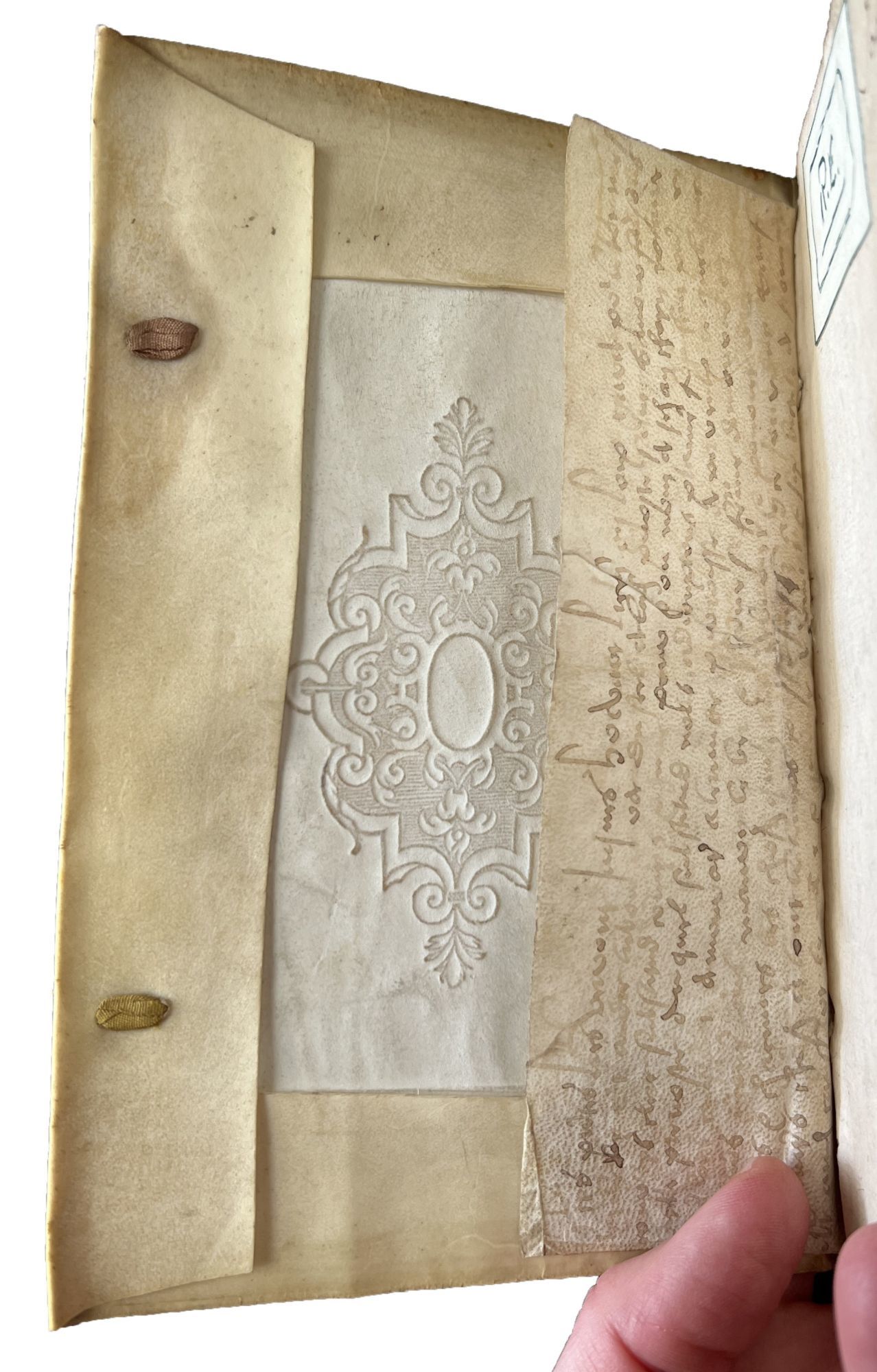
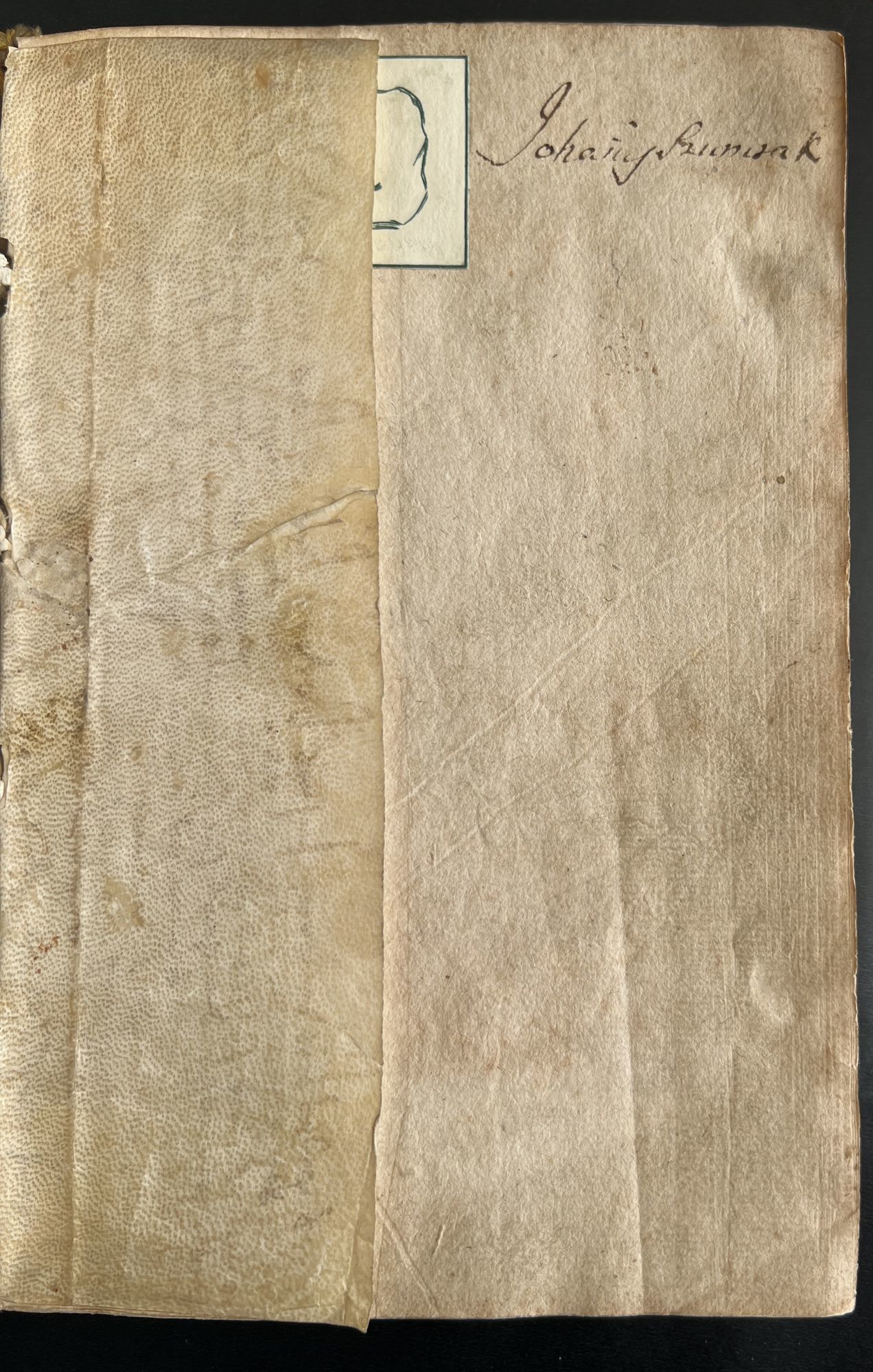
His three sons converted to Catholicism after his death, “thereby clearing the way for themselves and their descendants to secure influential positions at the Habsburg courts in Prague and Vienna, in the imperial army and in the provincial and state administration” (ibid., p. 38), and enabling the Liechtensteins to become one of the three richest noble families in the Habsburg monarchy, whose art and book collections became legendary. By the 20th century, the Liechtenstein estate library totaled approximately 100,000 volumes. In 1915, Hanns Bohatta estimated over 230 of Hartmann’s books to survive. Some were no doubt lost in WW II, others are still in the Liechtenstein Princely Library (in Vienna and Vaduz), and others were among the 20,000 books sold to H. P. Kraus in 1949. A few of Hartmann’s books had left the family library at earlier dates, such as this one, with its inscription by a 17th- or 18th-century owner.
Adams A-2280; BM STC French, p. 36; USTC 152527; Gültlingen, IX, p. 199: 403; Cartier, Bibliographie des éditions des de Tournes, no. 390. Cf. M. D. Reeve, “Ausonius,” in L. D. Reynolds (ed.), Texts and Transmission: A Survey of the Latin Classics (1983), pp. 26-28; M. von Albrecht, A History of Roman Literature (1997), II: 1320-1330; S. Prete, “Problems of the text of Ausonius,” L’Antiquité Classique, 28, no. 1 (1959): 243–54; Catalogus translationum IV (1980), pp. 196-199, 204; H. de La Ville de Mirmont, Le manuscrit de l'Ile Barbe (Codex leidensis Vossianus latinus 3) et les travaux de la critique sur le texte d'Ausone; l'oeuvre de Vinet et l'oeuvre de Scaliger (1917), 3 vols. Cf. Hanns Bohatta, “Die Fürstlich Liechtensteinsche Fideikommissbibliothek in Wien,” in Zentralblatt für Bibliothekswesen 32 (nos. 6–7, June–July 1915), pp. 185–196); Czech-Liechtenstein, Relations Past and Present: A Summary Report by the Czech-Liechtenstein Commission of Historians (Vaduz, 2020) (online), pp. 36-37.18th-century owner.
Details
Title
Opera
Author
AUSONIUS, Decimus Magnus (ca. 310-ca. 395)
Condition
Unknown
Publisher
Jean I de Tournes: Lyon
Date
1558