

Emma
- London: John Murray, 1816
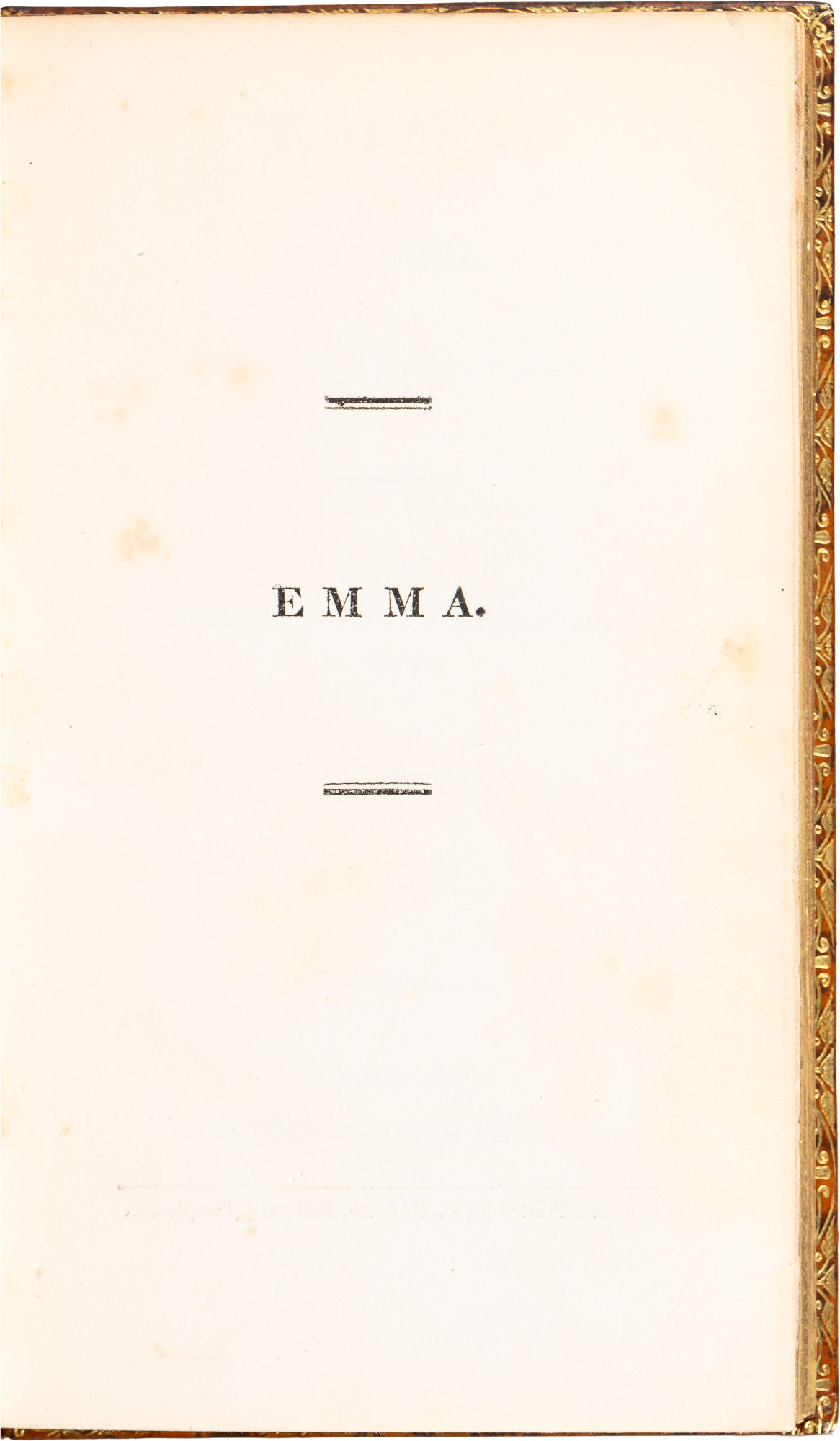
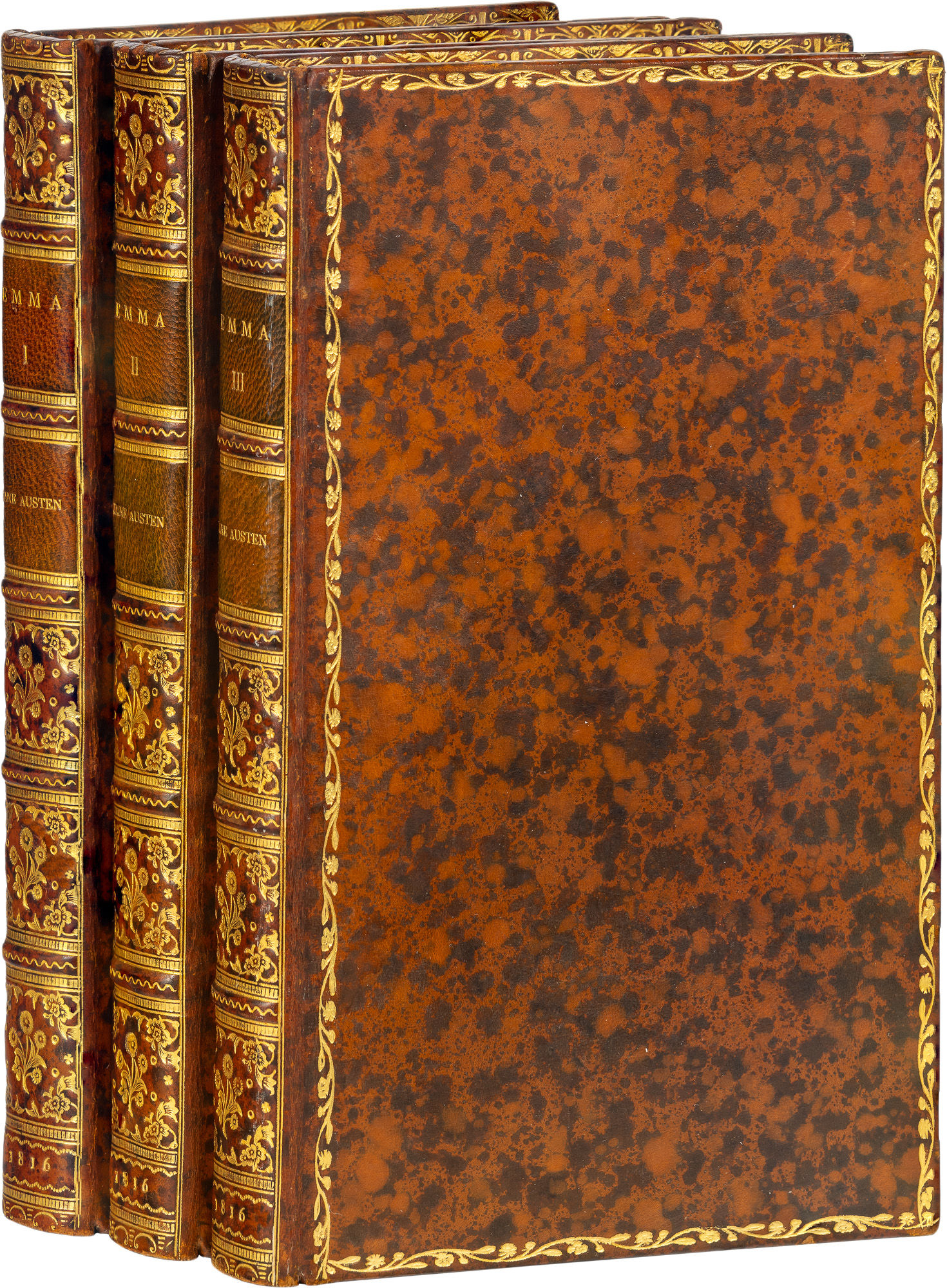
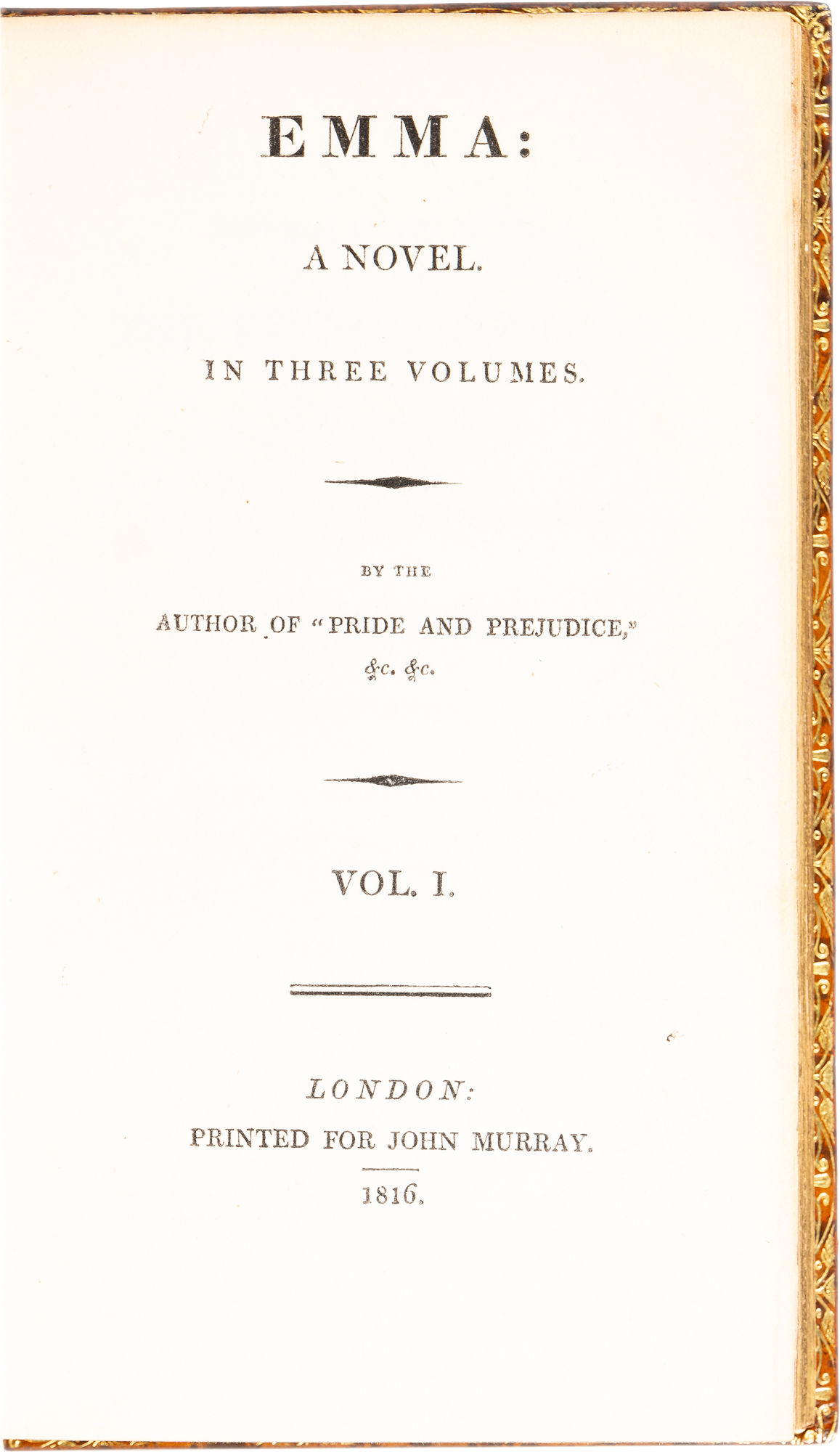
London: John Murray, 1816. First Edition. 3 vols., 12mo (173 × 107mm), pp. [6], 322; [4], 351, [1]; [4], 363, [1-ad]. Late nineteenth- to early twentieth-century full mottled calf by Zaehnsdorf (stamped on the lower corner of the verso of the front free endpapers), spine compartments and cover borders elaborately decorated in gilt with flowers and vines, brown morocco spine labels lettered in gilt, all edges gilt, inner dentelles gilt. Bookseller Bartlett & Co., Boston stamp to the upper corner of the endpapers, minute rubs at edges, early and later leaves lightly foxed, two small professional repairs to Volume II, page 351, just affecting text, early faded ink attribution "Jane Austen" to the title page of Volume III, else a fine and beautiful set (and other copies are not). Pages correctly watermarked 1815, and here is what is most significant: complete with all three correct half-titles. Sets with half-titles are significantly rarer than those without, particularly the Volume I half-title, as the printer placed it at the end of the volume and it was seldom included by the period binders-ten or more times as rare. Available here for about twice the price of incomplete copies, a beneficiary of the striking book market inefficiencies sometimes seen. Gilson A8, Keynes 8, Sadleir 62d. Emma was a revolution in writing, and belongs alongside Flaubert, Joyce, and Woolf as among the greatest of all experimental novels, a coming-of-age tale written at the zenith of Austen's moral vision. She set out claiming that she wanted to create a heroine "whom no one but myself will much like." Her device was inept matchmaking in an idiosyncratic social comedy featuring a rich, beautiful, prestigious, likable, compassionate, dynamic, headstrong, snobbish, intellectually proud, clever, nimble, and yet misguided young woman, from a comfortable home and with a cheerful disposition, confronted by life's irreconcilable opposites and the Byzantine convolutions of affection. Laid down the center is a sly plotline, warm enough to bake bread and sharp enough to slice it. On the edges sit Austen's precise pen portraits, practiced style, and subtle command, which she combined, in an unreplicable trinity of art, to manipulate the reader into being happily surprised by any example of common sense, and ultimately reminded that the best substitute for experience is being 20 years old.
Details
Title
Emma
Author
Austen, Jane
Condition
Unknown
Publisher
John Murray: London
Date
1816
Edition
First Edition