

Manuscript on paper, entitled on first leaf of Vol. I: “Hakuhō shinpen” 舶砲新編 [“New Writings on Naval Artillery”]
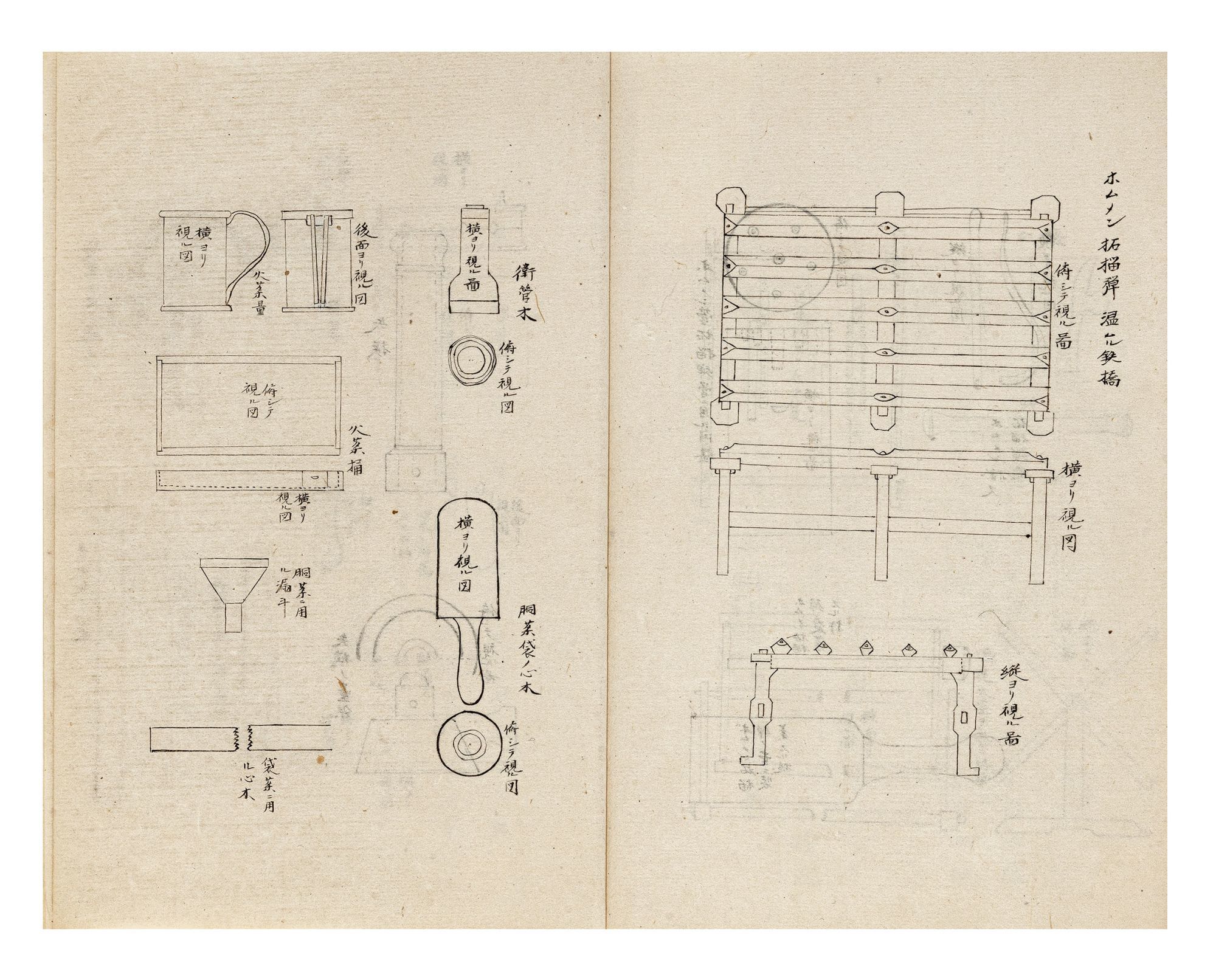
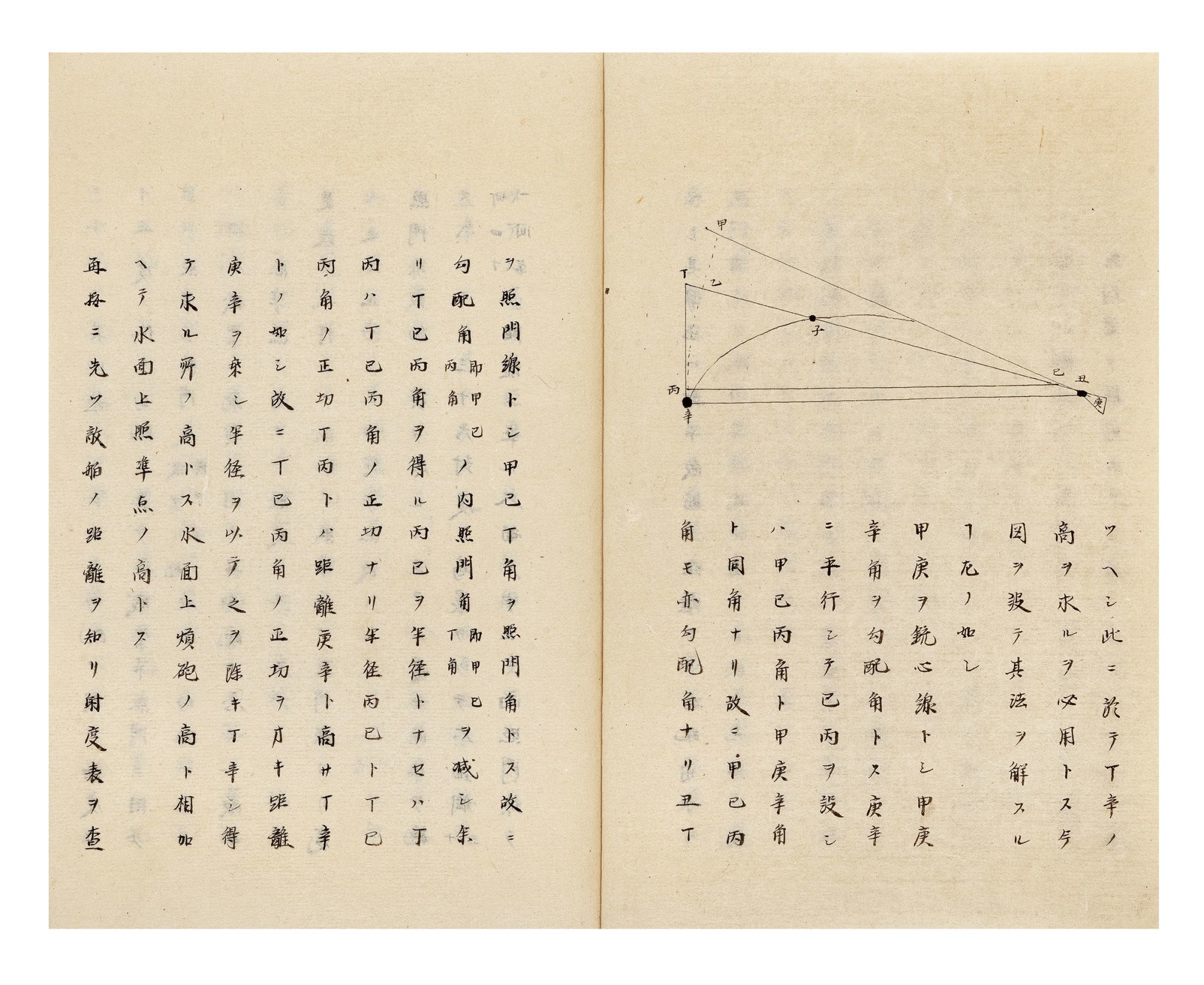
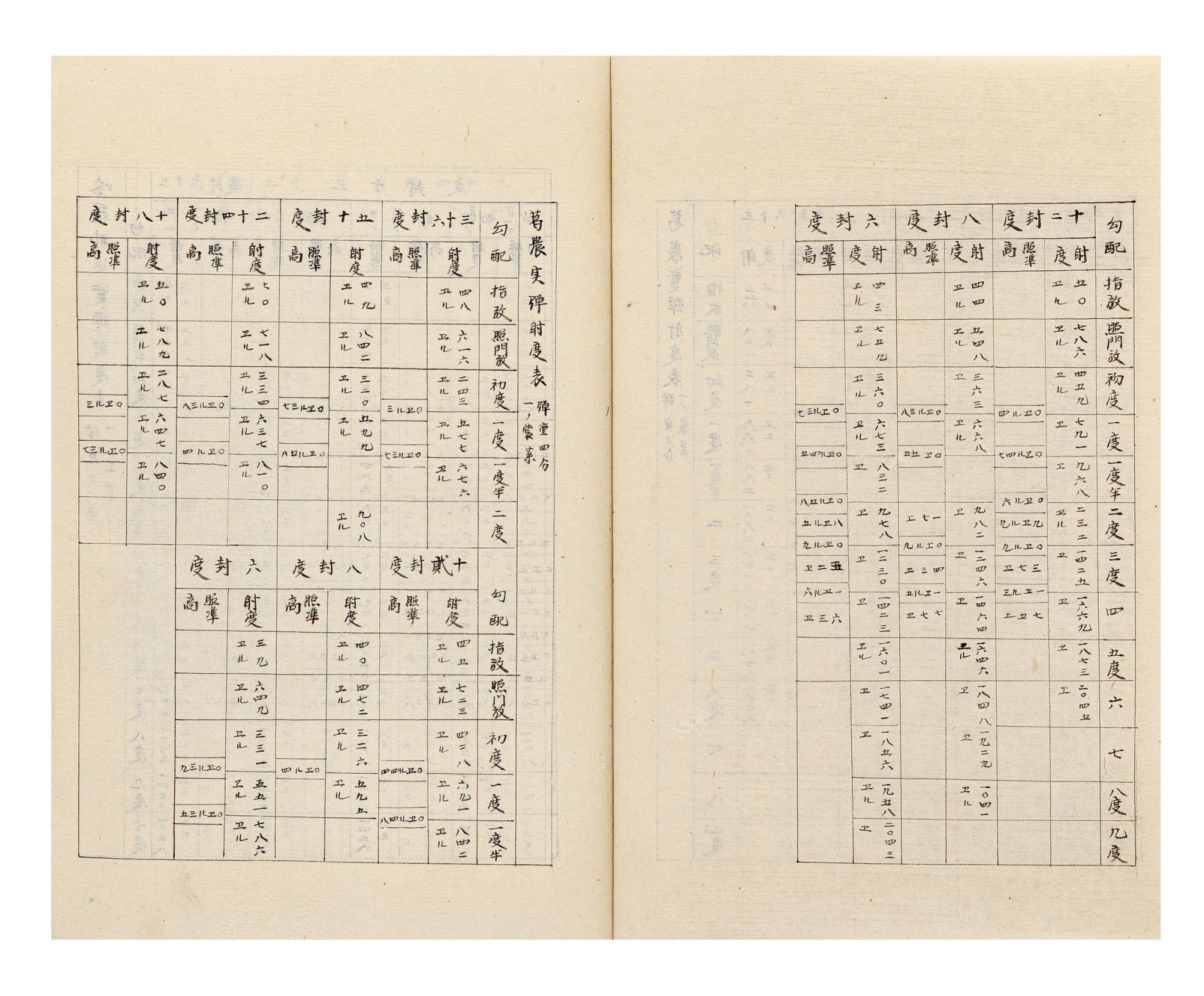
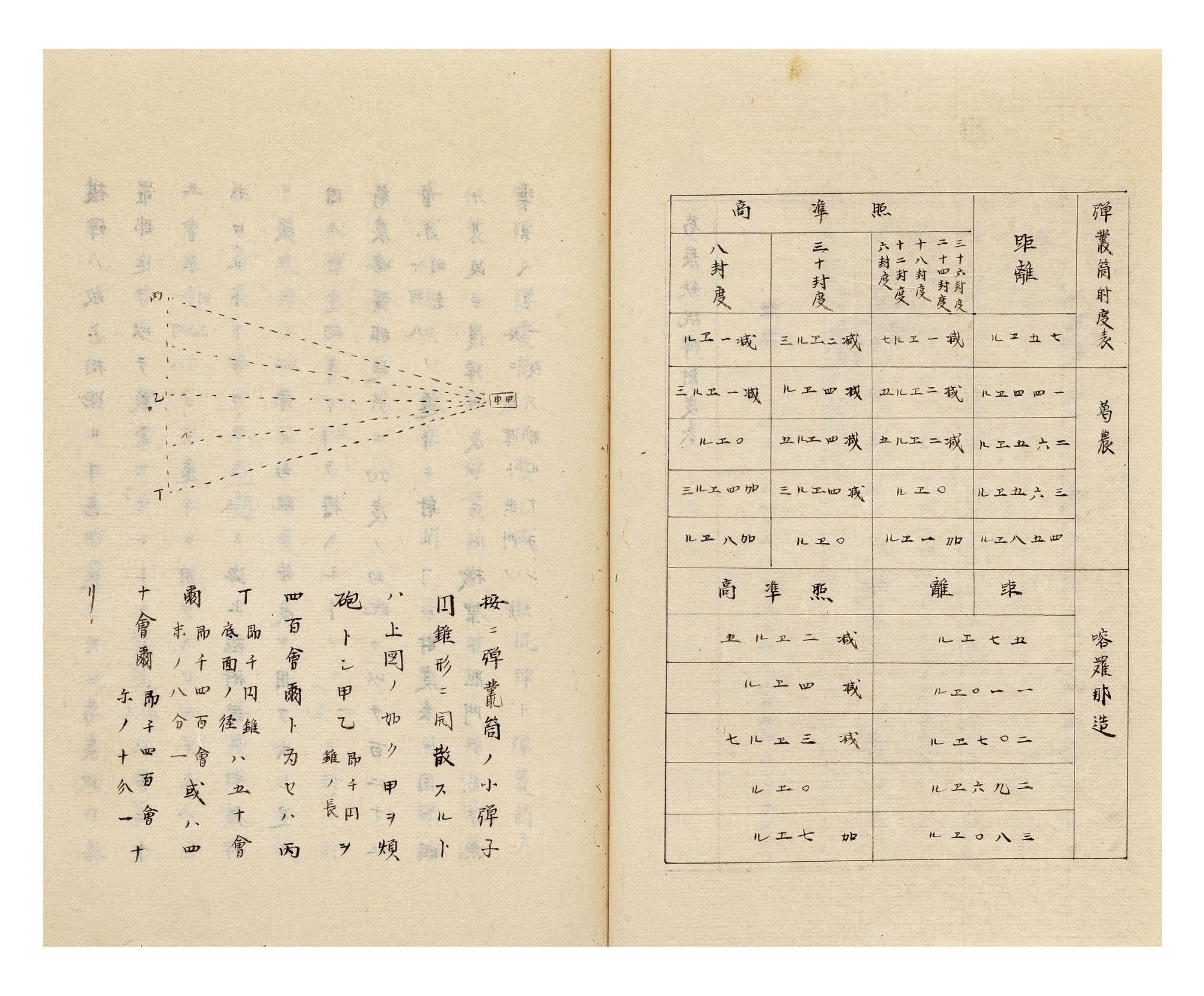
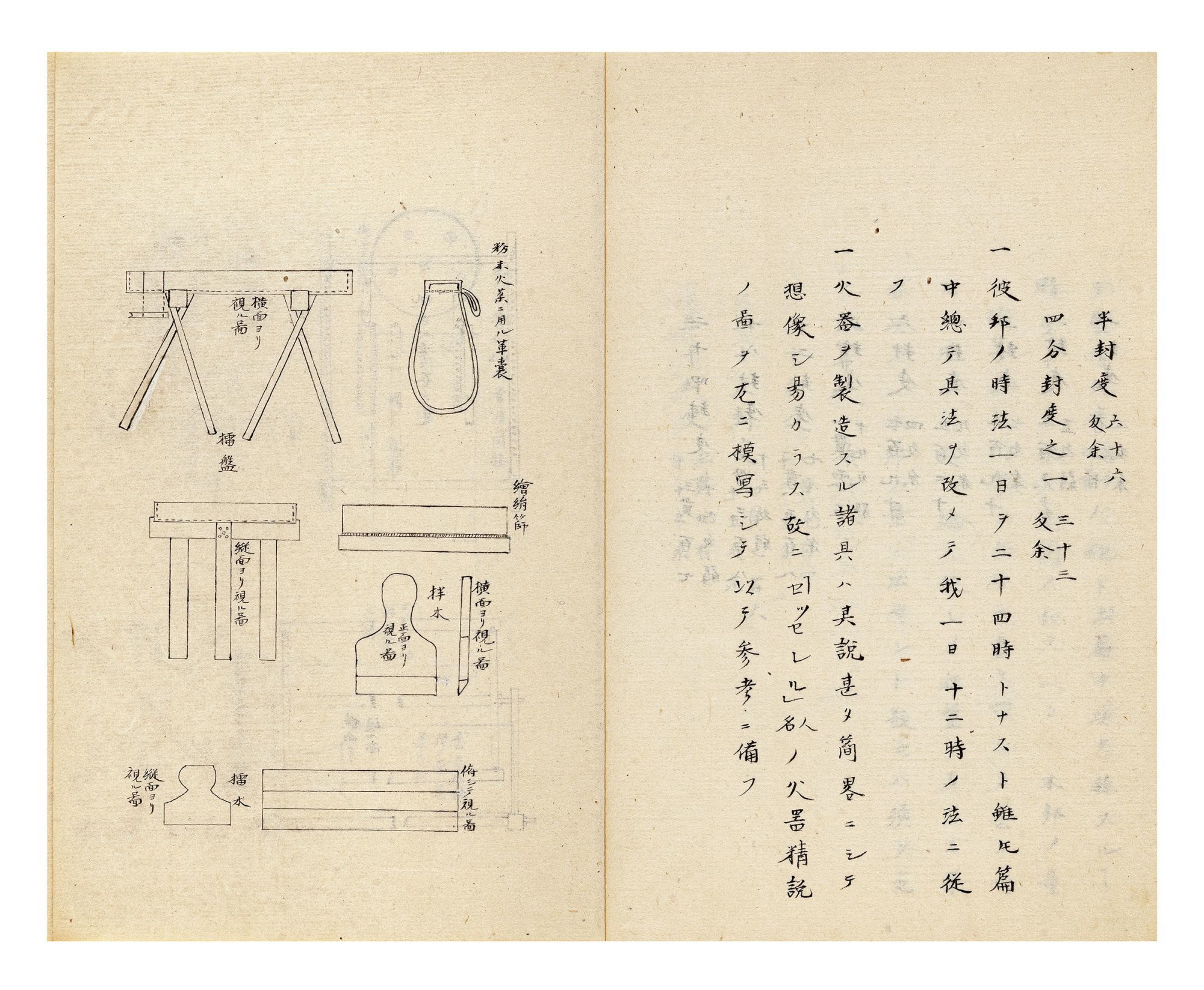
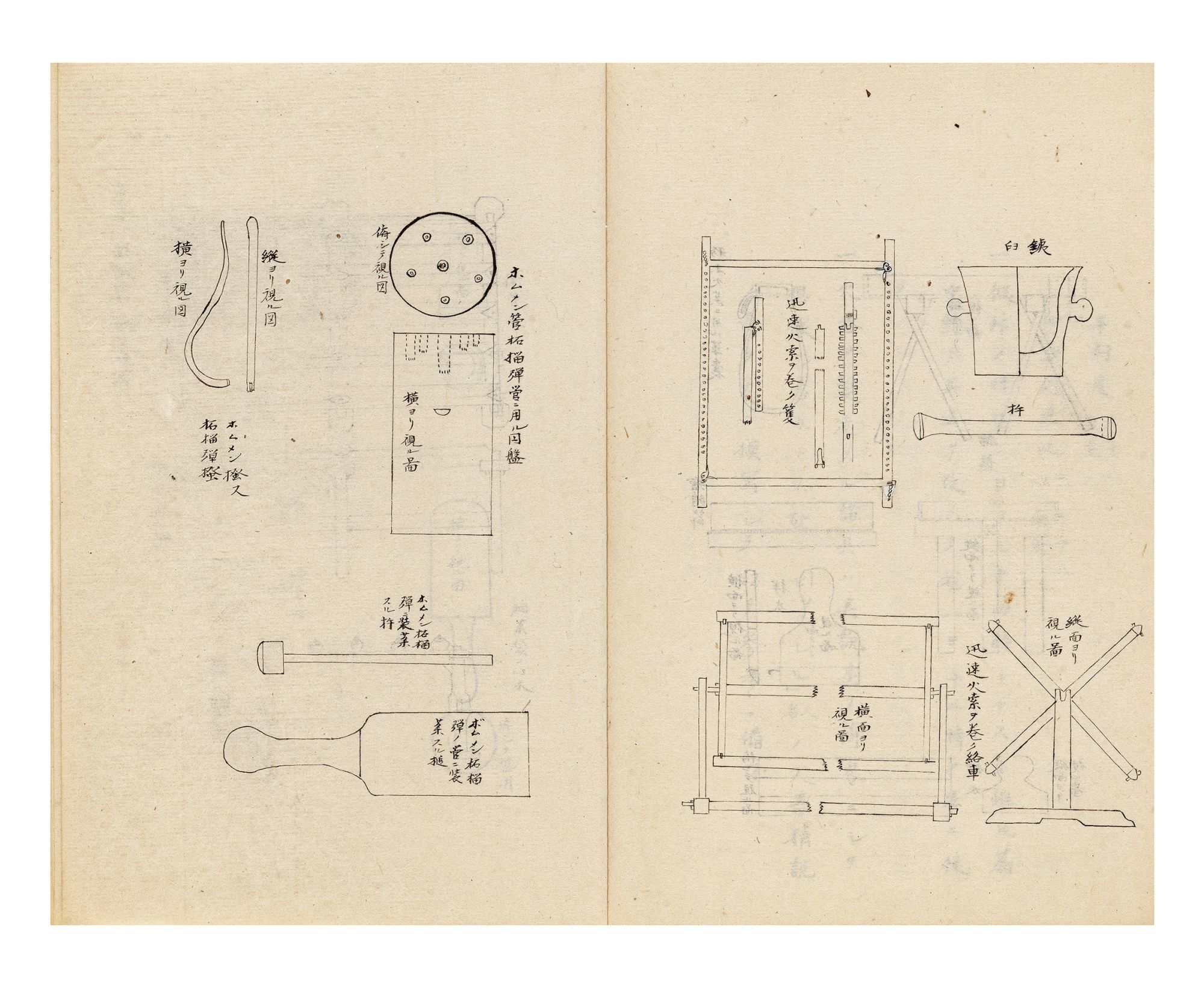
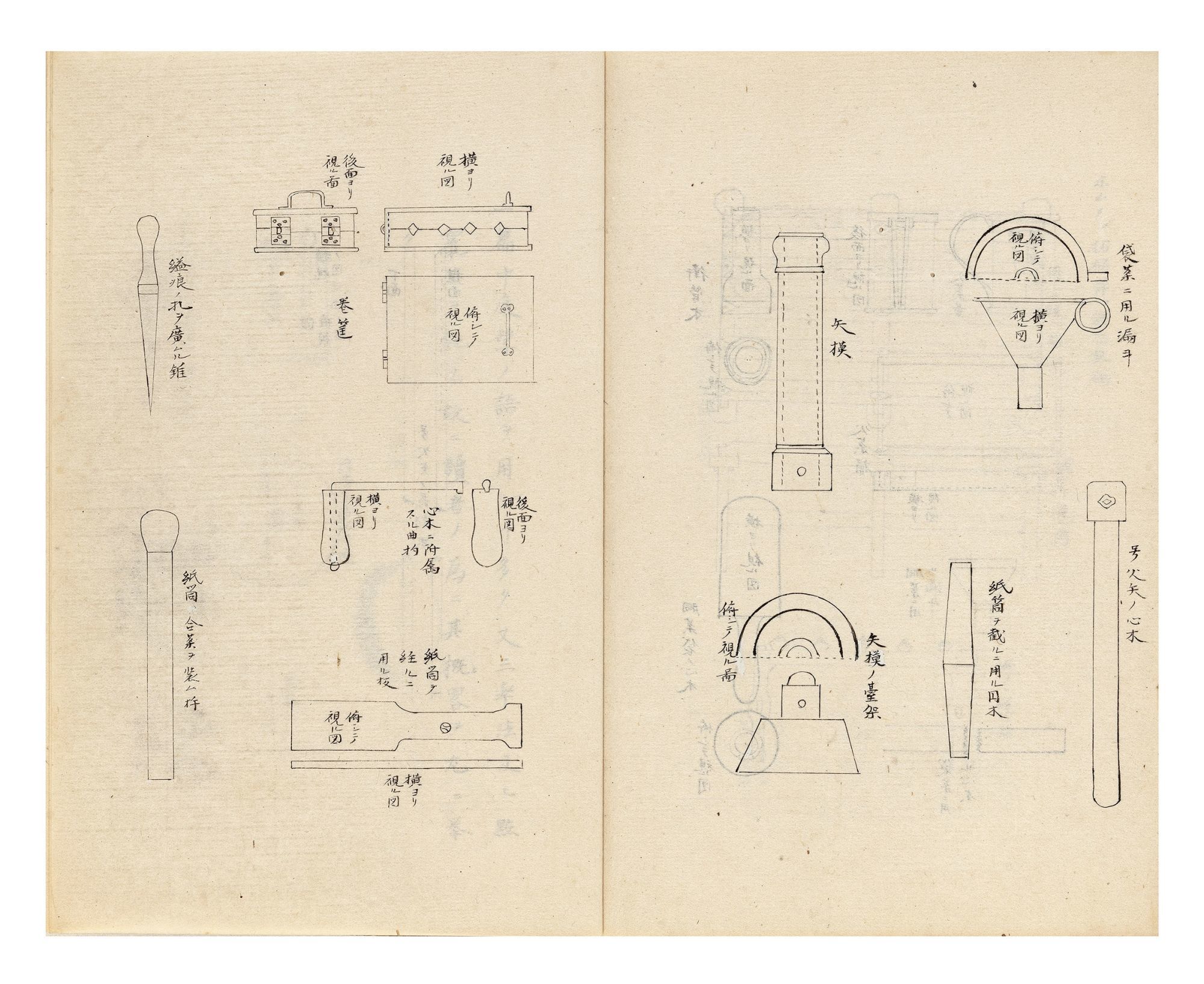
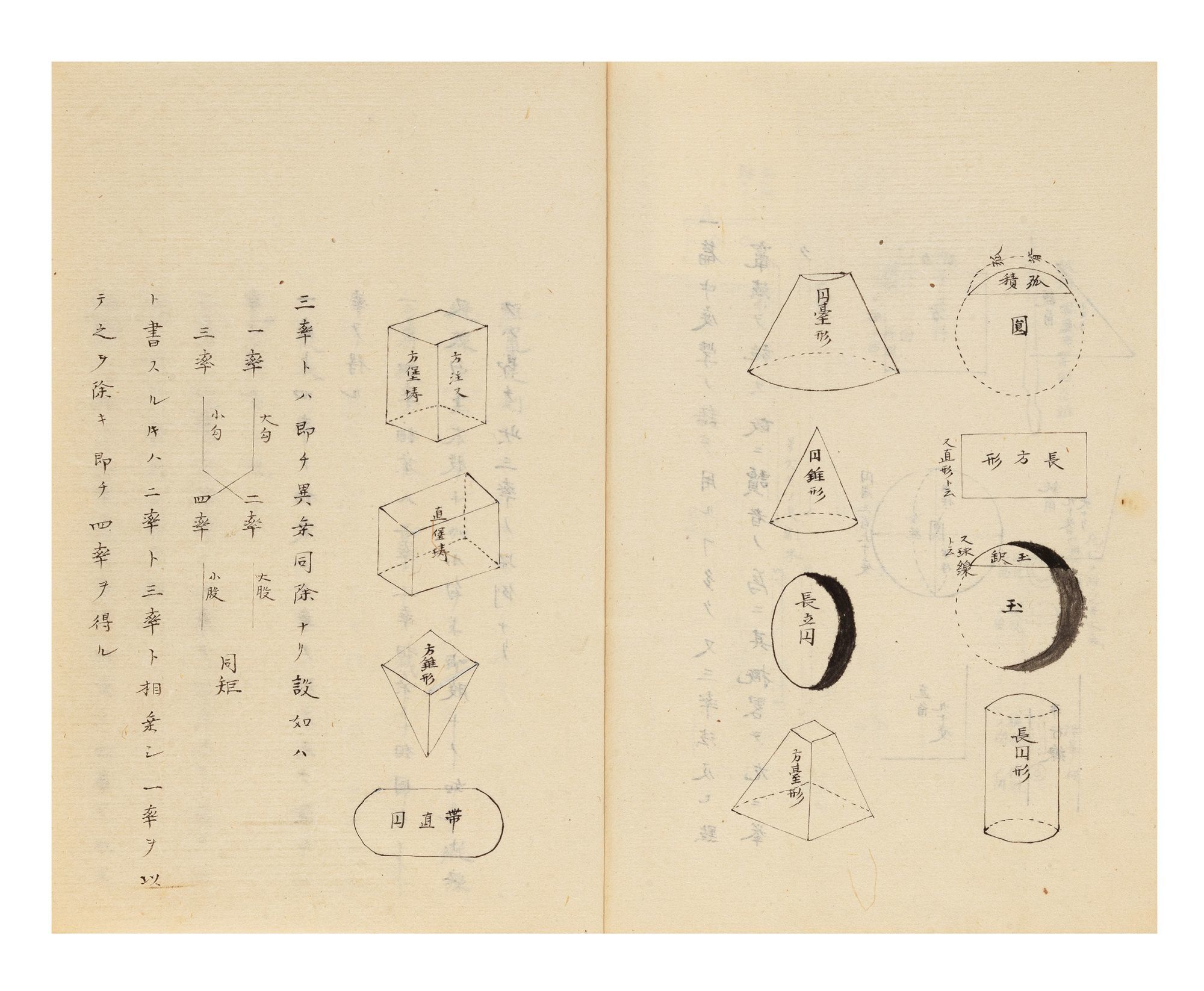
Ten pages of manuscript illus. in the first vol. plus a number of graphs & tables in the text. 724 folding leaves. Eleven parts in 12 vols. 8vo (265 x 185 mm.), orig. semi-stiff wrappers, new stitching. [Japan]: 1847.
The most complete copy known of one of the two Japanese translations of J. N. Calten’s Leiddraad bij het Onderrigt de Zee-Artillerie (Dutch eds.: 1832, 1842, and 1847). In the second quarter of the 19th century, Japan had an urgent need to update its artillery and learn more about the artillery of its international adversaries. Artillery had been used in the warfare that preceded the establishment of the Tokugawa shogunate in the early 17th century, but with the advent of peace, such weaponry had been strictly controlled. In the early 19th century, the European powers became more active in the waters around Japan, seeking access to Japanese ports, and several armed encounters with European ships resulted. The shogunal government sponsored the translation of European works on artillery and ordered new coastal batteries built. As the Dutch were already present in Japan as the only European nation allowed to trade, and a number of Japanese scholars were proficient in Dutch, books in that language, such as Calten’s, were translated first (Éric Seizelet, “La naissance de l’artillerie japonaise moderne à la fin de l’époque d’Edo (1830-1868),” Revue historique, no. 702 [2022]: pp. 319-60).
The first volume contains a glossary of Dutch and Japanese terms, a discussion of weights and measures, illustrations of gunpowder-making tools and concepts of ballistics, and a section on calculating. This introductory volume, containing a grand index, is signed and dated by the translator, Fujii, in 1847.
The first section of the manuscript proper opens with a translation of Calten’s original Preface, dated 1831. A discussion about gunpowder follows. The second section concerns guns and their different kinds (cannon, howitzers, etc.). Other sections cover gun carriages, munitions (solid cannonballs, grapeshot, etc.), tools and other necessities, handguns and rifles, and, crucially, the efficient operation of guns. These sections feature a number of ballistic calculations, graphs, and tables with data for different types of guns. The text ends with a discussion of the defense and attack of coastal positions.
Calten was a captain and professor of military science in the Dutch navy. Fujii (style name Tadashi 質) initially worked at the bakufu’s astronomical bureau in Edo but later returned to Kaga domain in the Chūbu region of Honshu. In 1840, he contributed to the work Eibunkan 英文鑑 [Mirror of the English Language].
This appears to be the most complete surviving copy of this text; NIJL lists a number of manuscripts, and all are far more incomplete. Our set seems to lack sections of Parts 3 and 9.
Calten’s book had been separately translated by Udagawa Yōan 宇田川榕庵 in 1843. Whereas Udagawa’s translation was eventually printed in 1854, Fujii’s remained in manuscript form and was never published.
Fine set, preserved in a chitsu, unimportant and mostly marginal worming, occasionally touching characters.
The most complete copy known of one of the two Japanese translations of J. N. Calten’s Leiddraad bij het Onderrigt de Zee-Artillerie (Dutch eds.: 1832, 1842, and 1847). In the second quarter of the 19th century, Japan had an urgent need to update its artillery and learn more about the artillery of its international adversaries. Artillery had been used in the warfare that preceded the establishment of the Tokugawa shogunate in the early 17th century, but with the advent of peace, such weaponry had been strictly controlled. In the early 19th century, the European powers became more active in the waters around Japan, seeking access to Japanese ports, and several armed encounters with European ships resulted. The shogunal government sponsored the translation of European works on artillery and ordered new coastal batteries built. As the Dutch were already present in Japan as the only European nation allowed to trade, and a number of Japanese scholars were proficient in Dutch, books in that language, such as Calten’s, were translated first (Éric Seizelet, “La naissance de l’artillerie japonaise moderne à la fin de l’époque d’Edo (1830-1868),” Revue historique, no. 702 [2022]: pp. 319-60).
The first volume contains a glossary of Dutch and Japanese terms, a discussion of weights and measures, illustrations of gunpowder-making tools and concepts of ballistics, and a section on calculating. This introductory volume, containing a grand index, is signed and dated by the translator, Fujii, in 1847.
The first section of the manuscript proper opens with a translation of Calten’s original Preface, dated 1831. A discussion about gunpowder follows. The second section concerns guns and their different kinds (cannon, howitzers, etc.). Other sections cover gun carriages, munitions (solid cannonballs, grapeshot, etc.), tools and other necessities, handguns and rifles, and, crucially, the efficient operation of guns. These sections feature a number of ballistic calculations, graphs, and tables with data for different types of guns. The text ends with a discussion of the defense and attack of coastal positions.
Calten was a captain and professor of military science in the Dutch navy. Fujii (style name Tadashi 質) initially worked at the bakufu’s astronomical bureau in Edo but later returned to Kaga domain in the Chūbu region of Honshu. In 1840, he contributed to the work Eibunkan 英文鑑 [Mirror of the English Language].
This appears to be the most complete surviving copy of this text; NIJL lists a number of manuscripts, and all are far more incomplete. Our set seems to lack sections of Parts 3 and 9.
Calten’s book had been separately translated by Udagawa Yōan 宇田川榕庵 in 1843. Whereas Udagawa’s translation was eventually printed in 1854, Fujii’s remained in manuscript form and was never published.
Fine set, preserved in a chitsu, unimportant and mostly marginal worming, occasionally touching characters.
Details
Title
Manuscript on paper, entitled on first leaf of Vol. I: “Hakuhō shinpen” 舶砲新編 [“New Writings on Naval Artillery”]
Author
CALTEN, J.N., author; FUJII, Saburō 藤井三郎, trans
Condition
Unknown