

[MEDICINE - WOMEN PHYSICIANS]. The Laws of Life, with special Reference to the physical Education of Girls
![[MEDICINE - WOMEN PHYSICIANS]. The Laws of Life, w](https://d3525k1ryd2155.cloudfront.net/h/364/879/1607879364.0.x.0.jpg)
- New York: George P. Putnam, 1852
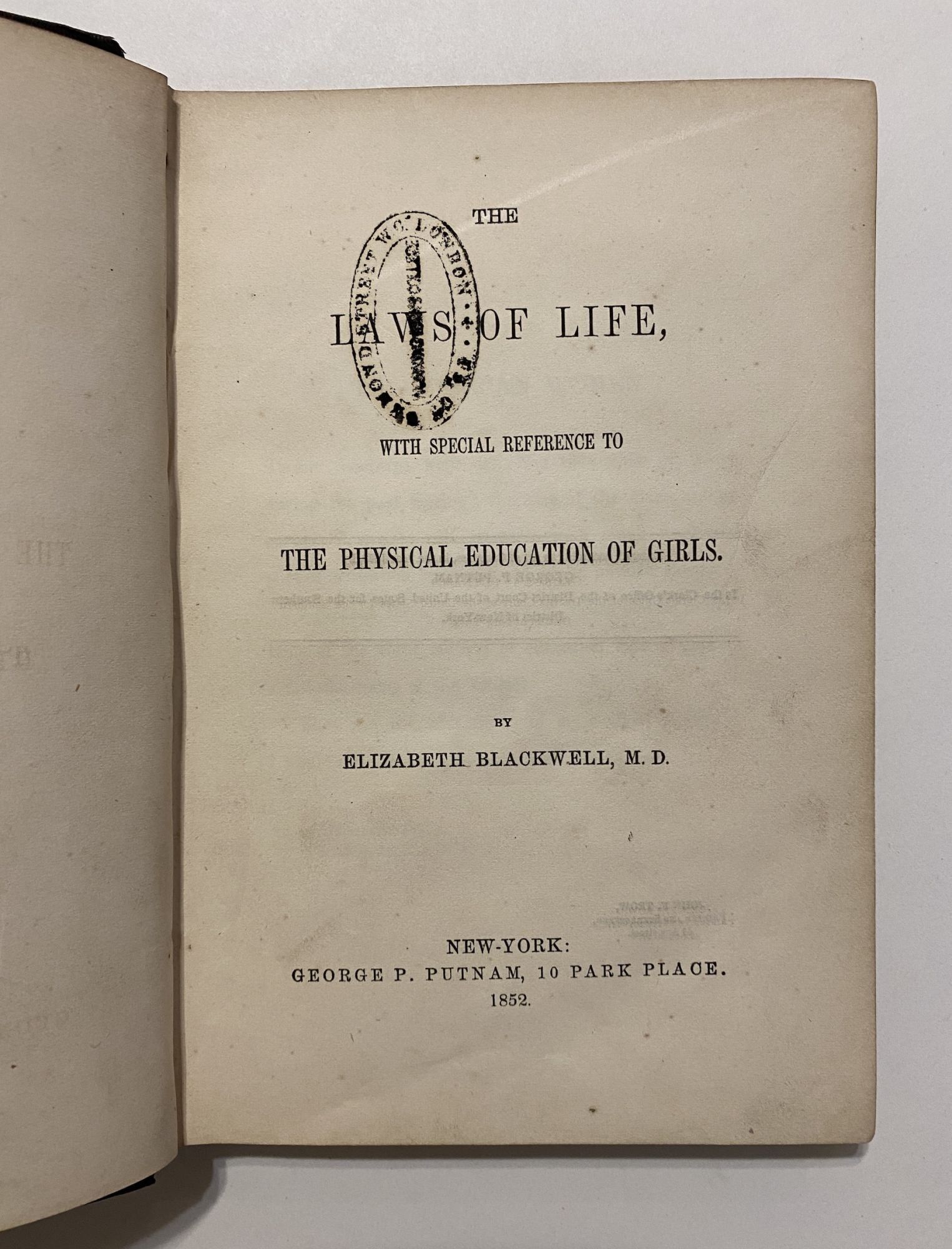
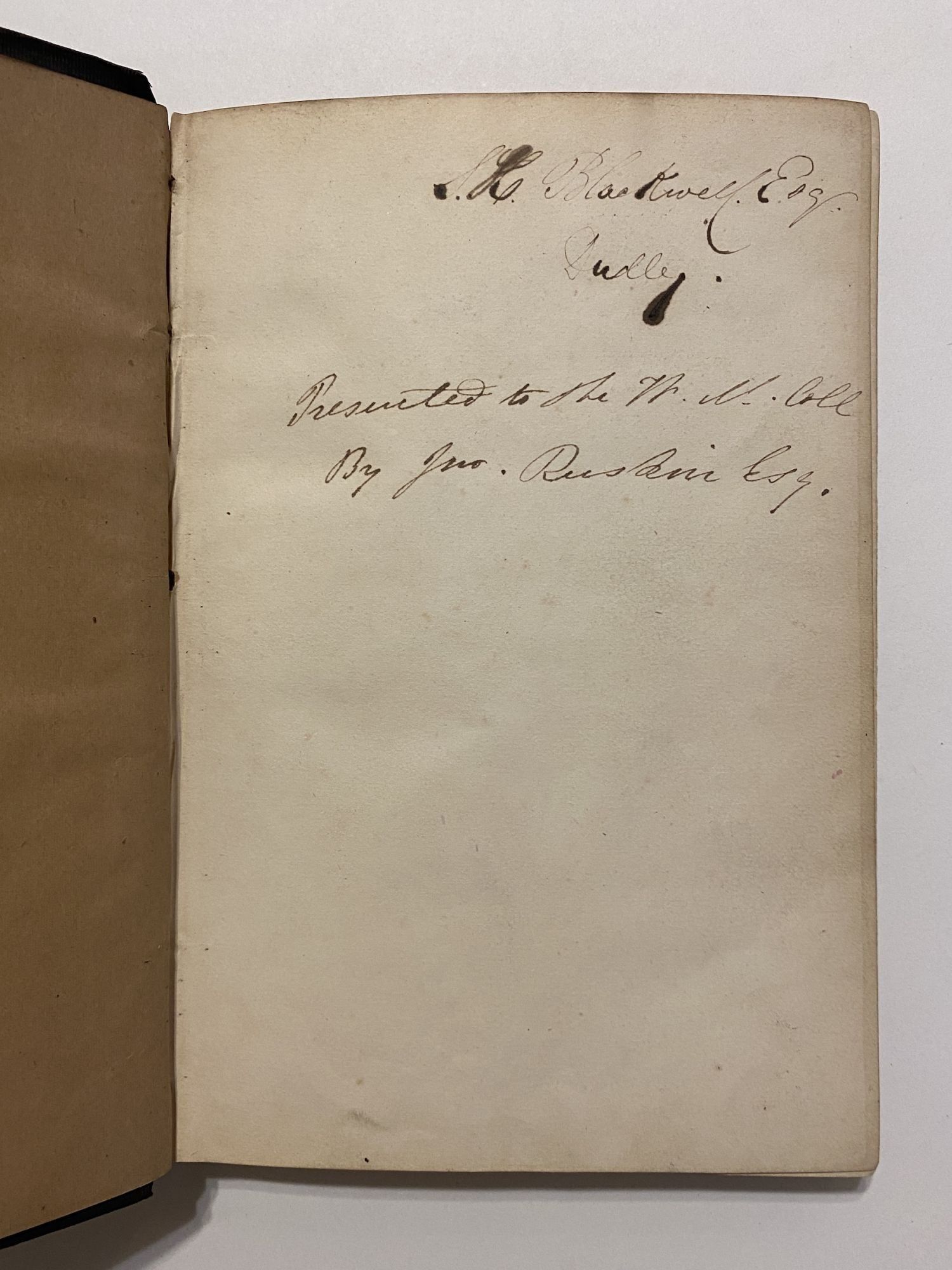
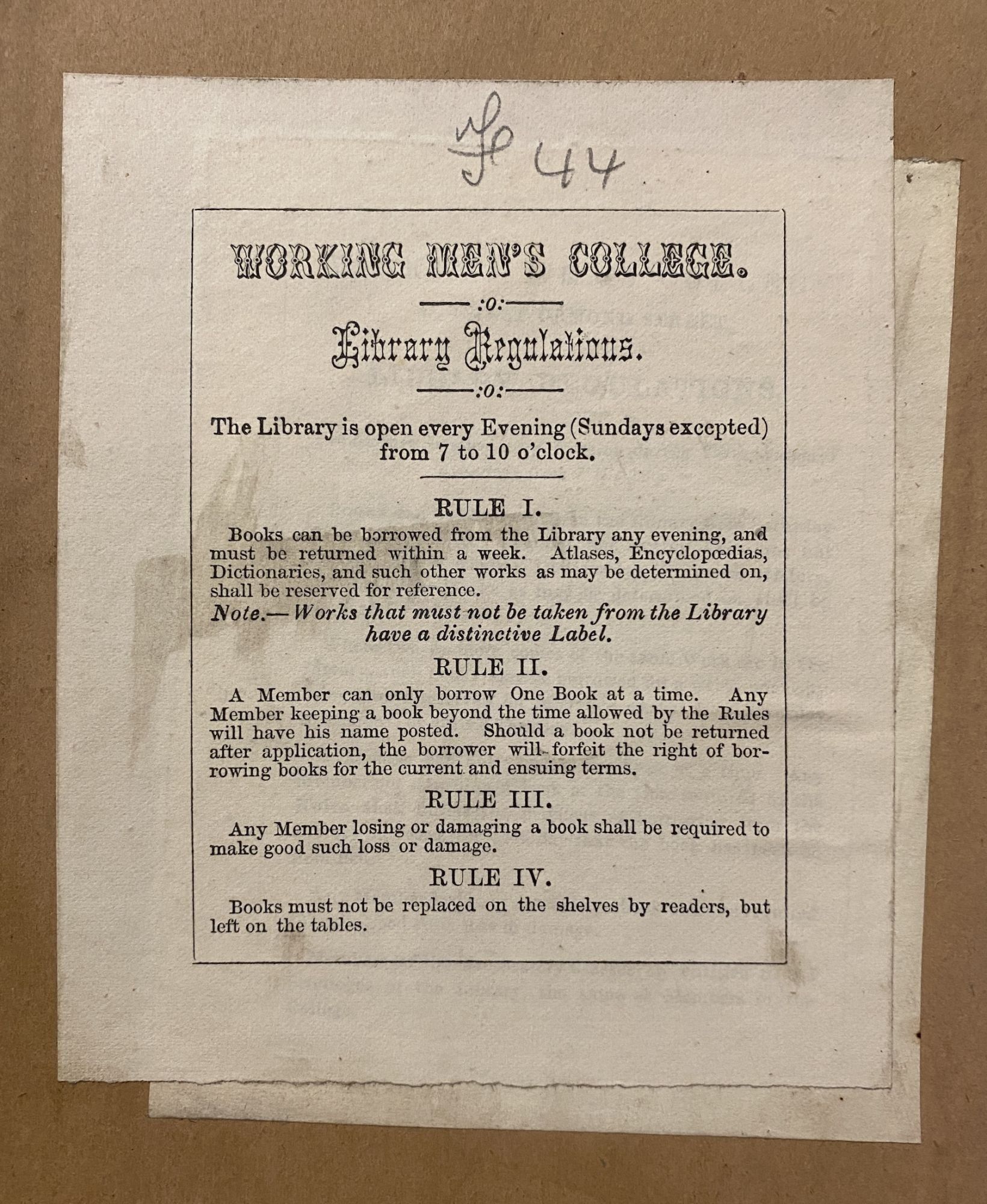
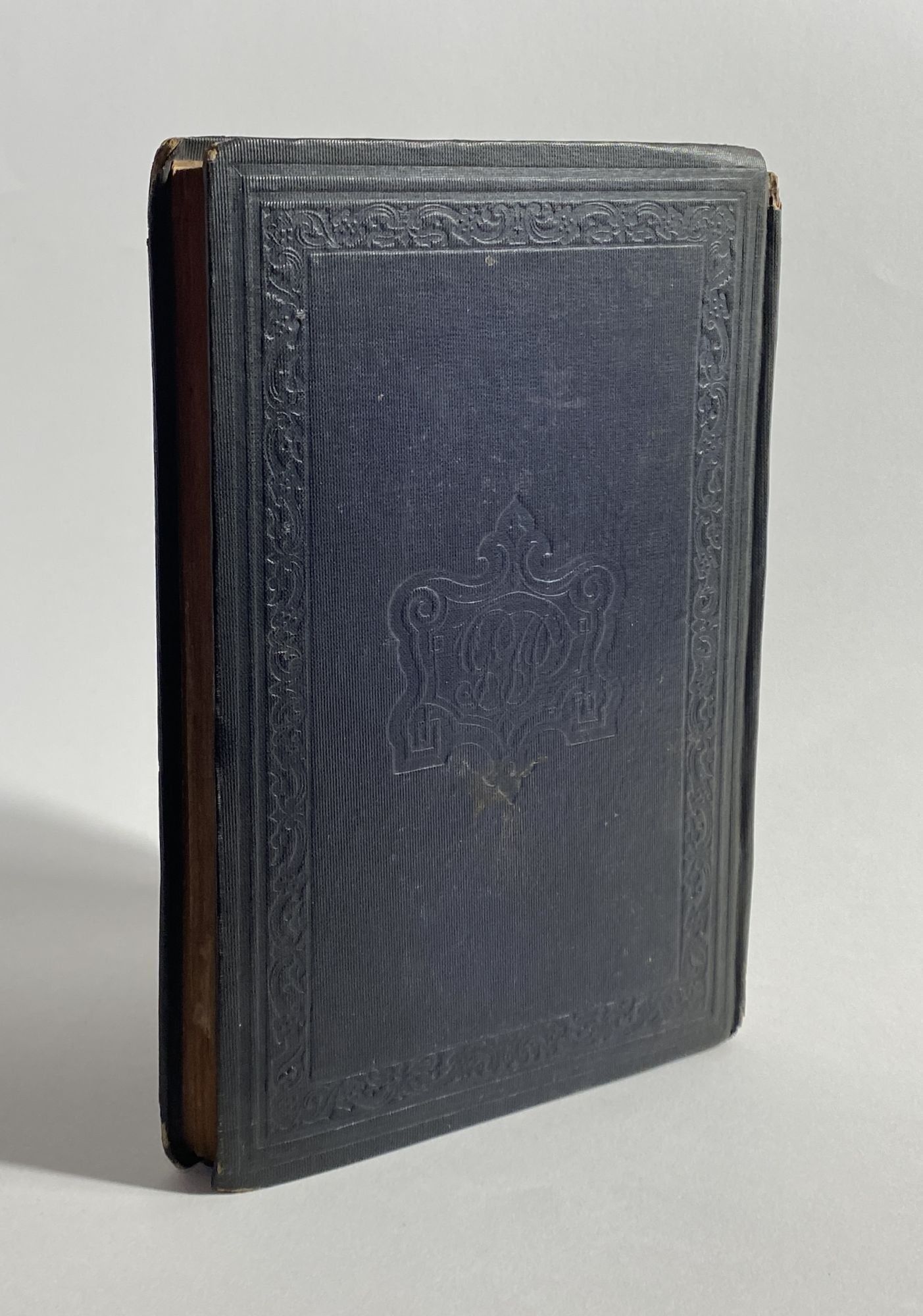
New York: George P. Putnam, 1852. First Edition. Very good. 12mo. 180 pp. (text with usual blemishes and signs of age and use, some top corners at one time folded by one or more readers). Original publisher's black cloth, blocked in blind, spine gilt, pale brown endpapers (corners bumped and worn, endcaps chipped off, binding a little skewed). Early ownership inscriptions in ink on front flyleaf (see below), Working Men's College bookplate with library regulations on front pastedown, corresponding ink stamp on title-page (SEE IMAGES). A very good, unsophisticated copy. THE FIRST PUBLISHED WORK BY ELIZABETH BLACKWELL, M.D. WHO WAS ONE OF THE MOST INSPIRING AND MOST INFLUENTIAL PHYSICIANS OF THE NINETEENTH CENTURY.
Blackwell (1821-1910) received international attention in 1849 when she earned her degree at Geneva Medical College, thereby becoming the first woman to obtain a medical degree in the United States. At that time women were banned from studying medicine at all American medical schools, and it was only by a fluke that she was admitted to Geneva. Believing that her application for admittance was nothing more than a practical joke, all 150 male students voted to approve her application. Whereas she was duly accepted by the college, for the next three years she faced considerable discrimination and obstacles, such as being forced to sit separately at lectures and often excluded from labs. Nonetheless, she graduated first in her class. Her thesis was on typhoid fever and raised questions about medicine and social and economic justice. Another first: during a trip to England in 1859 she was entered in the medical register of the British General Medical Council, thereby becoming the first woman to do so.
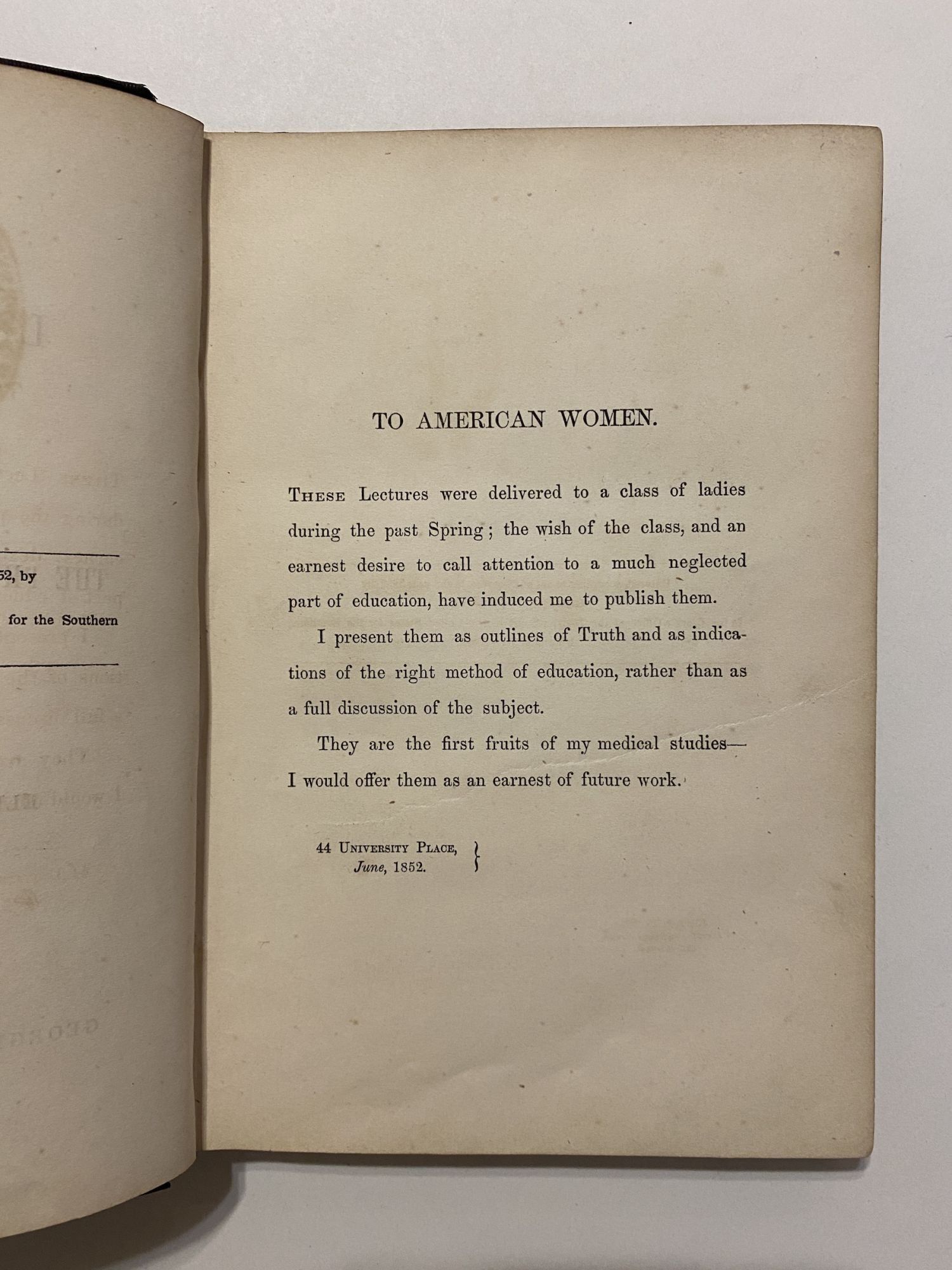
"The Laws of Life" is her first published book and consists of lectures delivered to "a class of ladies" as we learn from her Dedication to American Women (p. [5]). The text drew upon her clinical work in London, Paris, and New York City. Blackwell presents the contents of the book as "outlines of Truth and as indications of the right method of education [for women]." She calls attention to the dearth of advanced medical training by and for women, and assails the long-standing position of most male doctors that medical issues afflicting women was simply due to their so-called "nervous diseases." Blackwell champions both moral and physical exercise for women and children; concerning the development of the latter, she condemns the "wretched" educational system of "cramming" for studies which necessitated long hours of standing at a desk. Blackwell is careful not to blame schoolteachers (at this time nearly four out of five schoolteachers were women) but the evil of the educational system itself. For increasing and maintaining the health of girls and women, she emphasizes physical fitness, a healthy diet, and social and domestic stability -- all challenging concepts in her day.
In 1851 Blackwell opened a small clinic in New York City to treat impoverished women, but discrimination against female physicians meant few patients. Six years later, in 1857, she opened the New York Infirmary for Indigent Women and Children; its mission included providing training for women physicians (this institution still exists at the NYU Downtown Hospital). Since the women who trained in her Infirmary were not allowed to gain admissions to the male medical colleges, Blackwell opened her own medical college in 1868. She returned to London in 1875 and became a professor of gynecology at the newly established London School of Medicine for Women. Her autobiography " Pioneer Work in Opening the Medical Profession to Women" was published in 1895.
"She had battled all her life and her successes had been monumental. She had won the enthusiastic support of some prominent medical figures -- and the grudging acceptance of women into medicine. In 1881, there were only 25 female doctors registered in England and Wales but by 1911 there were 495 registered." (SOURCE: University of Bristol, Elizabeth Blackwell Institute of Health Research, online).
PROVENANCE:
1. Inscribed by Dr. Blackwell's first cousin, Samuel Holden Blackwell (1816-1868) of Dudley, Worcestershire, a geologist and owner of several ironworks.
2. JOHN RUSKIN, presented by him to the Working Men's College in November 1858 as is documented in the London Metropolitan Archives (LMA/4535/F/03/01/001 "The Earliest Library Catalogue"). Ruskin was an early proponent of the Christian socialist Working Men's College in London, founded in 1854; he gave regular classes there in its first years (and many books, including this one), and it was through teaching at the College that he met several friends and collaborators, among them Sir Edward Burne-Jones.
Cushing B421.
Blackwell (1821-1910) received international attention in 1849 when she earned her degree at Geneva Medical College, thereby becoming the first woman to obtain a medical degree in the United States. At that time women were banned from studying medicine at all American medical schools, and it was only by a fluke that she was admitted to Geneva. Believing that her application for admittance was nothing more than a practical joke, all 150 male students voted to approve her application. Whereas she was duly accepted by the college, for the next three years she faced considerable discrimination and obstacles, such as being forced to sit separately at lectures and often excluded from labs. Nonetheless, she graduated first in her class. Her thesis was on typhoid fever and raised questions about medicine and social and economic justice. Another first: during a trip to England in 1859 she was entered in the medical register of the British General Medical Council, thereby becoming the first woman to do so.
"The Laws of Life" is her first published book and consists of lectures delivered to "a class of ladies" as we learn from her Dedication to American Women (p. [5]). The text drew upon her clinical work in London, Paris, and New York City. Blackwell presents the contents of the book as "outlines of Truth and as indications of the right method of education [for women]." She calls attention to the dearth of advanced medical training by and for women, and assails the long-standing position of most male doctors that medical issues afflicting women was simply due to their so-called "nervous diseases." Blackwell champions both moral and physical exercise for women and children; concerning the development of the latter, she condemns the "wretched" educational system of "cramming" for studies which necessitated long hours of standing at a desk. Blackwell is careful not to blame schoolteachers (at this time nearly four out of five schoolteachers were women) but the evil of the educational system itself. For increasing and maintaining the health of girls and women, she emphasizes physical fitness, a healthy diet, and social and domestic stability -- all challenging concepts in her day.
In 1851 Blackwell opened a small clinic in New York City to treat impoverished women, but discrimination against female physicians meant few patients. Six years later, in 1857, she opened the New York Infirmary for Indigent Women and Children; its mission included providing training for women physicians (this institution still exists at the NYU Downtown Hospital). Since the women who trained in her Infirmary were not allowed to gain admissions to the male medical colleges, Blackwell opened her own medical college in 1868. She returned to London in 1875 and became a professor of gynecology at the newly established London School of Medicine for Women. Her autobiography " Pioneer Work in Opening the Medical Profession to Women" was published in 1895.
"She had battled all her life and her successes had been monumental. She had won the enthusiastic support of some prominent medical figures -- and the grudging acceptance of women into medicine. In 1881, there were only 25 female doctors registered in England and Wales but by 1911 there were 495 registered." (SOURCE: University of Bristol, Elizabeth Blackwell Institute of Health Research, online).
PROVENANCE:
1. Inscribed by Dr. Blackwell's first cousin, Samuel Holden Blackwell (1816-1868) of Dudley, Worcestershire, a geologist and owner of several ironworks.
2. JOHN RUSKIN, presented by him to the Working Men's College in November 1858 as is documented in the London Metropolitan Archives (LMA/4535/F/03/01/001 "The Earliest Library Catalogue"). Ruskin was an early proponent of the Christian socialist Working Men's College in London, founded in 1854; he gave regular classes there in its first years (and many books, including this one), and it was through teaching at the College that he met several friends and collaborators, among them Sir Edward Burne-Jones.
Cushing B421.
Details
Title
[MEDICINE - WOMEN PHYSICIANS]. The Laws of Life, with special Reference to the physical Education of Girls
Author
Blackwell, Dr. Elizabeth
Condition
Very Good
Publisher
George P. Putnam: New York
Date
1852
Edition
First Edition