

[THOMAS JOHNSON, SCOTTISH PRINTER IN THE HAGUE]. Sammelband of four English Restoration Plays
![[THOMAS JOHNSON, SCOTTISH PRINTER IN THE HAGUE]. S](https://d3525k1ryd2155.cloudfront.net/h/377/879/1607879377.0.x.0.jpg)
- London [i.e. The Hague]: Printed for the Company (i.e. Thomas Johnson), 1720
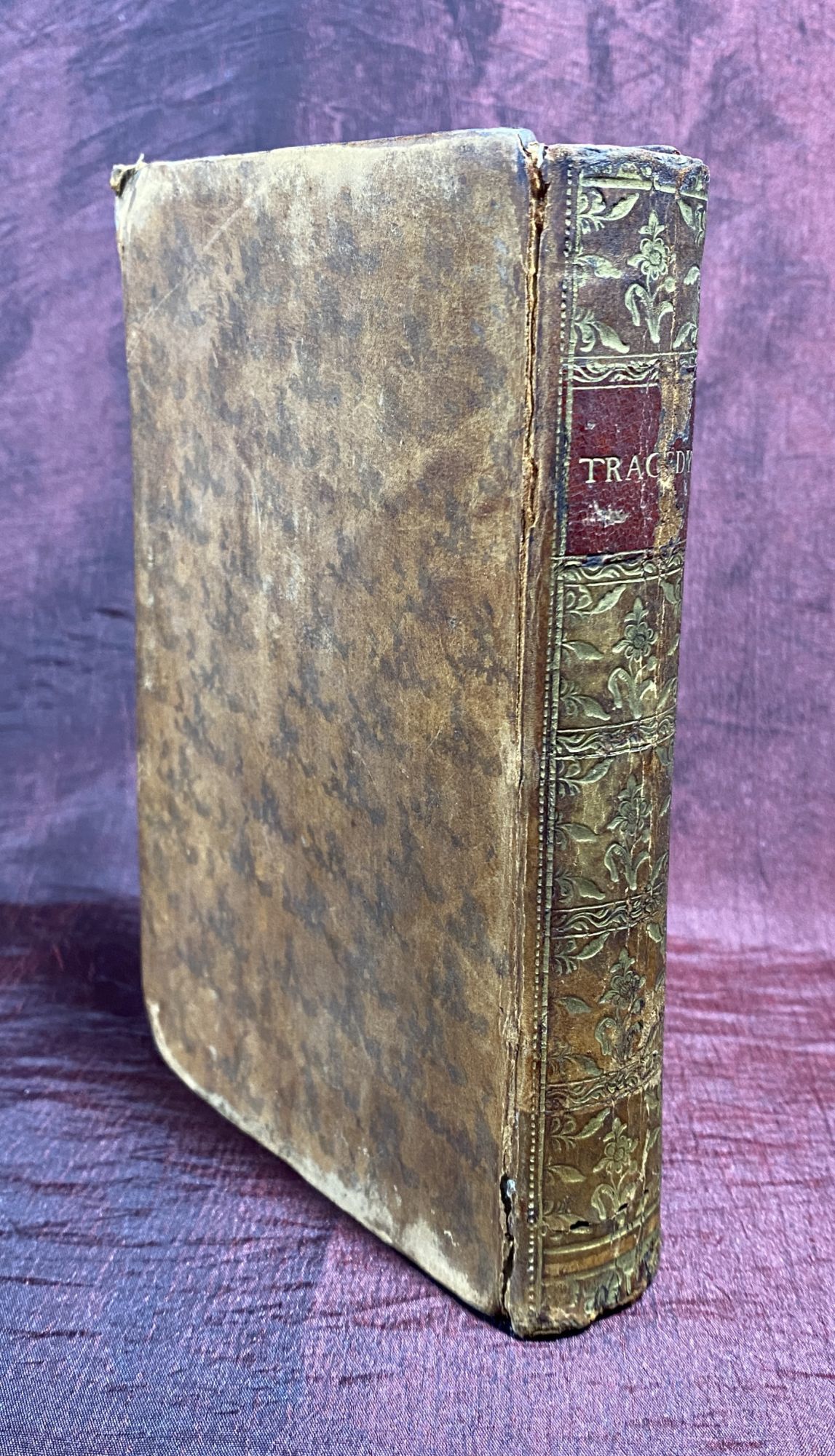
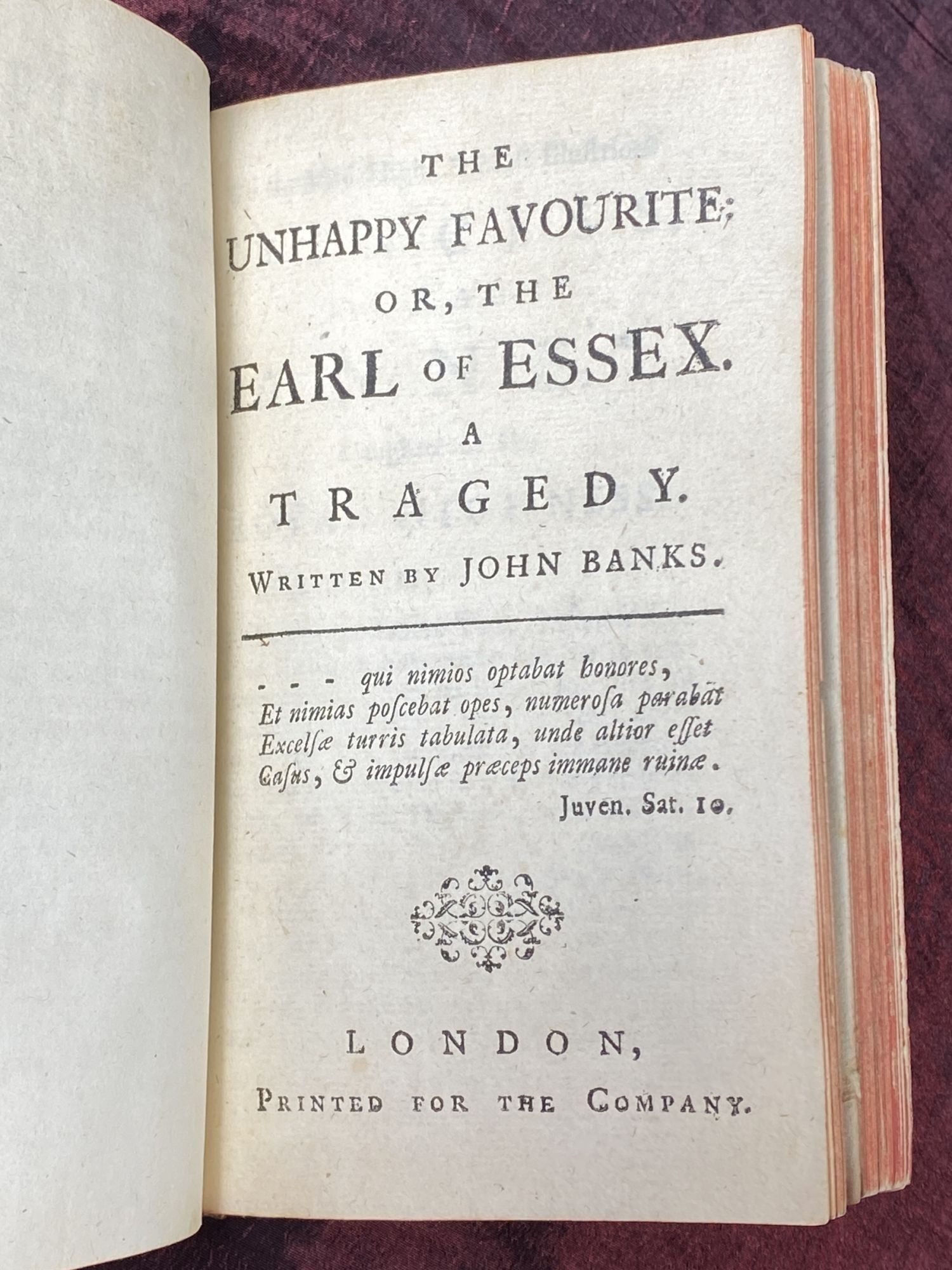
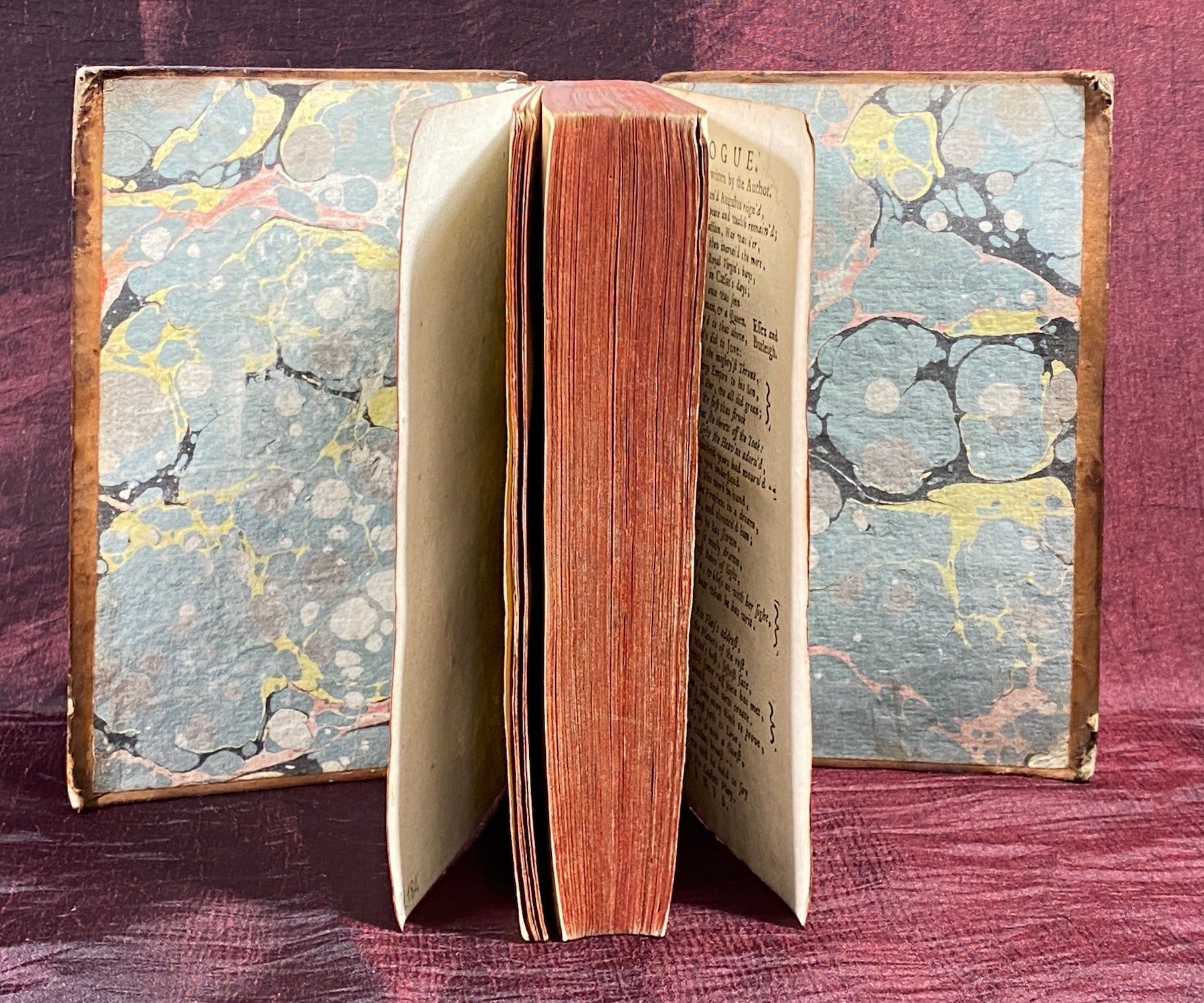
London [i.e. The Hague]: Printed for the Company (i.e. Thomas Johnson), 1720. Good. 8vo. Contemporary (Dutch?) marbled calf, smooth spine gilt in six compartments, red lettering piece "Tragedy" (chipped) in the second (binding worn, significantly at the foot and corners, headcap missing); marbled endpapers, red edges. CLANDESTINELY PUBLISHED BY THE KEY FIGURE IN THE SCOTTISH-DUTCH BOOKTRADE OF THE EARLY 18TH CENTURY.
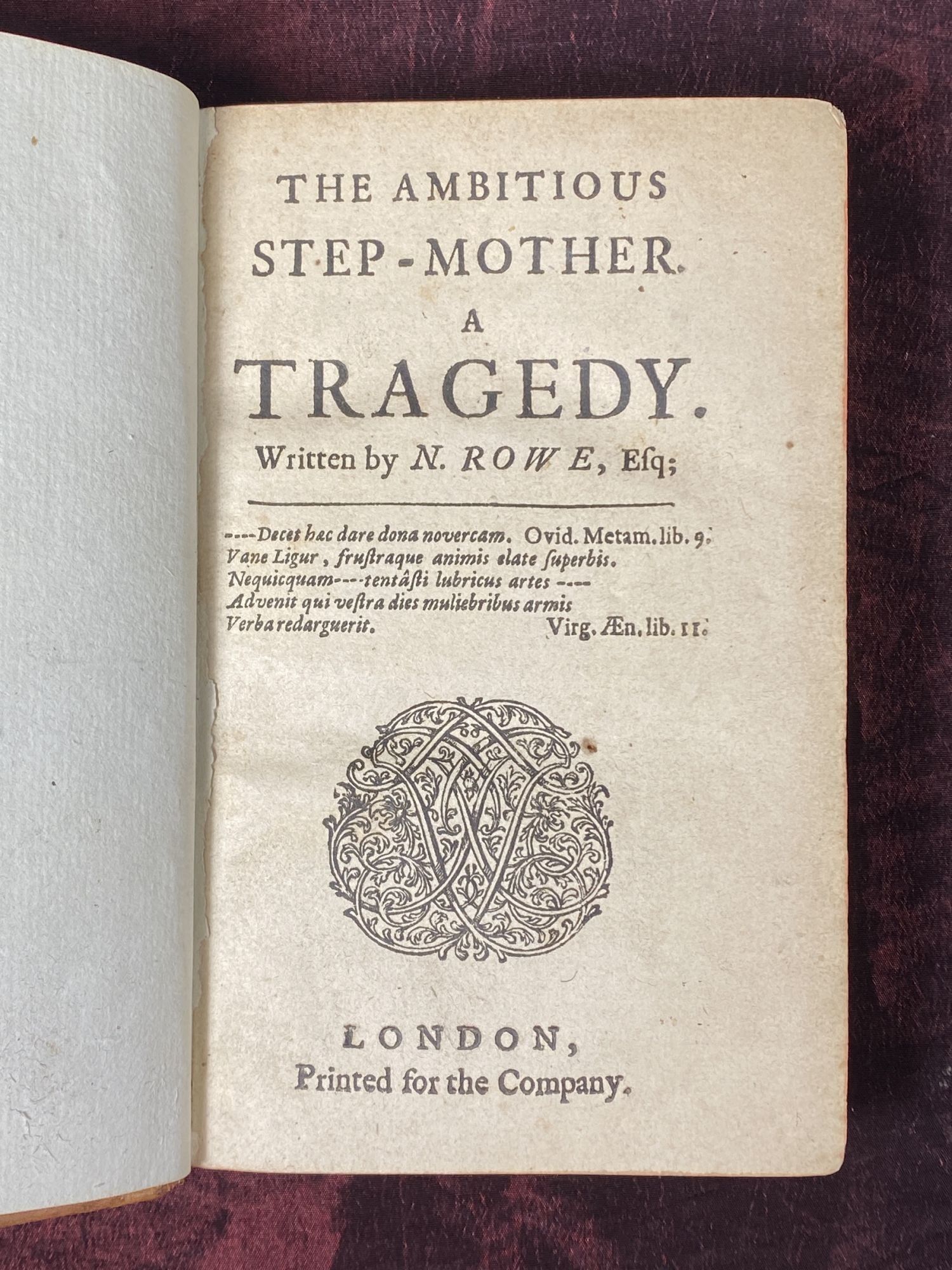
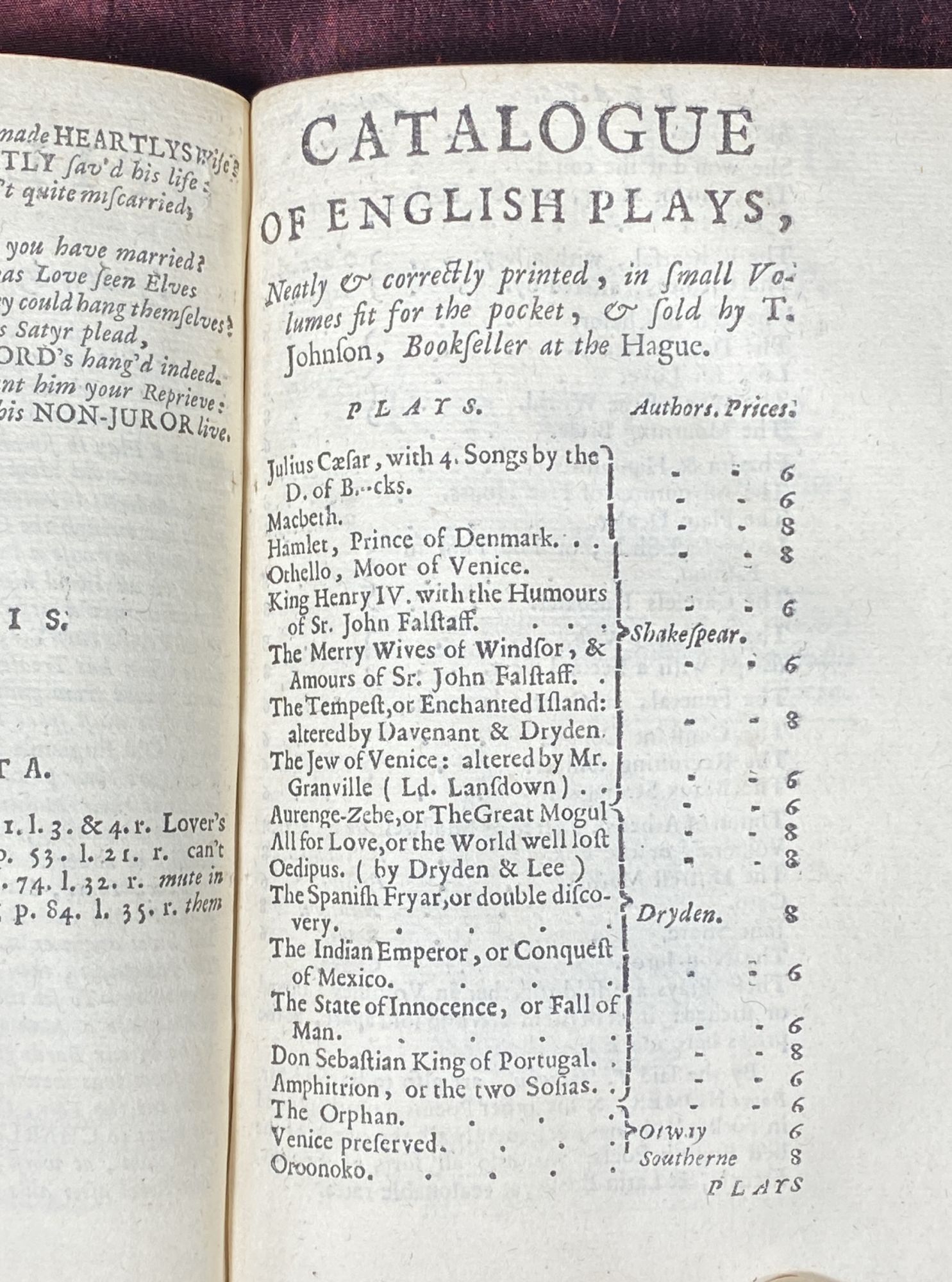
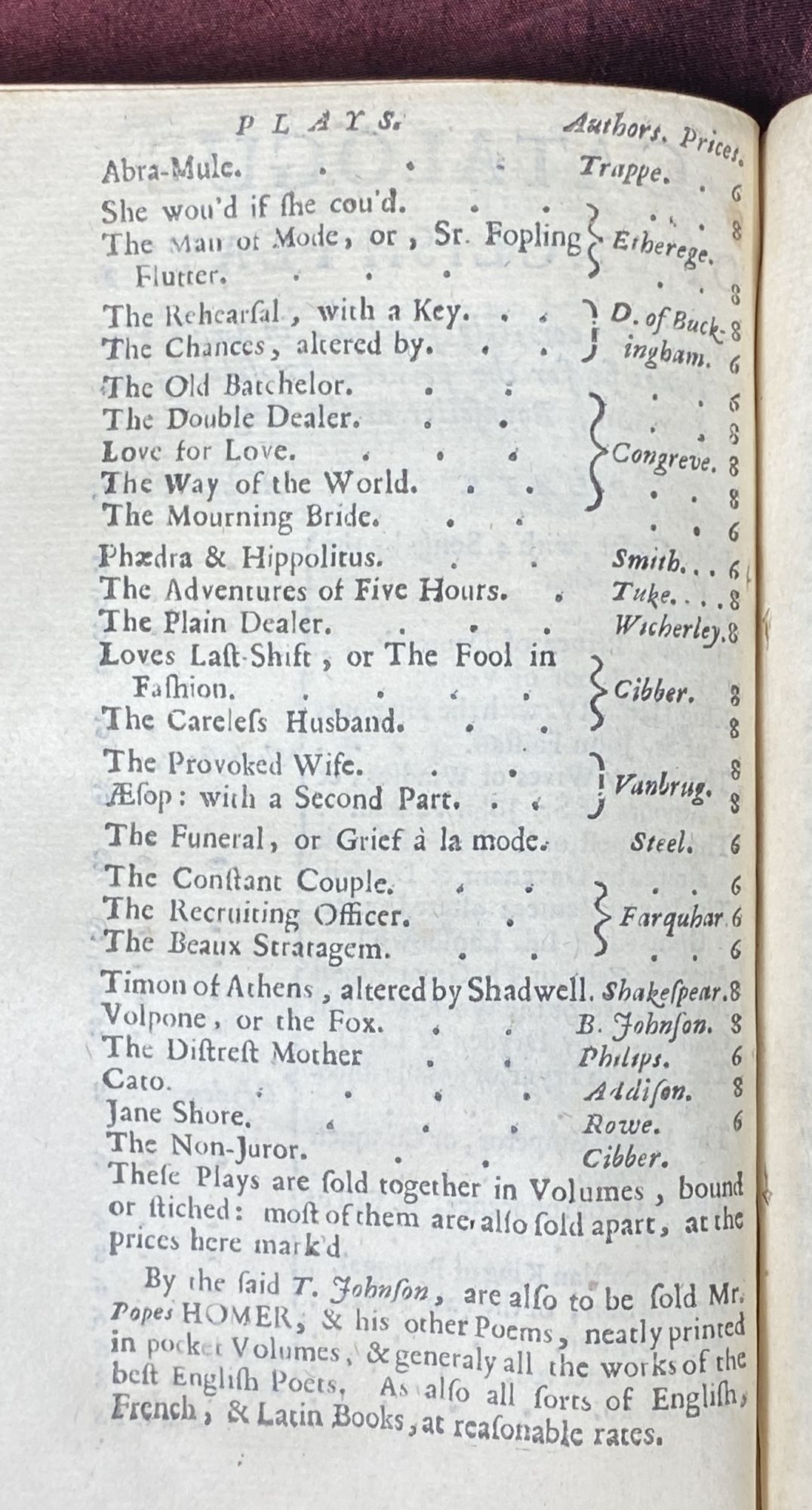
Excellent Sammelband of four English Restoration plays (three tragedies and one comedy). All imprints are ficticious: the present volume was published -- and probably compiled -- by Thomas Johnson (ca. 1677-1735), a Scotsman who was active as a bookseller in The Hague from 1701 to 1728; he then went to Rotterdam where he was active until his death. With Alexander Cunningham, Johnson was the most significant agent of the Scottish Dutch book trade at that time. Johnson created and exploited Anglo-Dutch communications and retail networks, and in doing so became one of the foremost publishers in The Netherlands during the Enlightenment, Scottish or otherwise.
"Johnson was probably born in 1677 in Edinburgh and he arrived in the United Provinces around 1700. It is not known what motivated him to move, and there is no indication that he intended to become a bookseller. He was probably simply attracted by the significant Scottish presence in the United Provinces, their economic successes and the tolerant Dutch climate. Soon after his arrival, he established himself as a bookseller in The Hague after a brief cooperation with the French publisher Jonas l'Honore." (SOURCE: Esther Mijers, 'News from the Republick of Letters': Scottish Students, Charles Mackie and the United Provinces, 1650-1750" pp. 135-137).
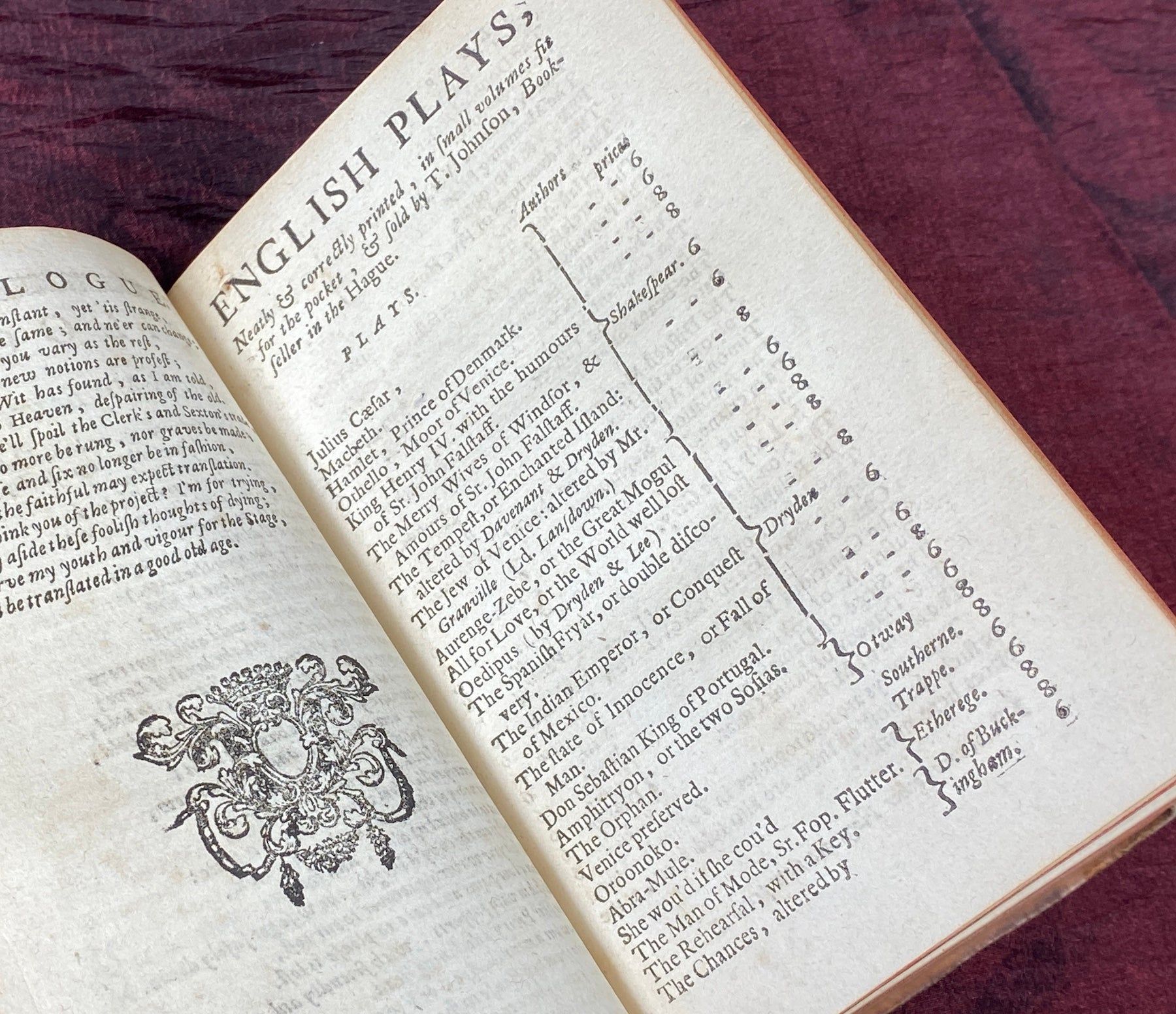
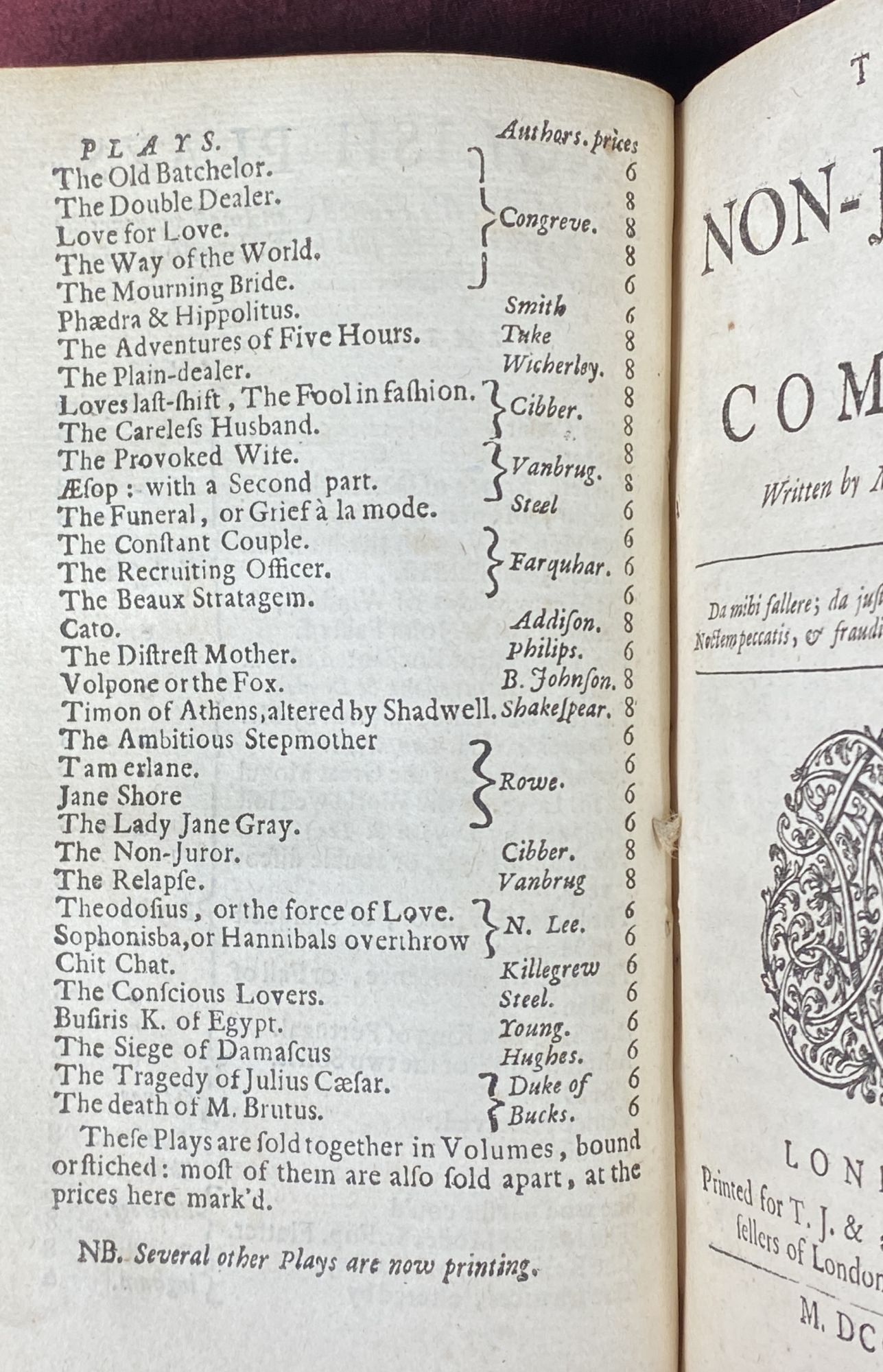
"Johnson brought out upwards of 60 English plays, Pope's 'Works' and translation of the 'Iliad,' and a number of other titles in the 1710s and 1720s. He did not own the rights to any of them. In the Netherlands, that was not a problem; indeed, he was providing a valuable service for expatriates. But in Britain, Johnson's books were illegal and so had to be smuggled in, sometimes bearing false imprints" (as here). SOURCE: Allington et al., The Book in Britain: A Historical Introduction (2019), pp. 202-203.
CONTENTS OF THE SAMMELBAND:
1. Rowe, N[Icholas]. The Ambitious Step-Mother. A Tragedy. London [i.e., The Hague], printed for the Company [of, booksellers, Thomas Johnson], [1715]. 92, (4) pp. Early edition of the first work by Nicholas Rowe (1674-1718), first performed in 1700 and published in 1702.
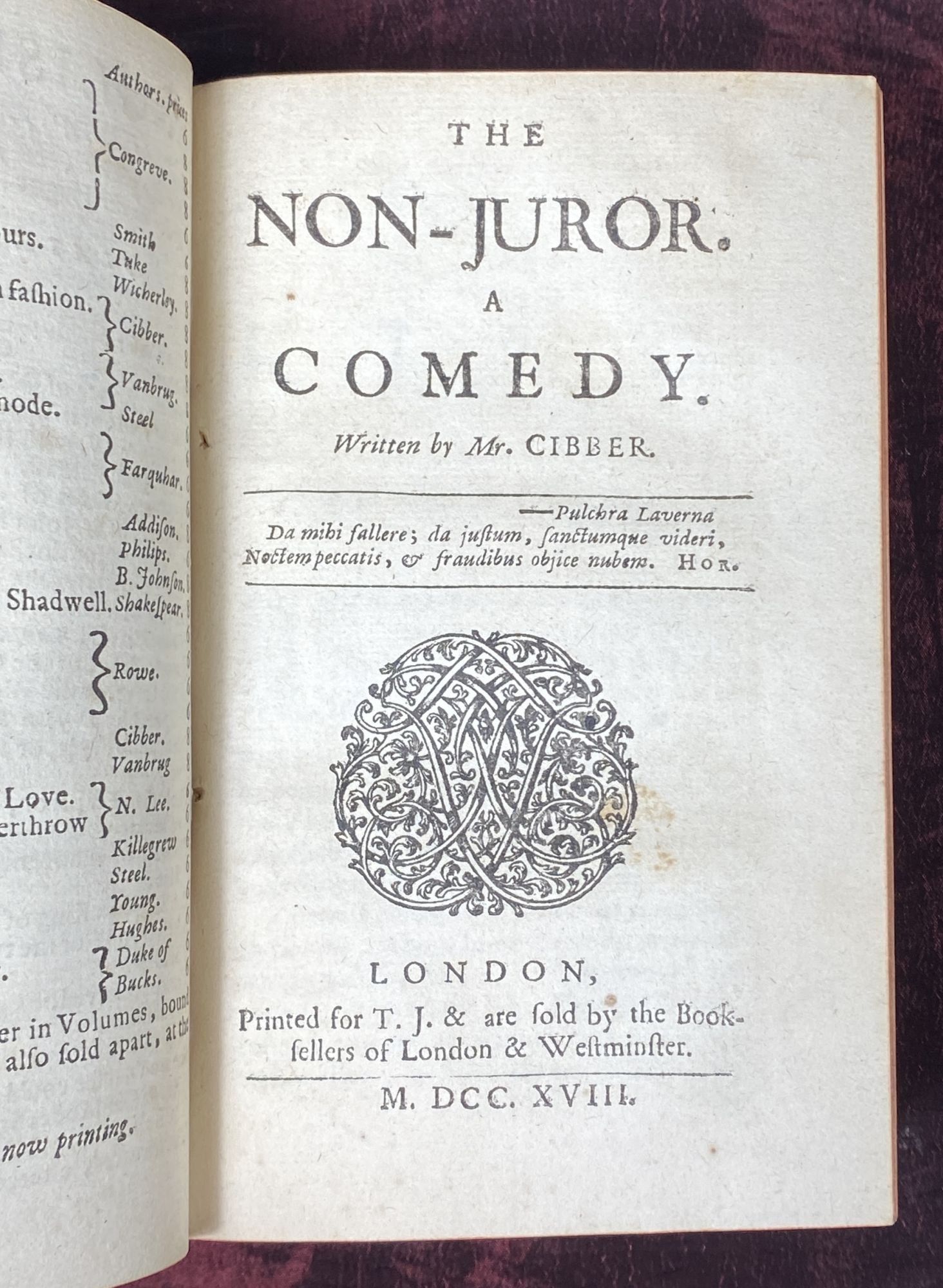
2. Cibber, [Colley]. The Non-Juror. A Comedy. London [i.e., The Hague], printed for T[homas] J[ohnson] & are sold by the Booksellers of London & Westminster, 1718. 110, (2) pp. One of several editions in the year of the first publication. Cibber's Whig-inspired version of Moli re's "Tartuffe" (with a caustic foreword by Nicholas Rowe) was dedicated to King George I, who rewarded the author with 200 guineas and made him Poet Laureate in 1730.
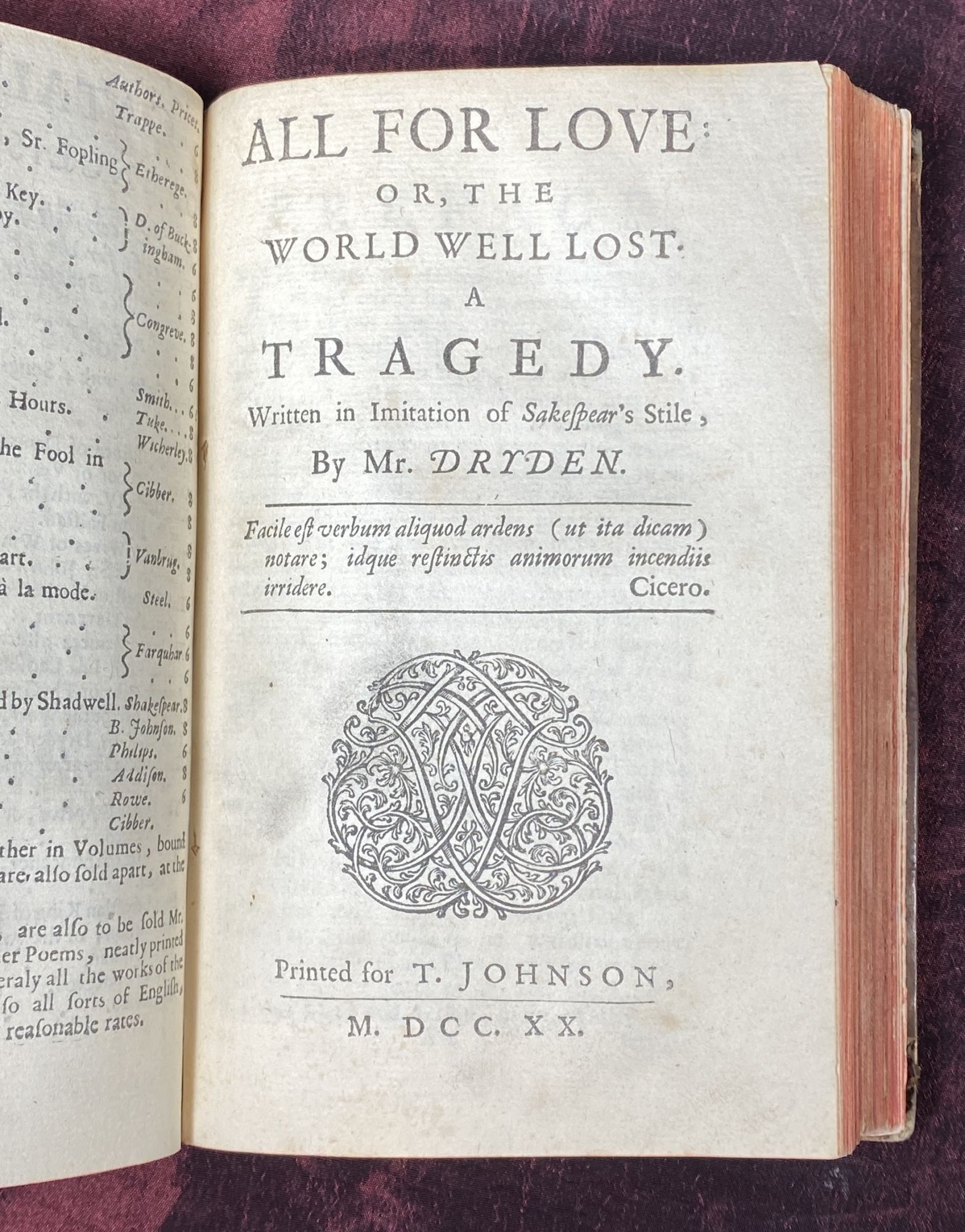
3: Dryden, [John]. All for Love: or, The World Well Lost. A Tragedy. Written in Imitation of Sakespear's [sic] Stile. [The Hague], printed for T. Johnson, 1720. 101, (1) pp., final blank leaf. Later edition of Dryden's tragedy in blank verse (first published in 1678), written in imitation of Shakespeare's "Antony and Cleopatra" and probably still his most frequently performed play.
4. Banks, John. The Unhappy Favourite: or, The Earl of Essex. A Tragedy. London [i.e., The Hague], printed for the Company [of booksellers; Thomas Johnson], [1711 or 1730?]. 85, (3) pp. (final page -- a blank -- pasted onto flyleaf). Later edition of Banks's first dramatic success, "The Unhappy Favourite", a tragedy in blank verse first shown in 1682. John Dryden contributed the Prologue and Epilogue.
Literature: Emil Rybczak, "Thomas Johnson: the publisher as an agent of Enlightenment" in: Dutch Crossing: Journal of Low Country Studies (online, accessed 5/2020). See also: B.J. McMullin, "T. Johnson, Bookseller in The Hague" in: An Index of Civilization: Studies of Printing and Publishing History in Honour of Keith Maslen (1993) pp. 99-112.
Excellent Sammelband of four English Restoration plays (three tragedies and one comedy). All imprints are ficticious: the present volume was published -- and probably compiled -- by Thomas Johnson (ca. 1677-1735), a Scotsman who was active as a bookseller in The Hague from 1701 to 1728; he then went to Rotterdam where he was active until his death. With Alexander Cunningham, Johnson was the most significant agent of the Scottish Dutch book trade at that time. Johnson created and exploited Anglo-Dutch communications and retail networks, and in doing so became one of the foremost publishers in The Netherlands during the Enlightenment, Scottish or otherwise.
"Johnson was probably born in 1677 in Edinburgh and he arrived in the United Provinces around 1700. It is not known what motivated him to move, and there is no indication that he intended to become a bookseller. He was probably simply attracted by the significant Scottish presence in the United Provinces, their economic successes and the tolerant Dutch climate. Soon after his arrival, he established himself as a bookseller in The Hague after a brief cooperation with the French publisher Jonas l'Honore." (SOURCE: Esther Mijers, 'News from the Republick of Letters': Scottish Students, Charles Mackie and the United Provinces, 1650-1750" pp. 135-137).
"Johnson brought out upwards of 60 English plays, Pope's 'Works' and translation of the 'Iliad,' and a number of other titles in the 1710s and 1720s. He did not own the rights to any of them. In the Netherlands, that was not a problem; indeed, he was providing a valuable service for expatriates. But in Britain, Johnson's books were illegal and so had to be smuggled in, sometimes bearing false imprints" (as here). SOURCE: Allington et al., The Book in Britain: A Historical Introduction (2019), pp. 202-203.
CONTENTS OF THE SAMMELBAND:
1. Rowe, N[Icholas]. The Ambitious Step-Mother. A Tragedy. London [i.e., The Hague], printed for the Company [of, booksellers, Thomas Johnson], [1715]. 92, (4) pp. Early edition of the first work by Nicholas Rowe (1674-1718), first performed in 1700 and published in 1702.
2. Cibber, [Colley]. The Non-Juror. A Comedy. London [i.e., The Hague], printed for T[homas] J[ohnson] & are sold by the Booksellers of London & Westminster, 1718. 110, (2) pp. One of several editions in the year of the first publication. Cibber's Whig-inspired version of Moli re's "Tartuffe" (with a caustic foreword by Nicholas Rowe) was dedicated to King George I, who rewarded the author with 200 guineas and made him Poet Laureate in 1730.
3: Dryden, [John]. All for Love: or, The World Well Lost. A Tragedy. Written in Imitation of Sakespear's [sic] Stile. [The Hague], printed for T. Johnson, 1720. 101, (1) pp., final blank leaf. Later edition of Dryden's tragedy in blank verse (first published in 1678), written in imitation of Shakespeare's "Antony and Cleopatra" and probably still his most frequently performed play.
4. Banks, John. The Unhappy Favourite: or, The Earl of Essex. A Tragedy. London [i.e., The Hague], printed for the Company [of booksellers; Thomas Johnson], [1711 or 1730?]. 85, (3) pp. (final page -- a blank -- pasted onto flyleaf). Later edition of Banks's first dramatic success, "The Unhappy Favourite", a tragedy in blank verse first shown in 1682. John Dryden contributed the Prologue and Epilogue.
Literature: Emil Rybczak, "Thomas Johnson: the publisher as an agent of Enlightenment" in: Dutch Crossing: Journal of Low Country Studies (online, accessed 5/2020). See also: B.J. McMullin, "T. Johnson, Bookseller in The Hague" in: An Index of Civilization: Studies of Printing and Publishing History in Honour of Keith Maslen (1993) pp. 99-112.
Details
Title
[THOMAS JOHNSON, SCOTTISH PRINTER IN THE HAGUE]. Sammelband of four English Restoration Plays
Author
[Various authors]
Condition
Good
Publisher
Printed for the Company (i.e. Thomas Johnson): London [i.e. The Hague]
Date
1720