

American Flag Iconography and Late 19th and Early 20th cent. Popular Music
- United States , 1940
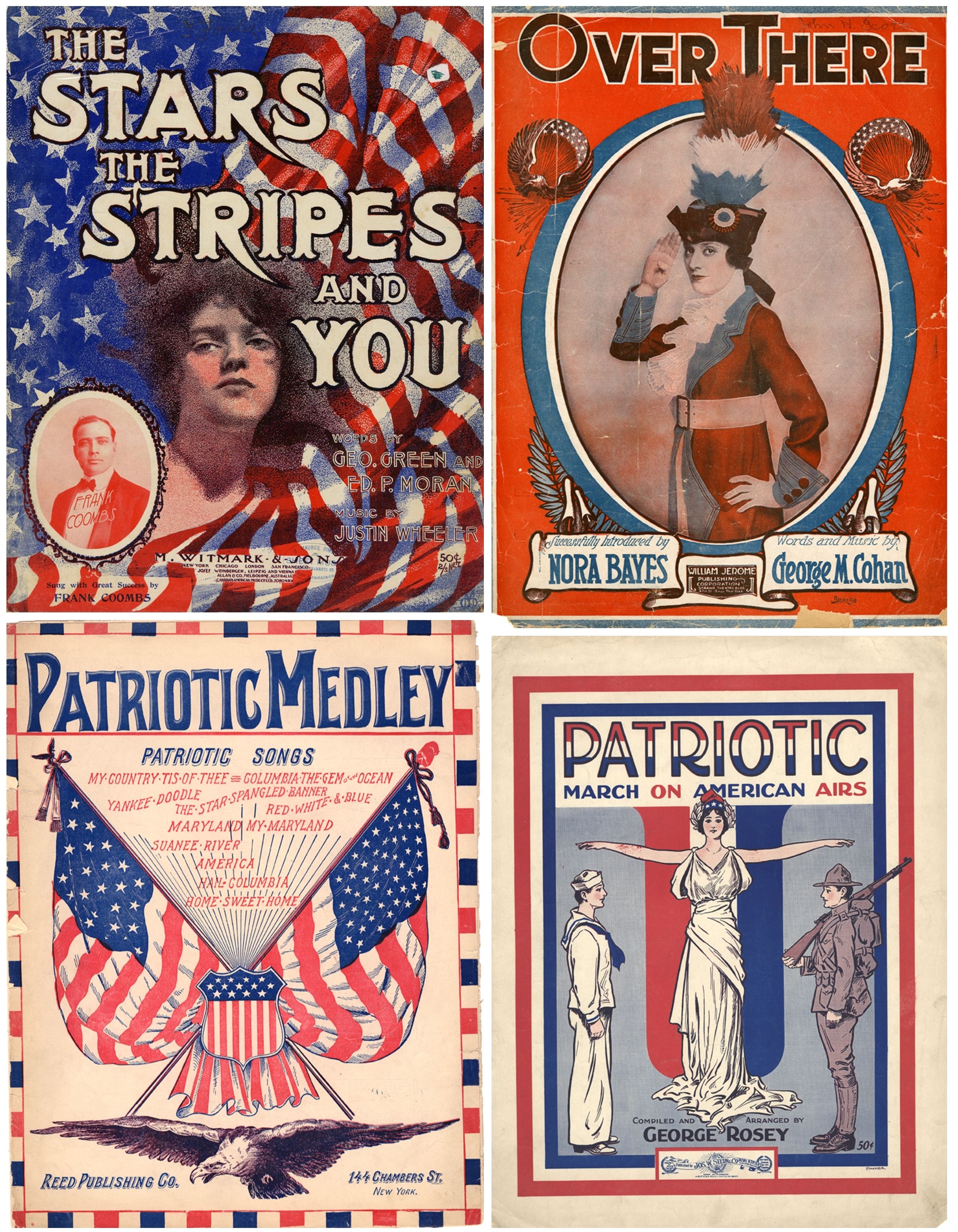
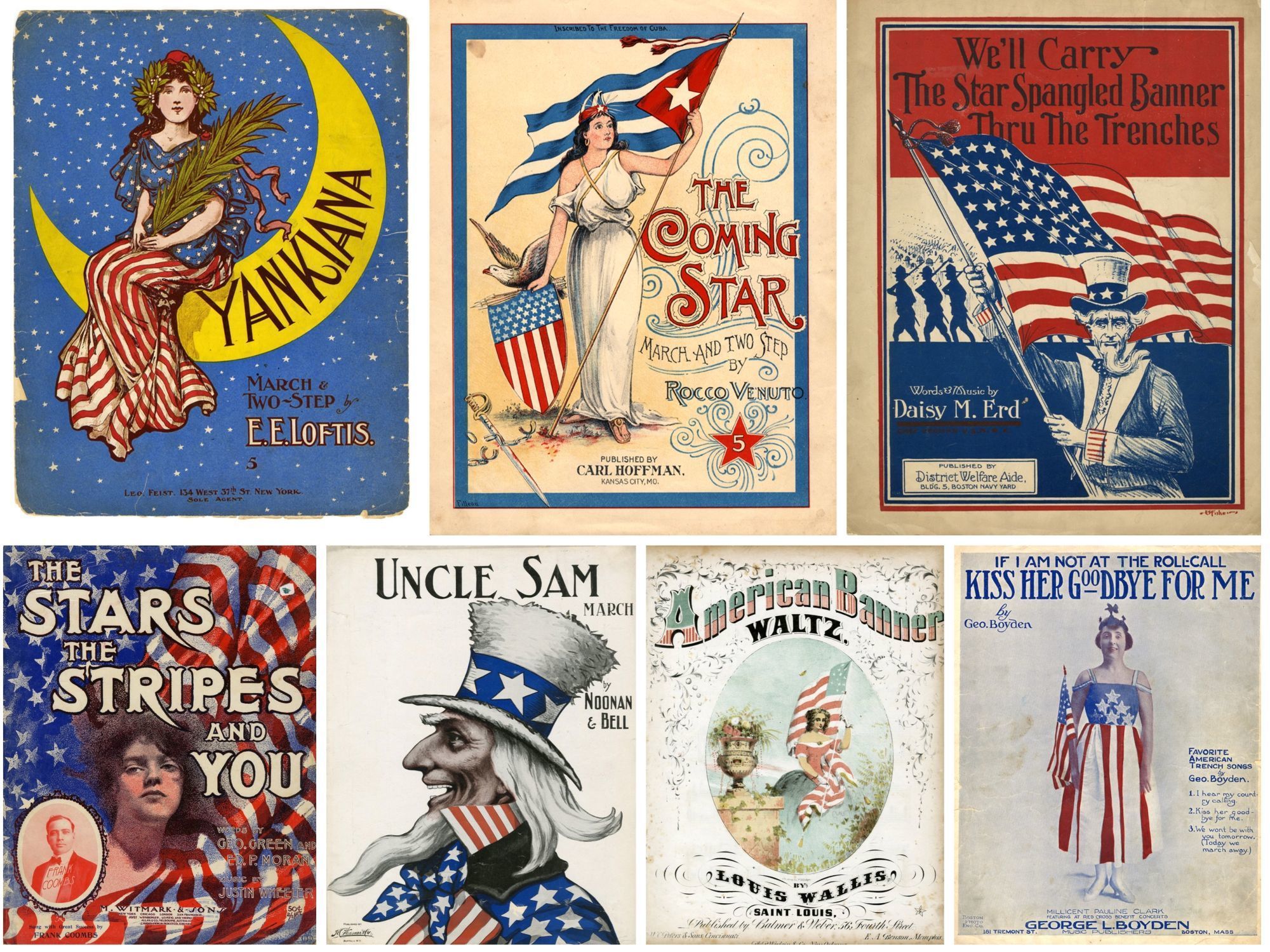
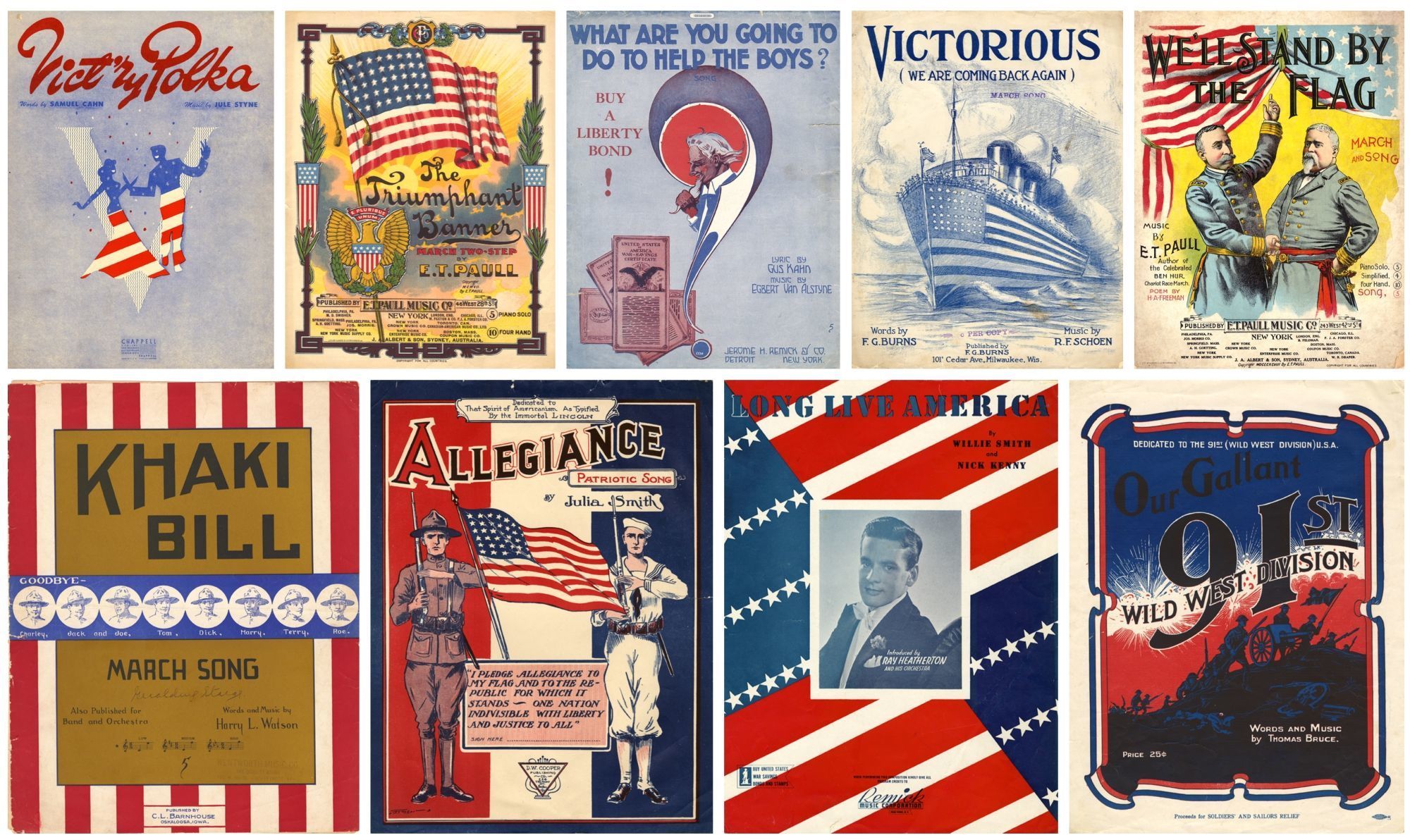
United States, 1940. Very good. Flaws include toning, chipping, with the occasional instance of leaf lacking, or short tears.. A collection of one hundred seven (107) items exploring the relationship between American flag iconography and the late 19th and early 20th century popular music. The items, which are comprised mainly of sheet music and lyric booklets, range in date from 1858 to the 1940s, and spanning several wars They have been divided into ten (10) discrete themed categories, including: Military and Wartime; Uncle Sam; Columbia and Lady Liberty; Bald Eagle; Women and Homefront; Presidents and Male Leaders; Foreign Language; Boyhood and Childhood; Music Addressed to the Flag (e.g. “You’re a Grand Old Flag”); and Miscellaneous. Together, the items provide a fascinating sociological view of how American flag iconography seamlessly knitted together national and personal identity, including notions of age and gender roles. Notably absent are any examples of Blackness or Native American representation, which in itself is interesting, but there is one example of Latina identity represented (see “The Coming Star”). The representation of women in this collection could be a fascinating project all its own; female identity is depicted here as everything from Lady Liberty and Columbia to “the girl back home” and mother of the nation. More often an object of desire and love for soldiers abroad, she is only depicted as an agent in her own right when anthropomorphized into Columbia or Lady Liberty leading her people to victory. In contrast, the items in the “Uncle Sam” category show his character as active and charismatic. Note well the category dedicated to childhood, which shows how patriotism was taught as a moral value into the nation’s youth, and highlights the Boy Scouts as a wholesome source of national pride. Highlights of the collection include: the marches of John Philip Sousa (including a souvenir of one of his performances); a 1910s small-format song lyric book printed as a prize for Cracker Jack boxes; two Uncle Sam-themed songs promoting war bonds; and sheet music for “March of the Boy Scouts”, showing how intertwined nationalistic identity and boyhood were at this time. The example of Latina representation is an 1898 publication by Rocco Venuto, “The Coming Star”, a song celebrating the 1898 U.S. Occupation of Cuba. Instead of the then-expected Anglo-Saxon personification if Columbia, the cover image depicts a Latina Columbia with dark hair bearing the Cuban flag, alongside American iconography such as a bald eagle and the stars and stripes on a shield.
Overall, the collection presents a compelling look into how American flag iconography affected personal identity, national values, and wartime sentiment.
Overall, the collection presents a compelling look into how American flag iconography affected personal identity, national values, and wartime sentiment.
Details
Title
American Flag Iconography and Late 19th and Early 20th cent. Popular Music
Condition
Very Good
Publisher
United States
Date
1940