

A Photographic Archive of Women with Musical Instruments
- 1930
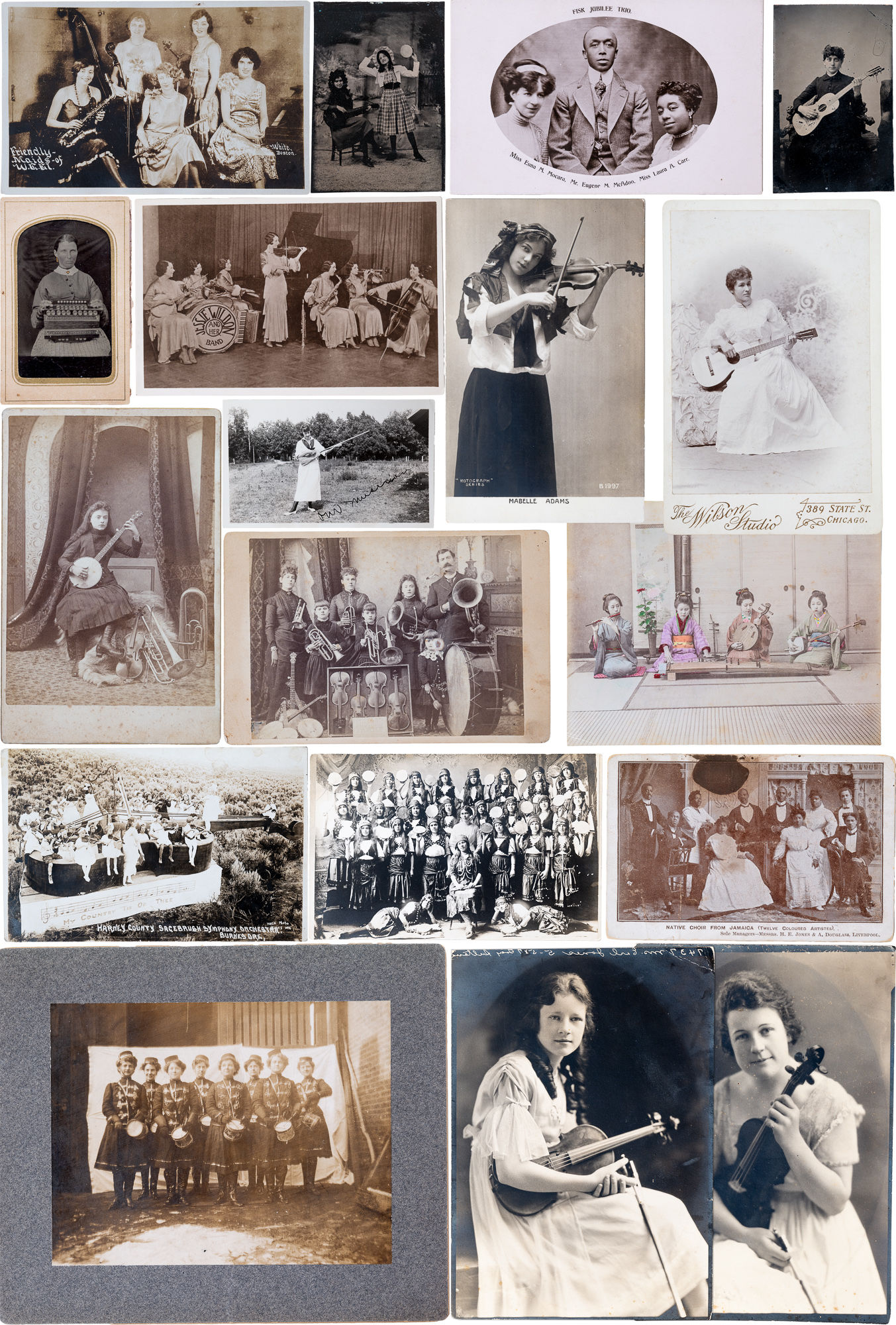
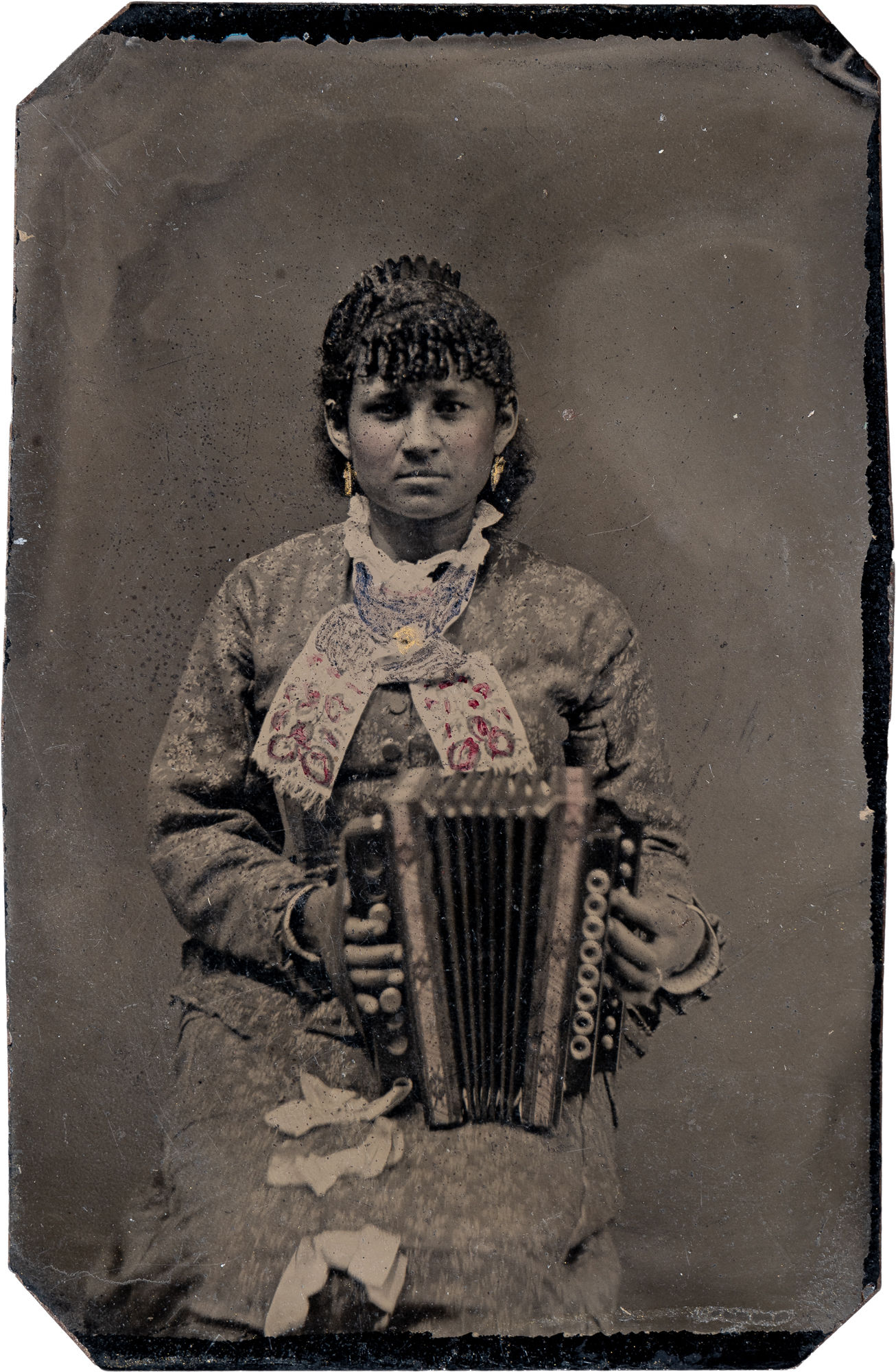
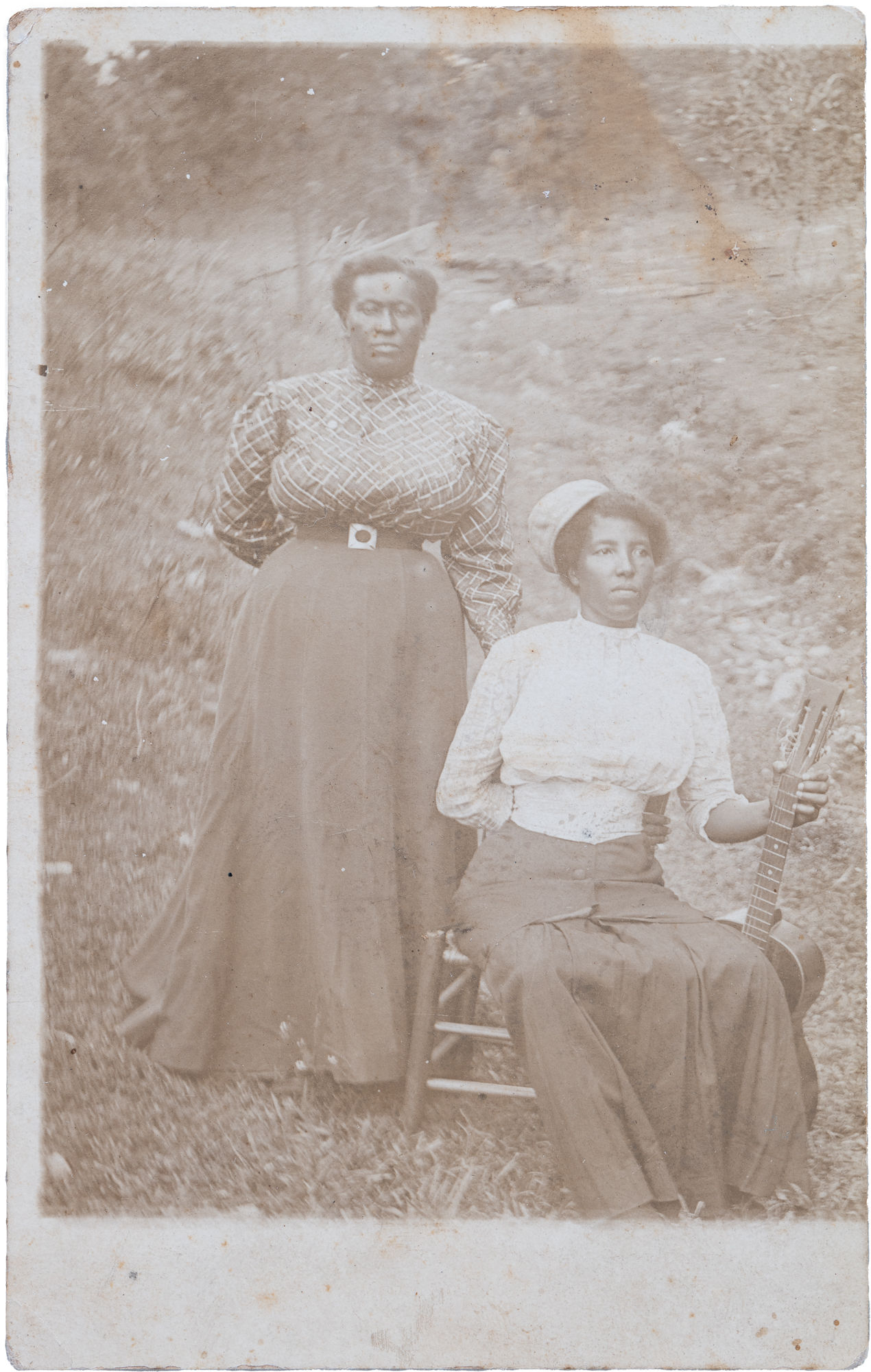
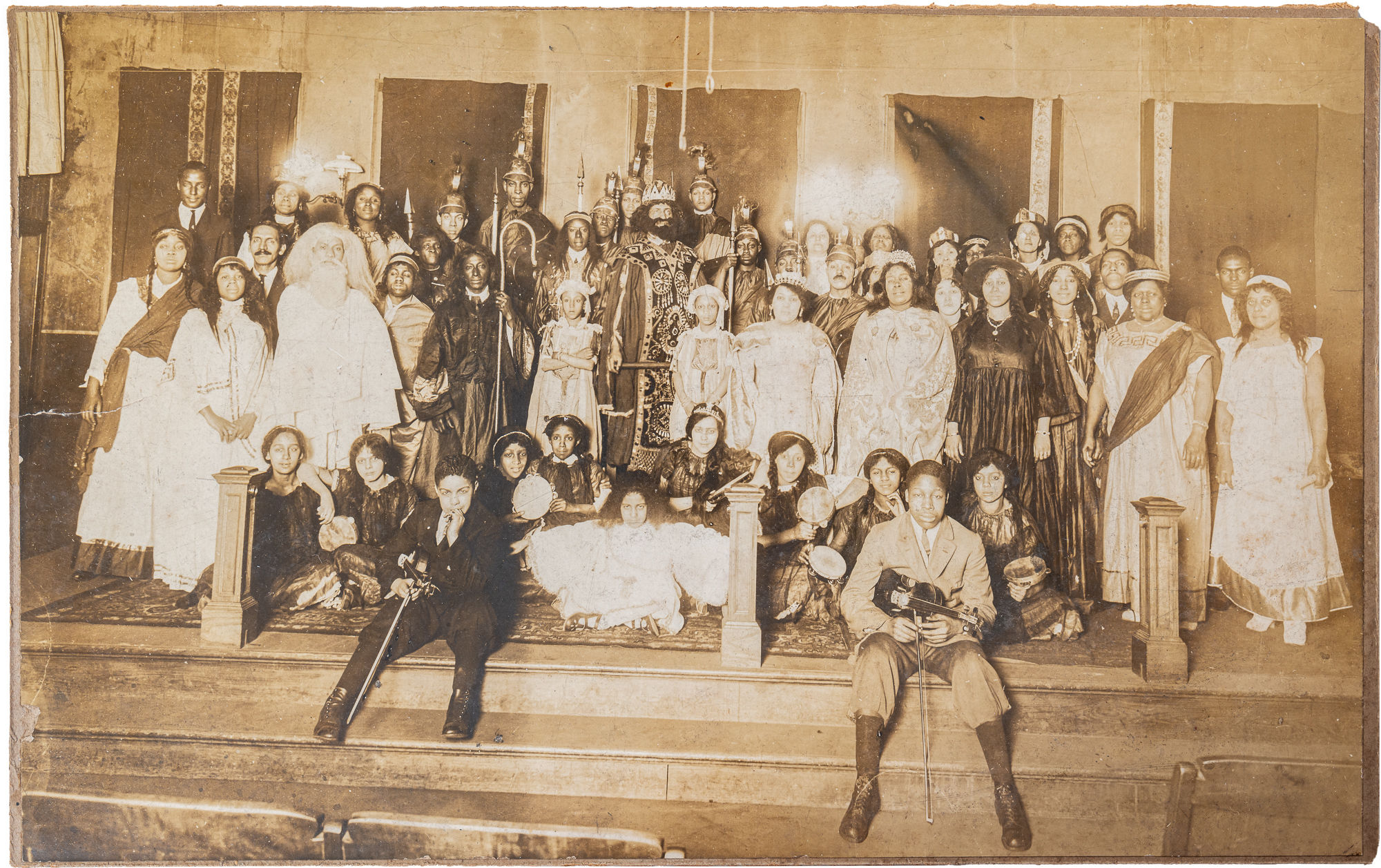
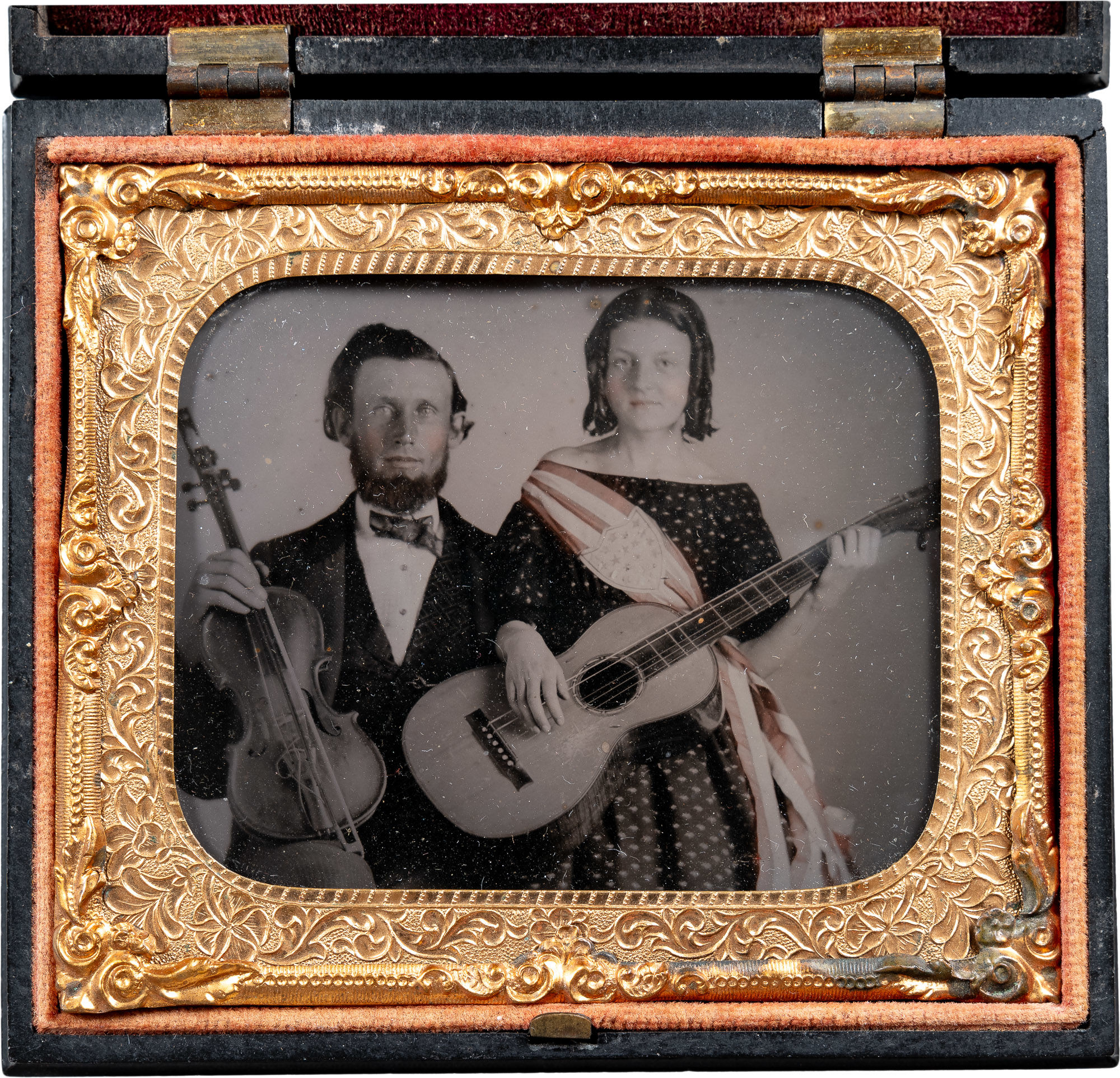
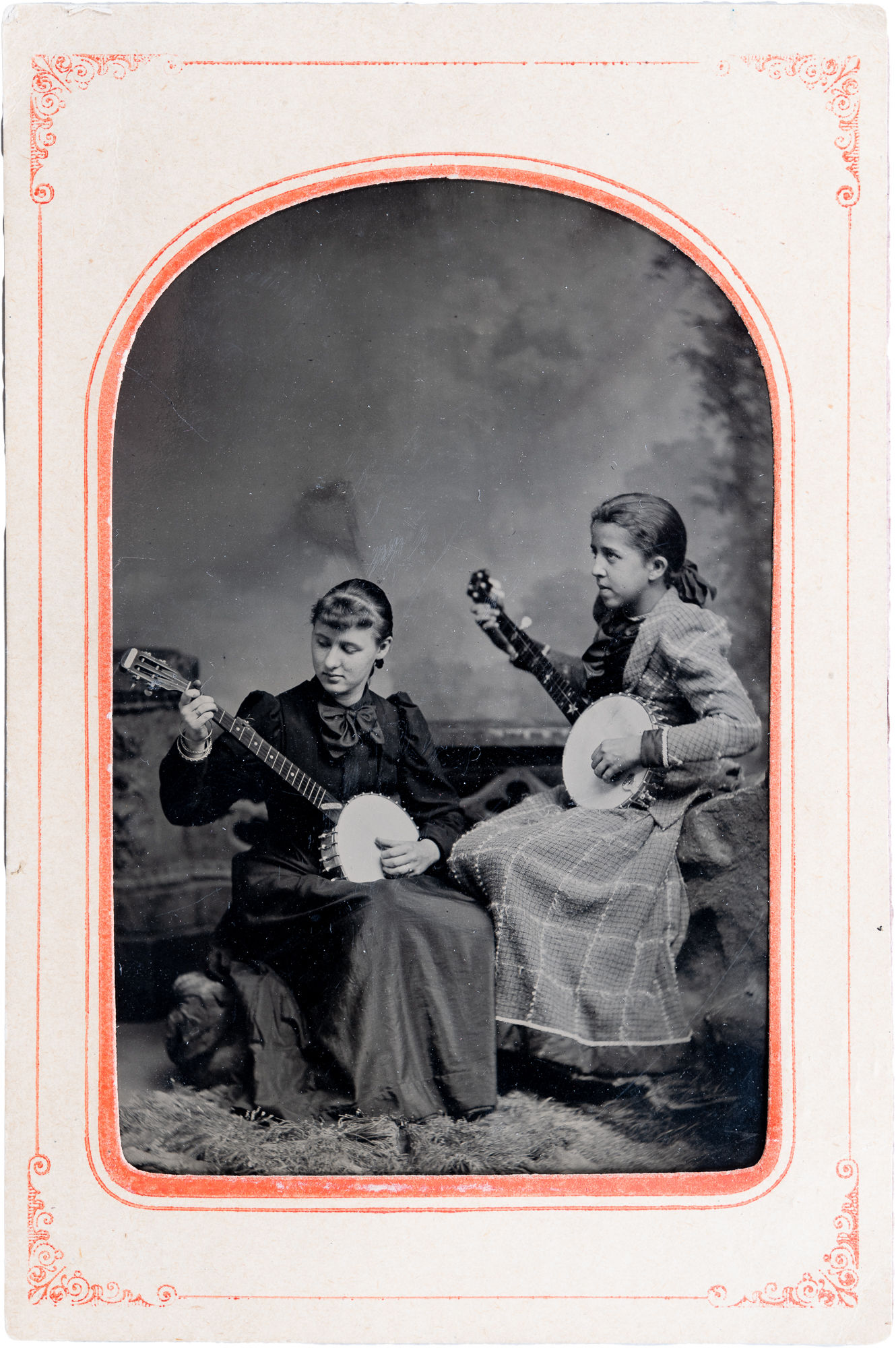
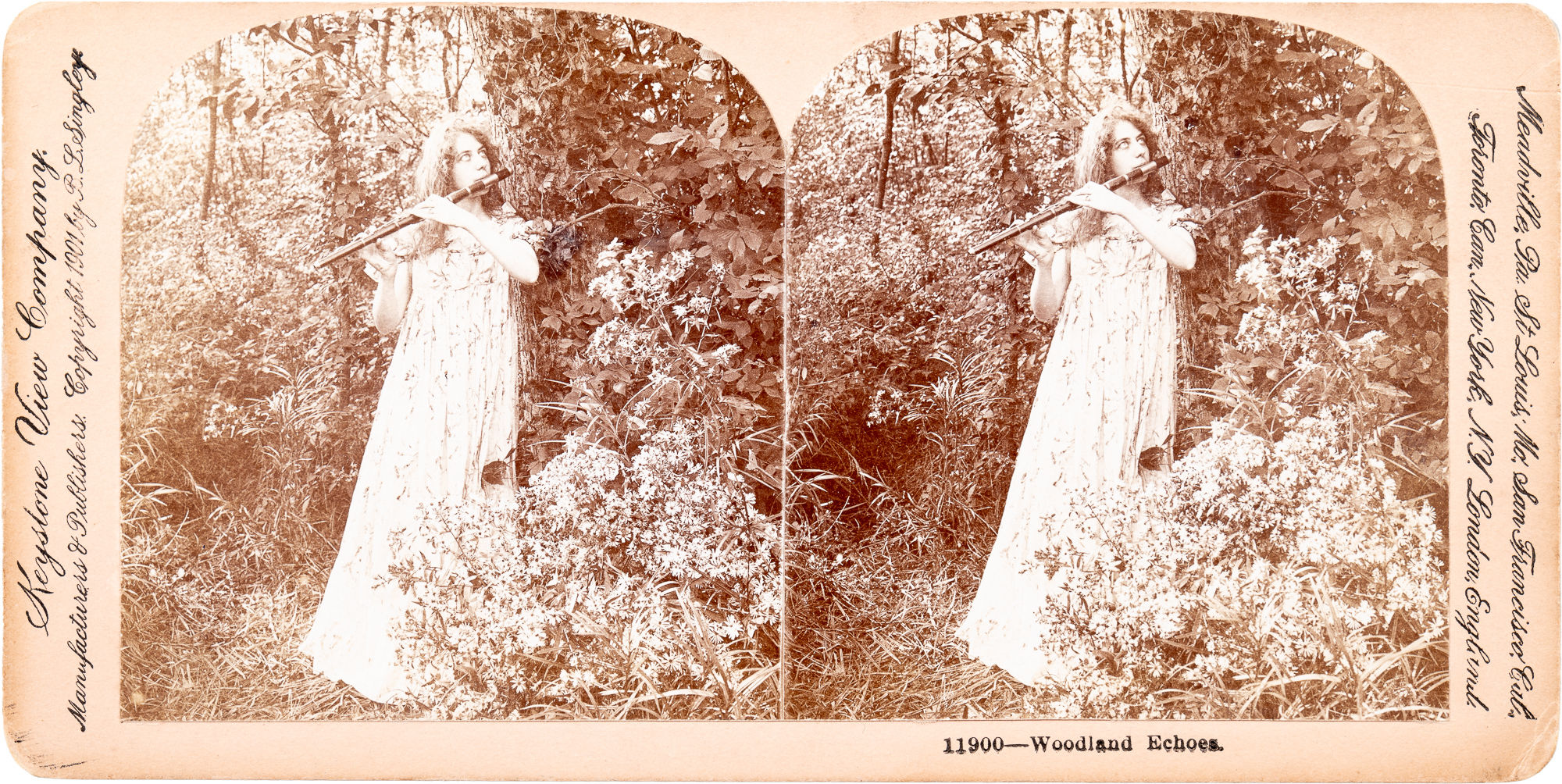
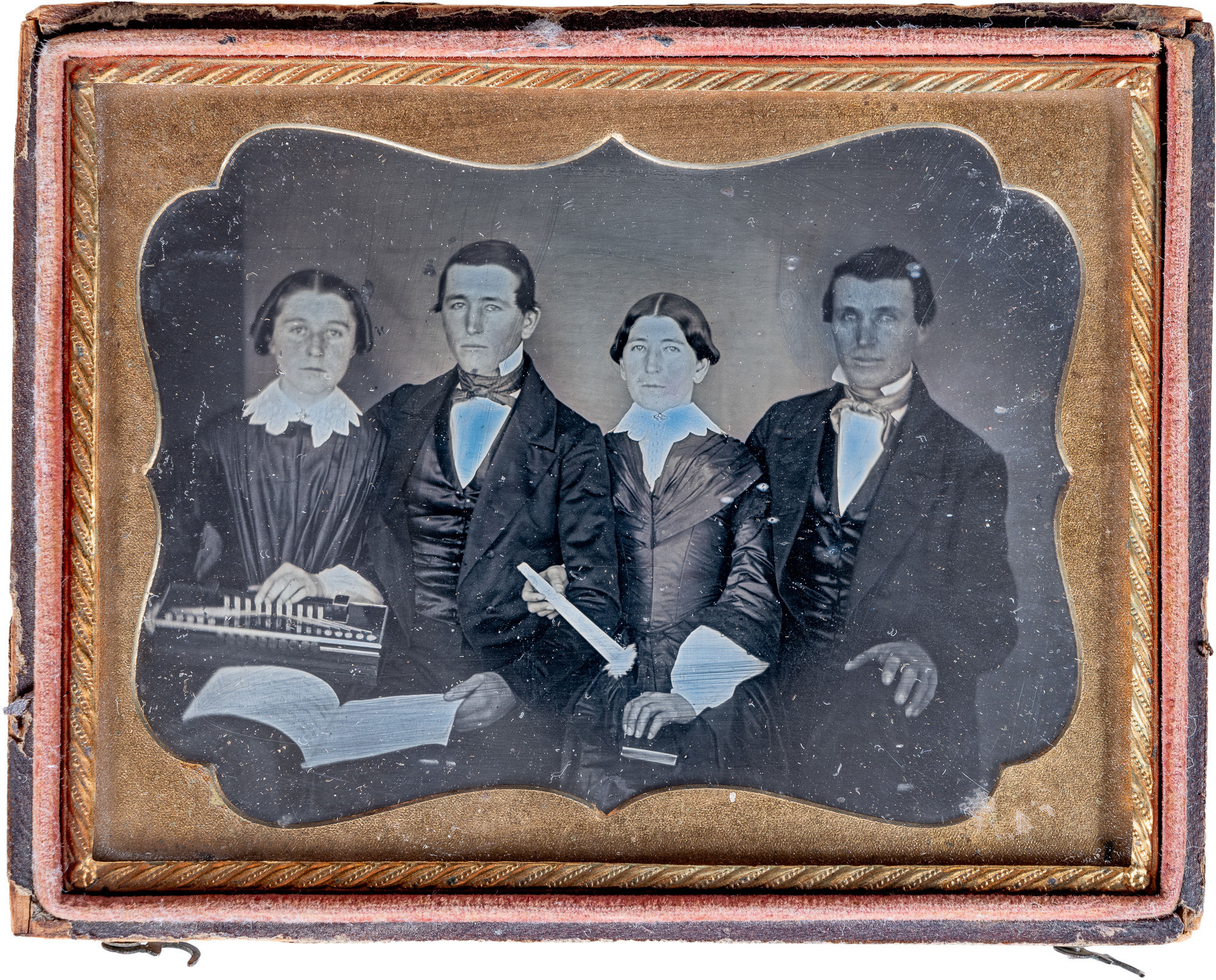
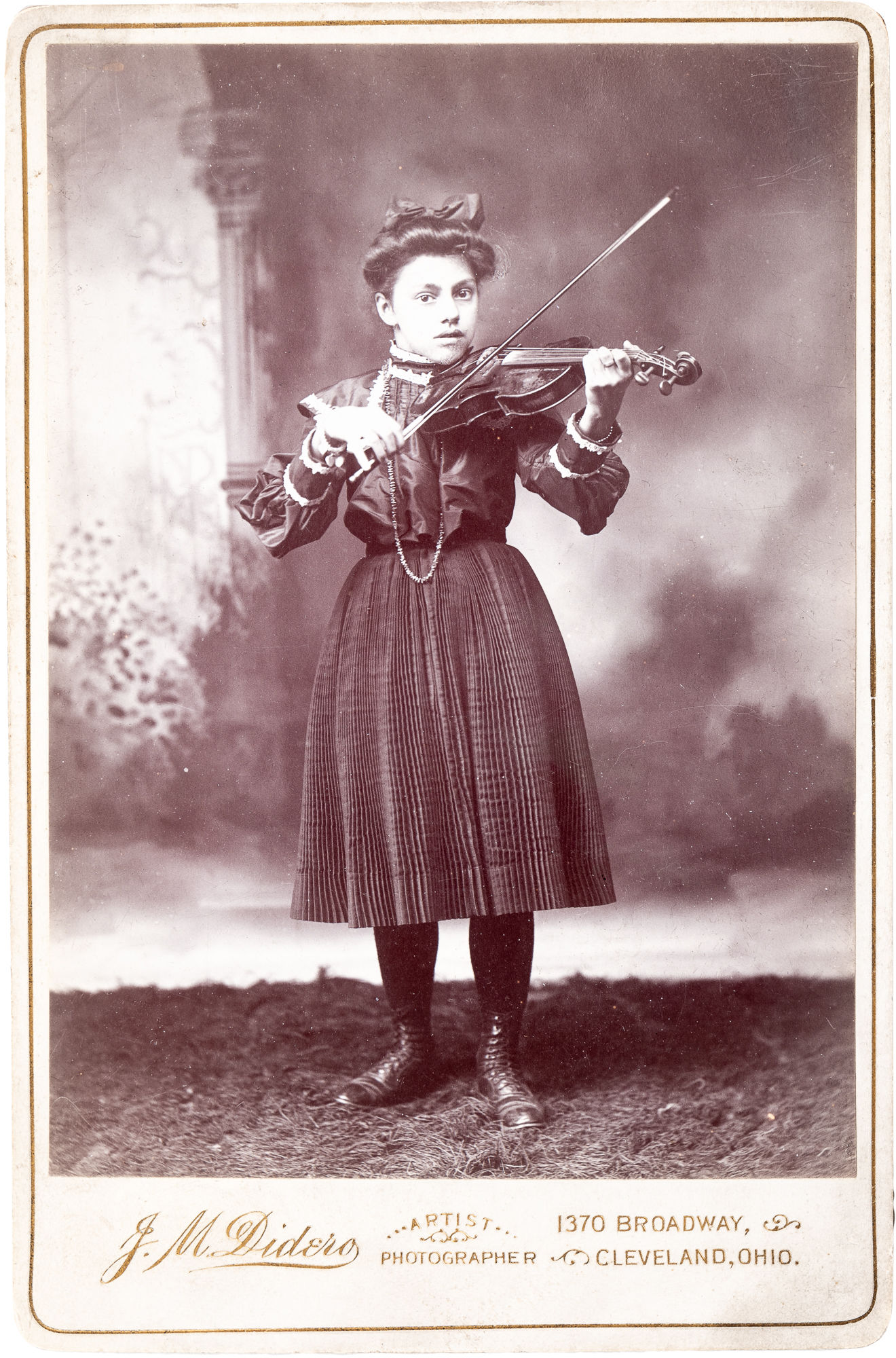
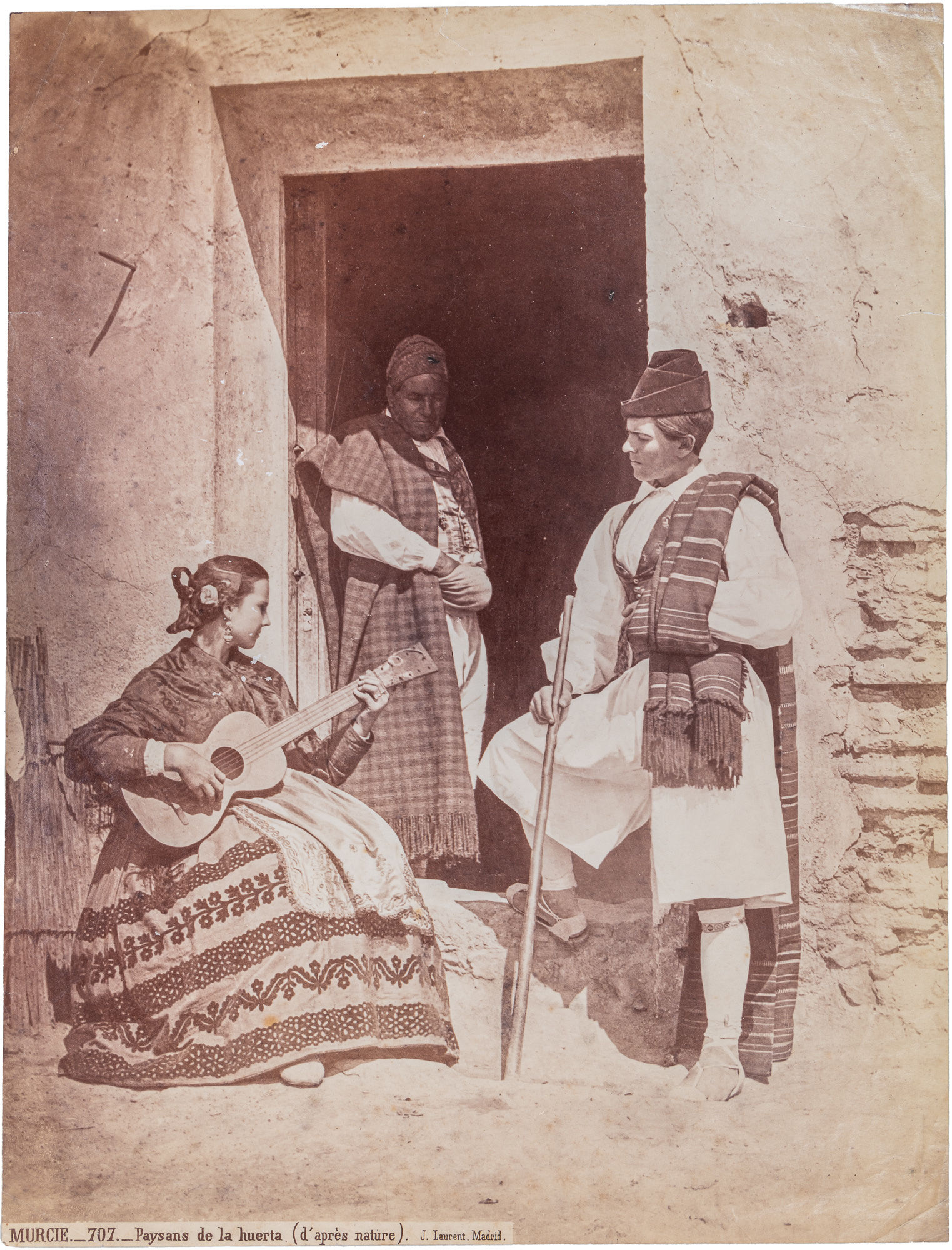
1930. Various locations worldwide, predominantly 19th century with most dating pre-1920. This archive comprises 366 individual photographs, including a single album containing 90 cyanotypes and one focused collection of 19 photographs documenting Vaudeville actress and violinist Mabelle Adams. The archive spans multiple photographic formats: 70 real photo postcards; 65 smaller format silver prints and albumens (under 5” x 7”, excluding CDVs and cabinet cards); 18 large format albumen, platinum or silver prints (over 5” x 7”); 48 cabinet cards; 26 CDVs; 9 stereoscopes; 17 tintypes (including two 1/2 plate, one 1/4 plate, and twelve 1/6 plate); 1 ambrotype (1/6 plate); 2 daguerreotypes (one 1/6 plate and one 1/2 plate); 1 glass negative; and the aforementioned photo album containing 90 cyanotypes. Overall condition is very good. Photographs measure from 1” x 1” up to 9 3/4” x 12 7/8”. Note: approximately 150 photographs remain unphotographed; requests for specific images can be accommodated.
Musical instruments feature prominently throughout the collection. While most photographs post-1890 depict genuine musicians, earlier studio portraits often show subjects posed with instruments they likely didn’t play. The collection showcases diverse instruments including guitars, violins, pianos, flutinas, bagpipes, banjos, tambourines, ukuleles, drums, trumpets, flutes, accordions, harps, lutes, violas, biwas, shamshirs, kotos, and possibly one of the earliest known photographs of a woman playfully using a broom as a guitar.
The Mabelle Adams [Humberstone] (1880-1935) archive offers insight into the accomplished violinist who performed for the B.F. Keith Vaudeville Circuit during the early 20th century. As an understudy of Maude Adams (niece of the great American stage actor Edwin Booth), she enjoyed a successful career that extended to Broadway. This mini-archive includes 9 smaller format platinum and silver prints (4 showing her with violin), 2 RPPCs (1 of her playing violin), and 8 larger format platinum or silver prints (1 with violin). Several are theatrical headshots with NY theatre stamps (Orpheum and Palace), two feature actress Marion Murray, and there is one lengthy letter to Adams from Paris. Her son, H. Bruce Humberstone, became a prolific film director.
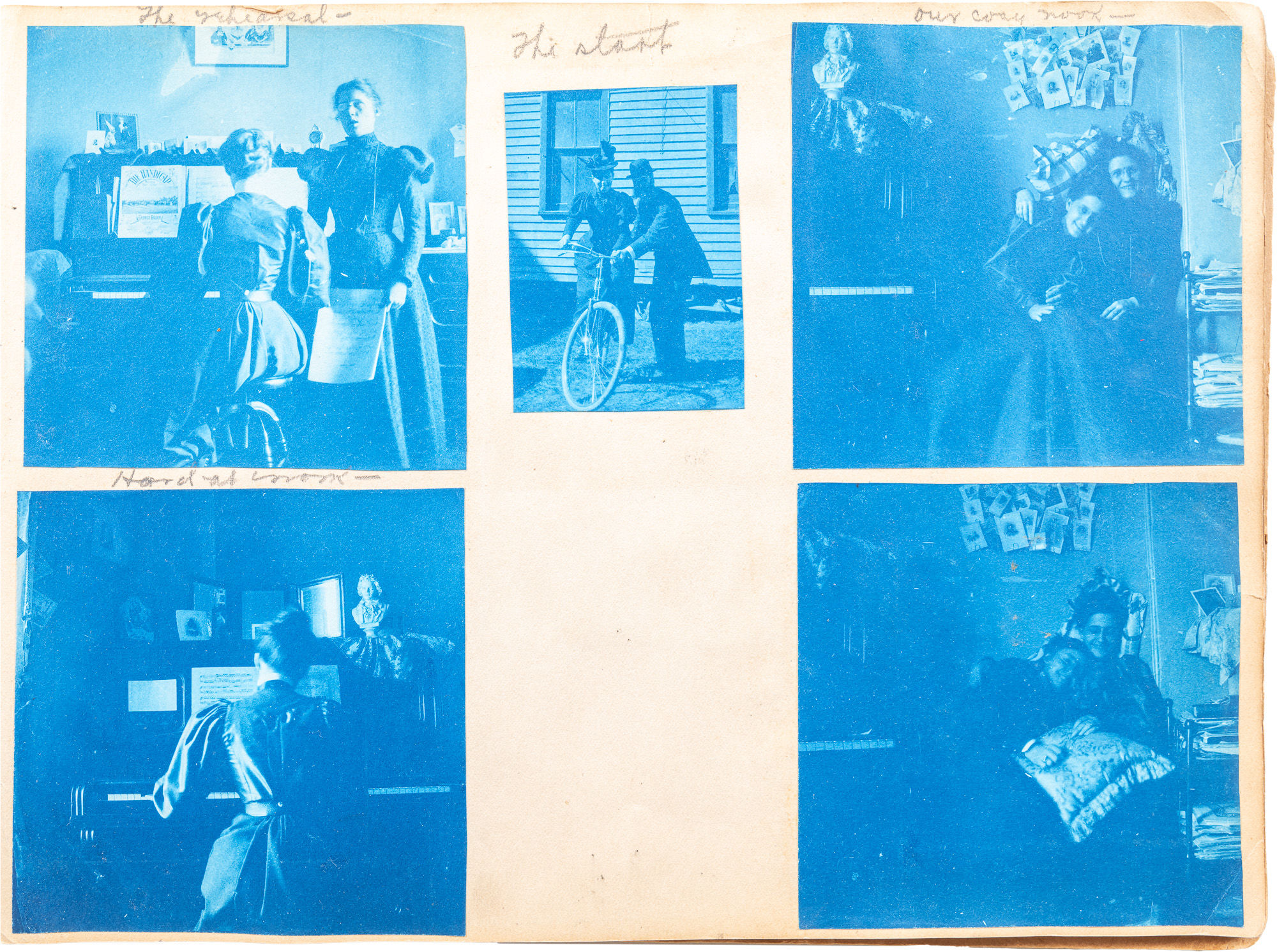
The photo album (Boston, 1897) documents New England Conservatory of Music students Marie Crosby and Louise Mather. Measuring 10” x 7” with tan cloth over stiff paper boards, it contains 90 cyanotypes (1” x 1” to 3½” x 3½”) with captions. The album begins with their visit to Mather’s family home in Indiana, showing them riding bicycles and in horse-drawn carriages. Later photographs capture their dormitory, campus life, Boston scenes, and musical practice—Crosby studied piano and organ while Mather pursued vocal studies. Particularly charming are the playful moments between studies, with one photograph of a friend making a silly face captioned “Jo- the Monday face,” and another labeled “the rehearsal” showing Marie at her piano while Louise stands singing with sheet music in hand. The intimate nature of these images offers rare documentation of women’s daily experiences in higher musical education during the late Victorian era. Her career continued at Winthrop College (State College of South Carolina) and Howard Payne College in Texas, where she established herself as a well-known female composer in the early 1900s.
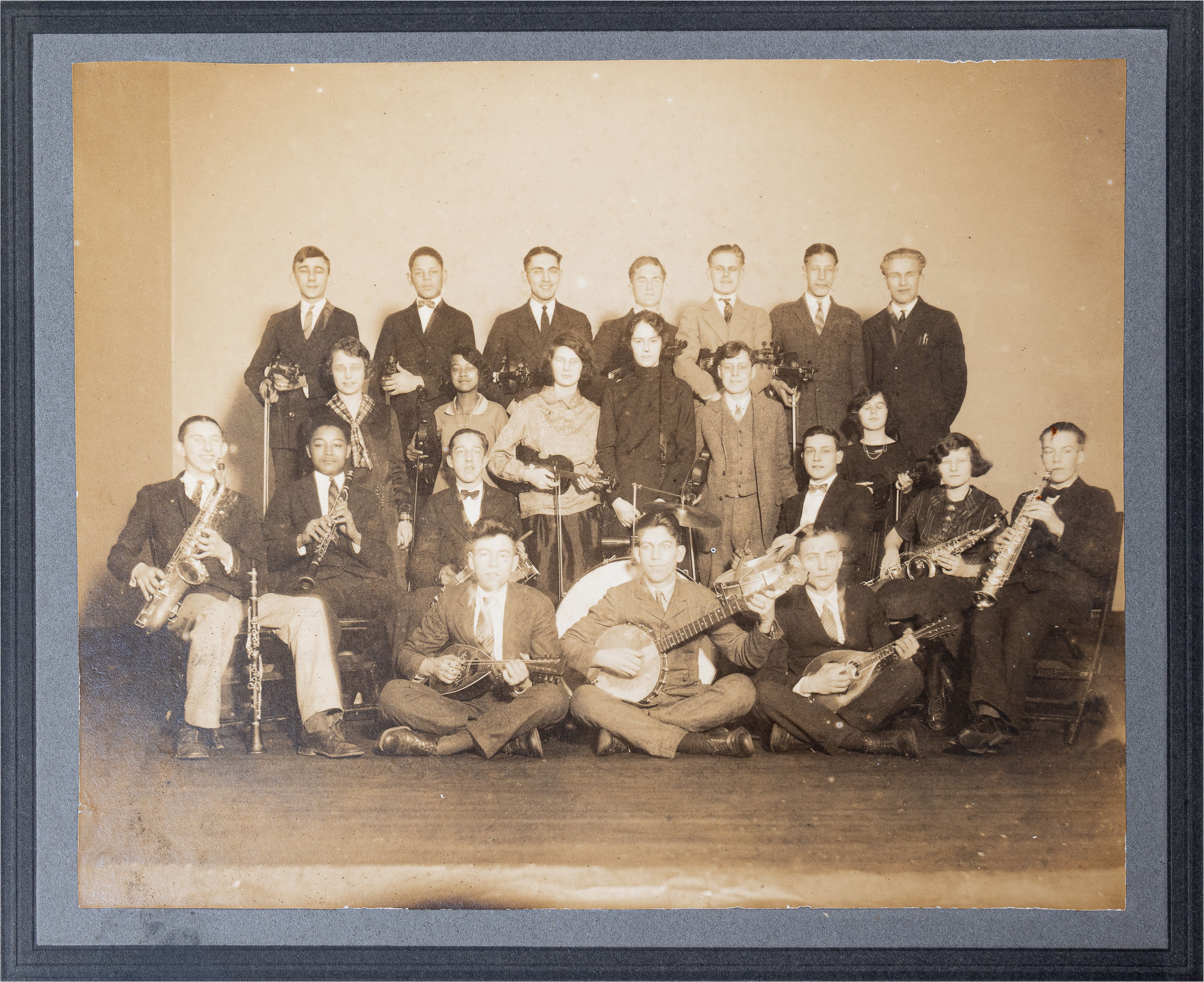
Subjects have been identified in 35 photographs, with 29 providing information about orchestras or bands. Notable subjects include the African American Fisk University Jubilee singers, the McGibeny Family (1877), members of the Shepard Family of Musicians from NY, Vaudeville actress Marian MacLaren (with 1923 press photo and newspaper clipping about her murder), the Berger family of bell ringers, an all-female Salvation Army group, a Parisian class of 23 students, the Liverpool-based Jamaican Native Choir, and the Alpha Orchestra of Attleboro, MA with a contemporary newspaper clipping.
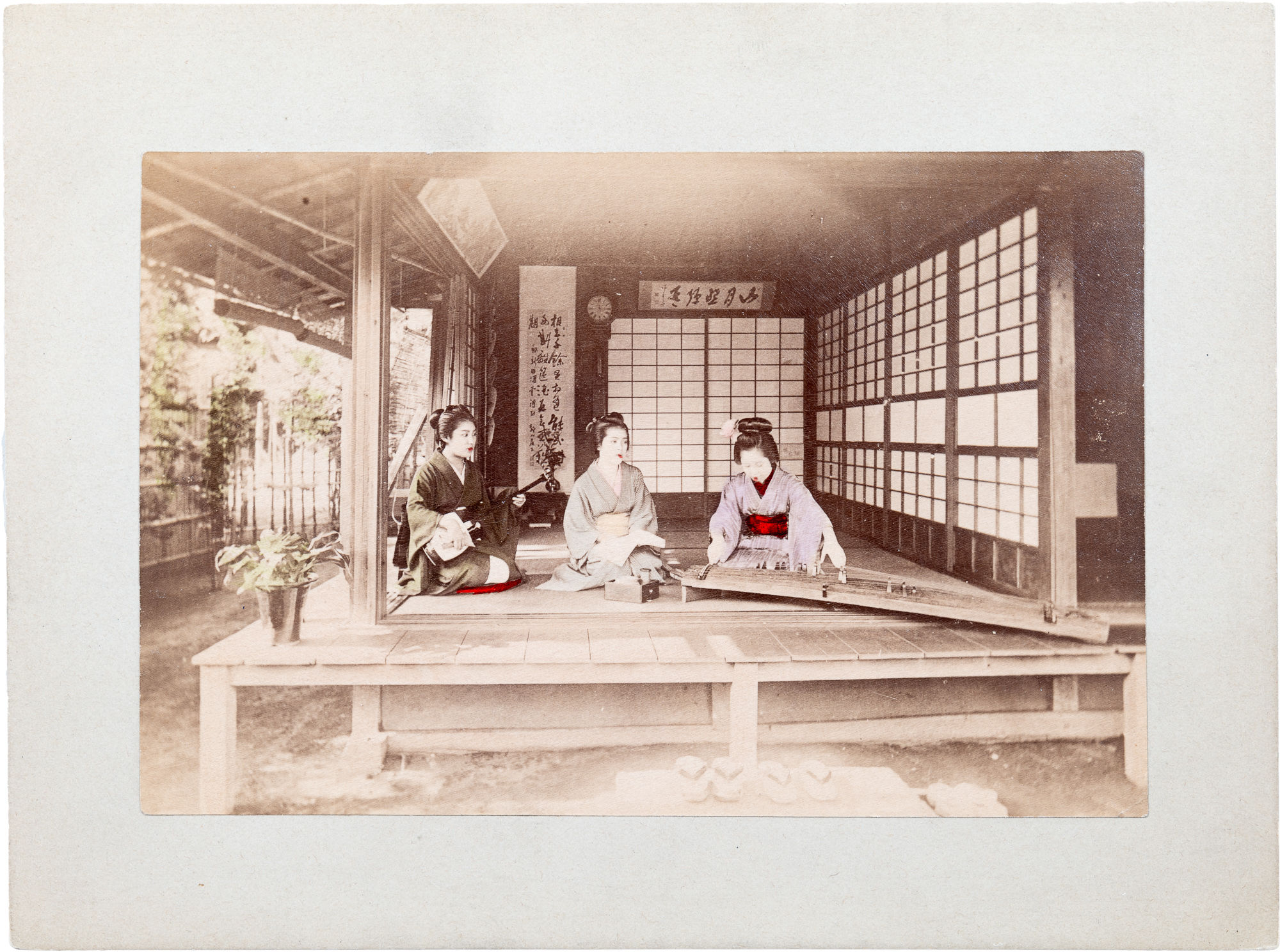
Geographic diversity spans North America (with photographs from 20 states including California, New York, Massachusetts, and others), alongside 56 photographs from the United Kingdom and Continental Europe. International highlights include 10 photographs of Geishas from Japan, and others from New Zealand, Java, and Indonesia. Of particular historical significance is a large format platinum print (c.1920s) of a mixed-gender, racially integrated band—predating the recognized first integrated American band of 1938.
This collection traces the democratization of both photography and musical instruments across class lines, from expensive early daguerreotypes suggesting wealthy subjects to accessible postcards documenting working musicians. The technological and economic shifts visible in these images parallel broader social transformations of the era, as cultural production became increasingly accessible beyond elite circles. Early photographs featuring orchestral instruments give way to folk instruments like banjos and guitars in later images, illustrating how musical expression expanded across socioeconomic boundaries. The archive serves as a visual chronicle of how technological innovation in photography simultaneously documented and facilitated widening participation in musical culture.
The archive also illuminates the gendered dynamics of musical performance during this period. Women like Mabelle Adams and Marie Crosby navigated a cultural landscape where musical accomplishment functioned both as a marker of middle-class refinement and as a pathway to professional independence. The photographs reveal the complex negotiation between respectability and visibility for female performers—from conservatory students to Vaudeville professionals. While pianos and harps were traditionally associated with domestic performance, this collection documents women’s engagement with diverse instruments—challenging simplistic gender categorizations. The all-female Salvation Army group and images of women in integrated bands further document the expansion of women’s access to public musical spaces previously dominated by men.
Musical instruments feature prominently throughout the collection. While most photographs post-1890 depict genuine musicians, earlier studio portraits often show subjects posed with instruments they likely didn’t play. The collection showcases diverse instruments including guitars, violins, pianos, flutinas, bagpipes, banjos, tambourines, ukuleles, drums, trumpets, flutes, accordions, harps, lutes, violas, biwas, shamshirs, kotos, and possibly one of the earliest known photographs of a woman playfully using a broom as a guitar.
The Mabelle Adams [Humberstone] (1880-1935) archive offers insight into the accomplished violinist who performed for the B.F. Keith Vaudeville Circuit during the early 20th century. As an understudy of Maude Adams (niece of the great American stage actor Edwin Booth), she enjoyed a successful career that extended to Broadway. This mini-archive includes 9 smaller format platinum and silver prints (4 showing her with violin), 2 RPPCs (1 of her playing violin), and 8 larger format platinum or silver prints (1 with violin). Several are theatrical headshots with NY theatre stamps (Orpheum and Palace), two feature actress Marion Murray, and there is one lengthy letter to Adams from Paris. Her son, H. Bruce Humberstone, became a prolific film director.
The photo album (Boston, 1897) documents New England Conservatory of Music students Marie Crosby and Louise Mather. Measuring 10” x 7” with tan cloth over stiff paper boards, it contains 90 cyanotypes (1” x 1” to 3½” x 3½”) with captions. The album begins with their visit to Mather’s family home in Indiana, showing them riding bicycles and in horse-drawn carriages. Later photographs capture their dormitory, campus life, Boston scenes, and musical practice—Crosby studied piano and organ while Mather pursued vocal studies. Particularly charming are the playful moments between studies, with one photograph of a friend making a silly face captioned “Jo- the Monday face,” and another labeled “the rehearsal” showing Marie at her piano while Louise stands singing with sheet music in hand. The intimate nature of these images offers rare documentation of women’s daily experiences in higher musical education during the late Victorian era. Her career continued at Winthrop College (State College of South Carolina) and Howard Payne College in Texas, where she established herself as a well-known female composer in the early 1900s.
Subjects have been identified in 35 photographs, with 29 providing information about orchestras or bands. Notable subjects include the African American Fisk University Jubilee singers, the McGibeny Family (1877), members of the Shepard Family of Musicians from NY, Vaudeville actress Marian MacLaren (with 1923 press photo and newspaper clipping about her murder), the Berger family of bell ringers, an all-female Salvation Army group, a Parisian class of 23 students, the Liverpool-based Jamaican Native Choir, and the Alpha Orchestra of Attleboro, MA with a contemporary newspaper clipping.
Geographic diversity spans North America (with photographs from 20 states including California, New York, Massachusetts, and others), alongside 56 photographs from the United Kingdom and Continental Europe. International highlights include 10 photographs of Geishas from Japan, and others from New Zealand, Java, and Indonesia. Of particular historical significance is a large format platinum print (c.1920s) of a mixed-gender, racially integrated band—predating the recognized first integrated American band of 1938.
This collection traces the democratization of both photography and musical instruments across class lines, from expensive early daguerreotypes suggesting wealthy subjects to accessible postcards documenting working musicians. The technological and economic shifts visible in these images parallel broader social transformations of the era, as cultural production became increasingly accessible beyond elite circles. Early photographs featuring orchestral instruments give way to folk instruments like banjos and guitars in later images, illustrating how musical expression expanded across socioeconomic boundaries. The archive serves as a visual chronicle of how technological innovation in photography simultaneously documented and facilitated widening participation in musical culture.
The archive also illuminates the gendered dynamics of musical performance during this period. Women like Mabelle Adams and Marie Crosby navigated a cultural landscape where musical accomplishment functioned both as a marker of middle-class refinement and as a pathway to professional independence. The photographs reveal the complex negotiation between respectability and visibility for female performers—from conservatory students to Vaudeville professionals. While pianos and harps were traditionally associated with domestic performance, this collection documents women’s engagement with diverse instruments—challenging simplistic gender categorizations. The all-female Salvation Army group and images of women in integrated bands further document the expansion of women’s access to public musical spaces previously dominated by men.
Details
Title
A Photographic Archive of Women with Musical Instruments
Condition
Unknown
Date
1930