

Sylvie and Bruno [and] Sylvie and Bruno Concluded (in 2 vols.)
![Sylvie and Bruno [and] Sylvie and Bruno Concluded](https://d3525k1ryd2155.cloudfront.net/h/948/275/1610275948.0.x.jpg)
- London: Macmillan and Co, 1893
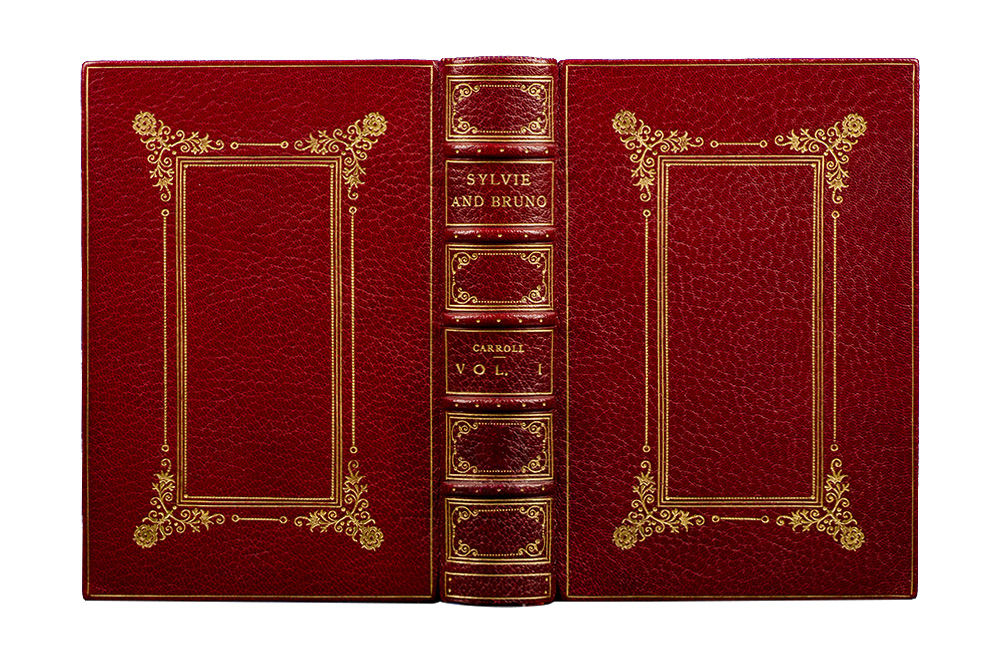
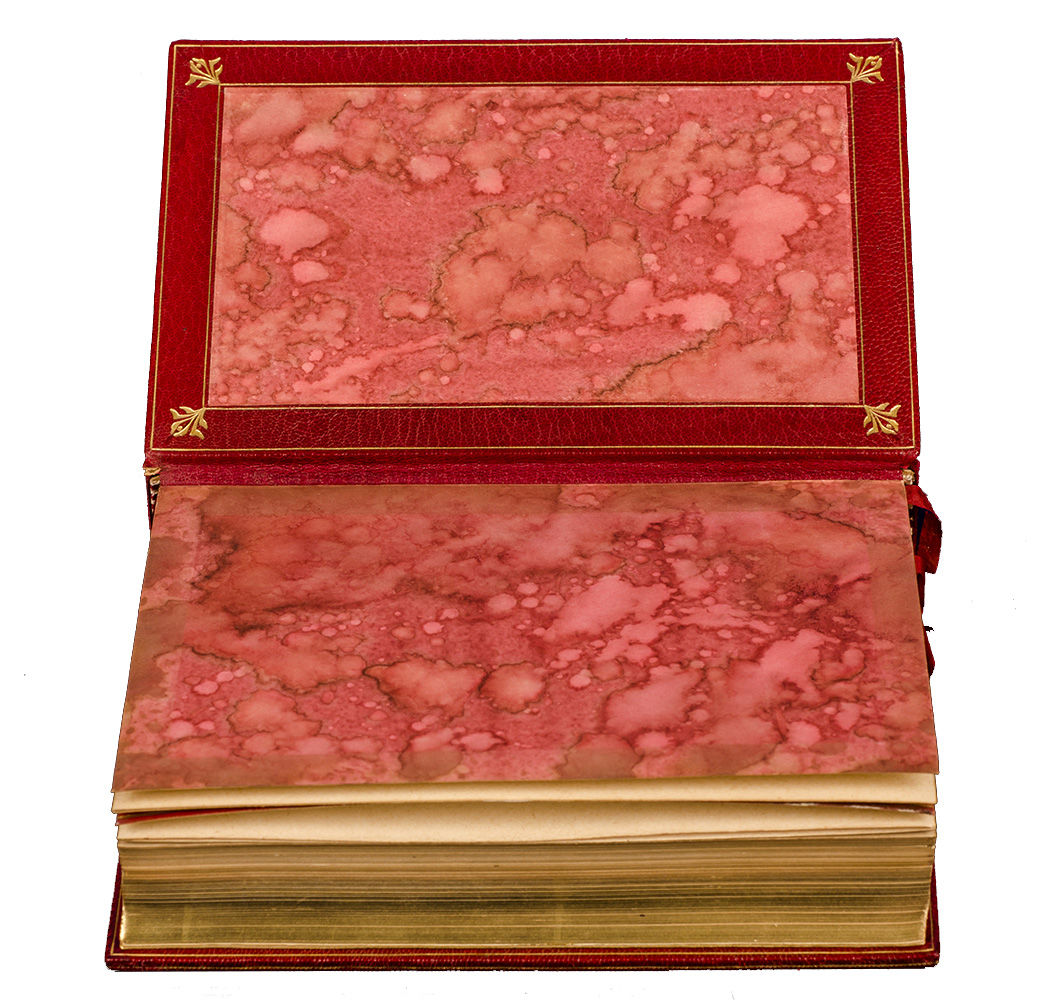
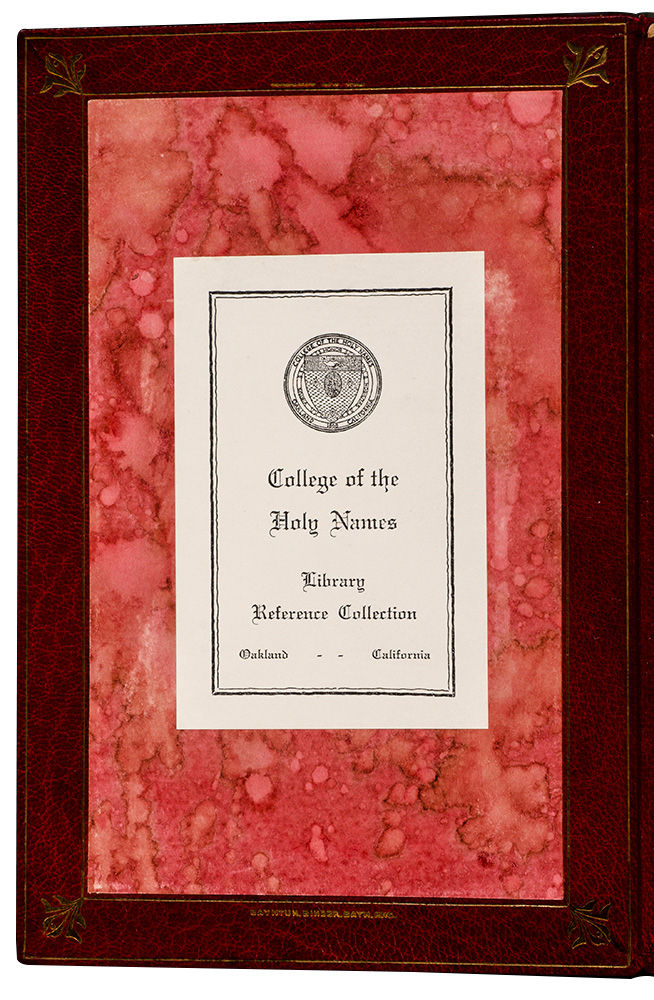
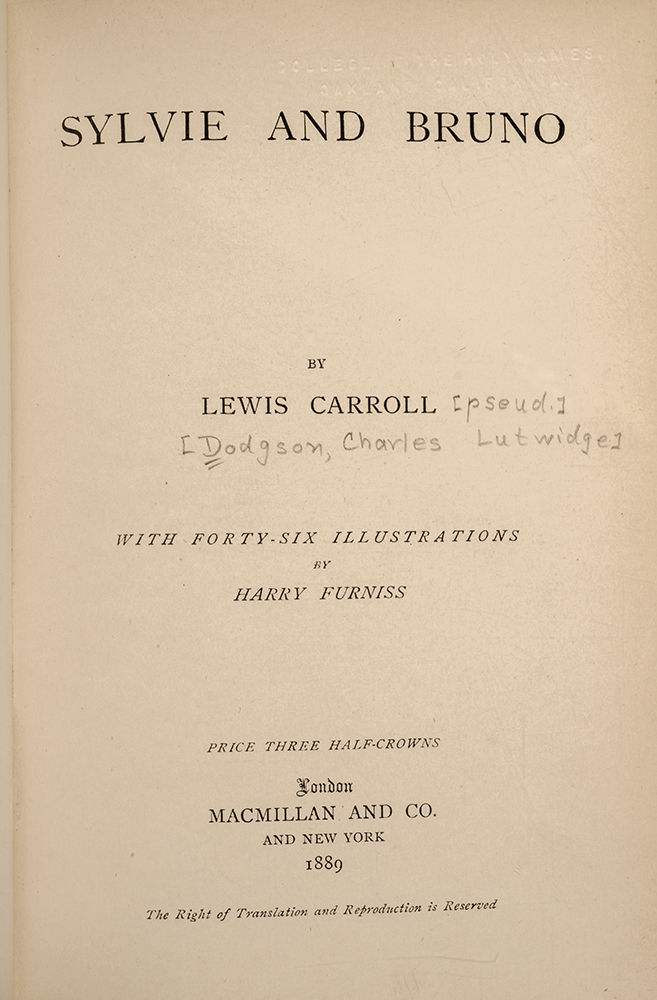
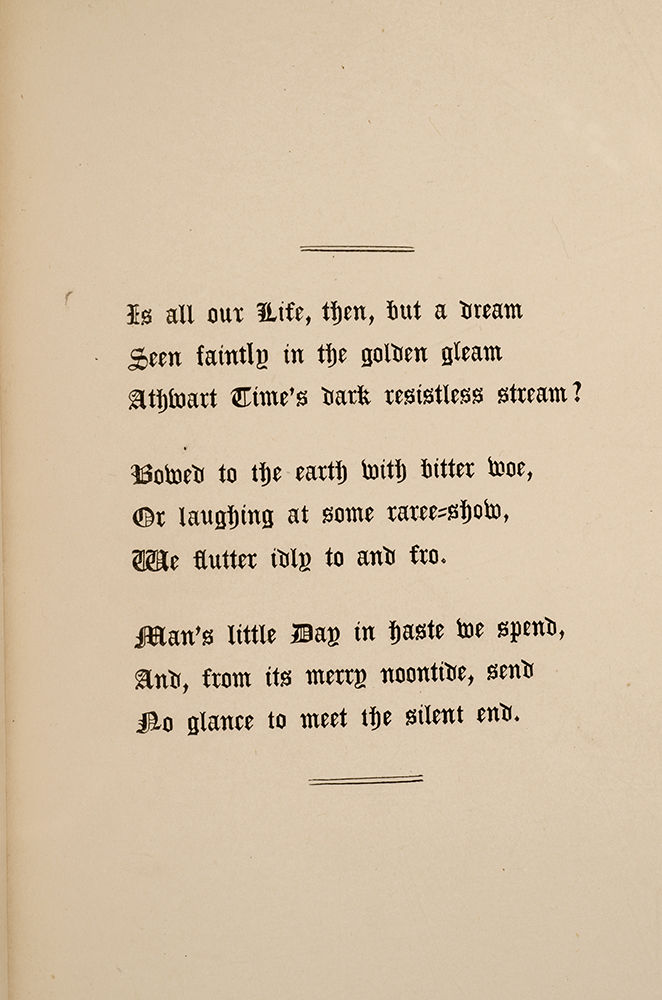
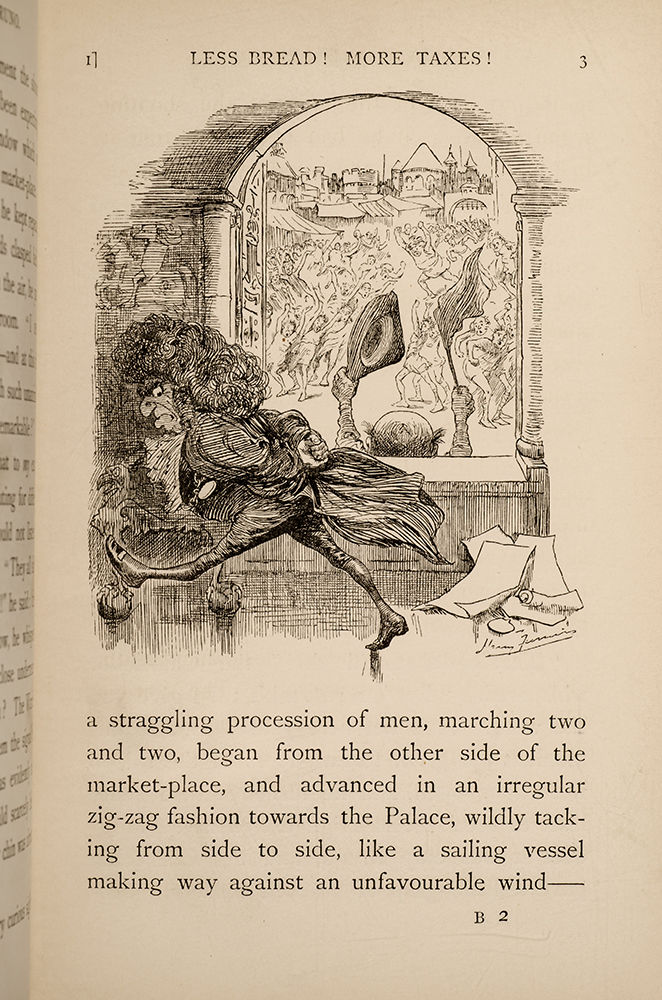
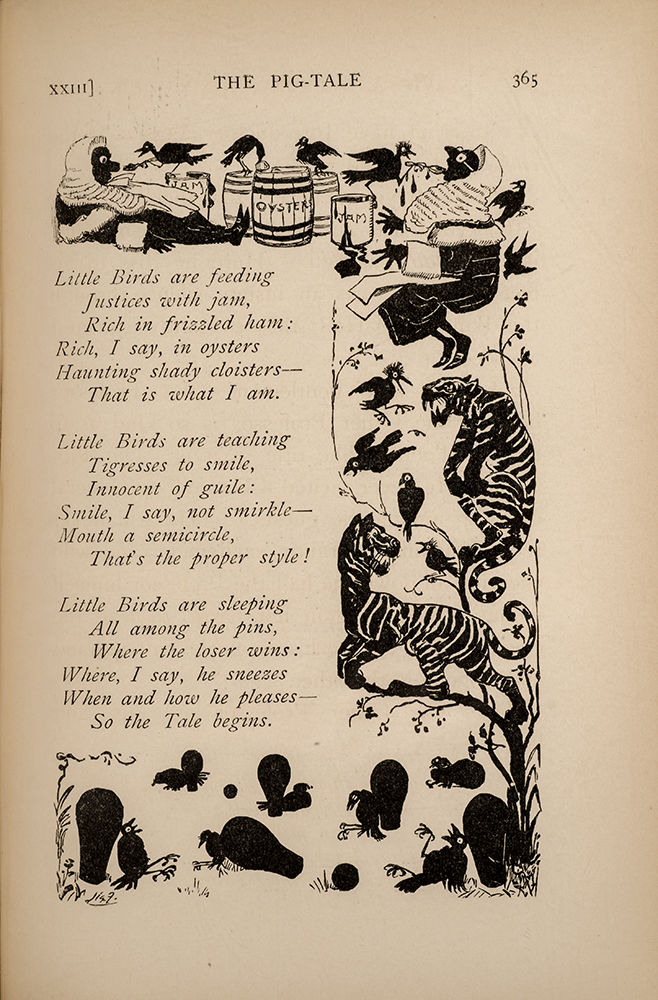
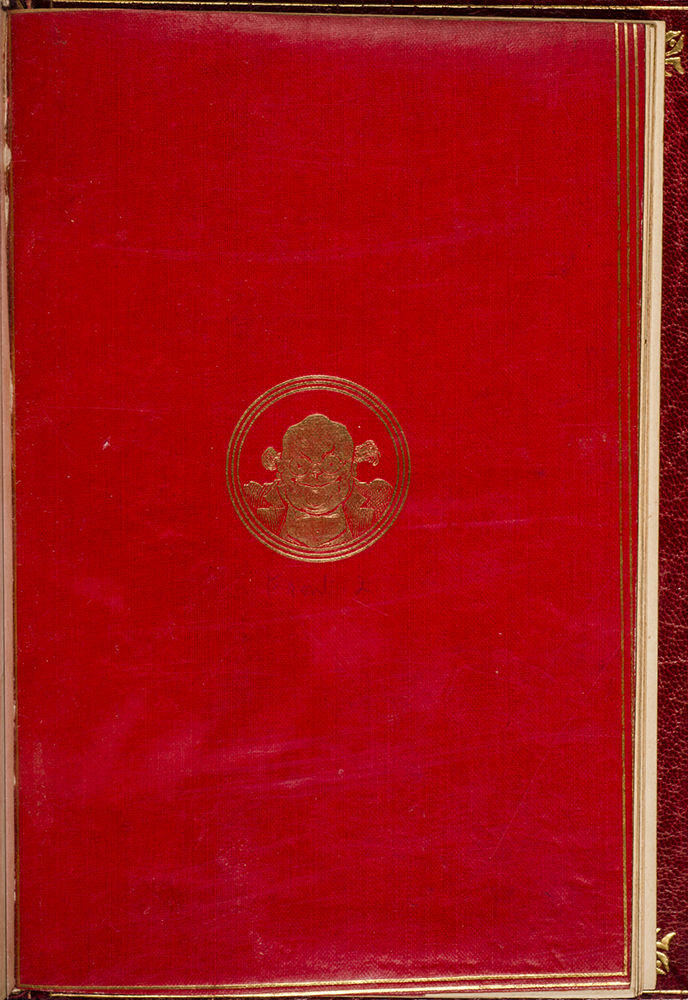
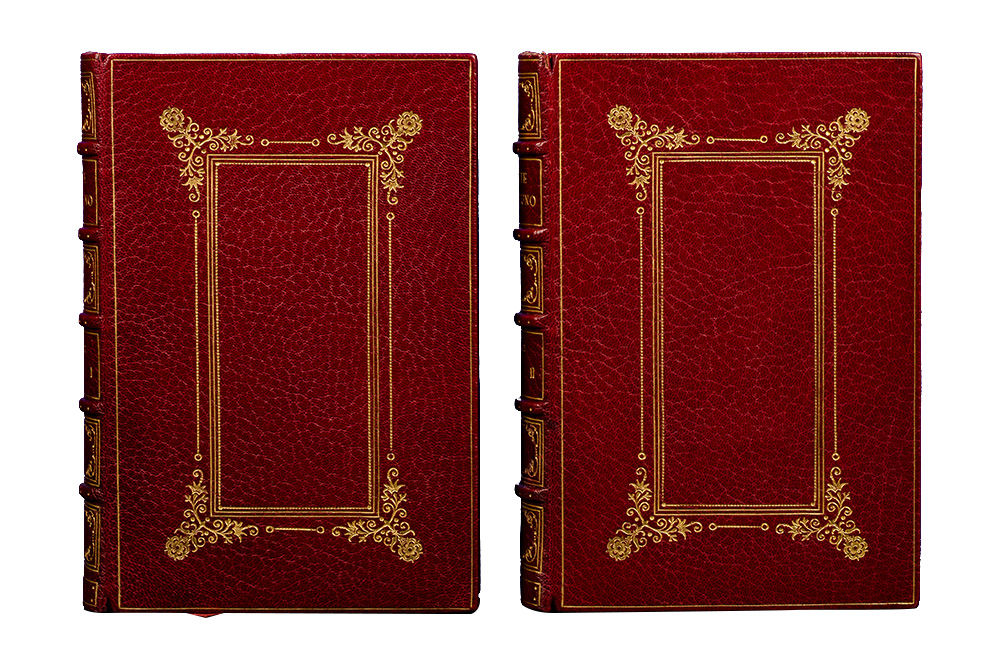
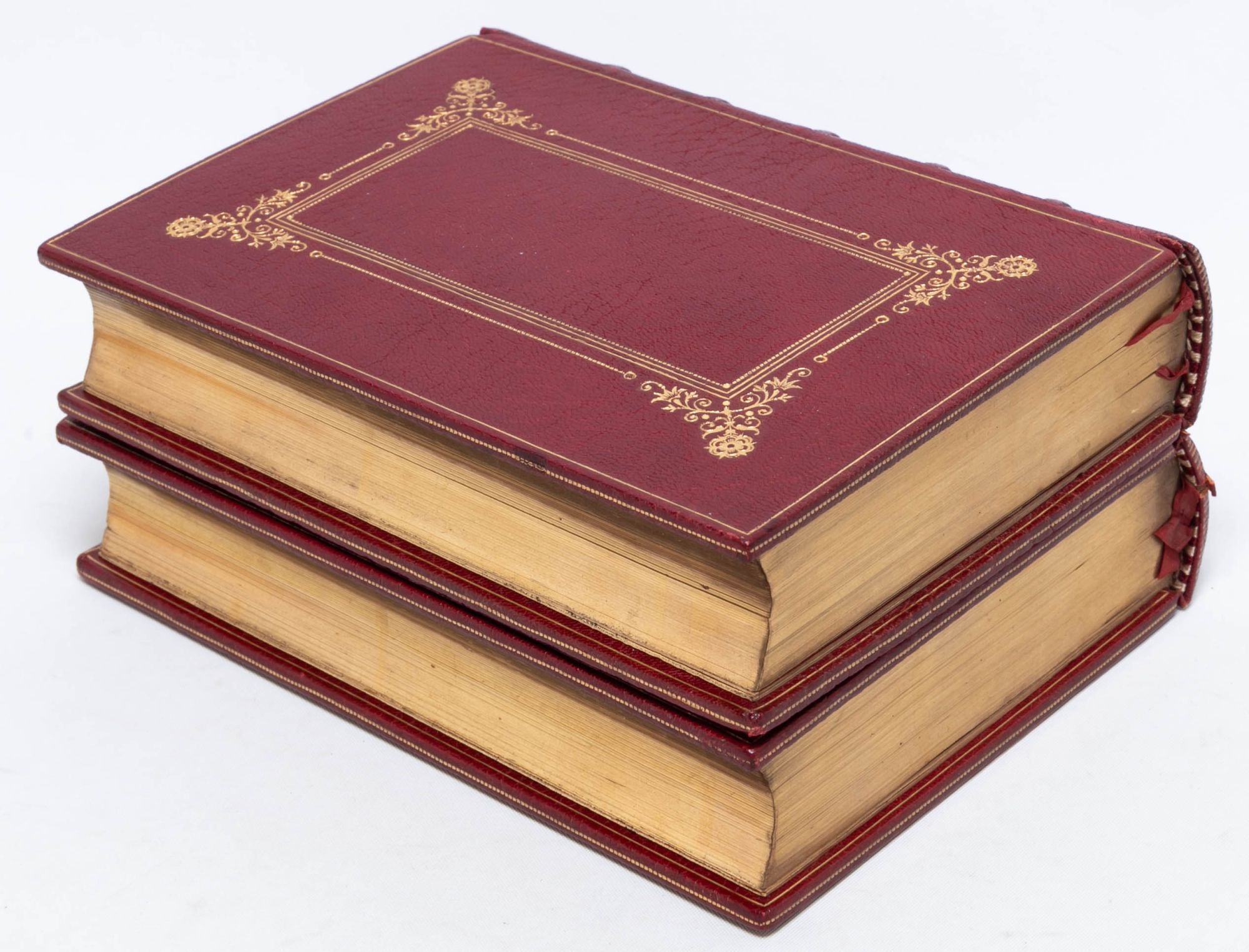
London: Macmillan and Co, 1893. First edition. Two octavo volumes (7 x 4 3/4 inches; 179 x 121 mm.). xxiii, [1, blank], 400; xxxi, [1, blank], 423, [1, blank] pp. With forty-six (ten full-page) illustrations by Harry Furniss in each volume. Each frontispiece with original tissue-guard. Verso of each title-page with small blue library accession number and a few leaves in each volume with the almost imperceptible blind stamp of the College of the Holy Names, Oakland, California. Bound ca. 1920 by Bayntun of Bath (stamp-signed in gilt on front turn-ins). Full maroon morocco, covers ruled in gilt surrounding an elaborate gilt central panel, spines with five raised bands, decoratively panelled and lettered in gilt in compartments, decorative gilt board-edges and turn-ins. red marbled endpapers, all edges gilt. Slight staining from original cloth covers on facing last page of Sylvie and Bruno and last blank of Sylvie and Bruno Concluded. With the rectangular bookplate of College of the Holy Names, Oakland, California on both front paste-downs. A fine pair.
Together, Sylvie and Bruno along with Sylvie and Bruno Concluded make up the final novel published by Lewis Carroll. "It is essentially a philosophical tract on morality, politics, and religion...packed with puns, paradoxes, puzzles, poetry, and Carroll's patented brand of inspired nonsense...Carroll entwines two plots, set in two alternate worlds, one the fairy kingdom of Elfland and the other a realm called Outland which mirrors and satirizes English society. In the former, Bruno and Sylvie endure adventures typical of classic fairy tales; in the latter, the two men vie for the love of a beautiful woman" (Publisher's Weekly). A departure from the Alice books, here Carroll tackles a number of more adult themes and plots.
The poem The Mad Gardener's Song is the most famous poem in the book:
"He thought he saw an Albatross
That fluttered round the lamp:
He looked again, and found it was
A Penny-Postage-Stamp.
"You'd best be getting home," he said:
"The nights are very damp!"
Williams, Madan & Green. The Lewis Carroll Handbook, 217 & 250.
Together, Sylvie and Bruno along with Sylvie and Bruno Concluded make up the final novel published by Lewis Carroll. "It is essentially a philosophical tract on morality, politics, and religion...packed with puns, paradoxes, puzzles, poetry, and Carroll's patented brand of inspired nonsense...Carroll entwines two plots, set in two alternate worlds, one the fairy kingdom of Elfland and the other a realm called Outland which mirrors and satirizes English society. In the former, Bruno and Sylvie endure adventures typical of classic fairy tales; in the latter, the two men vie for the love of a beautiful woman" (Publisher's Weekly). A departure from the Alice books, here Carroll tackles a number of more adult themes and plots.
The poem The Mad Gardener's Song is the most famous poem in the book:
"He thought he saw an Albatross
That fluttered round the lamp:
He looked again, and found it was
A Penny-Postage-Stamp.
"You'd best be getting home," he said:
"The nights are very damp!"
Williams, Madan & Green. The Lewis Carroll Handbook, 217 & 250.
Details
Title
Sylvie and Bruno [and] Sylvie and Bruno Concluded (in 2 vols.)
Author
Carroll, Lewis
Condition
Unknown
Publisher
Macmillan and Co: London
Date
1893
Edition
First edition