

Vanity Fair
- London: Bradbury & Evans, 1848
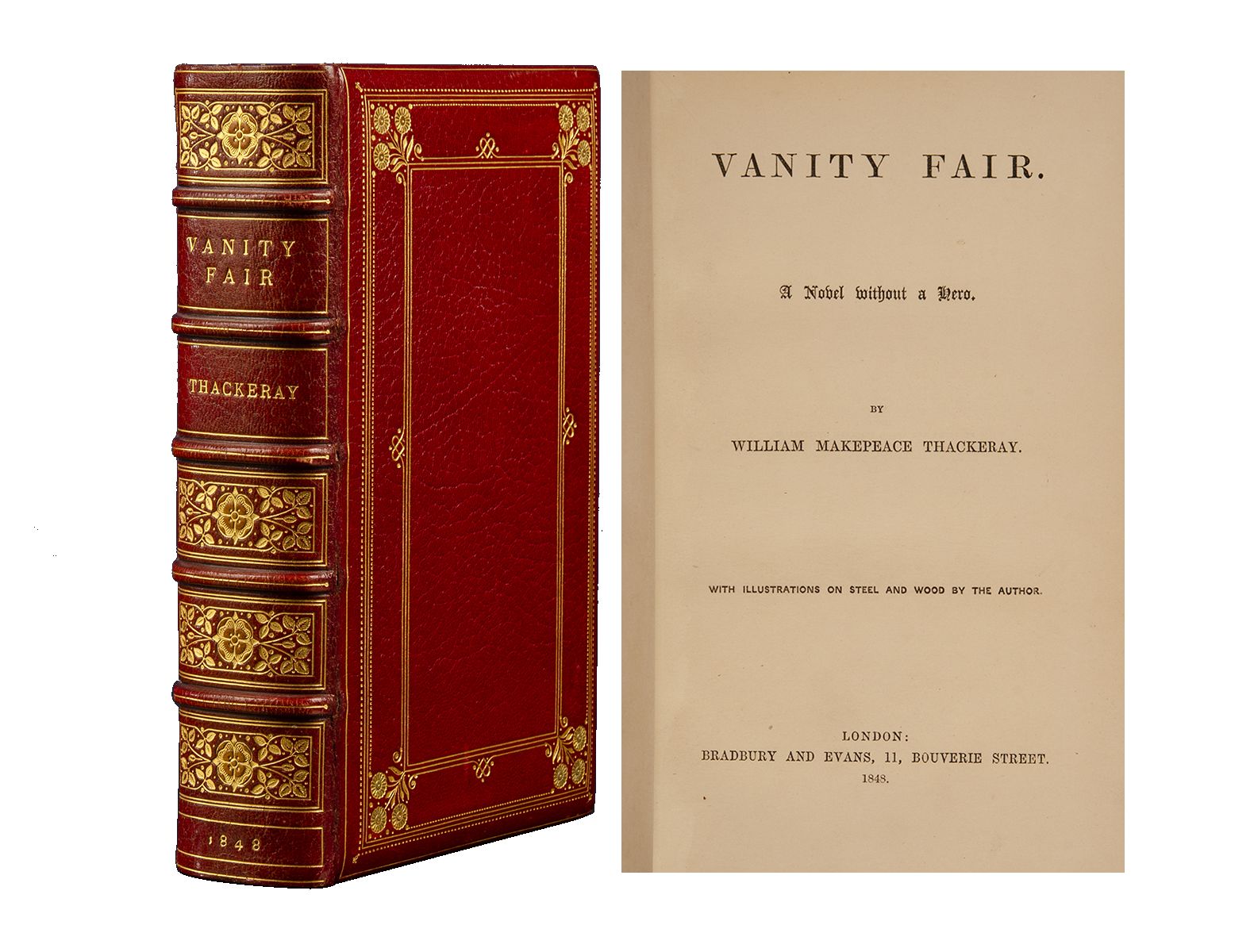
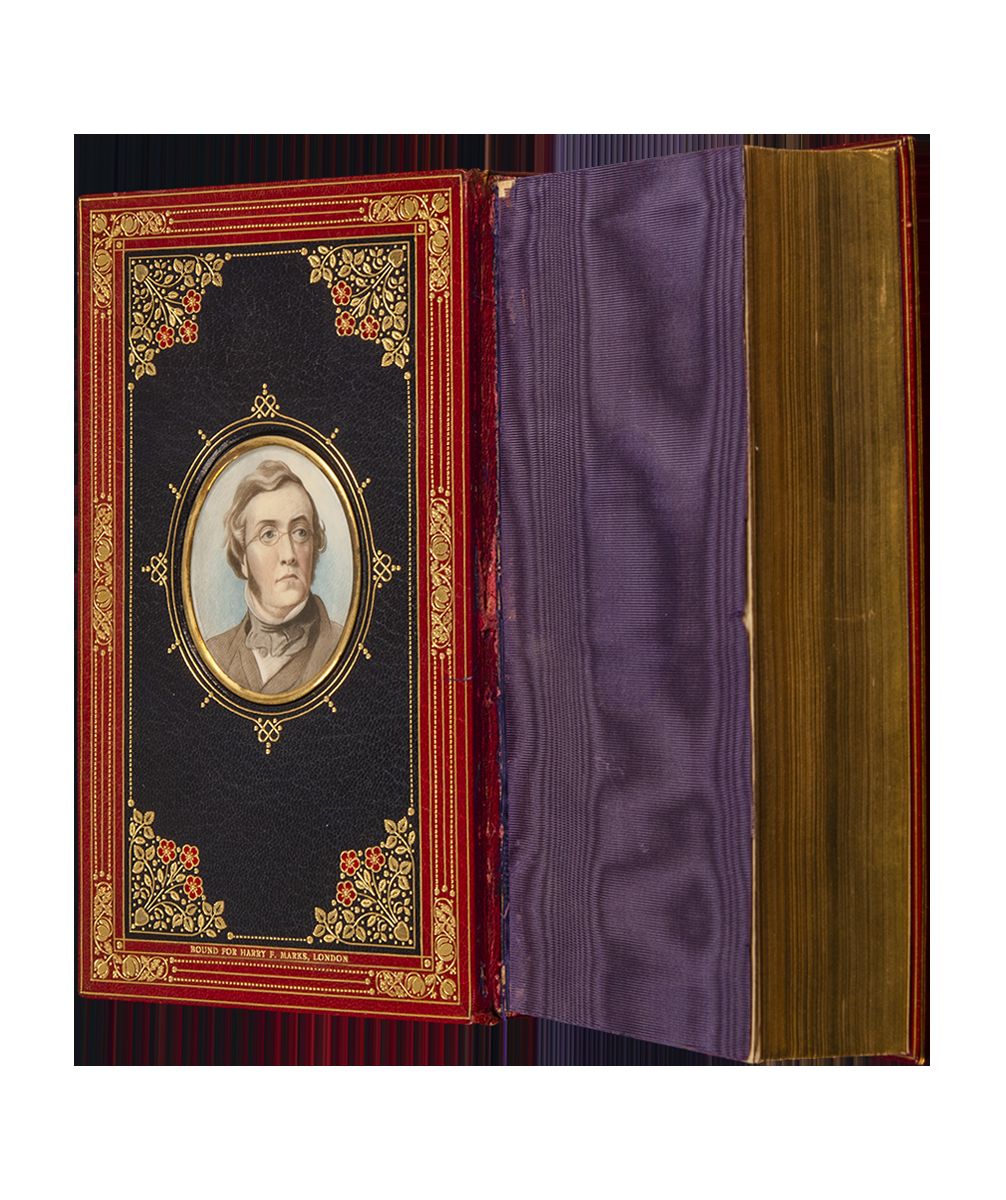
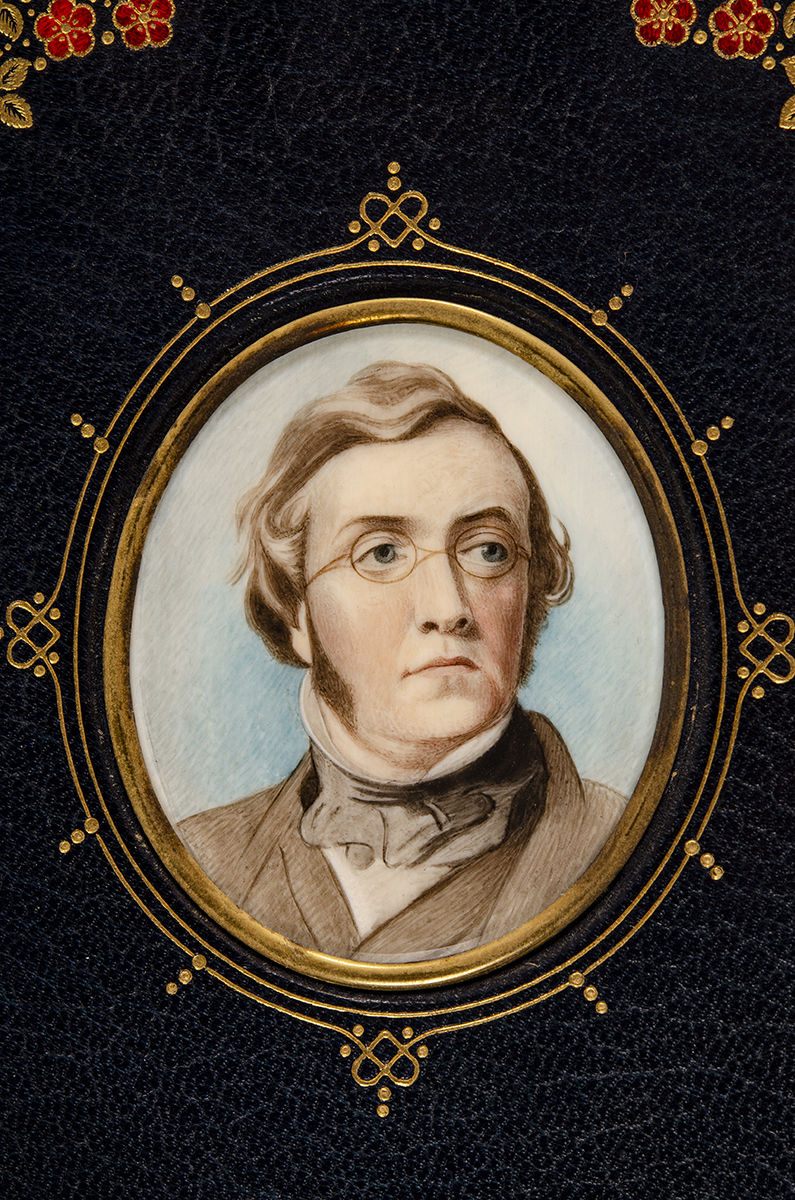
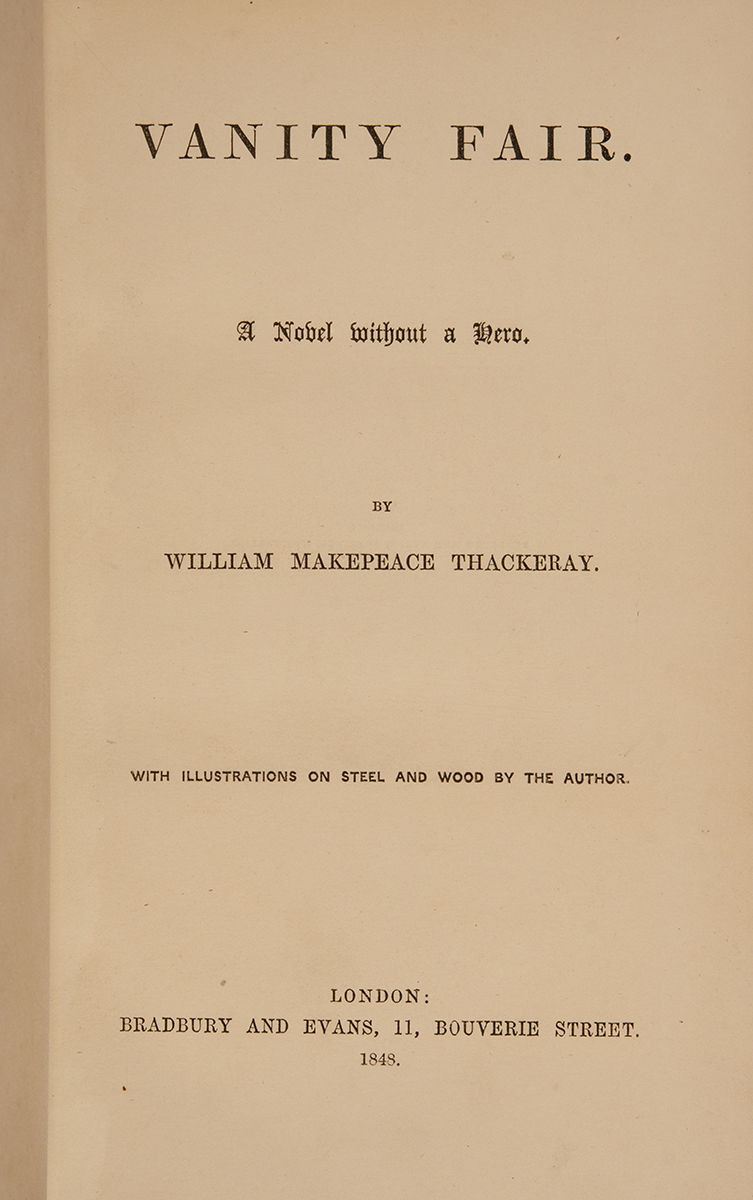
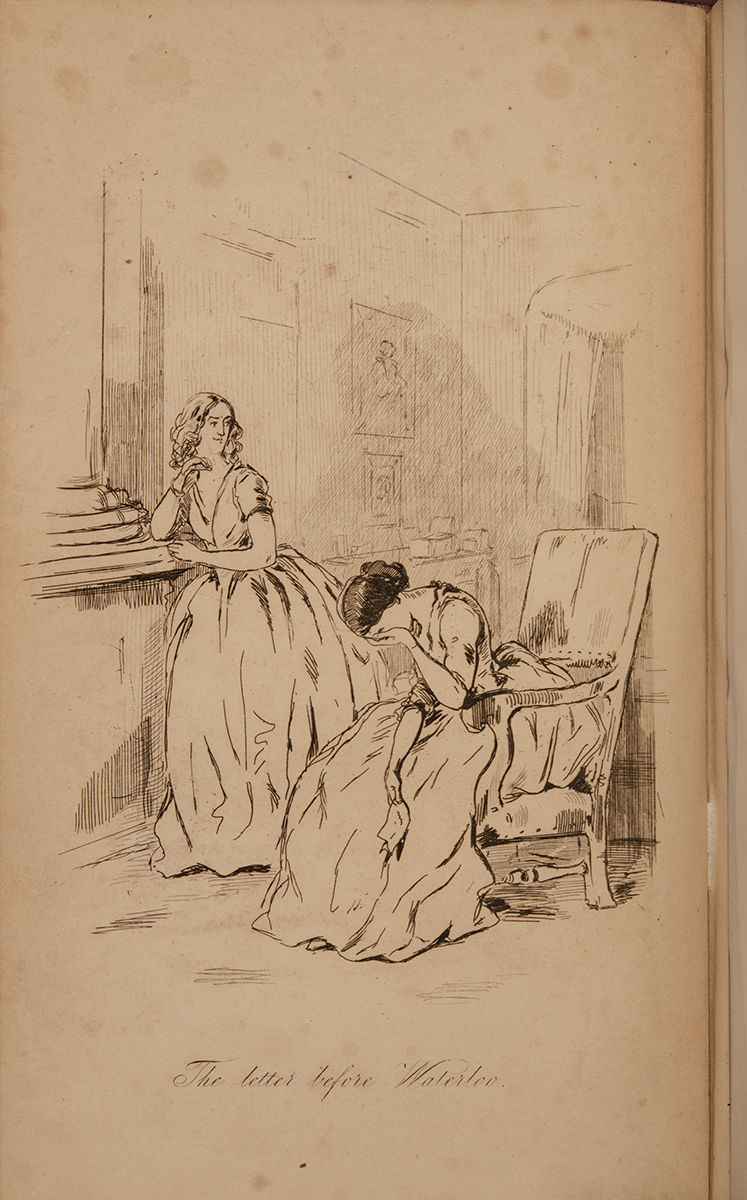
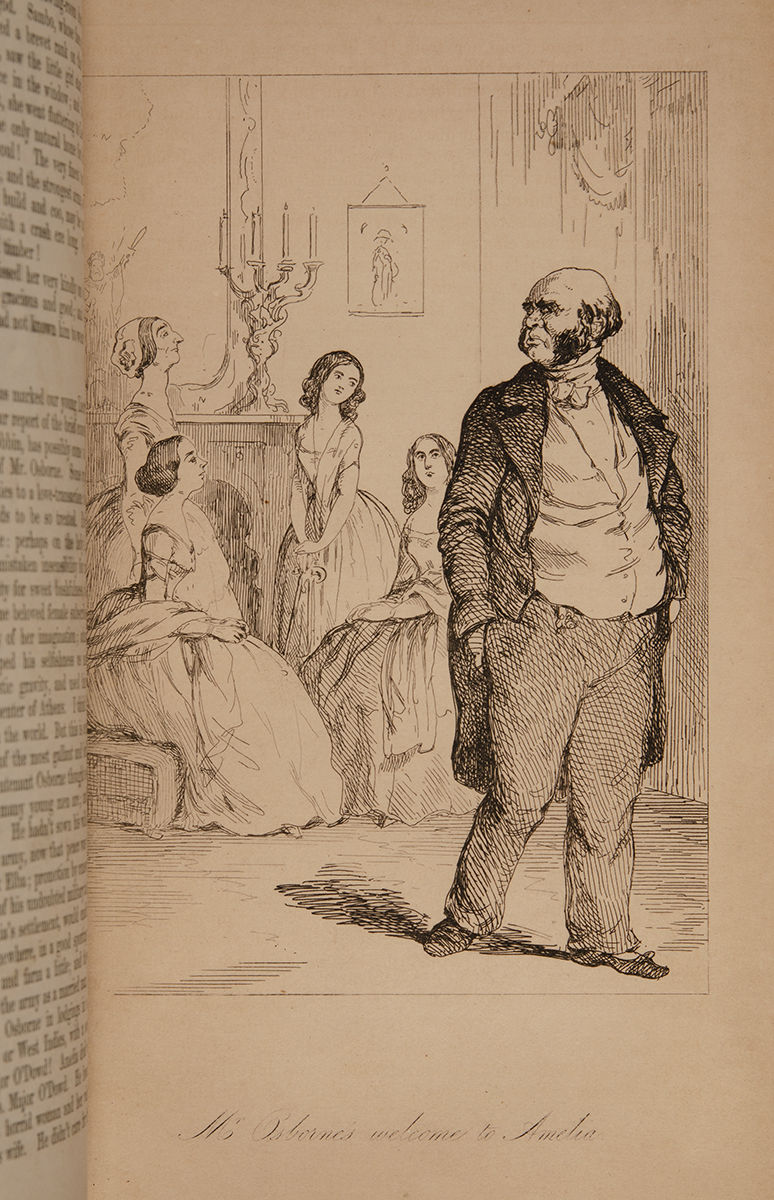
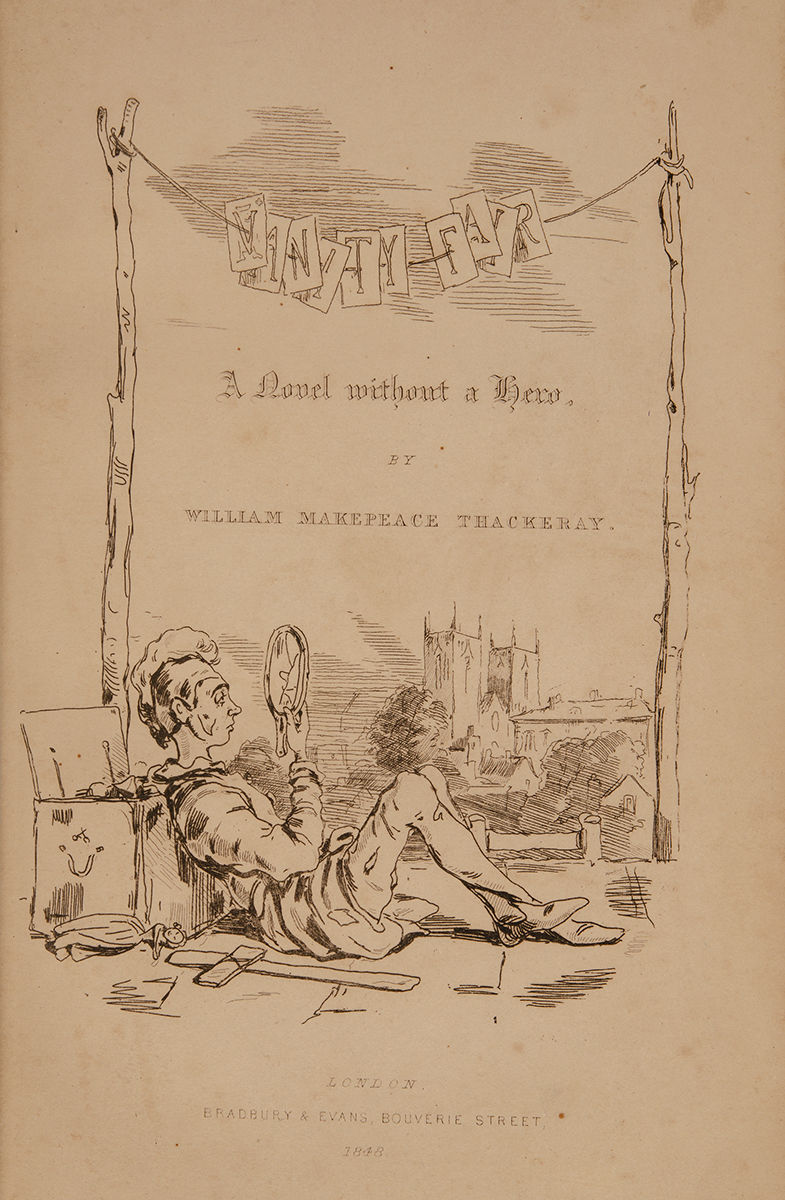
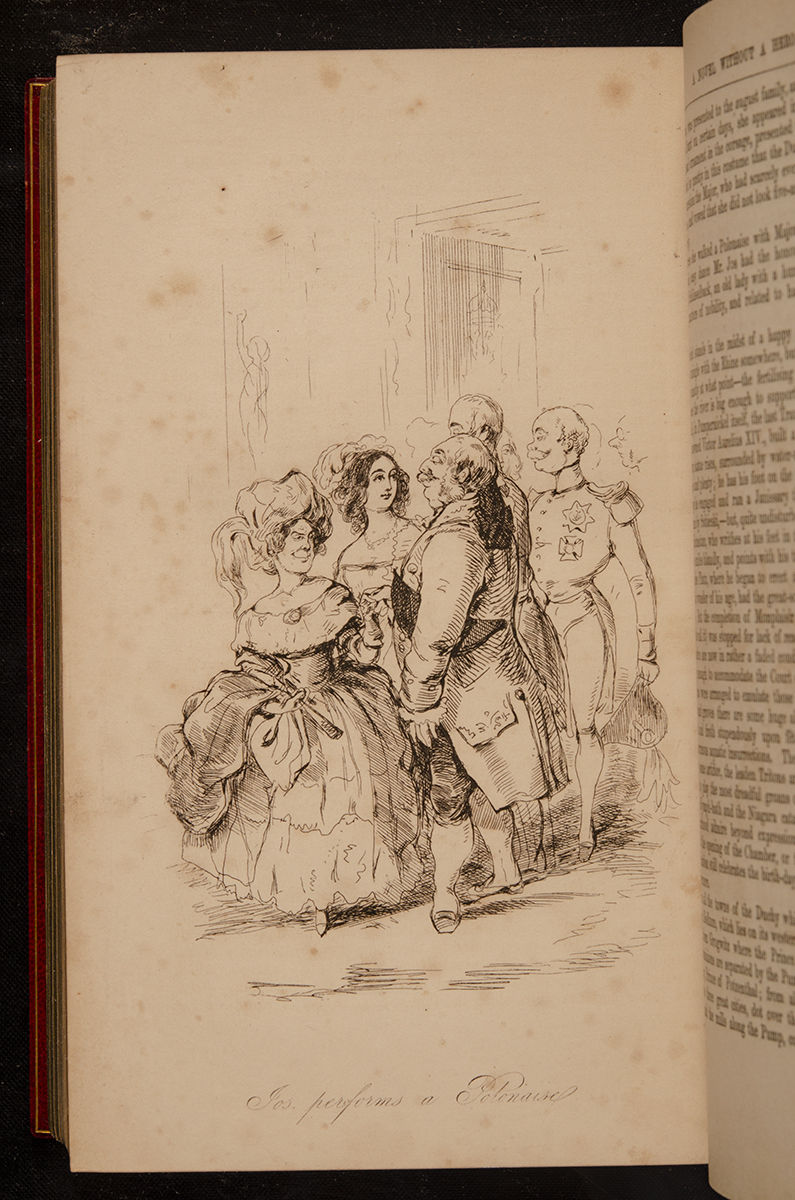
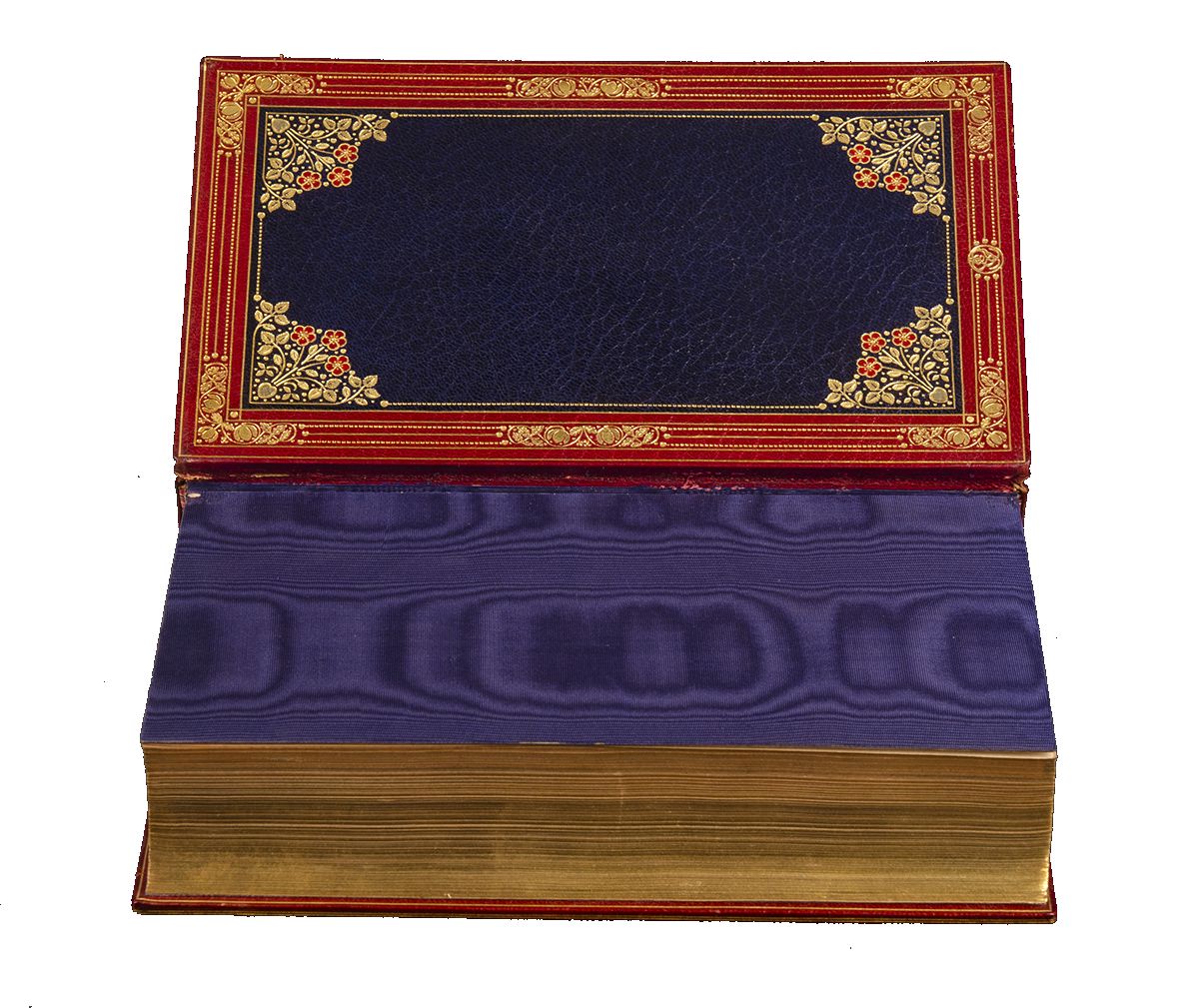
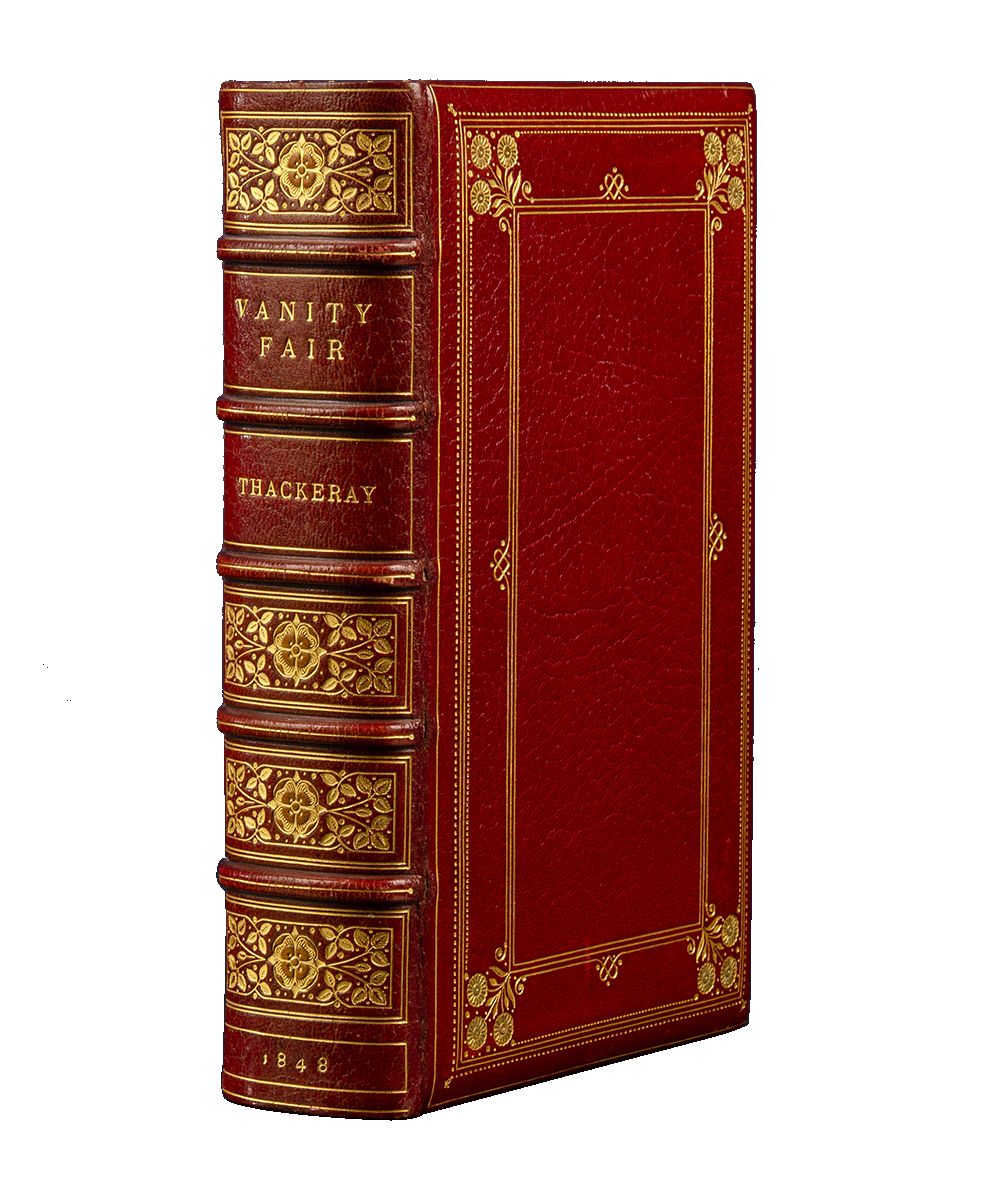
London: Bradbury & Evans, 1848. First edition. Near Fine. First issue with the suppressed woodcut of the Marquis of Steyne on page 336, with "Mr. Pitt" for "Sir Pitt" on page 453, and the rustic heading on page one. Octavo (8 5/16 x 5 1/8 inches; 210 x 130 mm.). xvi, 624 pp, with thirty-eight black and white steel engraved plates with tissue guards and one hundred and fifty woodcuts in the text by Thackeray. Expert paper repair to pages [xv] and xvi. Plates generally a little toned, still a near fine and very desirable copy of this classic. Bound c. 1920 by [Sangorski & Sutcliffe] stamped signed "Bound for Harry F. Marks. London" on lower turn-in. Full crimson crushed levant morocco over beveled boards, covers elaborately bordered in gilt, decorative gilt corner-pieces, each with a gilt triple flower design inlaid with green morocco petals. Spine with five raised bands, elaborately tooled in a similar floral design with four large flowers with tan morocco inlays, lettered in gilt in compartments. Inside front cover with large rectangular dark blue morocco inlaid panel, decorative gilt corner-pieces surrounding an oval gilt frame with a very fine hand-painted portrait miniature set under glass of the young Thackeray - possibly by Miss C.B. Currie. Double gilt-ruled board edges, highly decorative gilt turn-ins, blue watered silk endleaves (with a small chip at the fore-edge of the front leaf), all edges gilt. Minimal rubbing to joints (front joint touched up) otherwise near fine. Housed in a felt-lined red cloth clamshell case, spine with leather label, lettered in gilt.
Considered by its author to be a novel without a hero, Vanity Fair follows the path of the social climbing Becky Sharp as she seeks to improve her position within the British social strata set around the time the Napoleonic Wars. One of literature's most important early iterations of the female anti-hero, Miss Sharp helped to expose the truth that women were not merely domesticated angels but could be just as ambitious and driven as their male counterparts; and her foil Amelia reveals that even an apparent paragon of femininity was imperfect. A contemporary Victorian reviewer noted "Thakeray's theory of characterization proceeds generally on the assumption that the acts of men and women are directed not by principle but by instincts...There is not a person in the book who excites the reader's respect, and not one who fails to excite his interest. The morbid quickness of the author's perceptions of the selfish element, even in his few amiable characters, is a constant source of surprise. The novel not only has no hero, but implies the non-existence of heroism" (Contemporary Atlantic Monthly review). It was first published as in 19-part monthly serial from 1847 to 1848 with illustrations by Thackeray, and in 1848 published in book form with the subtitle "A Novel Without a Hero." A literary tour de force, transformed into a popular film starring Reese Witherspoon.
Harry F. Marks, was a renowned early twentieth century New York City bookman and the Black Sun Press' distributor in America. Marks had many books specially bound for his clientele by Sangorski & Sutcliffe. The story of the Sangorski & Sutcliffe Bindery reads like something out of a novel-when two of Douglas Cockrell's talented apprentices, Frances Sangorski and George Sutcliffe, were laid off during an economic downturn they began working out of an attic. Eventually their bindery would be famous for its intricate multicolored leather inlays and elaborate gold and jeweled bindings. Although named after the English miniaturist Richard Cosway (1742-1821), the desirable "Cosway Binding" with its jewel-like portrait miniature set into a fine binding was first developed at the turn of the century by J.H. Stonehouse, director of London's Henry Sotheran Booksellers. Their miniatures were painstakingly crafted by the talented painter Miss C. B. Currie (1849-1940). As the style grew in popularity, other publishing houses quickly began to reproduce this technique-each developing their own desirable take on the aesthetic-referred to as "Cosway style."
Grolier, 100 English, 87. Van Duzer 231. Wolff 6699. Near Fine.
Considered by its author to be a novel without a hero, Vanity Fair follows the path of the social climbing Becky Sharp as she seeks to improve her position within the British social strata set around the time the Napoleonic Wars. One of literature's most important early iterations of the female anti-hero, Miss Sharp helped to expose the truth that women were not merely domesticated angels but could be just as ambitious and driven as their male counterparts; and her foil Amelia reveals that even an apparent paragon of femininity was imperfect. A contemporary Victorian reviewer noted "Thakeray's theory of characterization proceeds generally on the assumption that the acts of men and women are directed not by principle but by instincts...There is not a person in the book who excites the reader's respect, and not one who fails to excite his interest. The morbid quickness of the author's perceptions of the selfish element, even in his few amiable characters, is a constant source of surprise. The novel not only has no hero, but implies the non-existence of heroism" (Contemporary Atlantic Monthly review). It was first published as in 19-part monthly serial from 1847 to 1848 with illustrations by Thackeray, and in 1848 published in book form with the subtitle "A Novel Without a Hero." A literary tour de force, transformed into a popular film starring Reese Witherspoon.
Harry F. Marks, was a renowned early twentieth century New York City bookman and the Black Sun Press' distributor in America. Marks had many books specially bound for his clientele by Sangorski & Sutcliffe. The story of the Sangorski & Sutcliffe Bindery reads like something out of a novel-when two of Douglas Cockrell's talented apprentices, Frances Sangorski and George Sutcliffe, were laid off during an economic downturn they began working out of an attic. Eventually their bindery would be famous for its intricate multicolored leather inlays and elaborate gold and jeweled bindings. Although named after the English miniaturist Richard Cosway (1742-1821), the desirable "Cosway Binding" with its jewel-like portrait miniature set into a fine binding was first developed at the turn of the century by J.H. Stonehouse, director of London's Henry Sotheran Booksellers. Their miniatures were painstakingly crafted by the talented painter Miss C. B. Currie (1849-1940). As the style grew in popularity, other publishing houses quickly began to reproduce this technique-each developing their own desirable take on the aesthetic-referred to as "Cosway style."
Grolier, 100 English, 87. Van Duzer 231. Wolff 6699. Near Fine.
Details
Title
Vanity Fair
Author
[Fine Binding - Cosway style] Thackeray, William Makepeace
Condition
Near Fine
Publisher
Bradbury & Evans: London
Date
1848
Edition
First edition