

Autograph Letter Signed (ALS)
- SIGNED Letter
- London: NP, 1791
London: NP, 1791. First Edition. Letter. EXCEPTIONALLY RARE LETTER FROM JAMES BOSWELL TO CARETAKER ANDREW GIBB DATED "30 APRIL 1791" TWO WEEKS BEFORE THE PUBLICATION OF LIFE OF SAMUEL JOHNSON. BOLDLY SIGNED WITH FULL SIGNATURE. Rarely at ease with himself, James Boswell was famously a man of contradictions, vacillating between different versions of his identity: Lecherous rake or doting husband? Sophisticated Londoner or Scottish farmer? Savvy businessman or indulgent landlord? Rebellious rogue or obedient son? If we were to put a pin on Boswell's most consistent character trait, it may simply be 'contradictory.'
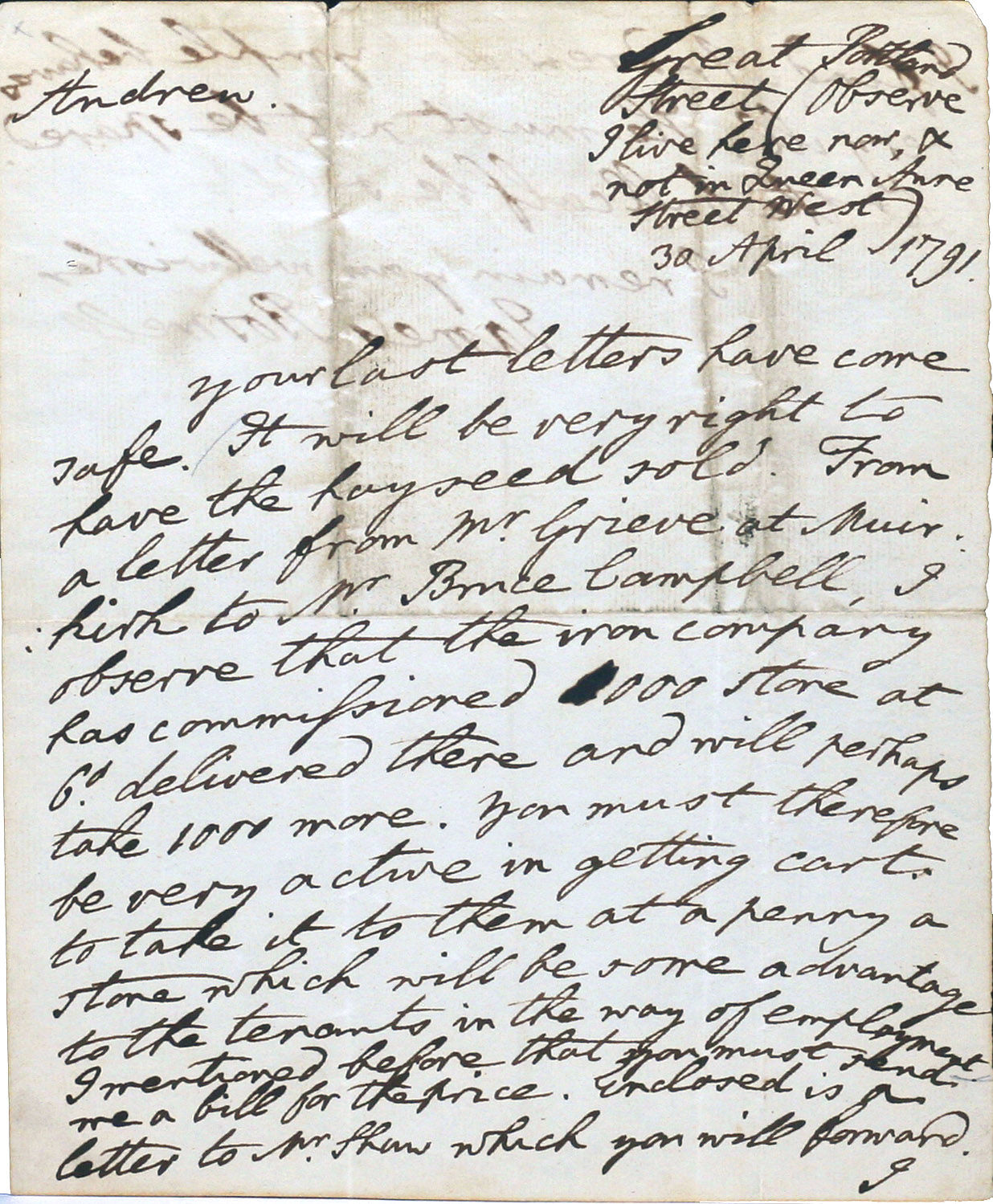
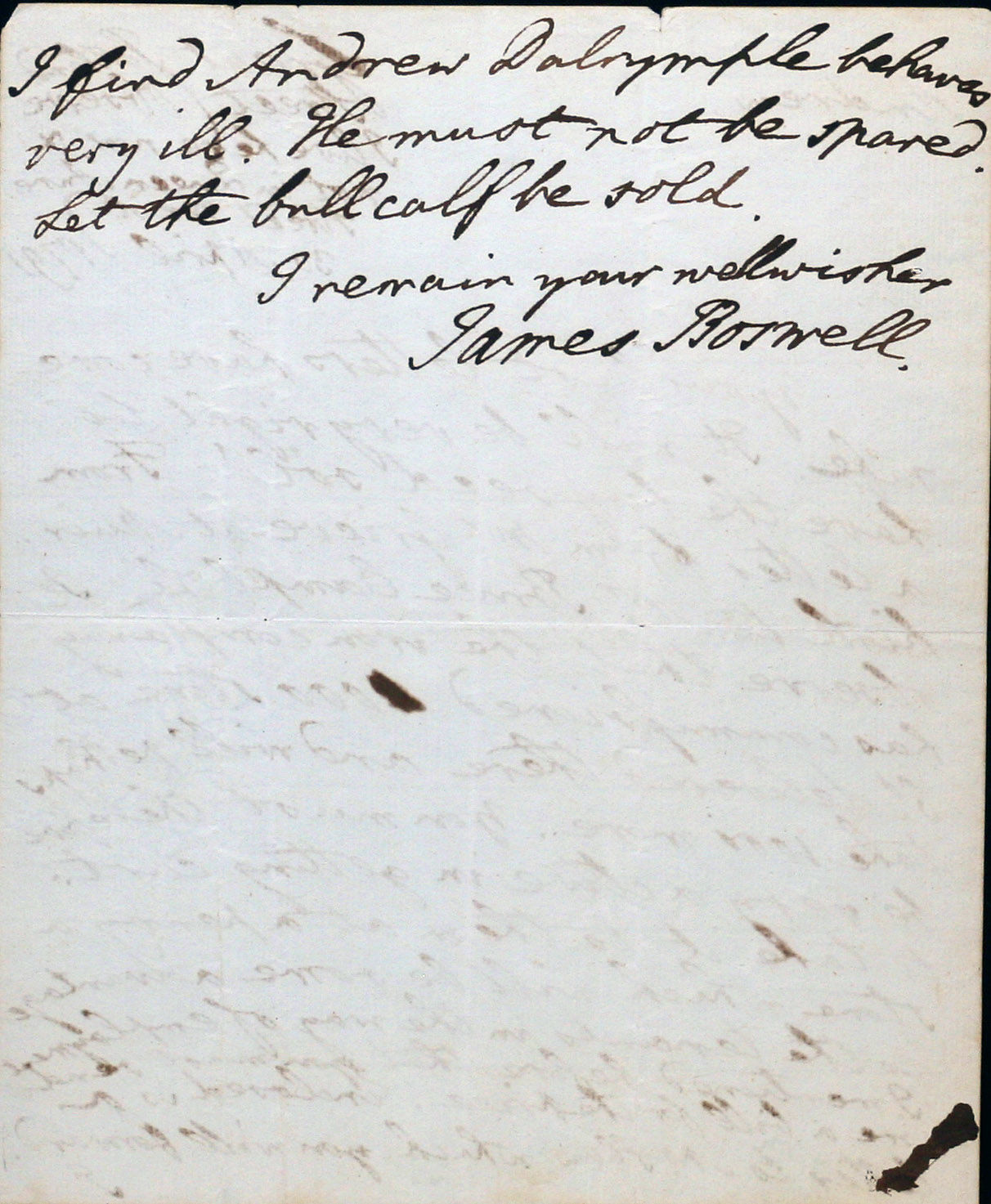
In this letter, written just two weeks before the publication of Life of Samuel Johnson , we see these contradictions on display. The letter to Boswell's new estate manager, Andrew Gibb, offers a glimpse into Boswell's mind and affairs. On the one hand we see Boswell, the provincial gentleman farmer concerned with the daily decisions of running Auchinleck, his Scottish estate, such as when he mentions, "It will be very right to have the hayseed sold" and "let the bull calf be sold." At the same time, despite his attempt to make financially savvy choices, we are reminded of Boswell's well known kindness to his tenants as is seen here in his attempts to provide "some advantage to the tenants in the way of employment." But of course, the managing of his ancestral home was not consistently a priority to Boswell. He pens the letter from London, after all. And lest he manage to stay consistently professional and on task in his letter, Boswell interrupts his own discussion of the management of Auchinleck with an angry declaration about a former tenant's offenses stating, "I find Andrew Dalrymple behaves very ill. He must not be spared." Having followed his own disjointed stream of consciousness, he returns to the financial affairs of the state without acknowledging his heated aside.
What must Andrew Gibb have thought? Even within this declaration about Andrew Dalrymple's supposedly terrible misdeeds, we see contradictory behavior. In another letter to Gibb of the same year, Boswell, still furious about Dalrymple, goes so far as to demand Gibb "let him be apprehended and imprisoned. I am very unwilling to proceed to extremities; but an example must be made in such a case." Yet, apparently months later Dalrymple remained at large. One can imagine Andrew Gibb frequently laughing at his boss's bluster, knowing it would likely come to nothing. Although brand new to his role, Gibb would continue to serve James Boswell and his descendants as the caretaker to Auchinleck for the next forty-six years. In addition to being called upon to arrest unruly tenants, he likely had enormous responsibilities, given his boss's frequent absences from the estate as well as his infamously poor business savvy. Indeed, at the time of this letter, Boswell found himself in a precarious financial situation, having taken large loans to purchase the neighborhing estate to Auchinleck.
Yet, we can forgive Boswell's emotional outburst. After all, in addition to worrying about his potentially poor business decision and his badly behaved tenant, in a few days his magnum opus Life of Samuel Johnson will be released to the world. It is admirable that he is attempting to manage his affairs from afar despite the overwhelming anticipation. He must have been preoccupied with both worry and excitement - will the public appreciate his work? Will he succeed in memorializing his great mentor/friend? Will the sales be sufficient to justify his audacious land purchases? Is all of this haunting his thoughts as he pens this letter to Andrew Gibb?
To add to the energy and anxiety swirling around Boswell's life, he notes in the letter that he has just moved to a new address in London on Great Portland Street, his final move, as he will die in London four years later in 1795.
The letter grants us a snapshot into the mind of James Boswell during a wonderfully and terrifyingly anticipatory time in his life. It offers us a range of Boswell's contradictions-is he more Londoner or Scotsman? Strict or lax landlord? Serious estate owner or emotional writer? It is delightful to imagine the frantic hand of James Boswell scribbling this letter, attempting to stay focused on his faraway affairs while distracted by the expectations of the upcoming weeks.
The letter reads in full:
Great Portland Street (observe I live here now, & not in Queen Anne Street West)
30 April 1791.
Andrew.
Your last letters have come safe. It will be very right to have the hayseed sold. From a letter from Mr. Grieve at Muir Kirk to Mr. Bruce Campbell, I observe that the iron company has commissioned 1000 stone at 6d [sixpence] delivered there and will perhaps take 1000 more. You must therefore be very active in getting cart to take it to them at a penny a stone which will be some advantage to the tenants in the way of employment. I mentioned before that you must send me a bill for the price. Enclosed is a letter to Mr. Shaw which you will forward. I [catchword on recto) I find Andrew Dalrymple behaves very ill. He must not be spared. Let the bull calf be sold.
I remain your wellwisher
James Boswell.
Hand-written letter in dark ink with strong and large full signature: "James Boswell." Great Portland Street, London, England: 30 April 1791. One page, 186 mm x 227 mm (7.3" x 8.0 "); Mailing folds, with some toning at folds. Contemporary ink smudges in lower margin. In excellent condition in a dark and legible text. Housed in a custom folder.
SCARCE: We can only trace a handful of James Boswell letters that have ever been on the market.
References:
Moss, Michael. The Duel between Sir Alexander Boswell and James Stuart: Scottish Squibs and Pistols at Dawn. United Kingdom, Cambridge Scholars Publishing, 2019.
Turnbull, Gordon. "Boswell, James (1740-1795), lawyer, diarist, and biographer of Samuel Johnson." Oxford Dictionary of National Biography. October 10, 2019. Oxford University Press.
In this letter, written just two weeks before the publication of Life of Samuel Johnson , we see these contradictions on display. The letter to Boswell's new estate manager, Andrew Gibb, offers a glimpse into Boswell's mind and affairs. On the one hand we see Boswell, the provincial gentleman farmer concerned with the daily decisions of running Auchinleck, his Scottish estate, such as when he mentions, "It will be very right to have the hayseed sold" and "let the bull calf be sold." At the same time, despite his attempt to make financially savvy choices, we are reminded of Boswell's well known kindness to his tenants as is seen here in his attempts to provide "some advantage to the tenants in the way of employment." But of course, the managing of his ancestral home was not consistently a priority to Boswell. He pens the letter from London, after all. And lest he manage to stay consistently professional and on task in his letter, Boswell interrupts his own discussion of the management of Auchinleck with an angry declaration about a former tenant's offenses stating, "I find Andrew Dalrymple behaves very ill. He must not be spared." Having followed his own disjointed stream of consciousness, he returns to the financial affairs of the state without acknowledging his heated aside.
What must Andrew Gibb have thought? Even within this declaration about Andrew Dalrymple's supposedly terrible misdeeds, we see contradictory behavior. In another letter to Gibb of the same year, Boswell, still furious about Dalrymple, goes so far as to demand Gibb "let him be apprehended and imprisoned. I am very unwilling to proceed to extremities; but an example must be made in such a case." Yet, apparently months later Dalrymple remained at large. One can imagine Andrew Gibb frequently laughing at his boss's bluster, knowing it would likely come to nothing. Although brand new to his role, Gibb would continue to serve James Boswell and his descendants as the caretaker to Auchinleck for the next forty-six years. In addition to being called upon to arrest unruly tenants, he likely had enormous responsibilities, given his boss's frequent absences from the estate as well as his infamously poor business savvy. Indeed, at the time of this letter, Boswell found himself in a precarious financial situation, having taken large loans to purchase the neighborhing estate to Auchinleck.
Yet, we can forgive Boswell's emotional outburst. After all, in addition to worrying about his potentially poor business decision and his badly behaved tenant, in a few days his magnum opus Life of Samuel Johnson will be released to the world. It is admirable that he is attempting to manage his affairs from afar despite the overwhelming anticipation. He must have been preoccupied with both worry and excitement - will the public appreciate his work? Will he succeed in memorializing his great mentor/friend? Will the sales be sufficient to justify his audacious land purchases? Is all of this haunting his thoughts as he pens this letter to Andrew Gibb?
To add to the energy and anxiety swirling around Boswell's life, he notes in the letter that he has just moved to a new address in London on Great Portland Street, his final move, as he will die in London four years later in 1795.
The letter grants us a snapshot into the mind of James Boswell during a wonderfully and terrifyingly anticipatory time in his life. It offers us a range of Boswell's contradictions-is he more Londoner or Scotsman? Strict or lax landlord? Serious estate owner or emotional writer? It is delightful to imagine the frantic hand of James Boswell scribbling this letter, attempting to stay focused on his faraway affairs while distracted by the expectations of the upcoming weeks.
The letter reads in full:
Great Portland Street (observe I live here now, & not in Queen Anne Street West)
30 April 1791.
Andrew.
Your last letters have come safe. It will be very right to have the hayseed sold. From a letter from Mr. Grieve at Muir Kirk to Mr. Bruce Campbell, I observe that the iron company has commissioned 1000 stone at 6d [sixpence] delivered there and will perhaps take 1000 more. You must therefore be very active in getting cart to take it to them at a penny a stone which will be some advantage to the tenants in the way of employment. I mentioned before that you must send me a bill for the price. Enclosed is a letter to Mr. Shaw which you will forward. I [catchword on recto) I find Andrew Dalrymple behaves very ill. He must not be spared. Let the bull calf be sold.
I remain your wellwisher
James Boswell.
Hand-written letter in dark ink with strong and large full signature: "James Boswell." Great Portland Street, London, England: 30 April 1791. One page, 186 mm x 227 mm (7.3" x 8.0 "); Mailing folds, with some toning at folds. Contemporary ink smudges in lower margin. In excellent condition in a dark and legible text. Housed in a custom folder.
SCARCE: We can only trace a handful of James Boswell letters that have ever been on the market.
References:
Moss, Michael. The Duel between Sir Alexander Boswell and James Stuart: Scottish Squibs and Pistols at Dawn. United Kingdom, Cambridge Scholars Publishing, 2019.
Turnbull, Gordon. "Boswell, James (1740-1795), lawyer, diarist, and biographer of Samuel Johnson." Oxford Dictionary of National Biography. October 10, 2019. Oxford University Press.
Details
Title
Autograph Letter Signed (ALS)
Author
BOSWELL, JAMES
Binding
Letter
Condition
Unknown
Publisher
NP: London
Date
1791
Edition
First Edition