

THREE LIVES
- London: John Rodker, 1927
London: John Rodker, 1927. Very good minus in good jacket.. Third UK printing of Stein's masterpiece of modernism and first published book - stories of three working-class Baltimorean women. By the time her first book was completed, Stein was well educated, well-traveled, and well connected in the art world, sitting for a Picasso portrait in 1906 even as she composed THREE LIVES with self-consciously painterly technique.
Though retrospectively classed as one of her most accessible works, the book was difficult for contemporaries, none of whom consented to publish it without being paid, and even the vanity press she settled on was hesitant to accept Stein's money without trying to correct her "pretty bad slips in grammar" (Beal). "I want to say frankly that I think you have written a very peculiar book and it will be hard thing to make people take it seriously," wrote Grafton publisher Frederick Hitchcock, who in 1909 hadn't seen anything yet.
In later years James Weldon Johnson acknowledged "Melanchtha" as perhaps the first instance of a white author writing a "story of love" between Black characters with humanity and dignity; not to be outdone in praise for her own works by anyone, Stein herself called it "the first definite step away from the nineteenth century and into the twentieth century in literature."
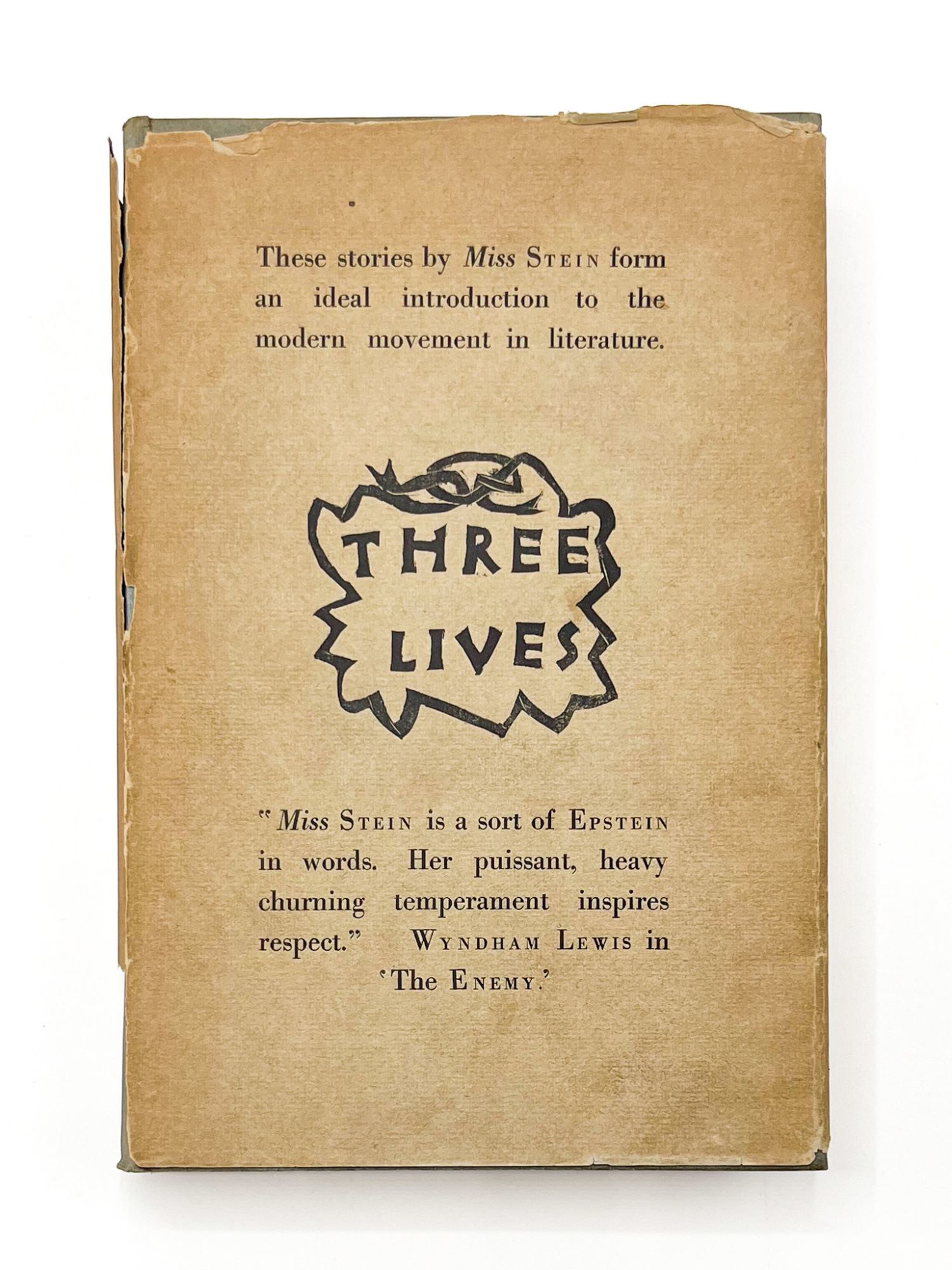
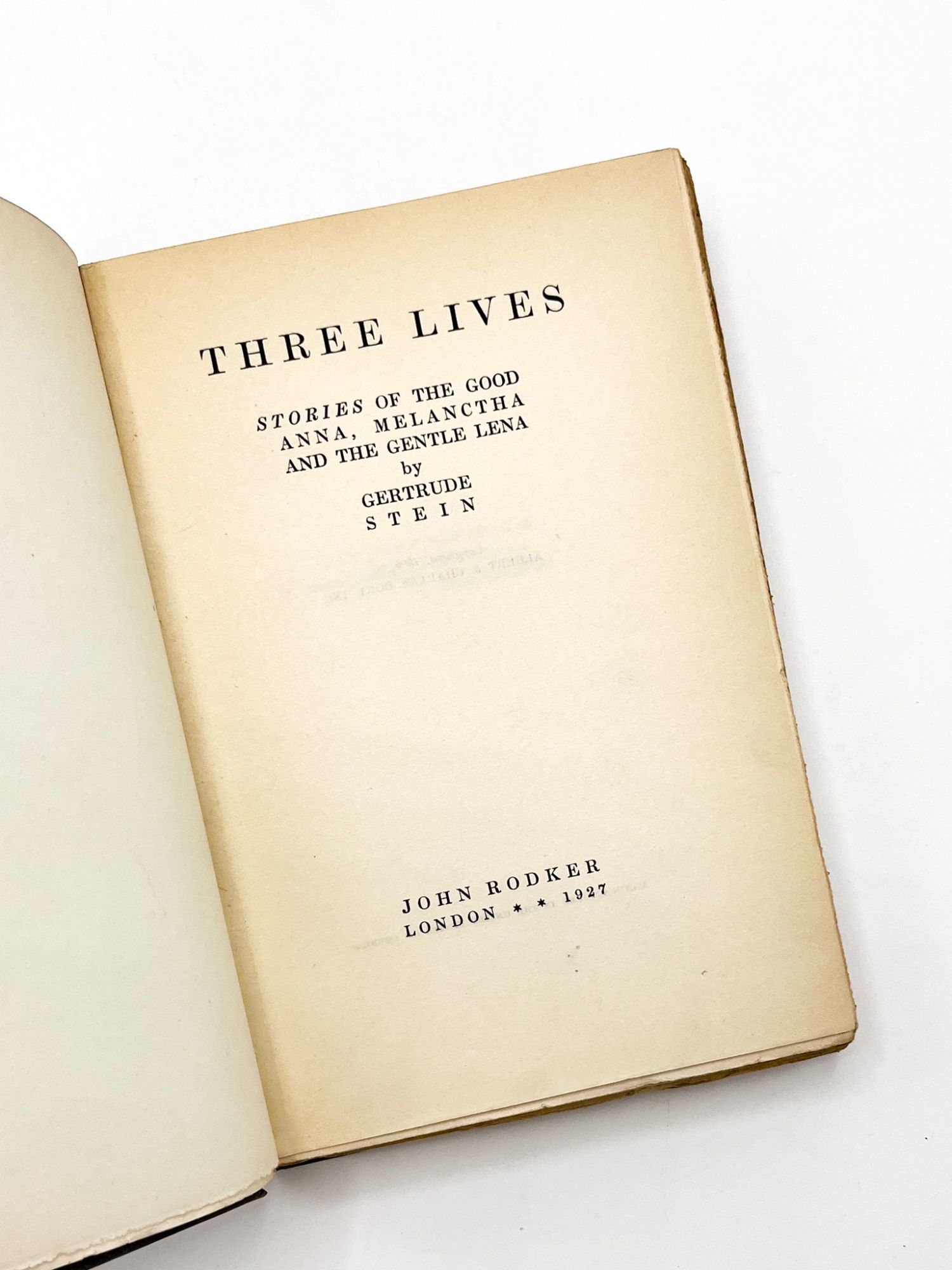
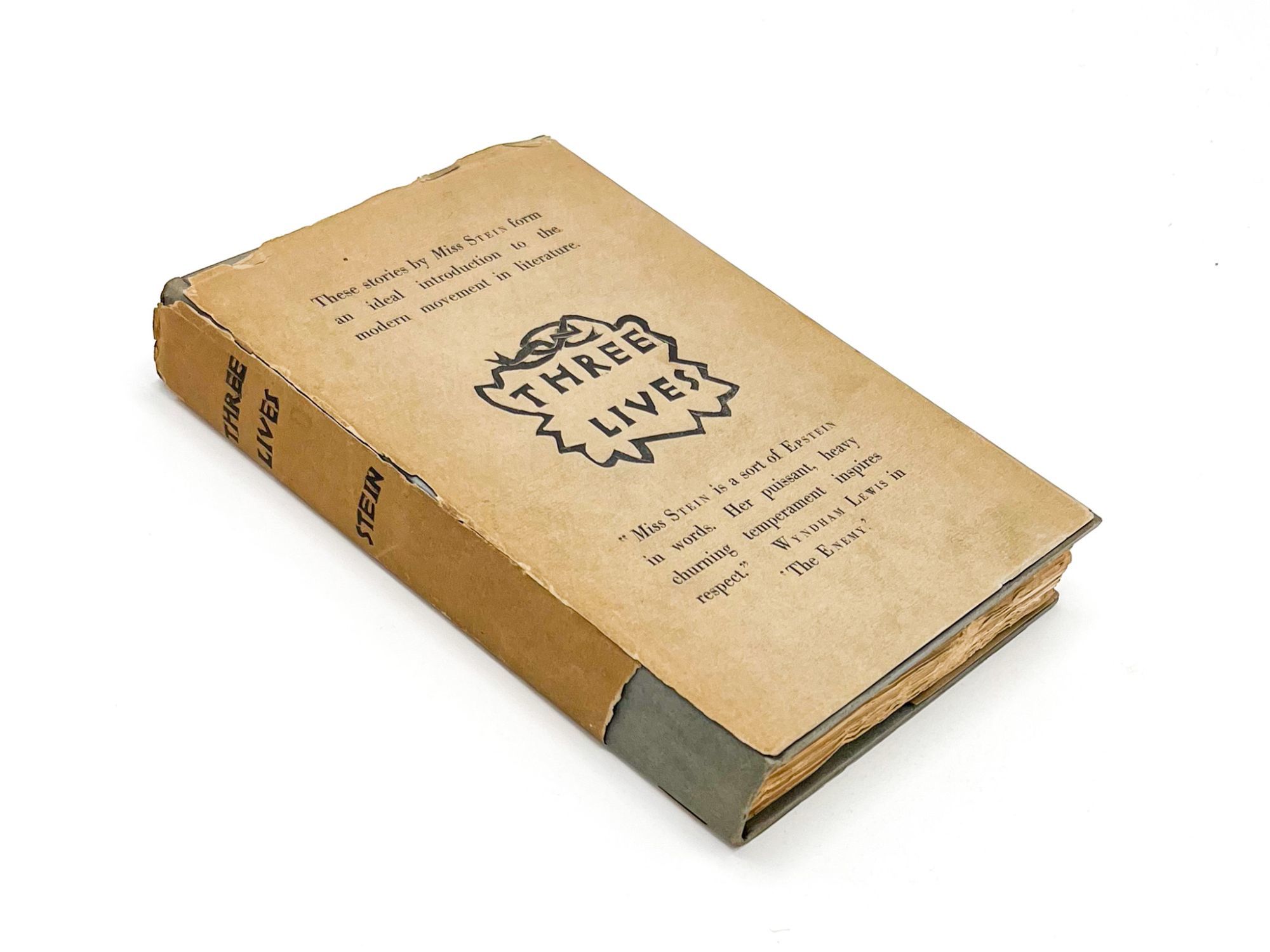
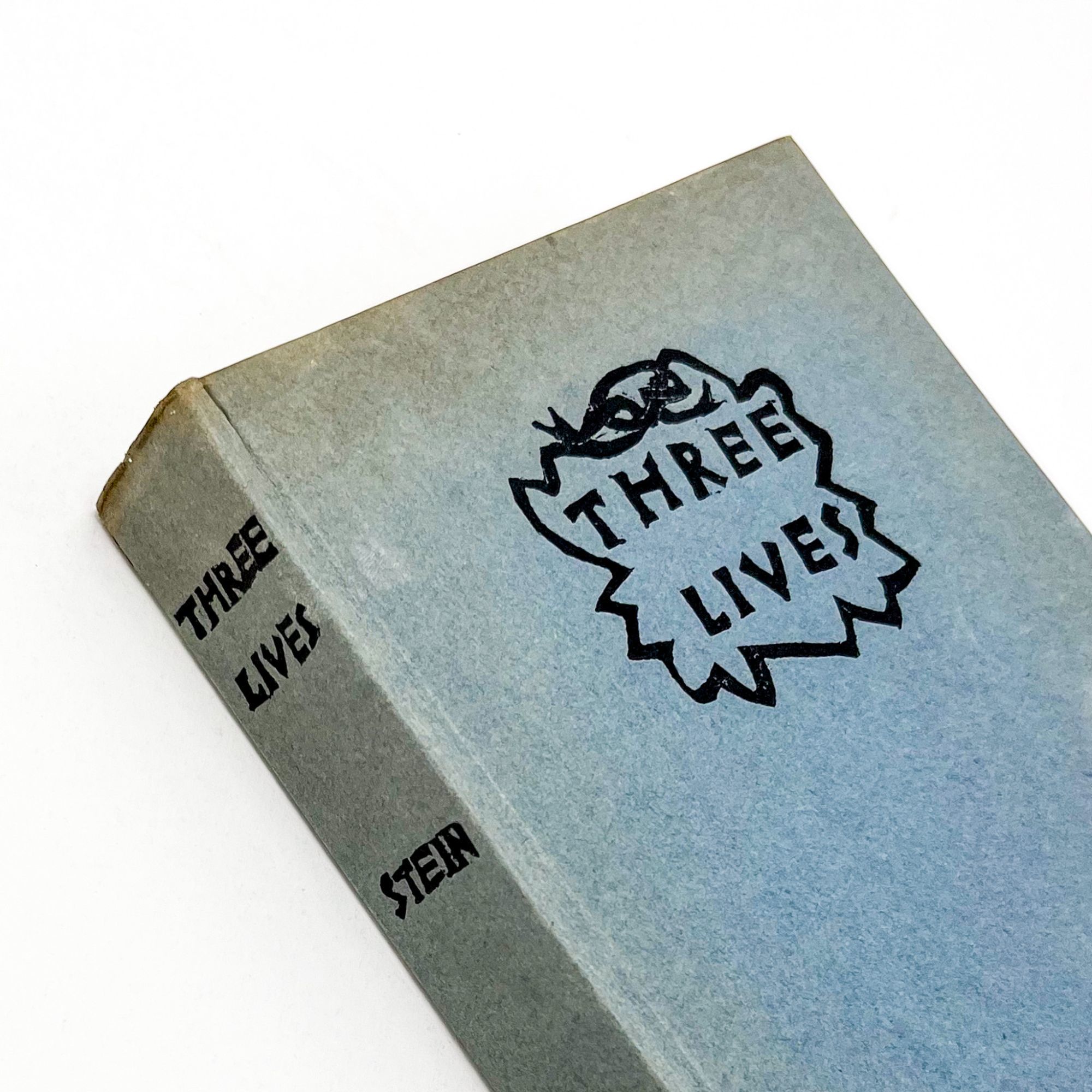
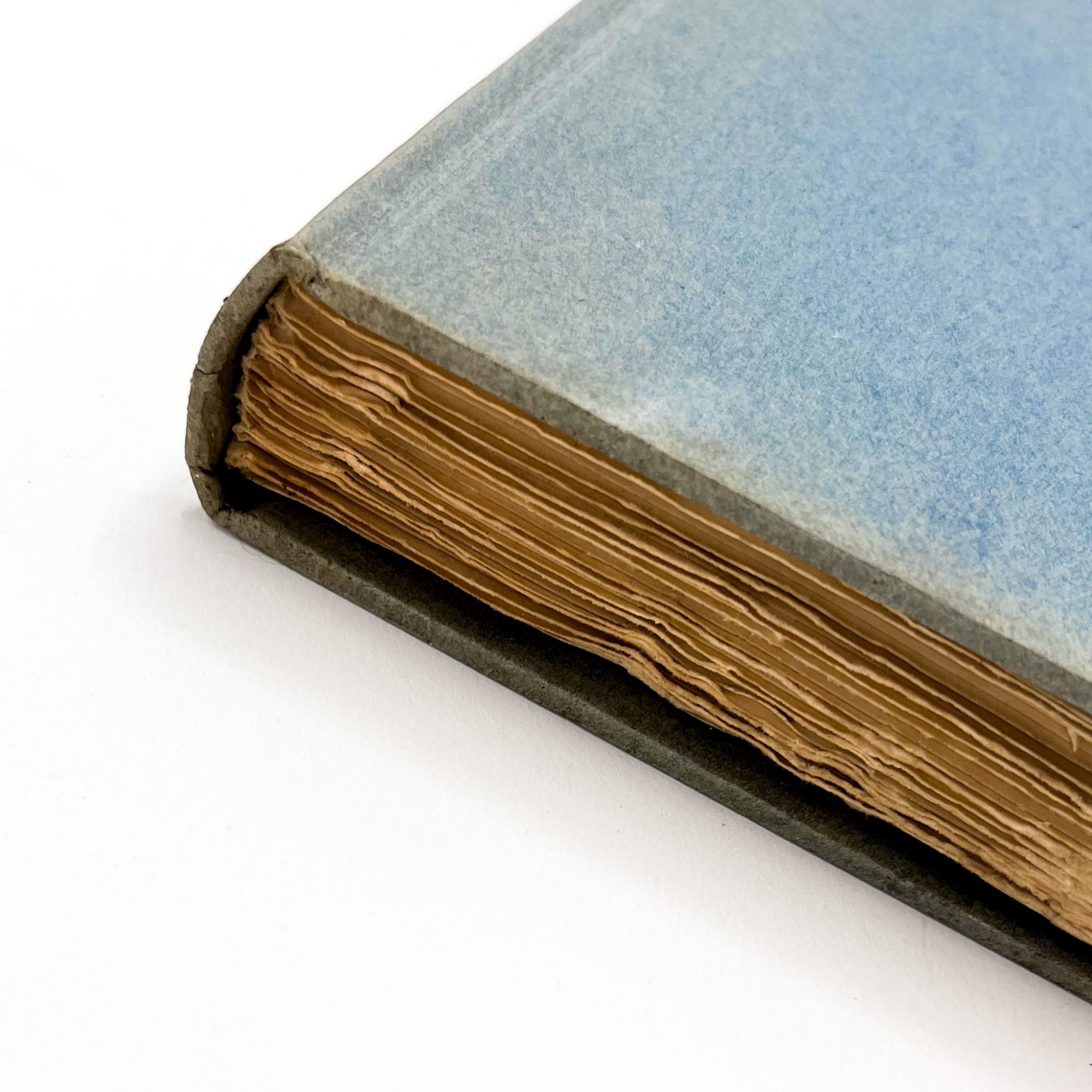
Scarce in the original dust jacket. Wyndham Lewis, who disliked publisher John Rodker sufficiently to caricature him in print and who wrote that "Gertrude Stein's prose-song is a cold, black, suet-pudding," was, rather remarkably, selectively excerpted from that same piece of criticism for this edition's jacket blurb. One must suppose it was done to irritate him. 7.25'' x 5''. Original slate grey boards stamped in black. Pale grey topstain. In original unclipped (25s.) dust jacket. False copyright statement to title page verso (Wilson A1e). 279, [1] pages. Light edgewear, a few scuff marks to front board, minor soil to top edge of text block. Offsetting to endpapers. Sunning and moderate chipping to jacket, with larger 2'' chip to heel of spine; long closed tears to jacket folds.
Though retrospectively classed as one of her most accessible works, the book was difficult for contemporaries, none of whom consented to publish it without being paid, and even the vanity press she settled on was hesitant to accept Stein's money without trying to correct her "pretty bad slips in grammar" (Beal). "I want to say frankly that I think you have written a very peculiar book and it will be hard thing to make people take it seriously," wrote Grafton publisher Frederick Hitchcock, who in 1909 hadn't seen anything yet.
In later years James Weldon Johnson acknowledged "Melanchtha" as perhaps the first instance of a white author writing a "story of love" between Black characters with humanity and dignity; not to be outdone in praise for her own works by anyone, Stein herself called it "the first definite step away from the nineteenth century and into the twentieth century in literature."
Scarce in the original dust jacket. Wyndham Lewis, who disliked publisher John Rodker sufficiently to caricature him in print and who wrote that "Gertrude Stein's prose-song is a cold, black, suet-pudding," was, rather remarkably, selectively excerpted from that same piece of criticism for this edition's jacket blurb. One must suppose it was done to irritate him. 7.25'' x 5''. Original slate grey boards stamped in black. Pale grey topstain. In original unclipped (25s.) dust jacket. False copyright statement to title page verso (Wilson A1e). 279, [1] pages. Light edgewear, a few scuff marks to front board, minor soil to top edge of text block. Offsetting to endpapers. Sunning and moderate chipping to jacket, with larger 2'' chip to heel of spine; long closed tears to jacket folds.
Details
Title
THREE LIVES
Author
Stein, Gertrude
Condition
Good
Publisher
John Rodker: London
Date
1927