

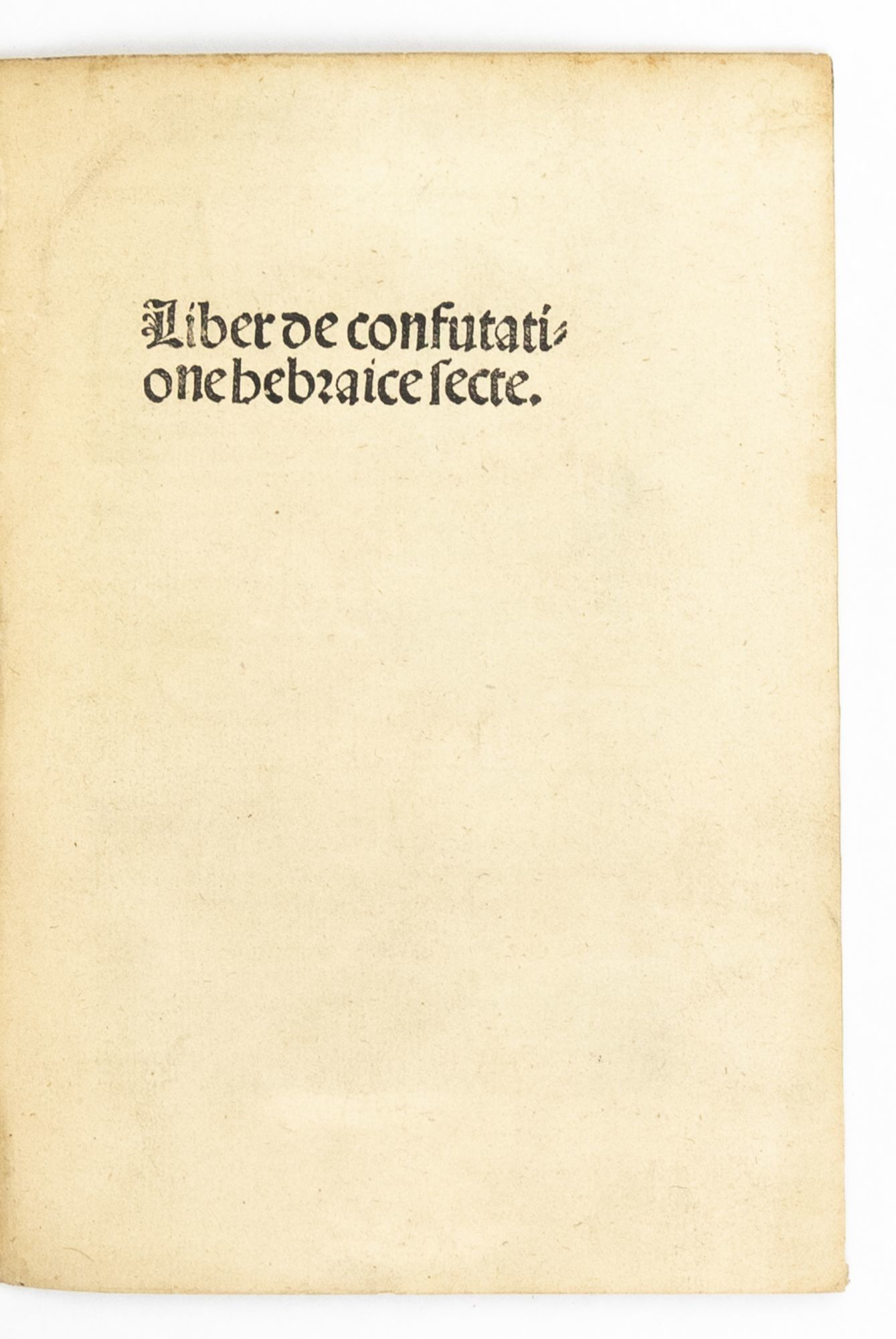
Liber de confutatione hebraice secte
- Hardcover
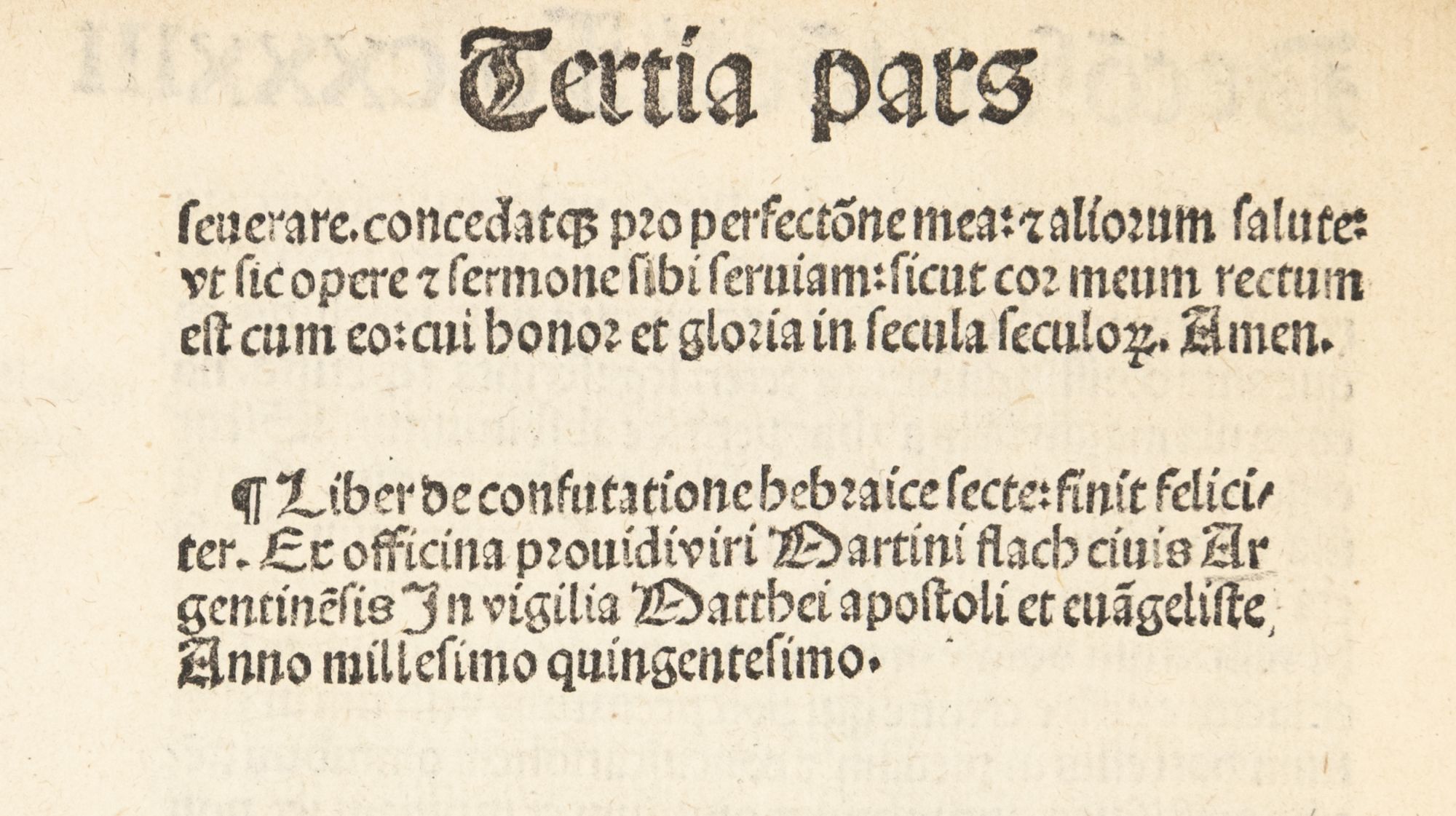
- Strasbourg: Ex officina...Martini Flach civis Argentinensis [i.e. Martin Flach], 20 September, 1500
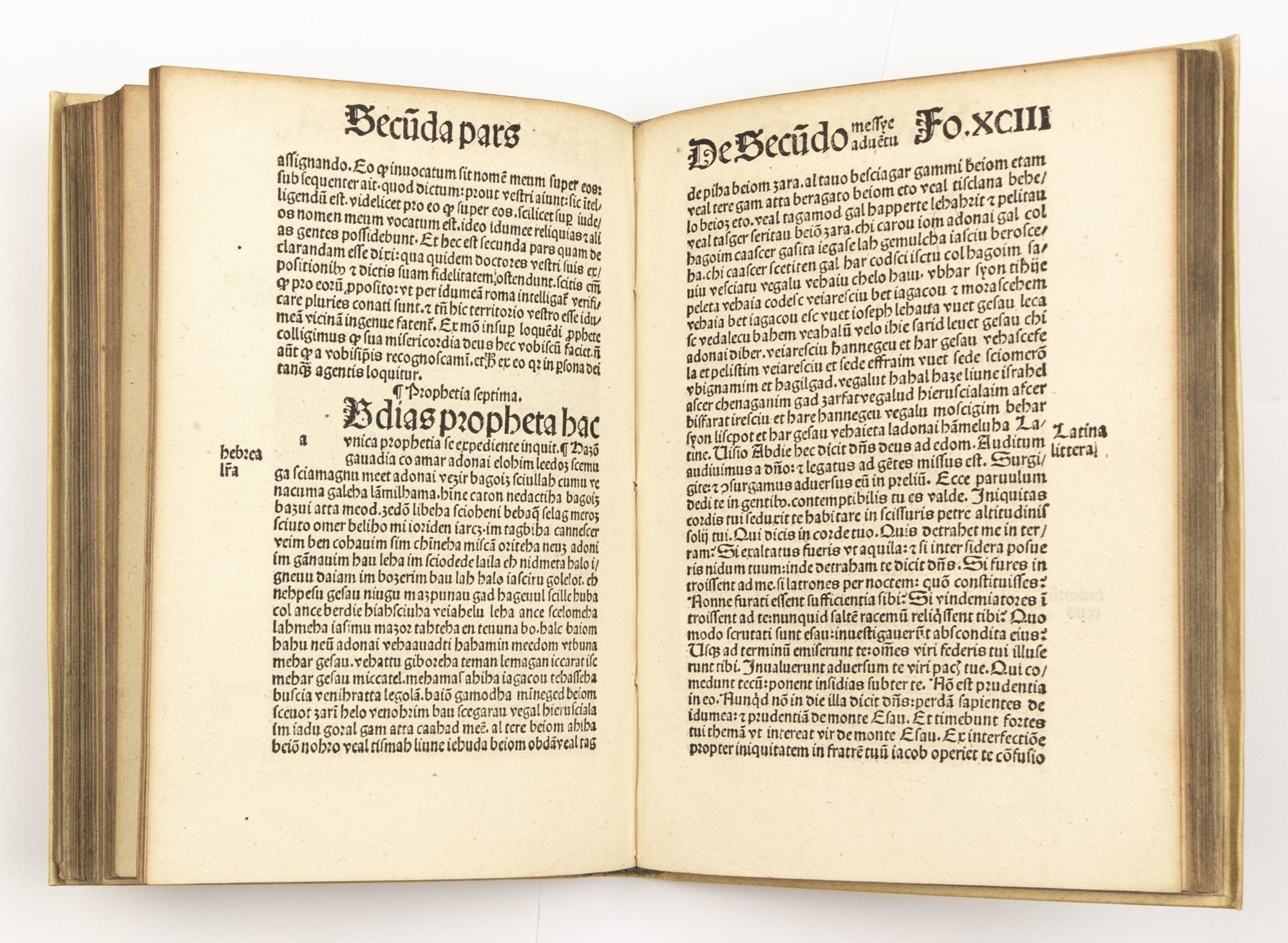
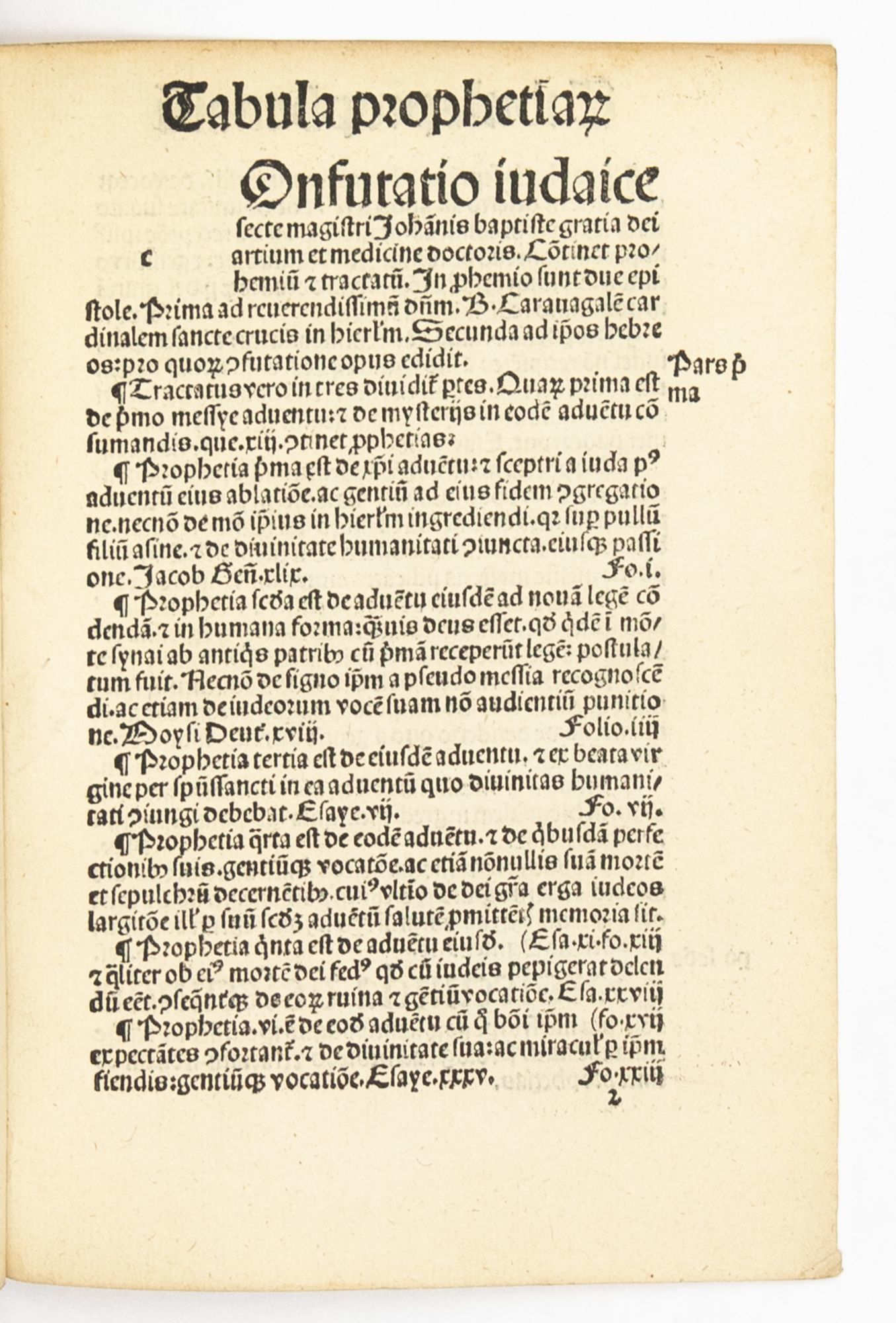
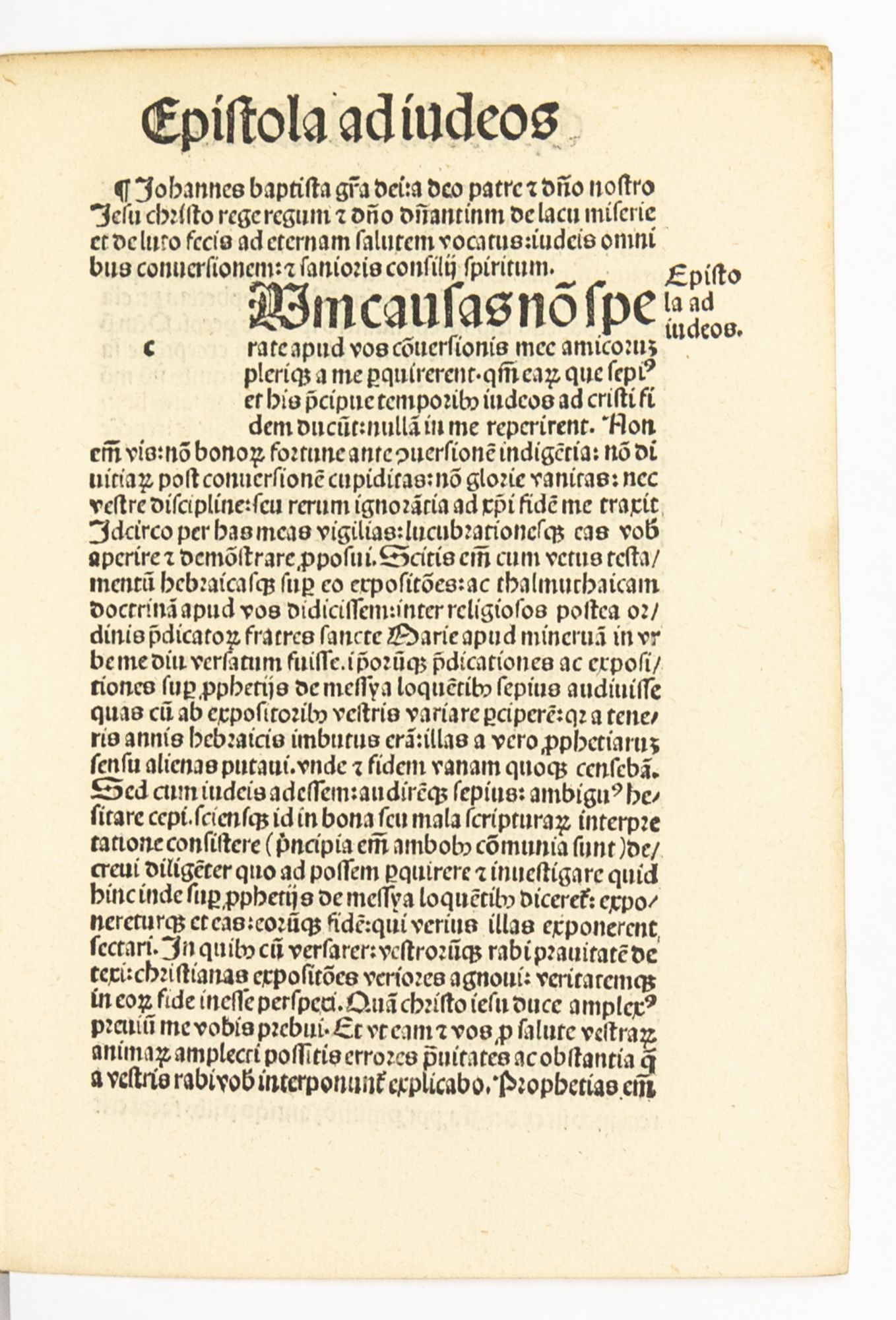
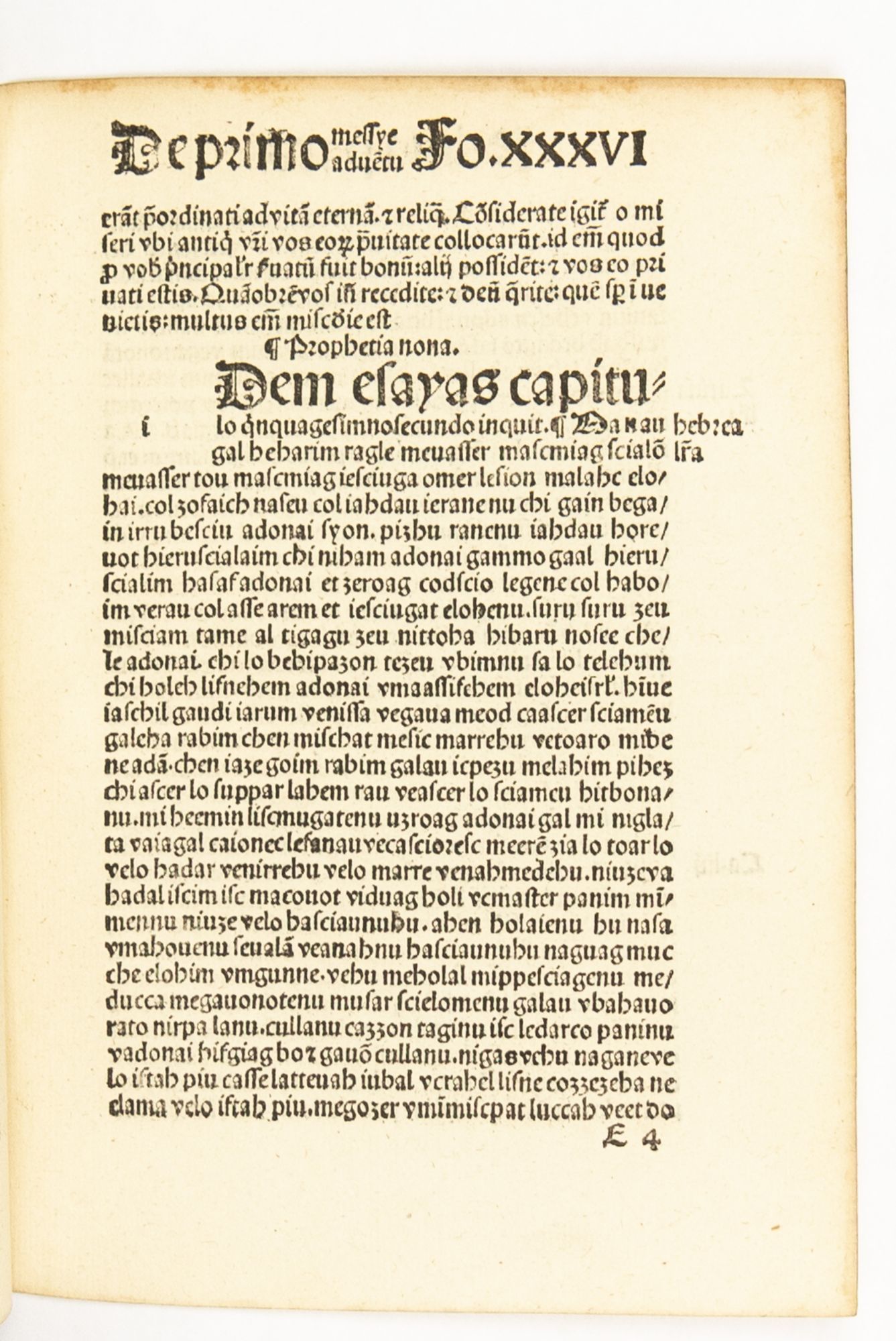
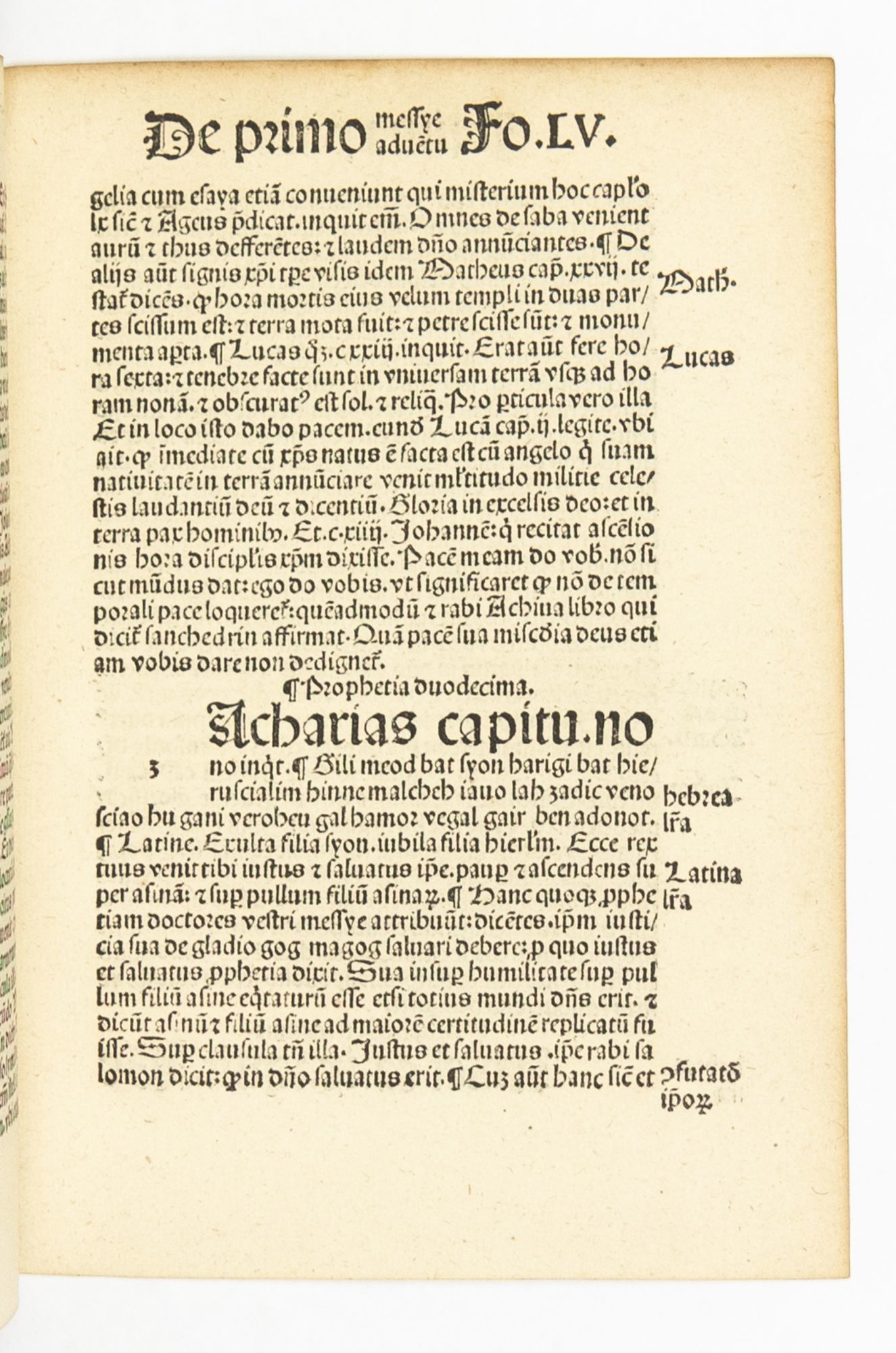
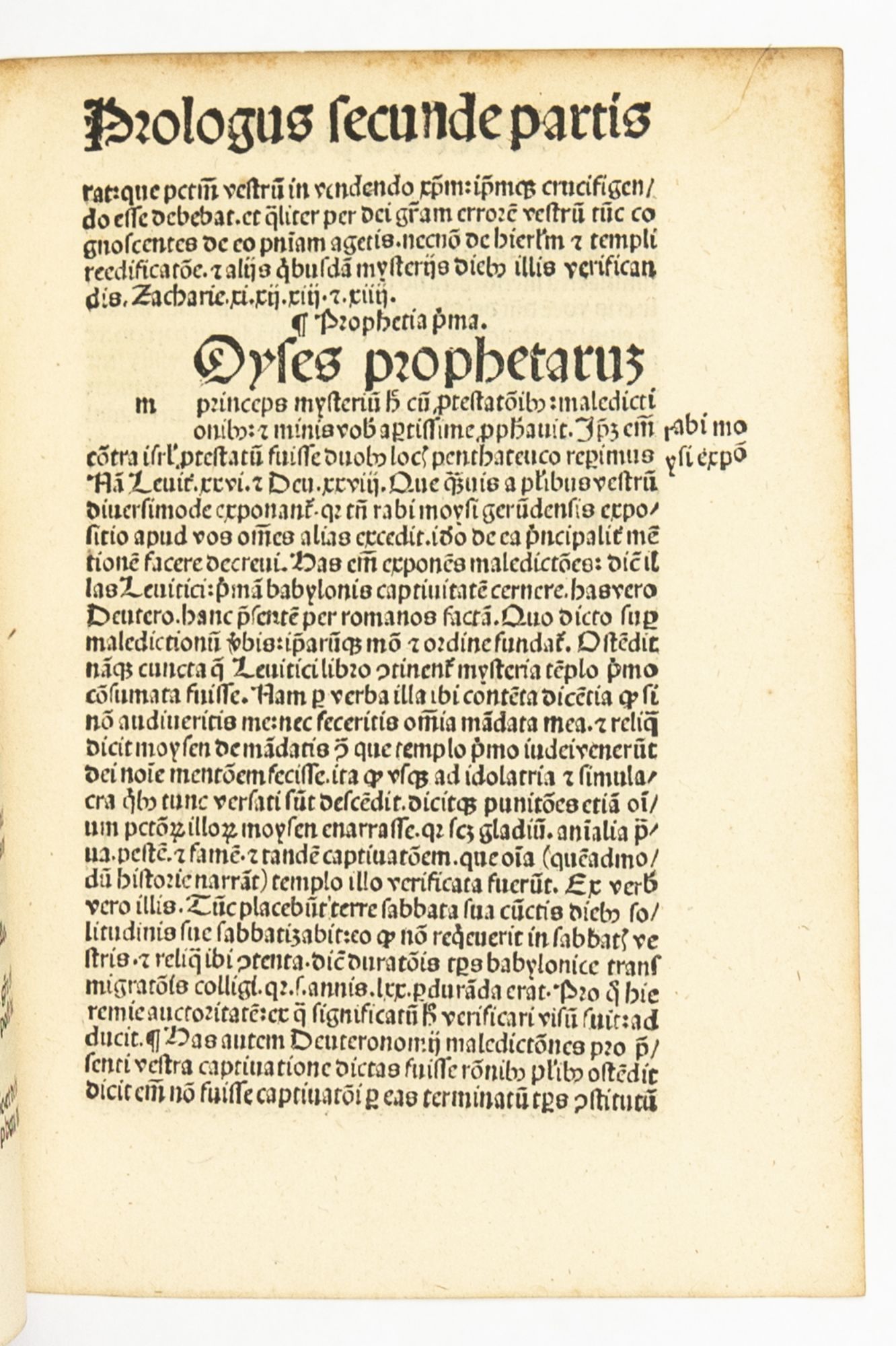
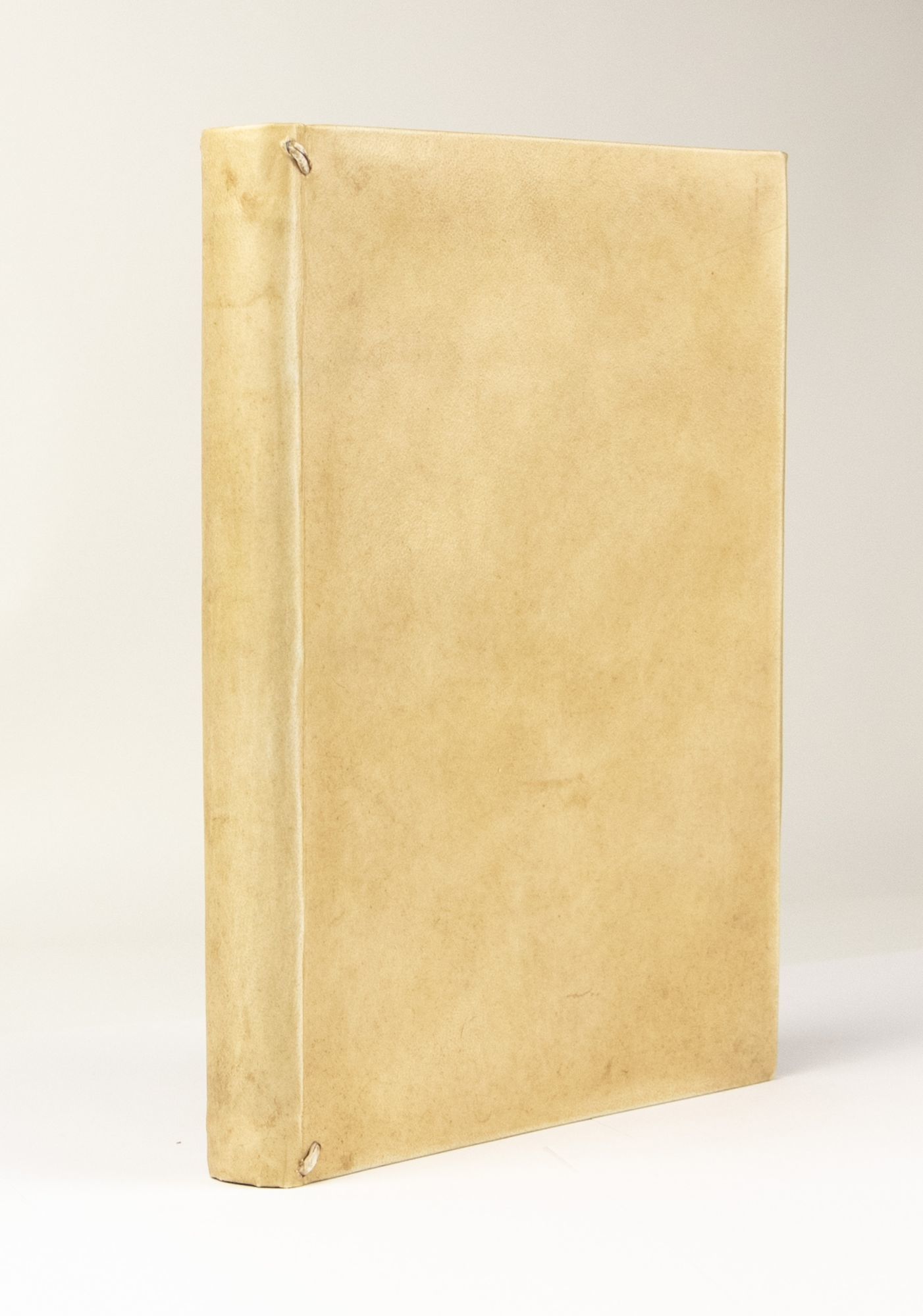
Strasbourg: Ex officina...Martini Flach civis Argentinensis [i.e. Martin Flach], 20 September, 1500. SECOND OF TWO EDITIONS. The first was printed at Rome by E. Silber in May of the same year. No other editions were printed. Hardcover. Fine. Bound in modern vellum. A fine, clean copy with just some occasional, very mild foxing to the upper margin. The Hebrew passages have been transliterated rather than set in Hebrew characters. A methodical refutation of Rabbinic interpretations of the Book of Prophets. Each chapter opens with a passage from the Bible transliterated from Hebrew into the Latin alphabet, followed by its translation into Latin. The author, the converted Jew Johannes Baptista Gratiadei (or Graziadei), delivers, following each Bible passage, a rich anthology of Jewish exegesis, followed by a thorough refutation, bringing to bear Christian authorities and Aristotle. He cites the 11th c. French rabbi Shlomo Yitzchaki, better known by the acronym “Rashi”; the 12th c. Catalan rabbi, physician and kabbalist Moses ben Nachman, called Nachmanides; Maimonides, Levi ben Gershon (“Gersonides”), David Kimhi and other Jewish commentators.
“In his prefatory epistle addressed to all Jews, Gratiadei writes that many friends have asked him why he converted; he says that he was brought to Christ neither by the desire for wealth or glory. He had long dedicated himself to the Hebrew exposition of the Old Testament and to Talmudic doctrine. However, at Santa Maria sopra Minerva in Rome (where Jews were compelled to listen to Christian sermons) he heard the Dominicans give Christian exposition of the words of the prophets concerning the coming of the Messiah. At first he considered these expositions alien to the true sense of the prophets and empty of faith (‘fidem vanam’). However, he began to have doubts, and looking into the words of the prophets he found the Christian expositions truer than those of the rabbis, whose perversion (‘pravitas’) of the meaning of the Biblical texts he detected. He began to see the truth in the Christian exposition of the texts.
“In order to allow Jewish souls to embrace salvation, Gratiadei says that he will refute the ‘deformed errors and obstinacy which the rabbis impose upon’ their congregants. For while the rabbis say that the Messiah has not come, scripture is full of references to the Messiah that indicate that he is Jesus Christ. Although the Jews are in captivity for selling Christ for thirty pieces of silver, nevertheless there shall be knowledge of the savior across the whole world and, as the prophets say: ‘one pastor, one sheepfold’ (‘unus pastor: et unum ovile.’)
“In his other prefatory letter, to Cardinal Bernardino López de Carvajal, Gratiadei writes that it is fitting that the matter of the Jews should be raised in the seventh year of the pope’s reign, since during the jubilee -traditionally celebrated every seven years- slaves were liberated. In the same way, the Jews might now be released from the servitude of their sins by reading Gratiadei’s book and converting. The book is also useful for Christians, who can now discern the disagreements of rabbis regarding the Hebrew prophets.”(Adapted from Bowd, A Database of Italian Humanists and Jews).
“In his prefatory epistle addressed to all Jews, Gratiadei writes that many friends have asked him why he converted; he says that he was brought to Christ neither by the desire for wealth or glory. He had long dedicated himself to the Hebrew exposition of the Old Testament and to Talmudic doctrine. However, at Santa Maria sopra Minerva in Rome (where Jews were compelled to listen to Christian sermons) he heard the Dominicans give Christian exposition of the words of the prophets concerning the coming of the Messiah. At first he considered these expositions alien to the true sense of the prophets and empty of faith (‘fidem vanam’). However, he began to have doubts, and looking into the words of the prophets he found the Christian expositions truer than those of the rabbis, whose perversion (‘pravitas’) of the meaning of the Biblical texts he detected. He began to see the truth in the Christian exposition of the texts.
“In order to allow Jewish souls to embrace salvation, Gratiadei says that he will refute the ‘deformed errors and obstinacy which the rabbis impose upon’ their congregants. For while the rabbis say that the Messiah has not come, scripture is full of references to the Messiah that indicate that he is Jesus Christ. Although the Jews are in captivity for selling Christ for thirty pieces of silver, nevertheless there shall be knowledge of the savior across the whole world and, as the prophets say: ‘one pastor, one sheepfold’ (‘unus pastor: et unum ovile.’)
“In his other prefatory letter, to Cardinal Bernardino López de Carvajal, Gratiadei writes that it is fitting that the matter of the Jews should be raised in the seventh year of the pope’s reign, since during the jubilee -traditionally celebrated every seven years- slaves were liberated. In the same way, the Jews might now be released from the servitude of their sins by reading Gratiadei’s book and converting. The book is also useful for Christians, who can now discern the disagreements of rabbis regarding the Hebrew prophets.”(Adapted from Bowd, A Database of Italian Humanists and Jews).
Details
Title
Liber de confutatione hebraice secte
Author
JUDAICA. ANTISEMITISM. BIBLICAL STUDIES. Gratiadei, Johannes Baptista [Giovanbattista Graziadei]
Binding
Hardcover
Condition
Fine
Publisher
Ex officina...Martini Flach civis Argentinensis [i.e. Martin Flach], 20 September: Strasbourg
Date
1500
Edition
SECOND OF TWO EDITIONS. The first was printed at Rome by E. Silb