

Journals of Congress
- Philadelphia: David C. Claypoole, 1779
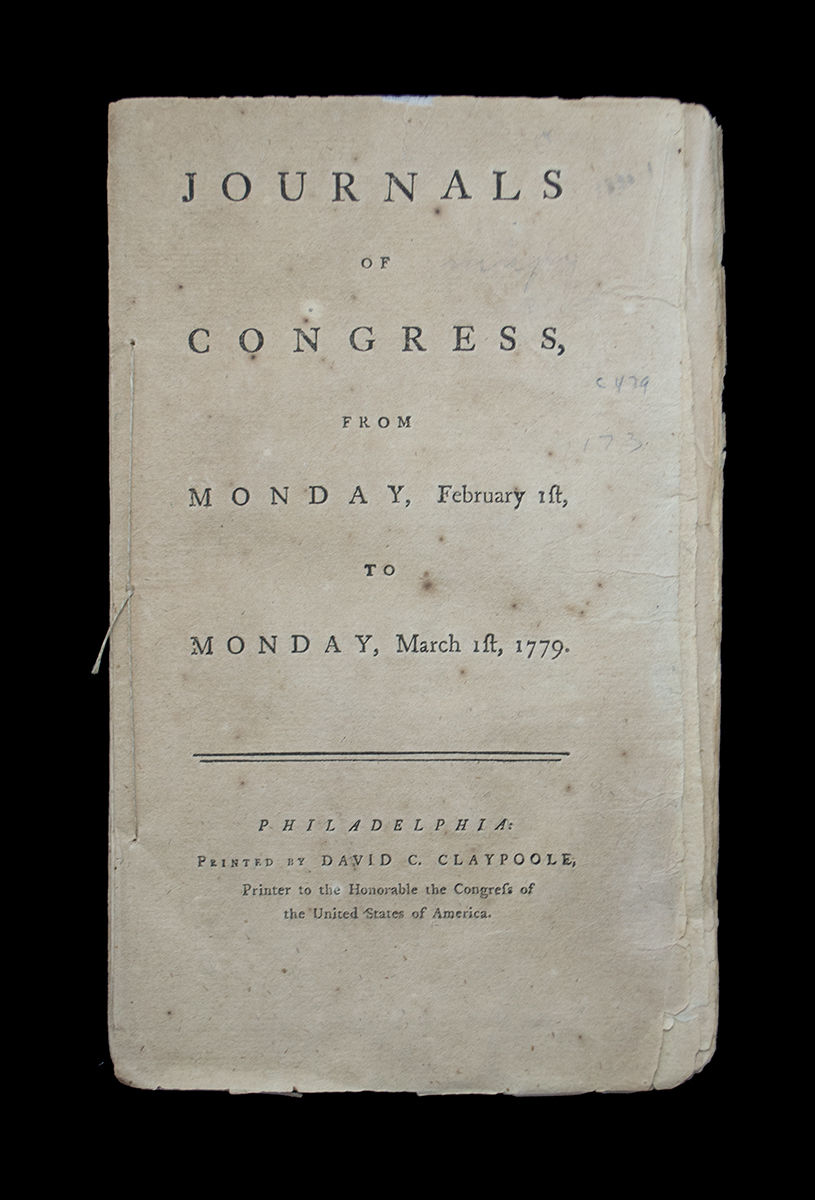
Philadelphia: David C. Claypoole, 1779. UNITED STATES OF AMERICA. CONTINENTAL CONGRESS]. Journals of Congress. Philadelphia: David C. Claypoole, 1 February-14 August, 1779.
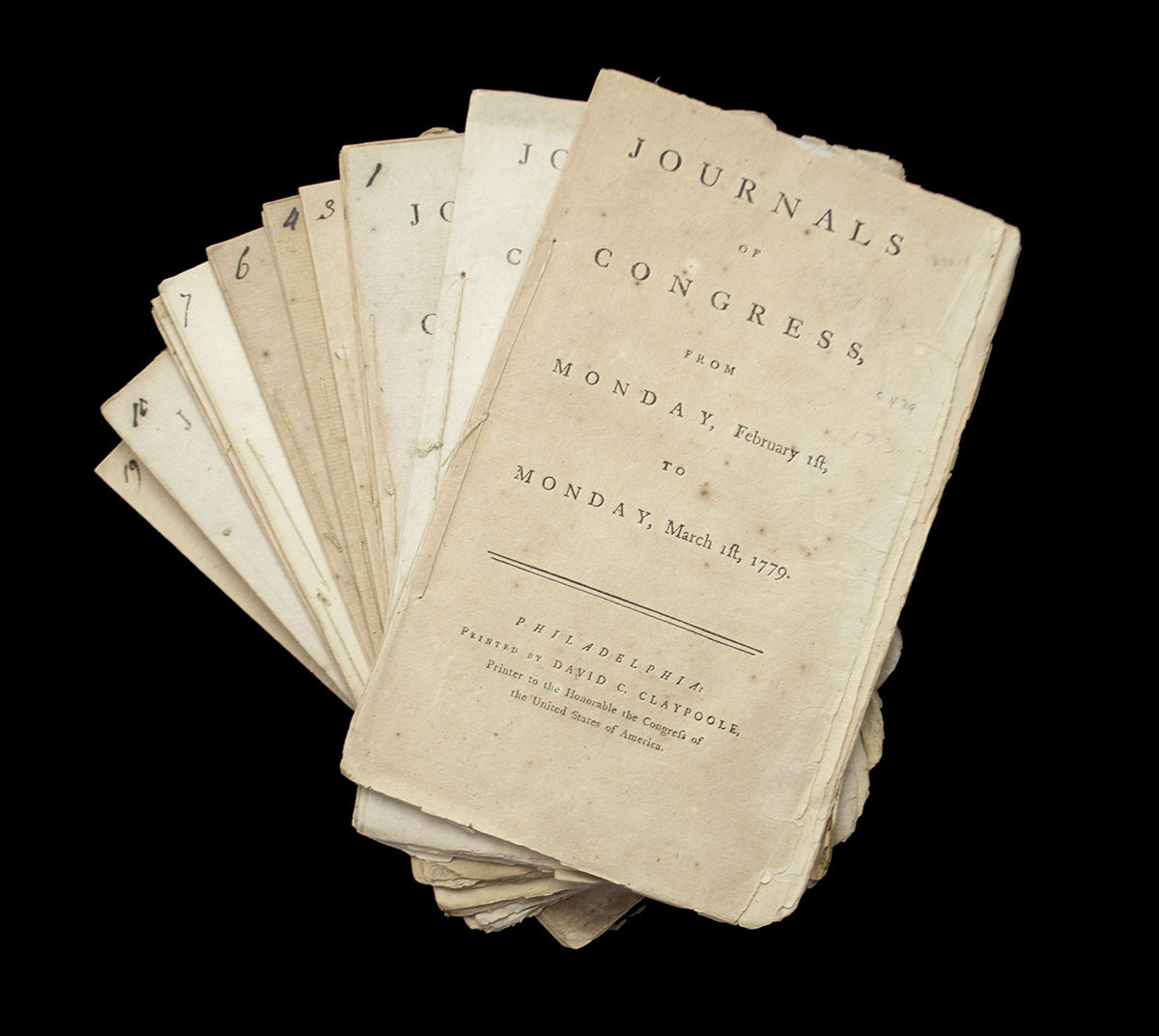
First edition. An almost consecutive run of monthly and weekly printings of the Journals of Congress. Containing 19 (of 41) total parts. This run begins with two monthly parts Monday, February 1st, to Tuesday, March 30th, 1779 (the first issue of 1779 began in January.). The weekly parts then begin on Wednesday, March 31, and run to Saturday, August 14, 1779, lacking two parts between June 12th and June 28th. Evans locates only two complete copies. This format was only tried for the this year, 1779.
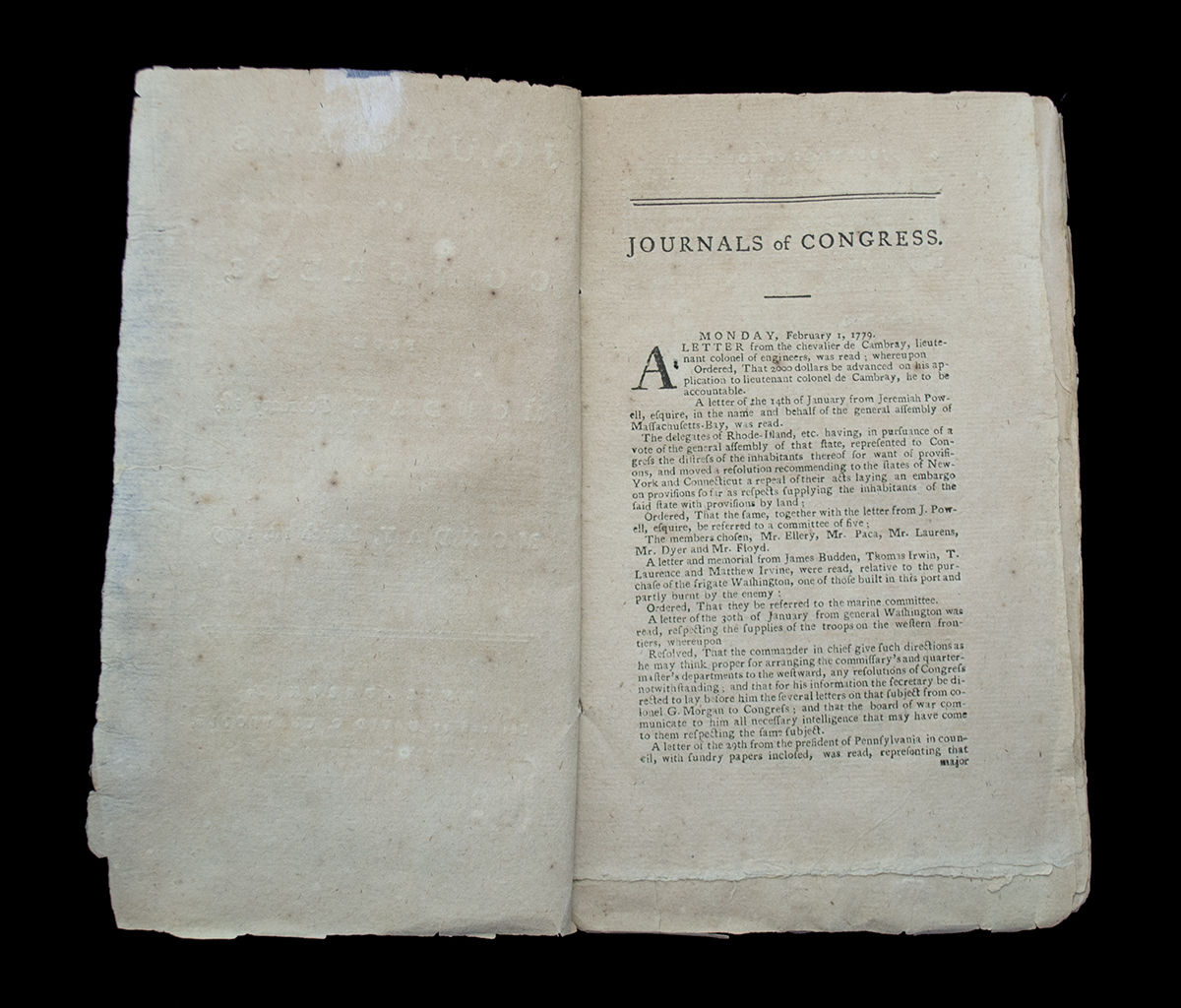
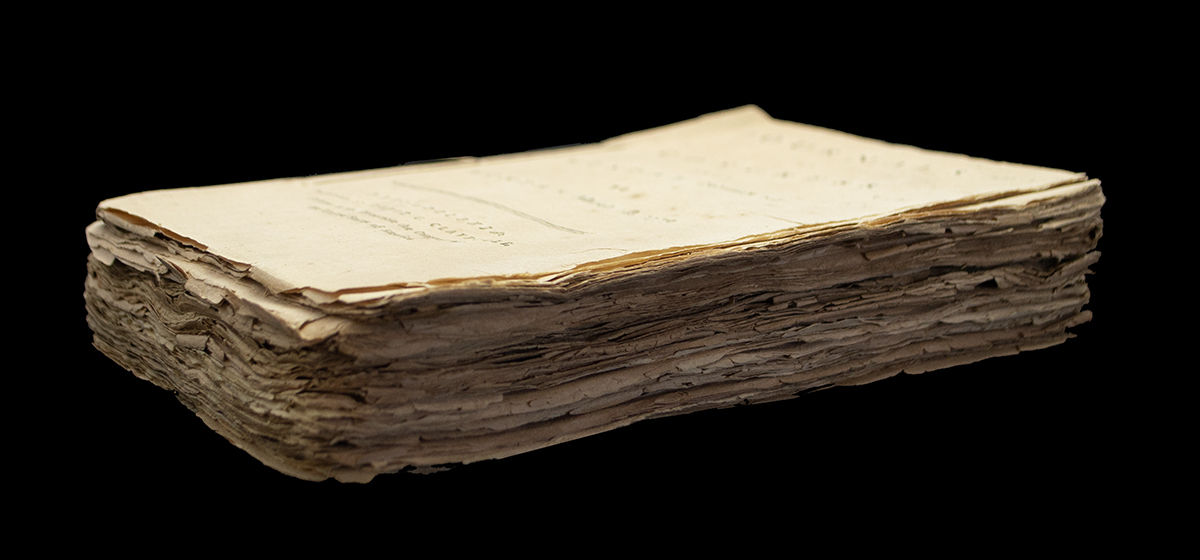
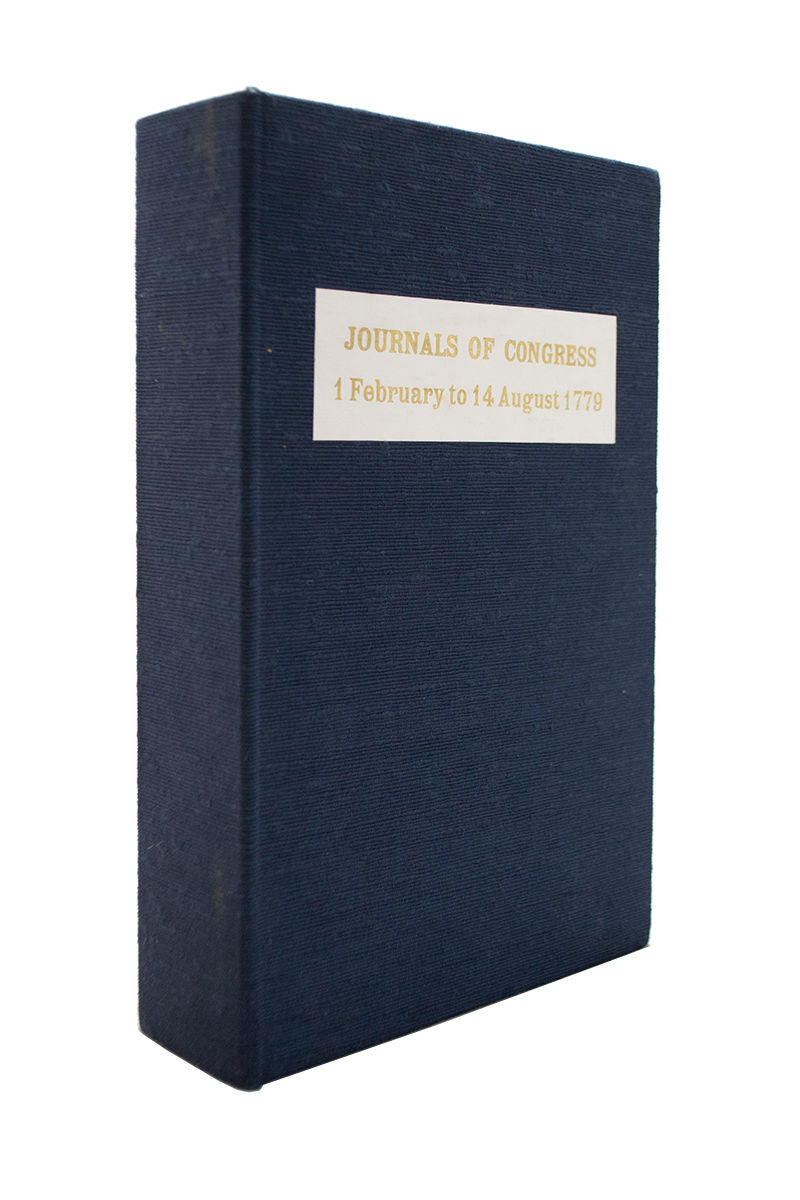
Each self-wrapped and stab-sewn. The July 19th issue in the original drab paper wrapper. The April 12th issue is unsewn. All pages uncut. Some spotting or light browning to a few titles. The June 7th issue worn and chipped at lower corner but not affecting text. Contemporary ink numerals at upper corners of weekly parts. Housed together in a blue cloth clamshell, with paper label, lettered in gilt.
"As the Continental Congress continued it deliberations, some delegates voiced considerable displeasure that the Journals were being published only in annual form making it difficult for them, in debate, to refer back to actions previously voted. In early 1779, therefore, it was decided to issue weekly issues of the Journals. William Floyd of New York explained, in a letter to George Clinton, that 'Congress finding that they cannot get the Journal printed so soon as they could wish in the mode heretofore adopted, have employed a printer [Claypoole] to begin at January, and print them us as soon as possible, and from April to have them printed weekly...' (Burnett, Letters of Delegates, 4:211)... The editions of all were no doubt very limited, and due to their essentially ephemeral nature, few have survived, especially without having been bound. The individual issues range in length from a mere four pages to 24 pages for the Monthly issues, depending upon how much business was under consideration during this difficult year, which saw increasing financial and supply shortfalls, the British burning of Norwalk and Fairfield, Connecticut; the fall of Savannah, Anthony Waynes's surprise success at Stony Point and John Paul Jones's victory over the British Serapis. (Christie's)
These Journals contain records of numerous Congressional hearings and legislations with America in the middle of the Revolution including "budgetary and fiscal issues, such as the devaluation of currency; diplomatic affairs, including multiple mentions of Benjamin Franklin as plenipotentiary to France; military matters, including the inspection of the army, numerous communications from General George Washington, and passages relating to the court-martial of Benedict Arnold. Also included are the roll call records of votes, and president of the Congress John Jay's circular letter to the states encouraging the idea of nationhood and a lasting union." (William Reese). On August 14th it was announced that "Congress have deemed it highly necessary to inform you, that the enemy have exerted themselves to send out a very considerable reinforcement to their army now in America. Seven thousand were destined hither from Europe and three thousand from the West Indies... It is proper you should be informed that our allies were much concerned to find that preparations were not earlier made for a vigorous campaign. The exertions of America are necessary to obtain the great objects of the alliance, her liberty, sovereignty and independence." (from the August 14 1779 Journal).
Evans 16586-16606.
HBS 69184.
$5,500.
First edition. An almost consecutive run of monthly and weekly printings of the Journals of Congress. Containing 19 (of 41) total parts. This run begins with two monthly parts Monday, February 1st, to Tuesday, March 30th, 1779 (the first issue of 1779 began in January.). The weekly parts then begin on Wednesday, March 31, and run to Saturday, August 14, 1779, lacking two parts between June 12th and June 28th. Evans locates only two complete copies. This format was only tried for the this year, 1779.
Each self-wrapped and stab-sewn. The July 19th issue in the original drab paper wrapper. The April 12th issue is unsewn. All pages uncut. Some spotting or light browning to a few titles. The June 7th issue worn and chipped at lower corner but not affecting text. Contemporary ink numerals at upper corners of weekly parts. Housed together in a blue cloth clamshell, with paper label, lettered in gilt.
"As the Continental Congress continued it deliberations, some delegates voiced considerable displeasure that the Journals were being published only in annual form making it difficult for them, in debate, to refer back to actions previously voted. In early 1779, therefore, it was decided to issue weekly issues of the Journals. William Floyd of New York explained, in a letter to George Clinton, that 'Congress finding that they cannot get the Journal printed so soon as they could wish in the mode heretofore adopted, have employed a printer [Claypoole] to begin at January, and print them us as soon as possible, and from April to have them printed weekly...' (Burnett, Letters of Delegates, 4:211)... The editions of all were no doubt very limited, and due to their essentially ephemeral nature, few have survived, especially without having been bound. The individual issues range in length from a mere four pages to 24 pages for the Monthly issues, depending upon how much business was under consideration during this difficult year, which saw increasing financial and supply shortfalls, the British burning of Norwalk and Fairfield, Connecticut; the fall of Savannah, Anthony Waynes's surprise success at Stony Point and John Paul Jones's victory over the British Serapis. (Christie's)
These Journals contain records of numerous Congressional hearings and legislations with America in the middle of the Revolution including "budgetary and fiscal issues, such as the devaluation of currency; diplomatic affairs, including multiple mentions of Benjamin Franklin as plenipotentiary to France; military matters, including the inspection of the army, numerous communications from General George Washington, and passages relating to the court-martial of Benedict Arnold. Also included are the roll call records of votes, and president of the Congress John Jay's circular letter to the states encouraging the idea of nationhood and a lasting union." (William Reese). On August 14th it was announced that "Congress have deemed it highly necessary to inform you, that the enemy have exerted themselves to send out a very considerable reinforcement to their army now in America. Seven thousand were destined hither from Europe and three thousand from the West Indies... It is proper you should be informed that our allies were much concerned to find that preparations were not earlier made for a vigorous campaign. The exertions of America are necessary to obtain the great objects of the alliance, her liberty, sovereignty and independence." (from the August 14 1779 Journal).
Evans 16586-16606.
HBS 69184.
$5,500.
Details
Title
Journals of Congress
Author
UNITED STATES OF AMERICA
Condition
Unknown
Publisher
David C. Claypoole: Philadelphia
Date
1779