

ONE OF 100 MOST FAMOUS MEDICAL BOOKS. Memoire sur le Pancreas et sur le role du suc pancreatique dans les phenomenes digestifs, particulierement dans la digestion des matieres grasses neutres (Claude Bernard)
TOGETHER WITH Memoire sur quelques points de la Physiologie des Algues (A Derbes & AJJ Solier) TOGETHER WITH Memoire sur le Calcul des Perturbations qu'eprouvent les Cometes (PA Hansen)
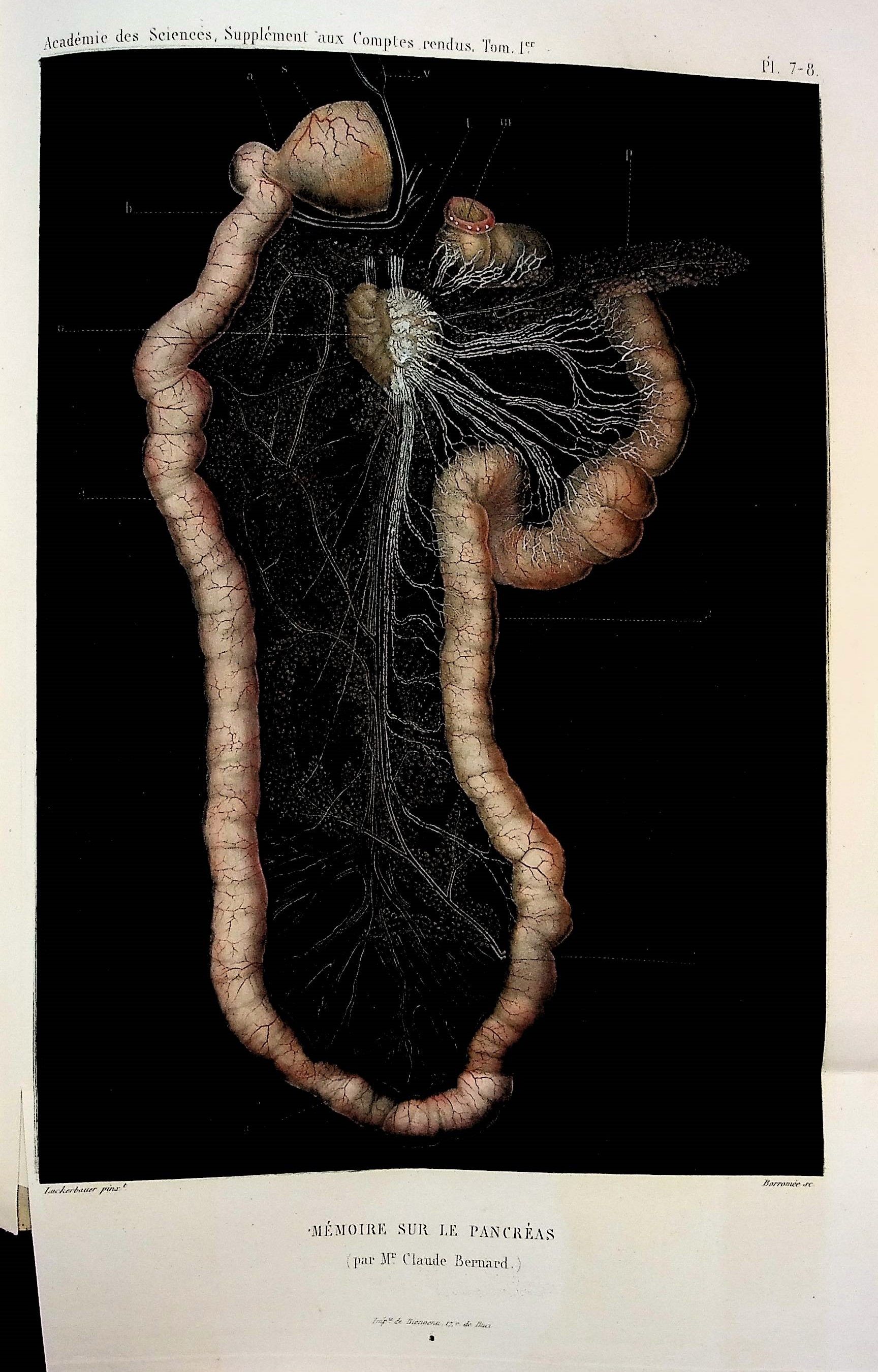
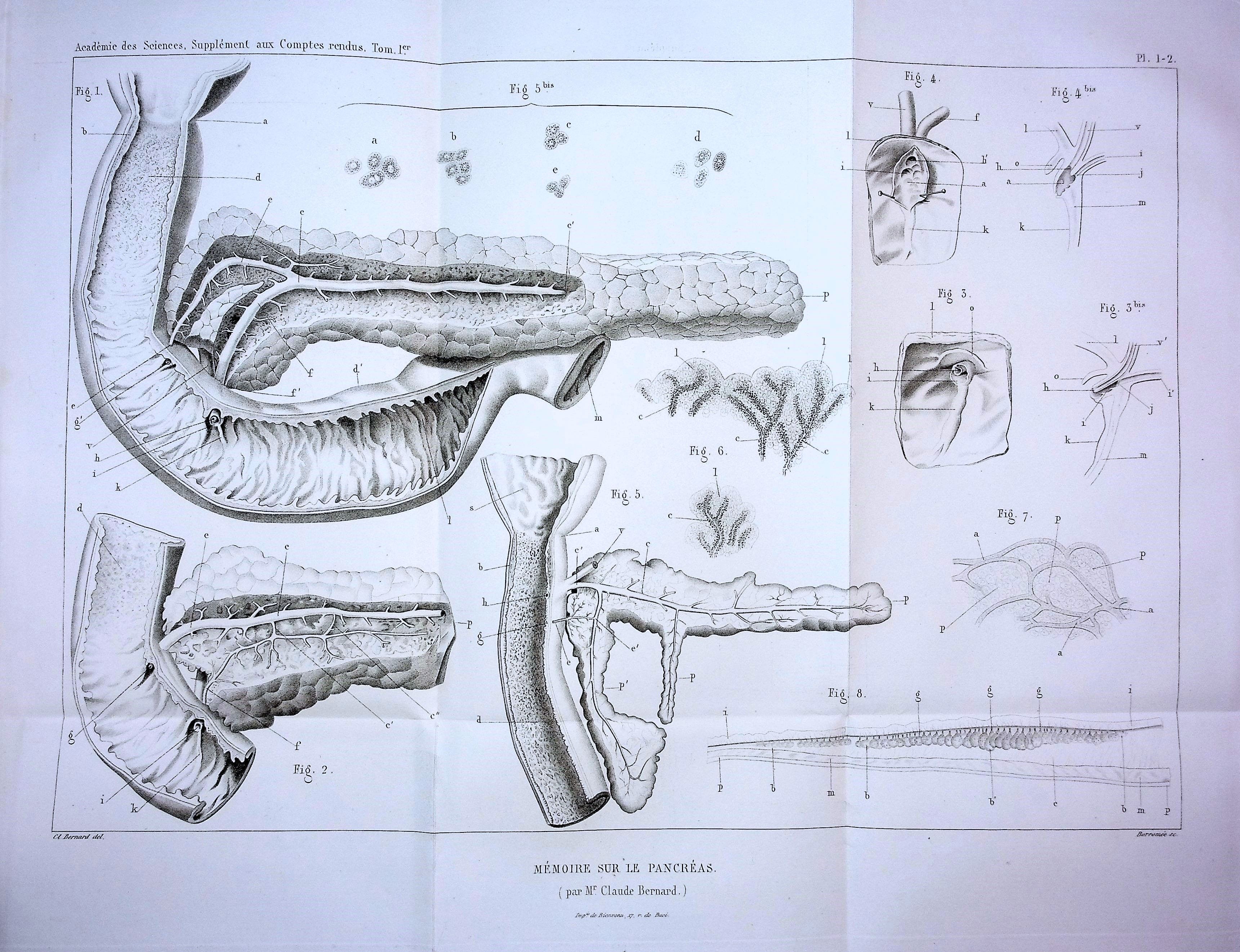
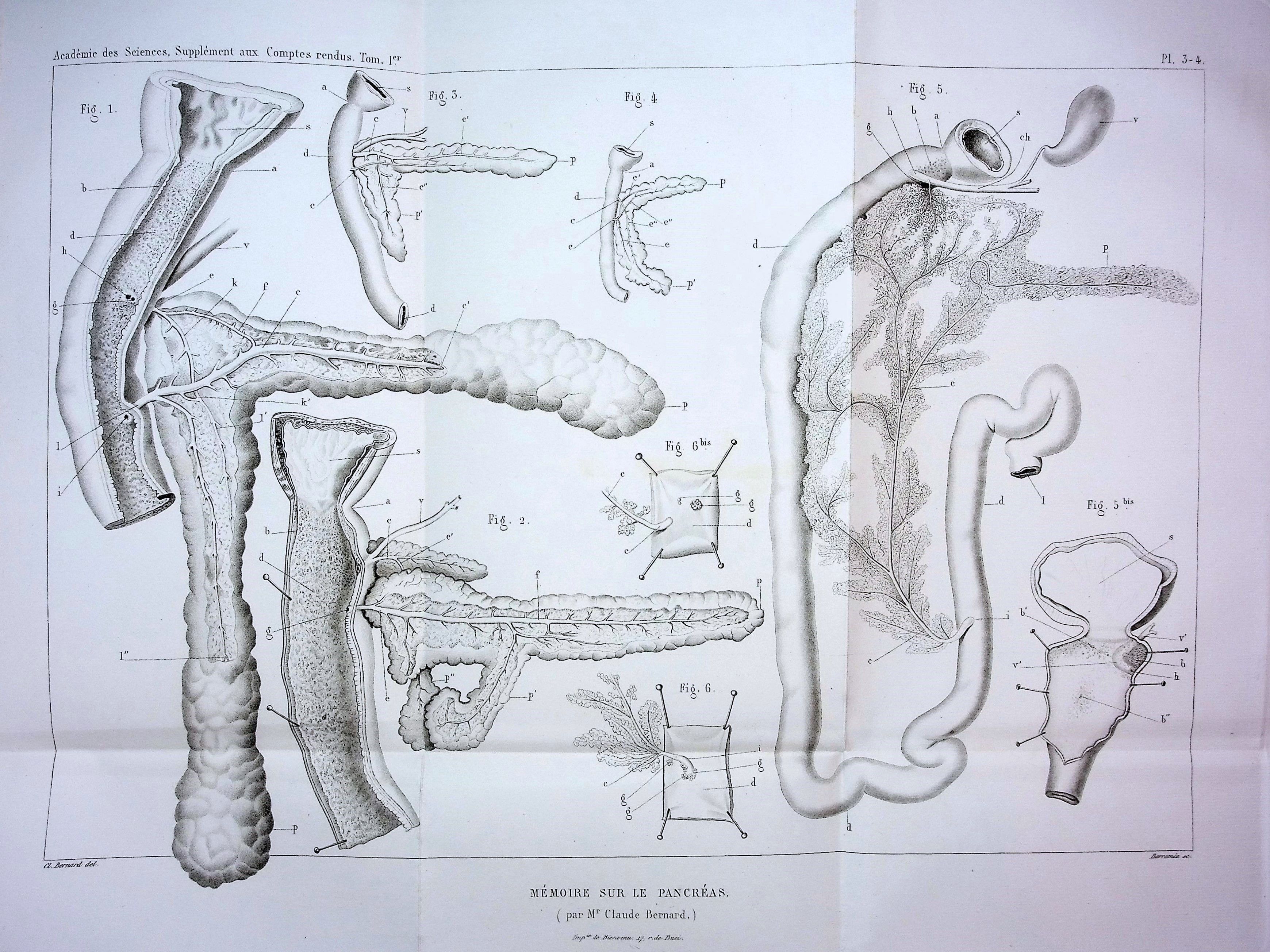
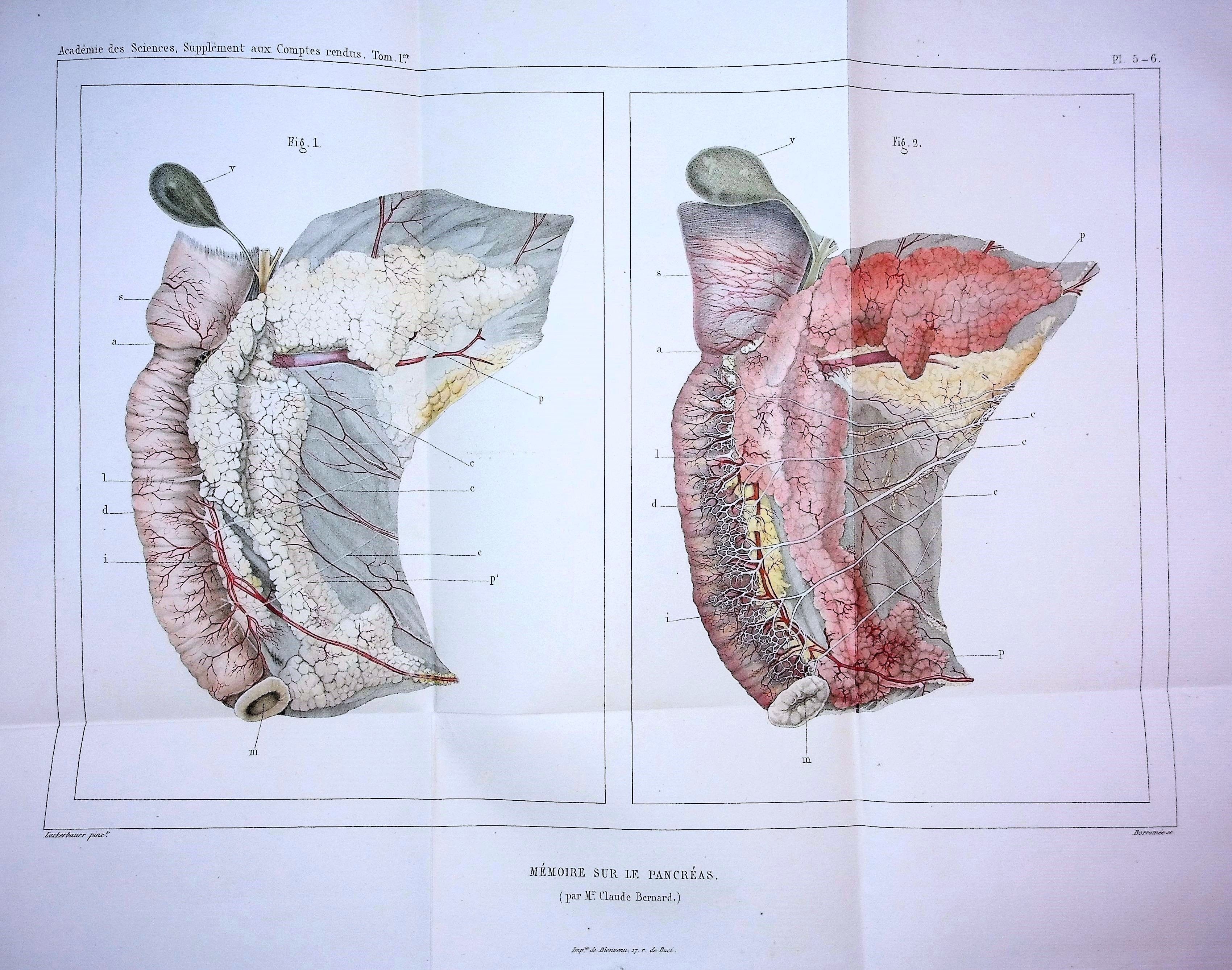
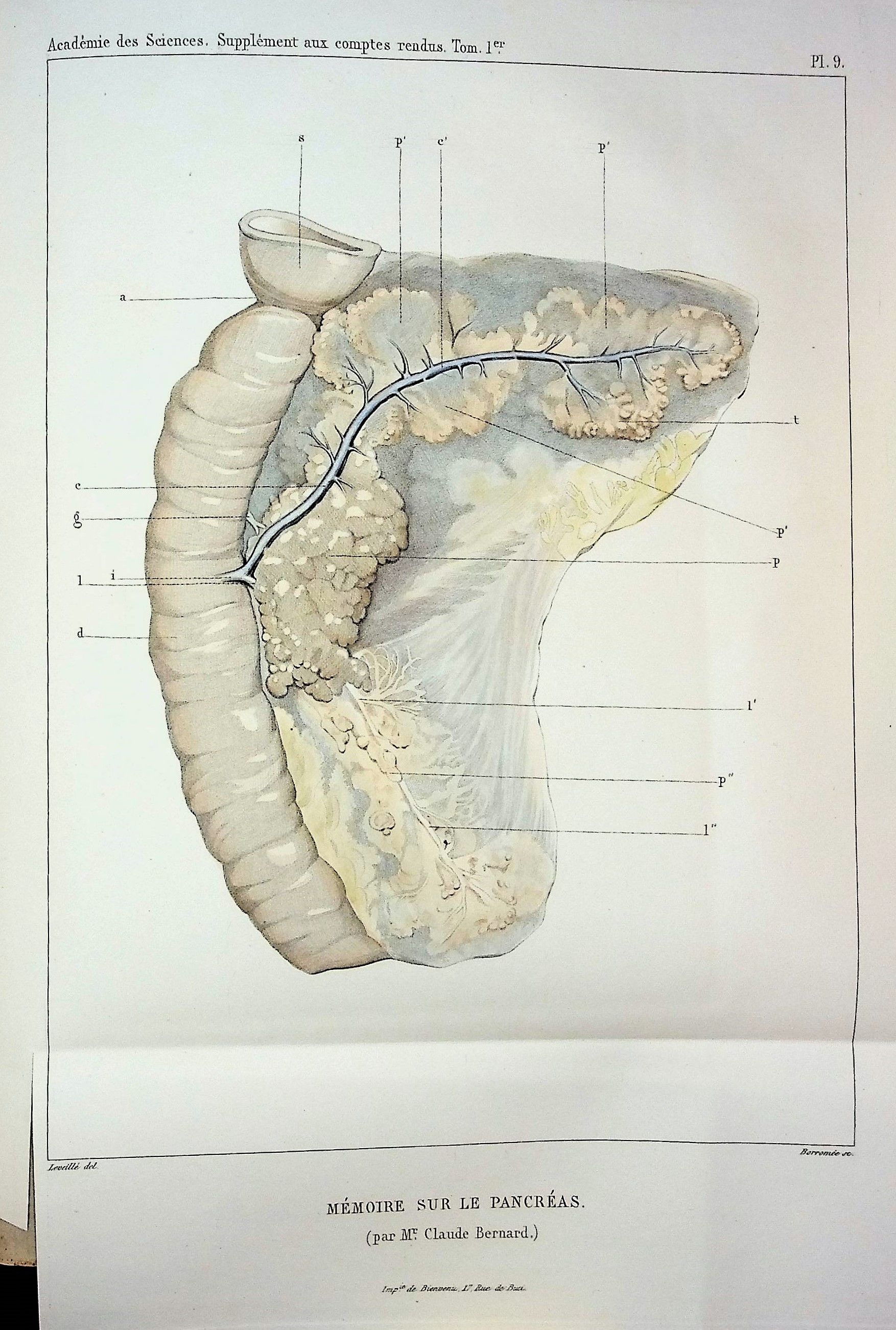
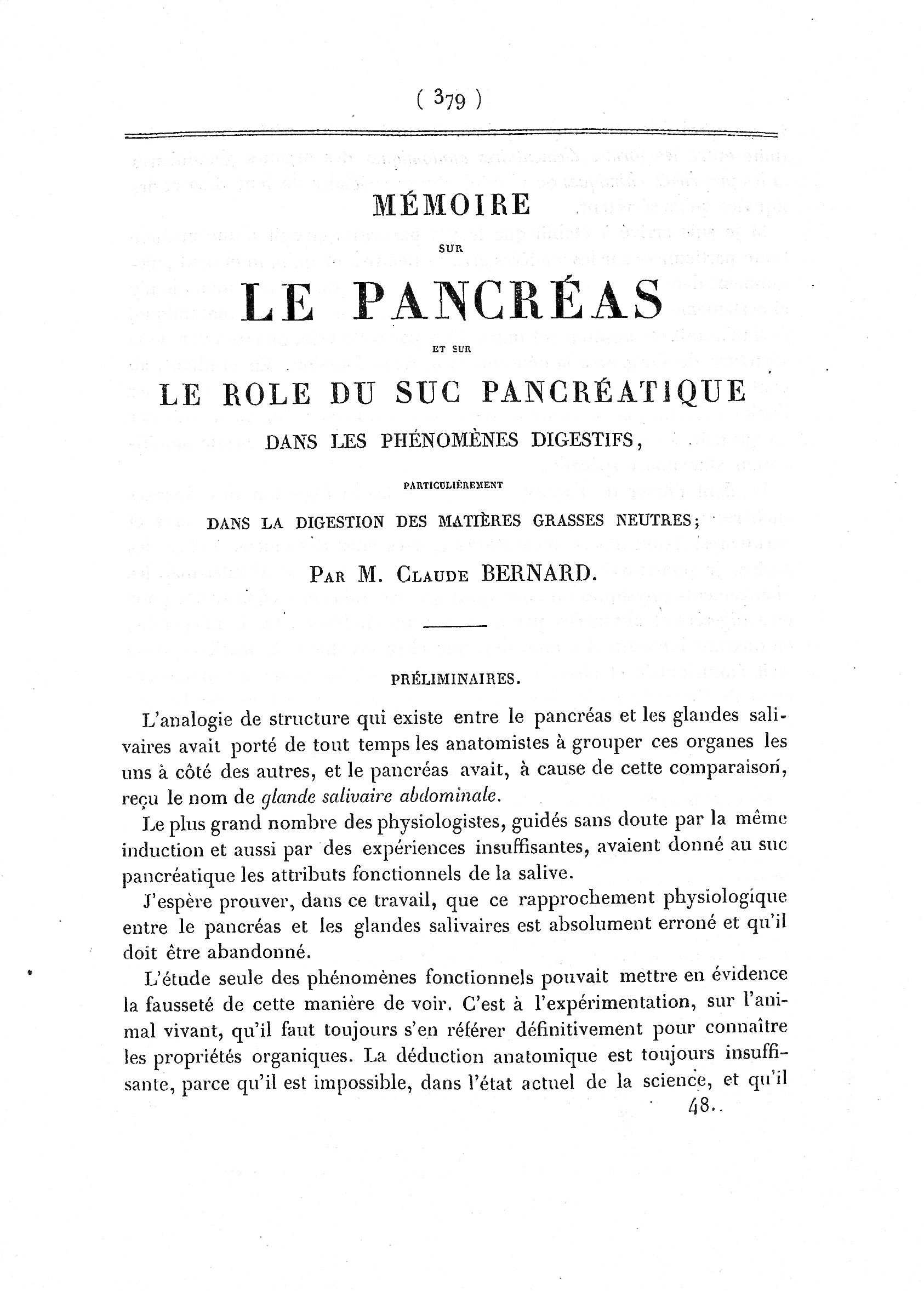
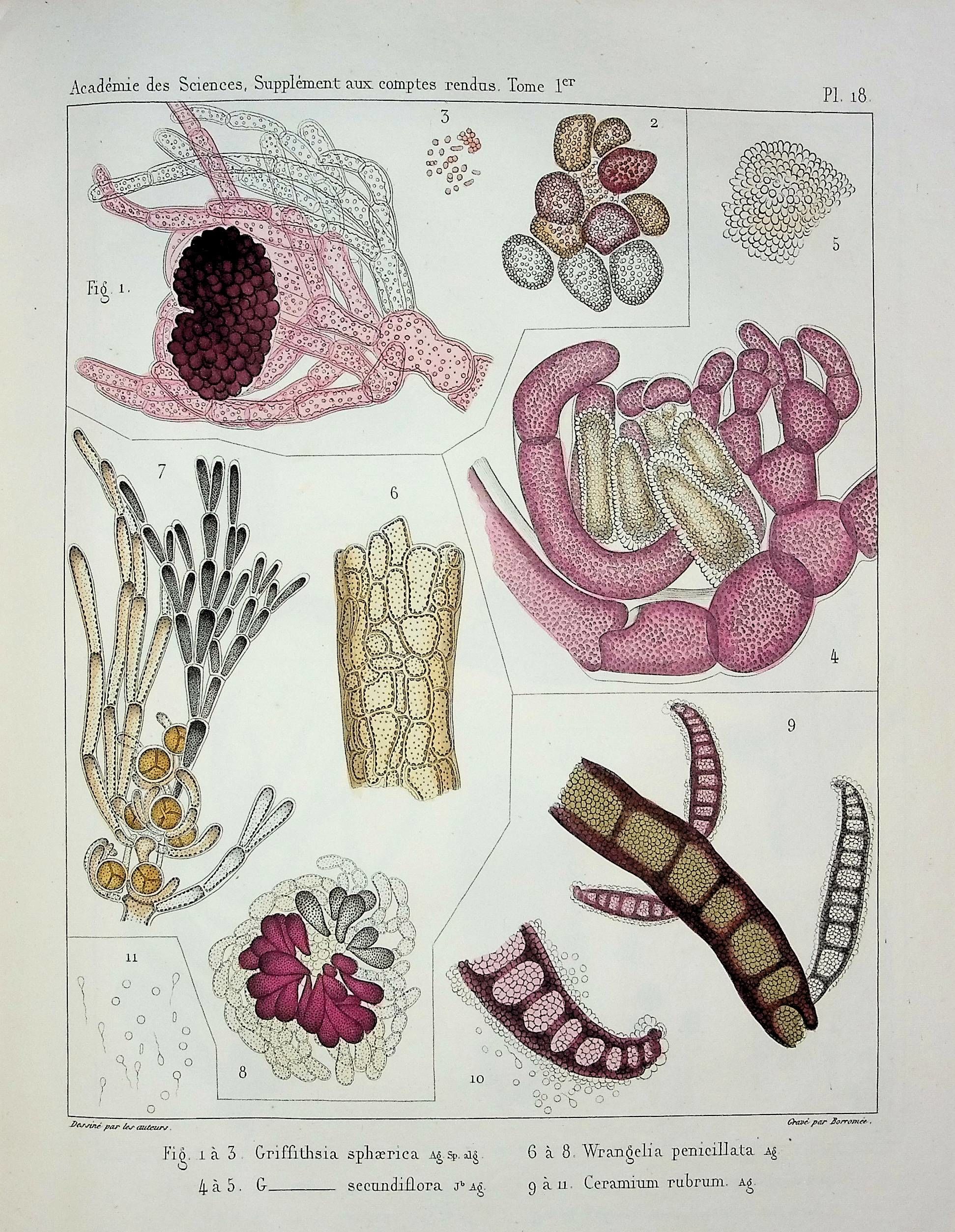
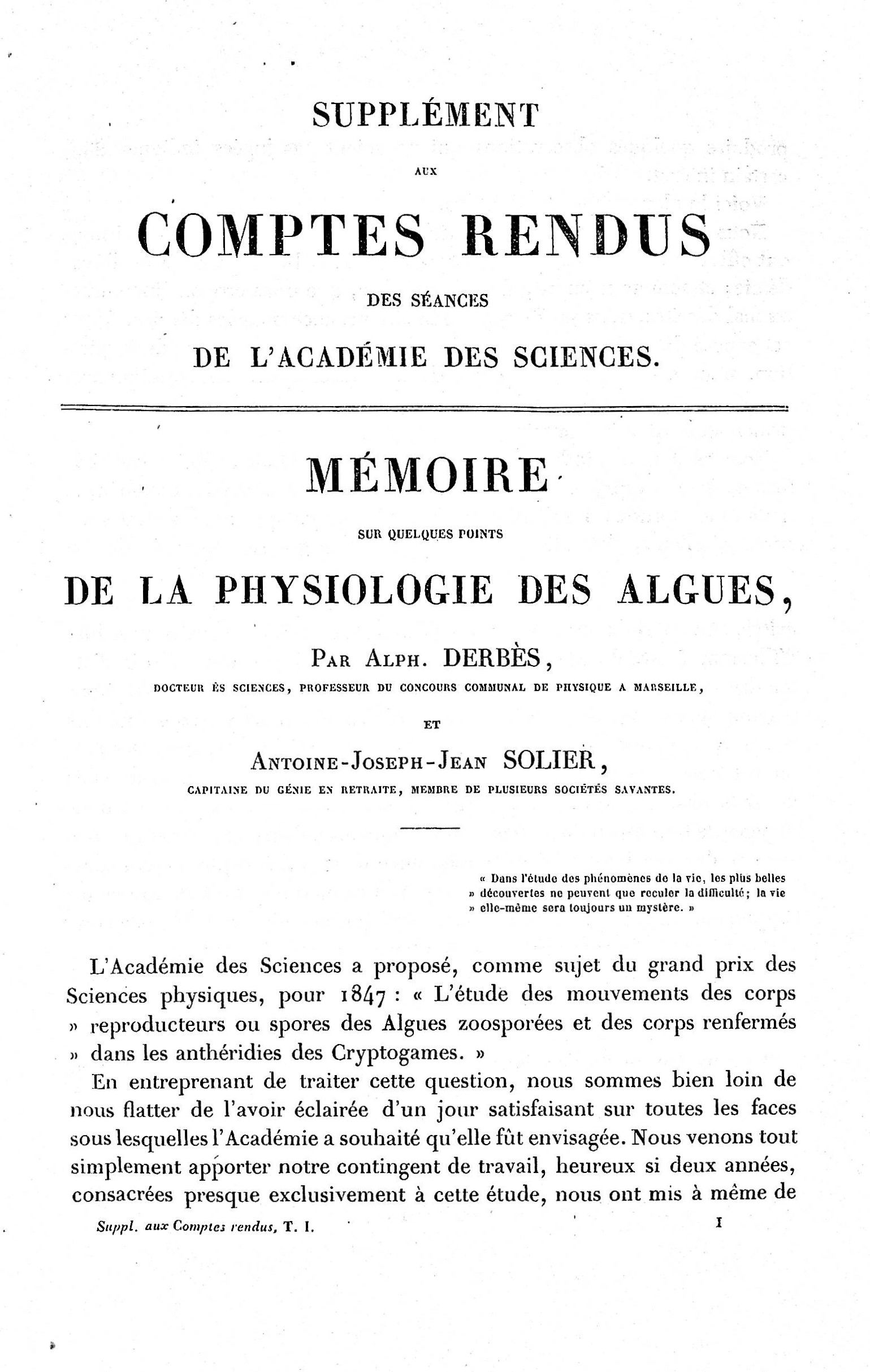
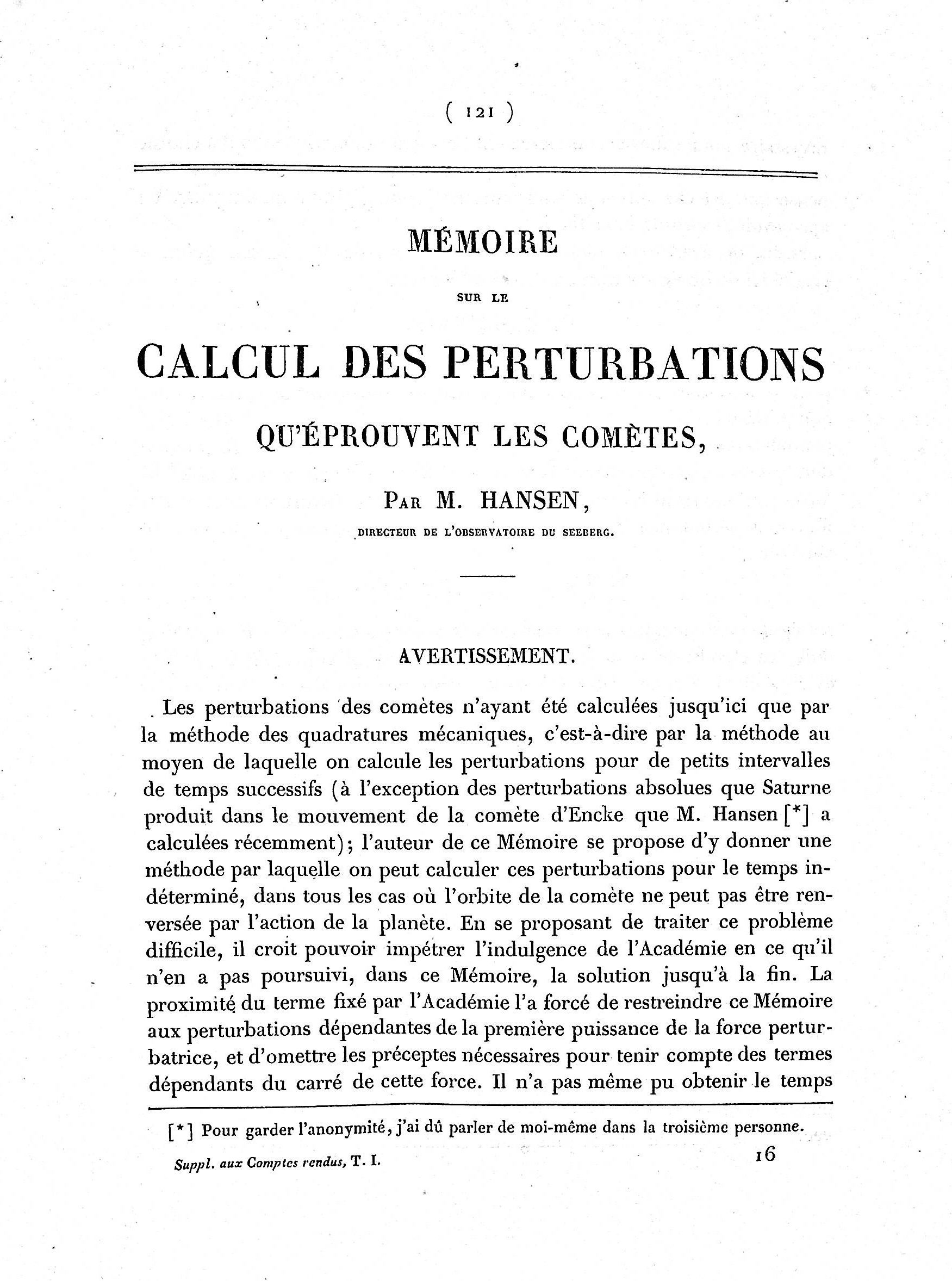
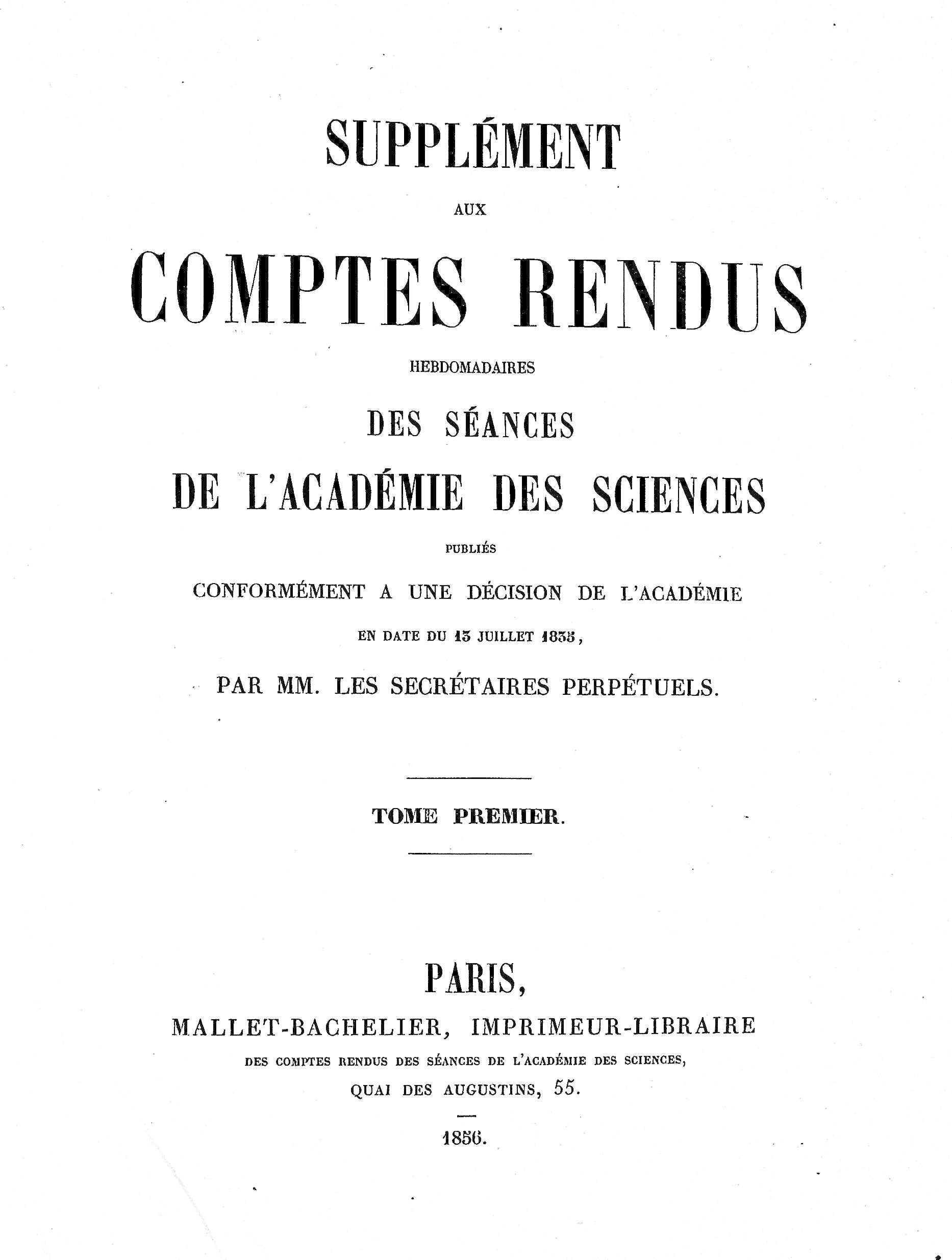
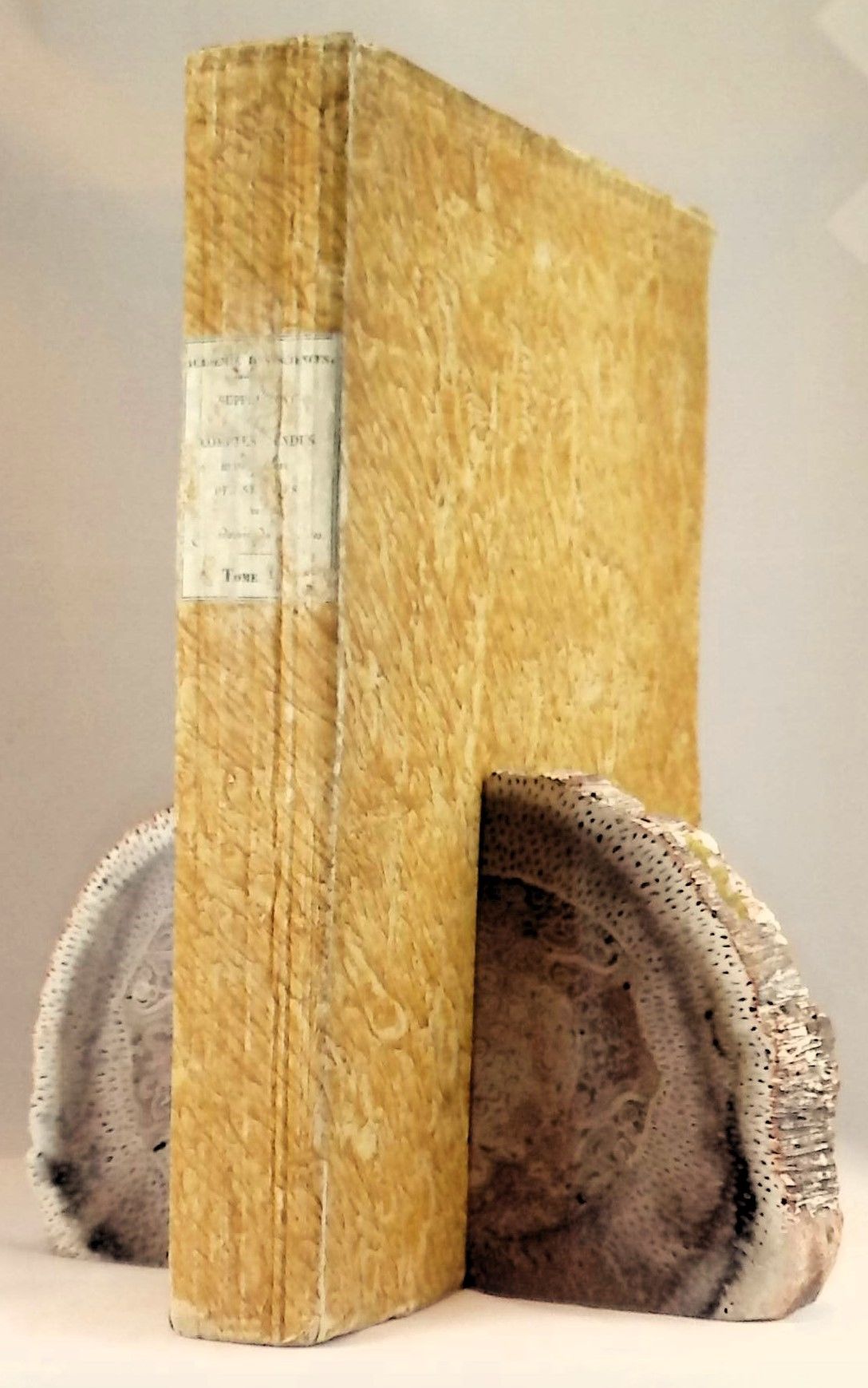
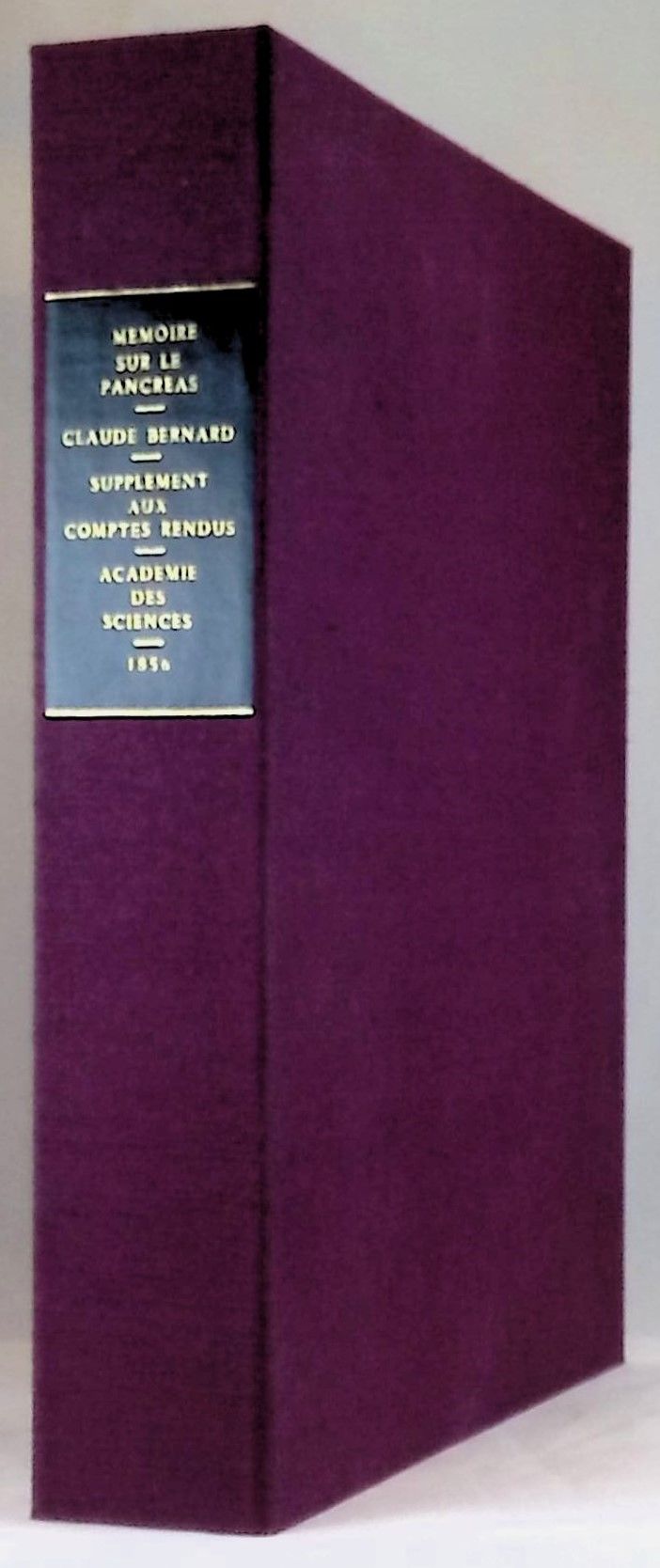
- original marbled paper covers
- Paris: Academy of Sciences, 1856
1856. First edition. THE MOST BEAUTIFULLY ILLUSTRATED OF ALL CLAUDE BERNARD'S WRITINGS AND ONE OF 100 BOOKS FAMOUS IN MEDICINE. Offered here is a copy of the very scarce complete issue of the journal containing the first edition of one of Claude Bernard's most famous works, included in the Grolier Club's 100 Books Famous in Medicine. The 28x22x4 cm volume is bound in original marbled paper covers with printed paper spine label. Three complete papers are included. Derbes & Solier: [6], 1-120 pp, 23 hand-colored engraved plates; Hansen: 121-378 pp; Bernard: 379-563 pp, 5 engraved plates, 3 hand-colored. Near-fine in a custom clam shell box bound in burgundy cloth with gilt black leather title label. COMPTES RENDUS HEBDOMADAIRES DES SEANCES DE L'ACADEMIE DES SCIENCES: The weekly reports of the sessions of the French Academy of Sciences were first published in 1835 at the instigation of the astronomer Francois Arago . The Reports complete the Memoirs of the Academy of Sciences which have appeared since 1666. CLAUDE BERNARD (1813-1878) was a French physiologist. Historian I. Bernard Cohen of Harvard University called Bernard "one of the greatest of all men of science". Among many other accomplishments, he was one of the first to suggest the use of a blinded experiment to ensure the objectivity of scientific observations. Claude Bernard's aim, as he stated in his own words, was to establish the use of the scientific method in medicine. He dismissed several previous misconceptions, questioned common presumptions, and relied on experimentation. Unlike many scientific writers of his time, Bernard wrote about his own experiments and thoughts, and used the first person. The "philosophic spirit", writes Bernard, is always active in its desire for truth. It stimulates a "kind of thirst for the unknown" which ennobles and enlivens scienceâ"where, as experimenters, we need "only to stand face to face with nature". "In 1846 Bernard began studying the pancreatic juices and their role in digestion, and in 1849 he published a paper in which he described his discovery of the role of pancreatic juices in the first stage of metabolism, the emulsification of fats by observing the processes of digestion in dogs and rabbits, and by experimentation with pure pancreatic juices collected from temporary pancreatic fistulae, Bernard was able to show that pancreatic juices made fats absorbable by breaking them down into fatty acids and glycerine."--Haskell F. Norman, One Hundred Books Famous in Medicine. AUGUSTE ALPHONSE DERBES (1818 - 1894) was a French zoologist and botanist, professor of general botany at the Faculty of Sciences of Marseille. His specialty was aquatic plant life, focusing on the physiology of algae. He was the first scientist to observe the fertilization of sea urchin eggs, a model that in the 20th century established the experimental study of the physiology of fertilization. ANTOINE-JOSEPH-JEAN SOLIER (1792 - 1851) was a French botanist and entomologist. PETER ANDREAS HANSEN (1795 - 1874) was a Danish-born German astronomer, considered among the foremost astronomers of his time. His study of the mutual perturbations of Jupiter and Saturn earned him the prize of the Berlin Academy in 1830, and a memoir on cometary perturbations (offered here) was crowned by the Paris Academy in 1850. Hansen was twice (in 1842 and 1860) the recipient of the Gold Medal of the Royal Astronomical Society, and he was awarded the Copley Medal by the Royal Society in 1850. GARRISON-MORTON No. 1000.1 "The most beautifully illustrated of all Bernard's writings, which summed up the results of his work on the role of the pancreas in digestion. English translation as Memoir on the pancreas, and on the role of pancreatic juice in digestive processes, particularly in the digestion of neutral fat, translated by John Henderson, reproducing the color plates in color. London, 1985." GROLIER 100 BOOKS FAMOUS IN MEDICINE No. 67. The acknowledged importance of the Bernard paper in the canon of medical literature is reflected by its inclusion by Haskell F. Norman in the publication of One Hundred Books Famous in Medicine, The Grolier Club, New York, 1995. This listing, curated under the auspices of the Grlolier Club, the most distinguished bibliophile society in America, includes the premier editions of medical publications dating from the 16th century. Authors include Hippocrates, Galen, Vesalius, Descartes, Jenner, Darwin, Pasteur, Osler, Watson & Crick.
Details
Title
ONE OF 100 MOST FAMOUS MEDICAL BOOKS. Memoire sur le Pancreas et sur le role du suc pancreatique dans les phenomenes digestifs, particulierement dans la digestion des matieres grasses neutres (Claude Bernard)
Author
Bernard, Claude
Binding
original marbled paper covers
Condition
Unknown
Publisher
Academy of Sciences: Paris
Date
1856
Edition
First edition
Size
Folio