

SIGNED. Figures Lauragaises [Notable public figures from Lauragais]
TOGETHER WITH Lauragais: Steeped in History, Soaked in Blood
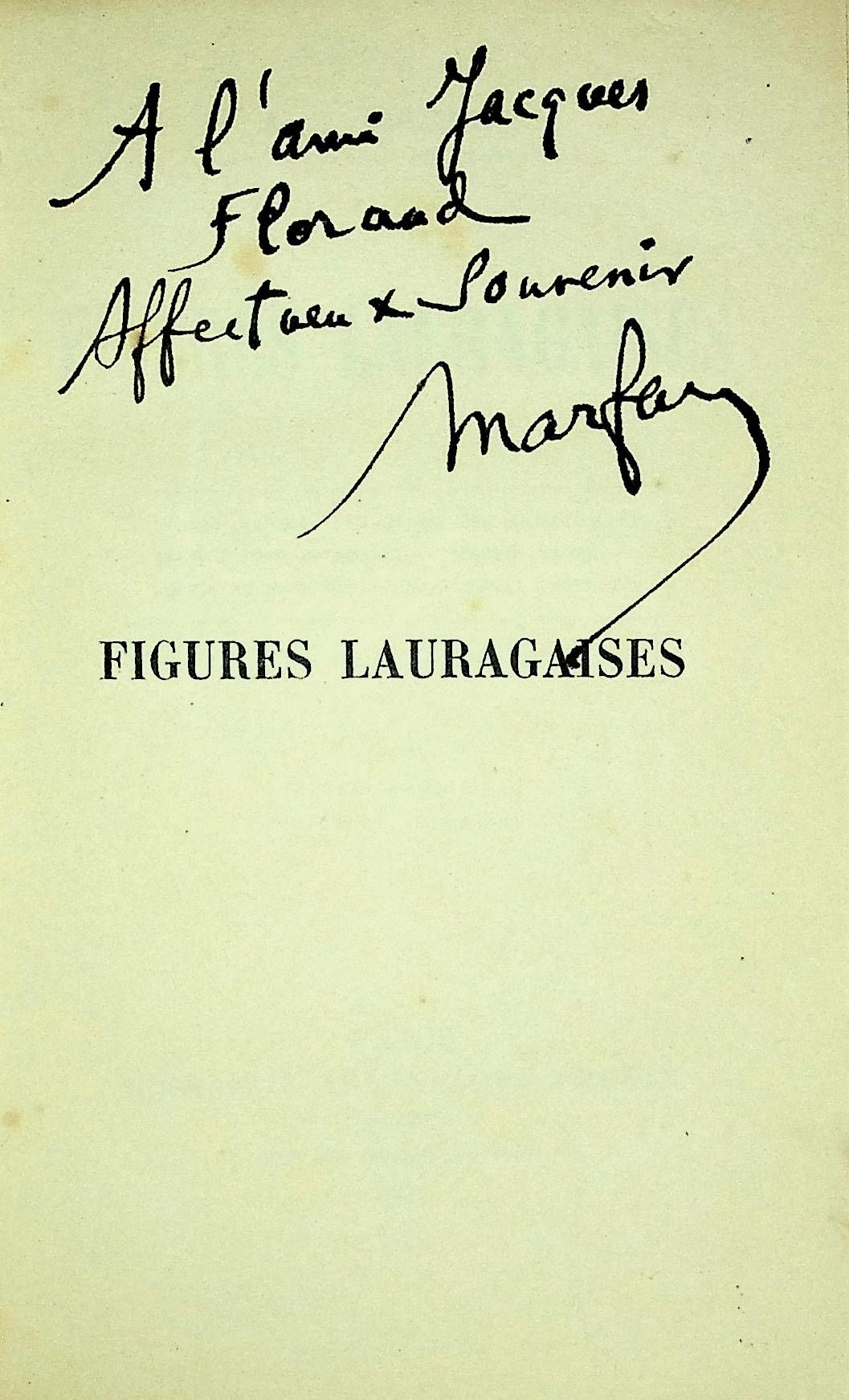
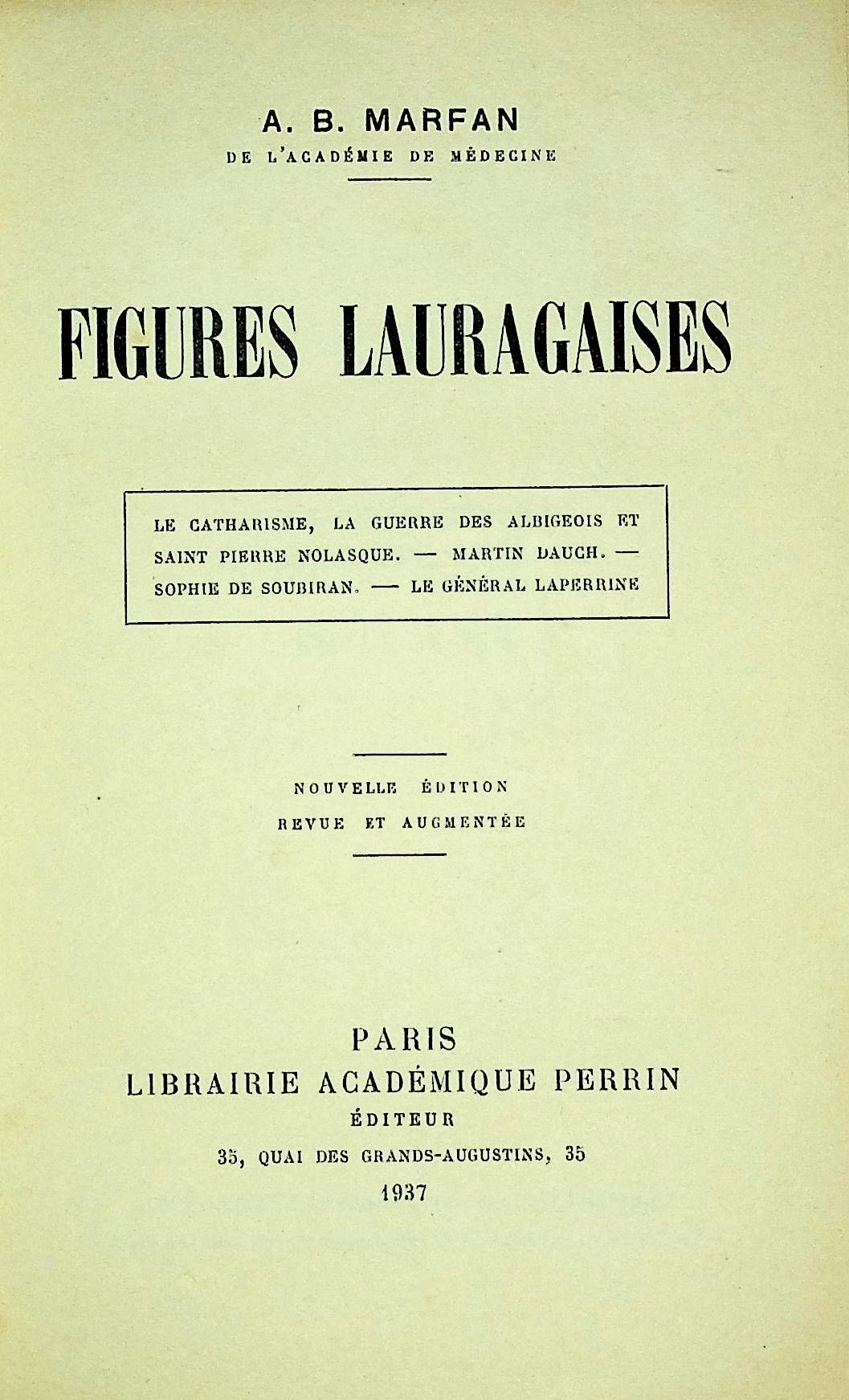
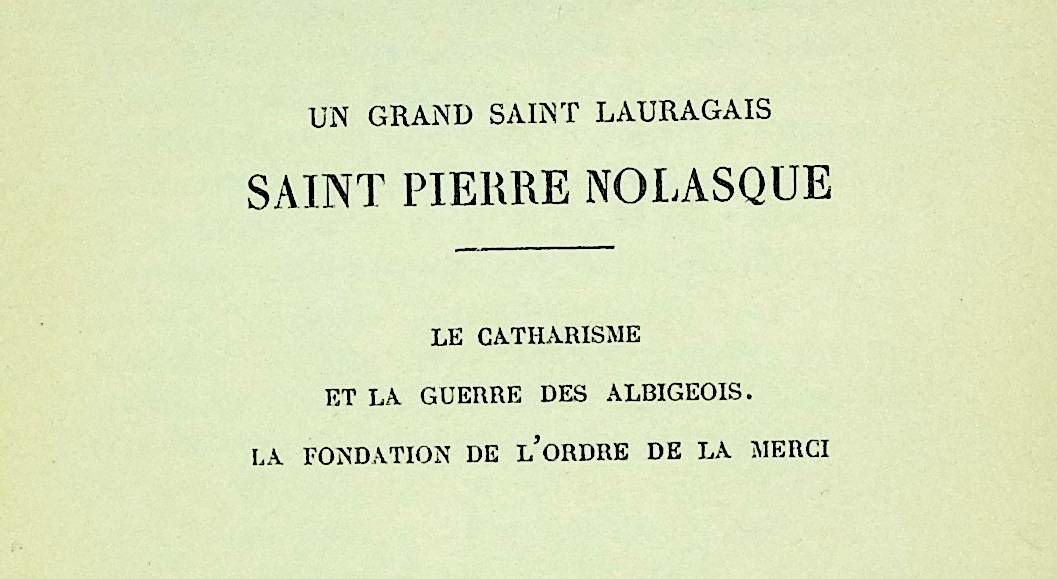
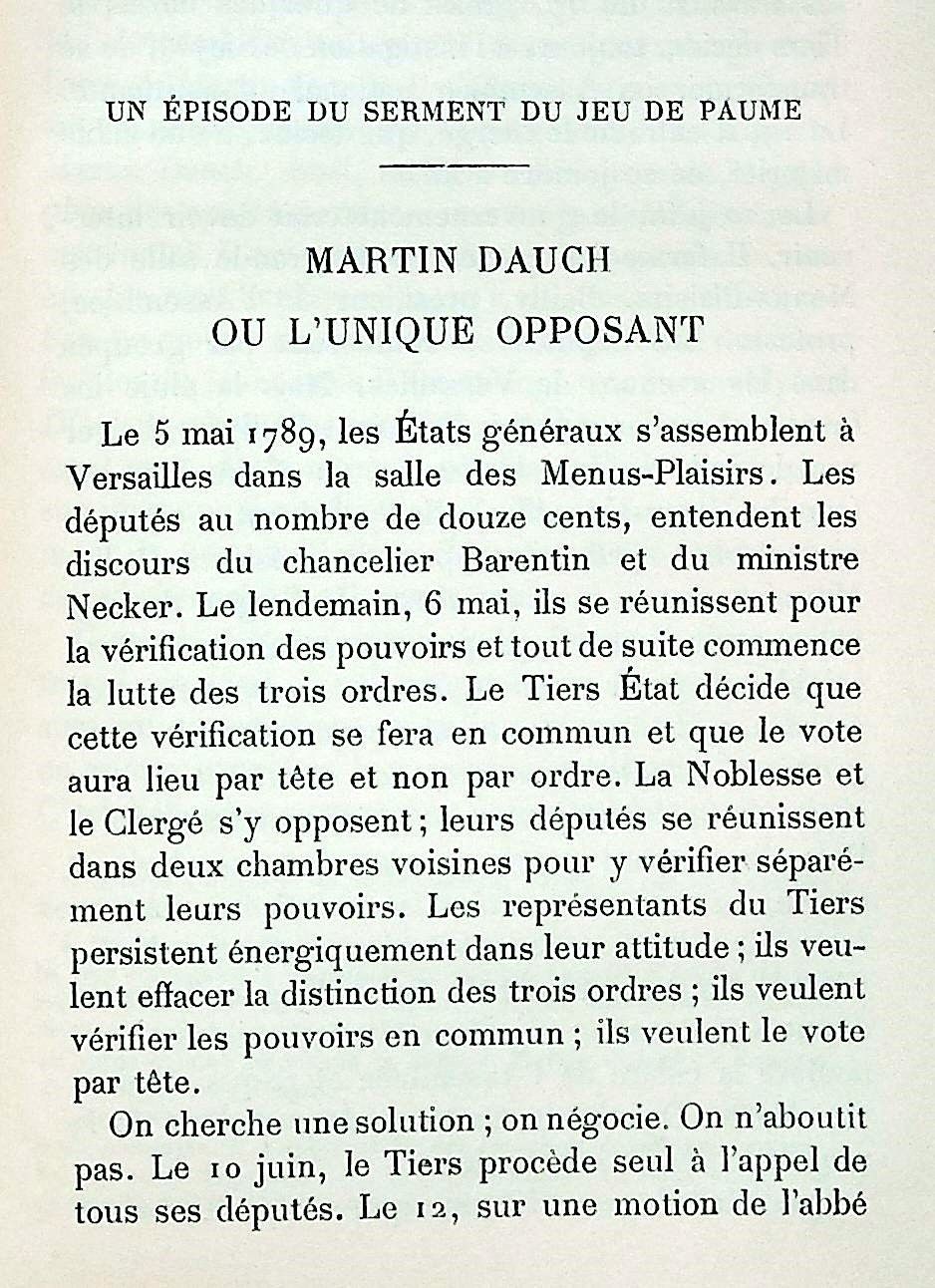
- SIGNED color printed paper covers
- Paris: Perrin, 1937
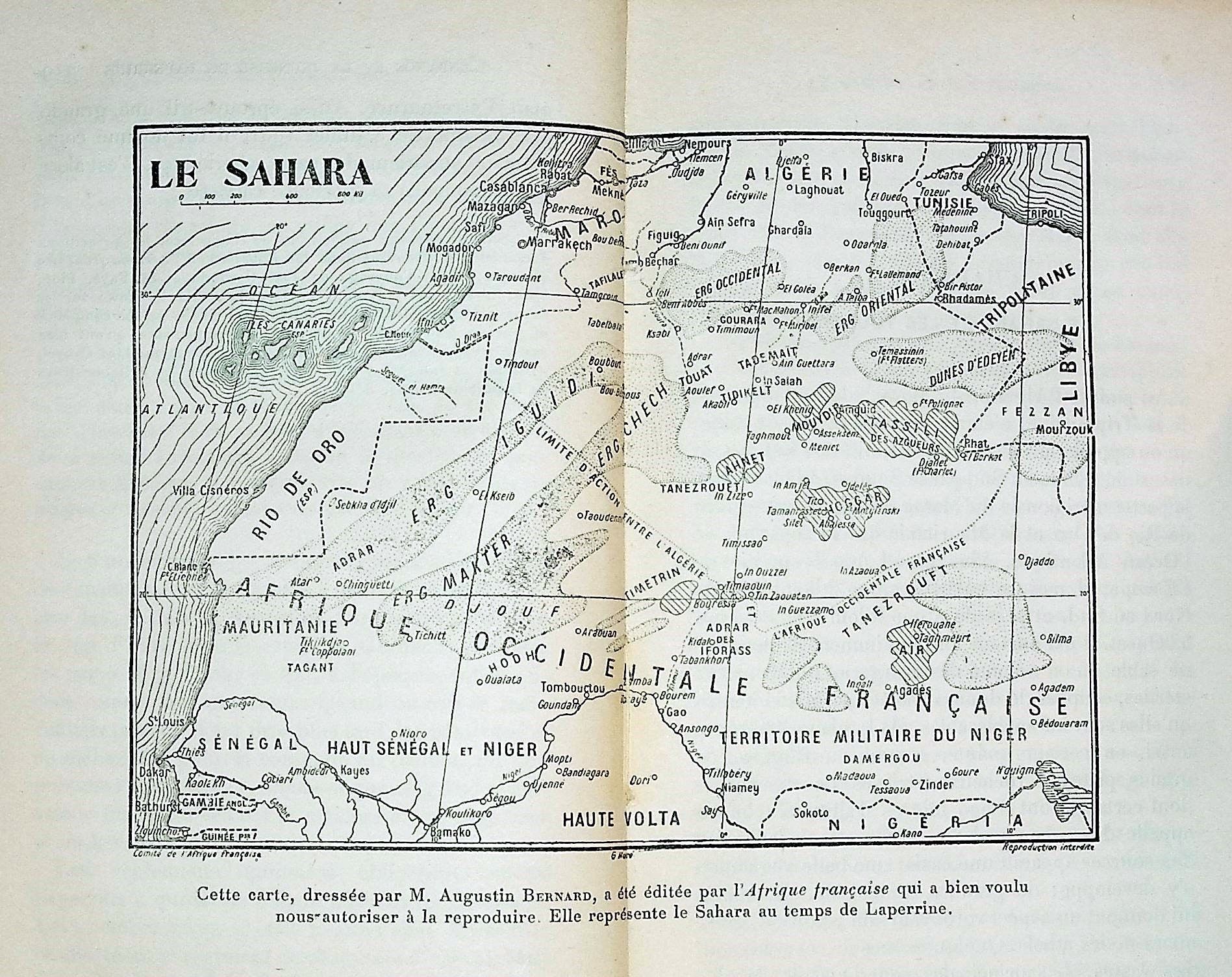
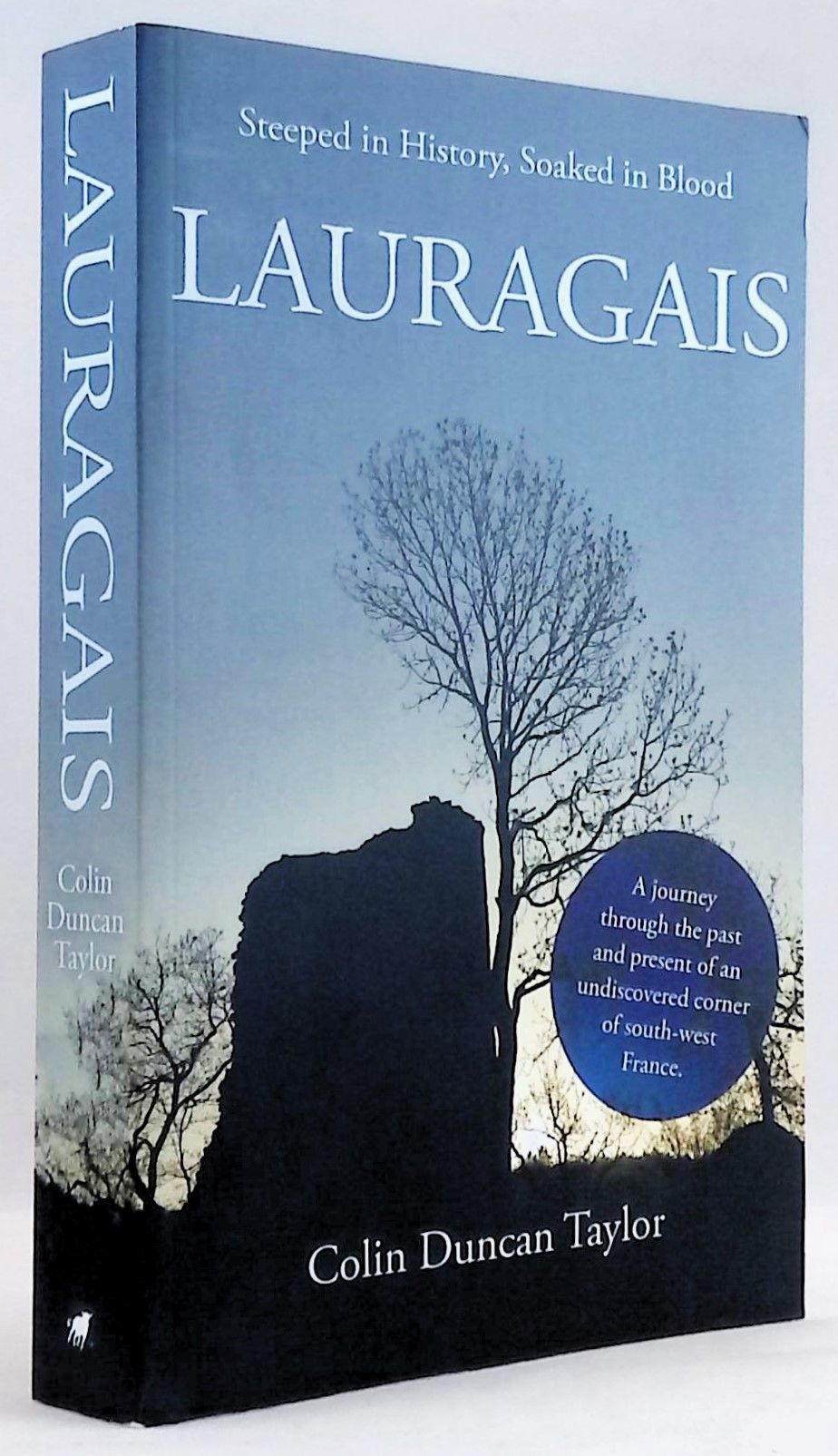
Paris: Perrin, 1937. Revised and enlarged edition. SCARCE BIOGRAPHIES OF 4 NOTABLE PERSONS SPANNING 800 YEARS OF FRENCH HISTORY, BY LEGENDARY PEDIATRICIAN ANTOINE MARFAN--SIGNED BY AUTHOR. 12x18.5 cm color printed paper covers, inscribed and signed on half-title page, "A l'ami Jacques Florand/ Affectueux Souvenir/ Marfan", i-ix, 309 pp (including 2-page map of French West Africa in late 19th century--pages 220-221); Cover edges browned, corners bumped, light foxing to endpapers, binding tight, overall very good in custom archival mylar cover. Contents: Saint Pierre Nolasque, Martin Daugh, Sophie de Soubiran, Henri Laperrine. [FRENCH LANGUAGE]. ANTOINE BERNARD-JEAN MARFAN (1858 – 1942) was a French pediatrician, born in Castelnaudary, the center of the Lauragais region of France. He began his medical studies in Toulouse, where he stayed for two years before moving to Paris. He was Chef de clinique medicale 1889-1891, Faculté de Médecine de l'Université de Paris in 1892 when he was appointed assistant professor of pediatrics in the Paris faculty. In 1914, at the age of 56 years, he was appointed as the first professor of infantile hygiene at the newly established pediatric clinic at the University of Paris. His career was spent at the Hôpital des Enfants Malades in the Rue des Sèvres, where he remained until his retirement in 1928. Marfan published extensively on pediatric themes and in 1897 was co-author of Treatise of Children's Diseases which was awarded the prize of the French Academy of Sciences. He was a pioneer in pediatrics in France and one of the most outstanding figures in his time. He was elected honorary fellow of the Royal Society of Medicine of the United Kingdom in 1934. In 1896 Marfan, presented the case of a 5-year-old girl, Gabrielle P, to the Société Médicale des Hôpitaux de Paris. Marfan pointed out her Gabrielle's disproportionately long limbs. and asthenic physique. Her mother had noticed the abnormalities already at birth. The fingers and toes were exceptionally long and slender, making a spider-like impression. Whether Gabrielle was affected by what became known as the Marfan syndrome has never been clarified. Indeed, she perhaps had congenital contractural arachnodactyly. Victor McKusick has given a comprehensive review of the Marfan syndrome in his classic monograph Heritable Disorders of Connective Tissue. Apart from his life in medicine Marfan was an extremely cultivated man with interests in art and literature and greatly enjoyed concerts and his visits to Italy where he had a particular interest in Venetian painting. After he retired, he wrote a biography of four forgotten but remarkable notable figures born close to his own birthplace, Castelnaudary, the center of the Lauragais region of France (offered here). ALSO INCLUEDED: Colin Duncan Taylor, Laurgais: steeped in History, Soaked in Blood, Matador Books (2018), 13.5x21.5 cm, color printed paper covers, 371 pp, folding map, as new [ENGLISH LANGUAGE]. The Lauragais is an area of the south-west of France that is south-east of Toulouse. It takes its name from the town of Laurac and has a large area. It covers both sides of the Canal du Midi, between Toulouse in the north-west and Carcassonne in the south-east and between Castres in the north-east and Pamiers in the south-west. Known from sources since the 11th century, the Lauragais has been alternately an archdeaconry, diocese, county and sénéchaussée (bailiwick). The rural area is known for its abundant agricultural production. The region is also famous for its history, especially the role that it played during the Albigensian Crusade. The first biography chronicles the life of Saint Pierre Nolasque (1189 – 1256), a Catholic priest known for founding the Royal and Military Order of Our Lady of Mercy of the Redemption of the Captives (the Mercedarians) with approval by Pope Gregory IX in 1235. Sources for the origins of the Mercedarians are scant and almost nothing is known of the founder, Peter Nolasco. A narrative developed between the fifteenth and early seventeenth centuries that culminated in Nolasco's canonization as a saint in 1628. The two earliest accounts, those written by the mid-fifteenth-century Mercedarian chroniclers Nadal Gaver and Pedro Cijar, declare the founder, the son of a merchant, to be from the French village of Mas-Saintes-Puelles, near the town of Castelnaudary. Nolasco followed Simon de Montfort in the war against the Albigensians. In the Battle of Muret Montfort had defeated and killed King Peter II of Aragon, and took his son James prisoner, a child of six years, and sent him back to Aragon with Nolasco, then twenty-five years old, appointed his tutor. After making a pilgrimage to Our Lady of Montserrat, Nolasco went to Barcelona where he began to practice various works of charity. Nolasco became concerned with the plight of Christians captured in Moorish raids and decided to establish a religious order to succor these unfortunates. Nolasco was canonized by Pope Urban VIII. The Albigensian Crusade, also known as the Cathar Crusade (1209–1229), was a military and ideological campaign initiated by Pope Innocent III to eliminate Catharism in Languedoc, what is now southern France. The Crusade was prosecuted primarily by the French crown and promptly took on a political aspect. It resulted in the significant reduction of practicing Cathars and a realignment of the County of Toulouse with the French crown. The distinct regional culture of Languedoc was also diminished. Between 1022 and 1163, the Cathars were condemned by eight local church councils, the last of which, held at Tours, declared that all Albigenses should be put into prison and have their property confiscated. From 1209 to 1215, the Crusaders experienced great success, capturing Cathar lands and systematically crushing the movement. From 1215 to 1225, a series of revolts caused many of the lands to be regained by the Cathars. A renewed crusade resulted in the recapturing of the territory and effectively drove Catharism underground by 1244. The Albigensian Crusade had a role in the creation and institutionalization of both the Dominican Order and the Medieval Inquisition. Because of these efforts, all discernible traces of the Cathar movement were eradicated by the middle of the 14th century. Some historians consider the Albigensian Crusade against the Cathars an act of genocide. The second biography concerns Joseph Martin-Dauch, (1741 – 1801), a French politician who represented Castelnaudary as a member of the Third Estate in the Estates-General preceding the French Revolution of 1789. He is remembered as the only member of 577 delegates, not to vote in favor of the Tennis Court Oath. He did so on the grounds that he could not faithfully execute any decisions that were not sanctioned by the king. On the day Louis XVI went to the meeting to give his approval of the constitution, the other representatives remained seated, but Martin-Dauch, true to his resolution and independence, rose and acknowledged the king. After the Estates-General ended, Martin-Dauch retired to Toulouse. He was thrown in prison during the Reign of Terror, but was afterwards released. He was saved from the guillotine when he gave a false name to revolutionary authorities. The third biography, that of Saint Sophie de Soubiran la Louvière (1834 - 1889), was a French Roman Catholic nun who established the Sisters of Marie-Auxiliatrice. She adopted the name of Marie of the Sacred Heart in 1877 after she had become a nun. At the age of 20 she renounced her plans to become a Carmelite nun in order to achieve the aims that her priest uncle Louis de Soubiran had set out for his parish. She attended a retreat under the Jesuit Paul Ginhac and decided to establish her own religious institution in 1864 with a focus on girls. Trouble began in 1869, the year after the community was authorized, with the profession of a new sister, who claimed to be a widow. Louvière trained her to keep the books of the order. In 1870 she fled to London due to the Franco-Prussian War and returned home after the Treaty of Frankfurt in May 1871. When she returned, she found herself accused of financial mismanagement by the new sister. As a result, Louvière was forced to leave the community. Her health began to take a steep decline after 1881, and she taught at various places in France. Despite the pain she endured she continued to teach catechism to people. Two years later, a new Mary Help of Christians superior reviewed the allegations, as Louvière's book-keeping nemesis had fled the convent, and her husband had come looking for her. As a result of the subsequent examination, it was discovered that the fled bookkeeper had embezzled monies of the order and falsified the books so as to throw the blame on Louvière. The founder was vindicated, and her reputation was restored. The beatification process started in Paris in 1934 was ratified in 1938. Pope Pius XII conferred upon her the title of Venerable on 7 August 1940 after the recognition of her life of heroic virtue. The final biography chronicles General Henri Laperrine (1860 – 1920), a French general who served during World War I. He organized the Compagnie Méharistes Sahariennes in 1897. He was a friend of Charles de Foucauld who was killed in 1916 in Tamanrasset. Laperrine died after a plane crash (a Breguet) in the Sahara in 1920. His companions, Lieutenant Bernard and mechanic Marcel Vasselin survived and recorded Laperrine's last words, "People think they know the desert...People think I know it. Nobody really knows it. I have crossed the Sahara ten times and I will stay here." Bernard and Vasselin buried Laperrine near the plane, but when a rescue party arrived he was disinterred and buried in Tamanrasset next to Foucauld. The fort was named for Laperrine.
Details
Title
SIGNED. Figures Lauragaises [Notable public figures from Lauragais]
Author
Marfan, Antoine B.
Binding
color printed paper covers
Condition
Unknown
Publisher
Perrin: Paris
Date
1937
Edition
Revised and enlarged edition