

Observations and experiments concerning the elementary phenomena of embryonic development in Chaetopterus, Journal of Experimental Zoology, Vol. III (2), pp 153-268
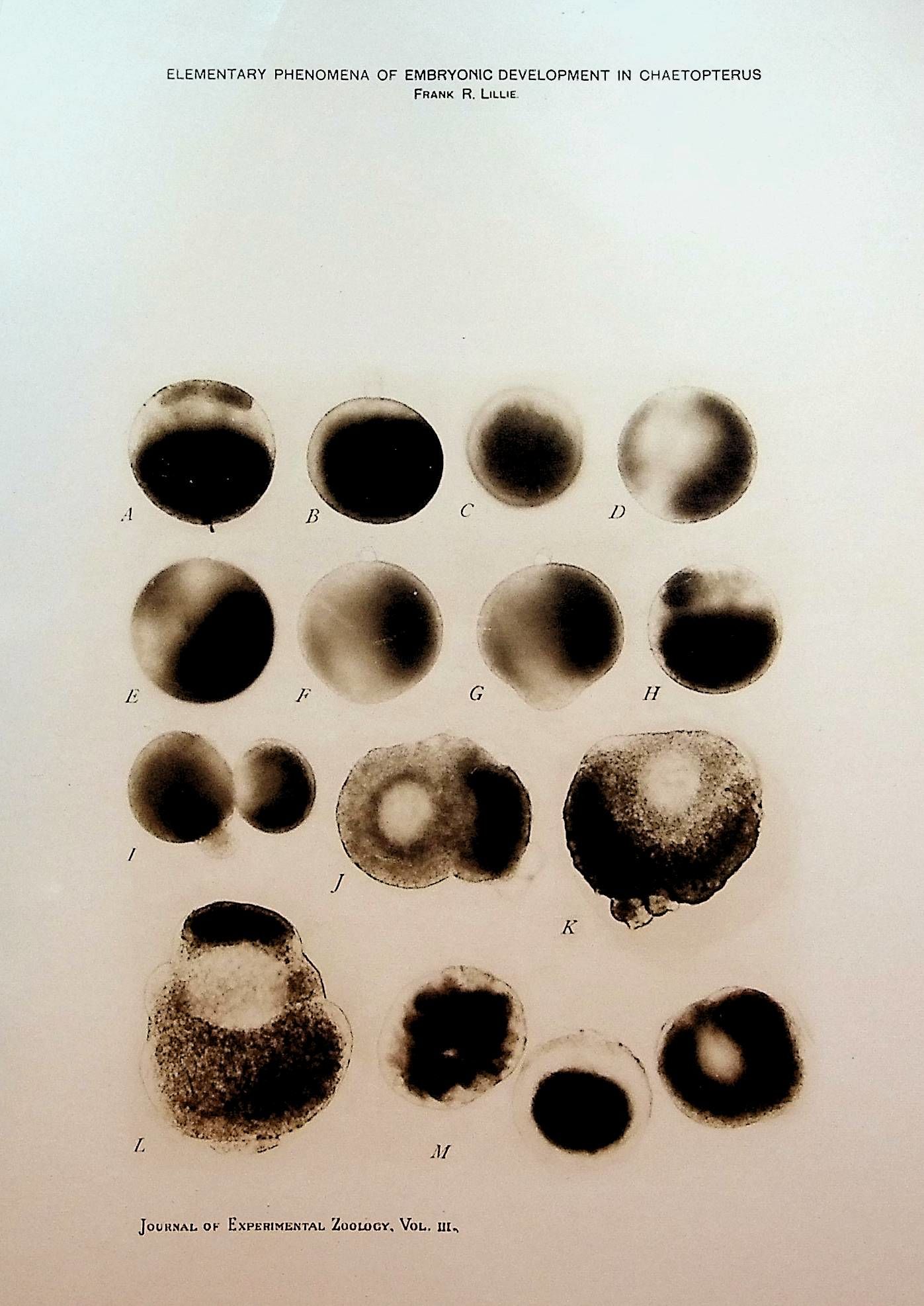
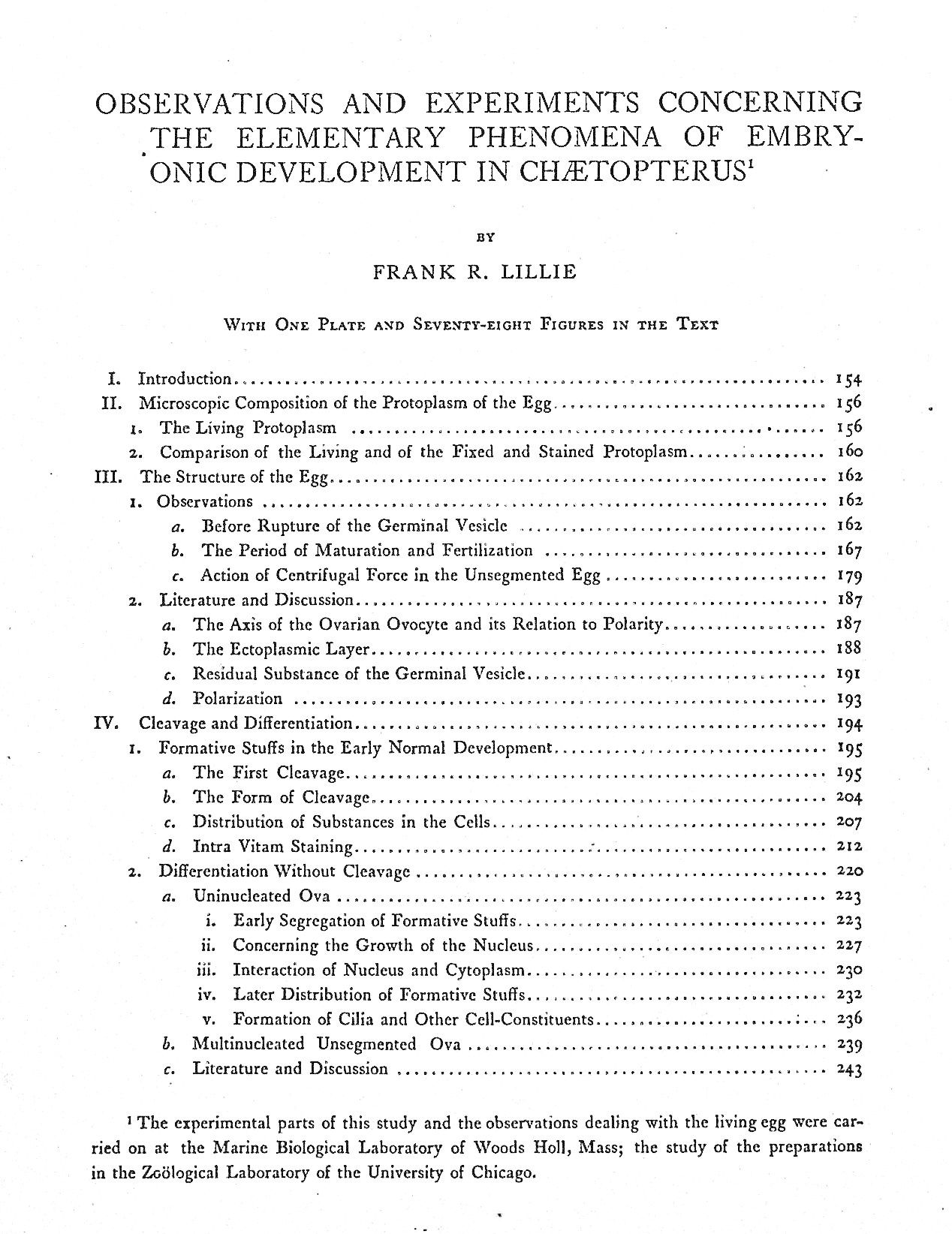
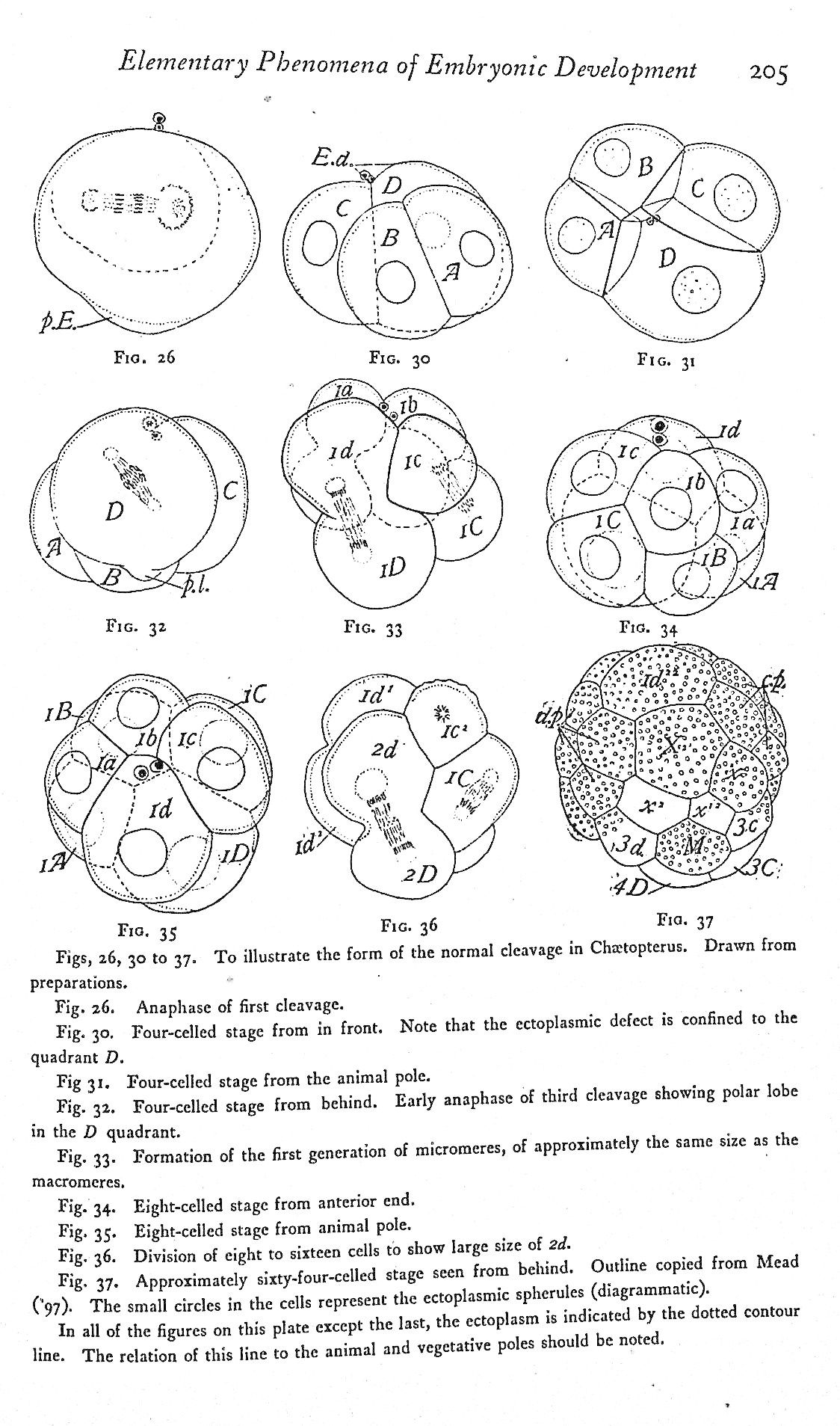
- SIGNED Printed paper covers
- 1906
1906. First edition.
1906 SCARCE OFFPRINT OF SEMINAL STUDY OF EARLY CLEAVAGE OF THE FERTILIZED EGG BY FRANK R. LILLIE, PIONEERING AMERICAN EMBRYOLOGIST--INSCRIBED TO DR. R.W. HALL.
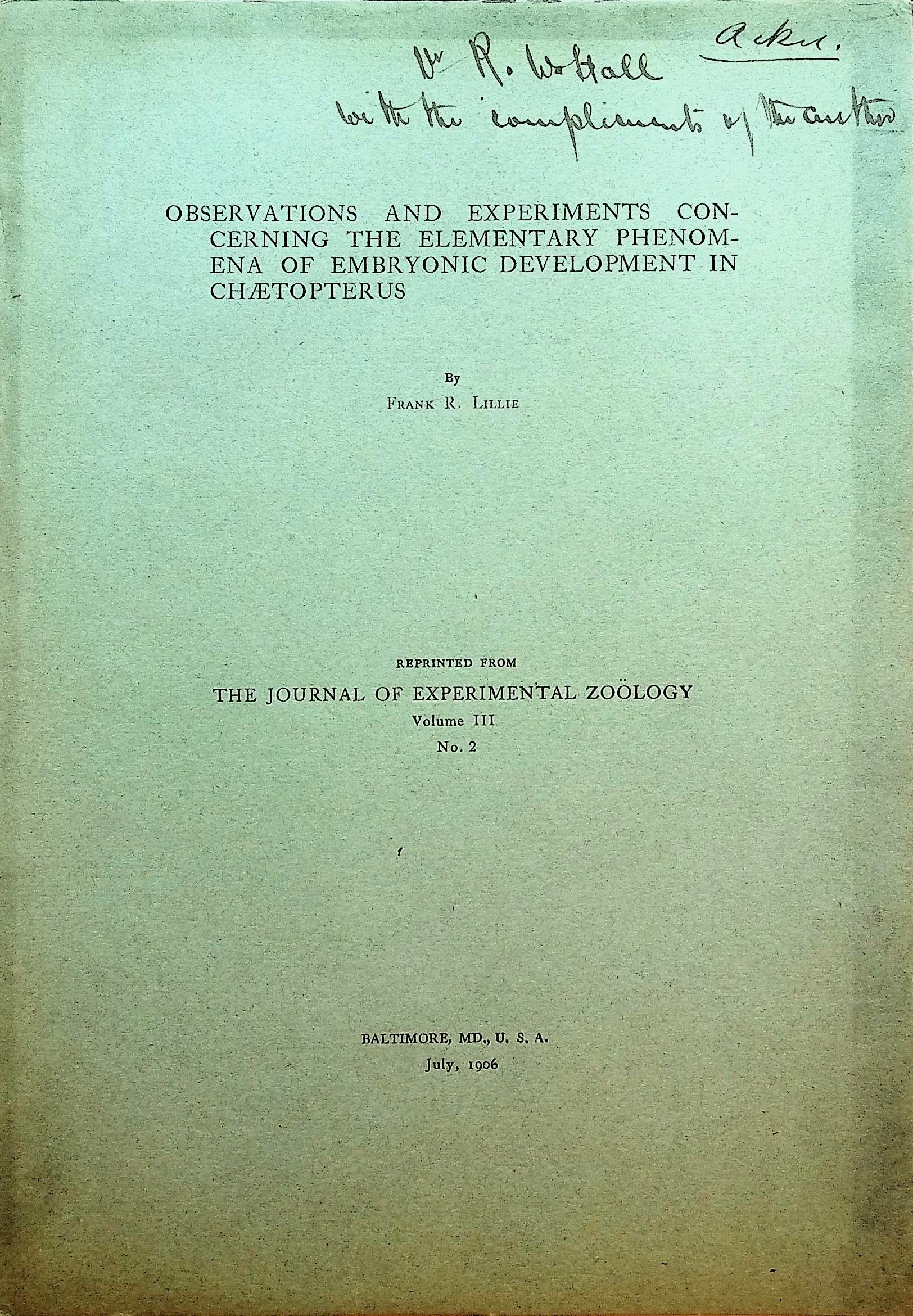
17.5x25 cm blue printed paper wraps, glue binding, inscribed in ink on cover to "Dr. R. W. Hall with the compliments of the author", pp [153-268], photographic plate. Pages age-toned, plate loose, very good in custom archival mylar cover.
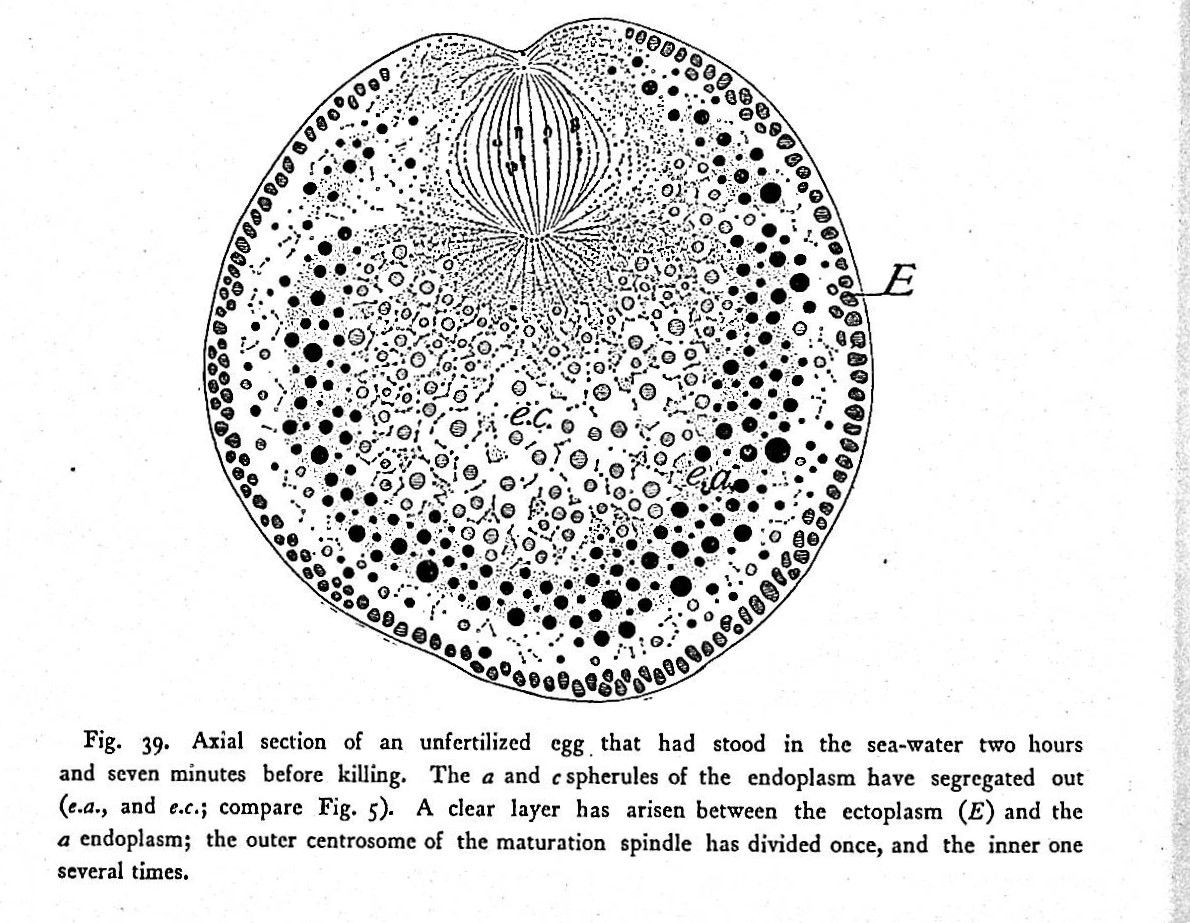
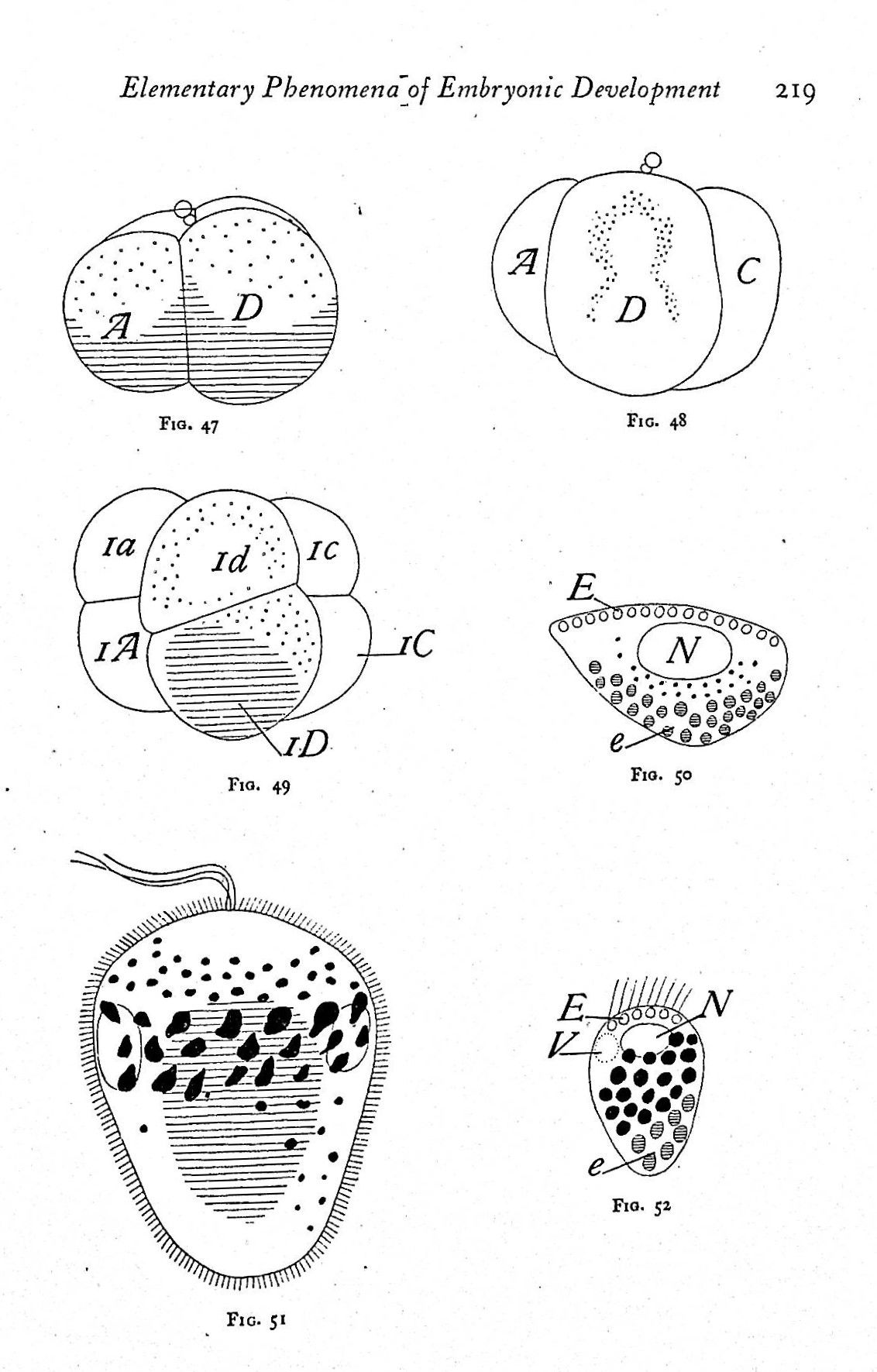
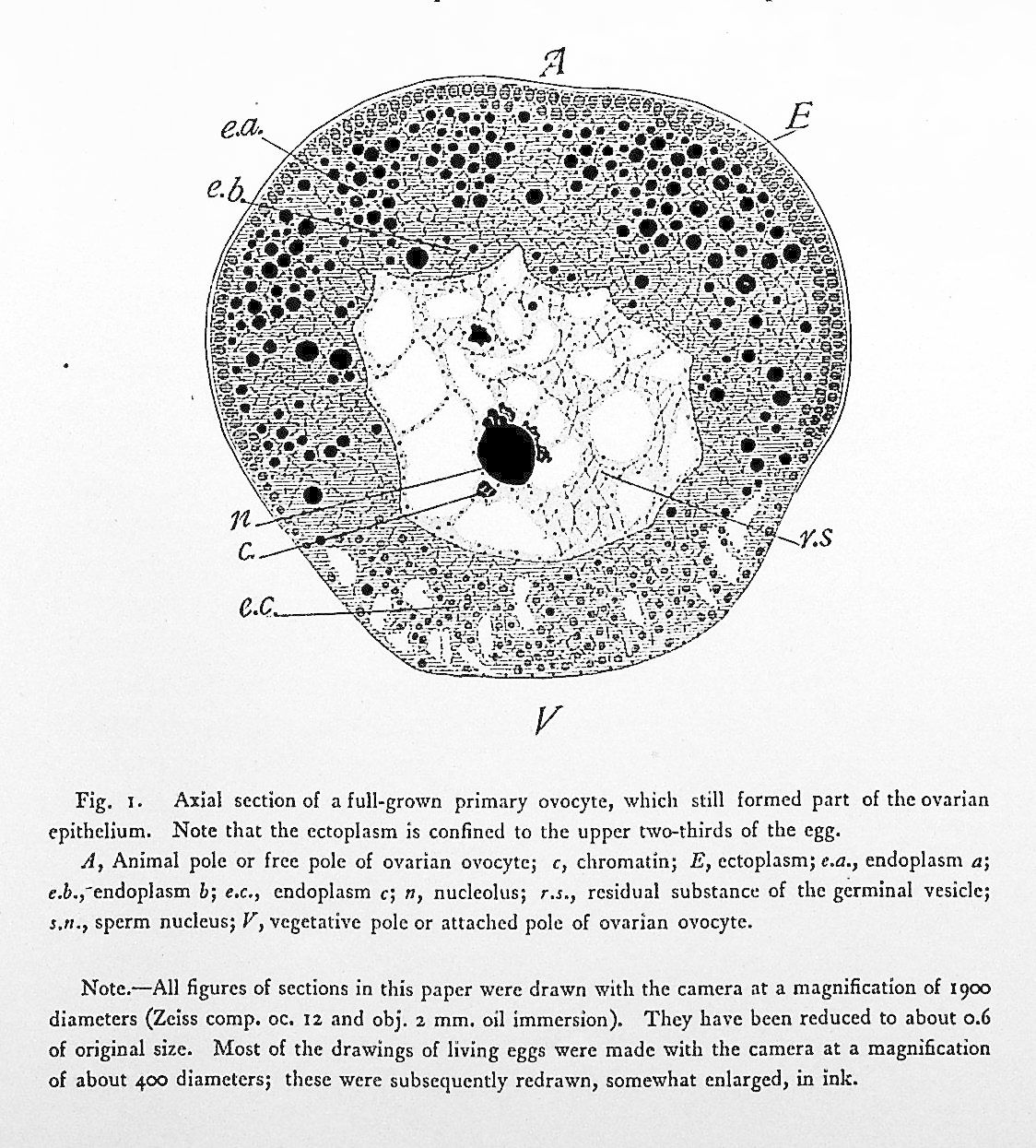
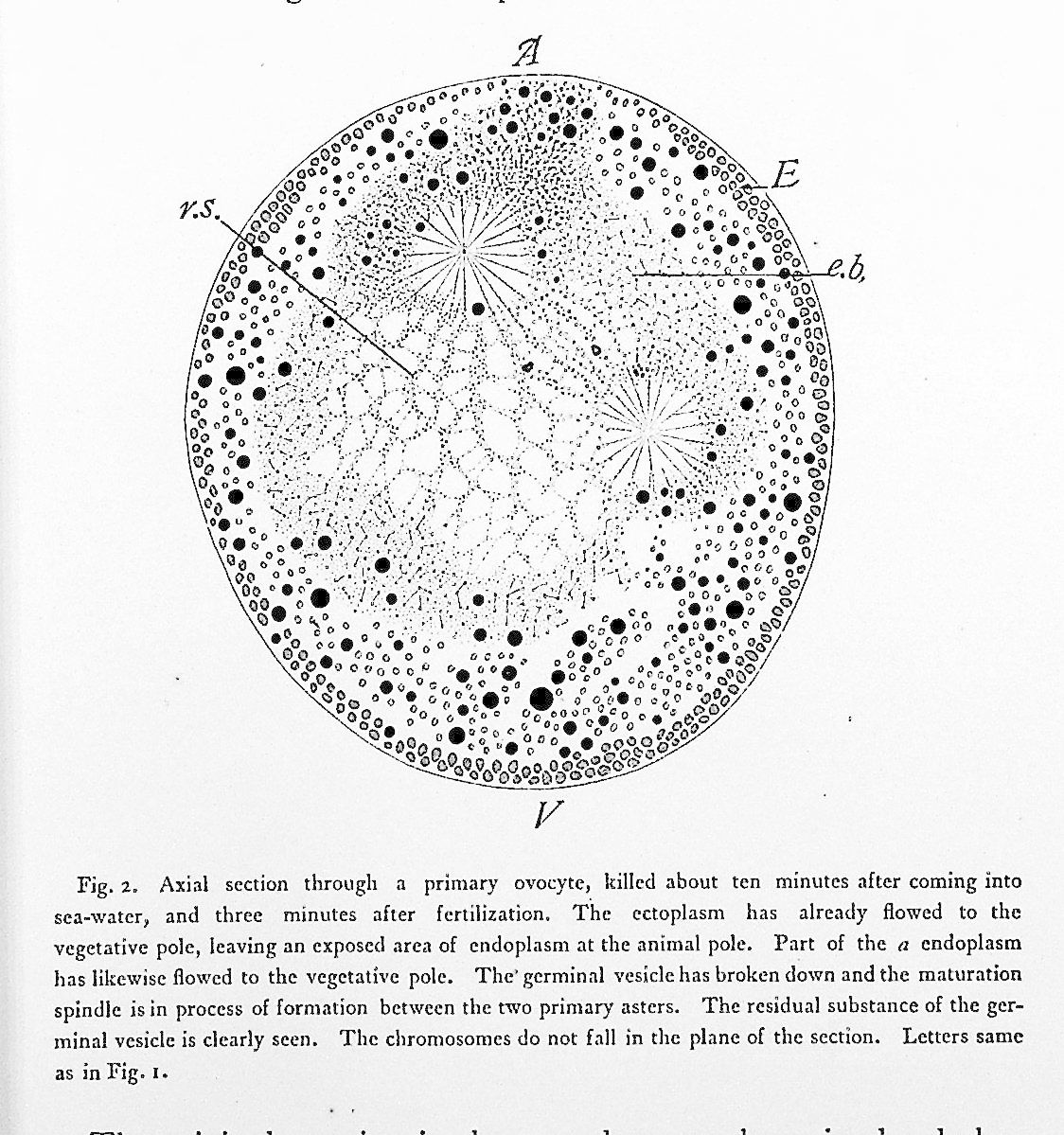
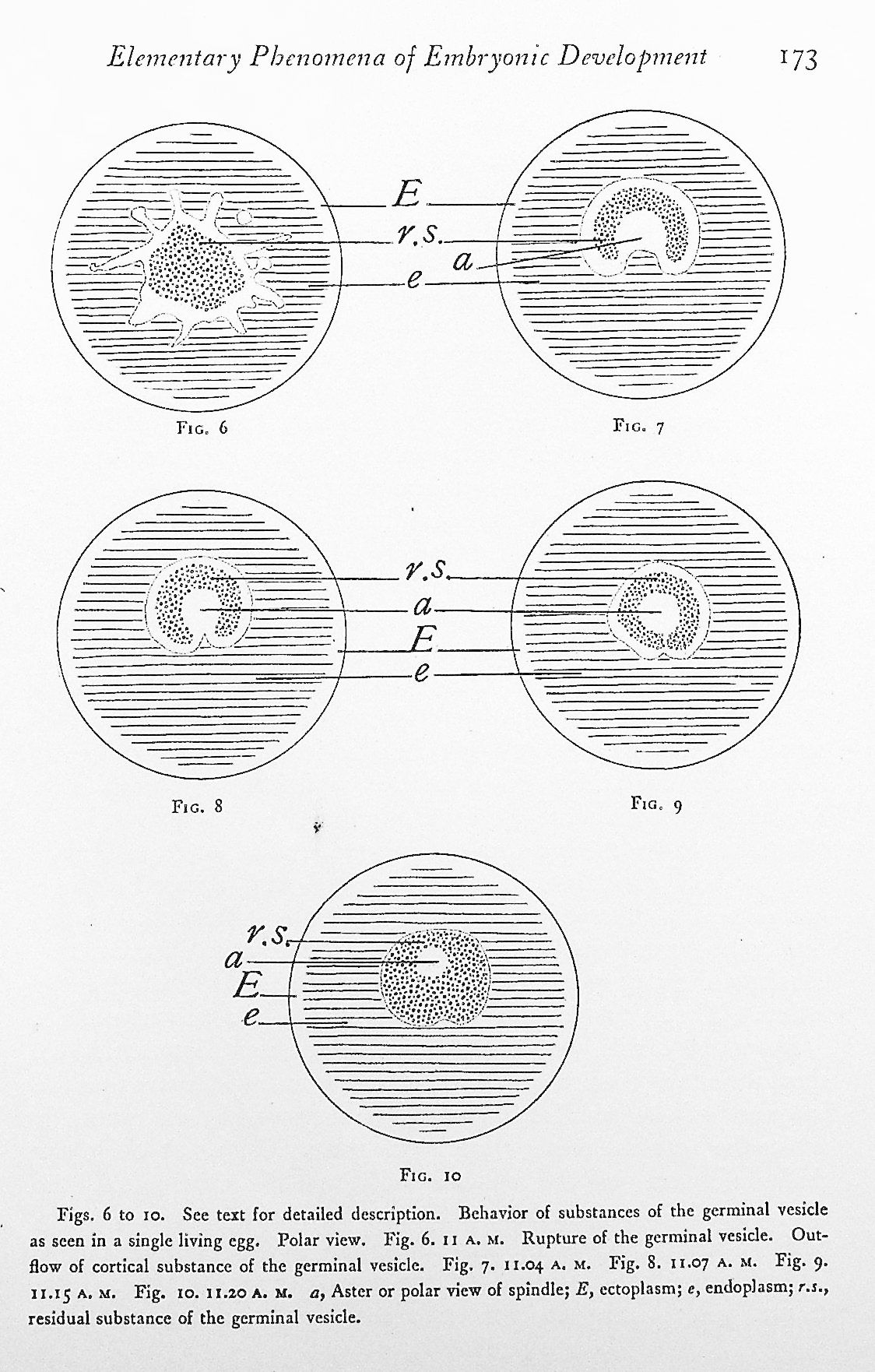
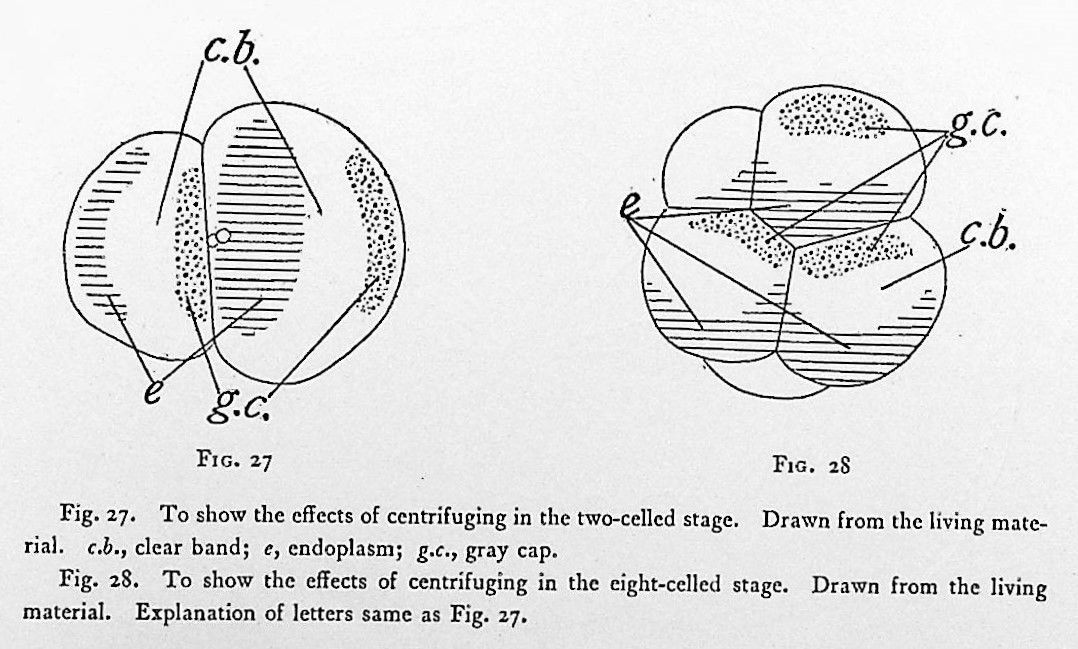
FRANK RATTRAY LILLIE (1870 – 1947) was an American zoologist and an early pioneer of the study of embryology. He served as the chairman of the National Academy of Sciences and the United States National Research Council, and was also an elected member of both the American Philosophical Society and the American Academy of Arts and Sciences. Born in Toronto, Ontario, Canada, Lillie moved to the United States in 1891 to study for a summer at the Marine Biological Laboratory (MBL) in Woods Hole, Massachusetts. Lillie formed a lifelong association with the laboratory, eventually rising to become its director in 1908. His efforts developed the MBL into a full-time institution. Lillie was appointed an Assistant Professor at the University of Chicago in 1900. He was named Chairman of the Department of Zoology in 1910 and Dean of the Division of Biological Sciences in 1931. His research there was instrumental in the development of the field of embryology. "By reflection on the meaning of the orderly and specific behavior of the individual cells during normal cleavage in the formation of specific parts of the glochidium larva of Unio, Lillie was well prepared to explore the nature of organization of the egg itself. Somehow the material basis for cleavage pattern must reside in the protoplasmic substance of the unsegmented egg. From studies of his contemporaries at Woods Hole, Lillie correctly discerned that the egg of the tubiculous polychaete annelid, Chaetopterus pergamentaceus, was far better adapted than that of Unio for the purpose. After a cytological examination of the minutiae of the changing disposition of visibly different substances in the egg cytoplasm during the course of maturation and fertilization and of their differential spatial distribution during cleavage and subsequent stages, Lillie studied the effect on egg development of the redistribution of visible substances by centrifugation. If the unfertilized egg at the period of the first maturation spindle was centrifuged at a moderate speed and then fertilized, the egg underwent normal cleavage: the polar organization of the egg was unmodified. Thus the conclusion could be drawn that there is a definite architecture in the ground substance, which is the basis of the localization pattern in normal development. To Lillie the so-called "organ forming substances" or "formative stuffs," terms then in common use, are "really germinal areas probably including a variety of substances, and distinguished only by their localization and by the useful but superficial character of color" (p. 257, paper offered here). The dynamic changes that take place in the egg protoplasm of Chaetopterus, especially at fertilization, immediately led to a study of the mechanism of fertilization of the egg, a subject that was to engage Lillie and his students for a period of over ten years (1910-1921). The work was brought together in 1919 in the form of a small, lucidly written book entitled Problems of Fertilization and again in 1924 (in collaboration with his devoted and distinguished student, the late E. E. Just) in a revised and expanded version."—BH Willier, Biographical Memoir of Frank Rattray Lillie, National Academy of Sciences, 1957.
Details
Title
Observations and experiments concerning the elementary phenomena of embryonic development in Chaetopterus, Journal of Experimental Zoology, Vol. III (2), pp 153-268
Author
Lillie, F.R.
Binding
Printed paper covers
Condition
Unknown
Date
1906
Edition
First edition