

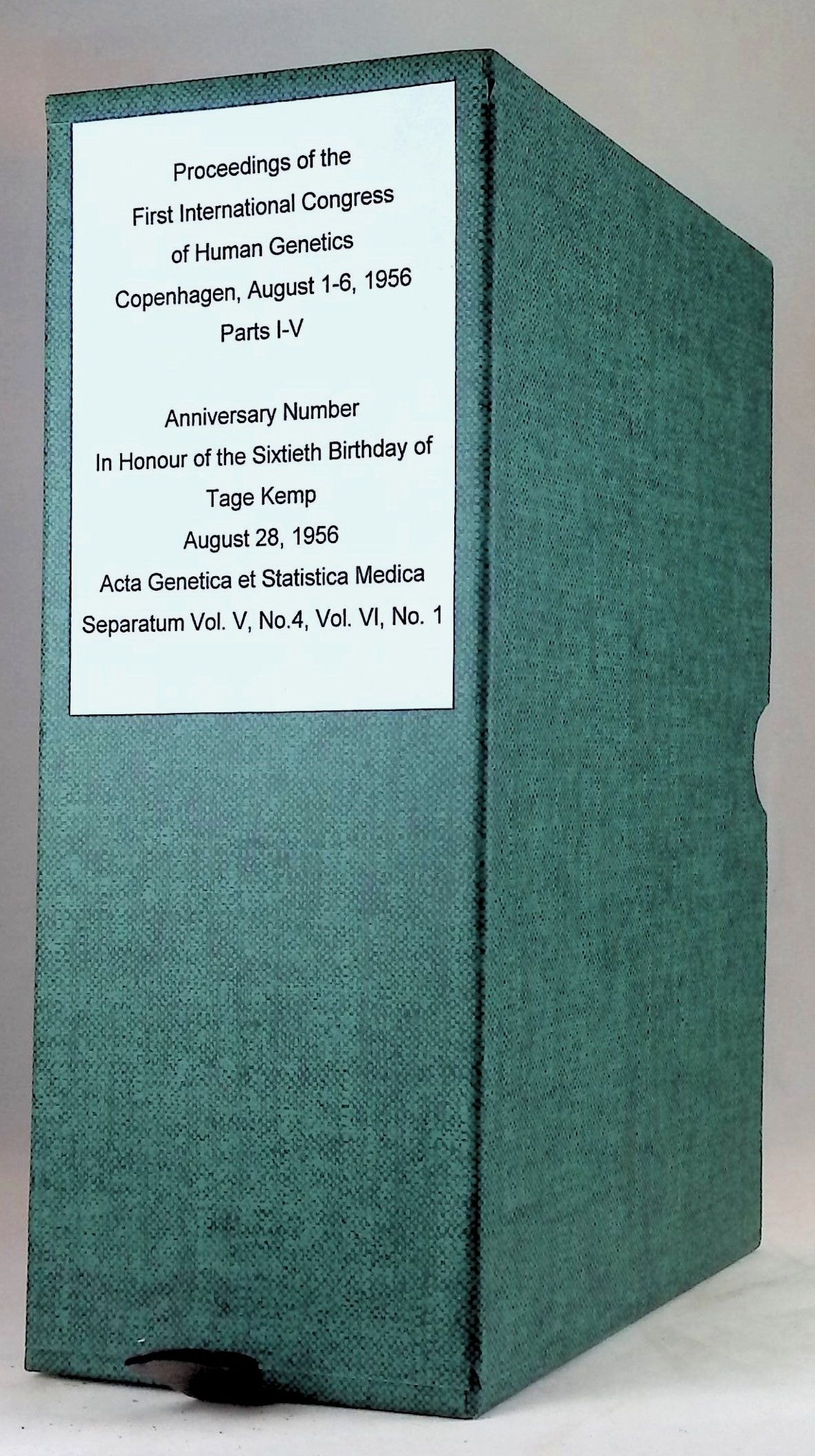
THE BIRTH OF MEDICAL GENETICS. Proceedings of the First International Congress of Human Genetics. Copenhagen, August 1-6, 1956

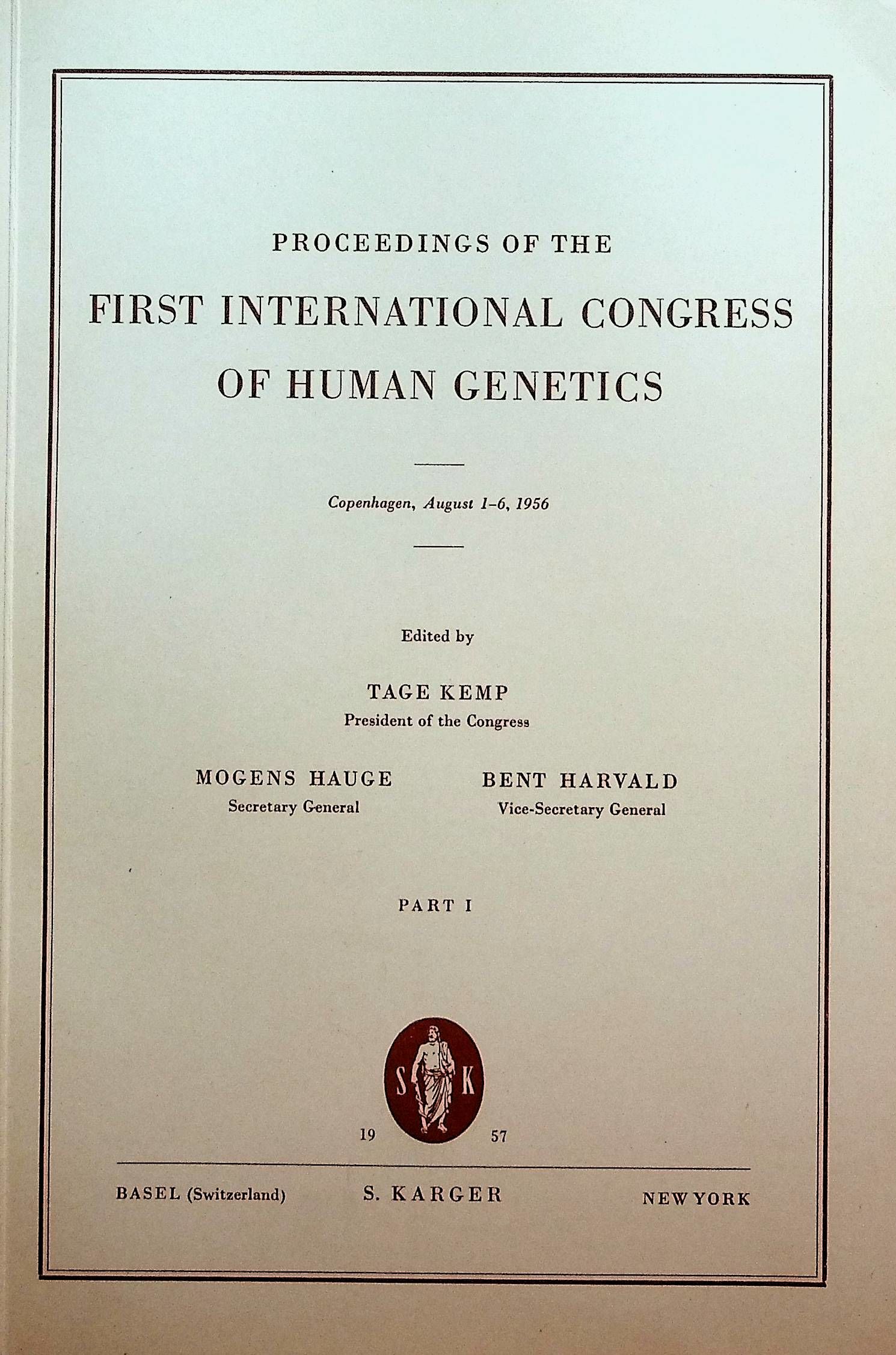
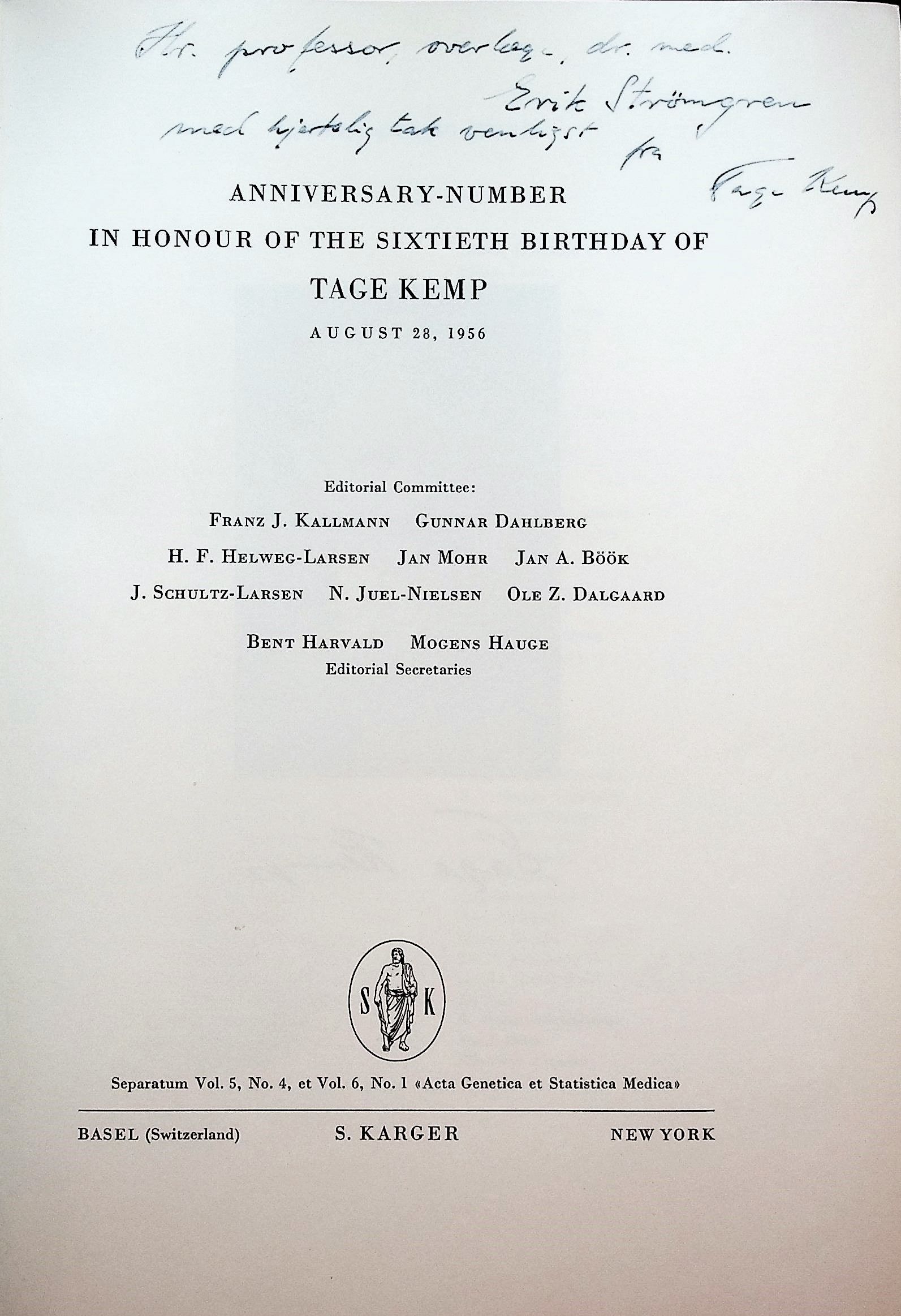
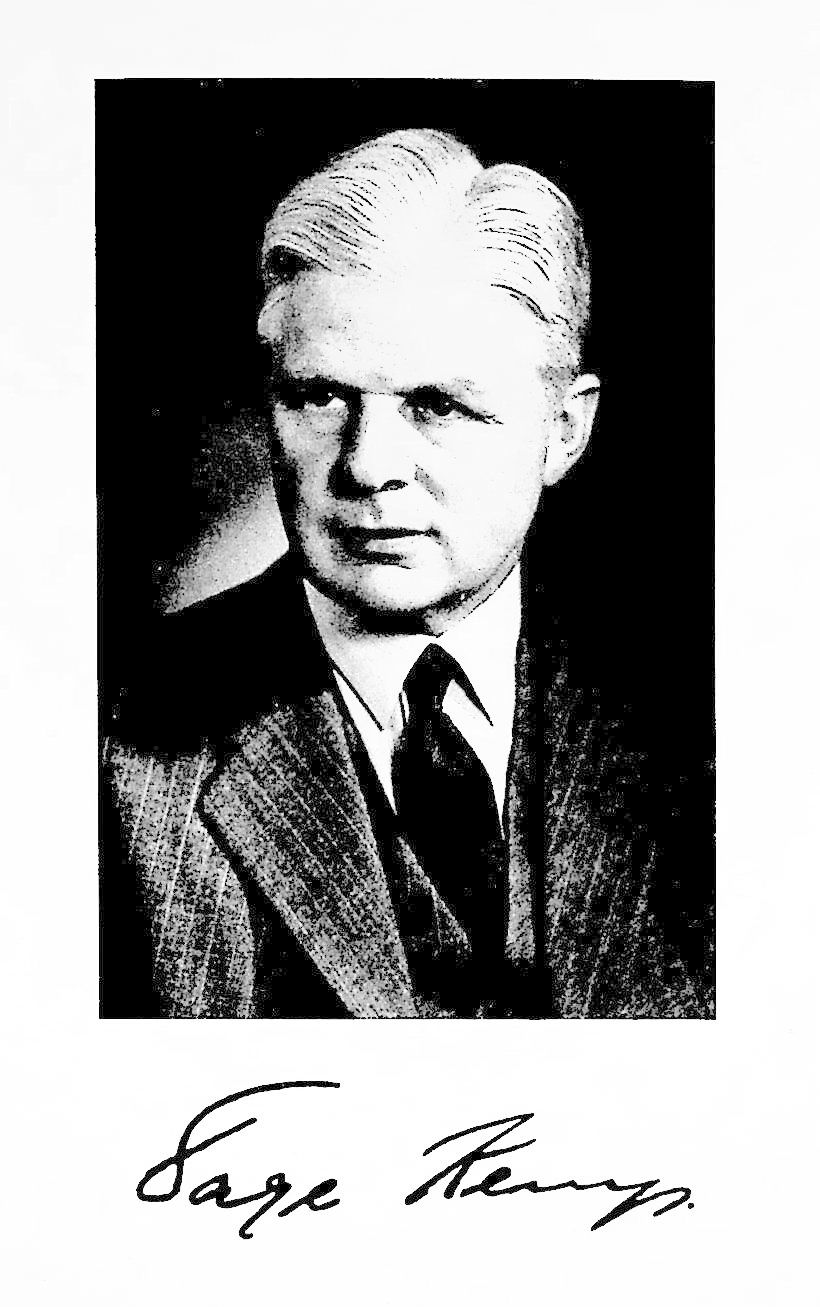
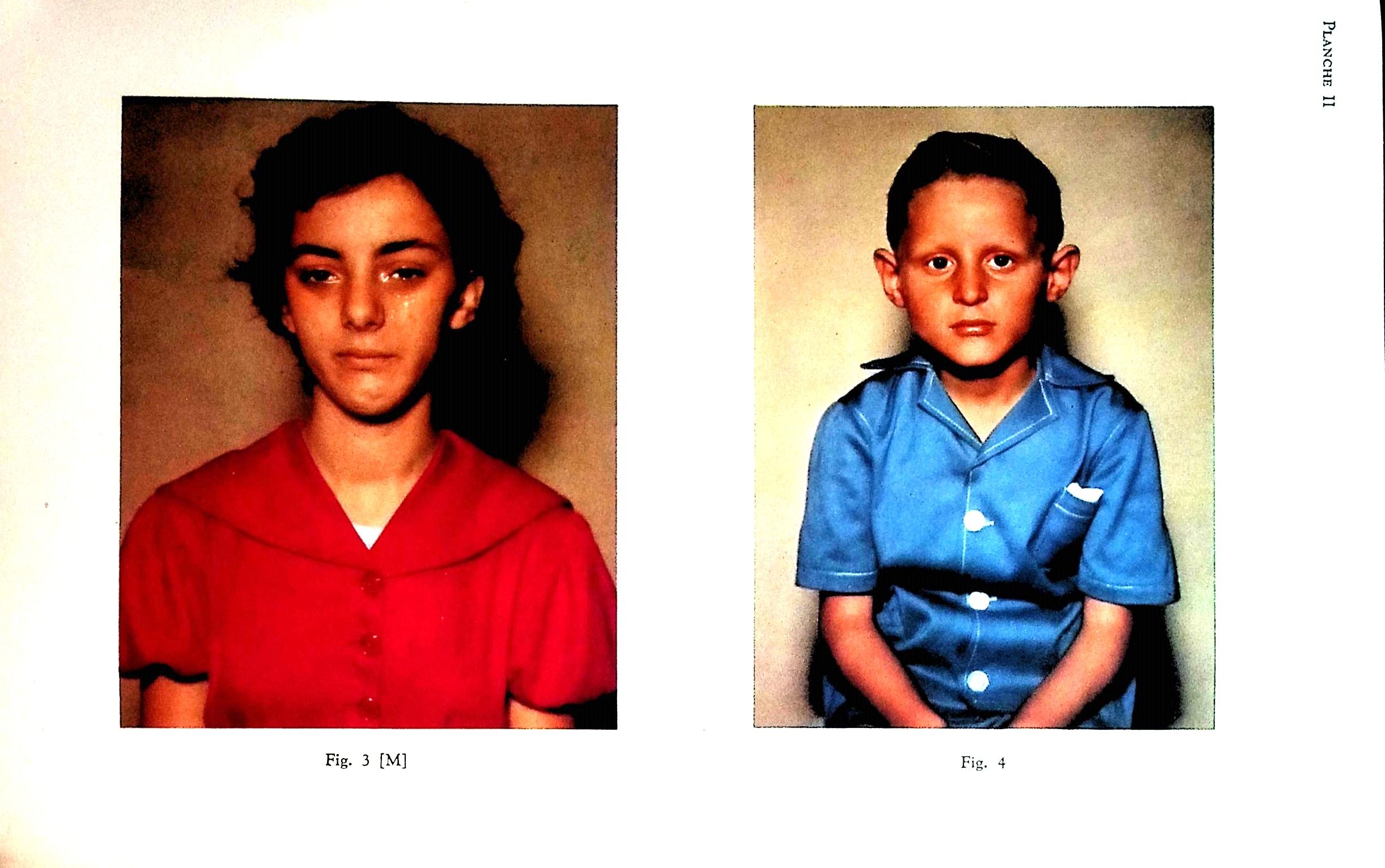
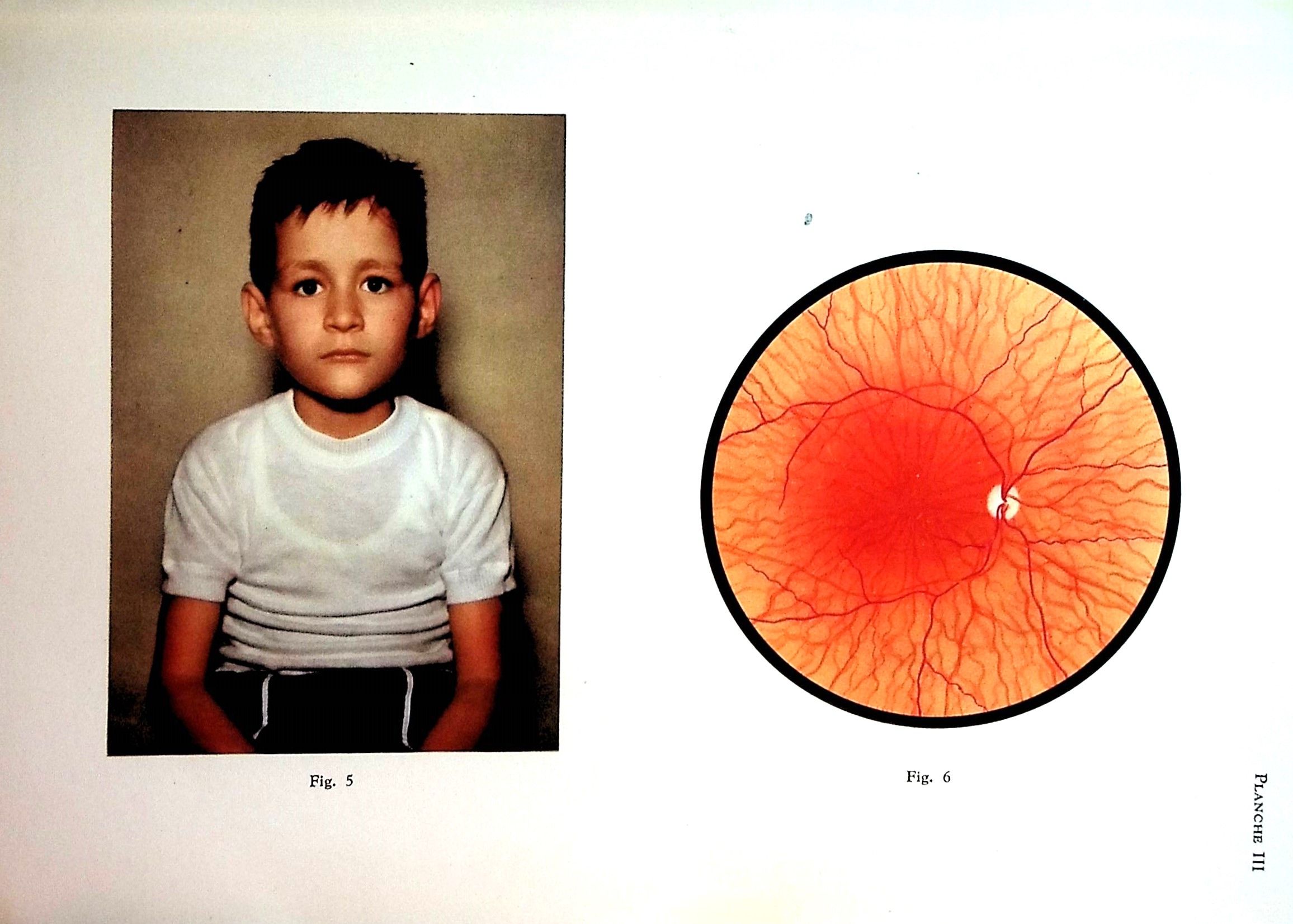
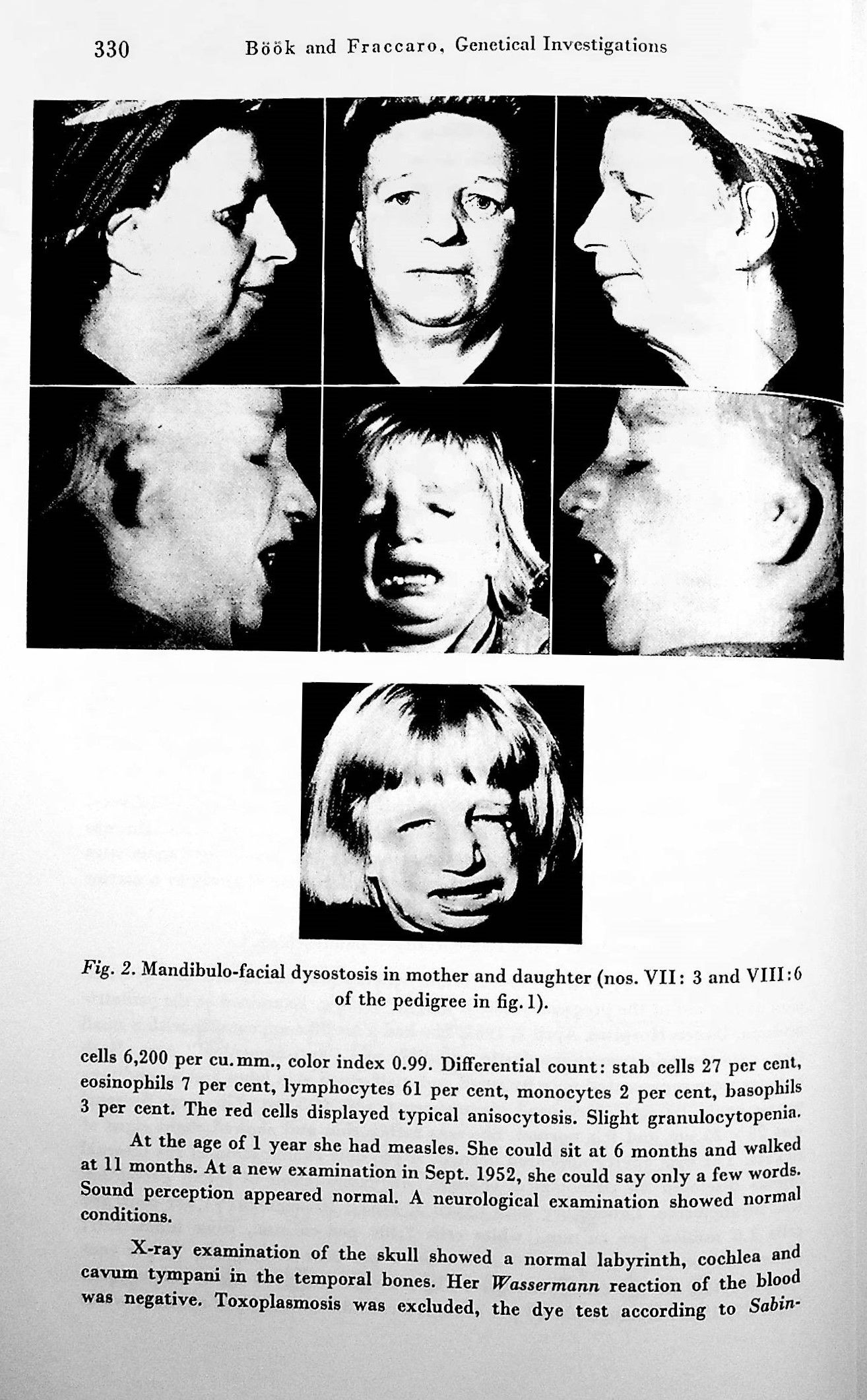
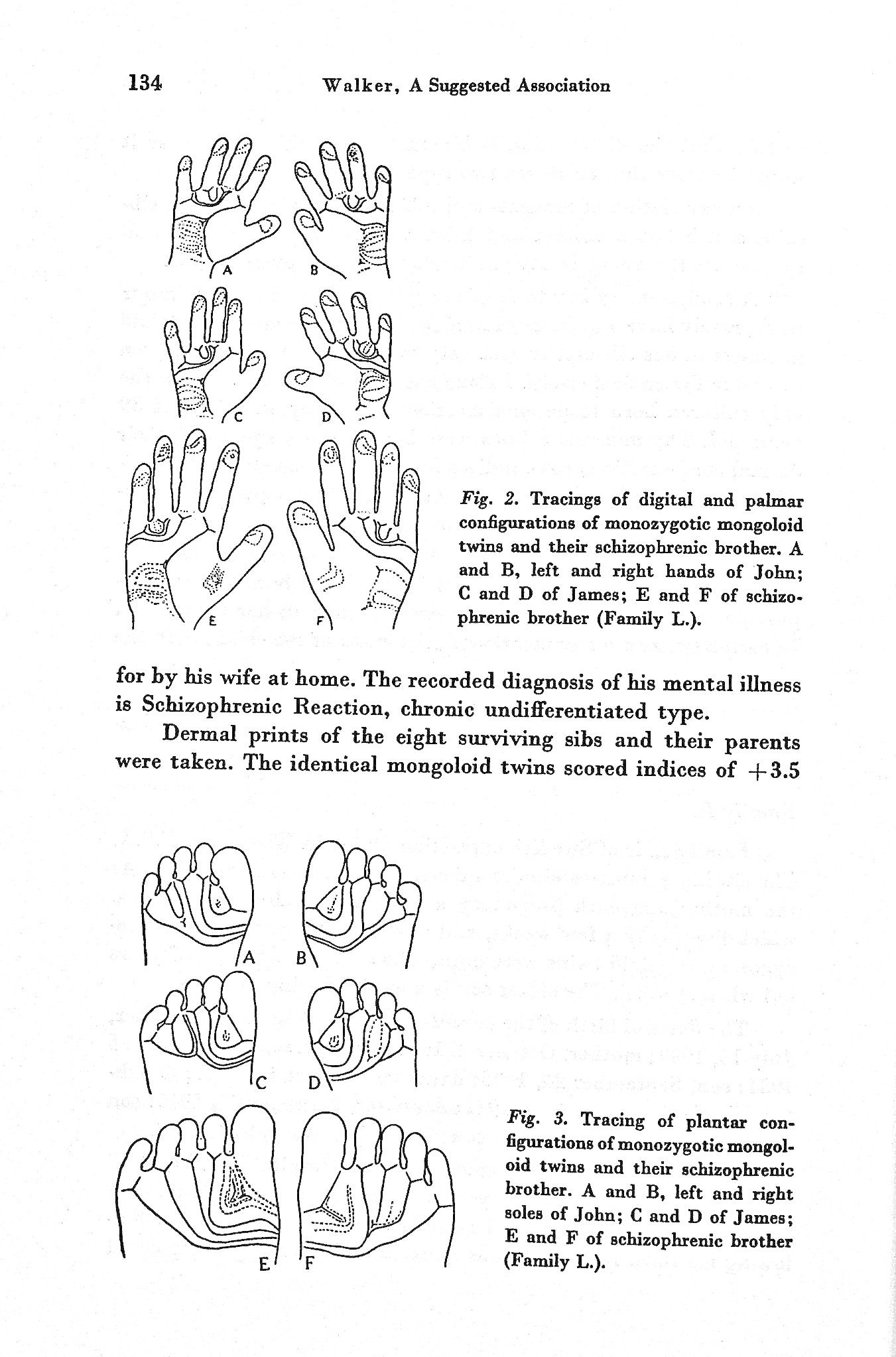
- SIGNED Printed paper covers
- Basel, New York: S. Karger, 1957
Basel, New York: S. Karger, 1957. First edition.
"THE BIRTH OF MEDICAL GENETICS": COMPLETE PROCEEDINGS OF 1956 COPENHAGEN HUMAN GENETICS MEETING WITH SIGNED TAGE KEMP ANNIVERSARY VOLUME.
17.3 x 24.3 cm gray paperbound volumes (Parts I-V): Part: I: [2],vii-xvi,[157]-316; Part II: [2],[321]-502; Part III: [2],505-613; Part IV: [2],3-248; Part V: [2],251-512, Index, and 17.3 x 24.8 cm Anniversary Number in Honour of the Sixtieth Birthday of Tage Kemp, August 28, 1956, Part I: [i-iv], pp [287]-422; Part II: 1-155. Anniversary number is inscribed and signed in ink on title page by Tage Kemp, "Hr. professor overlage, dr. med Erik Stromgren med hjertelig tak venhigst from Tage Kemp". Near fine in archival case. N. Comfort in The Science of Human Perfection (Yale, 2012): "The 1956 Copenhagen meeting looms large in the mythology of medical genetics, because it occurred at what has become known as the birth of the field. McKusick called it a "very defining experience" in his medical-genetic education. It is a trough in the medical-genetic landscape; events on either side tend to roll mnemonically into the summer of 1956, and Copenhagen gets credit for publicizing and therefore originating them. Nearly four hundred delegates attended, and fourteen countries sent national committees to the meeting. The prewar and immediate postwar cohort who had established the heredity clinics and founded the ASHG still dominated the American committee, which included such representatives as Sheldon Reed, Pete Oliver, Eldon Gardner, and Arthur Steinberg. An ambiguous group of respected geneticists with Nazi ties represented Germany: Otmar von Verschuer, Fritz Lenz, and Hans Nachtsheim all sought reintegration into the international genetics community. The British committee included Lionel Penrose, the Galton Professor, and Harry Harris, a biochemical geneticist at London Hospital Medical College, among others. Many Scandinavian medical geneticists attended, of course. Their noncoercive medical eugenics established a model for volunteeristic state control of heredity; several delegates reported on recent efforts to institute genetic registration of infants as an experiment in socialized genetic medicine. The formal government apparatus provided a supporting structure for voluntary eugenics, which scientists such as Kemp deemed not only acceptable but necessary for the responsible stewardship of the race. The Danish minister of education, Julius Bomholt, opened the proceedings by invoking the atomic age and how it had shaped human genetics as a field. He stressed its role in making the prevention of spread" of hereditary disease a topic of intense interest. Kemp took up this question in his presidential address, sharpening it in genetic terms. Invoking H. Muller's paradigm-generating paper of 1950, Kemp wrote. 'Within recent years, very much attention has been drawn to the dangers which load of mutations involves for the human race." Indeed, Muller's paper, "Further Reflections on the Load of Mutations in Man," followed Kemp's remarks in the proceedings. But one could turn this observation around, Kemp noted, and recognize the "treasure of normal genes" we harbor in our cells. Medical geneticists were the stewards of the gene pool. 'It is the task and responsibility of mankind in our generation, and in particular of the students of human and medical genetics, to protect this treasure and to shelter this heritage from harmful influences and threatening hazards." For Kemp, the "rise and rapid progress" of human genetics during the previous half-century-particularly in blood group studies, radiation genetics, population genetics, genetic epidemiology and control, medicogenetic registration, and genetic counseling-meant that the dream of genetic control was at hand. "The time is drawing near," he wrote, "when man can control his own biological evolution and also command his environments and conditions of life to an increasing extent." The medicalization of human genetics would enable mankind to at last realize the fantasy of self-directed evolution. Much of the meeting concerned topics that would have been familiar to any human-geneticist back to the beginning of the century. It featured twin studies and pedigrees; studies of inbreeding and cousin marriage; studies of color-blindness, hemophilia, and polydactylism; studies of race mixing; studies of intlligence and psychological disorders. Medicine, anthropology. and psychology still vied for predominance. President Kemp, describing Denmark's "medico-genetic or genetic-hygienic registration," outlined a method of field work indistinguishable from that of William Allan and Nash Herndon: Although analytical techniques had grown more sophisticated since 1940, the end was the same: "Using the experiences gained in the medico-genetic registry it will be possible to exercise a genetic-hygienic or eugenic activity as adviser on questions of sterilization, induced abortion, marriage, adoption and special relief" Such was the reality of preventive medicine in the atomic age. Although the bomb had rung in a new era filled with newly powerful sources of genetic risk, the means for reducing and ameliorating that risk remained about what they had been in the Progressive era. The gentle socialism of northern Europe provided the centralization necessary to consider such a project; American medical geneticists could only sigh and hope for such a system."
TAGE KEMP (1896 - 1964) graduated in 1921 in medicine and from 1923 he researched the fields of bacteriology, blood typing, tissue typing, endocrinology and heredity. In 1927 he earned a doctorate with the thesis Studies of sex characters in foetuses. By February 1935, Oluf Thomsen proposed the foundation of an Institute for Human Genetics and Eugenics in order to render possible research in this field. The result was the erection of the building at Tagensvej 14, although without the later addition of a first floor. The University Institute for Human Genetics was inaugurated 14 October 1938 with Tage Kemp as the leader. Young researchers carried out comprehensive medical-genetical investigations resulting in twenty-five theses during the first ten years. In August 1956 in Copenhagen Tage Kemp hosted the first International Congress in Human Genetics.
PROVENANCE: ERIK STROMGREN (1909-1993) was a Danish psychiatrist, a consultant at the Psychiatric Hospital in Aarhus and professor of psychiatry at the University of Aarhus 1945-80. He was the author of numerous scientific articles in the field of psychiatric genetics, demography, epidemiology, and general psychiatry, with a major impact on scientific psychiatry in Denmark. The Strömgren Medal is awarded to honor prominent psychiatric investigators.
Details
Title
THE BIRTH OF MEDICAL GENETICS. Proceedings of the First International Congress of Human Genetics. Copenhagen, August 1-6, 1956
Author
Kemp, Tage, Hauge, Mogens and Harvald, Bent
Binding
Printed paper covers
Condition
Unknown
Publisher
S. Karger: Basel, New York
Date
1957
Edition
First edition