

Il Meticciato di Guerra e altri casi [Miscegenation in War and Other Cases]
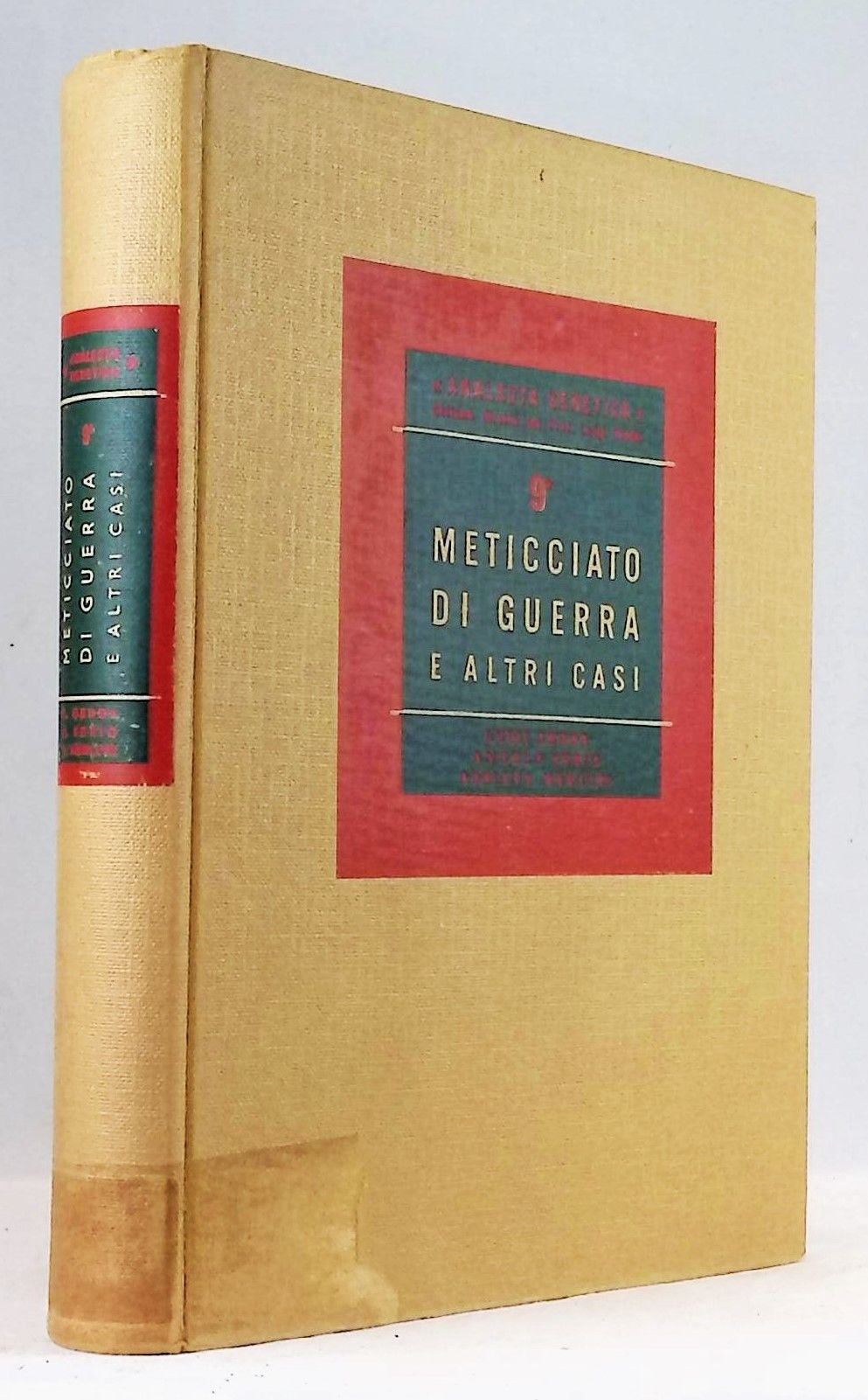
- SIGNED cloth binding
- Rome: Istituto Gregorio Mendel, 1960
Rome: Istituto Gregorio Mendel, 1960. First edition.
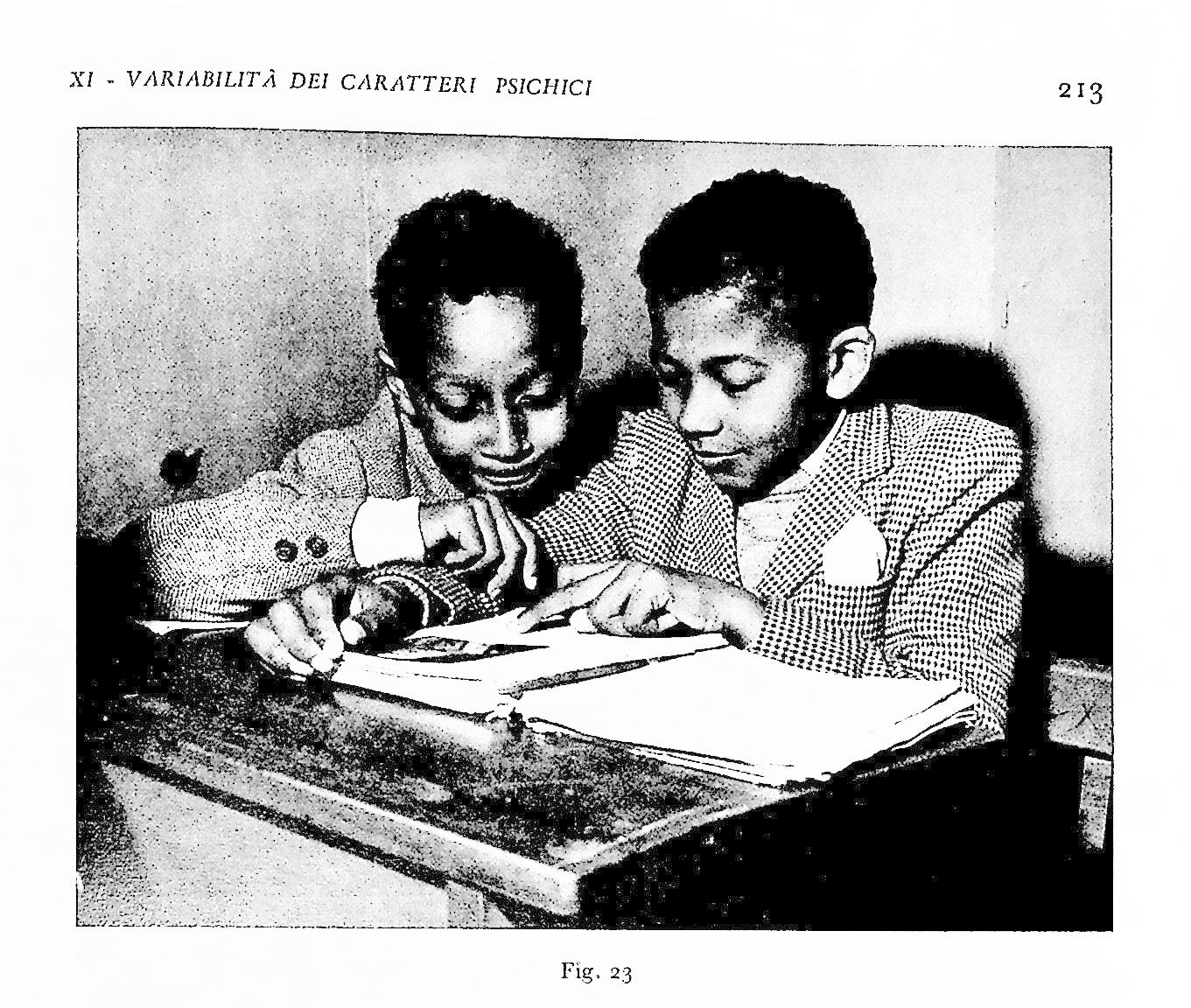
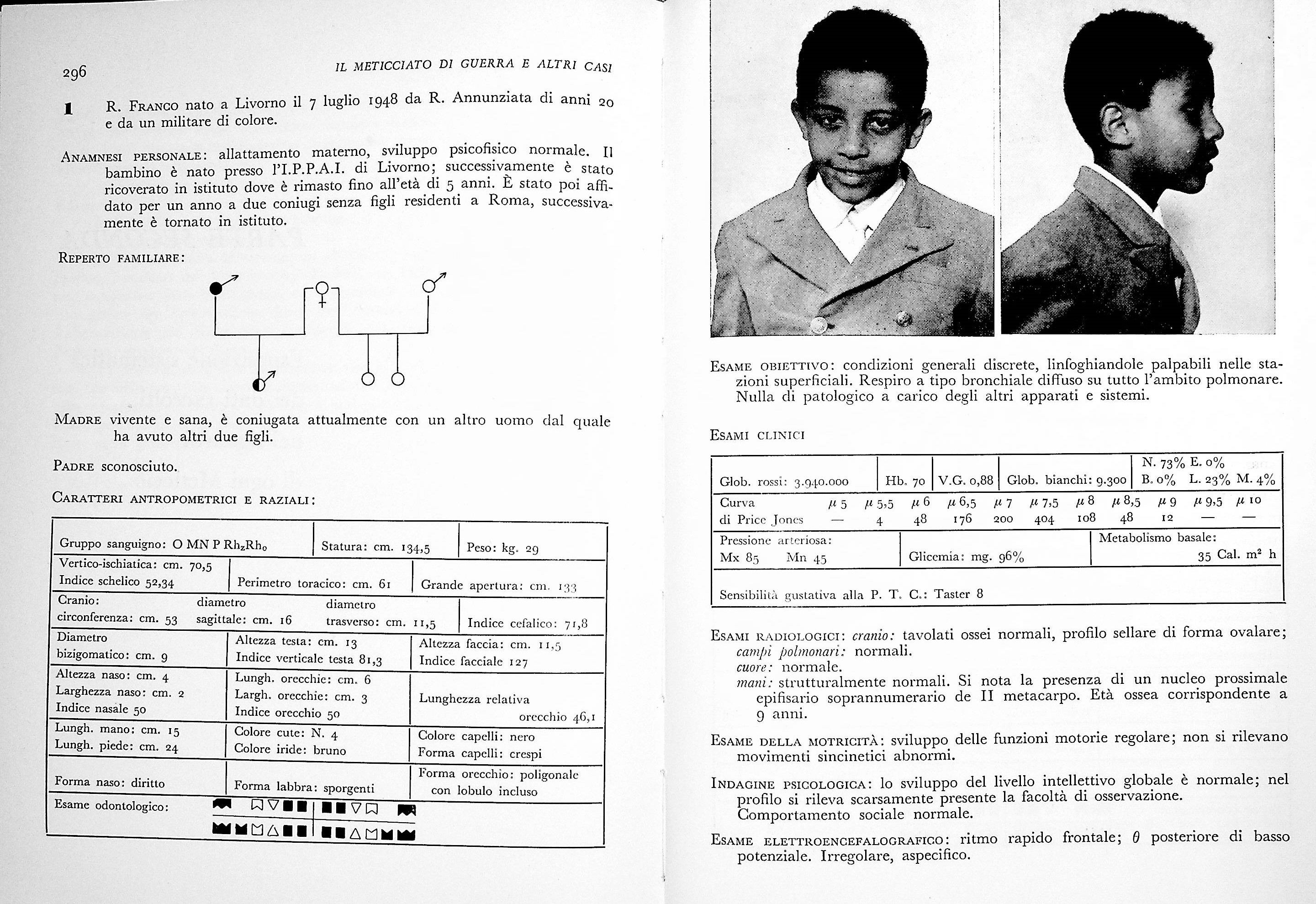
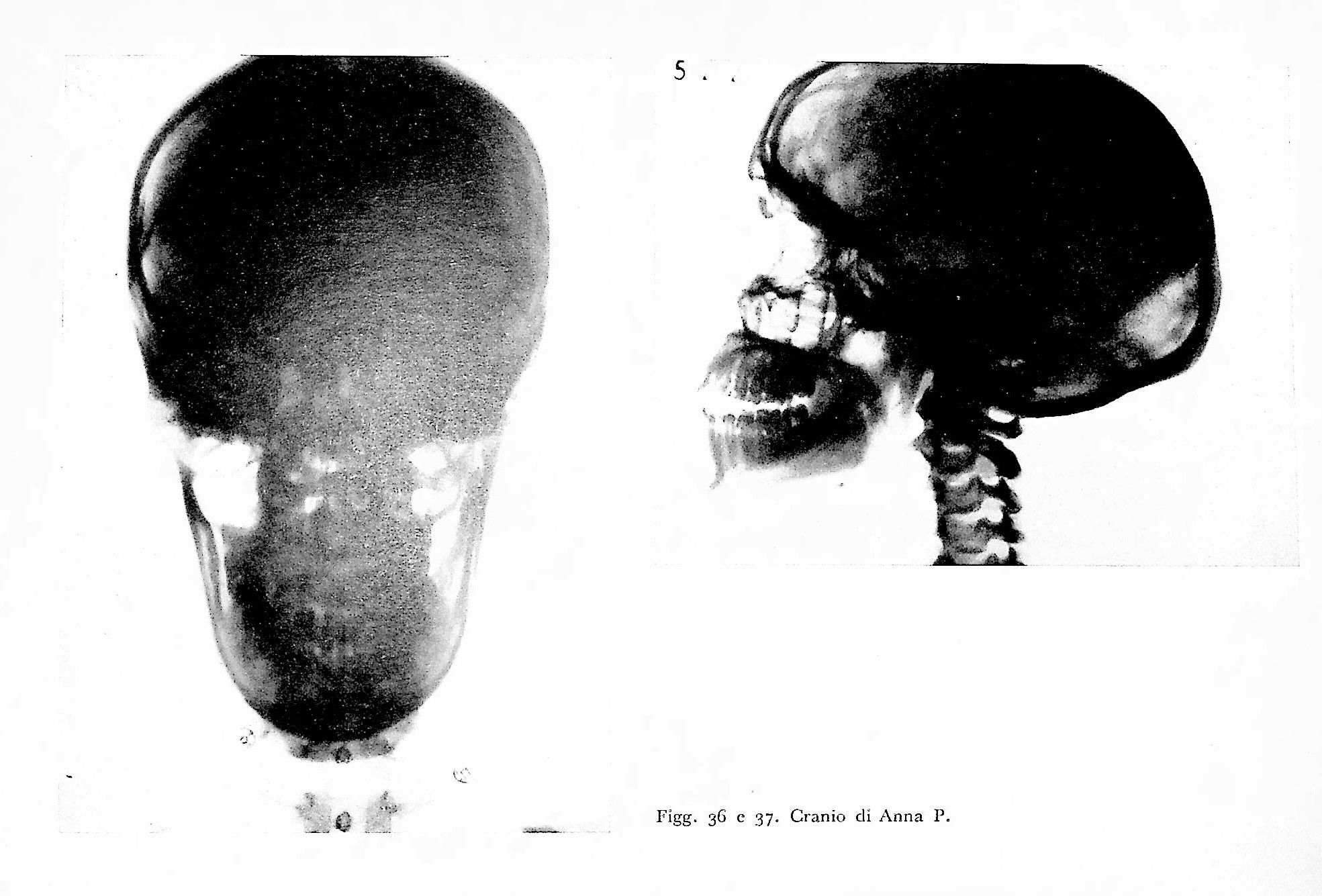
1960 ILLUSTRATED ITALIAN GENETIC STUDY OF MIXED RACE CHILDREN RESULTING FROM WORLD WAR II--SIGNED BY AUTHOR LUIGI GEDDA.
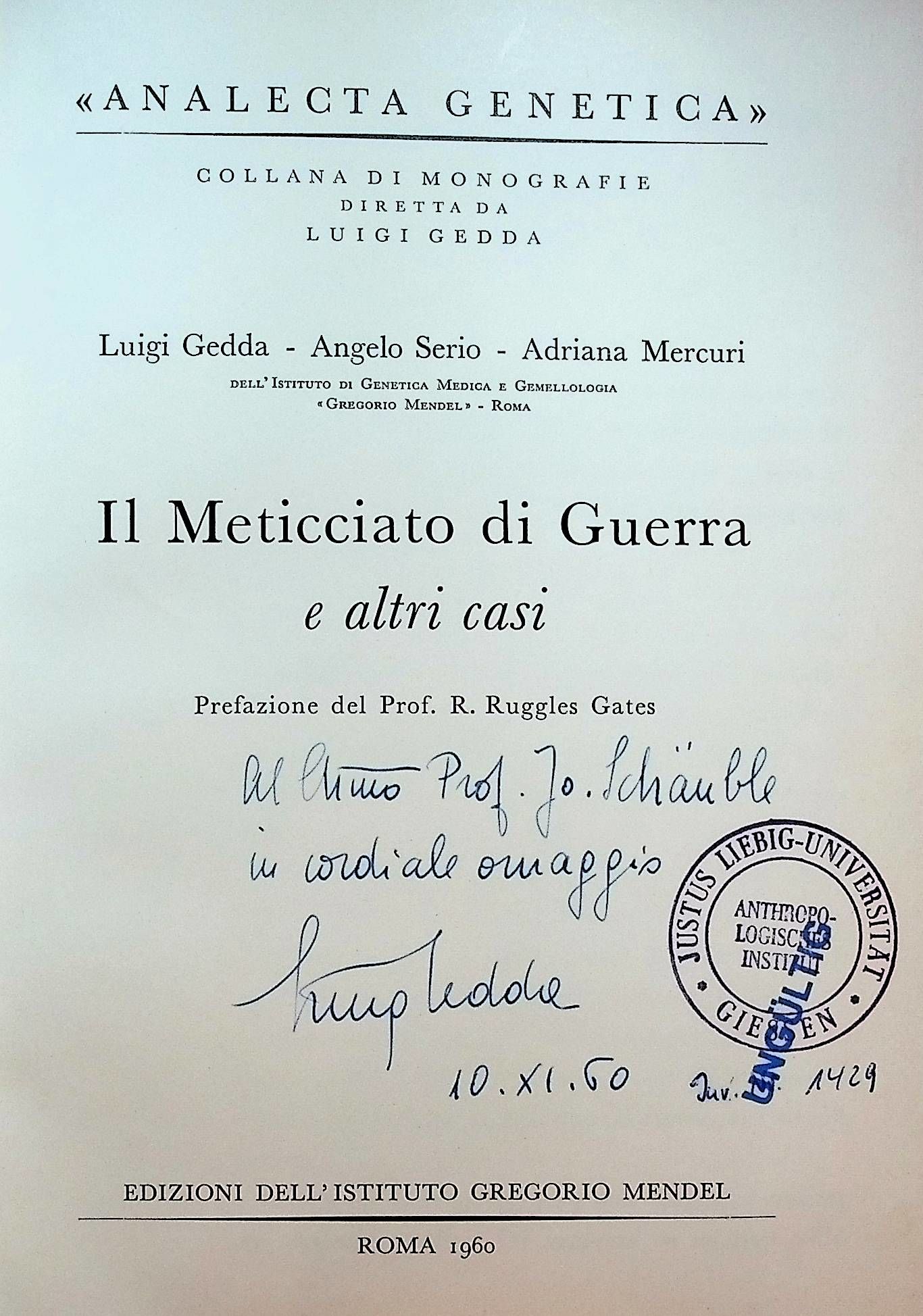
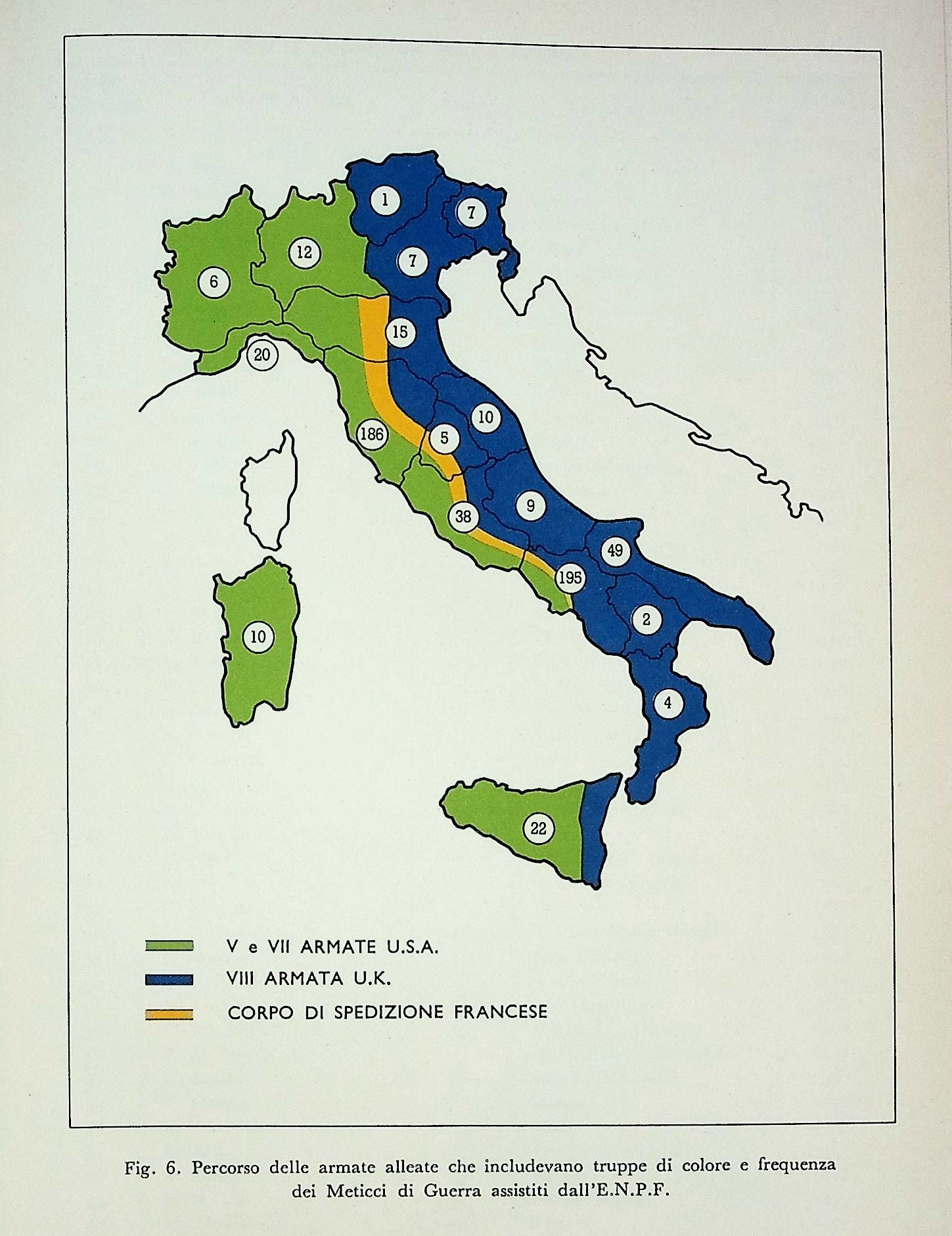
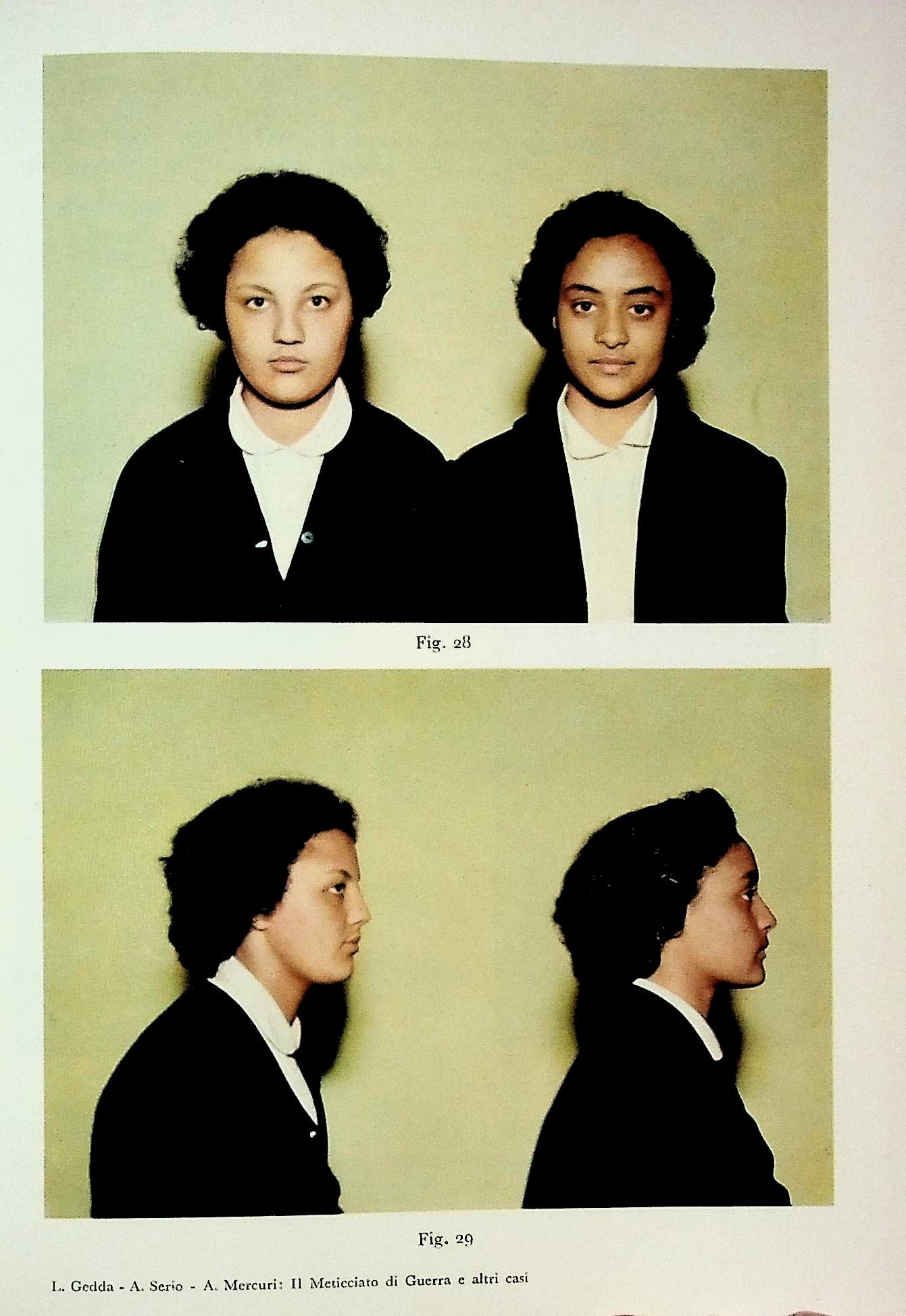
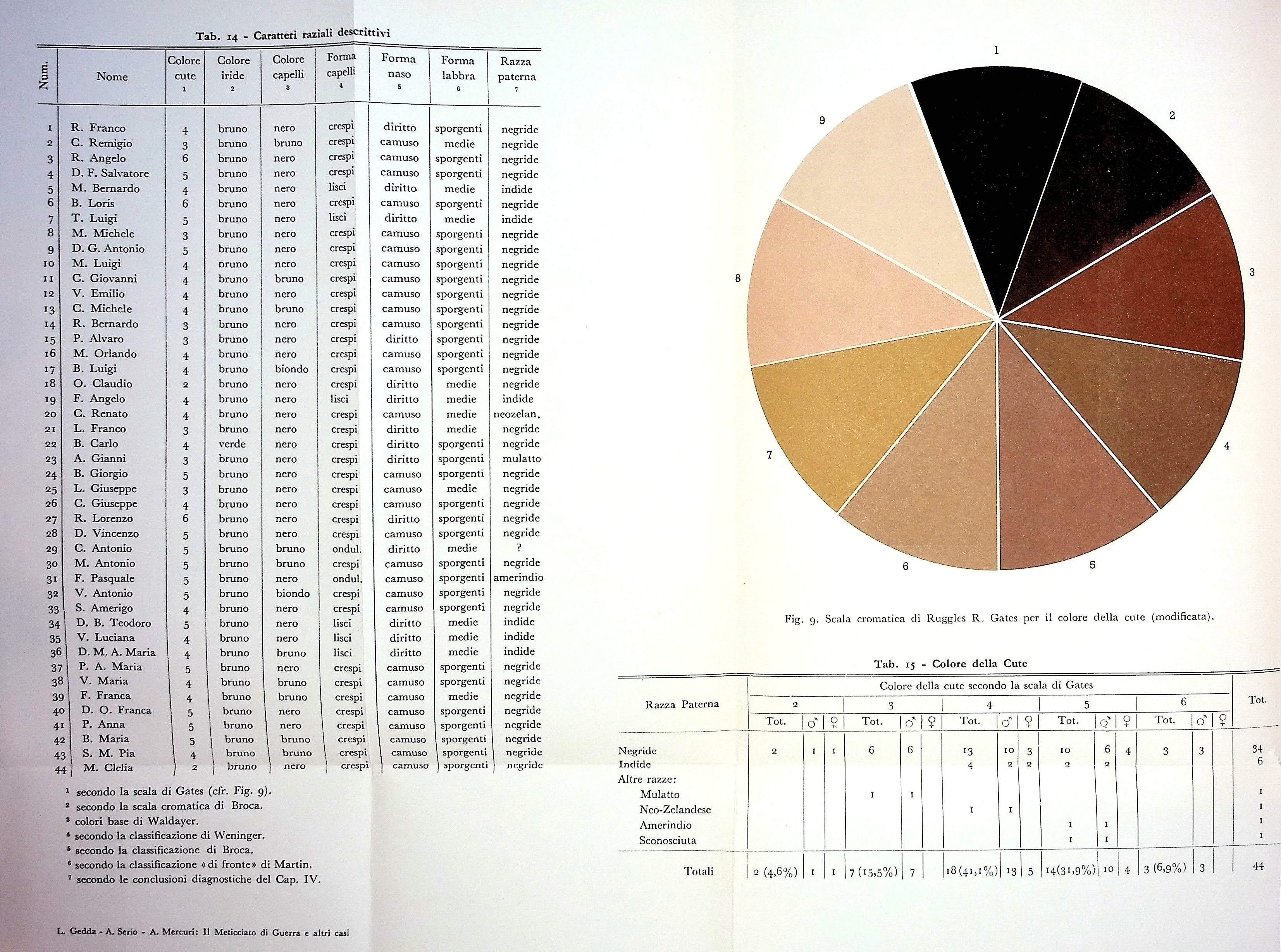
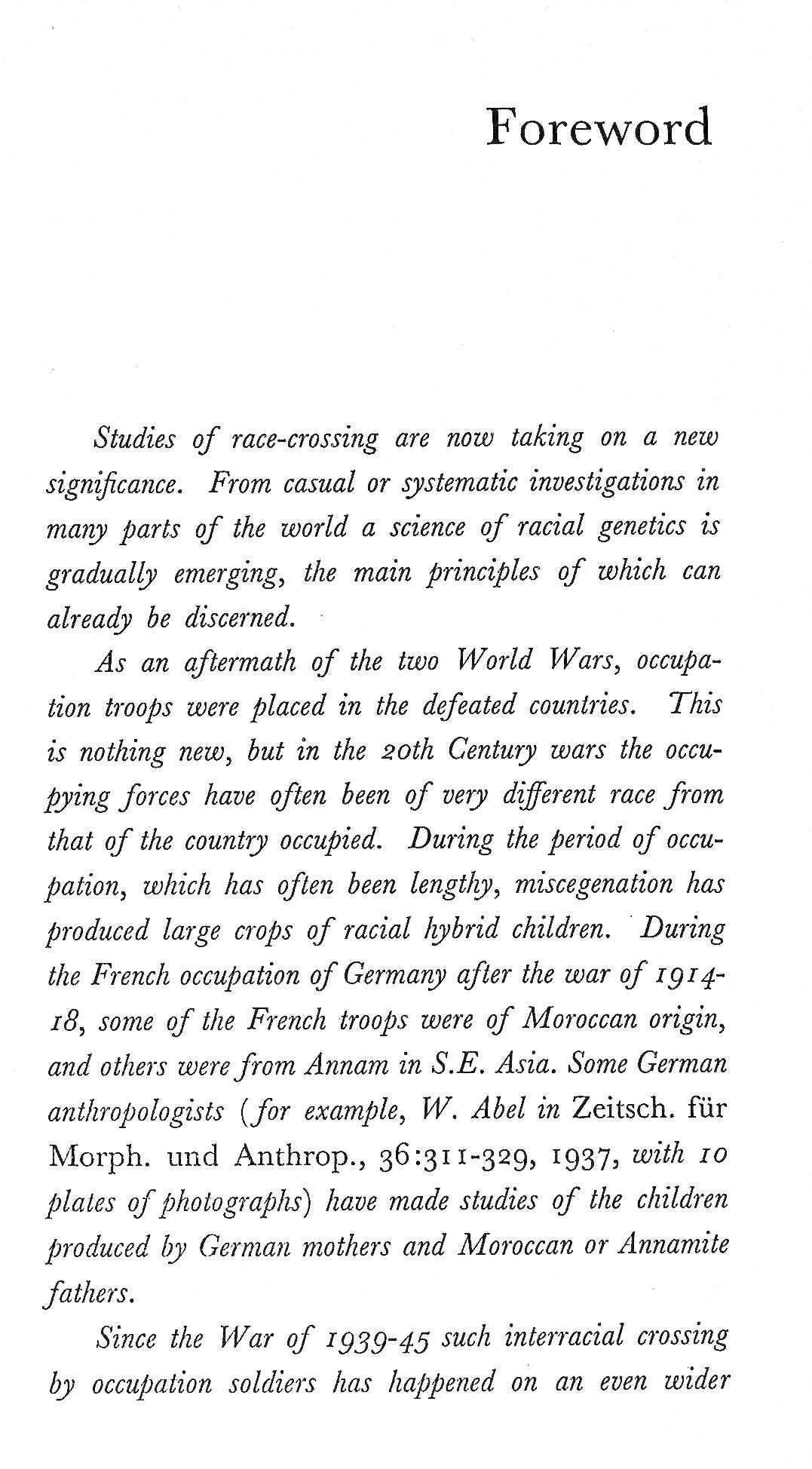
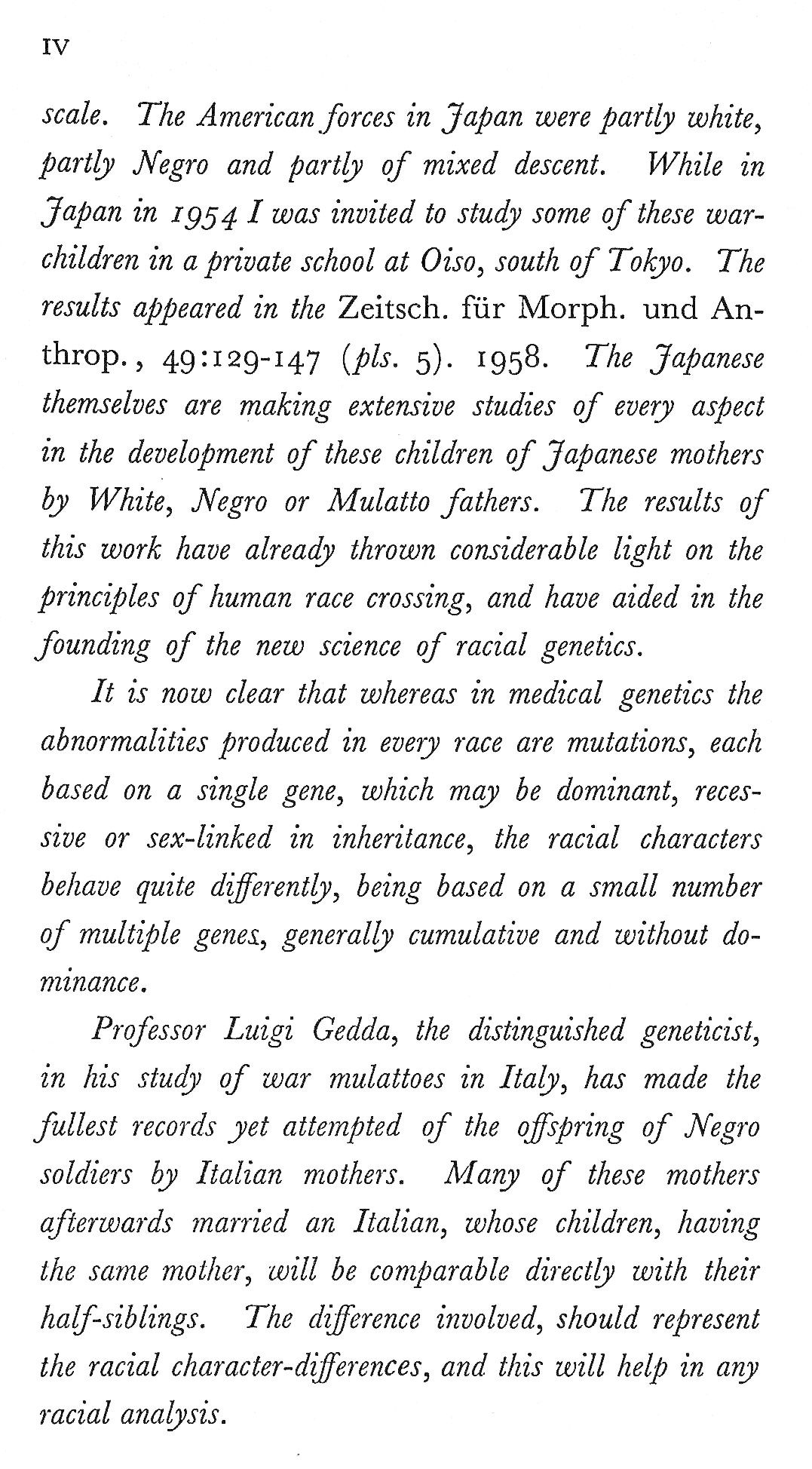
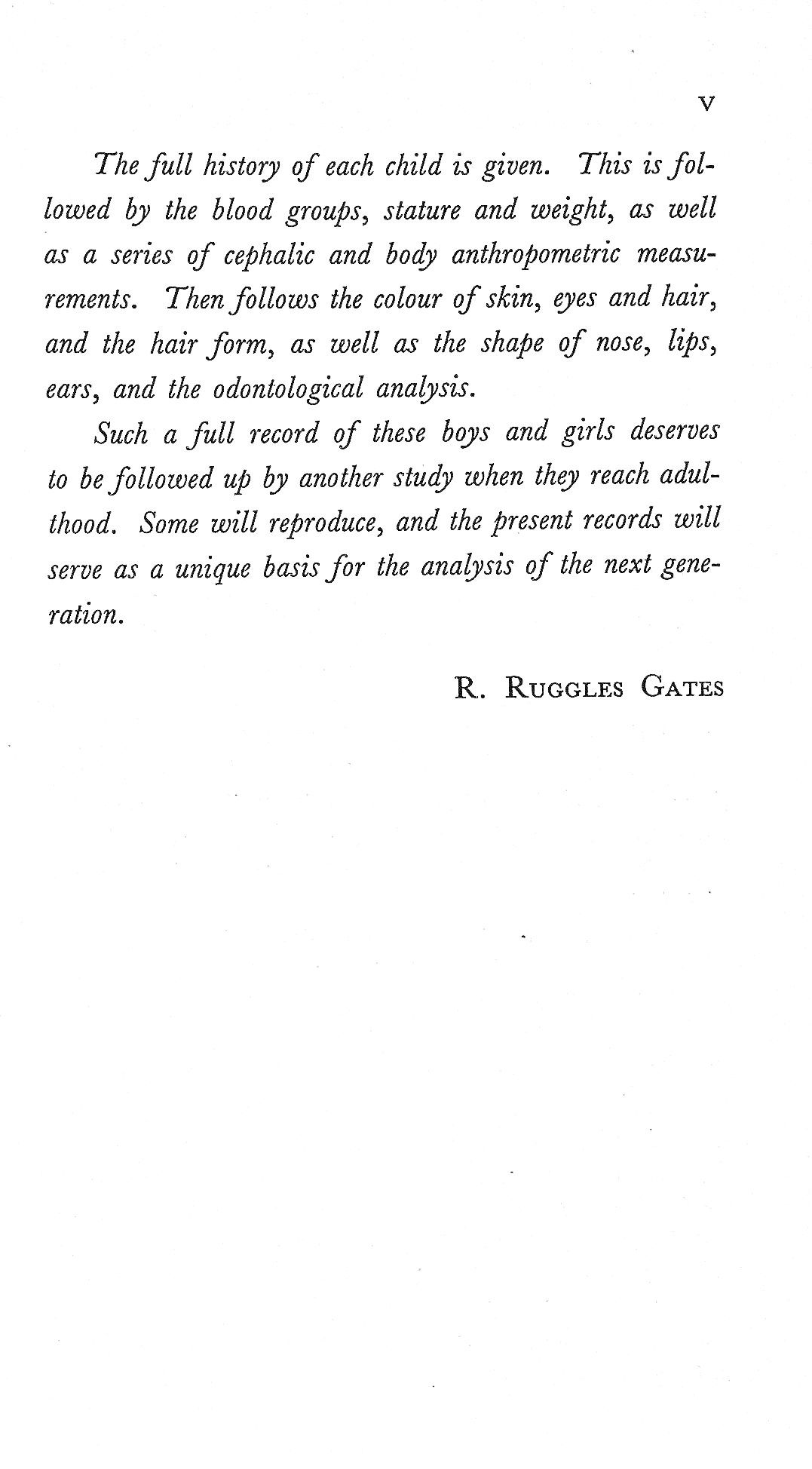
15.5x21.5 hardcover, brown cloth bindng, color printed title to cover and spine, inscribed and signed on title page, "Al Prof. Jo. Schauble in cordiale omaggio/ Luigi Gedda/ 10.XI.60", handstamp of Justus Liebig Universitat Giessen (cancelled), i-xi, 398 pp, [11] folded leaves of color and black and white photographic plates, indexes, summary in Italian, English, French and German, bibliography. TEXT IN ITALIAN WITH SUMMARY AND CONCLUSIONS IN ENGLISH, FRENCH AND GERMAN. FOREWORD: "Studies of race-crossing are now taking on a new significance. From casual or systematic investigations in many parts of the world a science of racial genetics is gradually emerging, the main principles of which can ilready be discerned. As an aftermath of the two World Wars, occupation troops were placed in the defeated countries. This is nothing new, but in the 20th Century wars the occupying forces have often been of very different race from that of the country occupied. During the period of occupation, which has often been lengthy, miscegenation has produced large crops of racial hybrid children. During he French occupation of Germany after the war of 1914-18, some of the French troops were of Moroccan origin, and others were from Annam in S.E. Asia. Some German anthropologists (for example, W. Abel in Zeitsch. fur Morph. und Anthrop., 36:311-329, 1937, with 10 plates of photographs) have made studies of the children produced by German mothers and Moroccan or Annamite fathers. Since the War of 1939-45 such interracial crossing by occupation soldiers has happened on an even wider scale. The American forces in Japan were partly white. partly Negro and partly of mixed descent. While in Japan in 1954 I was invited to study some of these warchildren in a private school at Oiso, south of Tokyo. The results appeared in the Zeitsch. fur Morph. und Anthrop., 49:129-147 (pls. 5). 1958. The Japanese themselves are making extensive studies of every aspect in the development of these children of Japanese mothers by White, Negro or Mulatto fathers. The results of this work have already thrown considerable light on the principles of human race crossing, and have aided in the founding of the new science of racial genetics. It is now clear that whereas in medical genetics the abnormalities produced in every race are mutations, each based on a single gene, which may be dominant, recessive or sex-linked in inheritance, the racial characters behave quite differently, being based on a small number of multiple genes, generally cumulative and without dominance. Professor Luigi Gedda, the distinguished geneticist. in his study of war mulattoes in Italy, has made the fullest records yet attempted of the offspring of Negro soldiers by Italian mothers. Many of these mothers afterwards married an Italian, whose children, having the same mother, will be comparable directly with their half-siblings. The difference involved, should represent the racial character-differences, and this will help in any racial analysis. The full history of each child is given. This is followed by the blood groups, stature and weight, as well as a series of cephalic and body anthropometric measuements. Then follows the colour of skin, eyes and hair, ind the hair form, as well as the shape of nose, lips. ears, and the odontological analysis. Such a full record of these boys and girls deserves be followed up by another study when they reach adulhood. Some will reproduce, and the present records will serve as a unique basis for the analysis of the next genertion." R. Ruggles Gates. FROM SUMMARY AND CONCLUSIONS: "A series of 44 young war mulattoes, ranging in age from 8 to 12 years, were studied by the authors. There were 34 boys from the Institute SS. Cuori in Anzio and 10 girls from the Institute S. Cuore of the Borgata del Trullo, a suburb of Rome. For historical and sociologic purposes, the following subgroups of mulattoes are proposed : (a) border mulattoes, born in border areas between countries inhabited by ethnically different populations; (b) slave mulattoes; (c) colonial mulattoes; (d) war mulattoes; (e) melting pot mulattoes, a growing subgroup due to improved means of travel and communication, dwindling of national barriers, political independence of former colonies, and worldwide distribution of many economic products-facilitating contacts, exchanges, friendships and marriages between individuals of different ethnic groups. The study of mulattoes (hybrids) has again been shown to represent a valuable technique for determining the transmission patterns of traits which are selectively distributed among ethnic groups. Since the given traits are, by definition, common to the members of particular groups, their mode of inheritance cannot be investigated with the same degree of exactness in intra-group matings."
LUIGI GEDDA (1902-2000) graduated in medicine in Turin in 1927, and beginning in 1960 he taught at Sapienza University of Rome, where he was granted a chair of medical genetics. As a scholar of twinning, in 1951 together with Luisa Gianferrari he founded the Italian Society of Medical Genetics. He also established the Institute of Medical Genetics and Twin Studies Gregorio Mendel, along with the branch Luigi Gedda Institute of Medical Genetics & Twin Research in Israel. In 1962, in response to the publication of Miscegenation in War and Other Cases, the geneticist Leslie C. Dunn explicitly accused Gedda of racism in the scientific journal "The Eugenics Review". In 1967 Gedda contributed to "Race and Modern Science" in opposition to the UNESCO Declaration on Race. REGINALD RUGGLES GATES (1882 – 1962), was a Canadian-born geneticist who published widely in the fields of botany and eugenics. He did botanical work in Missouri in 1910, then was a lecturer at Bedford College, London and Professor of Biology at King's College London. He was elected a Fellow of the Royal Society in 1931. Additionally, Gates was a eugenicist. In 1923, he wrote Heredity and Eugenics. He maintained his ideas on race and eugenics long after World War II, into the era when these were deemed anachronistic. He was a founder of Mankind Quarterly and the International Association for the Advancement of Ethnology and Eugenics, and his articles abounded in the journal as Acta Geneticae Medicae et Gemellologiae. He was a strong opponent of interracial marriage and, according to A. S. Winston, "argued that races were separate species."
Details
Title
Il Meticciato di Guerra e altri casi [Miscegenation in War and Other Cases]
Author
Gedda, Luigi, Serio, Angelo and Mercuri, Adriana
Binding
cloth binding
Condition
Unknown
Publisher
Istituto Gregorio Mendel: Rome
Date
1960
Edition
First edition