

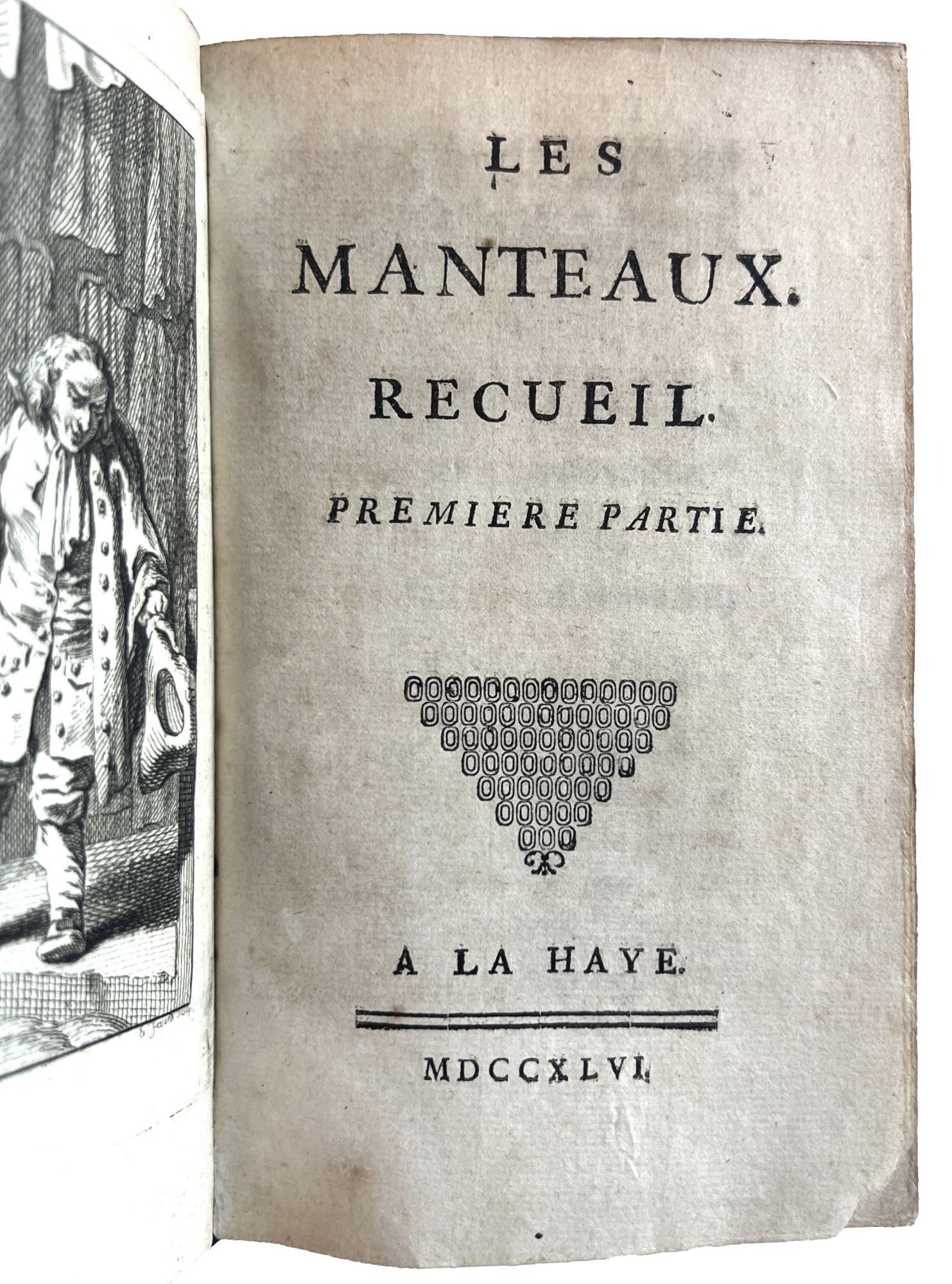
Les Manteaux. Recueil
- The Hague [i.e., Paris?]: s.n., 1746
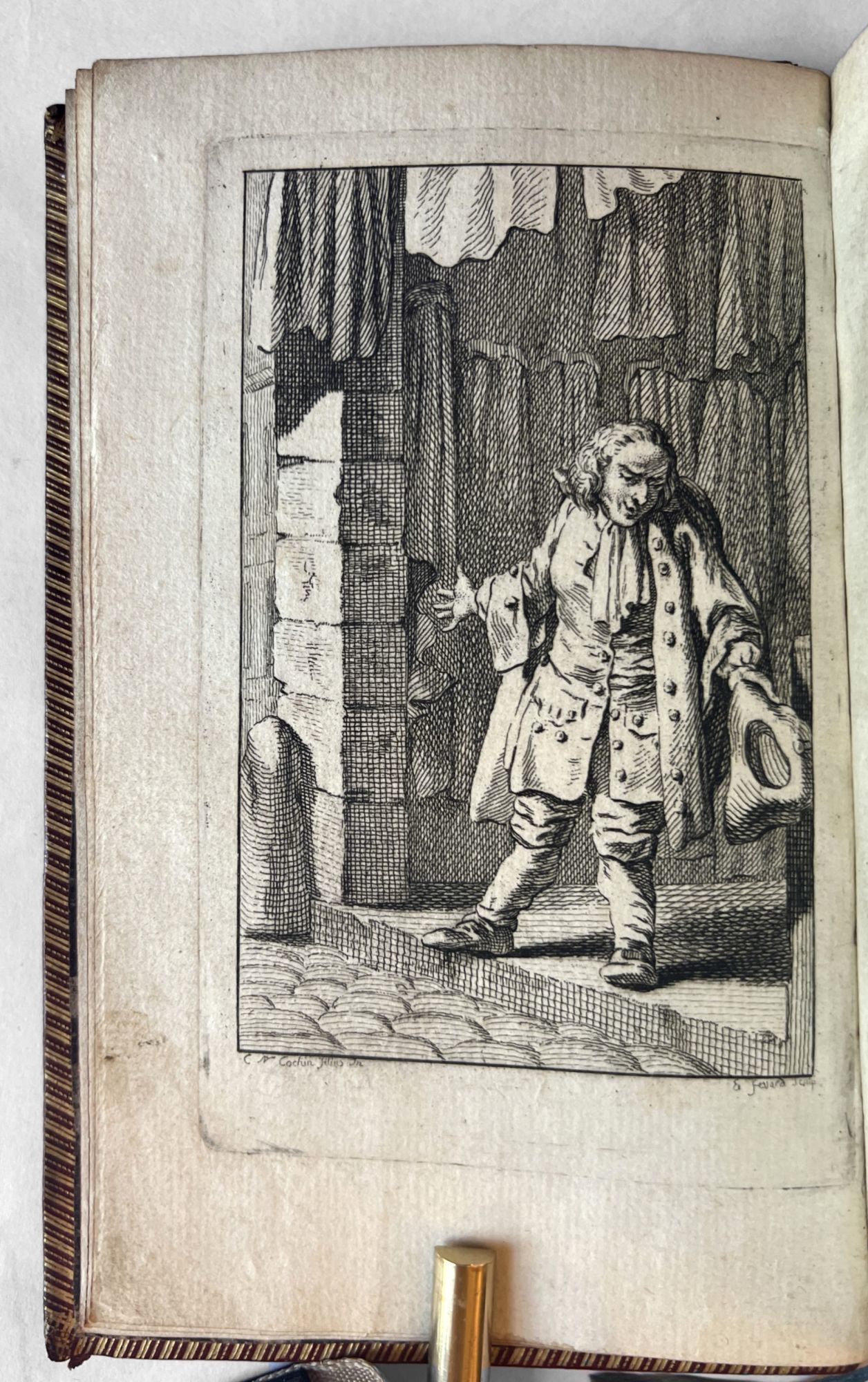
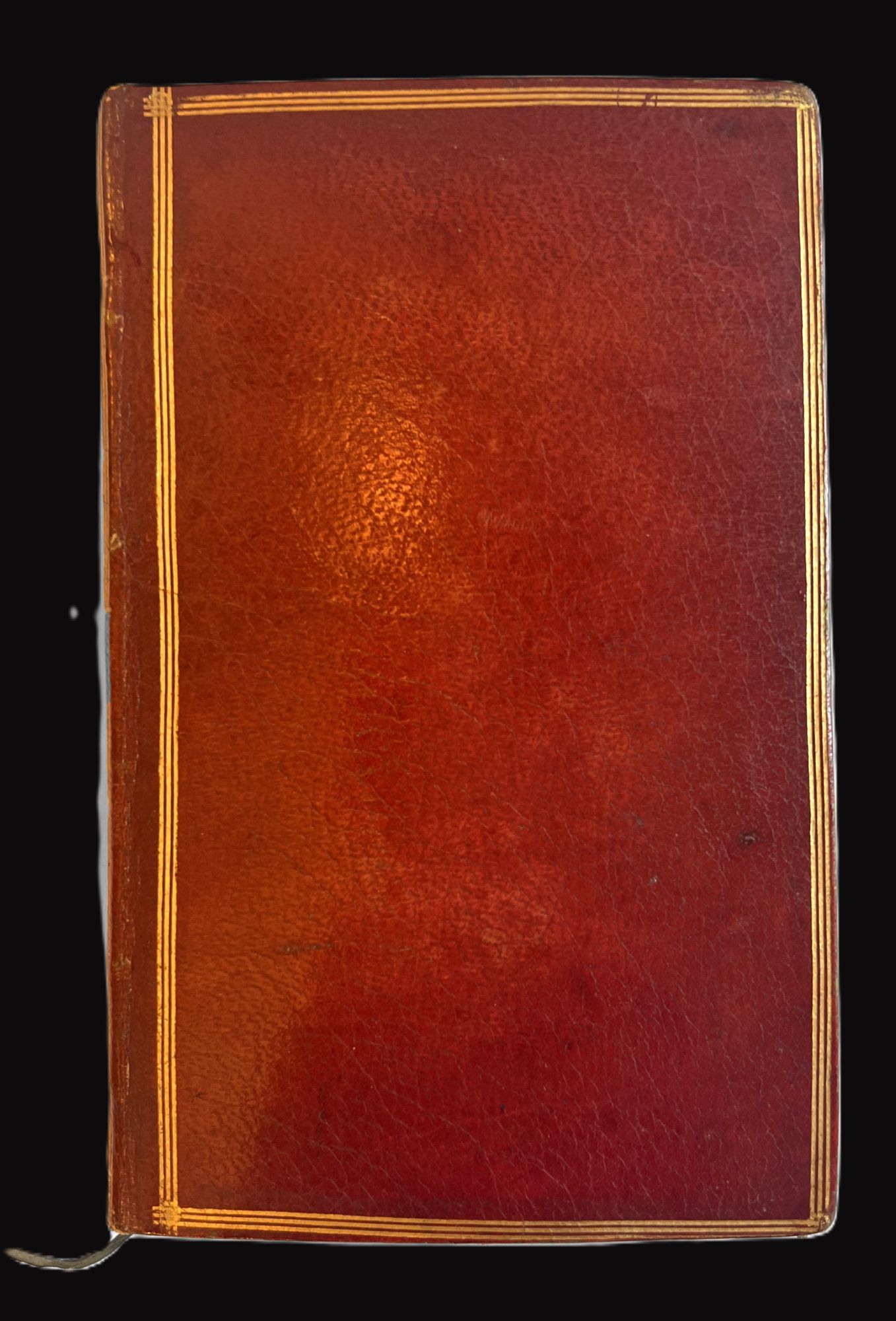
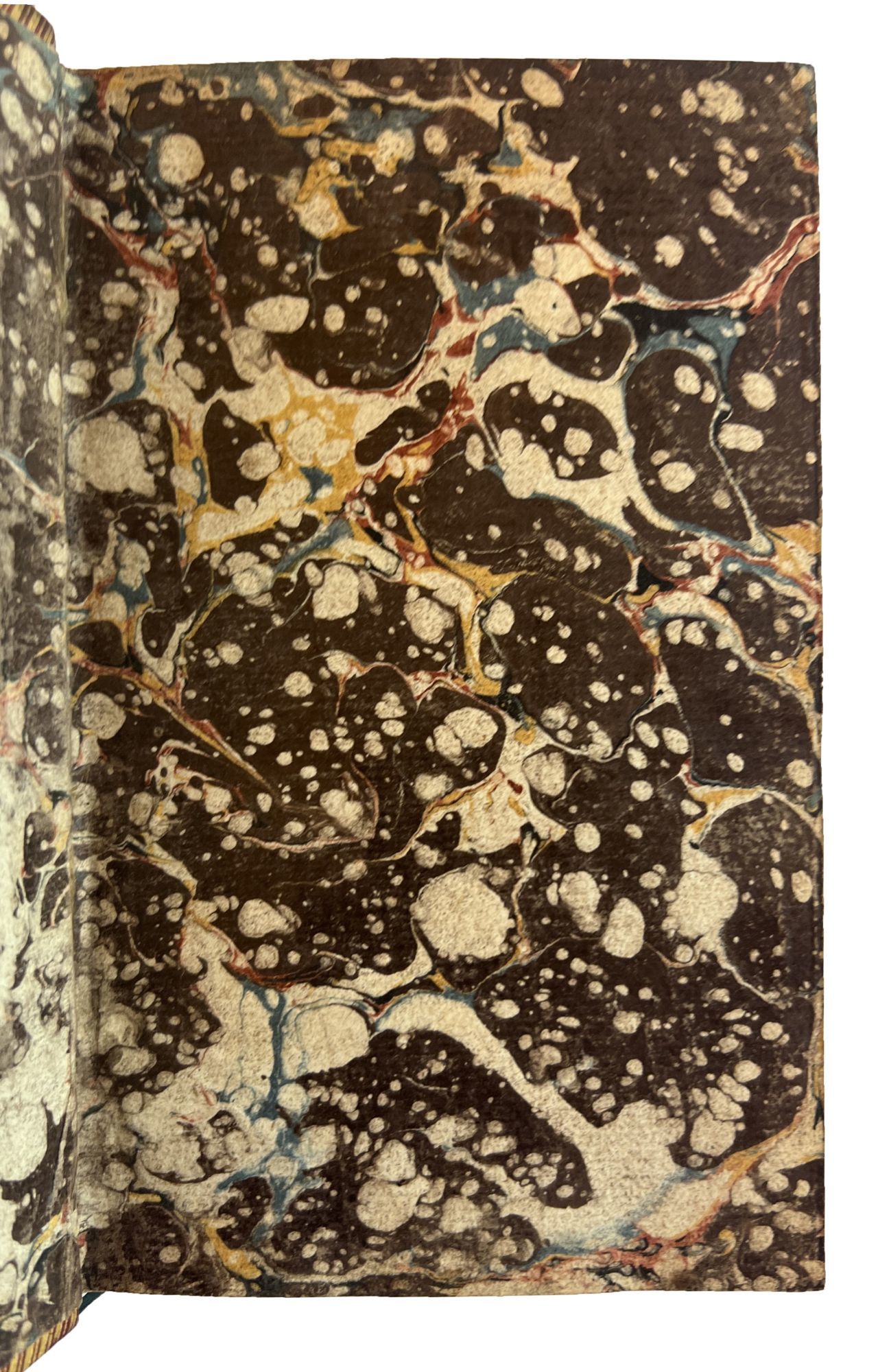
The Hague [i.e., Paris?]: s.n., 1746. 8vo (168 x 101 mm). 2 parts, separately titled and paginated: [3]-vi-xxiv, 182 pages, 1 blank leaf; [2] leaves, 128 pages. Engraved frontispiece by Fessard after Cochin fils (apparently included in the pagination), typographic title ornaments, head- and tailpieces. An attractive copy (stain to fols. A2-3 in second part, 2 or 3 minor marginal tears, some spotting). Contemporary red morocco, triple gilt fillet on sides, smooth spine sparingly gold-tooled and lettered, board edges gilt, gilt edges (scuffing to lower board edges and extremities of spine, corners a bit bumped). Provenance: early ?purchase note on lower flyleaf; John Wodehouse, 3rd Earl of Kimberley (1883-1941), bookplate; Leonard Forrer (1869-1953), his bookshop ticket of L. S. Forrer Ltd., Numismatic Booksellers, London; Charles Van der Elst (1904-1982), bookplate.***
Only Edition of an extended literary joke by the brilliant antiquarian, engraver, art patron and connoisseur the Comte de Caylus. He exercised his stylistic muscles in this peculiar collection of two dozen literary pieces revolving around the word manteau: in part 1, racy anecdotes, short stories, fairy tales, and a chivalric tale (written in pseudo-archaic French); and, in part 2, tongue-in-cheek erudite essays in several styles — the religious history, the antiquarian disquisition, the etymological or bibliographical analysis — all laced with fictional (and a few real) references, including imaginary medieval manuscripts.
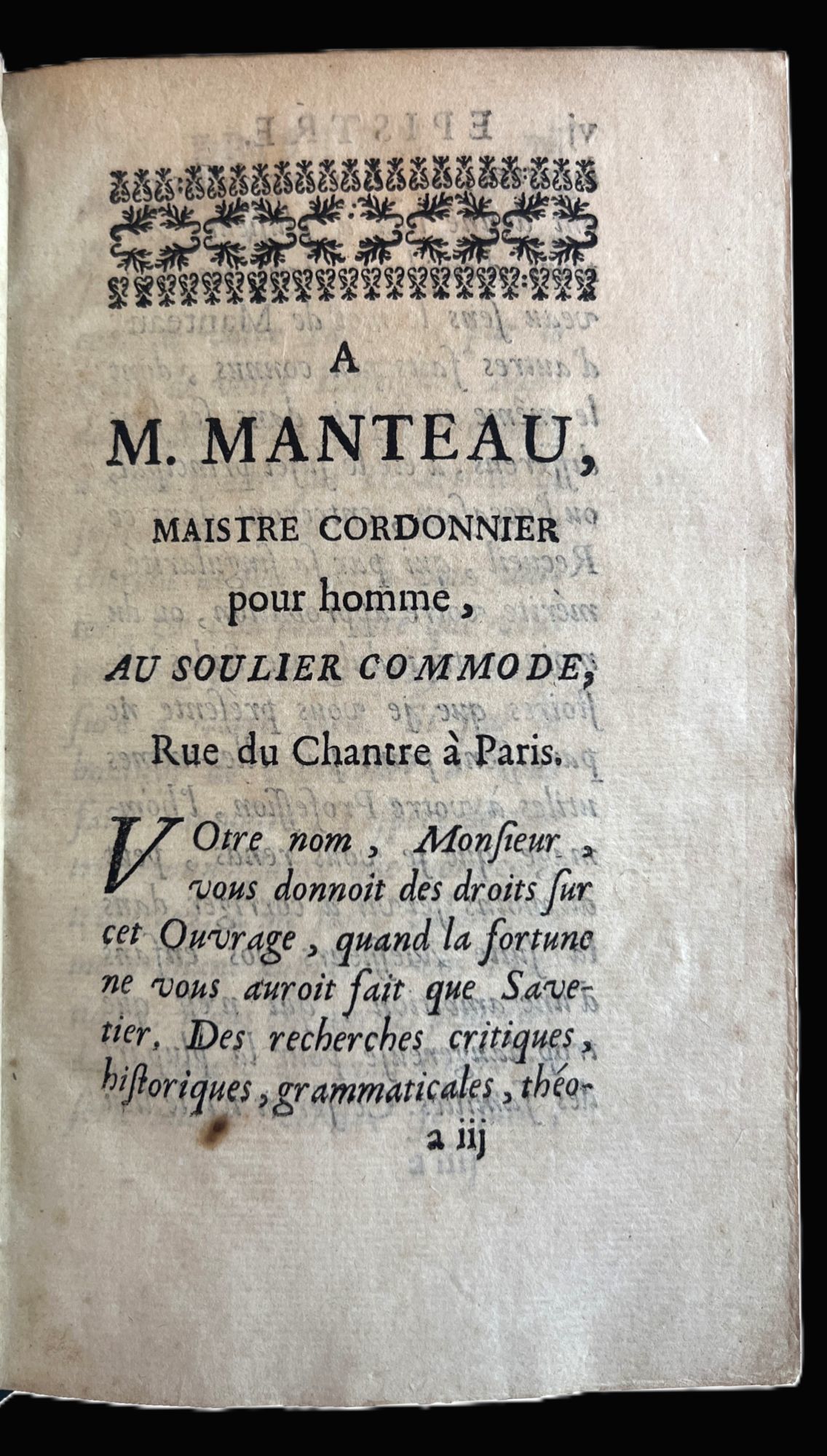
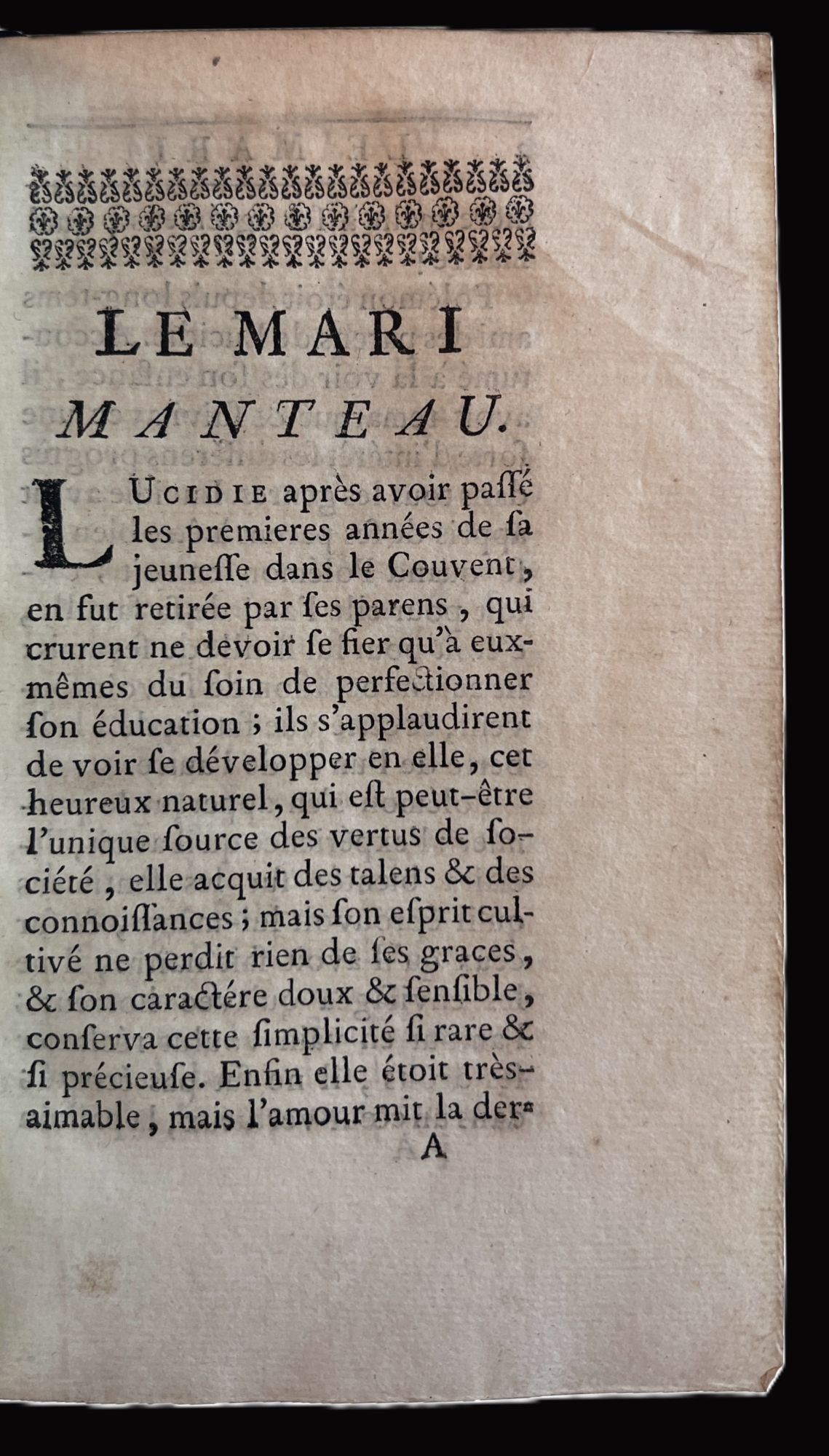
A glance at the entry for manteau in the online Trésor de la Langue Française gives an idea of the semantic opportunities offered by this word, whose appearances in many idiomatic expressions are exhaustively exploited by Caylus. In part 1 appear the manteau de fourrure (fur coat), the manteau de lit (a short bed-jacket into which a jealous husband is metamorphosed by his fairy mother-in-law, to teach him a lesson), the long and short coat, the chimney mantel (same word in French), and a portrait of a remarkable old man presented as the (fictional) originator of the term “sous le manteau” (clandestine or clandestinely).
In part 2 (which, its title notes with a wink, “one doesn’t need to read”), the author delves into the Roman pallium (a cloak), the coats of saints and clerics, those, both heraldic and actual, of Dukes and Peers, and the order of the Blancs-Manteaux. Completing the picture are a florilegium of dictionary extracts and a satirical etymological comparison of the French manteau with other languages (containing sentences like: “As for the letter L which is found at the end of words like Mantel and Mantello, one can very well understand it to be a diminutive of the Arabic word Allah, meaning God” [p. 103]).
The self-imposition of arbitrary constraints onto one’s writing, while an ancient practice (viz., poetic meter), have been associated more recently with a French literary movement from the 1960s known as Oulipo, short for Ouvroir de littérature potentielle (”workship of potential literature”), which included the great French authors Raymond Queneau and Georges Perec, whose wry humor and doggedness in pursuing the conceit to the end Caylus foreshadowed.
Cochin’s frontispiece shows a rather shifty-looking merchant in the doorway of his shop filled with coats.
OCLC locates 4 copies in North American libraries. Cohen-De Ricci 210; Gay-Lemonnyer 3:23; Barbier III: 34 (a 1775 edition, not seen elsewhere).
Only Edition of an extended literary joke by the brilliant antiquarian, engraver, art patron and connoisseur the Comte de Caylus. He exercised his stylistic muscles in this peculiar collection of two dozen literary pieces revolving around the word manteau: in part 1, racy anecdotes, short stories, fairy tales, and a chivalric tale (written in pseudo-archaic French); and, in part 2, tongue-in-cheek erudite essays in several styles — the religious history, the antiquarian disquisition, the etymological or bibliographical analysis — all laced with fictional (and a few real) references, including imaginary medieval manuscripts.
A glance at the entry for manteau in the online Trésor de la Langue Française gives an idea of the semantic opportunities offered by this word, whose appearances in many idiomatic expressions are exhaustively exploited by Caylus. In part 1 appear the manteau de fourrure (fur coat), the manteau de lit (a short bed-jacket into which a jealous husband is metamorphosed by his fairy mother-in-law, to teach him a lesson), the long and short coat, the chimney mantel (same word in French), and a portrait of a remarkable old man presented as the (fictional) originator of the term “sous le manteau” (clandestine or clandestinely).
In part 2 (which, its title notes with a wink, “one doesn’t need to read”), the author delves into the Roman pallium (a cloak), the coats of saints and clerics, those, both heraldic and actual, of Dukes and Peers, and the order of the Blancs-Manteaux. Completing the picture are a florilegium of dictionary extracts and a satirical etymological comparison of the French manteau with other languages (containing sentences like: “As for the letter L which is found at the end of words like Mantel and Mantello, one can very well understand it to be a diminutive of the Arabic word Allah, meaning God” [p. 103]).
The self-imposition of arbitrary constraints onto one’s writing, while an ancient practice (viz., poetic meter), have been associated more recently with a French literary movement from the 1960s known as Oulipo, short for Ouvroir de littérature potentielle (”workship of potential literature”), which included the great French authors Raymond Queneau and Georges Perec, whose wry humor and doggedness in pursuing the conceit to the end Caylus foreshadowed.
Cochin’s frontispiece shows a rather shifty-looking merchant in the doorway of his shop filled with coats.
OCLC locates 4 copies in North American libraries. Cohen-De Ricci 210; Gay-Lemonnyer 3:23; Barbier III: 34 (a 1775 edition, not seen elsewhere).
Details
Title
Les Manteaux. Recueil
Author
[CAYLUS, Anne Claude Philippe de (1692-1765)]
Condition
Unknown
Publisher
s.n.: The Hague [i.e., Paris?]
Date
1746