

Carcer d'Amore
- Venice: Francesco Bindoni & Mapheo Pasini, compagni, 1537
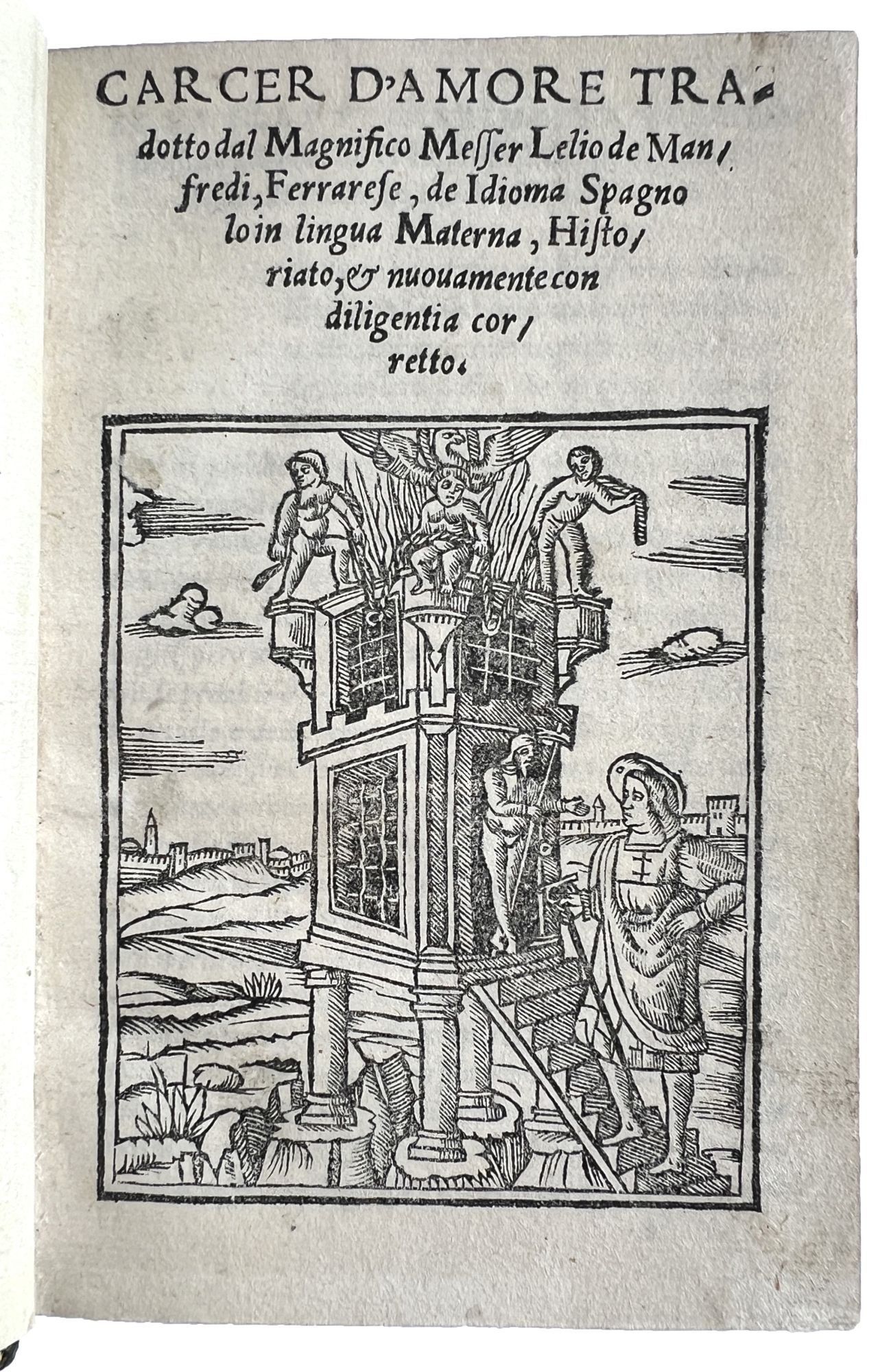
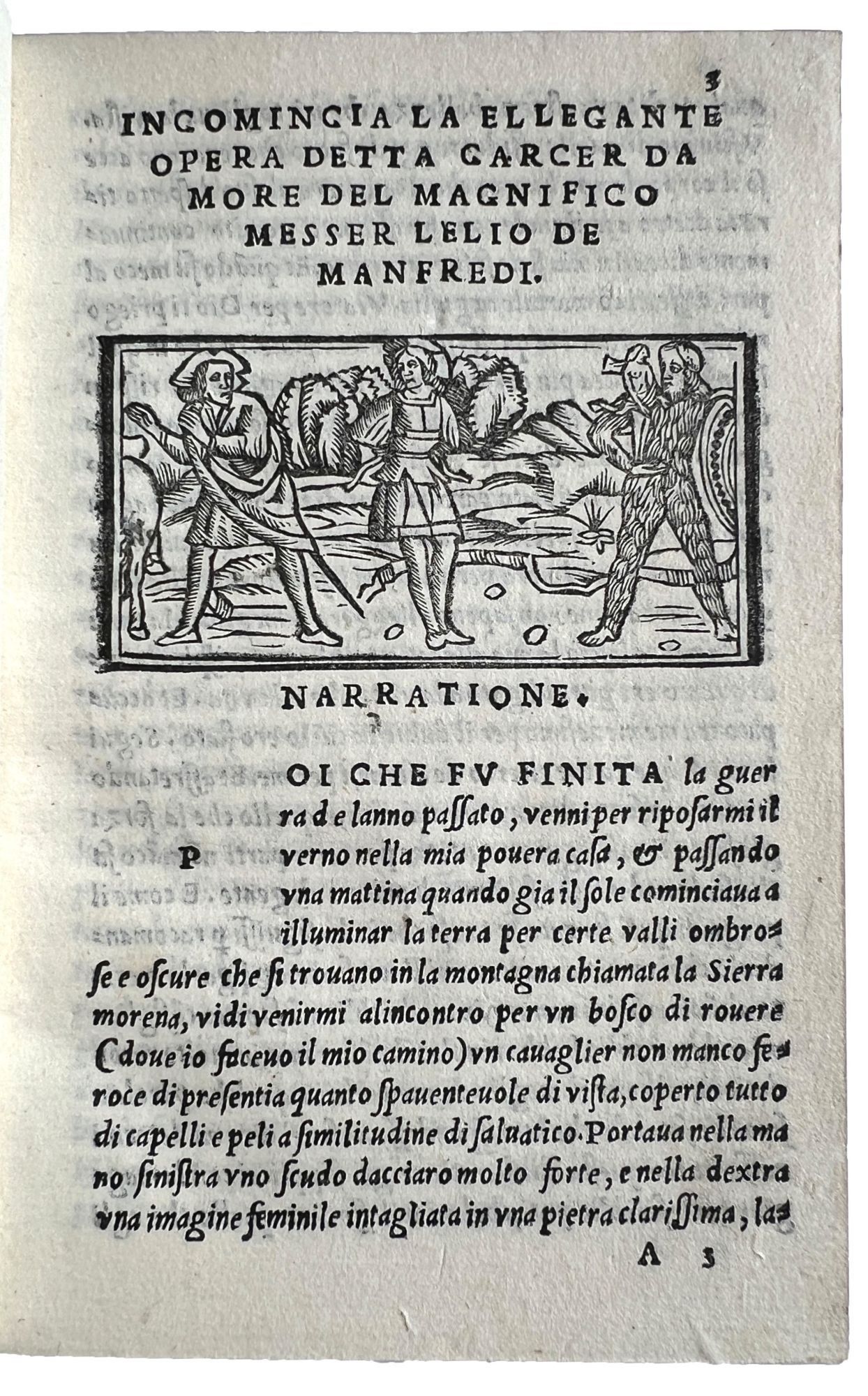
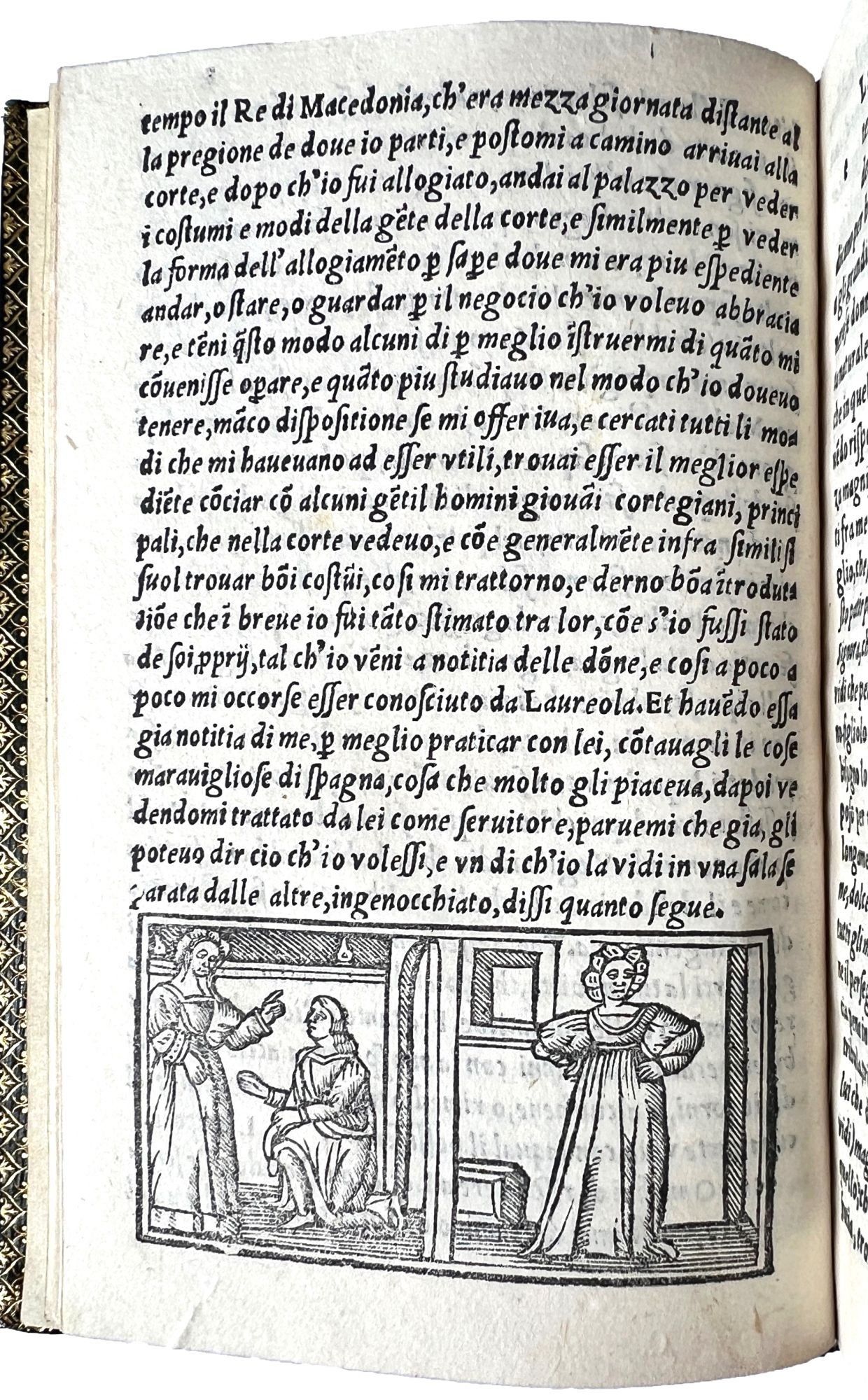
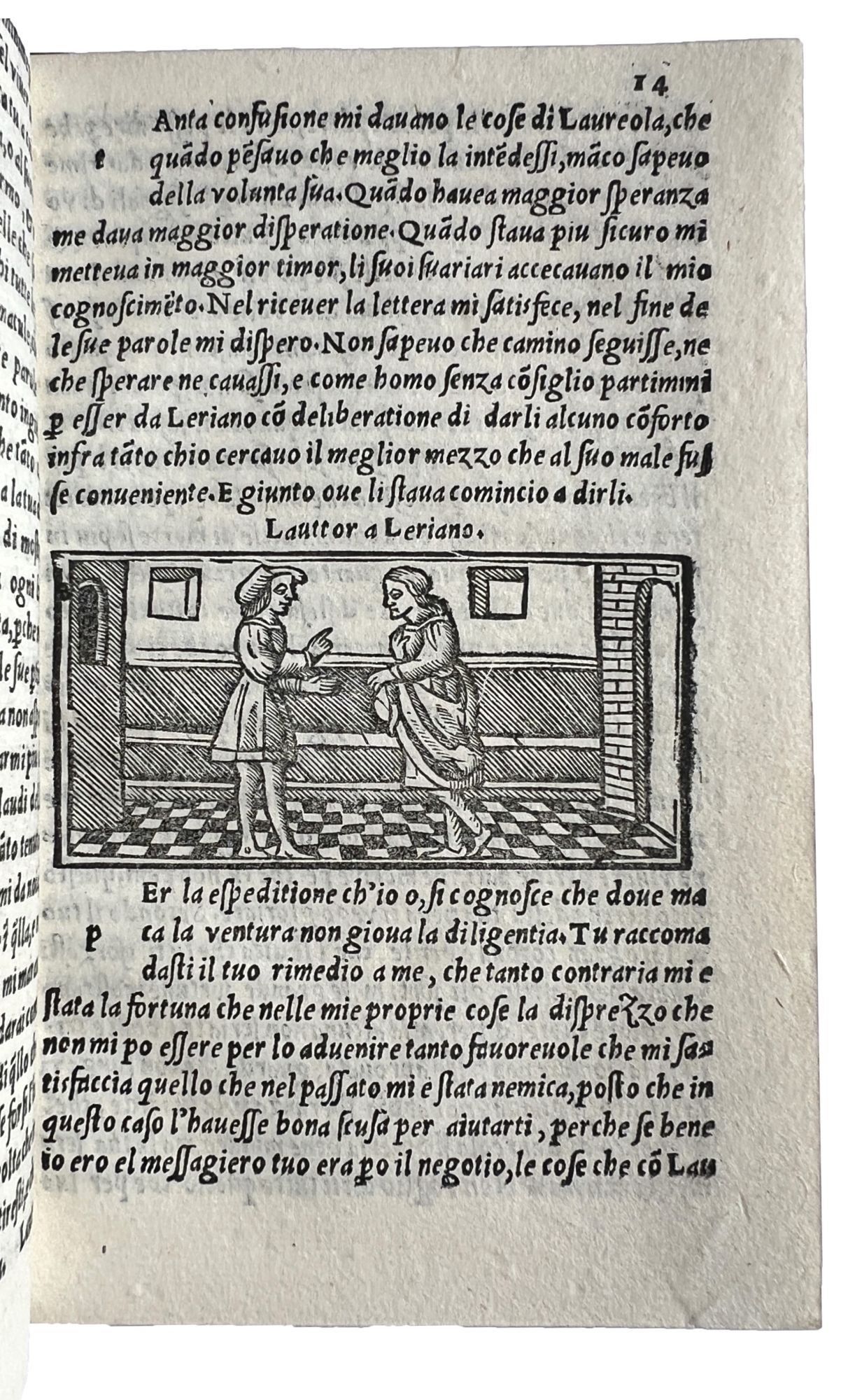
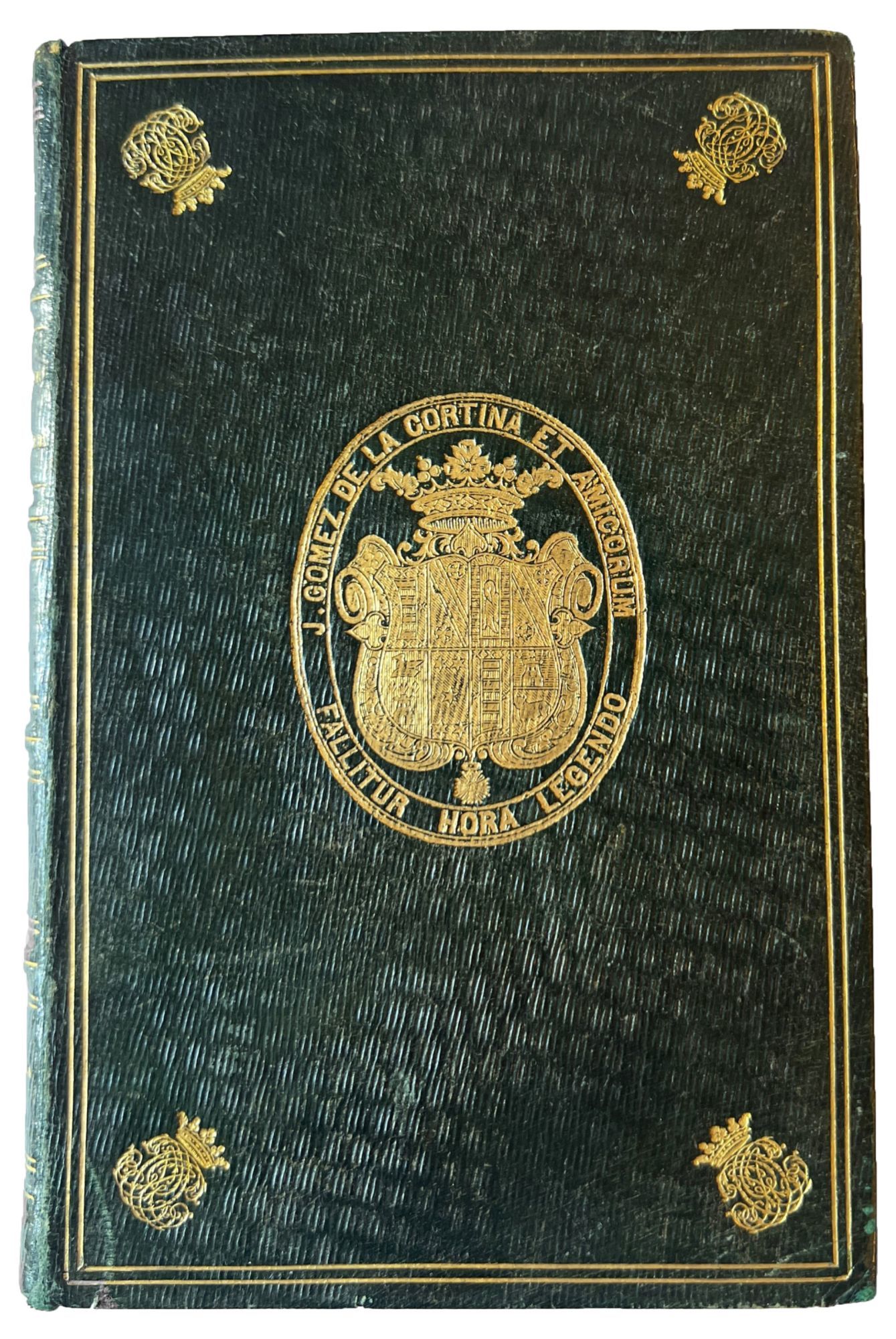
Venice: Francesco Bindoni & Mapheo Pasini, compagni, 1537. 8vo (145 x 94 mm). 48 leaves. Italic types. Large title woodcut of the prison of love in flames, 19 woodcut text illustrations printed from 13 blocks, most showing two scenes; initial spaces with guide letters (unrubricated). 19th-century green straight-grained morocco, sides with double fillet border enclosing central gold-blocked arms of Gómez de la Cortina, his gilt crowned ciphers in the corners, gilt edges. Provenance: Joaquin Gómez de La Cortina, 1st Marquis de Morante (1808-1868), supralibros & bookplate; with Quaritch, their collation note at end; sold in 1996 to Kenneth Rapoport (bookplate). ***
Lelio Manfredi’s Italian translation of the Carcel de amor (1st ed. 1492) was among the most popular sentimental romances of its time. Many wept over the thwarted love of the noble Leriano and Laureola, heir to the throne of Macedonia. Captive in an allegorical tower of love, communicating with his beloved only through mediators, the hero eventually renounces her in order to preserve her honor, threatened by a rival’s false aspersions. There are duels and battles, Leriano stops eating, and finally dies, after shredding and swallowing her letters. The tragedy touched a nerve and dozens of editions appeared in Spain, as well as translations into Italian, French, English, Catalan, and, in the 17th century, German. Few remembered the true author, whose name is omitted from most of these editions.
One of several Castilian romances that were widely adapted and translated into other western European languages, the Carcel de amor was the only one to appear first in print, and to be consistently illustrated. It permeated the European reading public. The tale is told through letters and monologues rather than dialogue, and much has been written about its hybrid forms and elaborate rhetoric (“a reflection of vernacular humanism and a fictional tour de force of rhetorical precepts” [Francomano, p. 10]), and about its literary sources and later influence (or lack of it): While many scholars note its influence on the development of later European Renaissance fiction through its use of epistolary exchanges and of a narrative voice (L’autore, who acts as intermediary), as well as its tragic ending and exploration of class differences between the lovers, one commentator has called it “a dead-end in the history of literature” (A. West: “In general, the Prison of Love is a book of vestiges: of ways of believing that no longer obtain, of customs that already were dying out, of a manner of writing soon to be eclipsed by the realism of the picaresque novel.”)
The humanist Lelio Manfredi (d. 1528) translated the work into Italian at the request of Isabella d’Este, to whom the printed editions are dedicated, the first appearing in Venice in 1514. Eight more editions of his translation are recorded by USTC, all but one Venetian, the last in 1546. This edition is the third of four recorded editions by the partners Fr. Bindoni & Maffeo Pasini, who specialized in vernacular literature and devotional works.
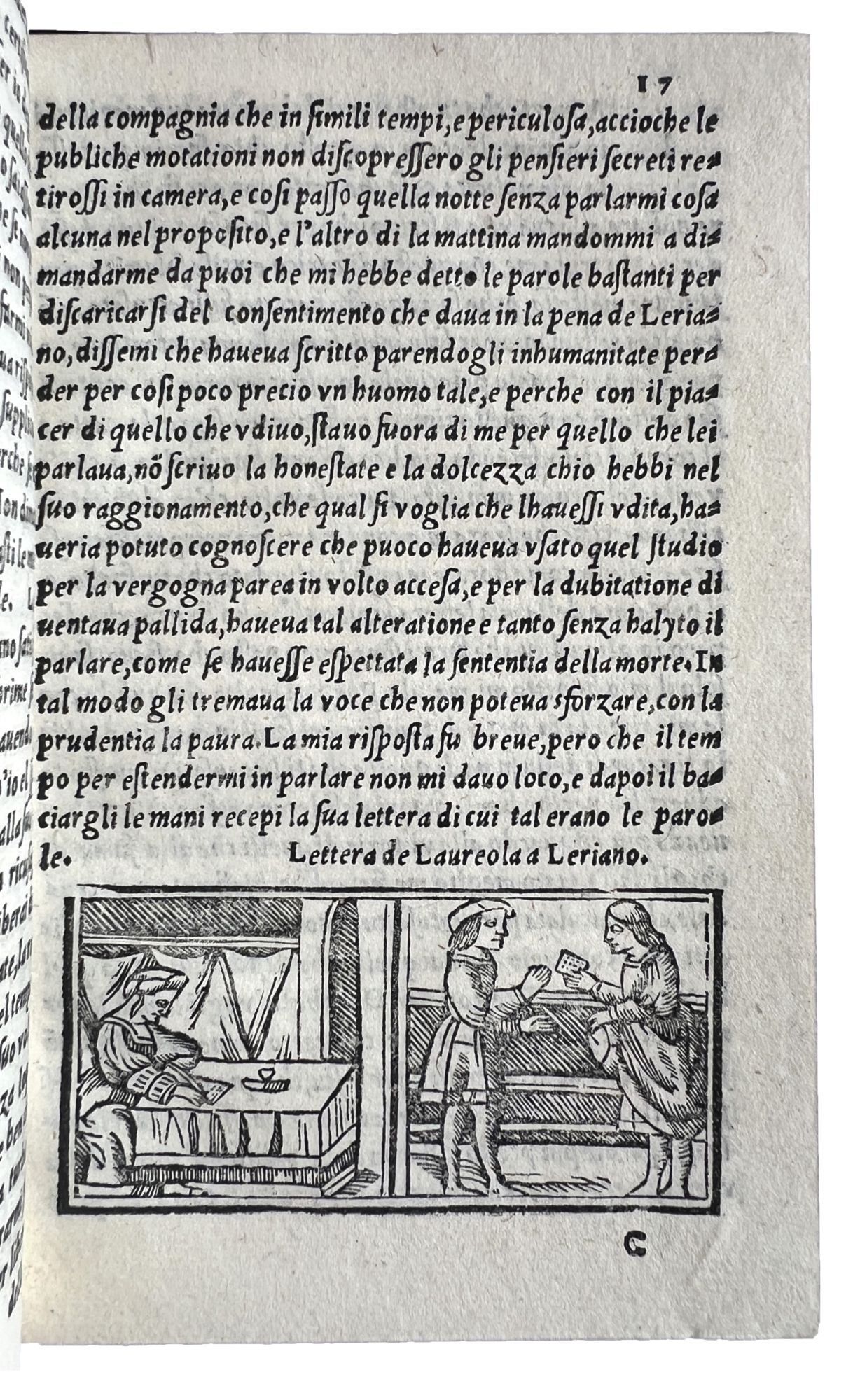
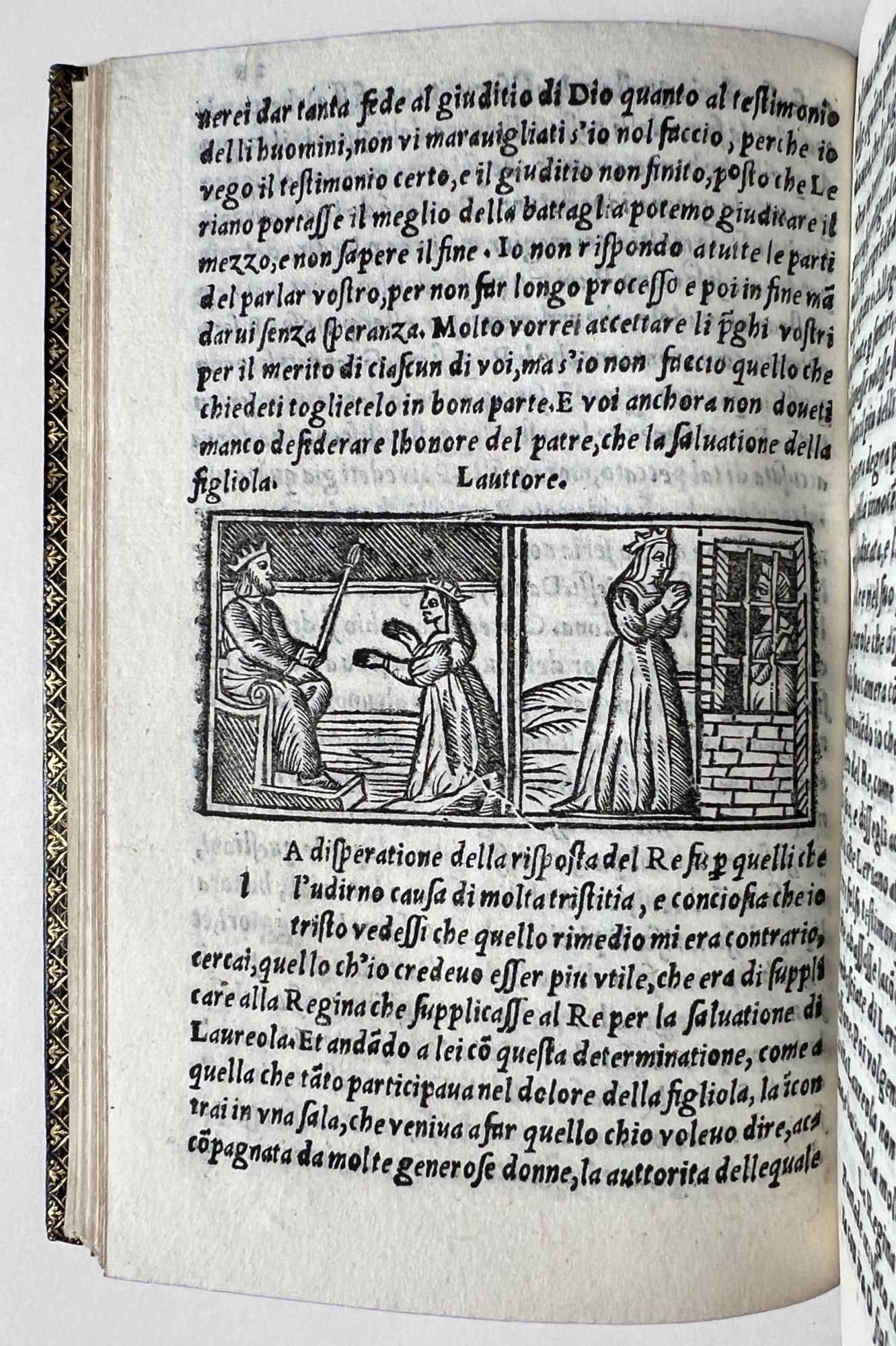
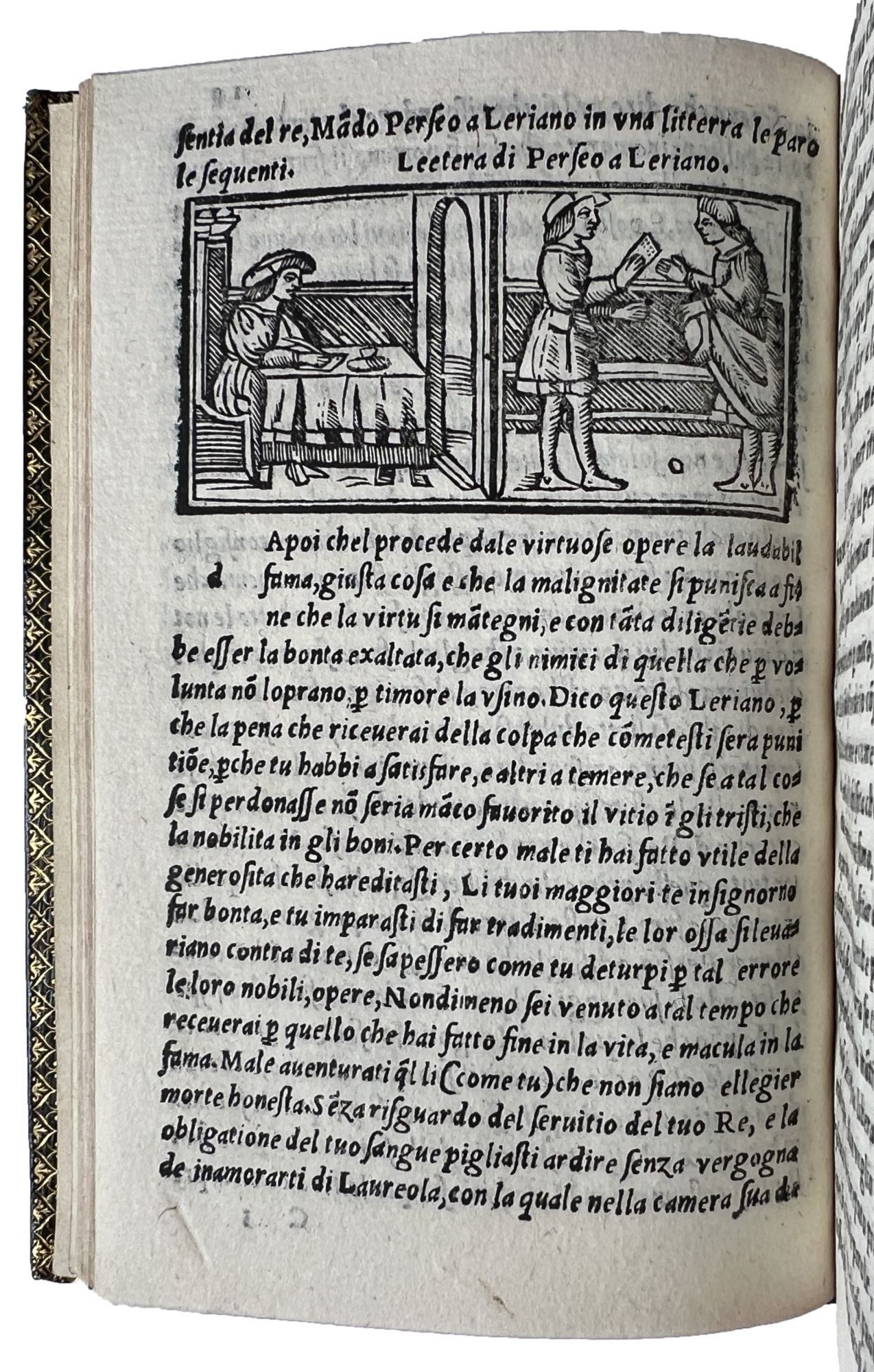
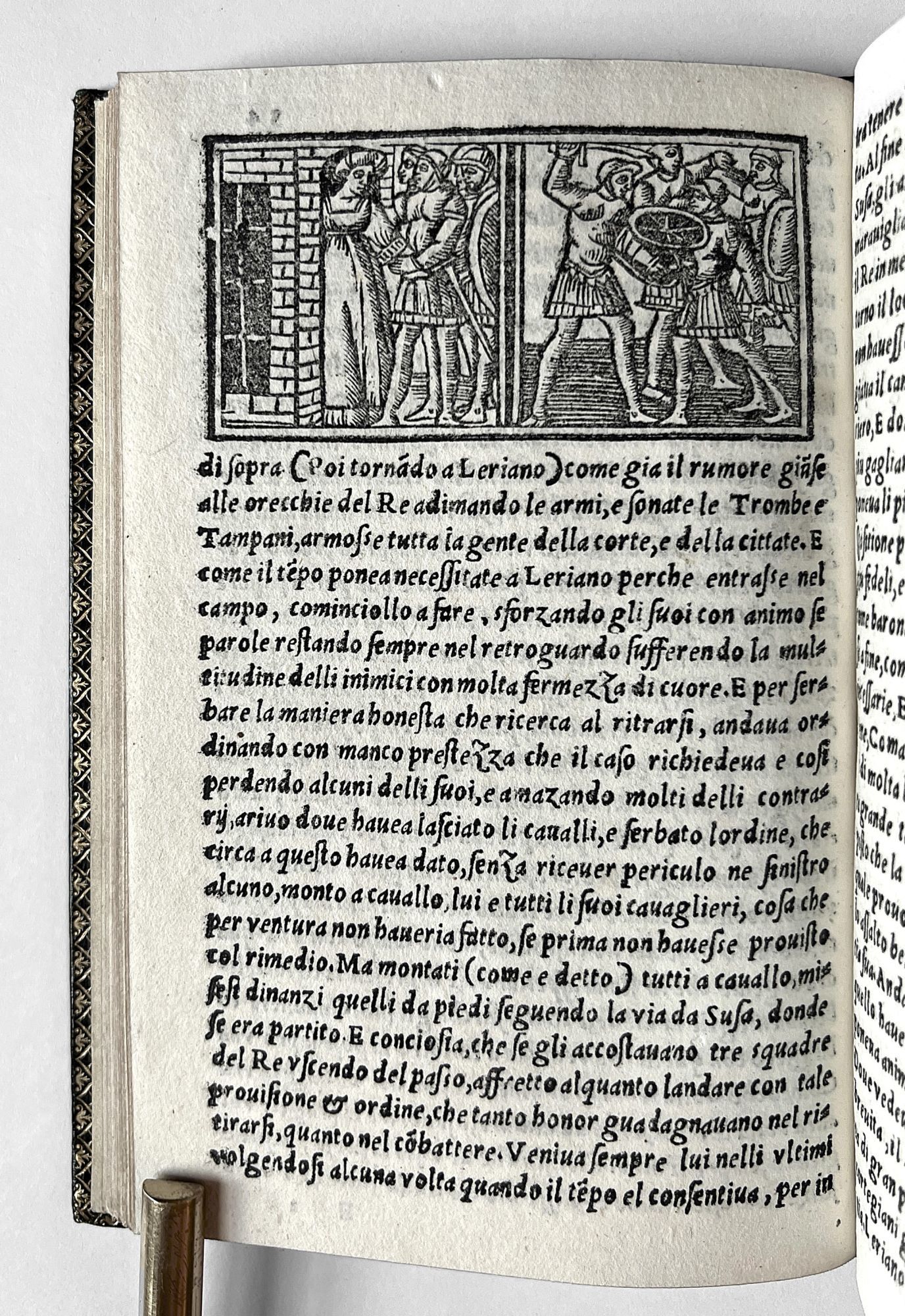
The title woodcut used in the Bindoni and Pasini editions is a close copy of woodcuts from earlier Venetian editions (see, for example, an anonymously published Spanish edition from 1523, Sander 6729 (not in USTC), whose title is reproduced in the Heredia catalogue, vol. 2, no. 2468). Its iconography dates to the earliest Spanish editions, as does that of the small, primitive text woodcuts, which relate to the text and are based on the more elaborate cuts from the Spanish incunable editions (cf. Deyermond). Blind copying was the order of the day: note the anachronism of a cheaply printed edition of the 1530s retaining blank initial spaces with guide letters, to be filled by nonexistent rubricators or illuminators (who by this late date would only have been hired to embellish costly imprints or luxury manuscripts).
I locate two US holdings of this edition (UCLA and Folger), and six holdings of other editions of Manfredi’s translation.
USTC 854438; EDIT-16 CNCE 66994; Sander 6732 note; Palau 293388; Brunet V, 112. Not in Essling. Cf. Alan Deyermond, “The Woodcuts of Diego de San Pedro's Cárcel de Amor, 1492-1496,” Bulletin hispanique (2002) 104-2: 511-528; Emily Francomano, The Prison of Love: Romance, Translation and the Book in the Sixteenth Century (Toronto, 2018); Adrian West, “On Translating Diego de San Pedro's The Prison of Love,” Asymptote, Oct. 2012, online.
Lelio Manfredi’s Italian translation of the Carcel de amor (1st ed. 1492) was among the most popular sentimental romances of its time. Many wept over the thwarted love of the noble Leriano and Laureola, heir to the throne of Macedonia. Captive in an allegorical tower of love, communicating with his beloved only through mediators, the hero eventually renounces her in order to preserve her honor, threatened by a rival’s false aspersions. There are duels and battles, Leriano stops eating, and finally dies, after shredding and swallowing her letters. The tragedy touched a nerve and dozens of editions appeared in Spain, as well as translations into Italian, French, English, Catalan, and, in the 17th century, German. Few remembered the true author, whose name is omitted from most of these editions.
One of several Castilian romances that were widely adapted and translated into other western European languages, the Carcel de amor was the only one to appear first in print, and to be consistently illustrated. It permeated the European reading public. The tale is told through letters and monologues rather than dialogue, and much has been written about its hybrid forms and elaborate rhetoric (“a reflection of vernacular humanism and a fictional tour de force of rhetorical precepts” [Francomano, p. 10]), and about its literary sources and later influence (or lack of it): While many scholars note its influence on the development of later European Renaissance fiction through its use of epistolary exchanges and of a narrative voice (L’autore, who acts as intermediary), as well as its tragic ending and exploration of class differences between the lovers, one commentator has called it “a dead-end in the history of literature” (A. West: “In general, the Prison of Love is a book of vestiges: of ways of believing that no longer obtain, of customs that already were dying out, of a manner of writing soon to be eclipsed by the realism of the picaresque novel.”)
The humanist Lelio Manfredi (d. 1528) translated the work into Italian at the request of Isabella d’Este, to whom the printed editions are dedicated, the first appearing in Venice in 1514. Eight more editions of his translation are recorded by USTC, all but one Venetian, the last in 1546. This edition is the third of four recorded editions by the partners Fr. Bindoni & Maffeo Pasini, who specialized in vernacular literature and devotional works.
The title woodcut used in the Bindoni and Pasini editions is a close copy of woodcuts from earlier Venetian editions (see, for example, an anonymously published Spanish edition from 1523, Sander 6729 (not in USTC), whose title is reproduced in the Heredia catalogue, vol. 2, no. 2468). Its iconography dates to the earliest Spanish editions, as does that of the small, primitive text woodcuts, which relate to the text and are based on the more elaborate cuts from the Spanish incunable editions (cf. Deyermond). Blind copying was the order of the day: note the anachronism of a cheaply printed edition of the 1530s retaining blank initial spaces with guide letters, to be filled by nonexistent rubricators or illuminators (who by this late date would only have been hired to embellish costly imprints or luxury manuscripts).
I locate two US holdings of this edition (UCLA and Folger), and six holdings of other editions of Manfredi’s translation.
USTC 854438; EDIT-16 CNCE 66994; Sander 6732 note; Palau 293388; Brunet V, 112. Not in Essling. Cf. Alan Deyermond, “The Woodcuts of Diego de San Pedro's Cárcel de Amor, 1492-1496,” Bulletin hispanique (2002) 104-2: 511-528; Emily Francomano, The Prison of Love: Romance, Translation and the Book in the Sixteenth Century (Toronto, 2018); Adrian West, “On Translating Diego de San Pedro's The Prison of Love,” Asymptote, Oct. 2012, online.
Details
Title
Carcer d'Amore
Author
[SAN PEDRO, Diego de (ca. 1437- ca. 1498)]
Condition
Unknown
Publisher
Francesco Bindoni & Mapheo Pasini, compagni: Venice
Date
1537