

THE RAPE OF THE LOCK, AND OTHER POEMS. [bound with] AN ESSAY ON MAN, AND OTHER POEMS
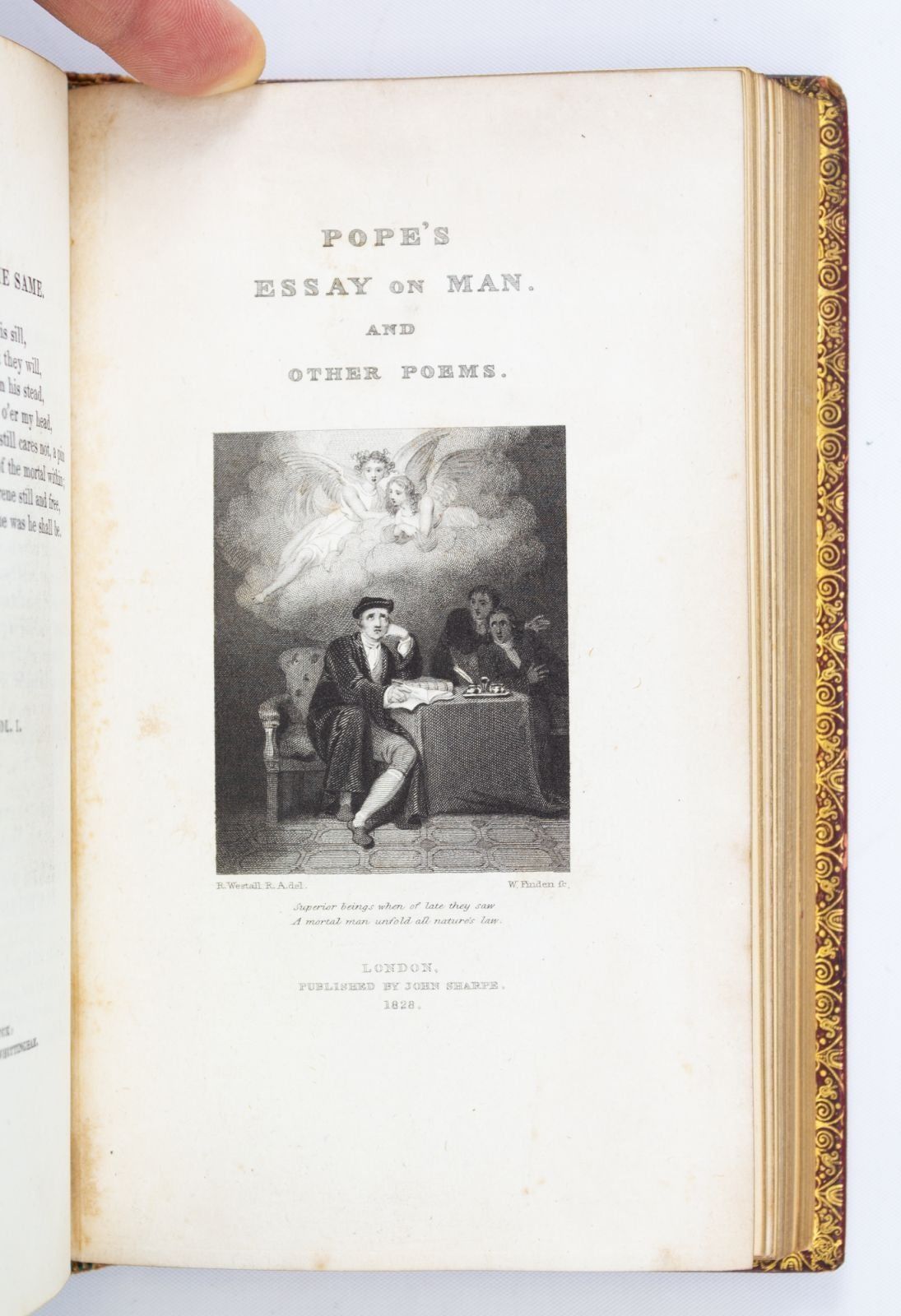
- London: Printed [by C. Whittingham] for John Sharpe, 1829
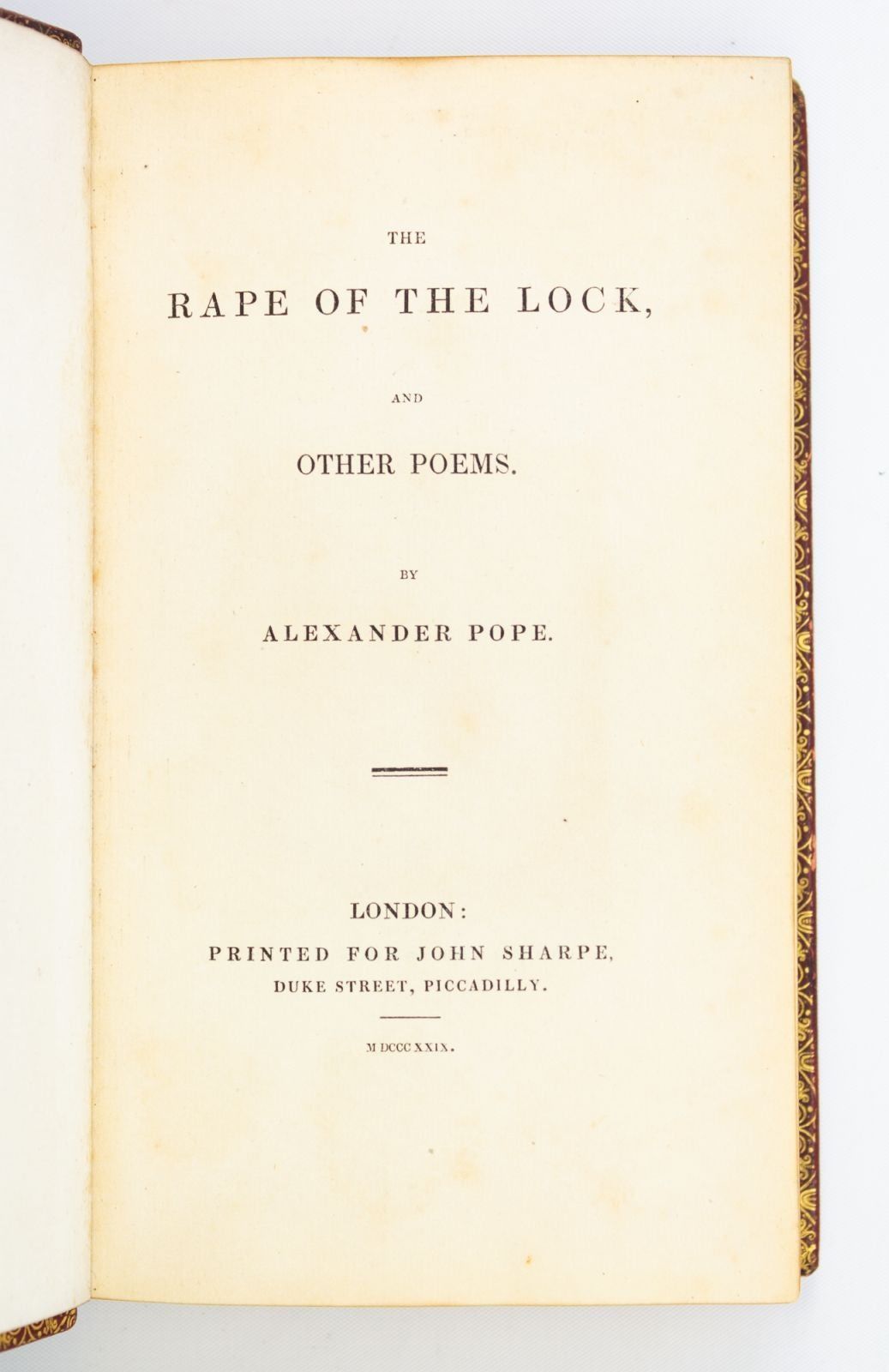
London: Printed [by C. Whittingham] for John Sharpe, 1829. 170 x 100 mm. (6 3/4 x 4"). 190 pp.; vi, 208 pp. Two volumes bound in one. .
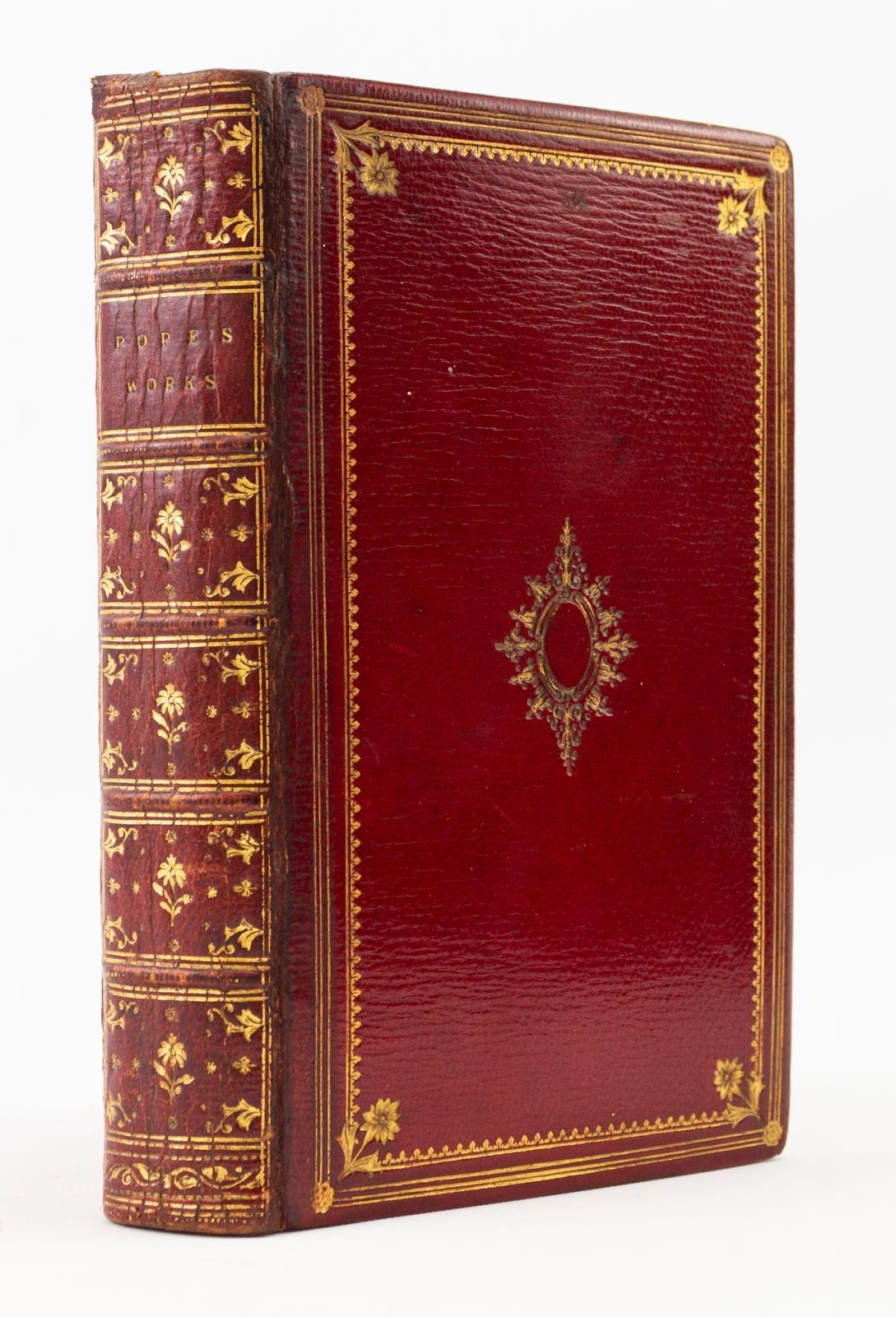
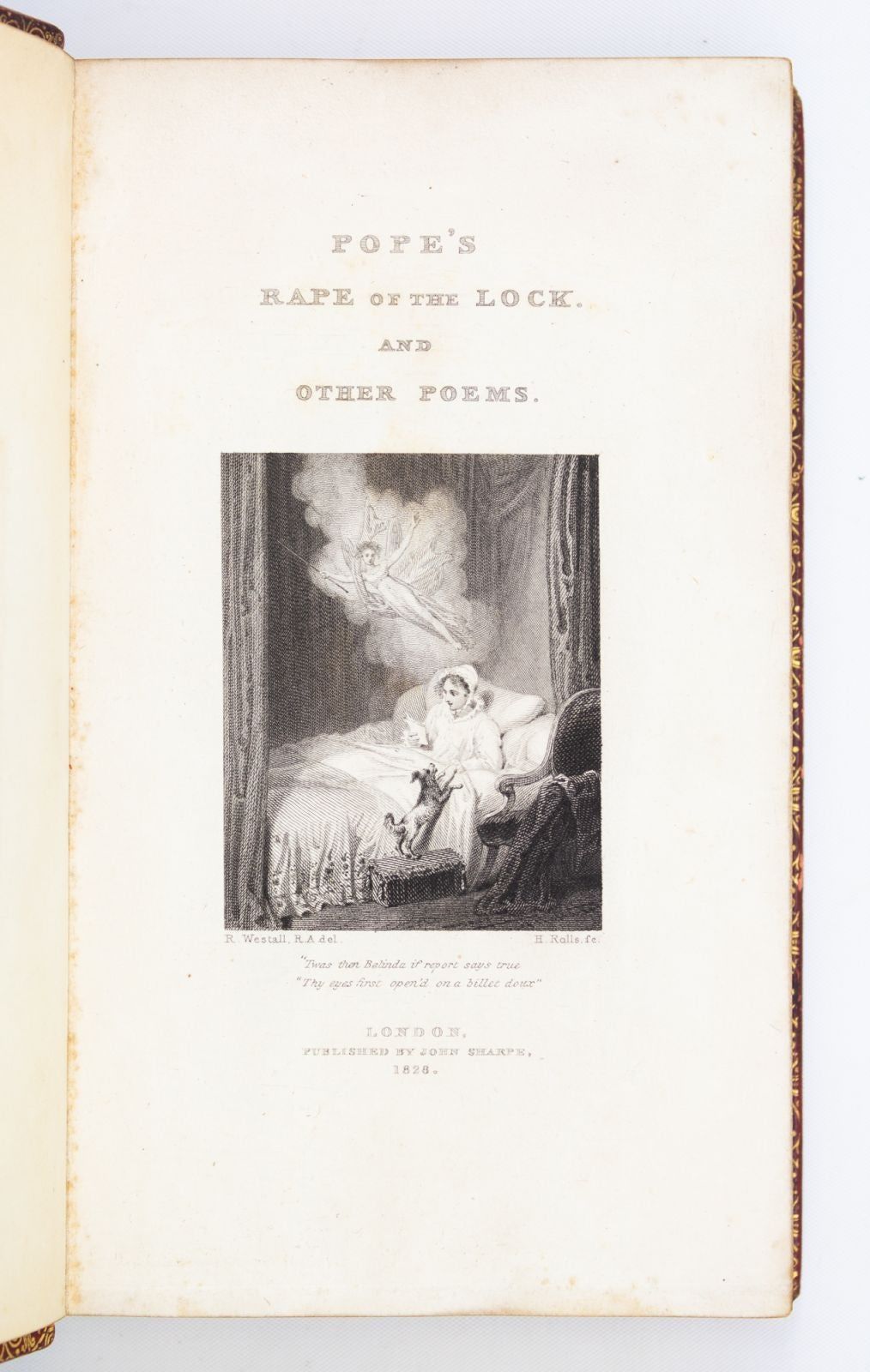
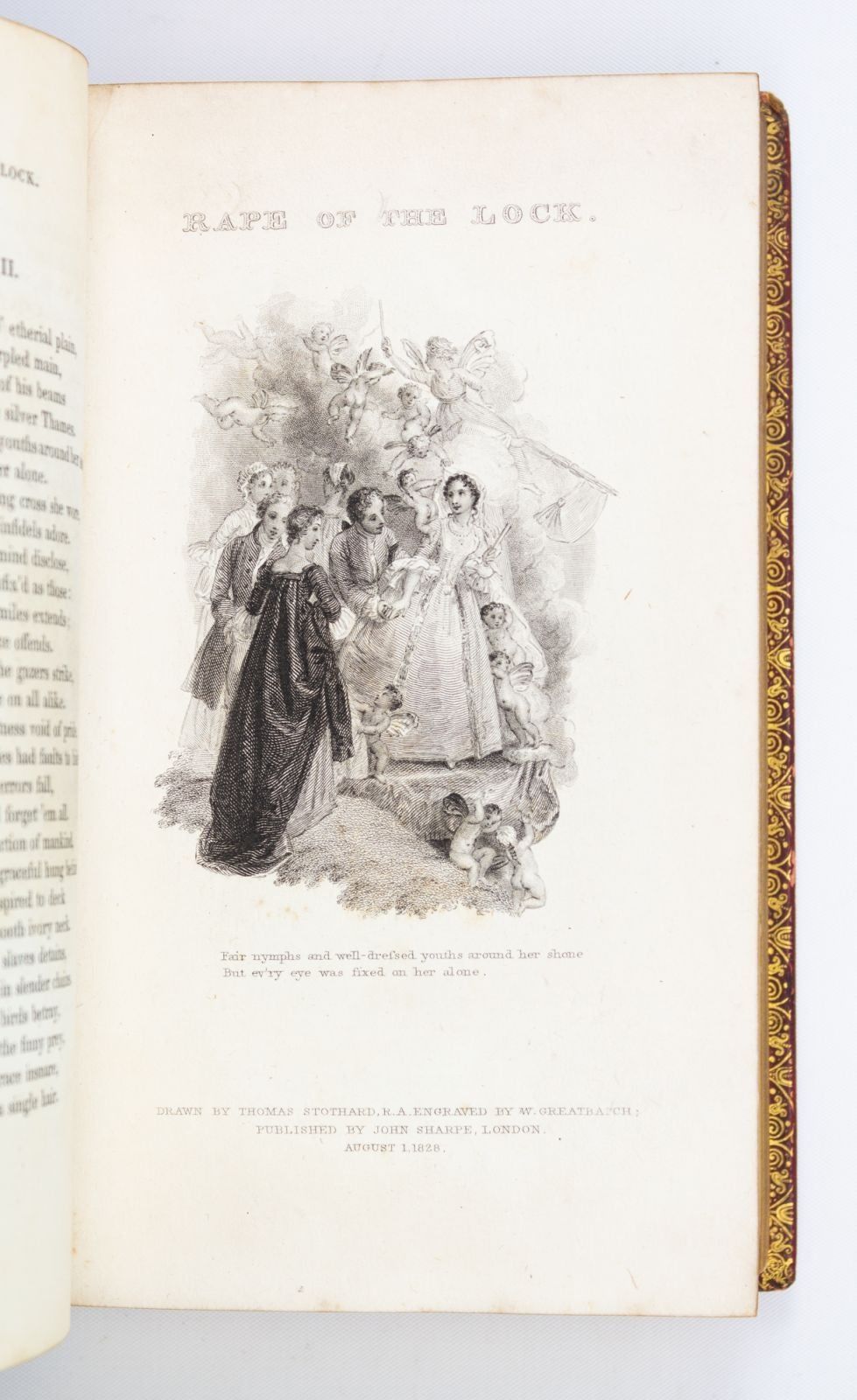
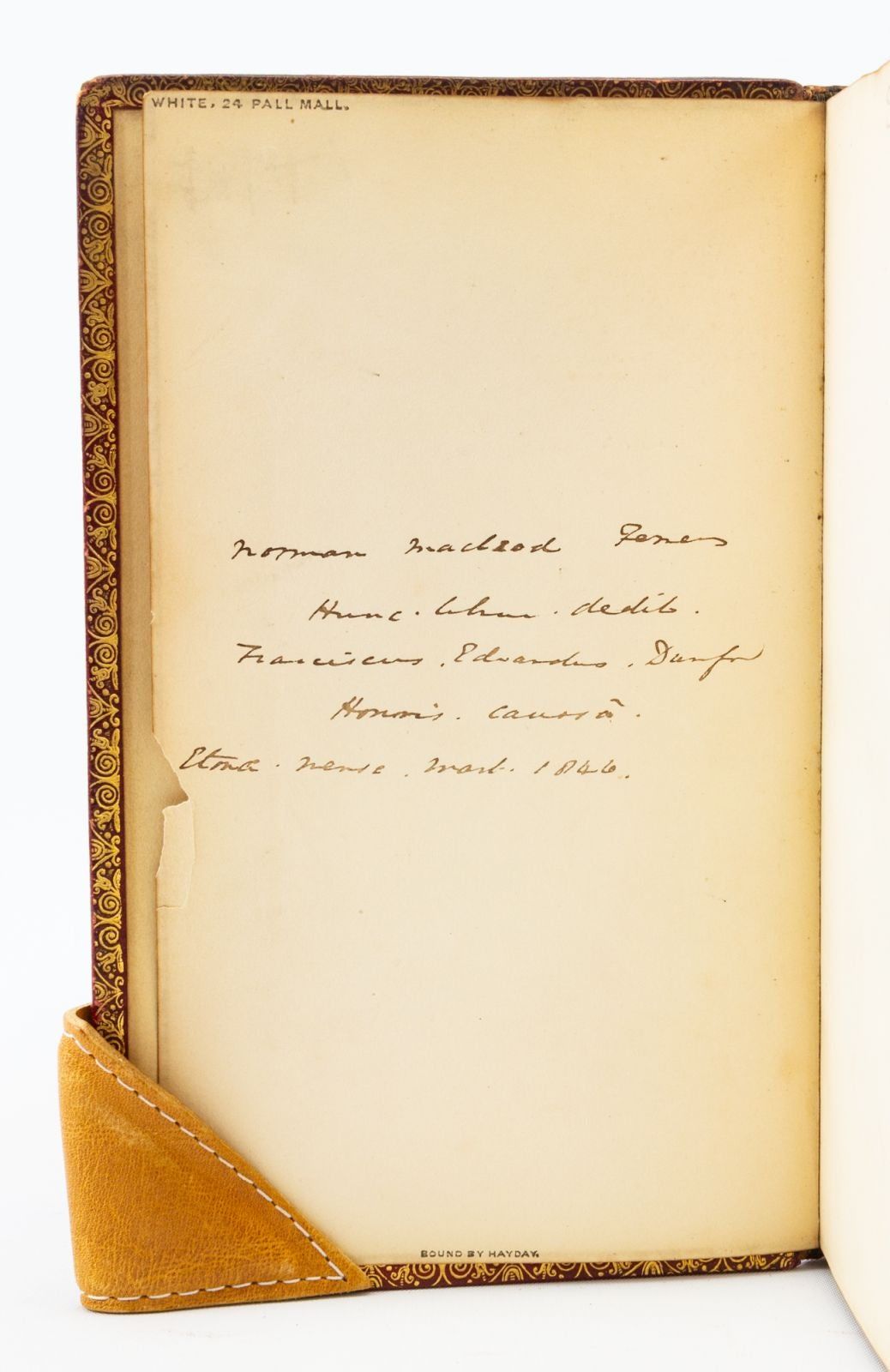
Attractive contemporary red morocco, gilt, by Hayday (stamp-signed at foot of verso of front free endpaper), covers with French fillet border, central panel framed by dogtooth roll, floral sprigs at corners, oval medallion at center within a lancet frame, raised bands, spine compartments with central floral sprig, leafy cornerpieces, gilt lettering, gilt turn-ins, all edges gilt. Two engraved title pages with vignette and 10 engraved plates illustrating poems. Verso of front free endpaper with ink owner inscription of Norman MacLeod Ferrers (see below) dated March 1846; occasional marginal annotations. Joints and corners somewhat rubbed, slight chip to head of rear joint, the majority of the plates a bit foxed, but still an excellent copy, the text clean and fresh, and the binding sound and not without appeal.
This attractively bound volume--with important provenance--contains two of the most enduring works by a man generally recognized as the greatest poet of the age. "The Rape of the Lock" is a graceful and devastating critique of everyday life among the vain and frivolous, and one of the century's most famous verses. The didactic success of the work results from the immense gap between the silliness of the episode and the great seriousness with which its participants treat it. "The poem is pure rococo, the one perfect example of this style in English." (Day) "Essay on Man" is Pope's grand philosophical poem in heroic couplets that, like Milton's "Paradise Lost," sought to accomplish nothing less than the vindication of the ways of God to man. Not really an essay on man at all, but instead on the moral order in the universe, the four epistles making up this celebrated work maintain that apparent evil results from a human failure to see the total plan of the universe and that there is a reason for whatever appears to be imperfect. Dugald Stewart called the work "the noblest specimen of philosophical poetry which our language affords." Other works included here are "Eloisa to Abelard," "Essay on Criticism," "Imitations of Horace," and numerous odes and epistles. One of the most prominent and productive English binders of the 19th century, James Hayday (1796-1872) first appeared in the London directories in 1825, and a dozen years later, he was employing a staff of between 30 and 40, including 10 finishers. He was known for his decorative work, using high quality leather and being very liberal with gilt embellishment. Our volume was presented as a prize to the 17-year-old Norman Macleod Ferrers (1829-1903) in the year he graduated from Eton College, by Assistant Master Francis Edward Durnford (1816-1881). Described in Benson's "Fasti Etonenses" as "the last of the real Fellows of Eton," Durnford was known for his strong devotion to his students and was endeared to generations of Etonians. Ferrers continued his education at Caius College, Cambridge, where he graduated in 1851 as Senior Wrangler (first among the students who received first class degrees in mathematics), a feat that has been called the greatest intellectual achievement attainable in Britain. Although he qualified as a lawyer and was ordained a priest in the church of England, Ferrers chose to devote his life to the study and teaching of mathematics. DNB notes, "He was probably the best lecturer, in his subject, in the university of his day; besides great natural powers in mathematics, he possessed an unusual capacity for vivid exposition." He made numerous contributions to the literature of mathematics, both as editor of "The Quarterly Journal of Pure and Applied Mathematics" and as the author of notable works on trilinear coordinates, spherical harmonics, and integer partitions. He became master of Caius College in 1880 and vice-chancellor of Cambridge University in 1884..
Attractive contemporary red morocco, gilt, by Hayday (stamp-signed at foot of verso of front free endpaper), covers with French fillet border, central panel framed by dogtooth roll, floral sprigs at corners, oval medallion at center within a lancet frame, raised bands, spine compartments with central floral sprig, leafy cornerpieces, gilt lettering, gilt turn-ins, all edges gilt. Two engraved title pages with vignette and 10 engraved plates illustrating poems. Verso of front free endpaper with ink owner inscription of Norman MacLeod Ferrers (see below) dated March 1846; occasional marginal annotations. Joints and corners somewhat rubbed, slight chip to head of rear joint, the majority of the plates a bit foxed, but still an excellent copy, the text clean and fresh, and the binding sound and not without appeal.
This attractively bound volume--with important provenance--contains two of the most enduring works by a man generally recognized as the greatest poet of the age. "The Rape of the Lock" is a graceful and devastating critique of everyday life among the vain and frivolous, and one of the century's most famous verses. The didactic success of the work results from the immense gap between the silliness of the episode and the great seriousness with which its participants treat it. "The poem is pure rococo, the one perfect example of this style in English." (Day) "Essay on Man" is Pope's grand philosophical poem in heroic couplets that, like Milton's "Paradise Lost," sought to accomplish nothing less than the vindication of the ways of God to man. Not really an essay on man at all, but instead on the moral order in the universe, the four epistles making up this celebrated work maintain that apparent evil results from a human failure to see the total plan of the universe and that there is a reason for whatever appears to be imperfect. Dugald Stewart called the work "the noblest specimen of philosophical poetry which our language affords." Other works included here are "Eloisa to Abelard," "Essay on Criticism," "Imitations of Horace," and numerous odes and epistles. One of the most prominent and productive English binders of the 19th century, James Hayday (1796-1872) first appeared in the London directories in 1825, and a dozen years later, he was employing a staff of between 30 and 40, including 10 finishers. He was known for his decorative work, using high quality leather and being very liberal with gilt embellishment. Our volume was presented as a prize to the 17-year-old Norman Macleod Ferrers (1829-1903) in the year he graduated from Eton College, by Assistant Master Francis Edward Durnford (1816-1881). Described in Benson's "Fasti Etonenses" as "the last of the real Fellows of Eton," Durnford was known for his strong devotion to his students and was endeared to generations of Etonians. Ferrers continued his education at Caius College, Cambridge, where he graduated in 1851 as Senior Wrangler (first among the students who received first class degrees in mathematics), a feat that has been called the greatest intellectual achievement attainable in Britain. Although he qualified as a lawyer and was ordained a priest in the church of England, Ferrers chose to devote his life to the study and teaching of mathematics. DNB notes, "He was probably the best lecturer, in his subject, in the university of his day; besides great natural powers in mathematics, he possessed an unusual capacity for vivid exposition." He made numerous contributions to the literature of mathematics, both as editor of "The Quarterly Journal of Pure and Applied Mathematics" and as the author of notable works on trilinear coordinates, spherical harmonics, and integer partitions. He became master of Caius College in 1880 and vice-chancellor of Cambridge University in 1884..
Details
Title
THE RAPE OF THE LOCK, AND OTHER POEMS. [bound with] AN ESSAY ON MAN, AND OTHER POEMS
Author
(FERRERS, NORMAN MACLEOD - HIS COPY). POPE, ALEXANDER
Condition
Unknown
Publisher
Printed [by C. Whittingham] for John Sharpe: London
Date
1829