

K. Tongŭi pogam 東醫寶鑑 [Treasured Mirror of Eastern Medicine [or] Classified Book of Medicine]
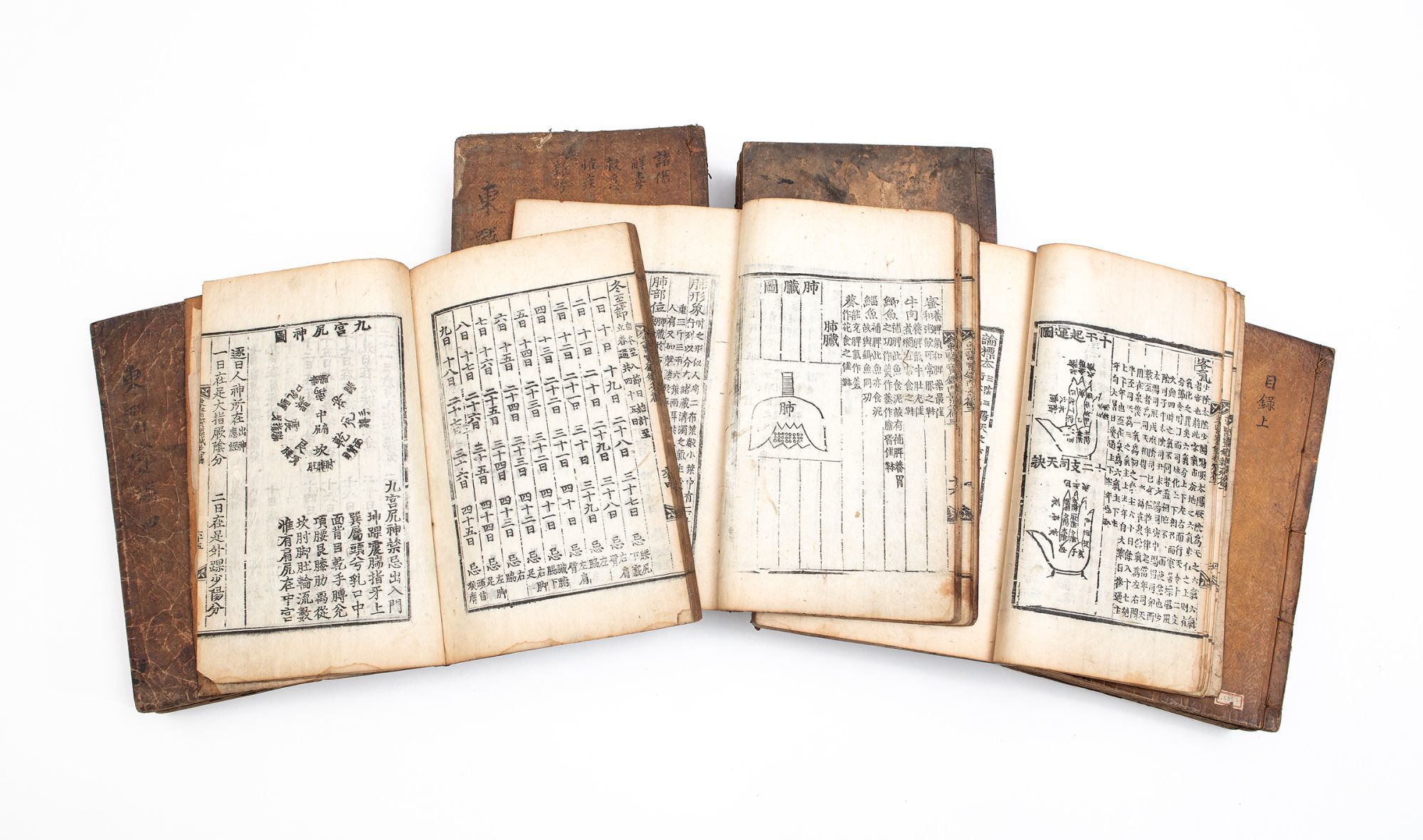
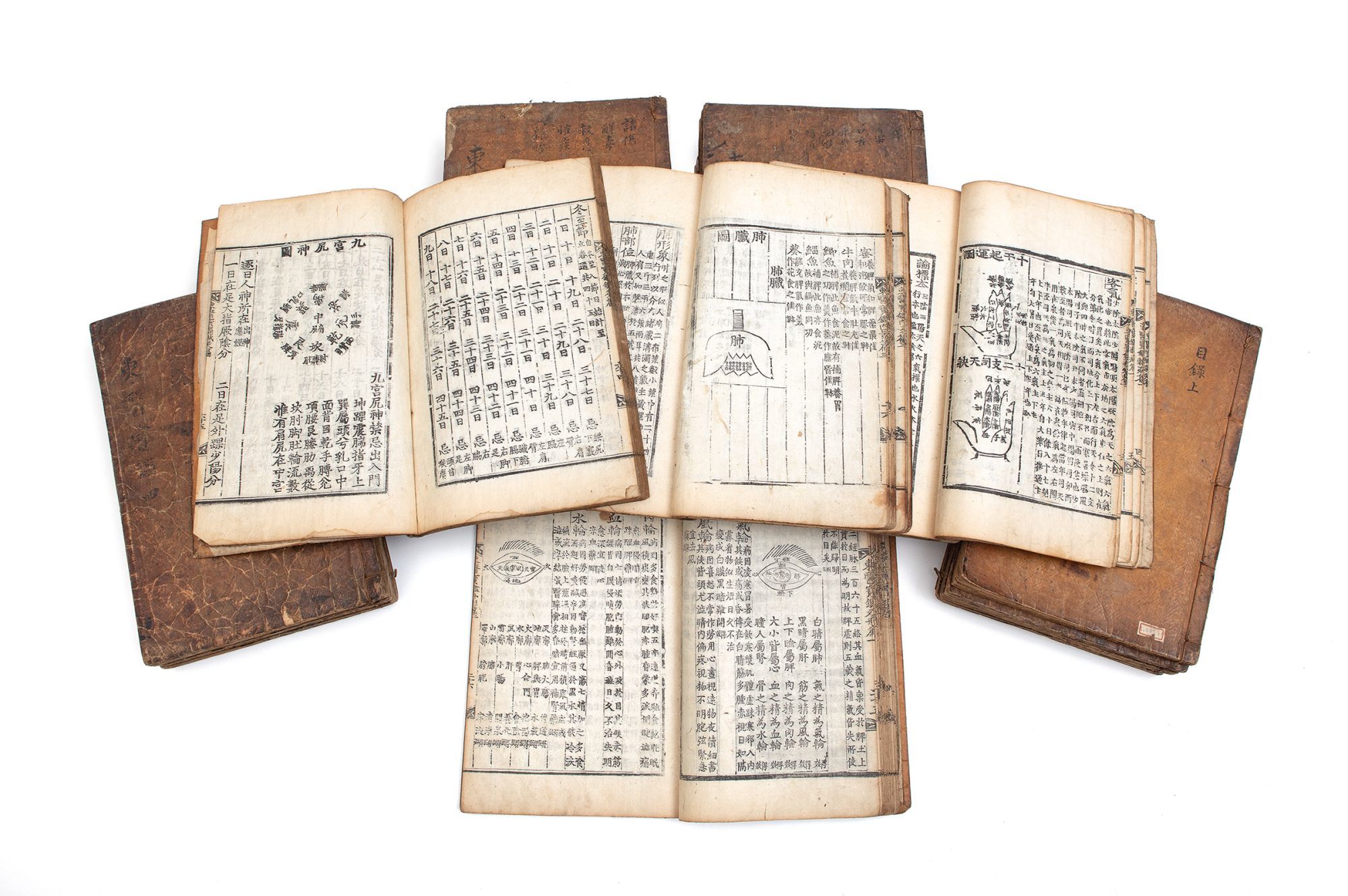
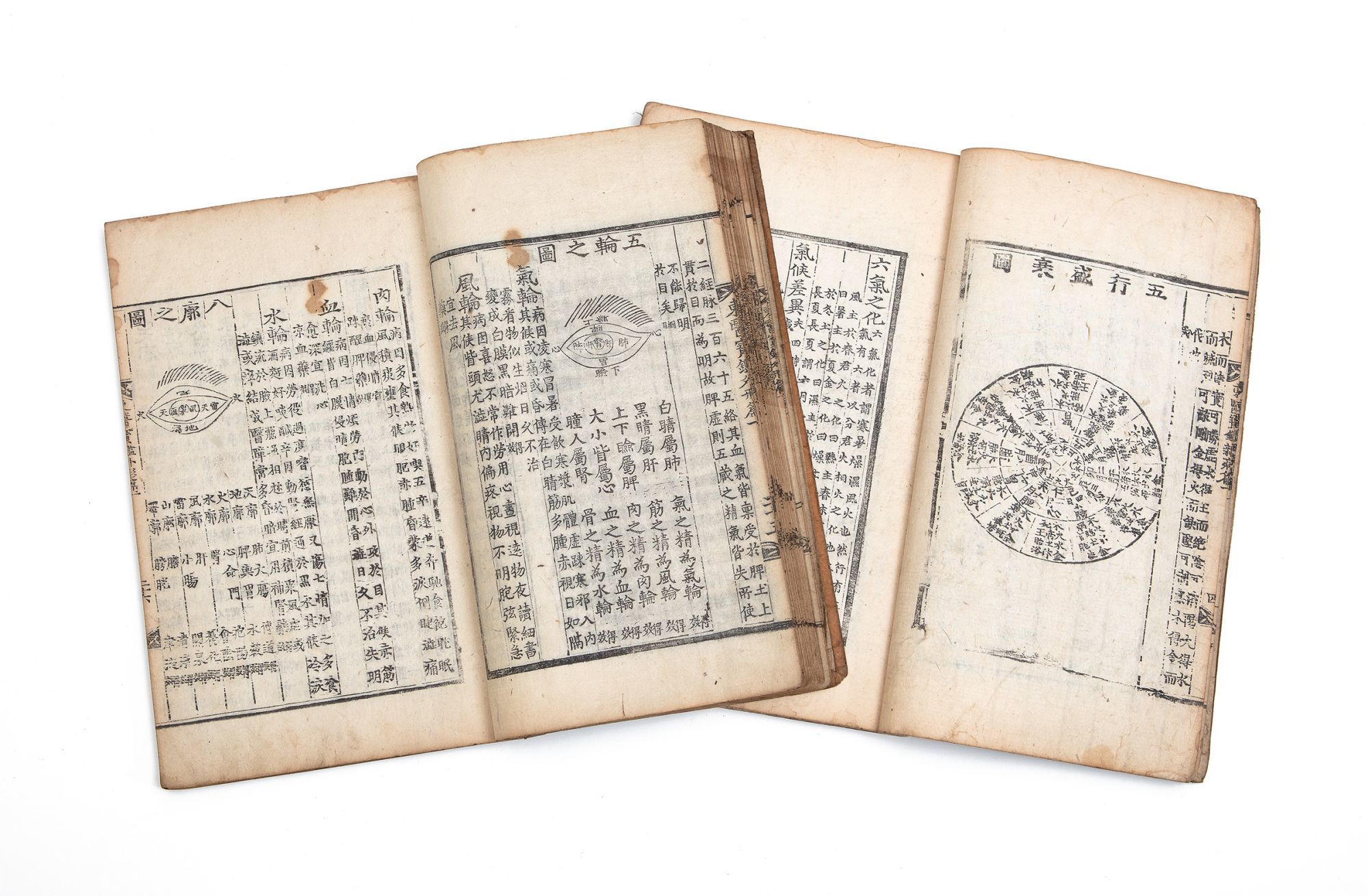
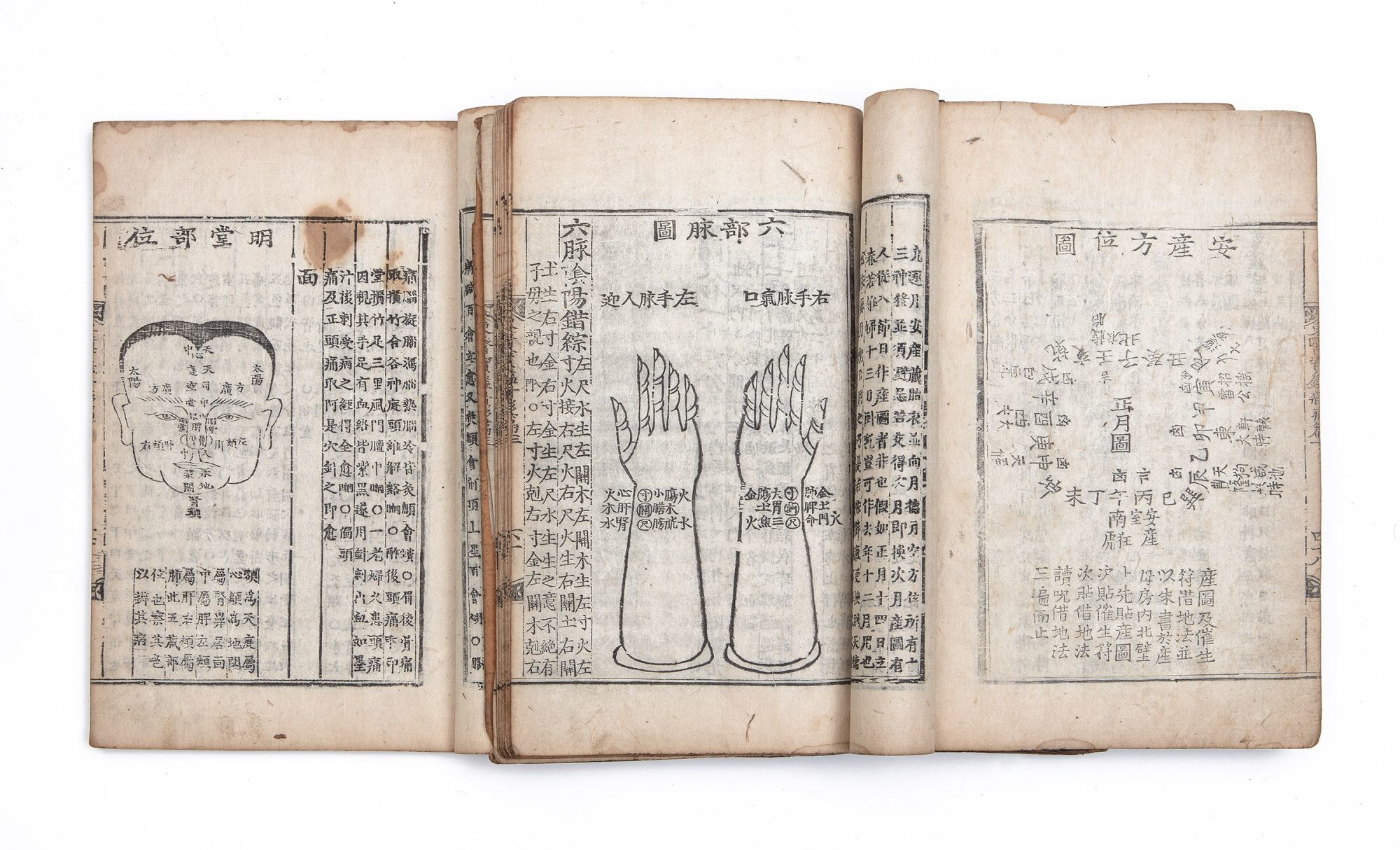
- 1634
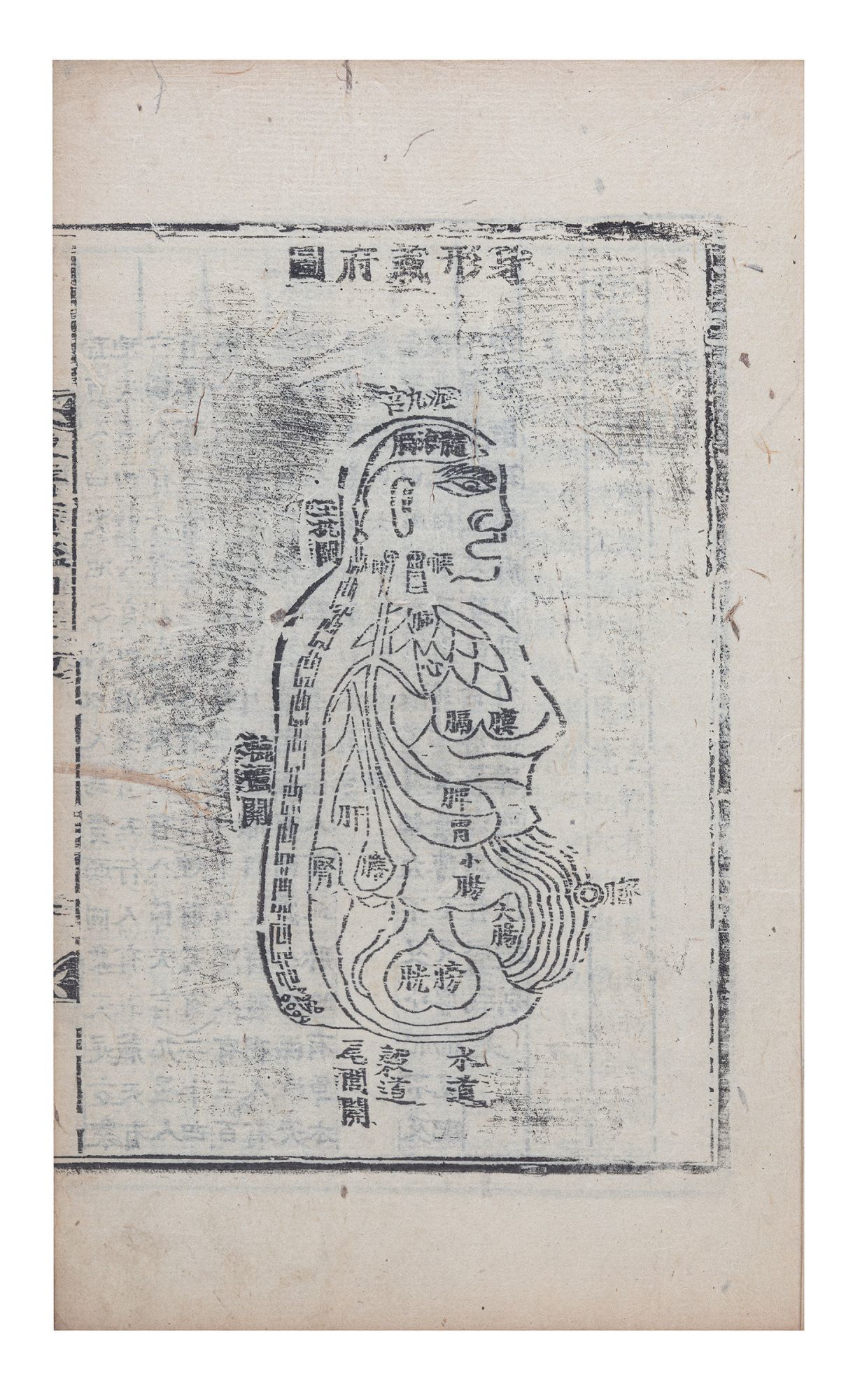
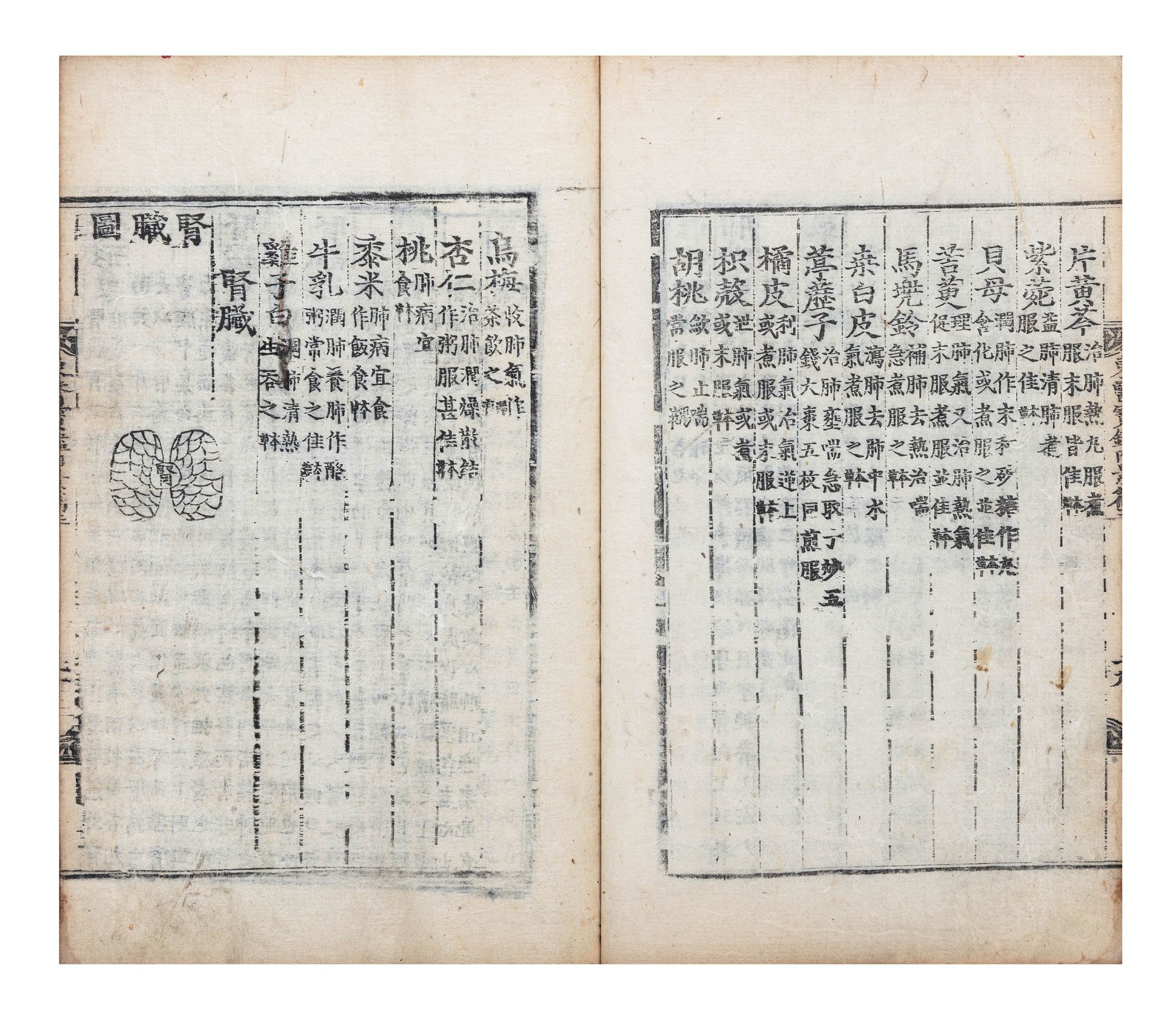
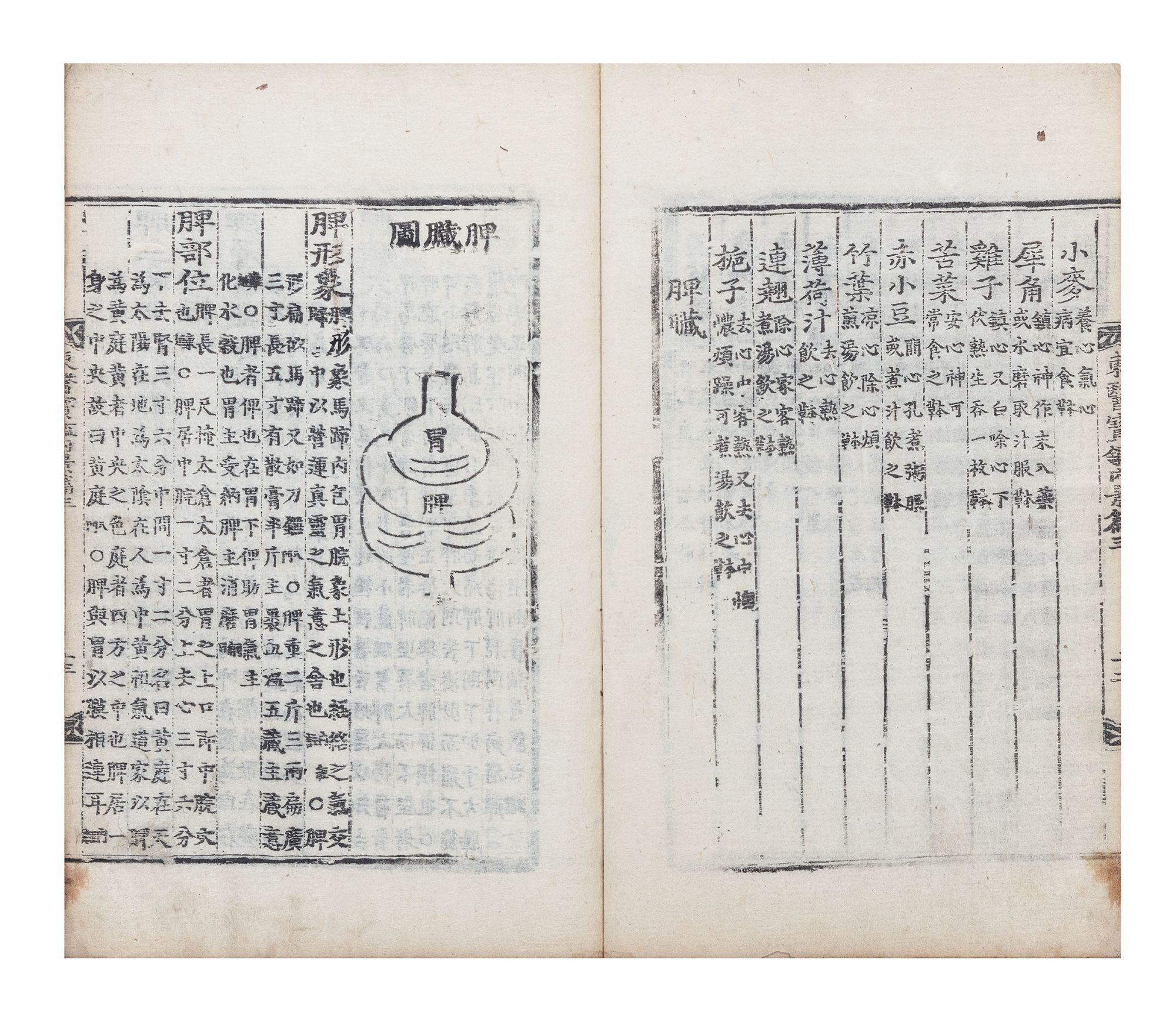
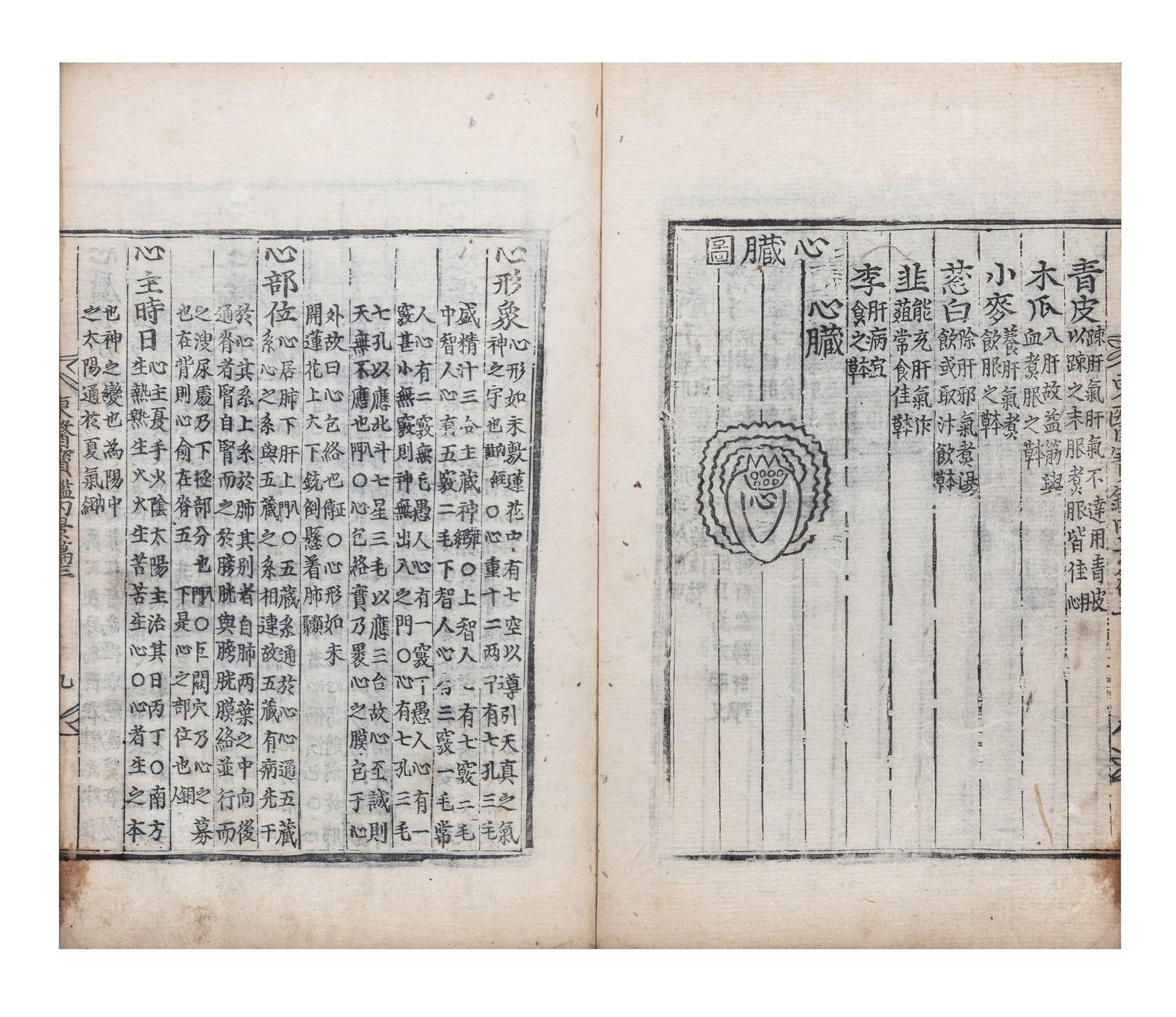
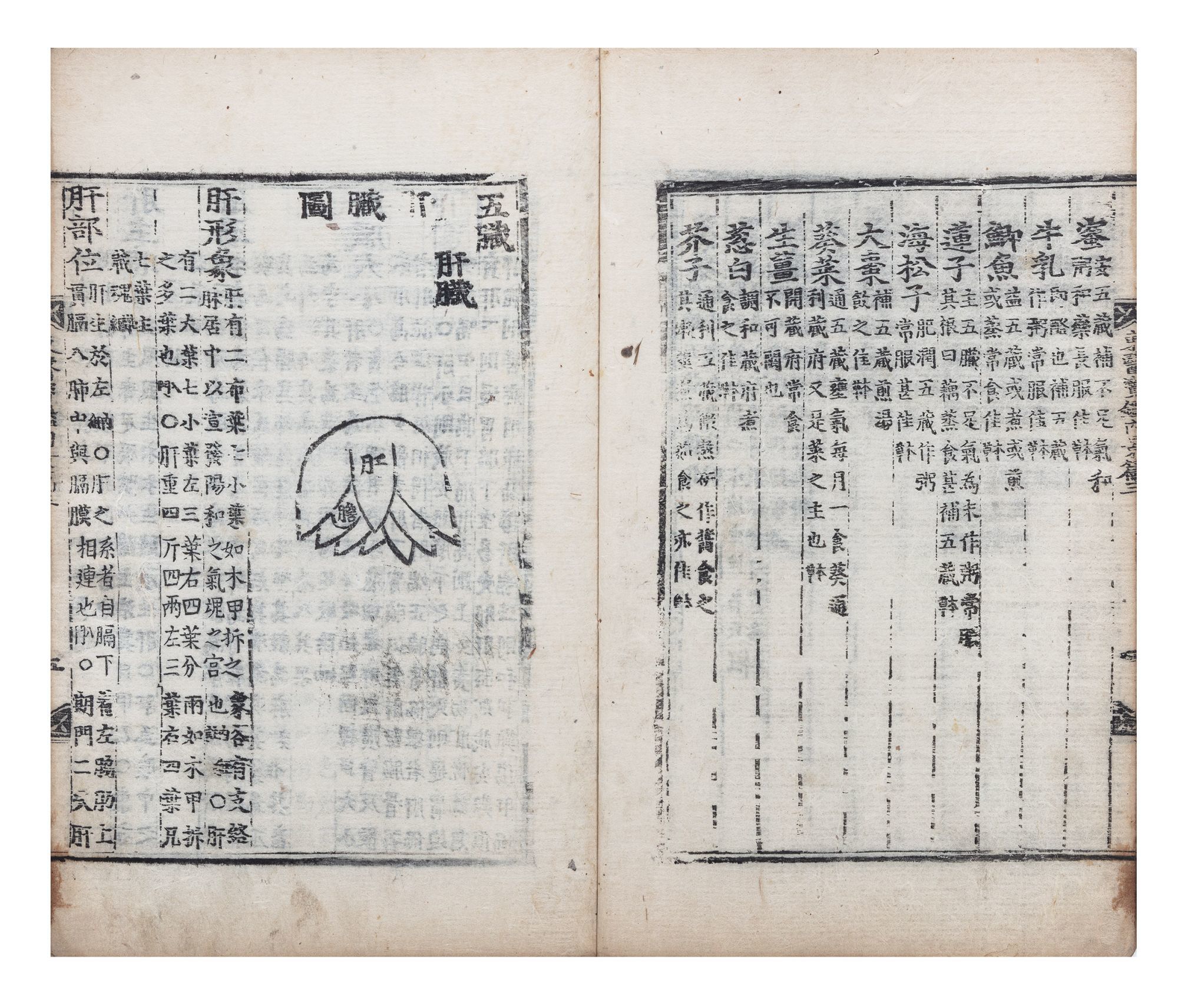
1634. Several woodcut illus. in the text. 25 vols. Folio (346 x 230 mm.), orig. wrappers (rubbed & several with some wear, three vols. with some staining, occasional minor foxing), orig. stitching. [Hansŏng]: [colophon in Vol. 2 dated 1634].
Second edition (1st ed.: 1613) of a very great rarity, “the greatest of all Korean medical treatises, [which] devotes its last chapters to acupuncture and moxibustion.”–Lu & Needham, Celestial Lancets, p. 263n. It is considered to have one of the finest classification systems in traditional East Asian medicine.
Hŏ Chun (1539/46-1615), was a court physician of the Yangcheon Hŏ clan during the reign of King Seonjo (1568-1608), of the Joseon dynasty in Korea. During the Japanese invasion of Korea (1592-98), Hŏ faithfully accompanied the king through numerous difficult campaigns. Following the conflict, the king commissioned Hŏ to write a medical book for his citizens, who suffered from post-war famines and epidemics. In 1610, Hŏ completed his masterwork, which was first published in 1613 (an even rarer book).
The Tongŭi pogam is divided into five broad sections: internal medicine (four vols.), external medicine (four vols.), miscellaneous diseases (11 vols.), herbal remedies (three vols.), and acupuncture (one vol.), all preceded by a most useful two-volume Table of Contents. In the first section on internal medicine, Hŏ describes the interdependence of the liver, lung, kidney, heart, and spleen. The section on external medicine explains how the skin, muscles, blood vessels, tendons, and bones allow for movement and maintenance of posture. The part on miscellaneous diseases describes the symptoms, diagnoses, and treatment methods of various diseases. Hŏ’s remedies rely on readily found medicinal herbs and plants, and he provides impressively detailed instructions on how to extract, maintain, and consume the herbs. The last section explains acupuncture strategies.
The work spread to other East Asian countries like China, Japan, and Vietnam and is still regarded as one of the classics of Asian medicine. “The Treasured mirror of eastern medicine was in fact one of the very few non-Buddhist works written outside China that achieved a wide circulation [within China]. It was written by Hŏ Chun (1539-1615) as a summation of Korean medical knowledge and was printed in Korea in 1613. Copies were sent directly to China in 1721 and 1728, and a copy reached Japan in 1681. A revised edition was printed in Japan with glosses in 1724 and again in 1799; copies of the 1799 edition were sent to China via Nagasaki in 1811 and 1837. The Treasured mirror of eastern medicine was reprinted in China in the eighteenth and nineteenth centuries, either from the Korean edition or from one of the Japanese editions with the glosses removed. This was a rare sign of high esteem for a book written outside China.”–Peter Kornicki, Languages, Scripts, and Chinese Texts in East Asia (Oxford: 2018), p. 144.
Hŏ Chun remains famous in Korea today: there are several recently created television series and films about him and his achievements; a best-selling novel about him was published in 1990; and a museum in Seoul is devoted to his life and works.
A very good, “married” set, with the first volume of miscellaneous diseases coming from another set. One volume has a hole to about ten leaves, touching a few characters.
❧ For an extended and excellent discussion of the contents and importance of this work, see Yeonseok Kang, “History and Characteristics of Korean Medicine” in Routledge Handbook of Chinese Medicine (2022), pp. 507-08.
Second edition (1st ed.: 1613) of a very great rarity, “the greatest of all Korean medical treatises, [which] devotes its last chapters to acupuncture and moxibustion.”–Lu & Needham, Celestial Lancets, p. 263n. It is considered to have one of the finest classification systems in traditional East Asian medicine.
Hŏ Chun (1539/46-1615), was a court physician of the Yangcheon Hŏ clan during the reign of King Seonjo (1568-1608), of the Joseon dynasty in Korea. During the Japanese invasion of Korea (1592-98), Hŏ faithfully accompanied the king through numerous difficult campaigns. Following the conflict, the king commissioned Hŏ to write a medical book for his citizens, who suffered from post-war famines and epidemics. In 1610, Hŏ completed his masterwork, which was first published in 1613 (an even rarer book).
The Tongŭi pogam is divided into five broad sections: internal medicine (four vols.), external medicine (four vols.), miscellaneous diseases (11 vols.), herbal remedies (three vols.), and acupuncture (one vol.), all preceded by a most useful two-volume Table of Contents. In the first section on internal medicine, Hŏ describes the interdependence of the liver, lung, kidney, heart, and spleen. The section on external medicine explains how the skin, muscles, blood vessels, tendons, and bones allow for movement and maintenance of posture. The part on miscellaneous diseases describes the symptoms, diagnoses, and treatment methods of various diseases. Hŏ’s remedies rely on readily found medicinal herbs and plants, and he provides impressively detailed instructions on how to extract, maintain, and consume the herbs. The last section explains acupuncture strategies.
The work spread to other East Asian countries like China, Japan, and Vietnam and is still regarded as one of the classics of Asian medicine. “The Treasured mirror of eastern medicine was in fact one of the very few non-Buddhist works written outside China that achieved a wide circulation [within China]. It was written by Hŏ Chun (1539-1615) as a summation of Korean medical knowledge and was printed in Korea in 1613. Copies were sent directly to China in 1721 and 1728, and a copy reached Japan in 1681. A revised edition was printed in Japan with glosses in 1724 and again in 1799; copies of the 1799 edition were sent to China via Nagasaki in 1811 and 1837. The Treasured mirror of eastern medicine was reprinted in China in the eighteenth and nineteenth centuries, either from the Korean edition or from one of the Japanese editions with the glosses removed. This was a rare sign of high esteem for a book written outside China.”–Peter Kornicki, Languages, Scripts, and Chinese Texts in East Asia (Oxford: 2018), p. 144.
Hŏ Chun remains famous in Korea today: there are several recently created television series and films about him and his achievements; a best-selling novel about him was published in 1990; and a museum in Seoul is devoted to his life and works.
A very good, “married” set, with the first volume of miscellaneous diseases coming from another set. One volume has a hole to about ten leaves, touching a few characters.
❧ For an extended and excellent discussion of the contents and importance of this work, see Yeonseok Kang, “History and Characteristics of Korean Medicine” in Routledge Handbook of Chinese Medicine (2022), pp. 507-08.
Details
Title
K. Tongŭi pogam 東醫寶鑑 [Treasured Mirror of Eastern Medicine [or] Classified Book of Medicine]
Author
HŎ, Chun 許浚 (or HEO JUN or XU JUN)
Condition
Unknown
Date
1634