

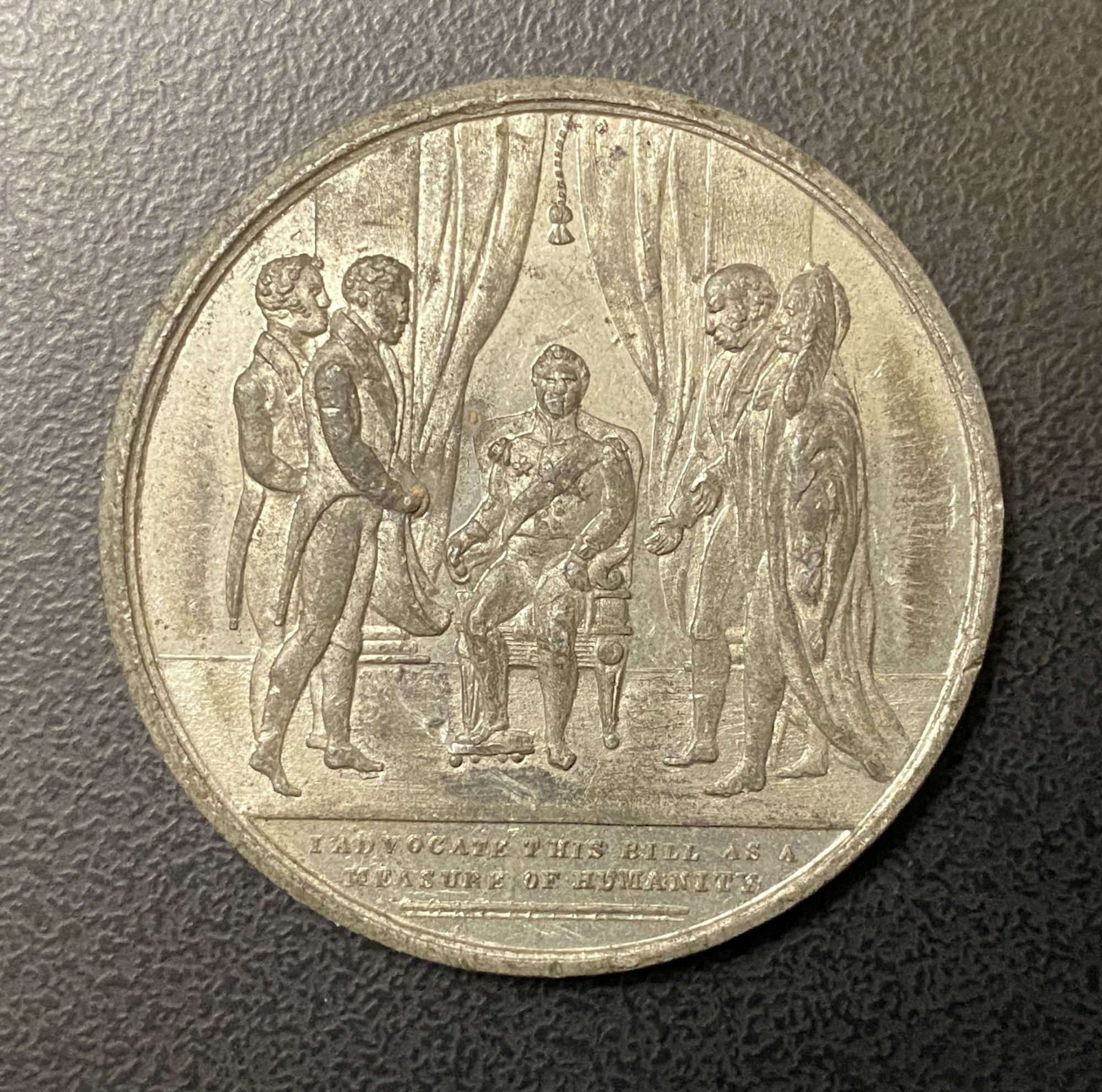
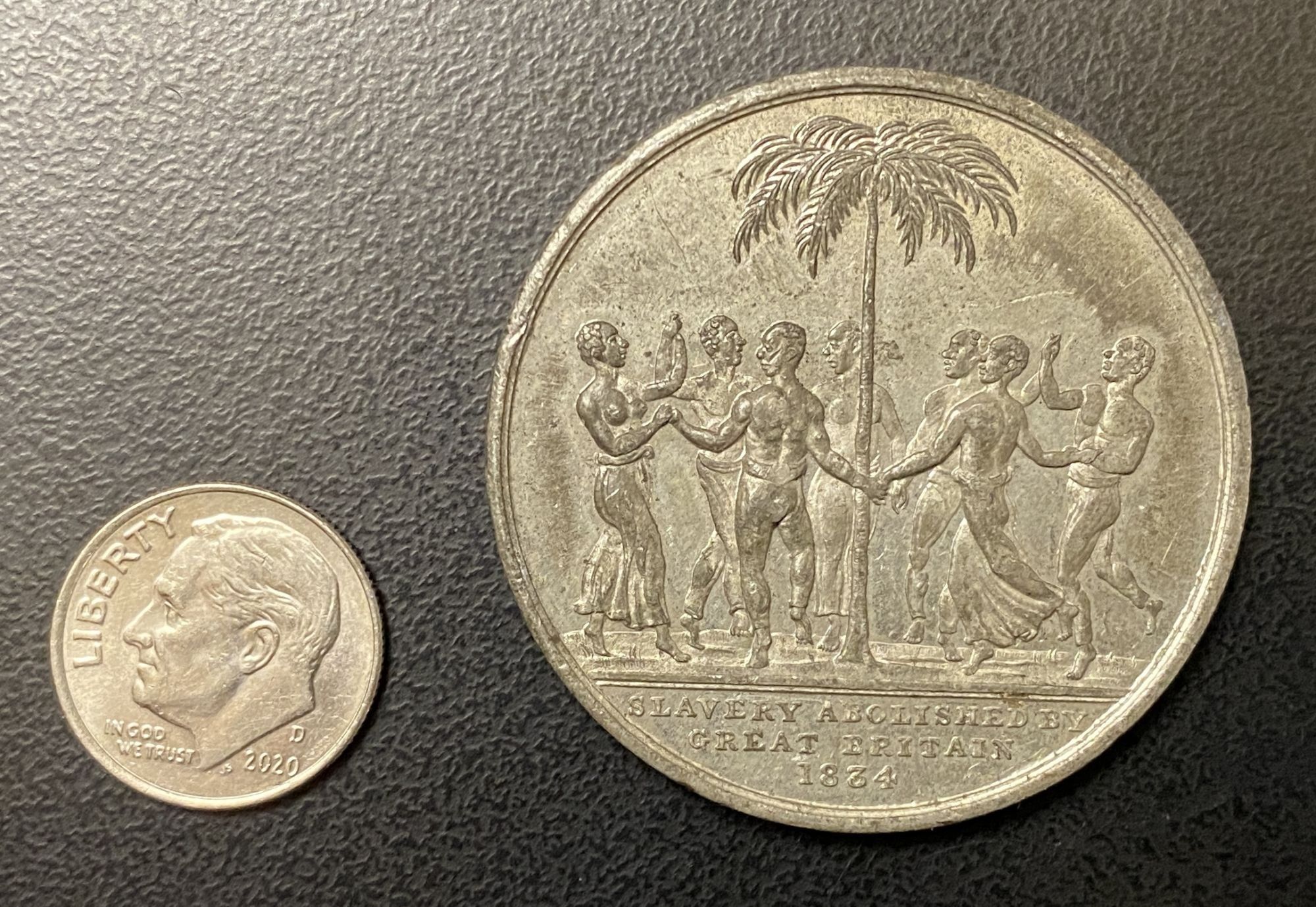
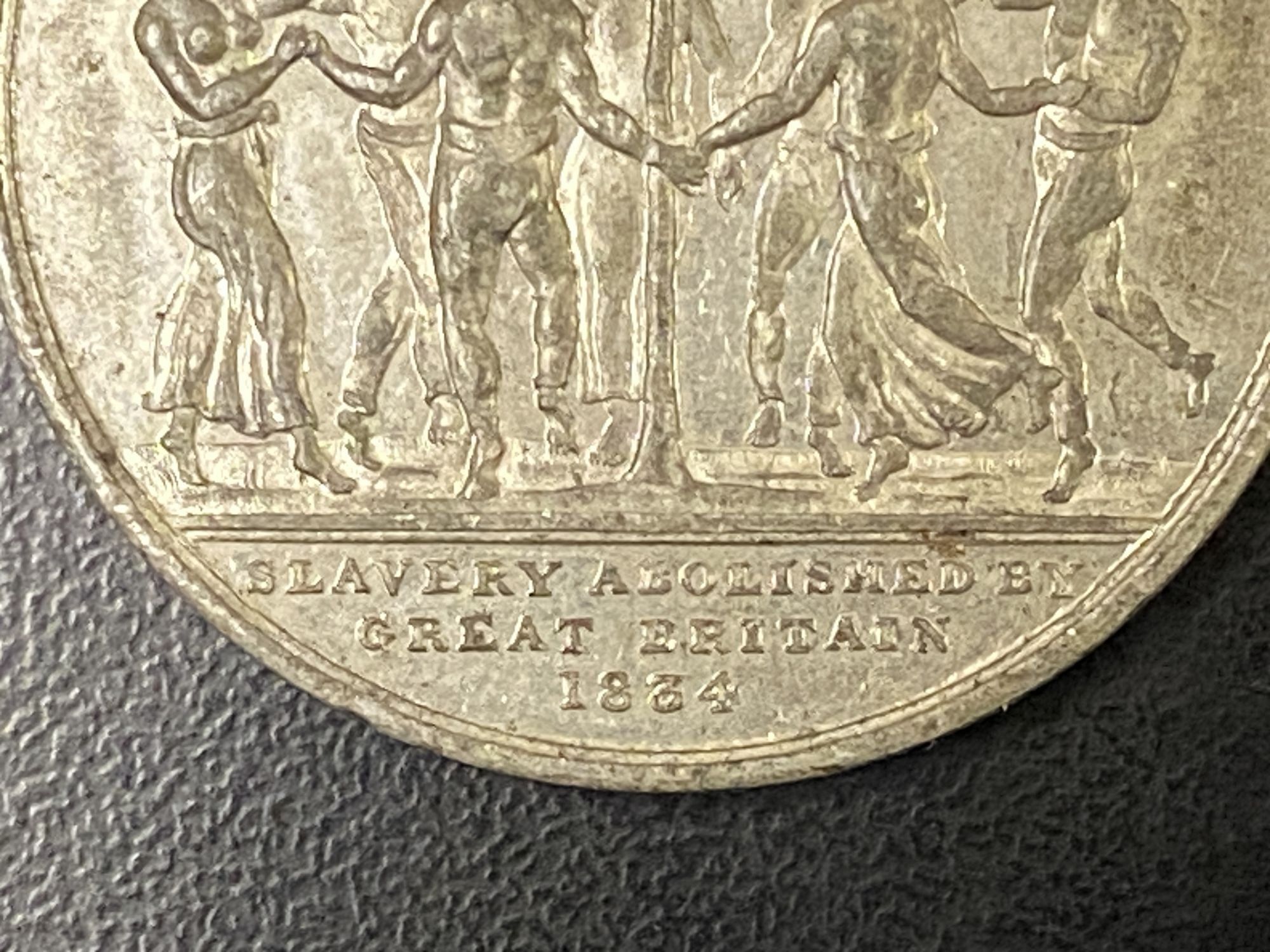
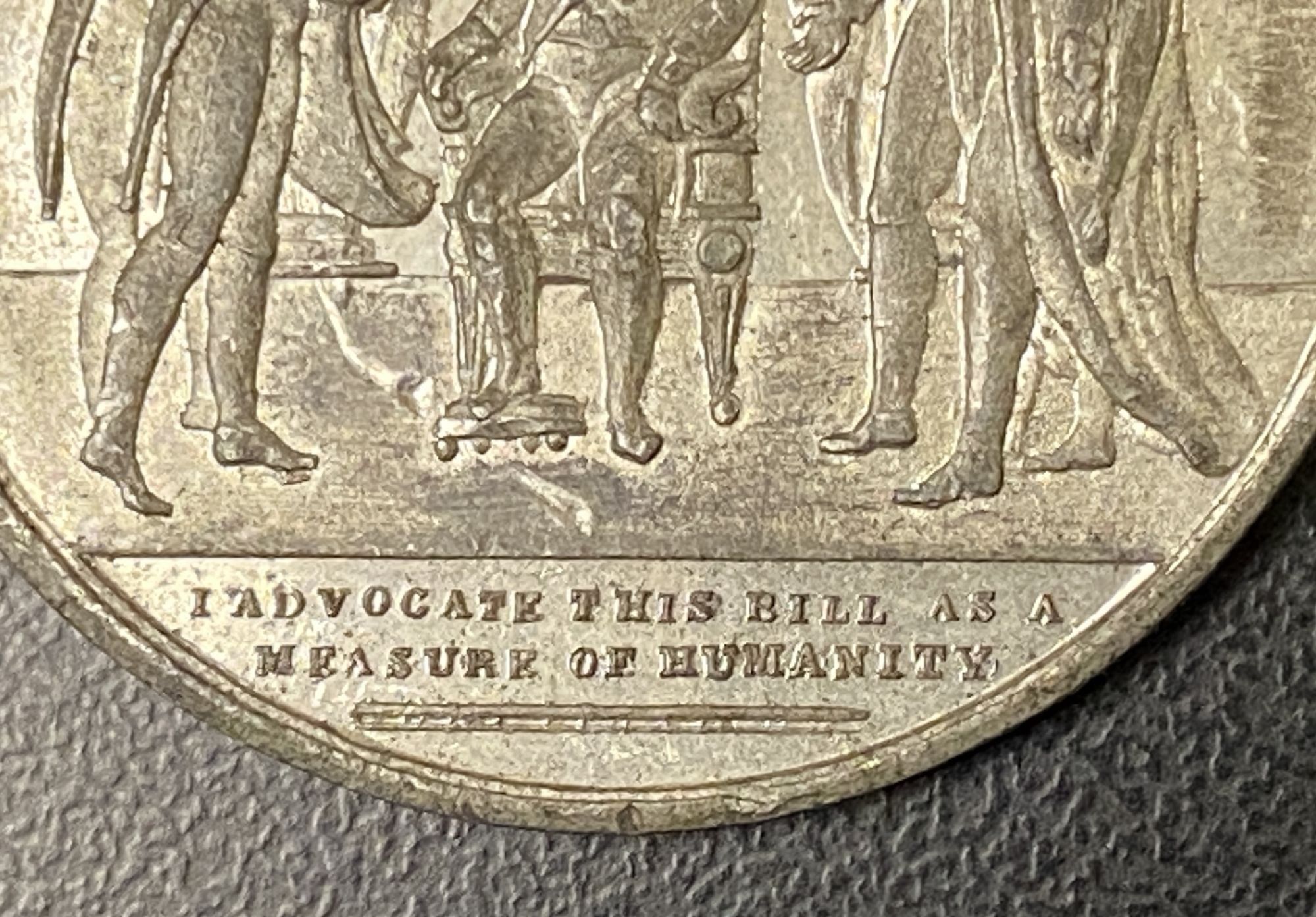
[ABOLITIONIST MEDAL 1834]. "I Advocate this Bill as a Measure of Humanity" / "Slavery Abolished by Great Britain 1834
![[ABOLITIONIST MEDAL 1834]. "I Advocate this Bill a](https://d3525k1ryd2155.cloudfront.net/h/878/498/1664498878.0.x.0.jpg)
- London , 1834
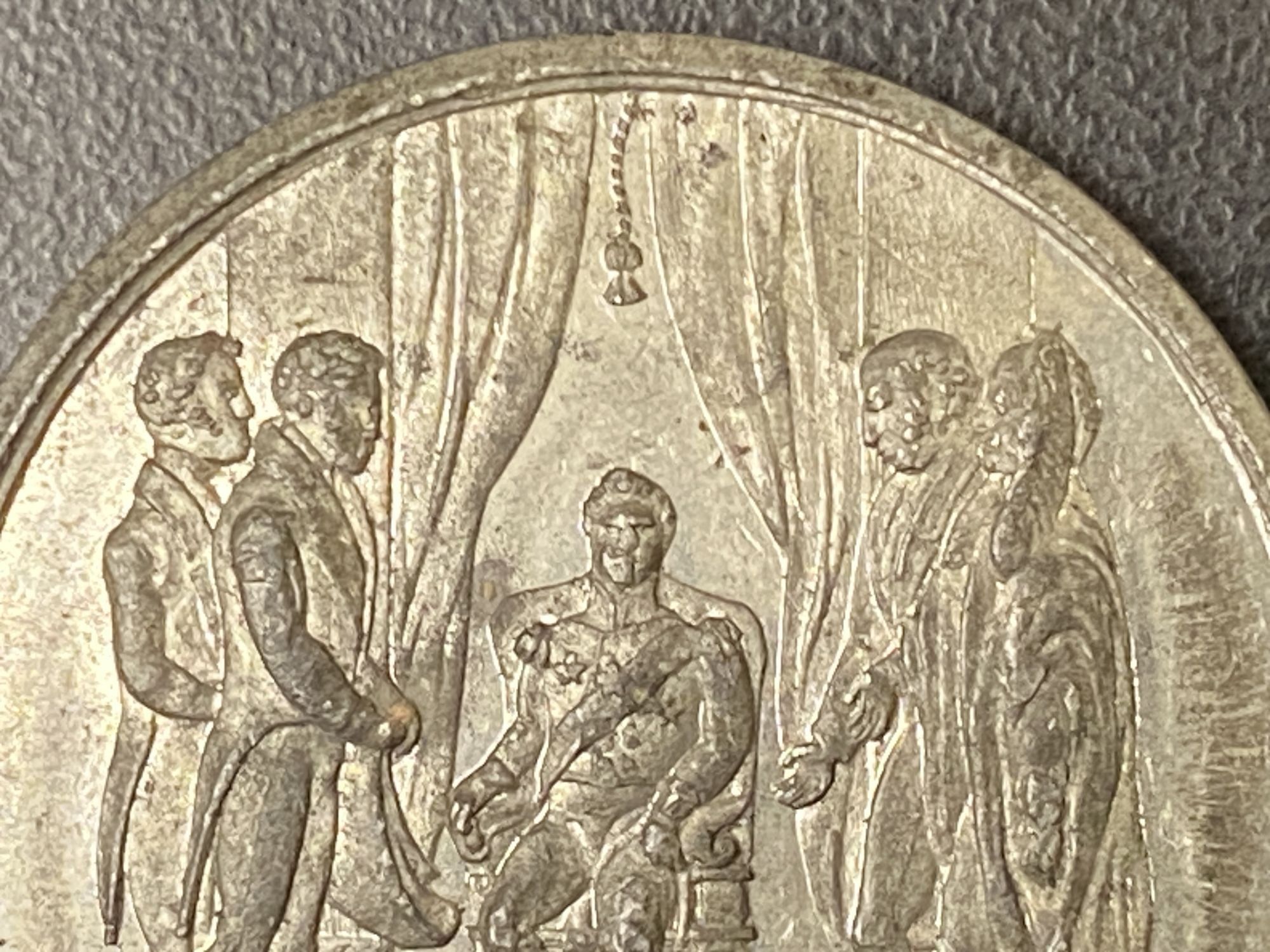
London, 1834. Very good. Commemorative medal, silvered white metal (41 mm diameter). Not formally "graded" but in very good condition and NOT a reproduction! SERVITUS NUMISMATICA! A VERY LITTLE KNOWN ABOLITIONIST COMMEMORATIVE MEDAL, CELEBRATING THE EXTRAORDINARY MOMENT IN WHICH COLONIAL SLAVERY WAS ABOLISHED BY THE BRITISH PARLIAMENT AND ROYAL ASCENT IN 1833, AND SUBSEQUENTLY BECOMING LAW IN 1834.
Commemorative medals such as ours would have been distributed at Abolitionist meetings, or sold with the proceeds going to fund the Abolitionist campaign. We have found that the tactile experience of handling an actual Abolitionist medal, as here, is immensely gratifying for students and "civilians" alike; certainly its unbreakability lends itself well in classroom settings and coursework involving the study of material culture.
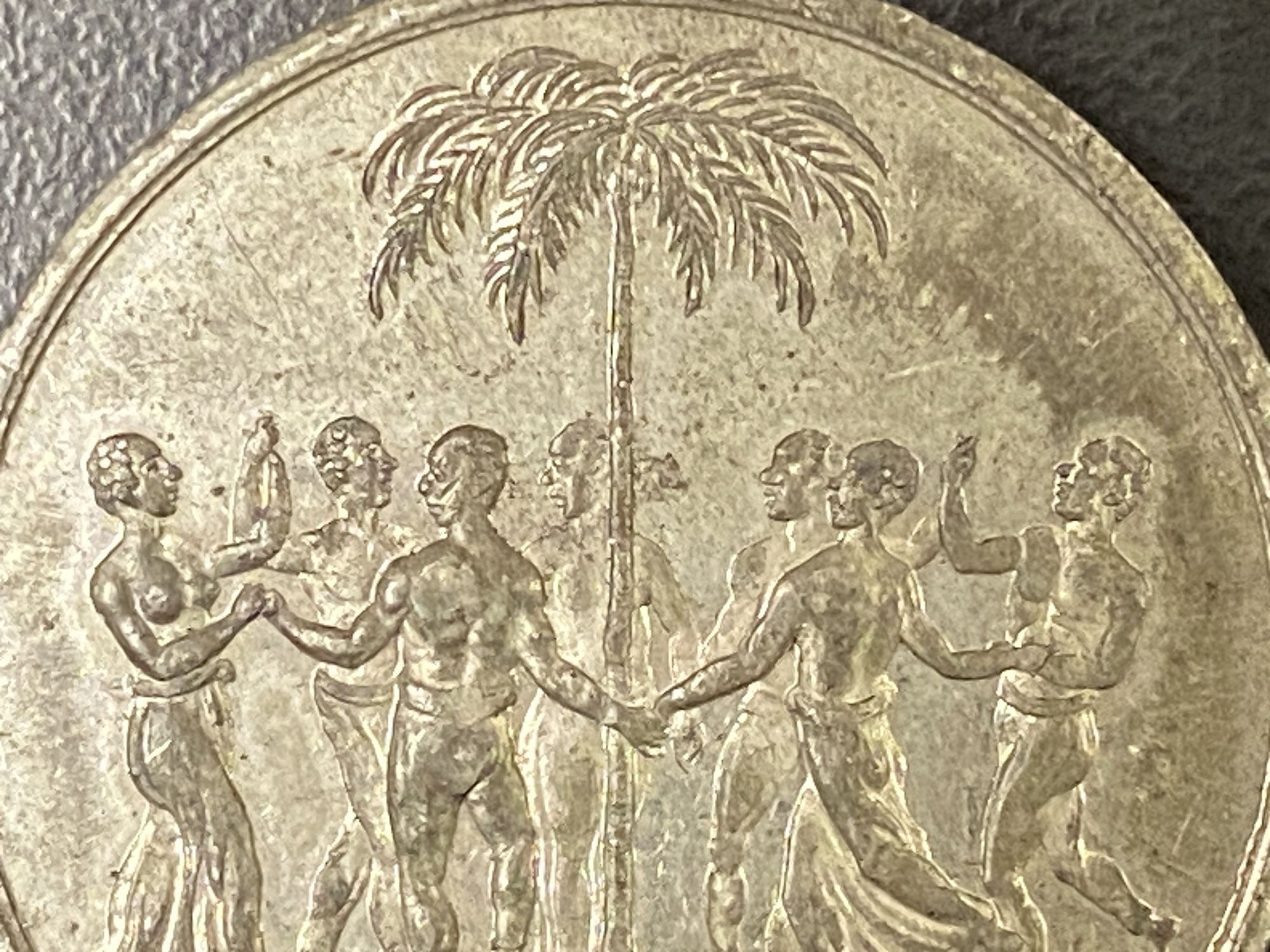
It is believed that our medal was produced in London by the medallist Thomas Halliday (1771-1844) who is considered one of the foremost medallic engravers of the first half of the nineteenth century. It was made in silvered white metal and commemorates the abolition of colonial slavery throughout the British colonies in 1834. The obverse depicts a seated King William IV (1765-1837) attended by four standing statesmen (or advisors). The reverse of the medal depicts a group of freed male and female slaves dancing in a circle around a palm tree.
In 1833 the British Parliament passed the Slavery Abolitionist Act (3 & 4 Will. 4. c. 73), outlawing the owning, buying, and selling of humans as property throughout its colonies around the world. While this did not free enslaved people in the United States (which of course was no longer a British colony), it was a source of inspiration and hope for abolitionists.
Our medal commemorates the exact day that the Slavery Abolitionist Act received William IV's royal ascent, on April 28, 1833, which made the Act become law, and which came into effect the following year on August 1, 1834. Brown (in his unsurpassable "British Historical Medals") states that the design for the obverse of this medal is taken from the medal struck for the Reform Bill of 1832, the legend in the exergue being altered to suit the occasion.
Two versions of the present medal exist: one in copper (examples of which are held by the Royal Museums Greenwich and the Schomburg Center NYPL); and one in silvered white metal (British Museum), as here.
Literature: Naomi Gardner, Embroidering Emancipation: Female Abolitionists and Material Culture in Britain and the USA, c.1780-1865 (PhD thesis, University of London, 2016, p. 93). Benjamin Weiss, Medallic History of Slavery: Racial Oppression as Chronicled by Historical and Commemorative Medals, 2020.
References: Eimer 1276. BHM 1673. Brown, Catalogue of British Historical Medals 1760-1960, vol. I (Accession of George III to the Death of William IV), pp. 383 (no. 1596), 398 (1665) and 400 (1673).
Commemorative medals such as ours would have been distributed at Abolitionist meetings, or sold with the proceeds going to fund the Abolitionist campaign. We have found that the tactile experience of handling an actual Abolitionist medal, as here, is immensely gratifying for students and "civilians" alike; certainly its unbreakability lends itself well in classroom settings and coursework involving the study of material culture.
It is believed that our medal was produced in London by the medallist Thomas Halliday (1771-1844) who is considered one of the foremost medallic engravers of the first half of the nineteenth century. It was made in silvered white metal and commemorates the abolition of colonial slavery throughout the British colonies in 1834. The obverse depicts a seated King William IV (1765-1837) attended by four standing statesmen (or advisors). The reverse of the medal depicts a group of freed male and female slaves dancing in a circle around a palm tree.
In 1833 the British Parliament passed the Slavery Abolitionist Act (3 & 4 Will. 4. c. 73), outlawing the owning, buying, and selling of humans as property throughout its colonies around the world. While this did not free enslaved people in the United States (which of course was no longer a British colony), it was a source of inspiration and hope for abolitionists.
Our medal commemorates the exact day that the Slavery Abolitionist Act received William IV's royal ascent, on April 28, 1833, which made the Act become law, and which came into effect the following year on August 1, 1834. Brown (in his unsurpassable "British Historical Medals") states that the design for the obverse of this medal is taken from the medal struck for the Reform Bill of 1832, the legend in the exergue being altered to suit the occasion.
Two versions of the present medal exist: one in copper (examples of which are held by the Royal Museums Greenwich and the Schomburg Center NYPL); and one in silvered white metal (British Museum), as here.
Literature: Naomi Gardner, Embroidering Emancipation: Female Abolitionists and Material Culture in Britain and the USA, c.1780-1865 (PhD thesis, University of London, 2016, p. 93). Benjamin Weiss, Medallic History of Slavery: Racial Oppression as Chronicled by Historical and Commemorative Medals, 2020.
References: Eimer 1276. BHM 1673. Brown, Catalogue of British Historical Medals 1760-1960, vol. I (Accession of George III to the Death of William IV), pp. 383 (no. 1596), 398 (1665) and 400 (1673).
Details
Title
[ABOLITIONIST MEDAL 1834]. "I Advocate this Bill as a Measure of Humanity" / "Slavery Abolished by Great Britain 1834
Author
Halliday, Thomas
Condition
Very Good
Publisher
London
Date
1834