

THESAURUS ANATOMICUS -- ANATOMISCH CABINET
- Amsterdam: Joannes Wolters, then Jansson-Waesberg, 1701-14; 1715-16
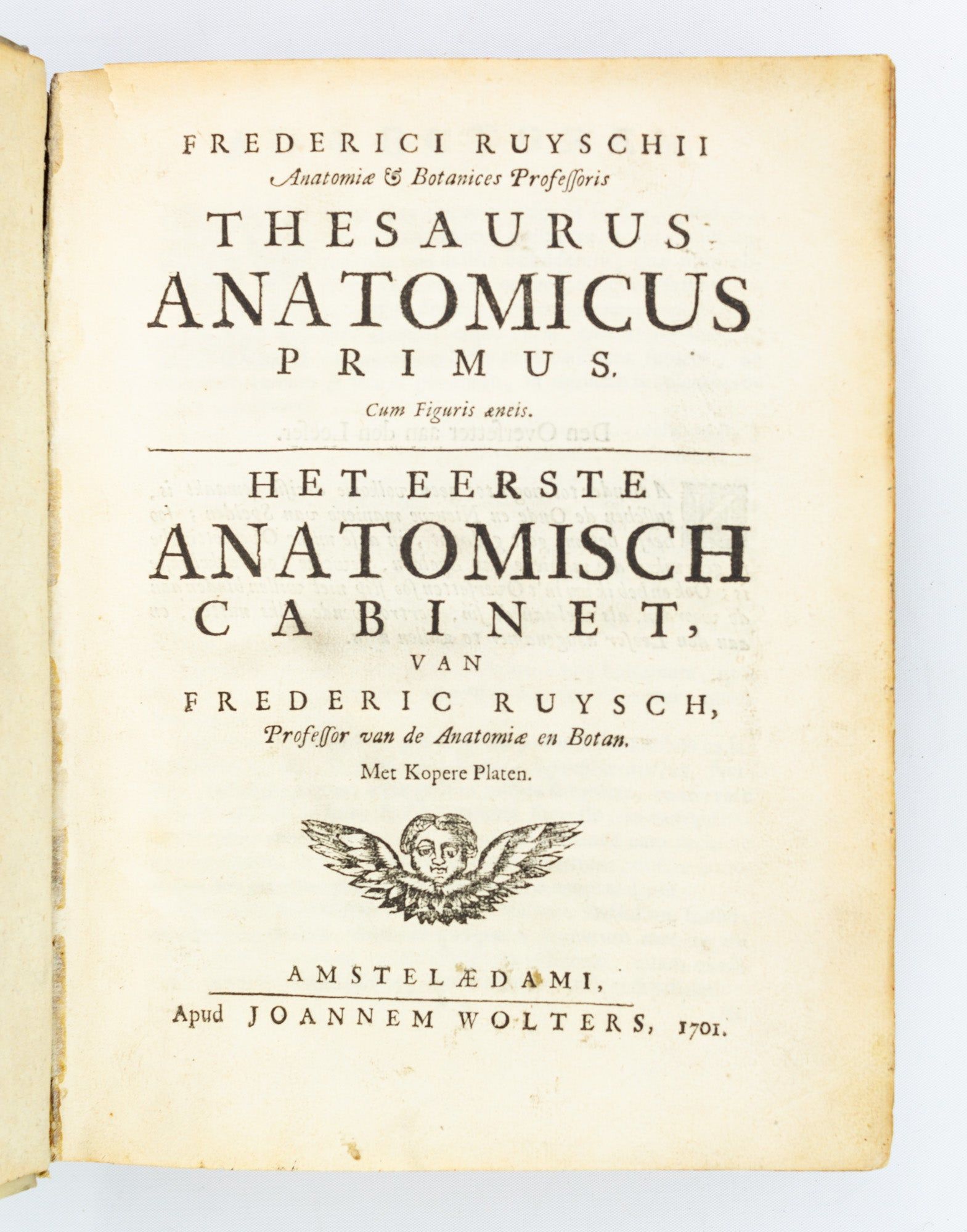
Amsterdam: Joannes Wolters, then Jansson-Waesberg, 1701-14; 1715-16. FIRST EDITIONS. 224 x 168 mm. (8 3/4 x 6 1/2"). 4 p.l., 62 pp., [1] leaf (errata); 2 p.l., 98 pp.; 2 p.l., 70 pp.; 1 p.l., 55 pp.; 1 p.l., 54 pp., 2 p.l., 30 pp., [1] leaf, 92 pp., [2] leaves, 44 pp., [4] leaves, 68 pp., [8] leaves, 72 pp., [1] leaf (errata), [12] leaves, 78 pp. 10 parts in one volume..
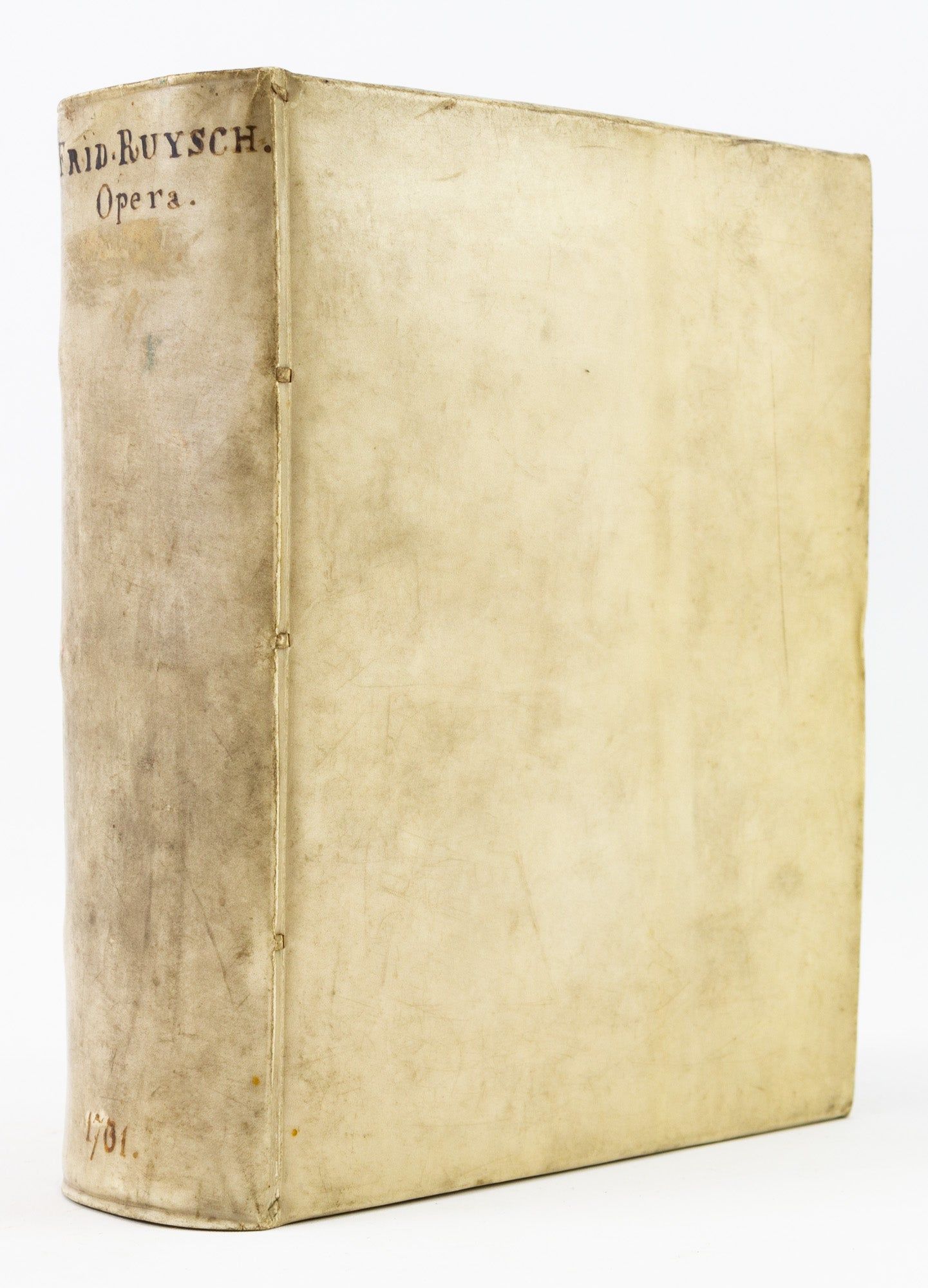
Contemporary stiff vellum, smooth spine with ink titling, yapp edges. WITH 42 ENGRAVED PLATES, as called for by Norman, six of these folding. Text in Latin and Dutch. Blake 395; Garrison-Morton 389; Heirs of Hippocrates 627; Jeremy Norman's HistoryofMedicine.com 623; Norman 1875. Vellum lightly soiled, front pastedown slightly defective, but the original unsophisticated binding in perfect order. Final plate with small hole due to adhesion to facing page, (minor damage done to image), a few other trivial imperfections (a couple of negligible marginal tears, a faint [ink?] stain across the top inch of text, a tiny burn hole), but AN UNUSUALLY BRIGHT, CLEAN COPY INTERNALLY, with all the important plates in exceptionally fine condition.
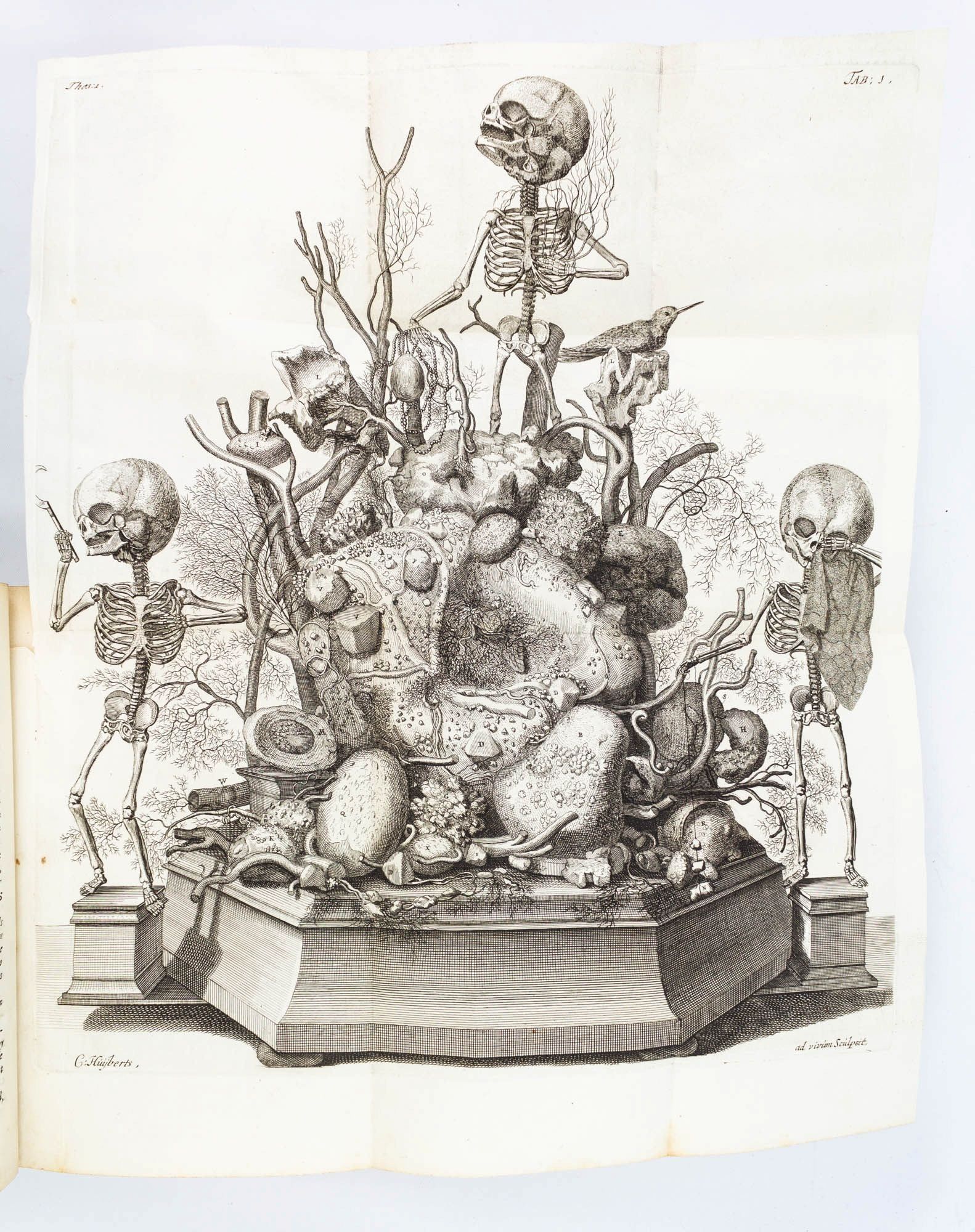
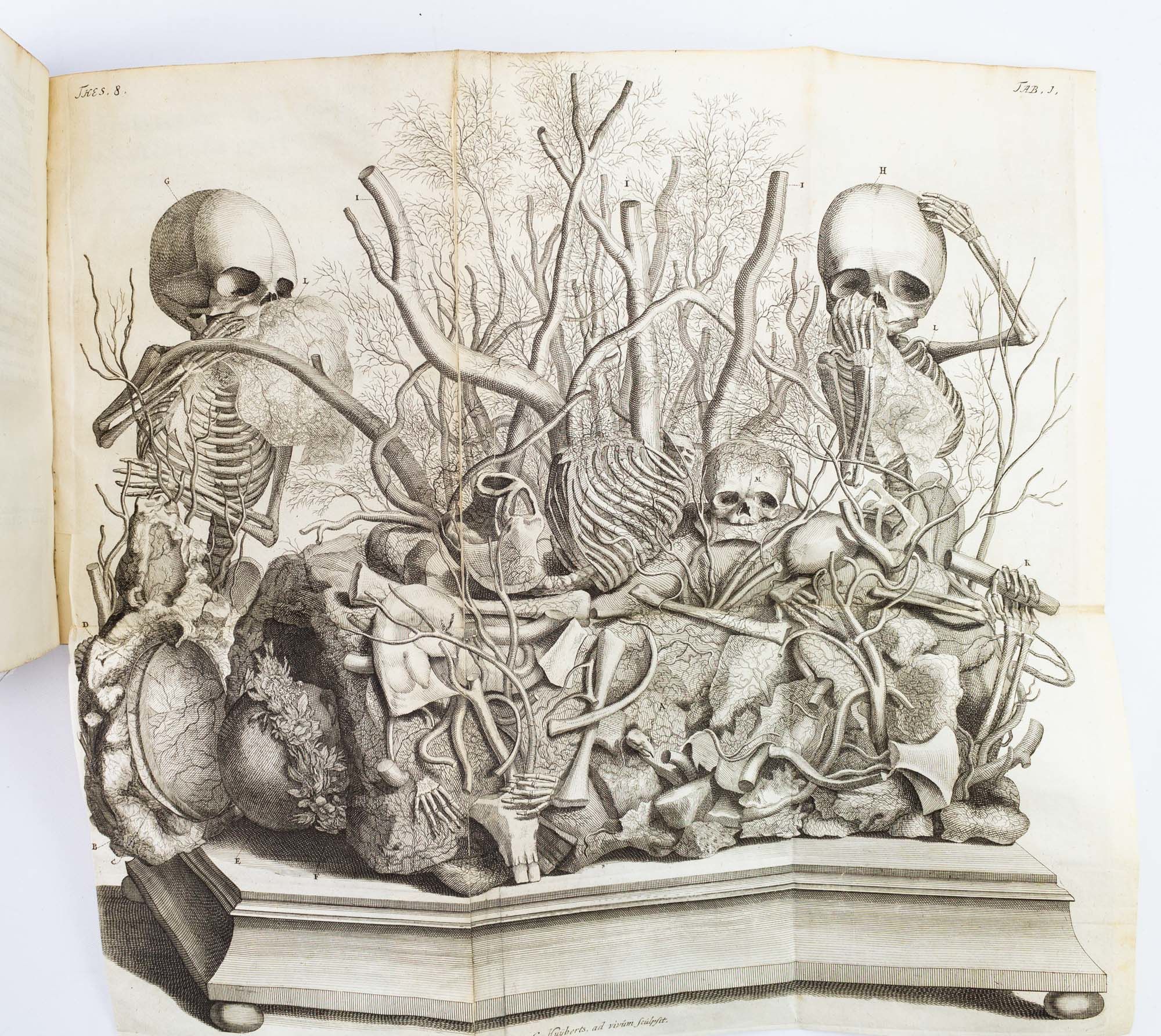
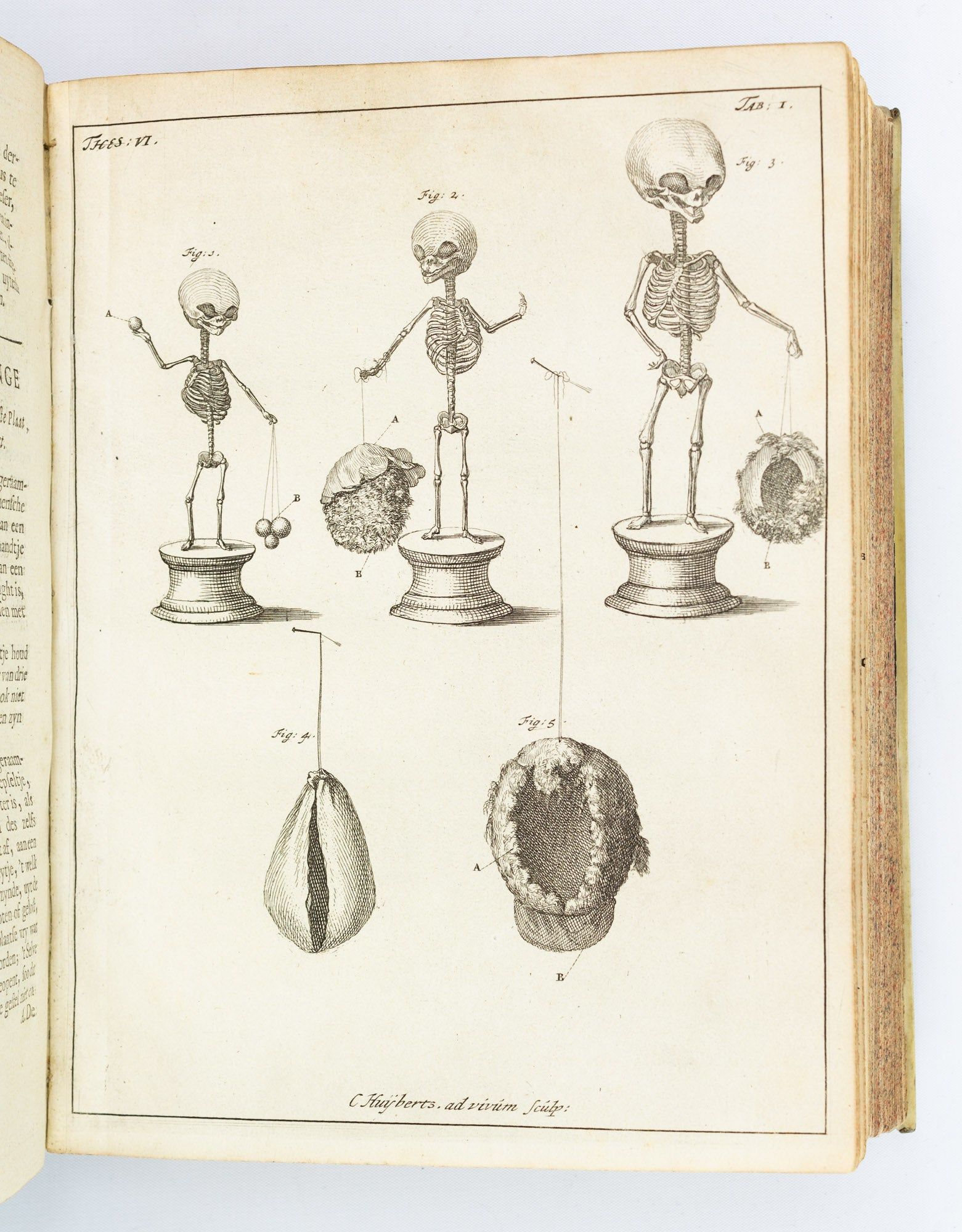
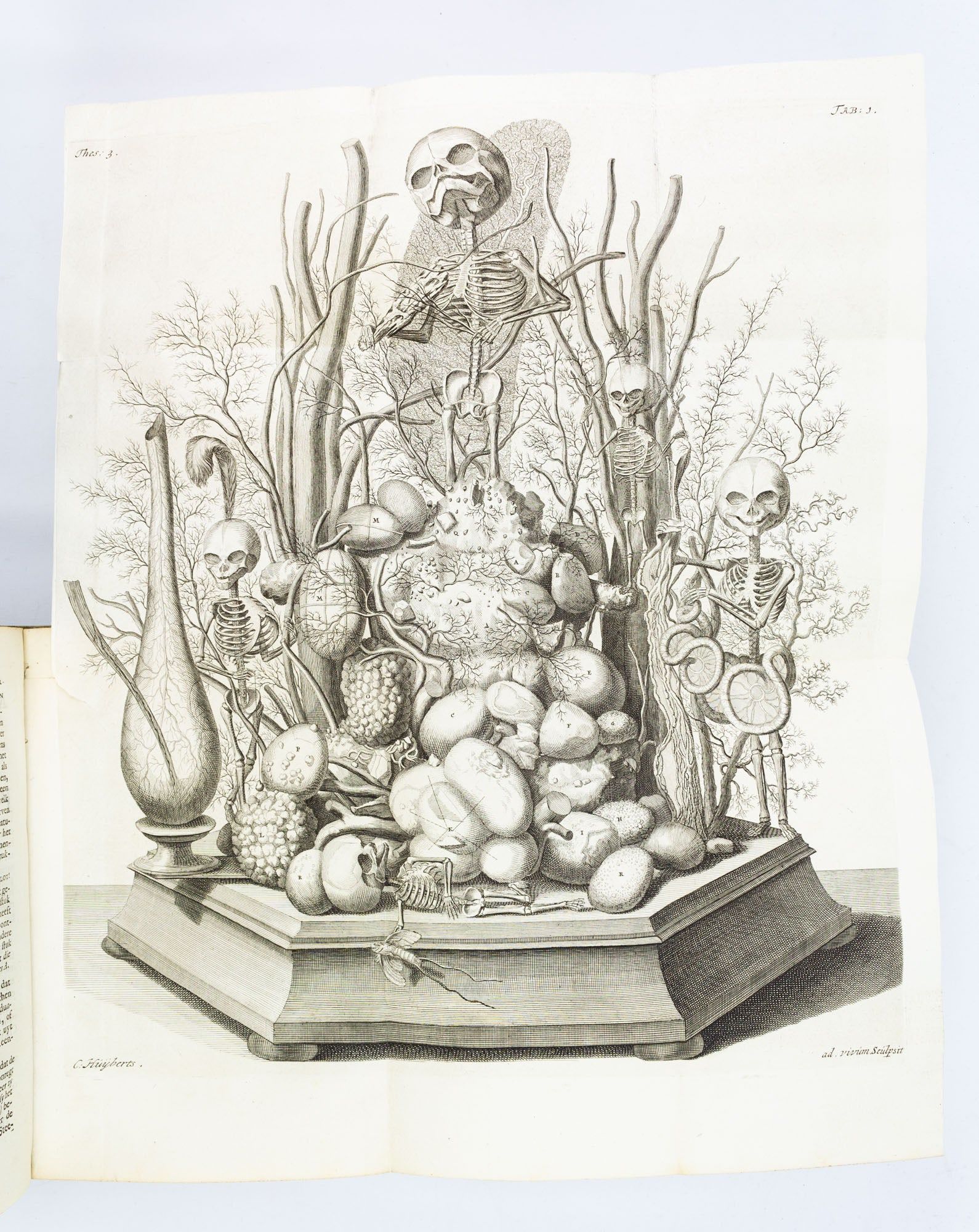
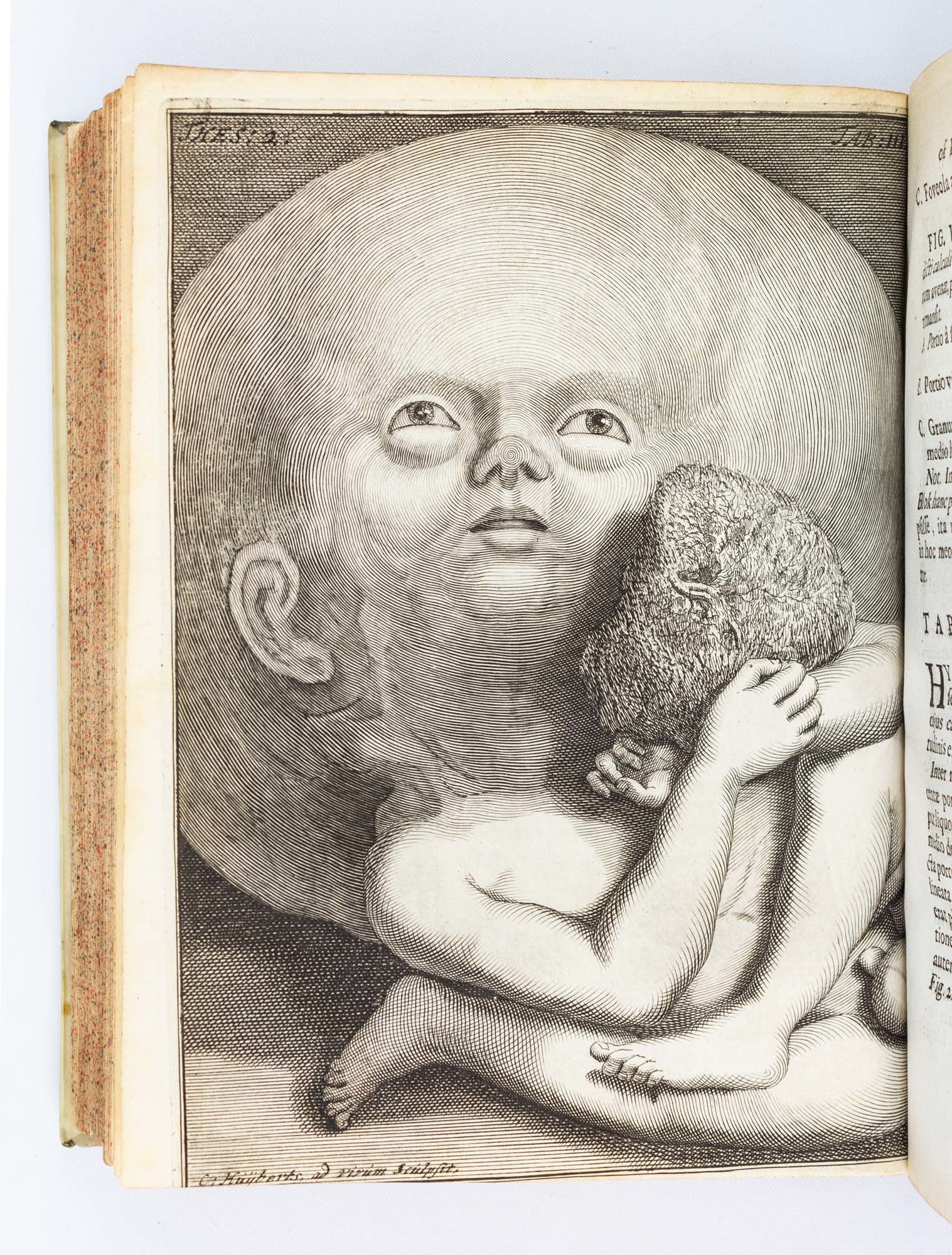
Scarce when seen bound from its original 10 parts, as here, this work describes the memorable "Anatomical Treasure" of Dutch physician and anatomist Frederick Ruysch, being illustrated by surrealistic, charmingly macabre engravings depicting "fantastic, dream-like concoctions constructed of human anatomical parts." (History of Medicine) Described by Norman as "probably the most original artist in the history of anatomical preparations," Ruysch (1638-1731) "enjoyed making up elaborate three-dimensional emblems of mortality from his specimens," which included fetal skeletons and preserved organs. Heirs to Hippocrates says that "the engraved illustrations deserve special mention for their whimsical, almost surrealistic, quality: quaintly posed skeletons surrounded by stuffed monsters, strange reptiles, dried plants, and sea creatures." According to Norman, "Ruysch's methods allowed him to prepare organs such as the liver and kidneys and keep entire corpses for years. He used a mixture of talc, white wax, and cinnabar for injecting vessels and an embalming fluid of alcohol made from wine or corn with black pepper added. Using his injection methods, Ruysch was the first to demonstrate the occurrence of blood vessels in almost all tissues of the human body, thereby destroying the Galenic belief that certain areas of the body had no vascular supply. He was also the first to show that blood vessels display diverse organ-specific patterns." Ruysch's dioramas were displayed in his home museum in Amsterdam, which was open to the public; visitors included Tsar Peter the Great of Russia, who purchased the collection in 1717 for the foundation of Russia's first public museum, the St. Petersburg Kunstkammer. Unfortunately, the Russian climate was not kind to the fragile constructions, and all deteriorated over time; the dramatic plates here are the best record we have of this unique collection..
Contemporary stiff vellum, smooth spine with ink titling, yapp edges. WITH 42 ENGRAVED PLATES, as called for by Norman, six of these folding. Text in Latin and Dutch. Blake 395; Garrison-Morton 389; Heirs of Hippocrates 627; Jeremy Norman's HistoryofMedicine.com 623; Norman 1875. Vellum lightly soiled, front pastedown slightly defective, but the original unsophisticated binding in perfect order. Final plate with small hole due to adhesion to facing page, (minor damage done to image), a few other trivial imperfections (a couple of negligible marginal tears, a faint [ink?] stain across the top inch of text, a tiny burn hole), but AN UNUSUALLY BRIGHT, CLEAN COPY INTERNALLY, with all the important plates in exceptionally fine condition.
Scarce when seen bound from its original 10 parts, as here, this work describes the memorable "Anatomical Treasure" of Dutch physician and anatomist Frederick Ruysch, being illustrated by surrealistic, charmingly macabre engravings depicting "fantastic, dream-like concoctions constructed of human anatomical parts." (History of Medicine) Described by Norman as "probably the most original artist in the history of anatomical preparations," Ruysch (1638-1731) "enjoyed making up elaborate three-dimensional emblems of mortality from his specimens," which included fetal skeletons and preserved organs. Heirs to Hippocrates says that "the engraved illustrations deserve special mention for their whimsical, almost surrealistic, quality: quaintly posed skeletons surrounded by stuffed monsters, strange reptiles, dried plants, and sea creatures." According to Norman, "Ruysch's methods allowed him to prepare organs such as the liver and kidneys and keep entire corpses for years. He used a mixture of talc, white wax, and cinnabar for injecting vessels and an embalming fluid of alcohol made from wine or corn with black pepper added. Using his injection methods, Ruysch was the first to demonstrate the occurrence of blood vessels in almost all tissues of the human body, thereby destroying the Galenic belief that certain areas of the body had no vascular supply. He was also the first to show that blood vessels display diverse organ-specific patterns." Ruysch's dioramas were displayed in his home museum in Amsterdam, which was open to the public; visitors included Tsar Peter the Great of Russia, who purchased the collection in 1717 for the foundation of Russia's first public museum, the St. Petersburg Kunstkammer. Unfortunately, the Russian climate was not kind to the fragile constructions, and all deteriorated over time; the dramatic plates here are the best record we have of this unique collection..
Details
Title
THESAURUS ANATOMICUS -- ANATOMISCH CABINET
Author
(ANATOMY - 18TH CENTURY, BIZARRE). RUYSCH, FREDERICK
Condition
Unknown
Publisher
Joannes Wolters, then Jansson-Waesberg: Amsterdam
Date
1701-14; 1715-16
Edition
FIRST EDITIONS