

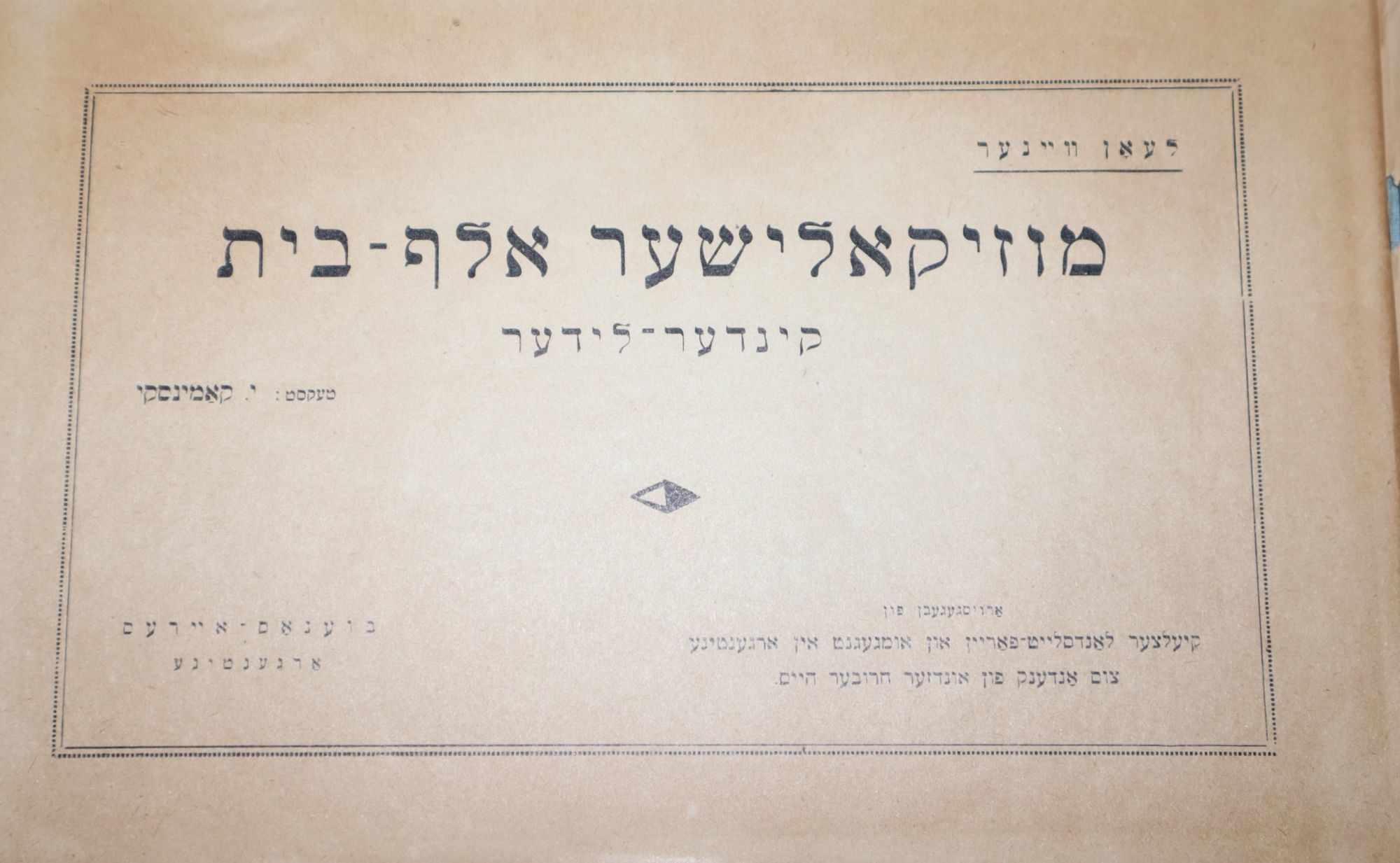
[Yiddish Children's Song Book] Alfabeto Musical [Musical Alphabet] In Yiddish: Muziḳalisher Alef-beys̀: Kinder Lider, or מוזיקאלישער אלף־בית : קינדער לידער
![[Yiddish Children's Song Book] Alfabeto Musical [M](https://d3525k1ryd2155.cloudfront.net/h/114/749/1669749114.0.x.jpg)
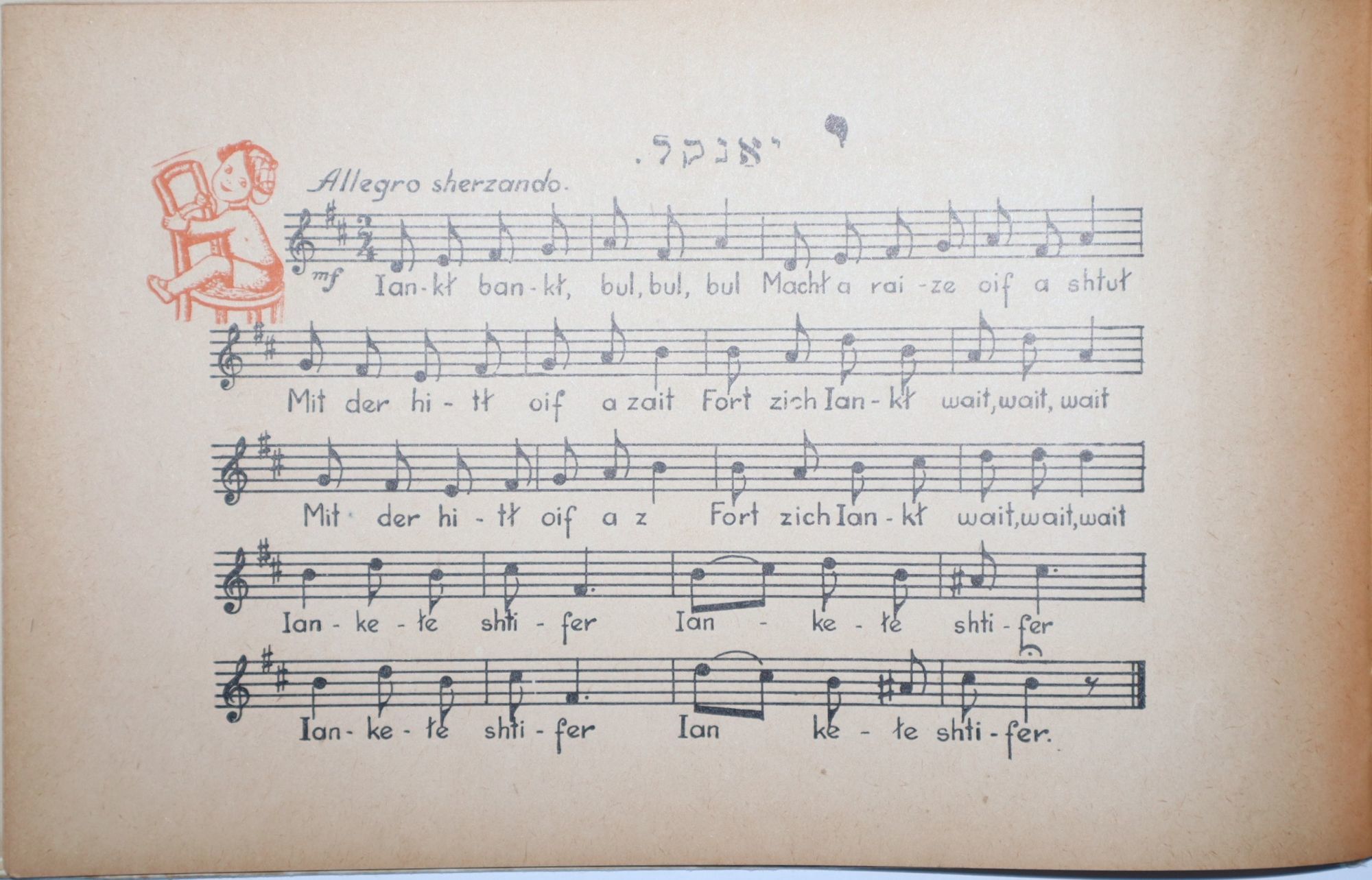
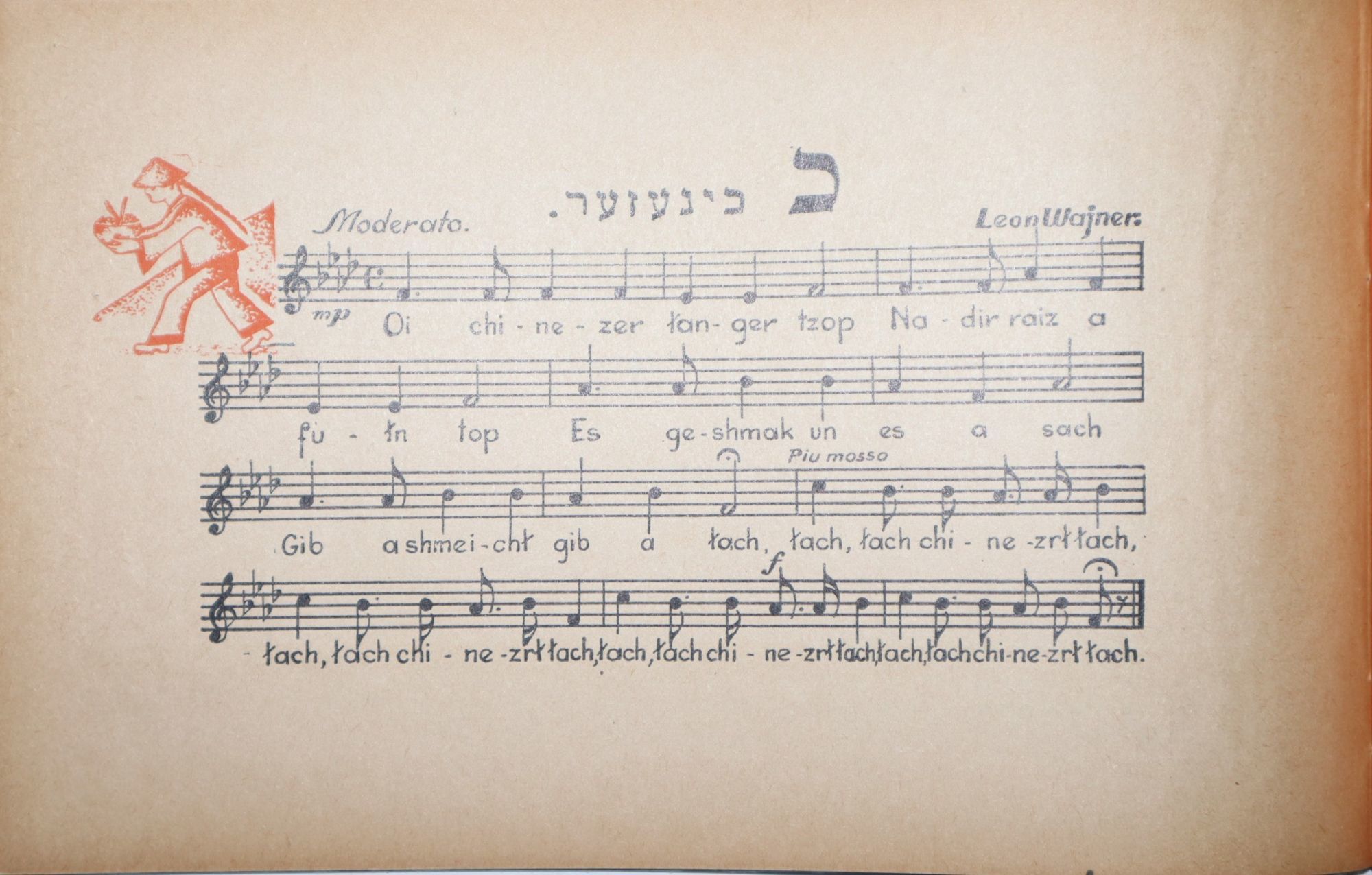
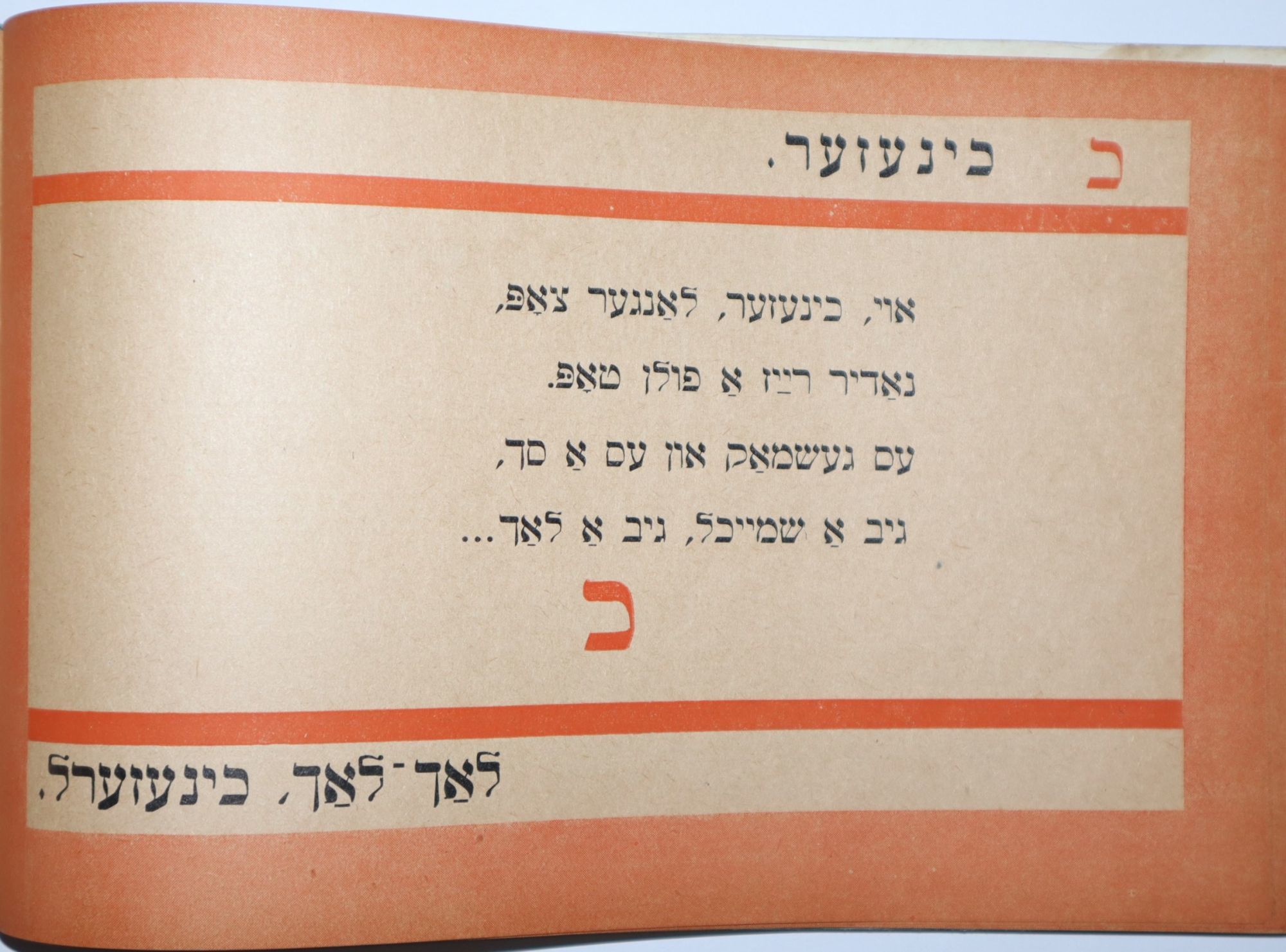
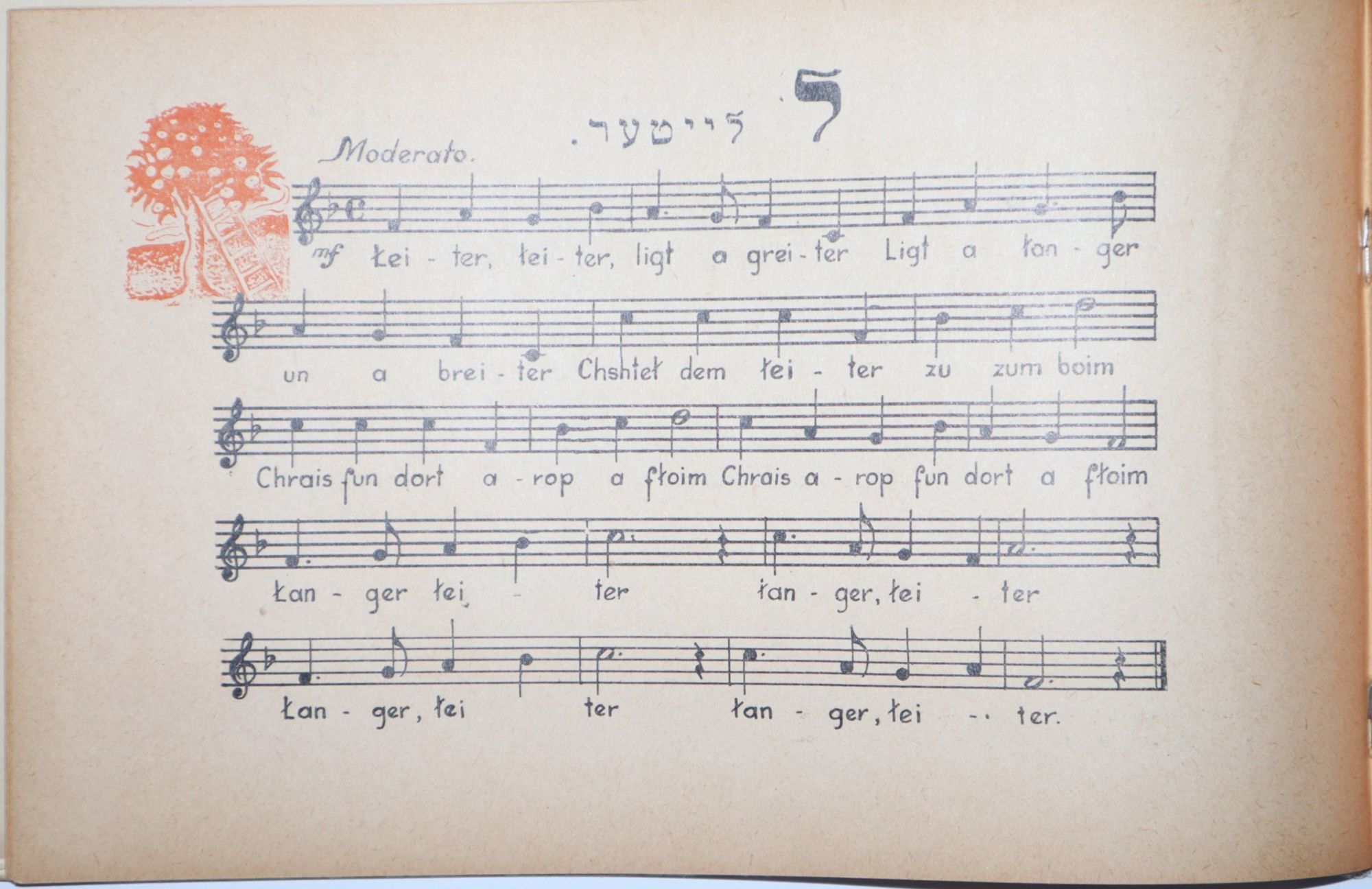
- Hardcover. Cloth Spine. Paper pastedowns on boards
- Buenos Aires: Ḳieltser Landslayt-Farayn. Cultura, 1950
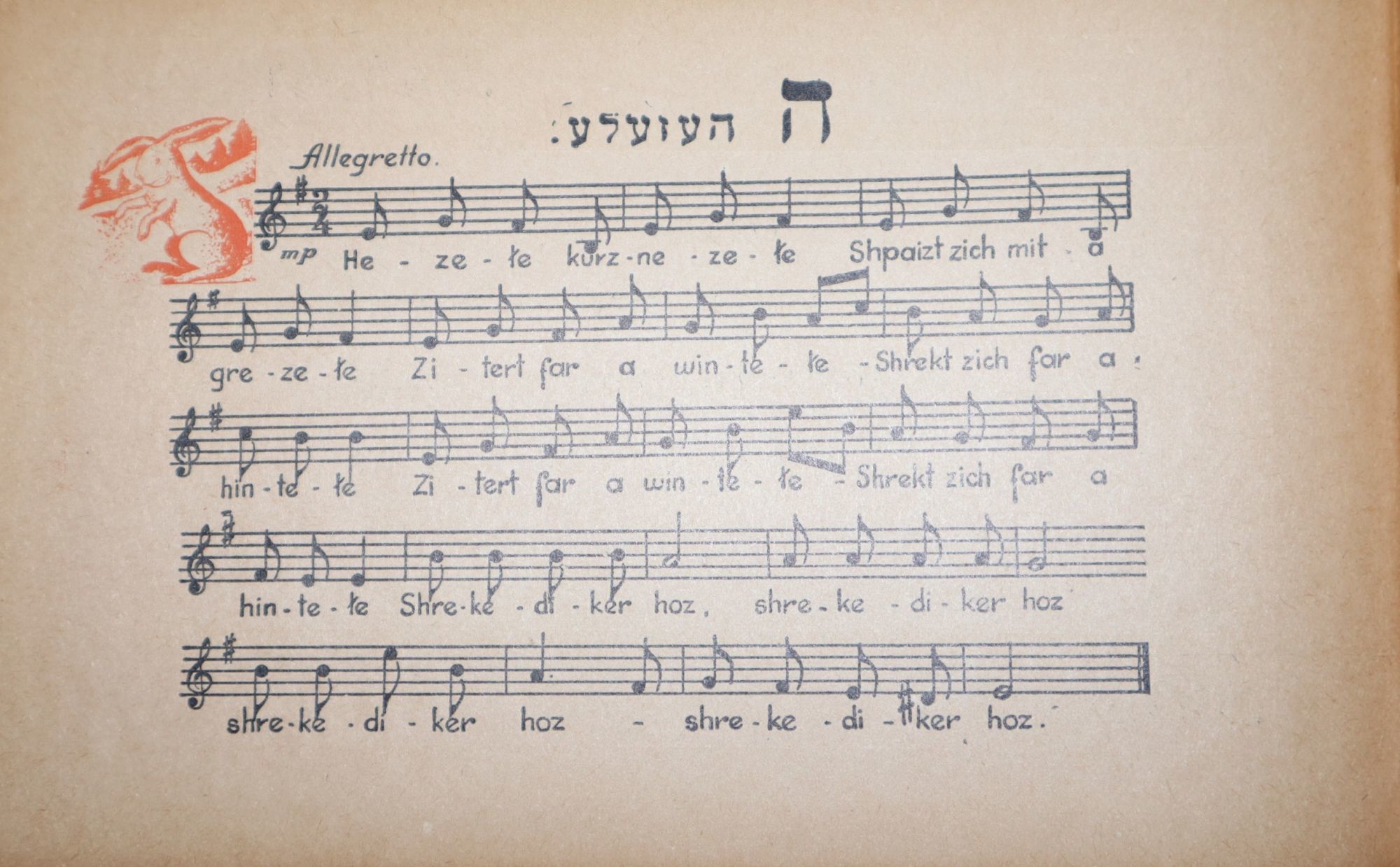
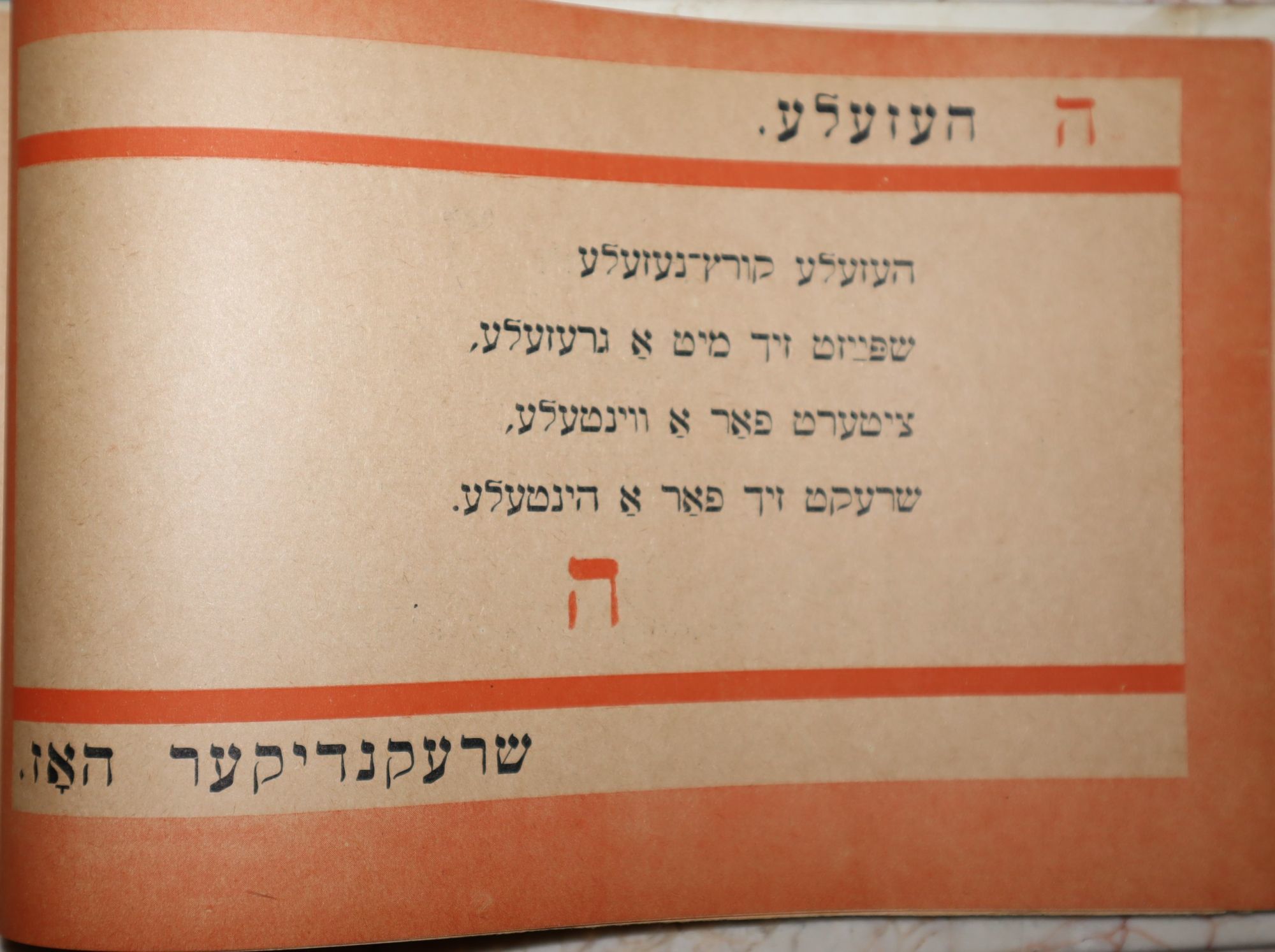
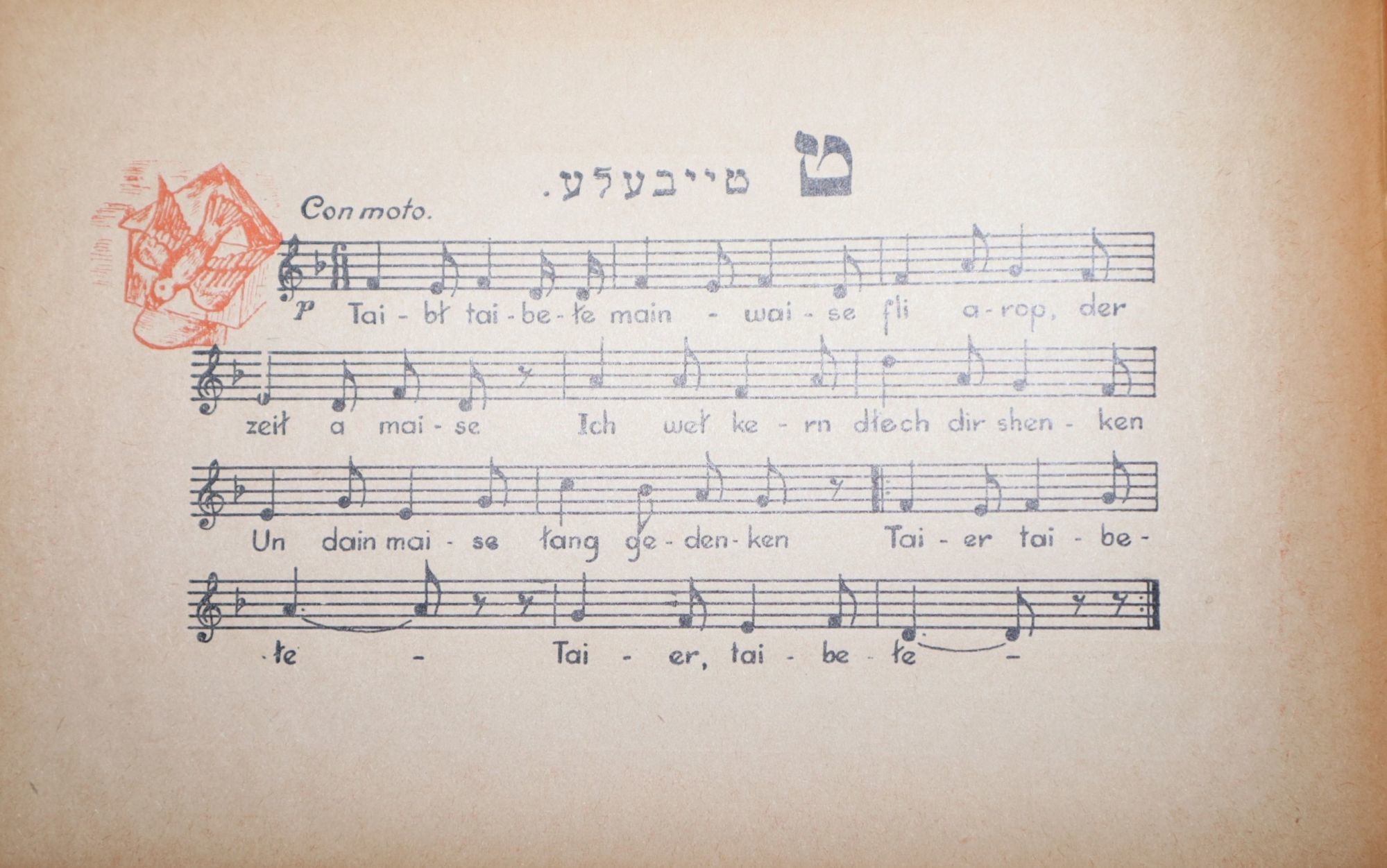
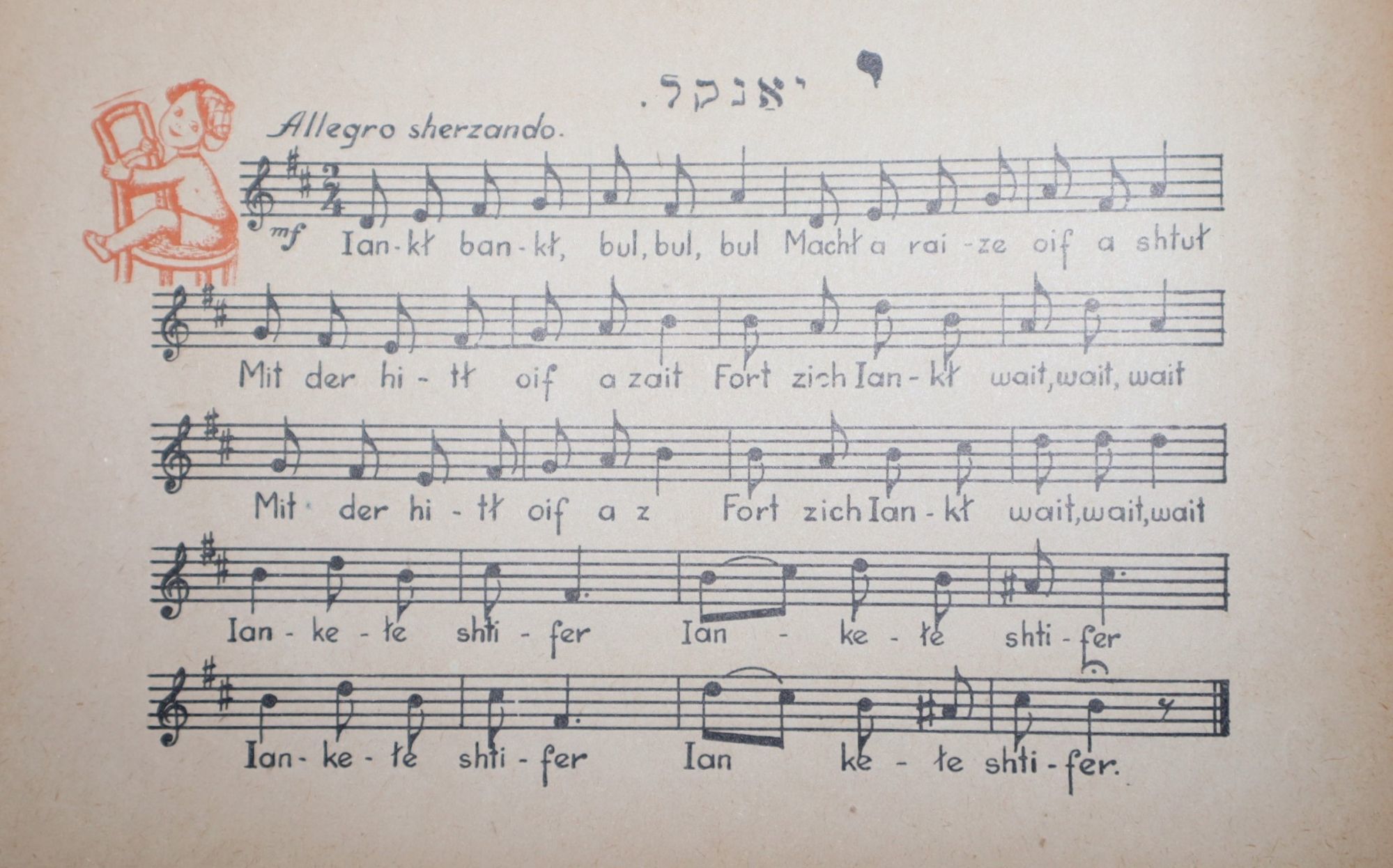
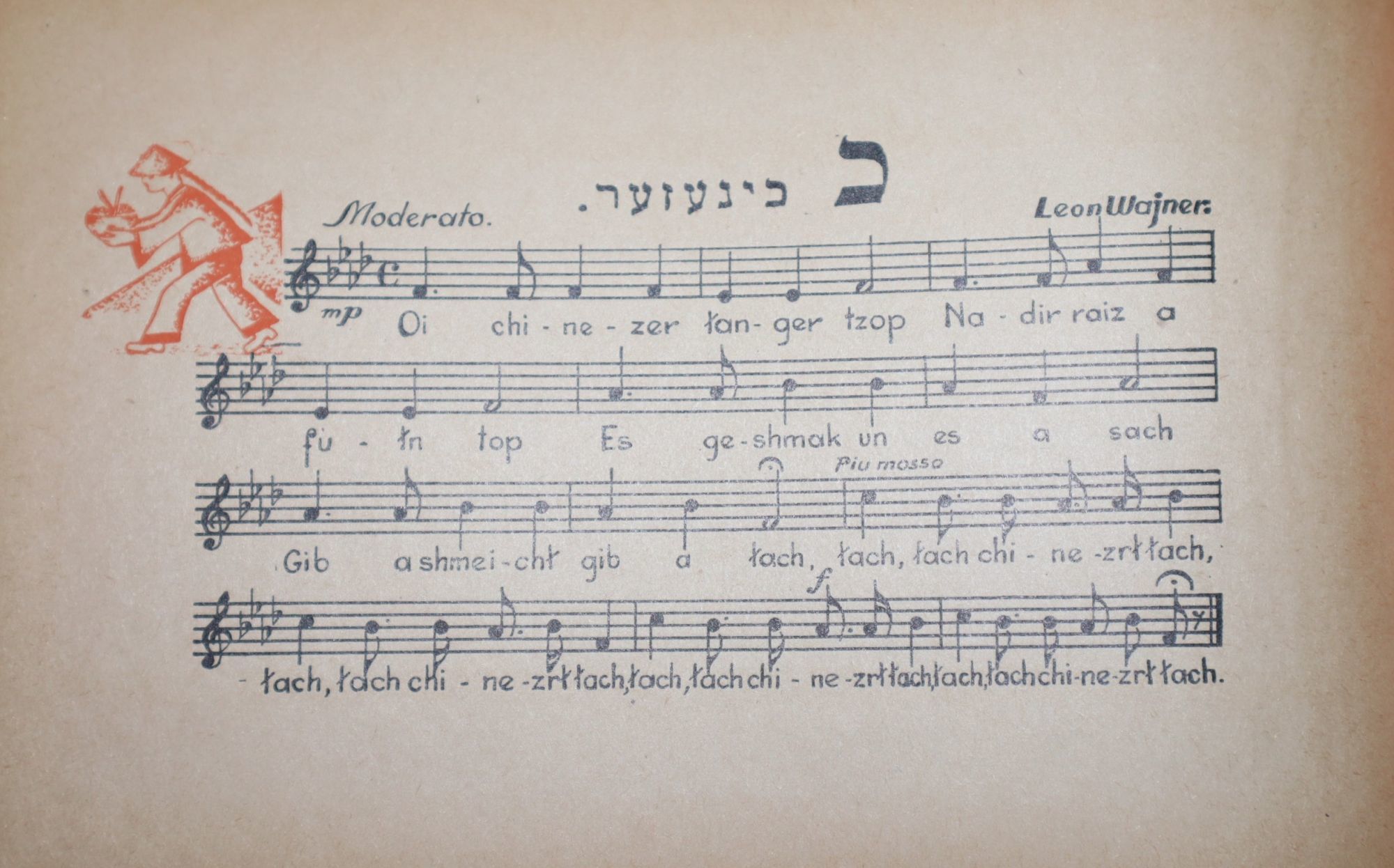
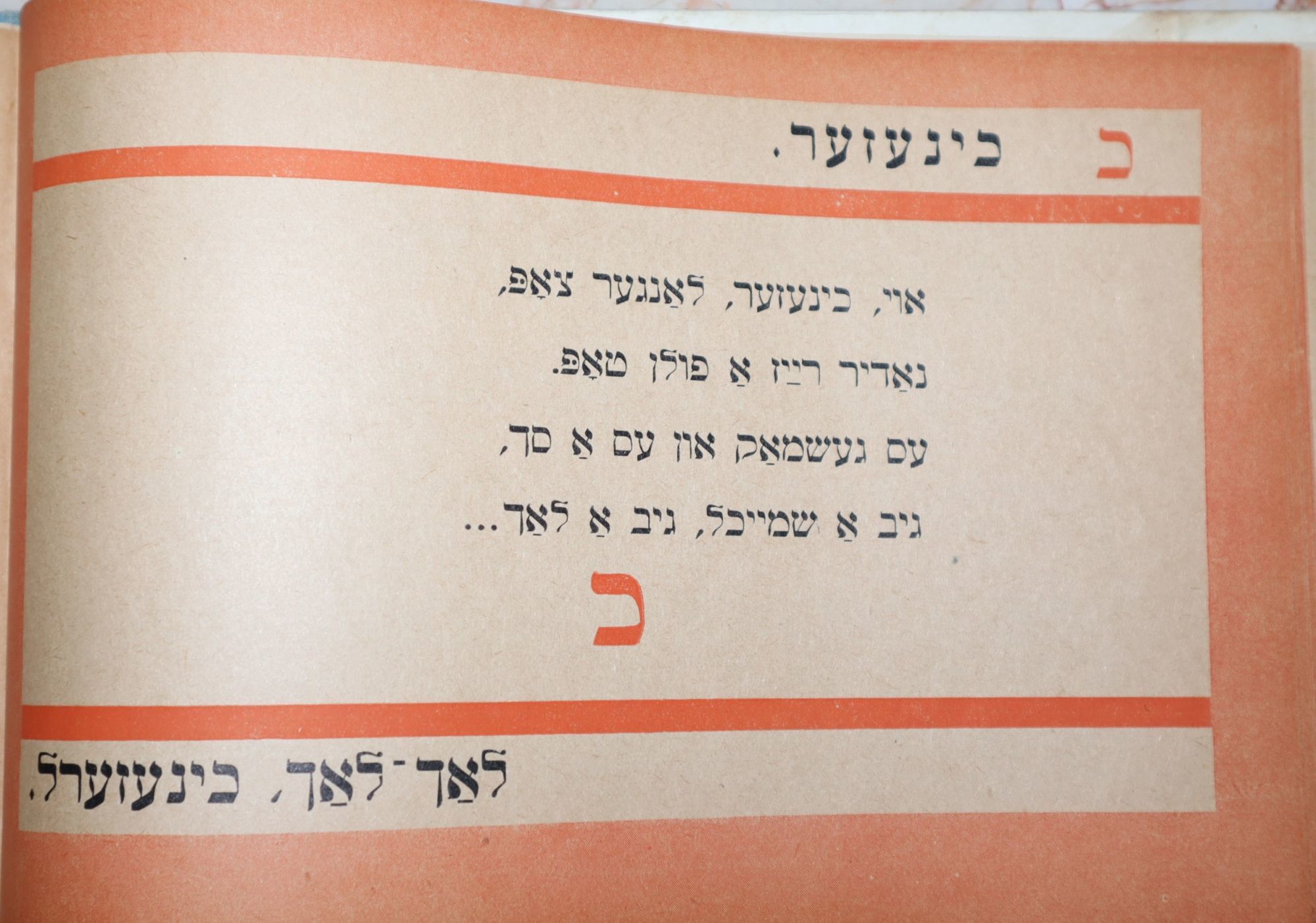
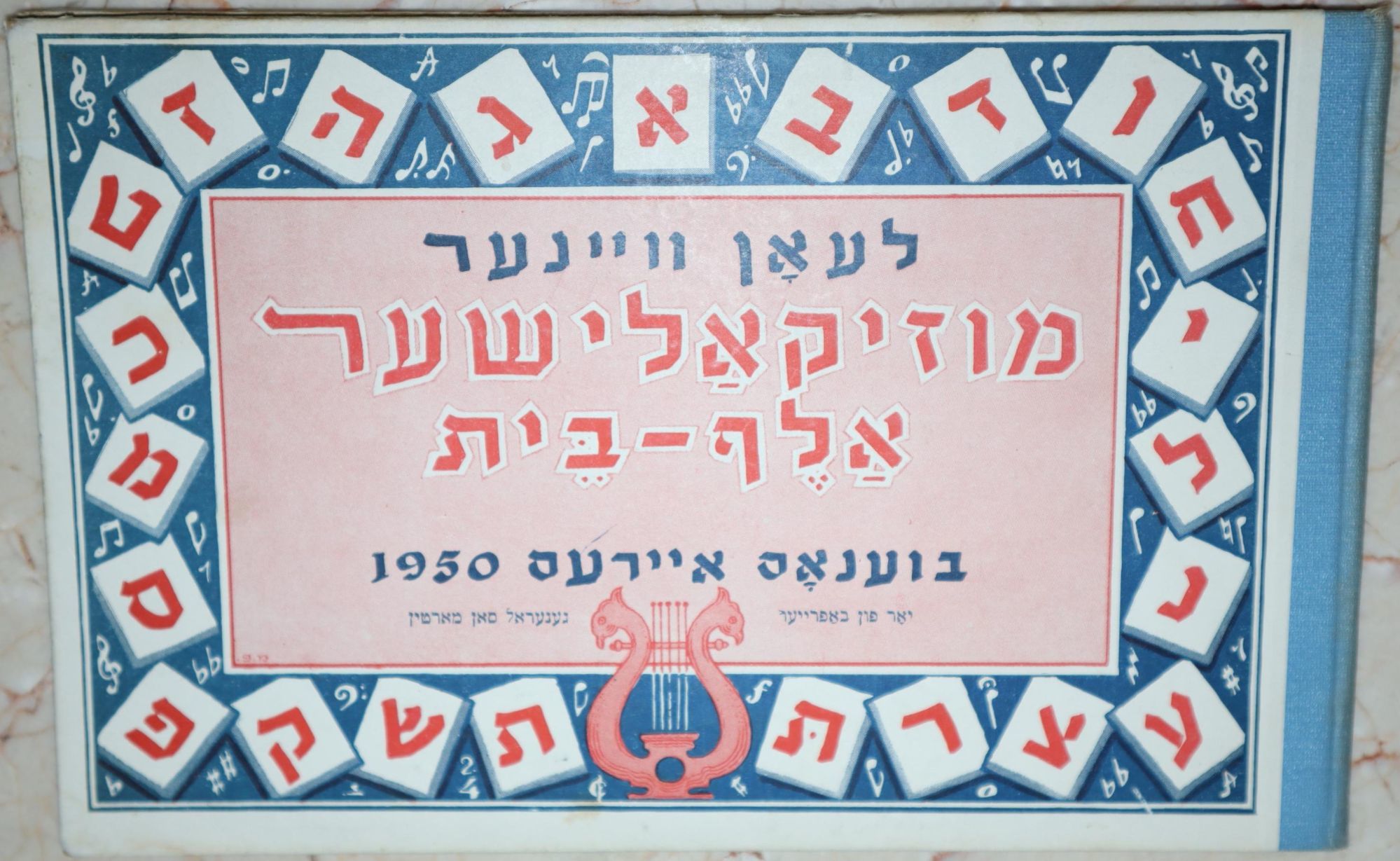
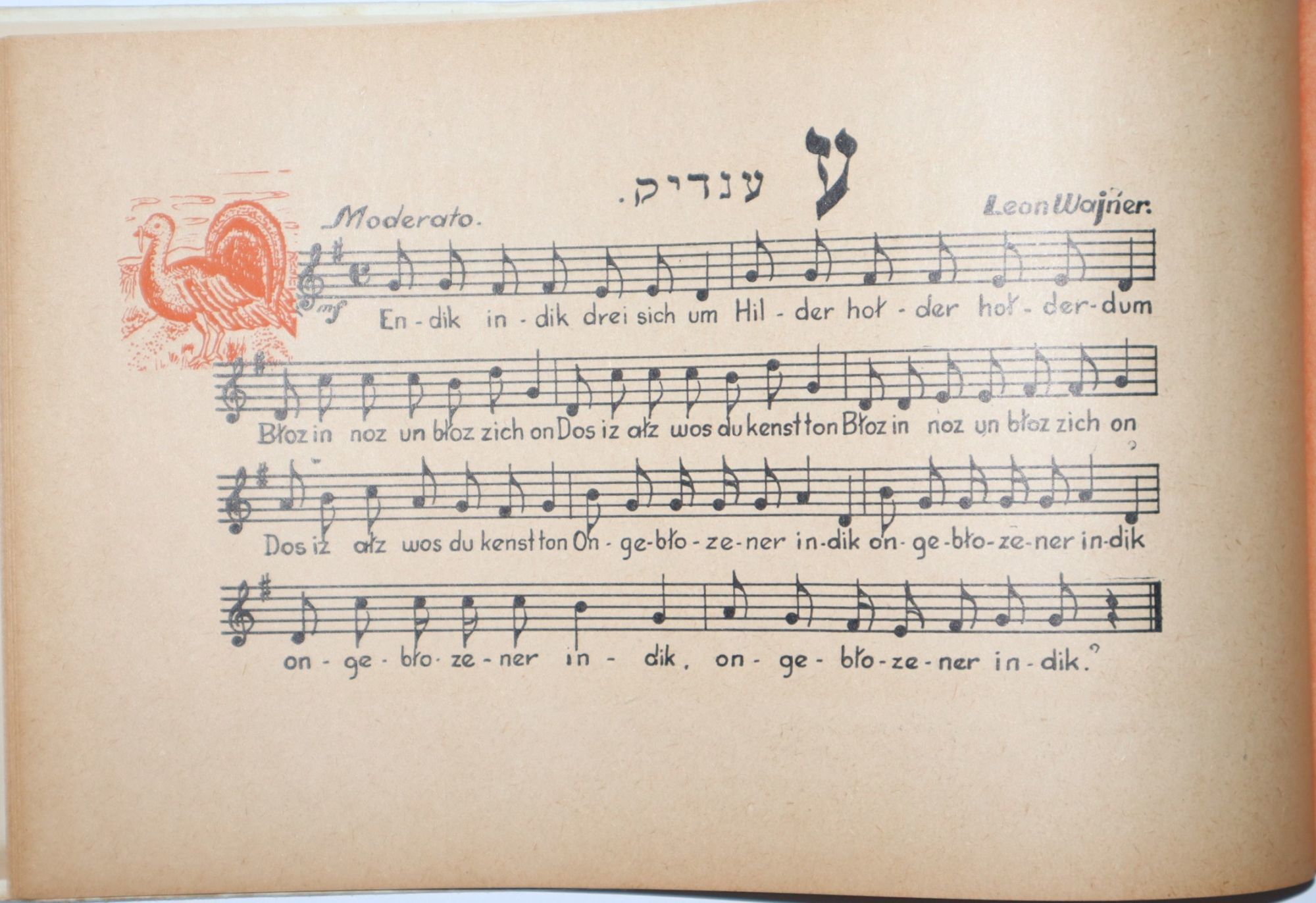
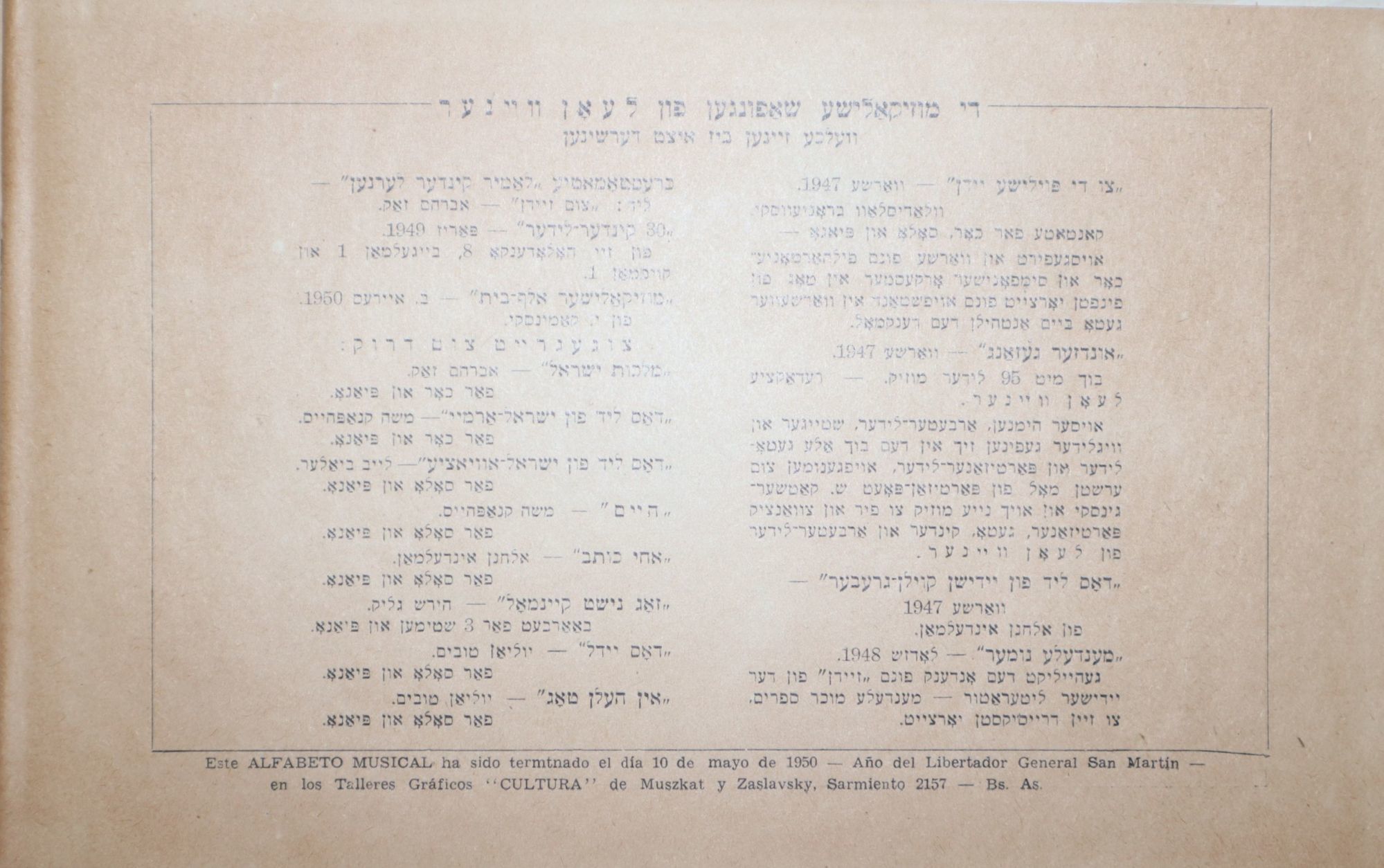
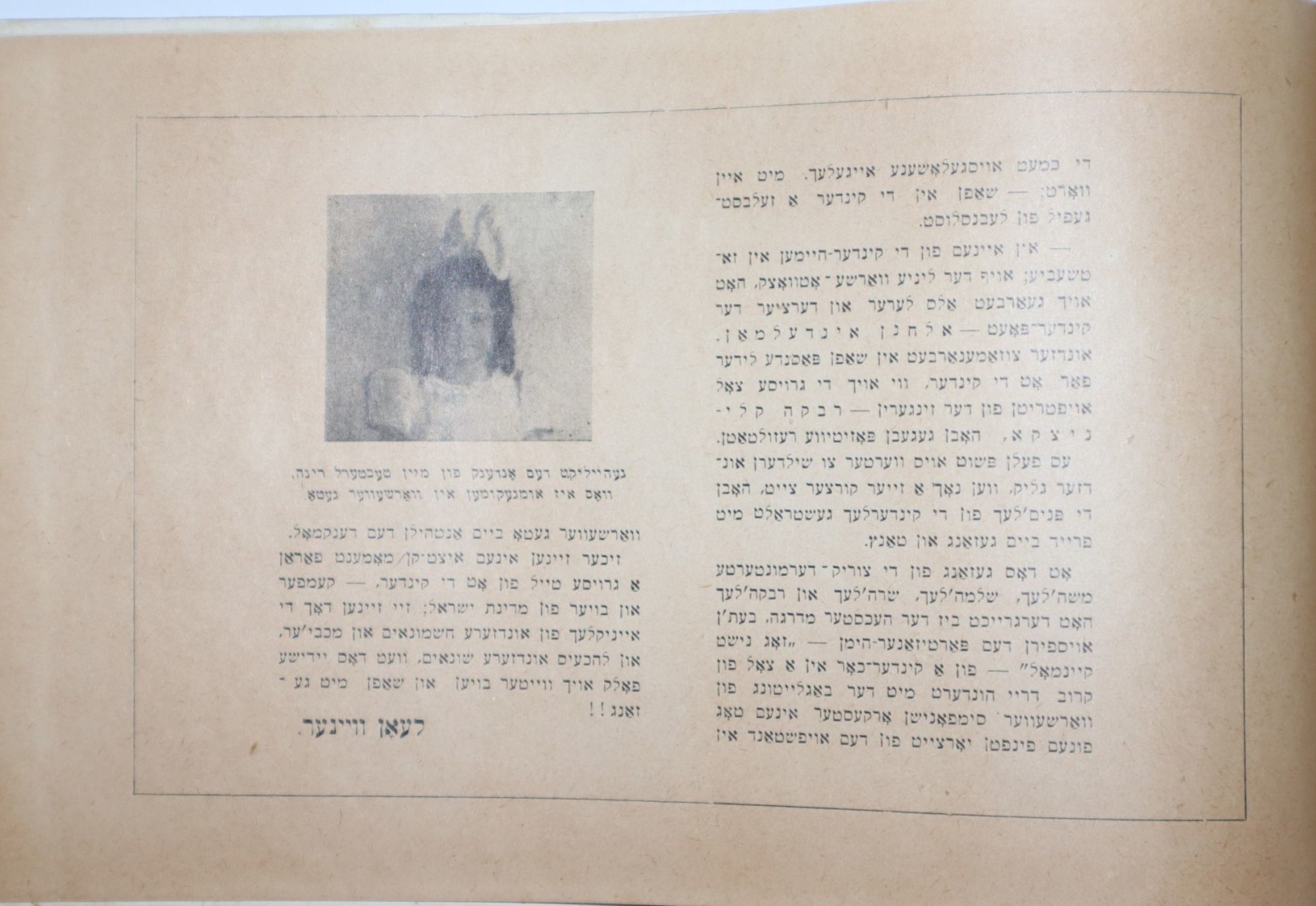
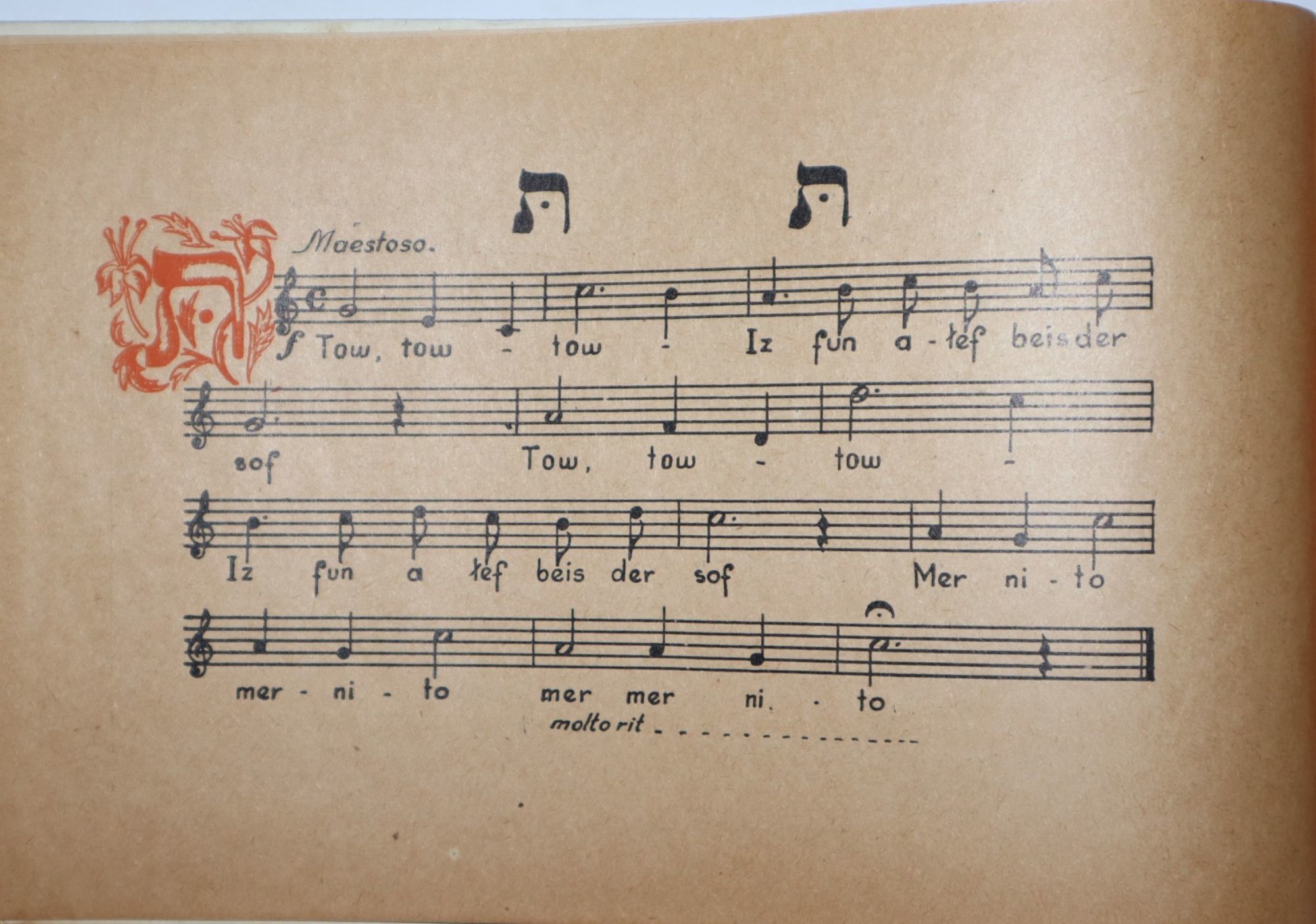
Buenos Aires: Ḳieltser Landslayt-Farayn. Cultura, 1950. First Edition. Hardcover. Cloth Spine. Paper pastedowns on boards. Very Good. A most unusual ABC song book -- the lyrics are in Yiddish, with the book published in Buenos Aires, of all places. Oblong. 16.5 by 26 cm. Unpaginated, 46 pages. The ABC is of the Hebrew alphabet, which is also the Yiddish alphabet. 23 letters in all. Underneath the musical notation the Yiddish lyrics are rendered using Roman letters, while on the facing page the lyrics are given in the traditional Yiddish Hebrew letters. Each song has as small vignette illustration in the upper left of the pages with musical notation, the illustration representing the word beginning with the letter the song is representing. In both the front and back are three pages separate from the ABC. In the front, this includes the title page, whose verso, a colophon, has an inked inscription written in a cursive Yiddish is dated 1965 but otherwise we don't have the skill or confidence to translate, given the inscrutability of the cursive. It is our sense, yet to be confirmed, that the inscription is by Wajner himself. In the back, what would be the front of an English or Spanish book, there is a tribute to the author and songwriter's daughter, murdered in the Warsaw ghetto during the war. There is a grainy photograph of the child. Wajner (1898-1979) was born in Lodz and was a successful concert violinist in interwar Poland as well as holding numerous positions in the Polish music establishment. Drafted by the army, he became a prisoner-of-war in Russia for much of the war. When released at the end of the war, he discovered his entire immediate family had been killed in the ghetto. In 1949 he emigrated to Argentina with Rivka Klinicki, a singer collaborator whom he marries. (We are fairly certain the "Kaminski" co-credit is referring to Klinicki.) Wajner was able to re-build his music career to where it had once been, and it seems he flourished in Argentina. Among his compositions were a good number touching on Jewish experience and specifically, the Holocaust, as the case with this children's book. Scarce, with several institutional holdings listed on OCLC First Search but unclear to us how many are physical copies. In any case, none found in commerce on the internet when this description was written, although we recognize the challenge of listing a Yiddish book and the other odd elements of this particular one. The leaves are heavily age toned, inevitable given the pulp content of the paper. While generally the book opens left to right, as typical of Yiddish and Hebrew books, the back of the book has a second title pastedown on its board, and there are three pages that begin in the back. A peculiarity that might be unique to our copy is that the back board pastedown is upside down in relation to the primary title page and the orientation of the pages generally. The leaves within are heavily age toned. The text block is detached from the boards but holding together otherwise. Minor soiling on the cover's pastedowns.
Details
Title
[Yiddish Children's Song Book] Alfabeto Musical [Musical Alphabet] In Yiddish: Muziḳalisher Alef-beys̀: Kinder Lider, or מוזיקאלישער אלף־בית : קינדער לידער
Author
Wajner, León [last name alternatively spelled, but not in this book, Weiner] and I Kaminski
Binding
Hardcover. Cloth Spine. Paper pastedowns on boards
Condition
Very Good
Publisher
Ḳieltser Landslayt-Farayn. Cultura: Buenos Aires
Date
1950
Edition
First Edition